
Contrary to what you may think, most motoring journalists don’t turn up an event like the Geneva motor show and just ask random questions that pop into their heads.
Alright, sometimes we might do that, but most of the time there’s some semblance of thought and research involved in deciding what to ask the industry's big cheeses.
A big topic on our agenda this year, alongside the usual electrification/autonomy/ 'don’t say the B-word' Brexit talk, was the future of small cars. I don’t mean small cars priced like bigger ones, such the Audi A1 and upcoming Honda Urban EV, I mean proper small cars: honest, simple, not over-endowed with technology or performance and, above all, cheap.
Industry figures have talked about the ever-slimming profit margins of such models for a few years now, and the exodus has already begun. Vauxhall won’t directly replace the Adam and Viva, the Renault Twingo has been axed from the UK and the future of the Toyota Aygo/Peugeot 108/Citroën C1 trio isn’t looking good.
But it was Volkswagen’s sales and marketing boss, Jürgen Stackmann, who said what many execs won't admit: emissions laws will kill off city cars as we know them.
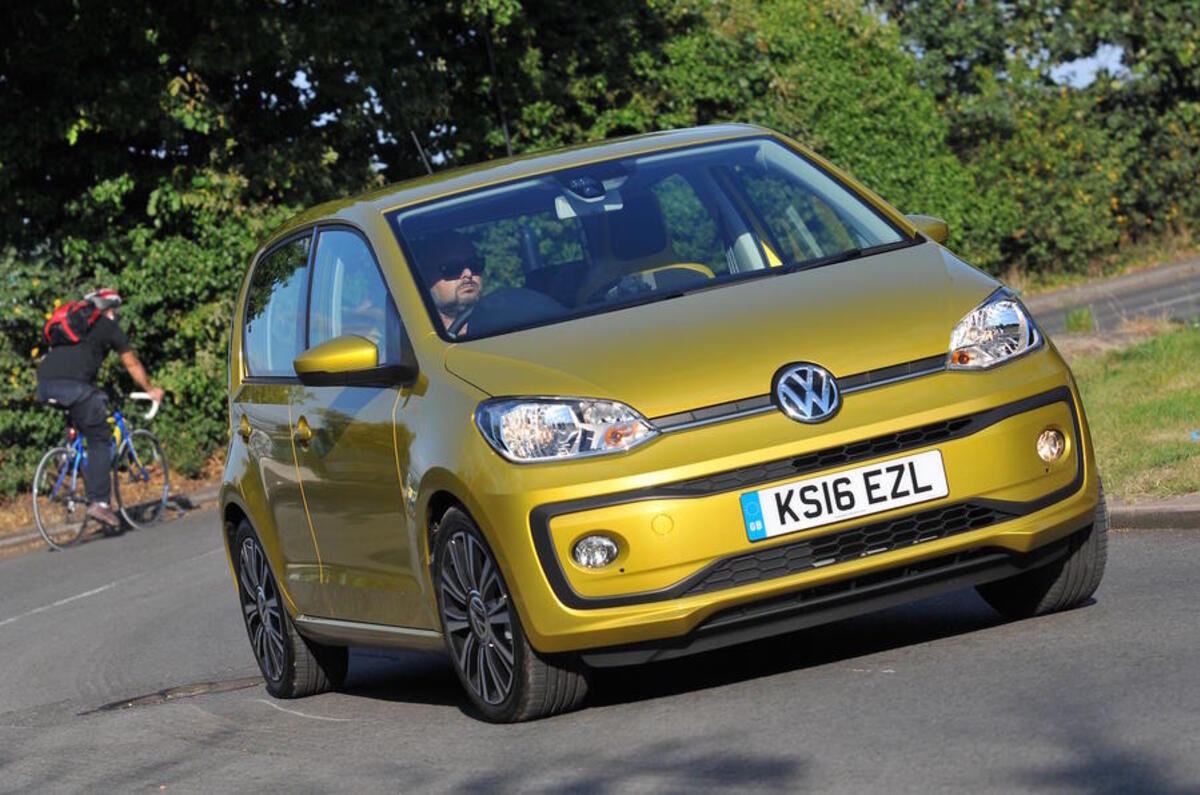
By next year all volume car makers must have a range CO2 emission average of below 95g/km. The Volkswagen Up already exceeds that under the new WLTP regime, so it’s either go all-electric (and significantly up the price) or send in the executioner.

That will be a crying shame. Cars like the Up are what most people should be driving: ingenious packaging means small exterior dimensions and yet genuine space for four inside, crash safety is now as good as anything else and they’re nowhere near as noisy, tinny and basic as they were even a decade ago. And some can still be bought on monthly payments costing less than a high-end phone contract.
They’re also huge fun at normal speeds. I recently spent time behind the wheel of the newly turbocharged Kia Picanto and found it far more enjoyable to drive than something like a performance SUV. It’s got enough power to entertain but not too much that you can’t wring it out without fear for your licence, and the size makes it perfect to chuck down even the narrowest of B-roads without fear for your door mirrors.