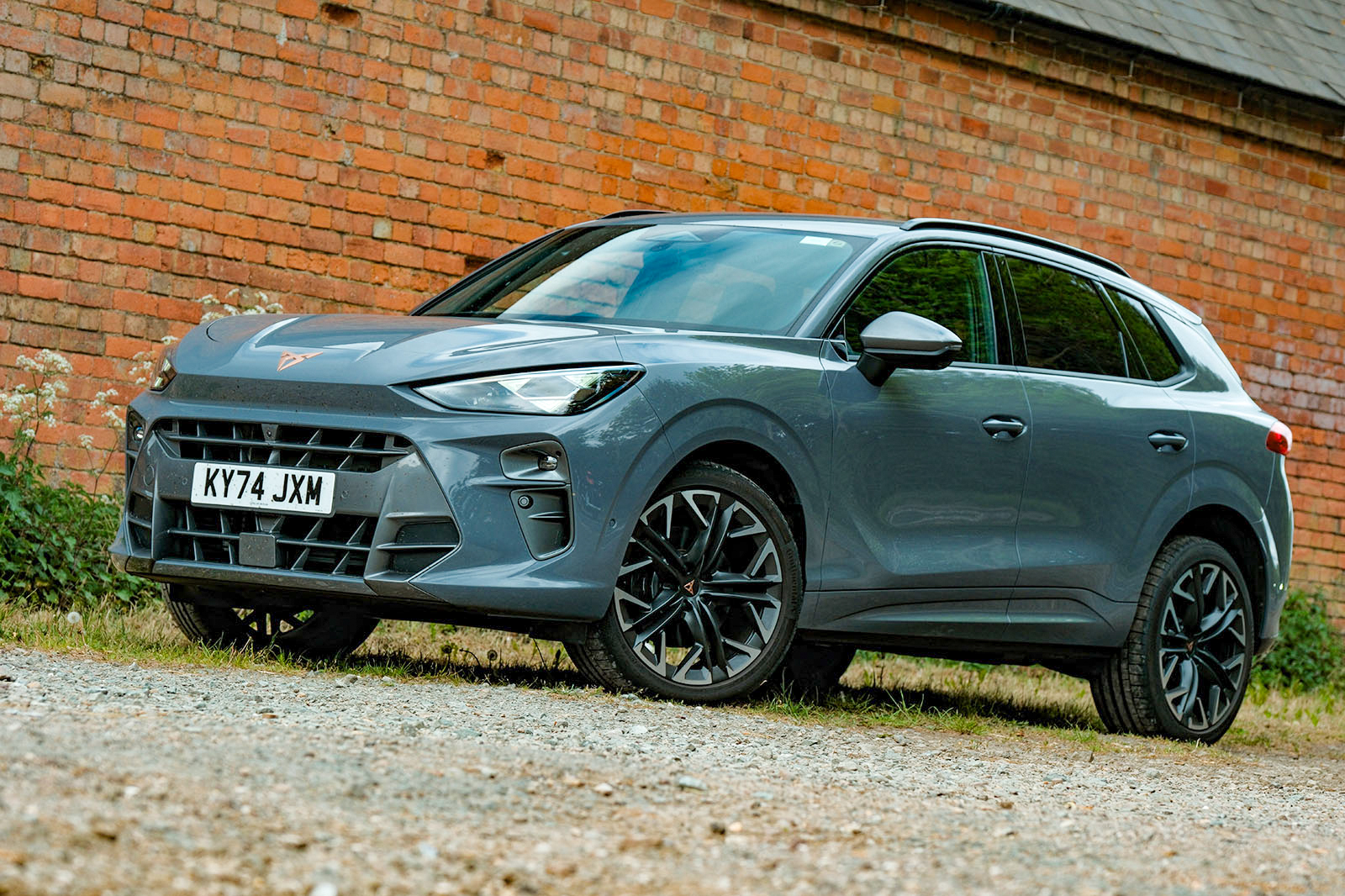
From £38,9958

Cupra completes its model range with a big sibling to the Ateca

The market, arguably, is not in need of another C-segment SUV. We already have an endless list including the likes of the Volkswagen Tiguan, Kia Sportage, Ford Kuga, Nissan Qashqai, Volvo XC40, BMW X1, Skoda Karoq, Audi Q3, MG HS, Hyundai Tucson and several others besides. 

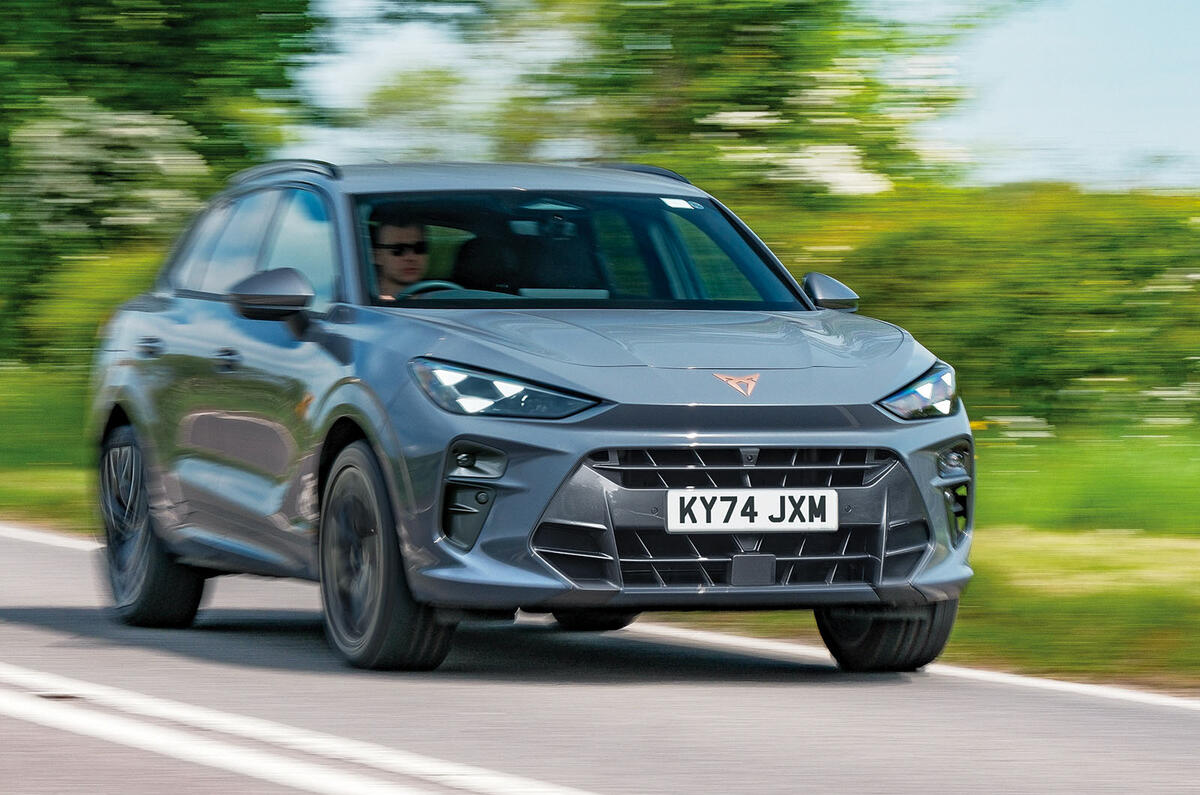
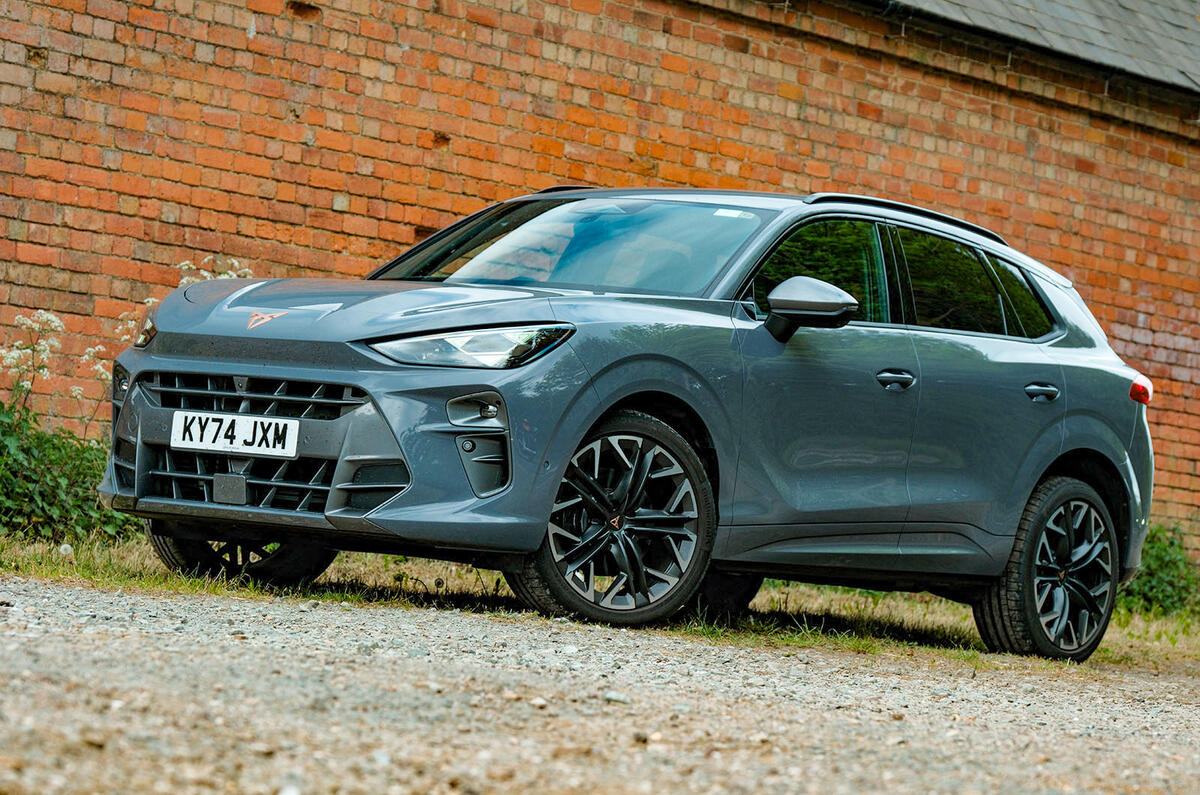
But this overcrowded field hasn’t deterred Cupra, which is already represented by the Ateca, and is aiming to ambush rivals with its new Cupra Terramar SUV. 

This is likely to be the last new Cupra product to be fitted with an internal combustion engine.

You might argue that adding another model in this segment is superfluous, but there are good reasons behind the Terramar’s existence. When Cupra became a stand-alone brand rather than a Seat spin-off, the Ateca was its first model. Since then Cupra has evolved dramatically in terms of design, technology, powertrains and, to some extent, dynamic identity. In short, the Ateca no longer feels particularly ‘Cupra’, whereas the Terramar does.

The Terramar is effectively Cupra’s flagship, although you could argue that this role is shared with the all-electric Tavascan, which has similar dimensions and sharper looks. There’s no electric Terrarmar yet, but it's expected to inherit the same platform as the Porsche Macan Electric when it goes upmarket for its second-generation. 

Whether you opt for an engine alone or pair it with an electric motor is up to you, and there is the choice of front- and four-wheel drive as well, plus a couple of suspension options. It’s typical Volkswagen Group fare, although we have come to like how Cupra sets its cars up in terms of steering, ride and handling, and there’s potential for the Terramar to be something of a driver’s choice in this chock-full class. 

Advertisement
Back to top

DESIGN & STYLING

7
Cupra Terramar review 2024 003

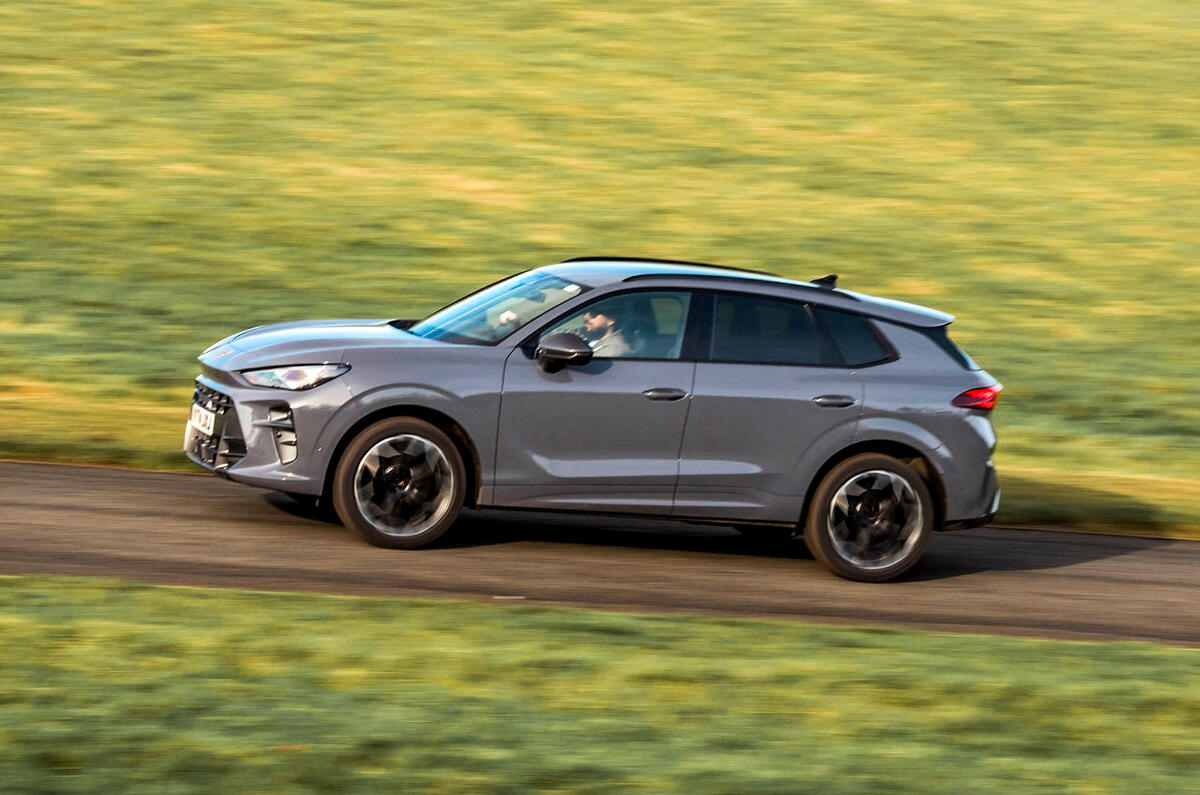
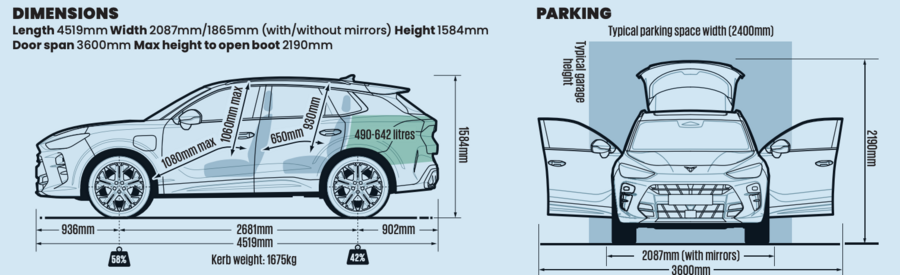
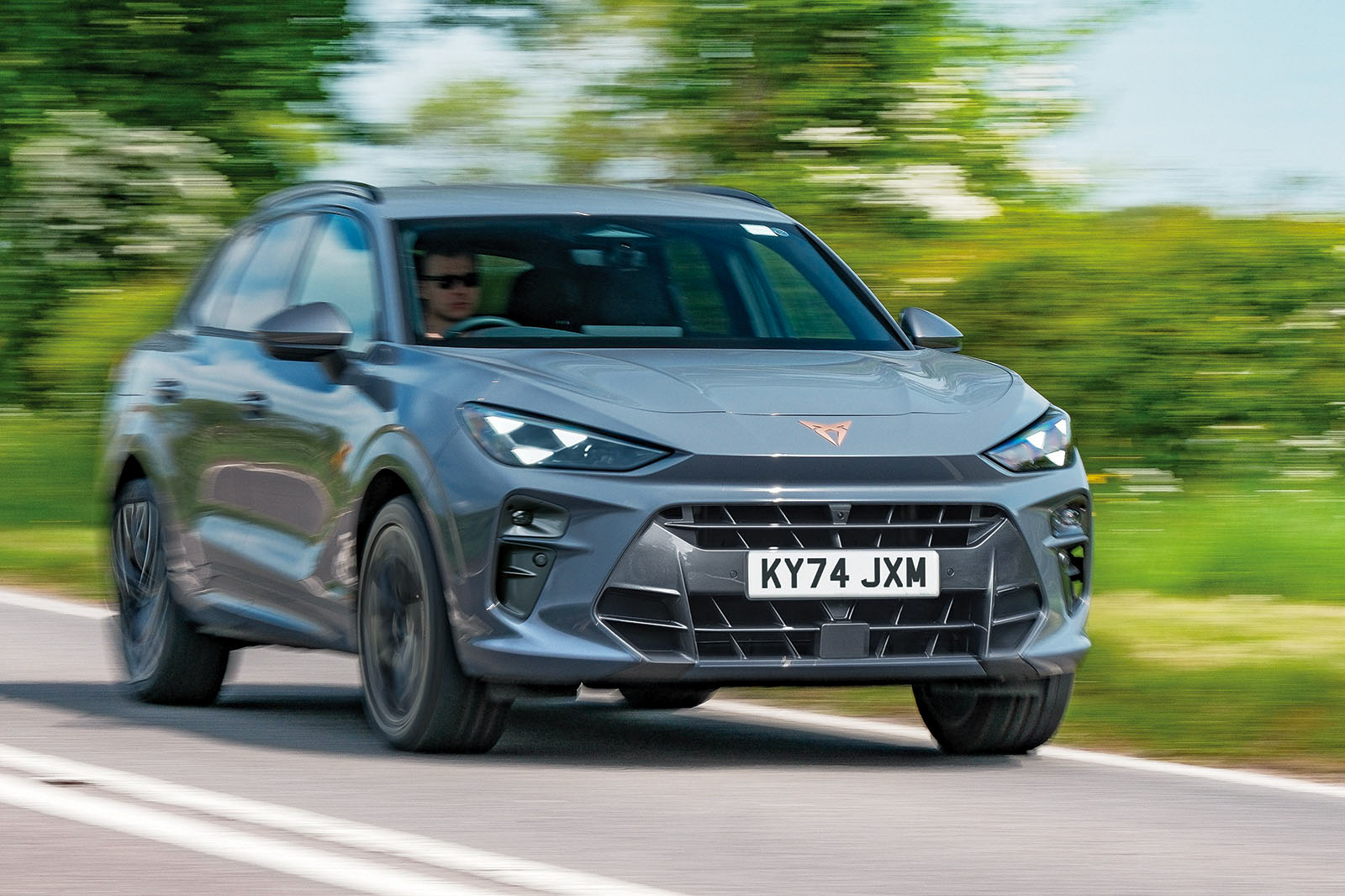
It’s worth defining the Terramar in relation to its Cupra range-mates, because the hierarchy is not obvious. In length and width, the new car slots in between the cheaper, lower-slung Formentor and the Tavascan, although it is also the widest of the three.

The differences are minimal, however, and each of these cars has a similar footprint, with the Formentor and Terramar even having the same wheelbase ( the Tavascan’s is longer on account of its EV-specific mechanical packaging).

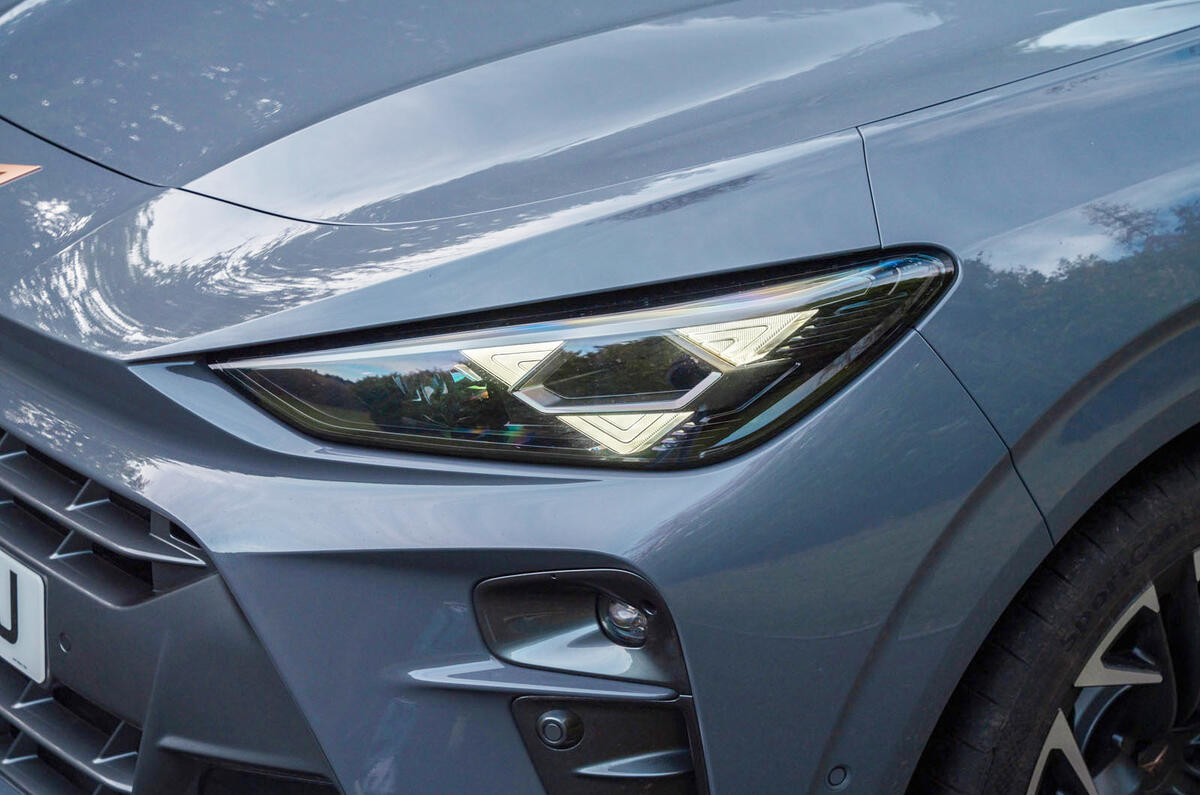
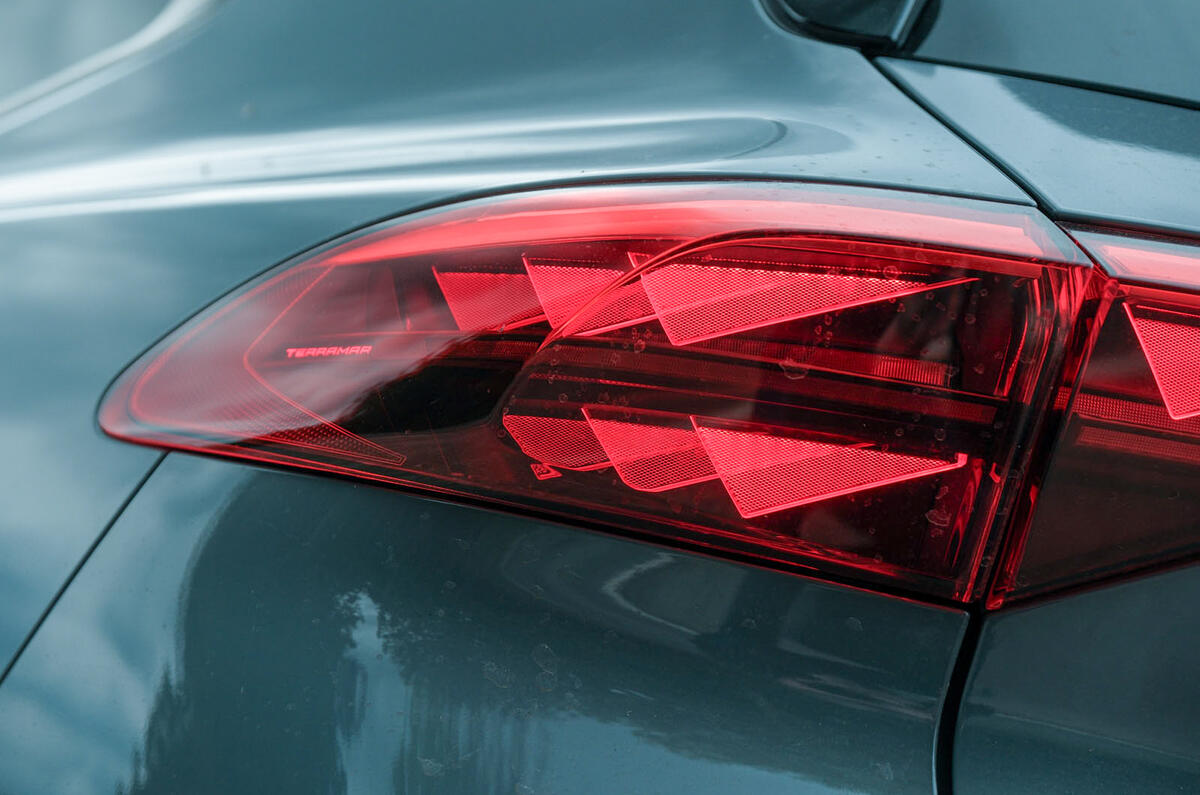
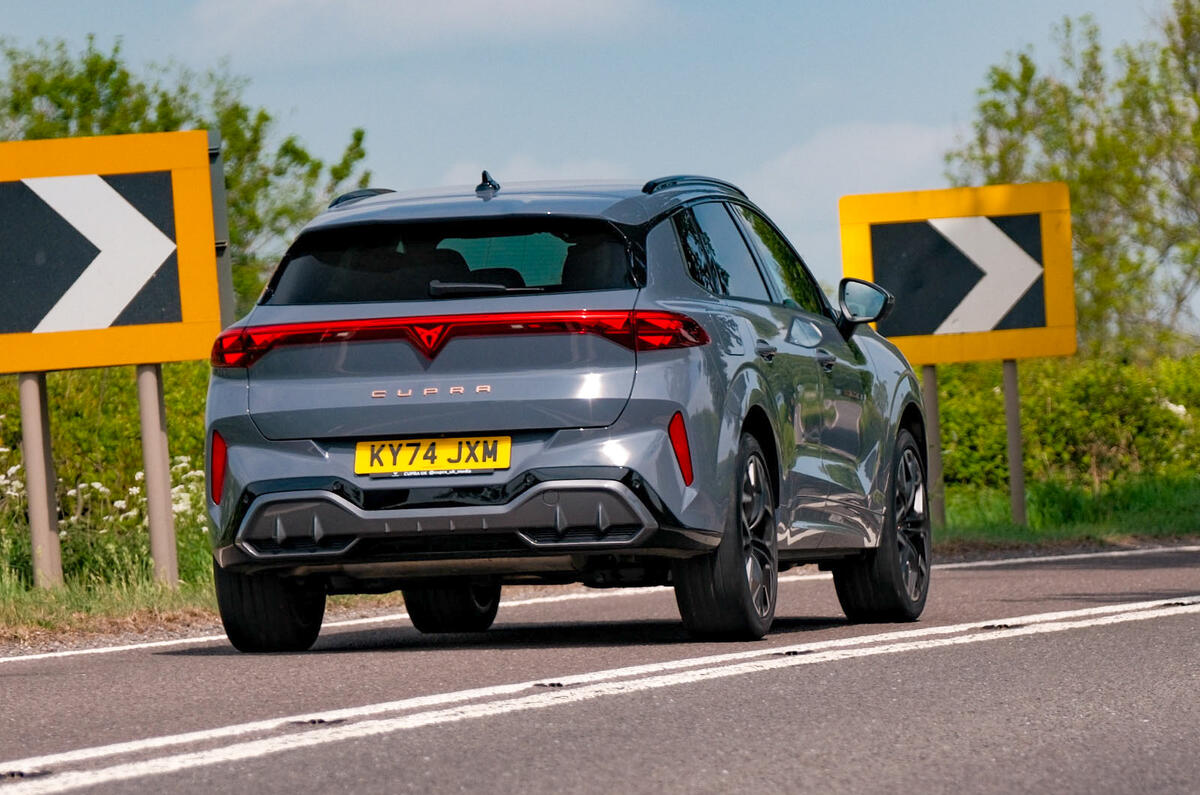
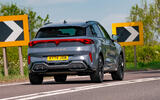
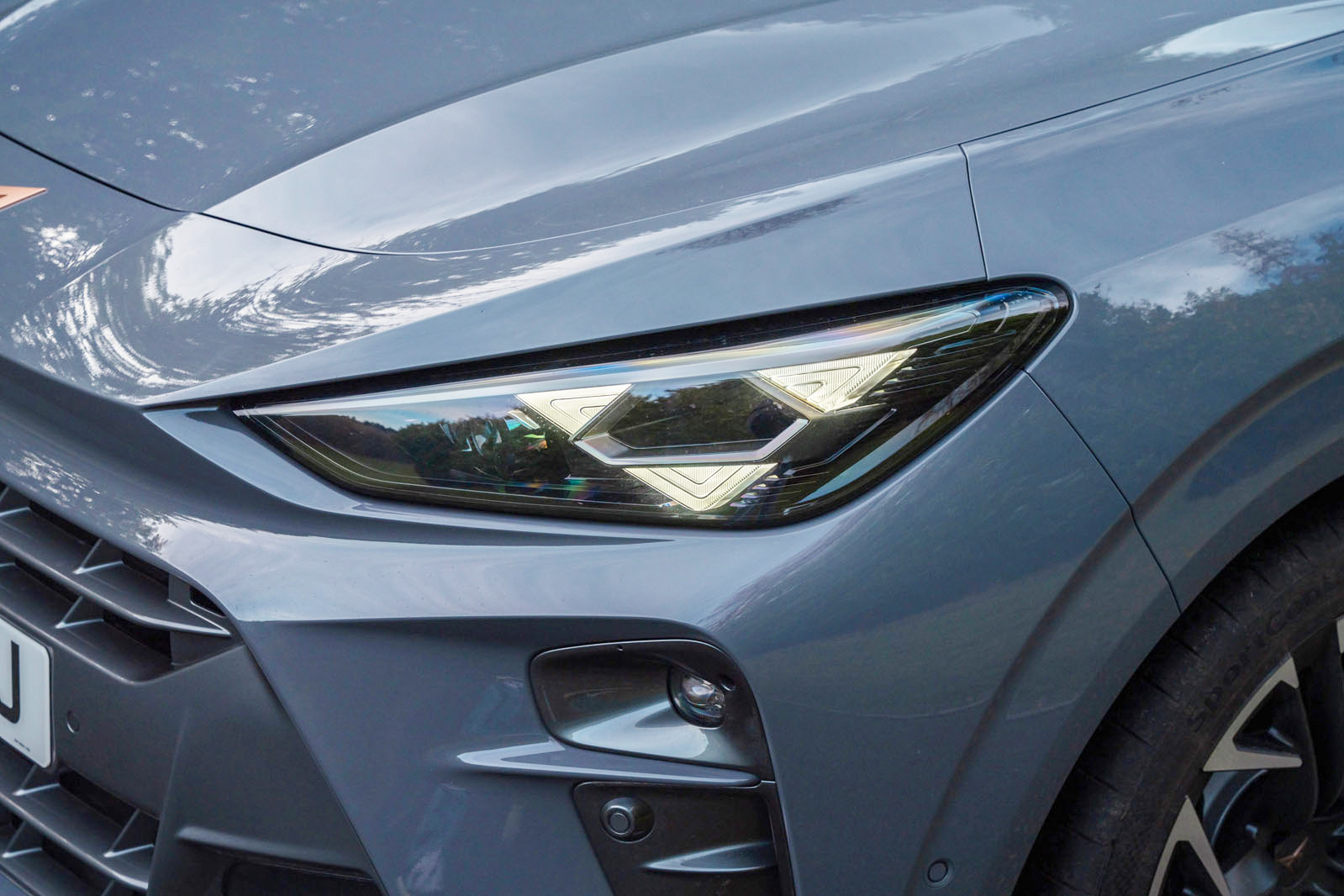
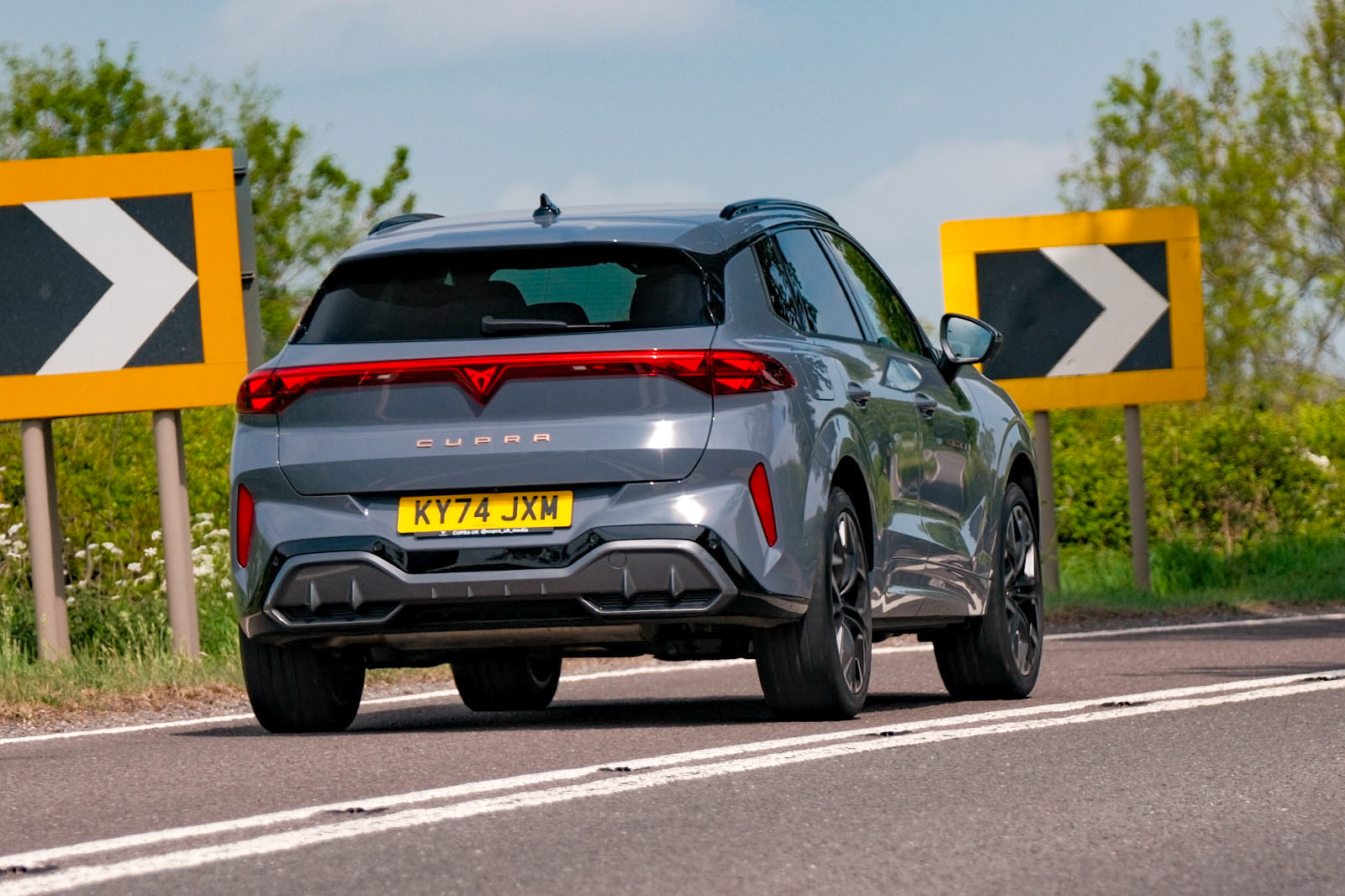
The Terramar sports some rather impressive lighting hardware, which has become a calling card for Cupra. The three-triangle signature for the headlights is one thing, but the multi-layered element in the tail-lights is even more striking, and standard across the range.

Built in Audi’s Gyor plant in Hungary, the Terramar uses the latest iteration of the MQB Evo platform, and is powered by a familiar range of powertrains. 

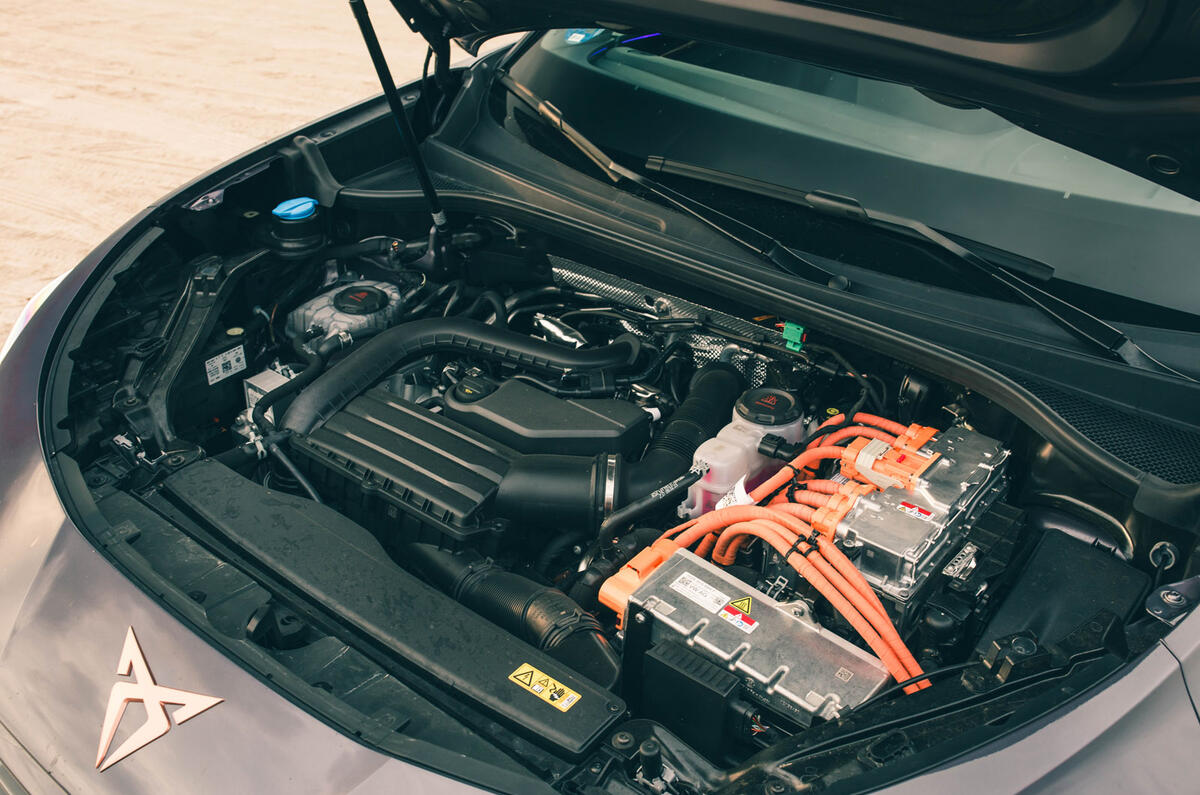
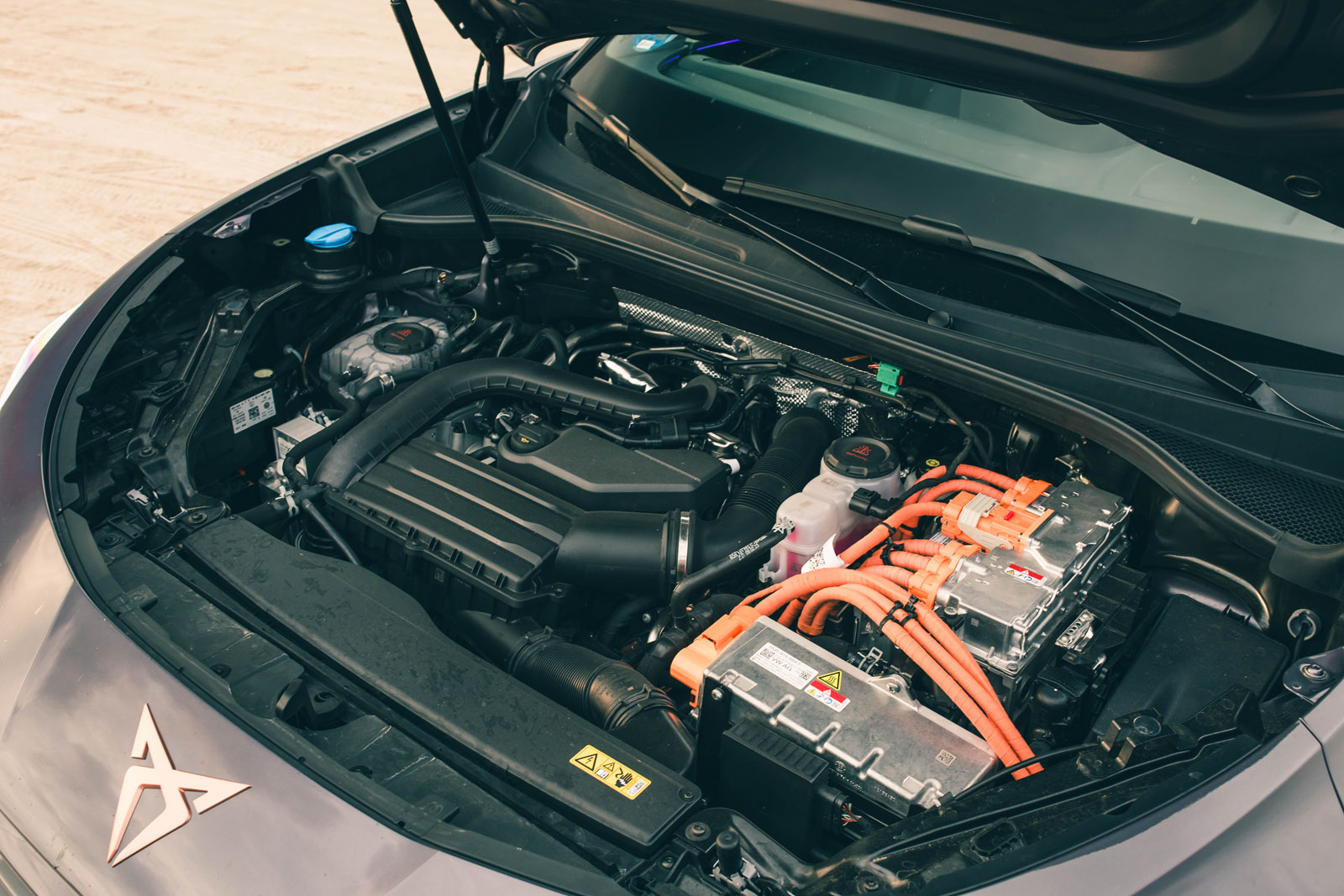
There are three options that don’t need plugging in: a 1.5-litre mild-hybrid four-cylinder petrol with 148bhp driving the front wheels, and a four-wheel-drive 2.0-litre with either 201bhp or 261bhp. Then there’s a 1.5-litre plug-in hybrid with either 201bhp or 268bhp. Both options use the same generous, 19.7kWh (usable) battery as the latest VW Golf, VW Tiguan and Skoda Superb, and so are rated for more than 70 miles on a charge.

For the 261bhp 2.0-litre TSI, the four-wheel drive comes in the familiar form of a Haldex-sourced, hydraulically controlled multi-plate clutch that engages the rear axle when required. It allows the Terramar to split available torque equally between the axles, with the precise amount dictated by data relating to steering angle, wheel slip and, of course, any yaw the chassis might be experiencing.

What the Terramar doesn’t get (in any guise) is the dual-clutch, torque-splitting rear axle first seen on the Mk8 Golf R. This can direct all of the available rear-axle torque to either rear wheel. Only the Formentor and the Leon estate are available with this hardware, as well as the 'EA888' 2.0-litre engine in full, 329bhp Golf R-matching output.

As for suspension, in comparable spec, the Terramar’s body sits 10mm lower than the Tiguan, and from VZ1 grade up the Cupra is fitted with the twin-valve dampers that form the basis of the highly variable Dynamic Chassis Control (DCC). 

The Terramar also introduces a new-for-Cupra front suspension upright that dials in greater camber, as well as a new control arm for keener initial steering response. On this 2.0 TSI version, and also the 268bhp eHybrid, you can option six-piston front brakes from Akebono (made famous by the McLaren P1), which ups the discs’ diameter from 340mm to 375mm. 

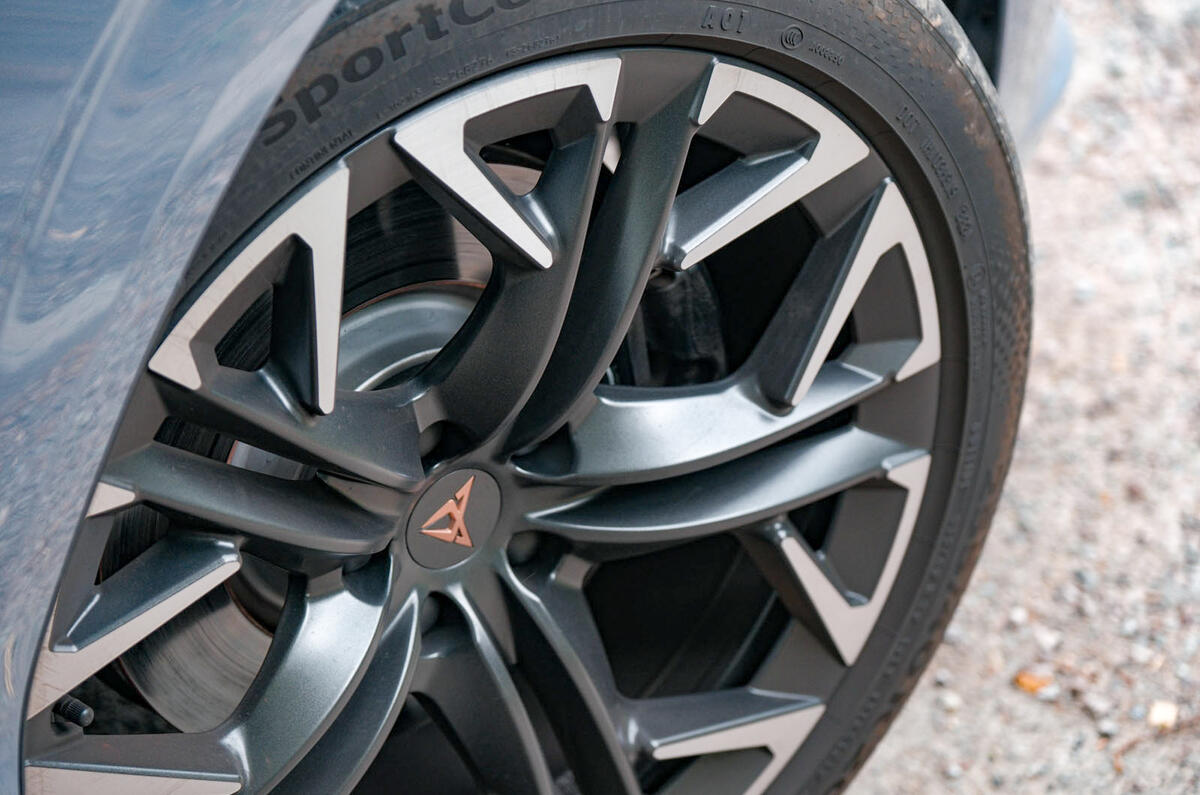
Cupra doesn’t skimp on rubber for the 261bhp Terramar, at least in VZ2 trim – this car is fitted with Continental’s excellent SportContact 6 tyres

INTERIOR

8
Cupra Terramar review 2024 006

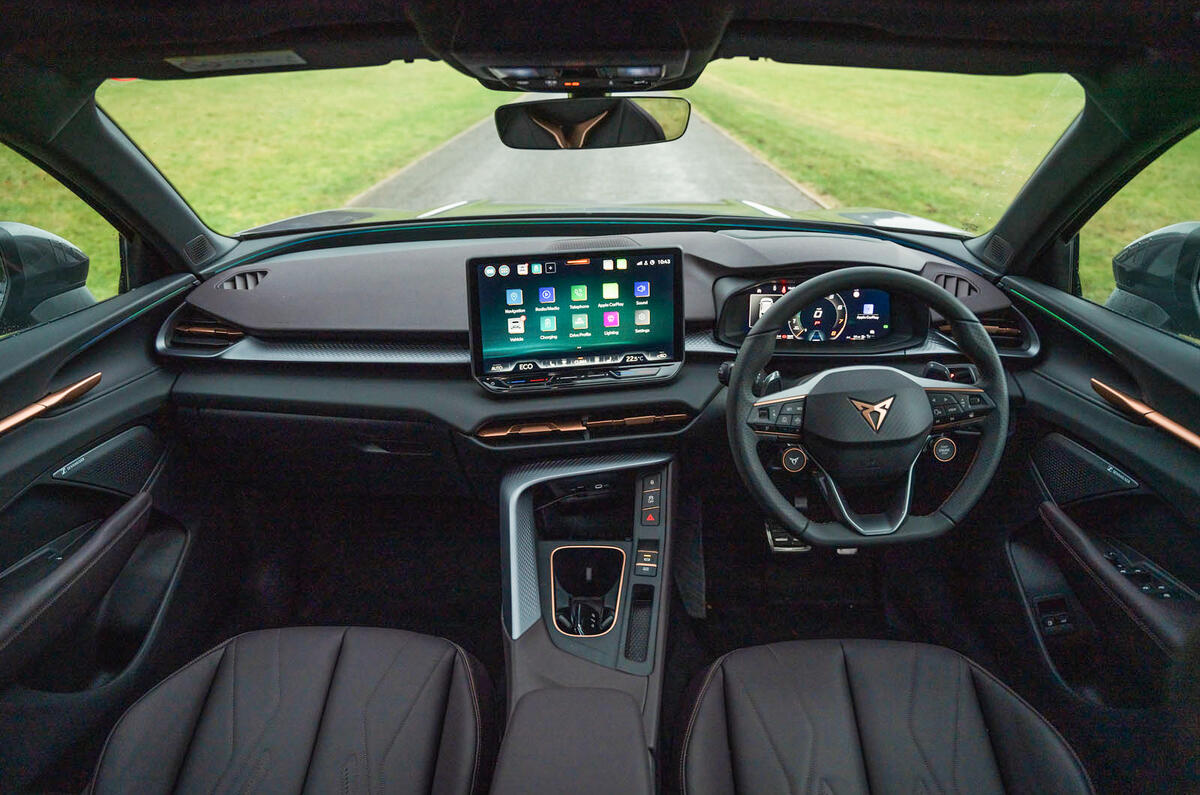
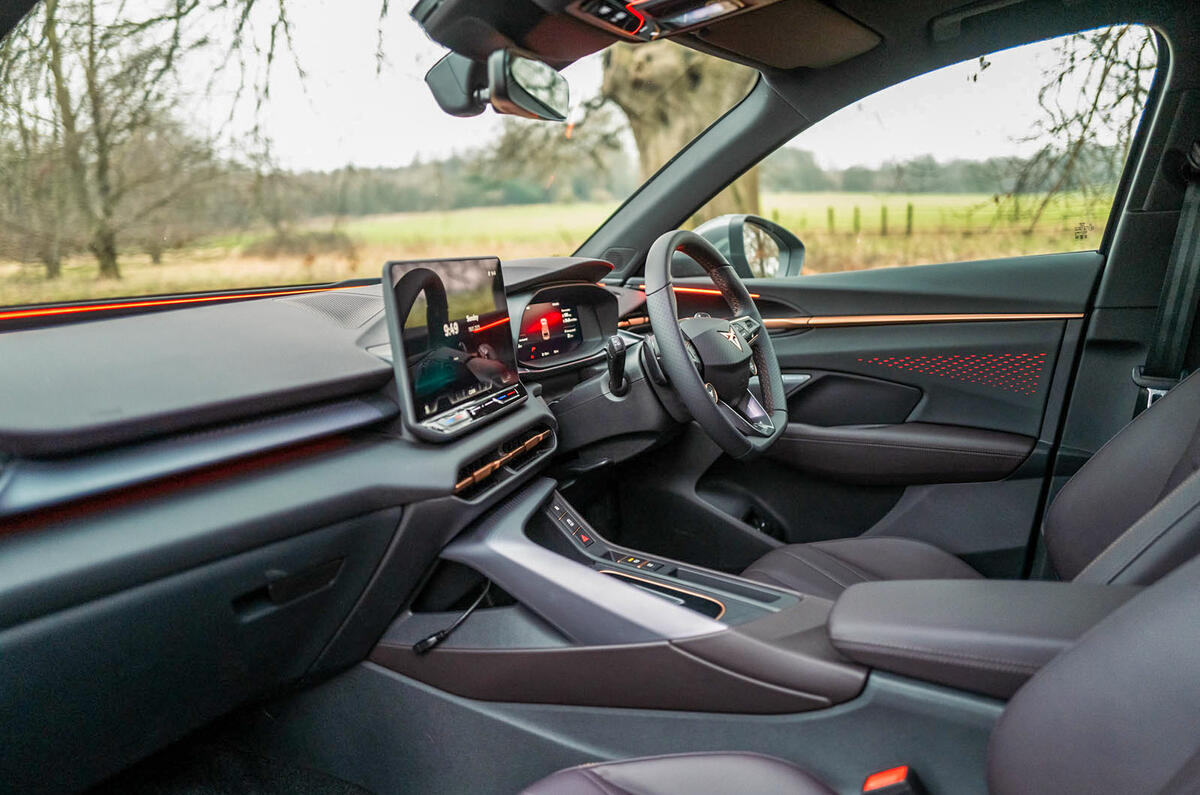
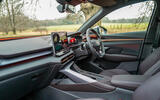
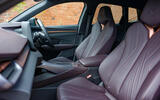
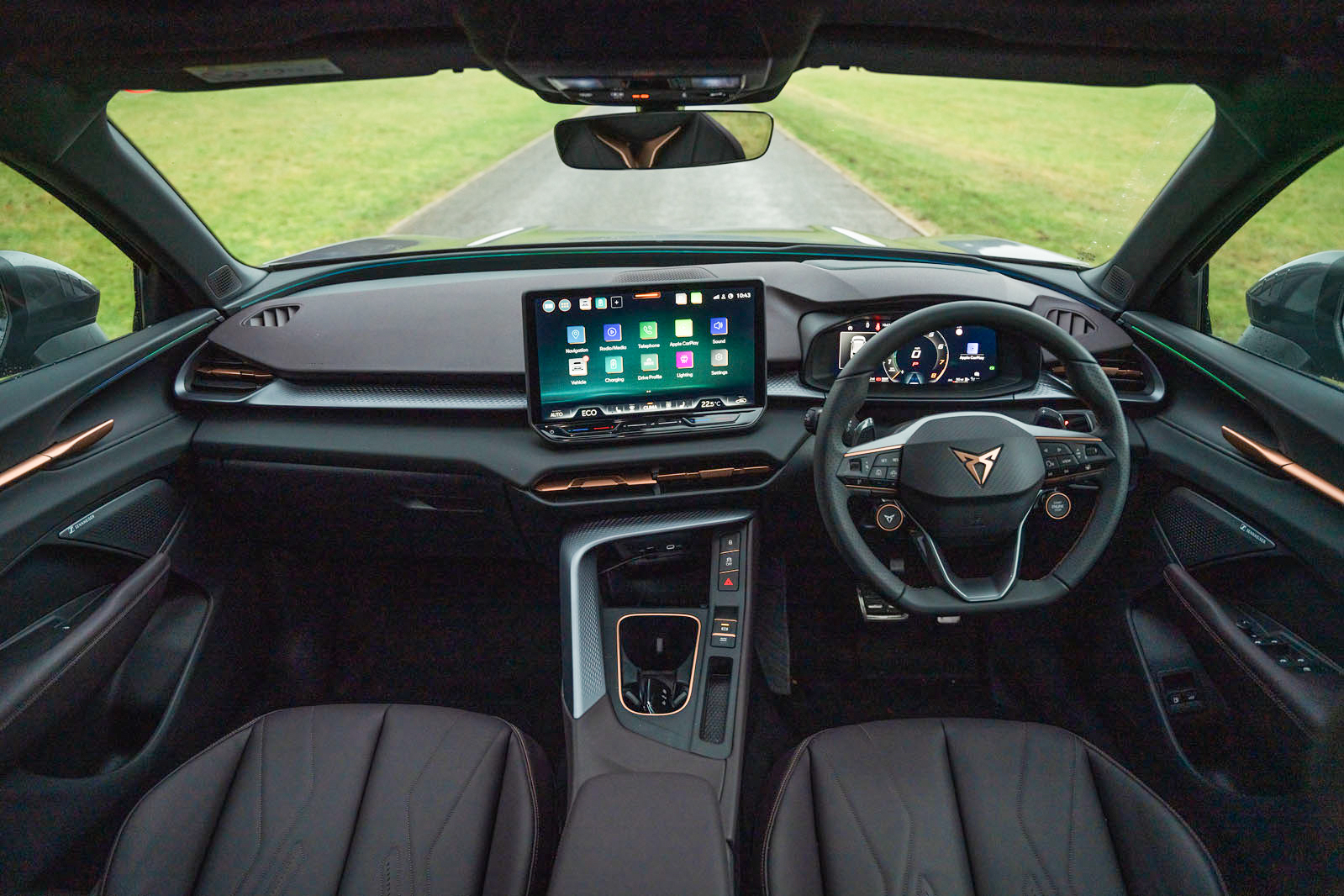
Cupra’s recent wares have perhaps the most distinctive interiors of all the VW Group coterie, majoring on unusual colours and plush materials. (Audi has gone all in on piano black plastics, while Skoda and VW itself are solidly unmemorable.)

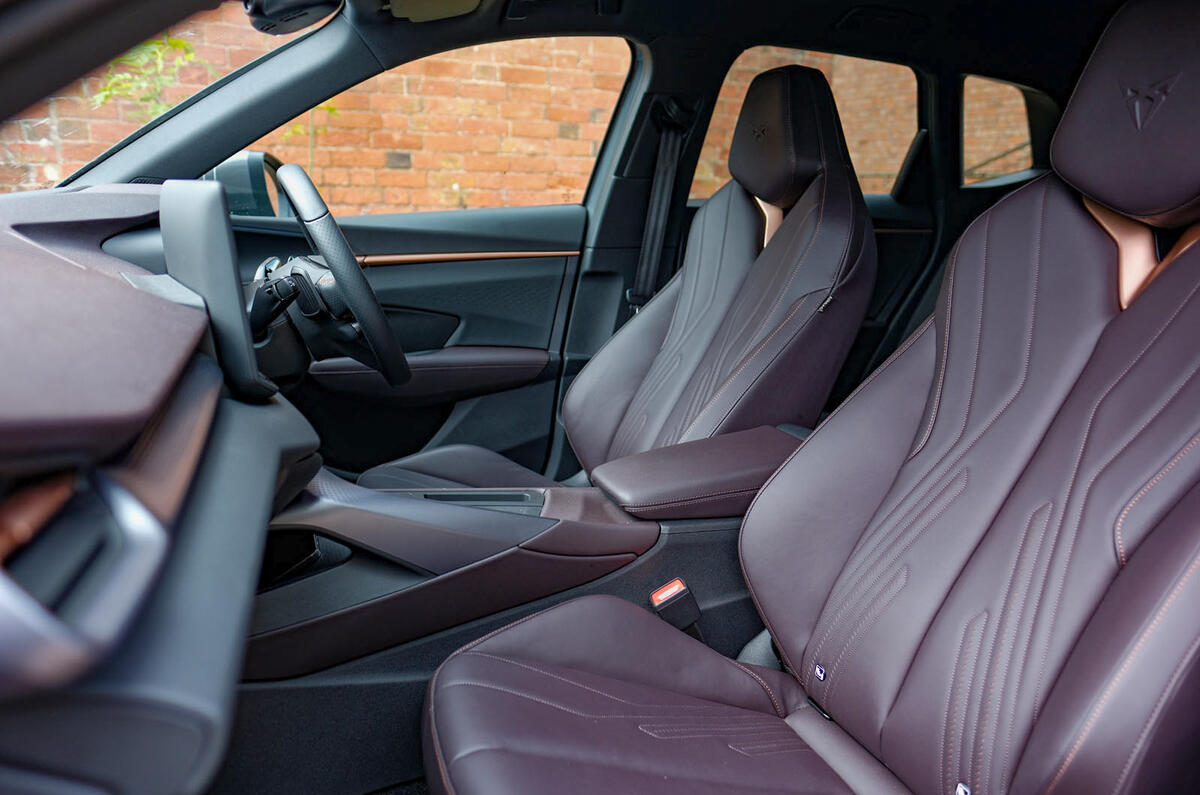
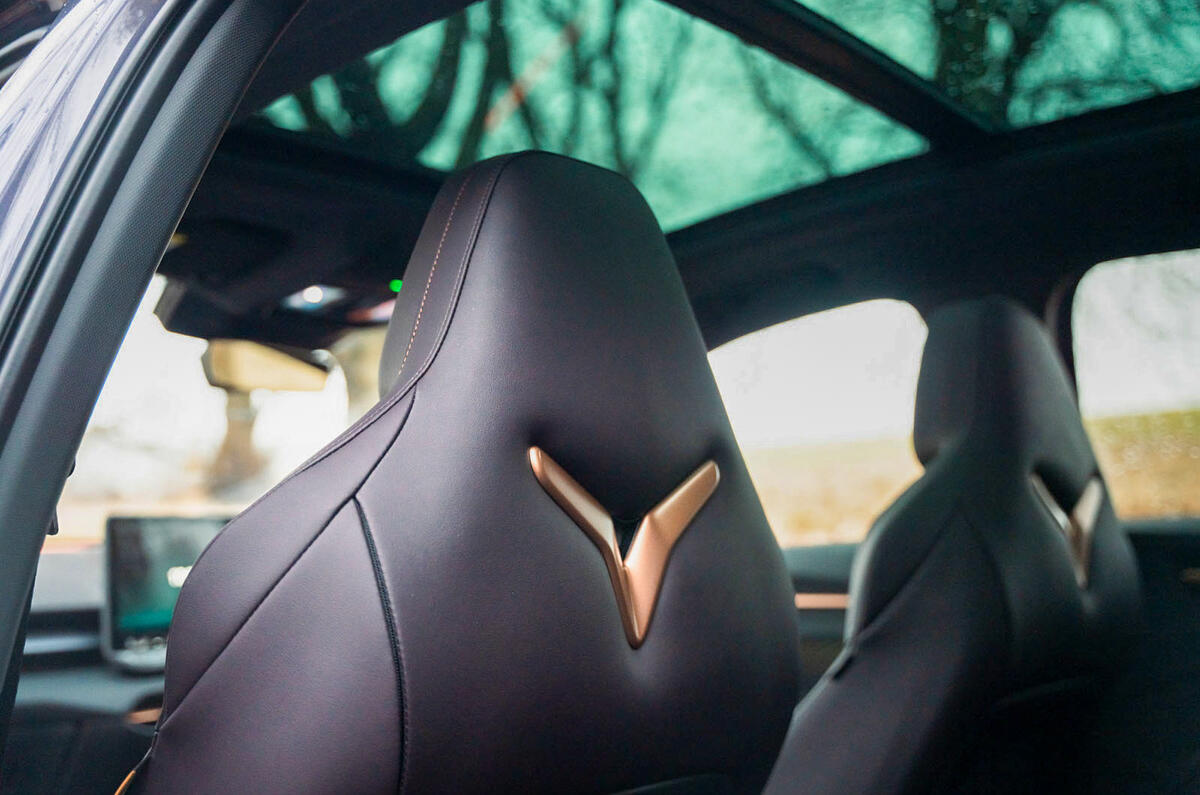
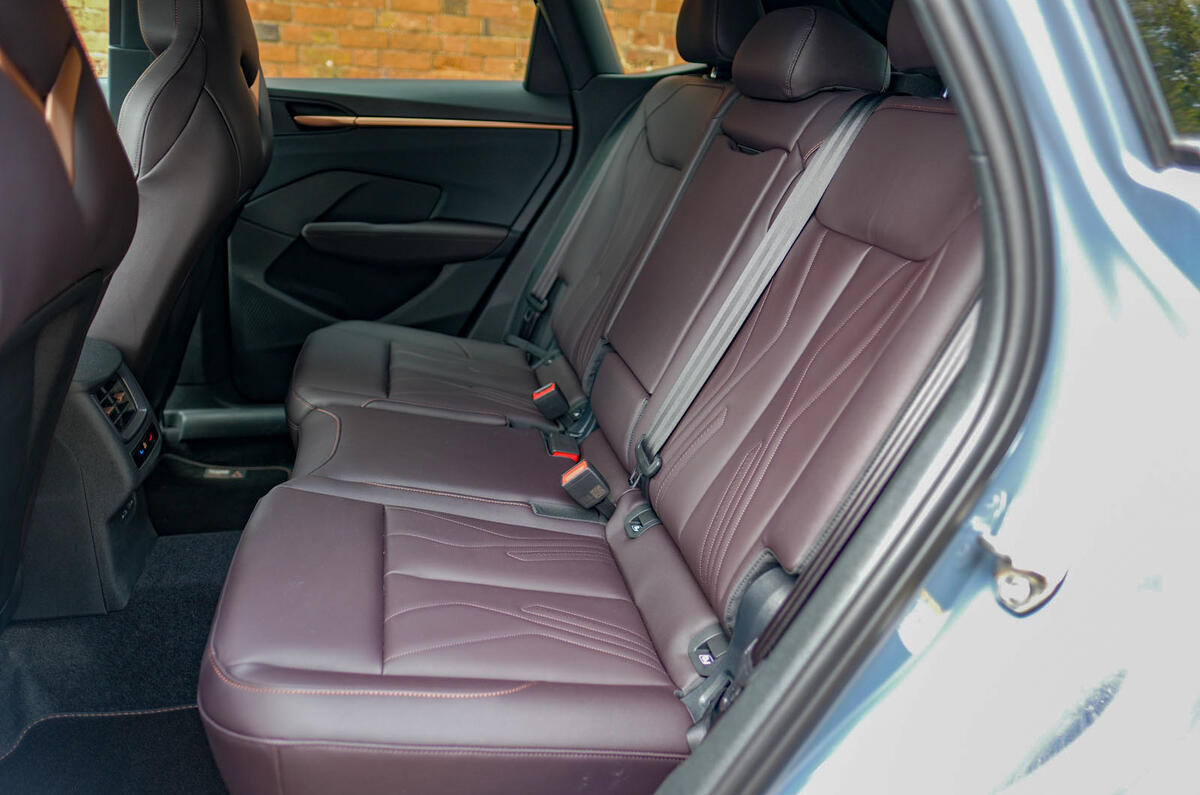
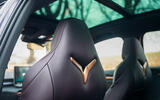
VZ2-grade variants get burgundy upholstery, fluid stitching patterns and copper details, and while they were a bit louche for some testers, you can’t say Cupra isn’t making an effort. The cockpit is also fairly driver-oriented and has some interesting technical textiles made from recycled plastics. It feels inviting and high quality, and gives you a reasonably low driving position for something that is, after all, supposed to be an SUV.

Copper-coloured elements are integral to Cupra’s colour palette but they feel chintzy here, and perhaps undermine the atmosphere of what can be rather a rewarding driver’s car

The sports seats are also nicely supportive, with plenty of adjustment, and there’s a decent amount of storage. It all combines to make the Terramar feel like the urbane ‘GT’ of the C-SUV class.

The same can be said of the V2 trim, which can match high-spec cars for fit and finish. Key touch points are draped in the same recycled materials and you get fancy ambient lighting and a head-up display. Overall it feels upmarket, save for a few cheaper furnishings down by your knees and feet. 

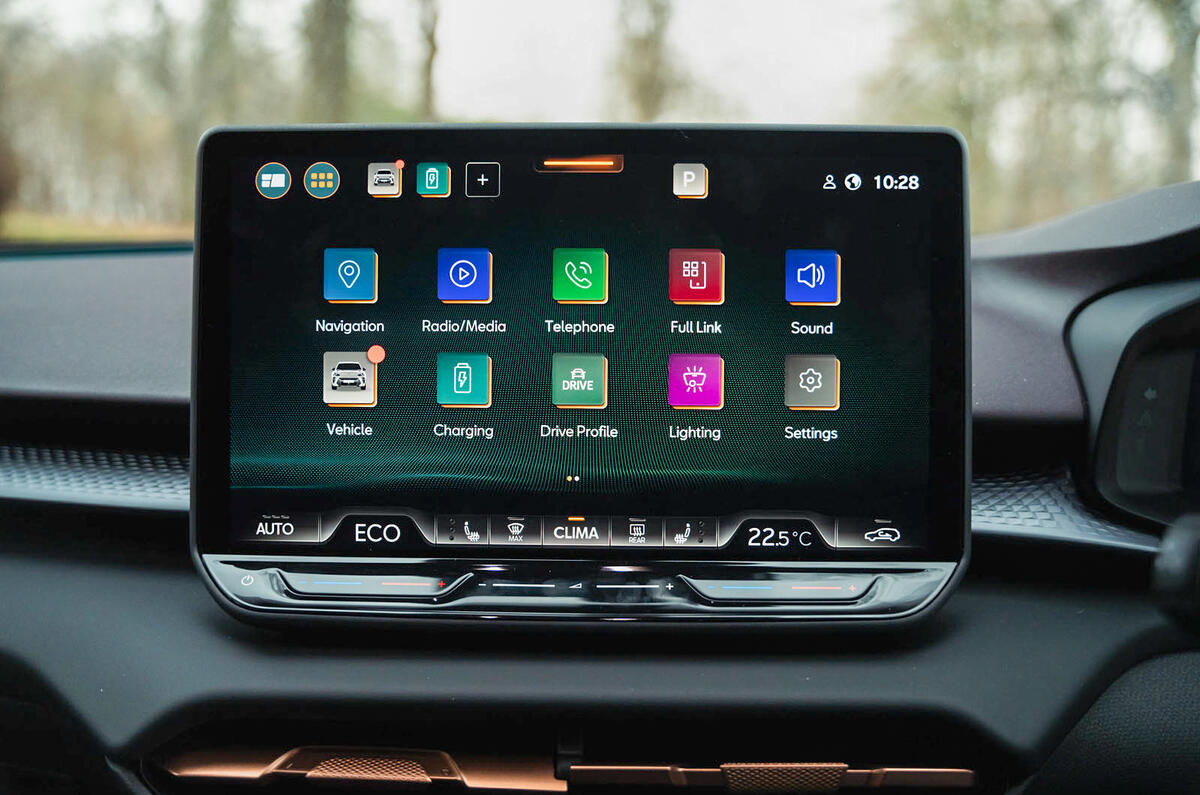
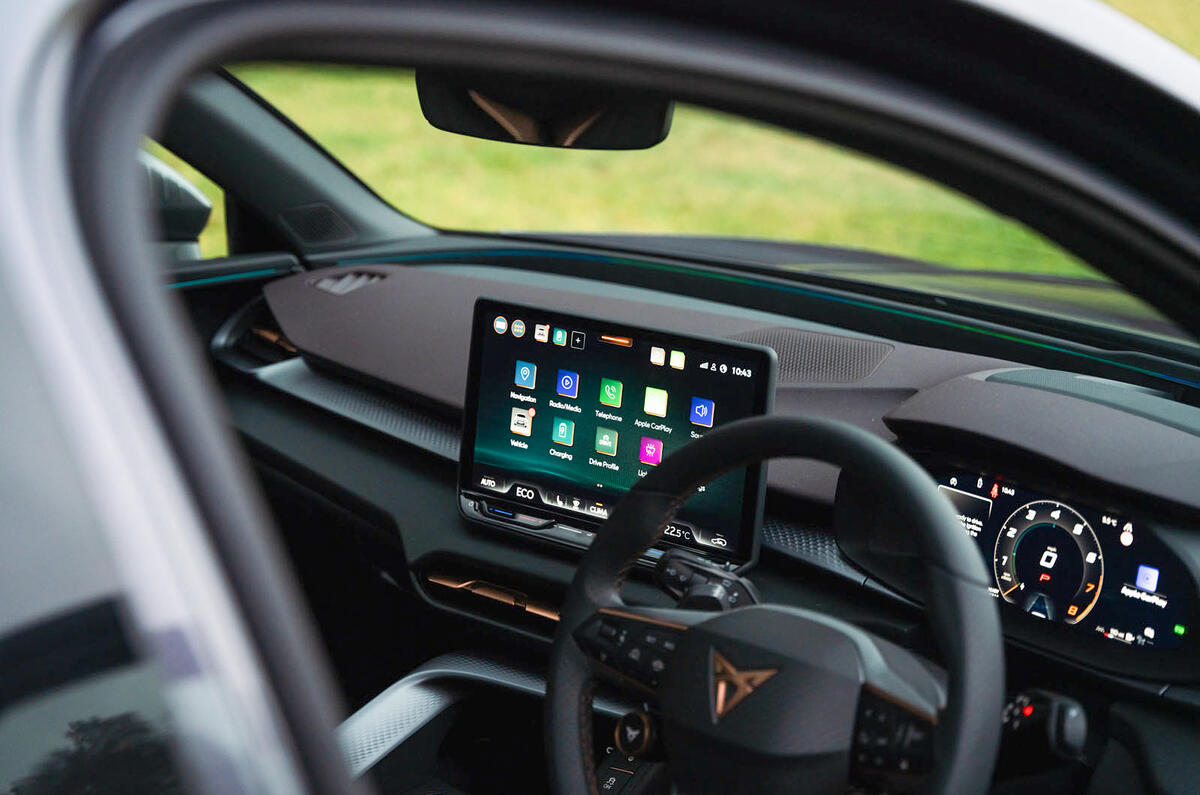
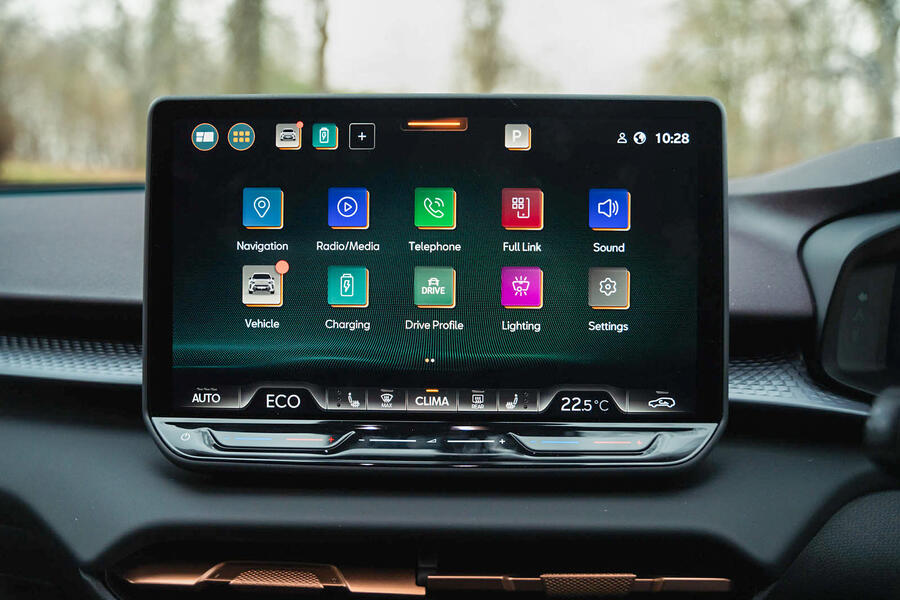
As has become the norm, nearly everything is controlled through the centre screen, which has had a significant update compared with previous generations of Cupras but still has room for improvement.

The dreaded touch bar remains and looks a bit cheap compared with the rest of the interior but the main screen interface is fairly logical. A bar at the bottom gives you instant access to the climate controls and heated seats, and a permanent bar at the top lets you choose up to three shortcuts. Swiping down reveals even more customisable shortcuts.

Some of the menus are too complex, but most frequently used functions are easily accessible, including the ADAS controls, which can also be usefully accessed via the spoke of the firm, contoured steering wheel. Here, you’ll also find the switchgear for the car’s ‘predictive’ adaptive cruise control and lane keeping program.

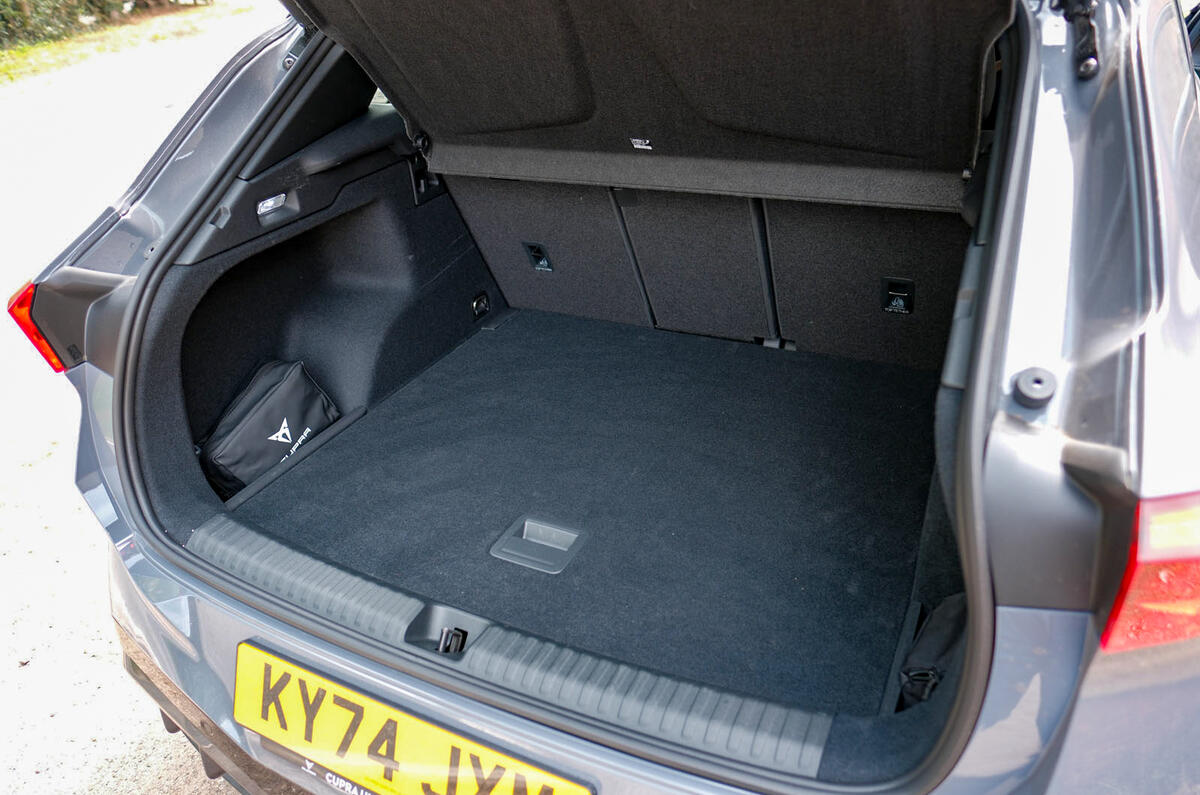
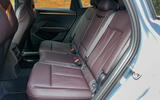
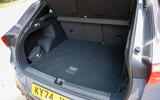
Ergonomically, the Terramar does nothing to change the game, but it does have a trick up its sleeve. The rear seats slide 150mm fore and aft, as well as reclining and folding in a 40/20/40 pattern. It means you can achieve a competitive amount of leg room, or up to 642 litres of boot capacity if you also set the split-level floor to its lowest position and slide the seats forward.

That’s within spitting distance of the larger, less athletic Tiguan. The PHEV models aren’t so capacious, mind. With the battery to house, there’s no extra underfloor storage, meaning you’re limited to 400 litres.

ENGINES & PERFORMANCE

7
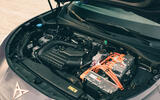
16 Cupra Terramar PHEV 2024 review engine

This more powerful 2.0-litre TSI Terramar is comfortably the most convincing version of the car we have yet tested. The characteristics of the 'EA888' engine are as they ever were, with accessible, consistent torque delivery being prioritised over much in the way of ‘shape’ in the power curve, but it is done to impressive effect.

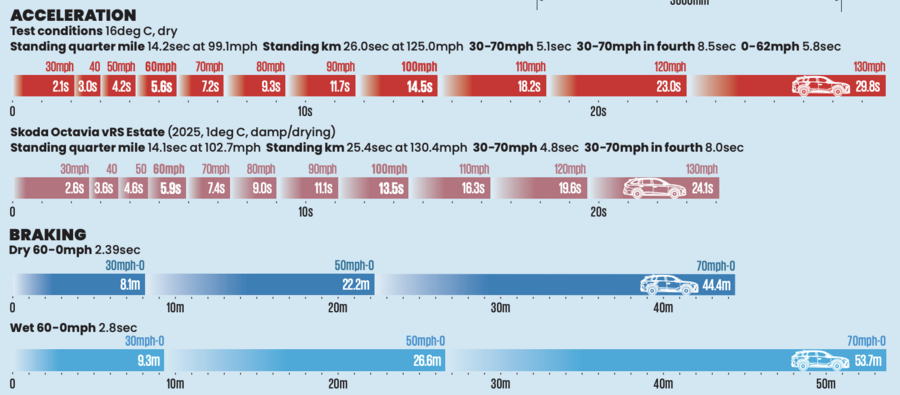
With 261bhp, and helped by a launch control function, the Terramar surged to 60mph in 5.6sec and 62mph in 5.8sec, beating the manufacturer’s 5.9sec claim. Had Cupra been generous enough to fit the Terramar with the 329bhp version of the powertrain found in the Formentor, we would expect those figures to be a second or so quicker, but even so, this is not a sluggish car, particularly by class standards, and it has prodigiously easy drivability. With four-wheel drive and good rubber, straight-line traction is also never an issue, even in the damp.

I’m surprised Cupra wasn’t allowed to screw more power out of this 'EA888' engine. In the past, Seat was always given reasonably free rein with its sportier hatchbacks, some of which were very hardcore indeed. Around 310bhp would set this model apart.

The Terramar’s performance is aided by a capable dual-clutch automatic gearbox that goes about its business without fanfare. This extends to the shift paddles, which are somewhat uneventful to pull in light of the flamboyance of Cupra’s approach to cabin design elsewhere.

But perhaps that’s not worth crying over, because although you can initiate a manual mode, the car’s brain never seems to give you full control, and will always upshift at the 6500rpm redline besides.

Given the strait-laced effectiveness of the engine itself, perhaps the most memorable element of the Terramar’s performance is the synthetic engine and exhaust notes piped into the cabin. This feels more forgivable in a slightly frivolous, pseudo-sporty crossover than it does in a serious performance car like, say, a BMW M5, and the Terramar’s made-up sonic output is, in truth, among the rortiest and silliest around.

Yet pushing the mode-select button that hangs off the steering wheel and engaging Cupra mode (available on VZ models only) does up the fun factor and lends some engagement to the car’s lightly boosty throttle response and uniform delivery.

Ultimately, although the hottest Terramar is down on spec-sheet power compared with rivals from BMW, Mercedes-AMG and Mini, on the road it feels plenty quick enough and decently good fun.

At the other end of the Terramar spectrum sits the 1.5-litre e-Hybrid that makes 201bhp and 258lb ft for a fairly uneventful 0-62mph time of 8.3sec. There’s a briskness to it in both full-EV and hybrid mode, and the electric motor adds a modicum of additional zip for nipping into gaps in traffic and overtaking on a motorway, but it’s by no means quick.

If you’re after more grunt, then you can have the hybrid with 268bhp, but it’s dearer and less efficient when the battery is empty, which means you might as well opt for the pure-petrol 2.0-litre TSI. 

The plug-in hybrid has a number of drive modes and some paddle shifters behind the steering wheel that allow you to swap cogs, but the gearbox isn’t the most refined. Most of the time the car ignores them and overrides your inputs: that might be to shut off the engine when you’re braking into a corner, or to loudly fire the engine up when you think you're accelerating gently. There's also a tendency for the automatic transmission to hang on to a gear for too long, which means the engine gets pretty vocal when you step on the accelerator more abruptly. 

The hybrid powertrain works more seamlessly when you’re cruising along the motorway. In this setting it’s hushed and refined and there’s only a small amount of wind roar filtering into the cabin. Running exclusively in electric mode brings more smoothness too, particularly at lower speeds around town. You can adjust the regenerative braking, and in its highest setting, it draws you in nicely, despite a slightly mushy feel to the brake pedal. 
RIDE & HANDLING

8
Cupra Terramar review 2024 016

In our experience, the front-drive, hybrid-powered Terramar isn’t the most enlivening device on a good B-road. The balance is one of mild understeer and there’s an inertness to direction changes that you don’t get so much with lower-riding models such as the Leon, or even the Formentor.

Anybody weighing up the Terramar as a more spacious, more lavish upgrade from traditional hot hatch fare won’t find a lot to get excited about here.

I rather liked this car, mostly because of its relative simplicity – a 2.0-litre turbo motor, a decent dual-clutch ’box plus four-wheel drive, and nothing more complicated. Feels strangely old-fashioned these days.

The pure-petrol 4Drive Terramar, especially when fitted with the more powerful engine and Cupra’s version of the Volkswagen Group’s DCC, is a different proposition. All Terramars have a gratifying weight and speed to their steering (by class standards, at least), and our test car carved into bends accurately before establishing an easy mid-corner balance, then driving out with lots of traction and an ability to keep its nose on your chosen line.

This car wears its driven rear axle lightly: it only really manifests on the power rather than off it, which is how you would want it. Turn in on a trailing throttle and the Terramar won’t rotate like a true hot hatch, but it gestures towards that kind of balance. The rear axle then supports the balance as you exit, although the oversteer antics permitted by the famous torque splitter are of course absent.

So there is little point in wringing the Terramar’s neck, but that’s fine because the car works best at a committed canter. Much of this is due to the DCC, which can seem overwhelming at first, with its multitude of damper settings, but it does allow you to set the Terramar up very nicely for British country roads.

Light steering, the most responsive engine mode and damping response just a touch softer than the default mode (so closer to Comfort than Cupra) lets the car flow in a controlled manner, giving you a communicative level of weight transfer but with reassuring resistance to roll and pitch.

In this way, you can make fast, satisfying, surprisingly comfortable progress in any conditions, which is surely what a car like this is all about.

Seeing as the plug-in hybrid variants are carrying more than 200kg of additional bulk, it will come as little surprise that they handle with slightly less poise and agility than the 2.0-litre TSI. 

The steering is progressive and accurate, and the body doesn't suffer too much in terms of body roll, despite the extra weight, We’d usher you towards the warmed-up pure-petrol variant if you’re after more feel and engagement. 

Comfort and stability - 4 stars

We have touched on stability, which is generally excellent, the car responding predictably even if you go out of your way to unsettle it on a circuit. (Only in VZ cars can the ESC be turned off entirely.) The Terramar’s fundamental level of comfort is also high.

Outright visibility isn’t as good as it is in many rivals (Cupra has aimed to instil that cosseted feel with a high scuttle and beltlines). However, the ergonomics are fine for long-distance work and, by slackening the dampers to just a notch or two below the standard Comfort setting on the DCC menu, you can earn yourself a cushy, flowing ride quality that feels in keeping with the car’s near-£50,000 positioning.

On its 20in wheels, our VZ2 car’s ability to deal with potholes and threadbare road surfaces wasn’t quite as impressive but it was still at an acceptable level given the performance-leaning remit. The Terramar is never conspicuously lacking in rolling refinement.

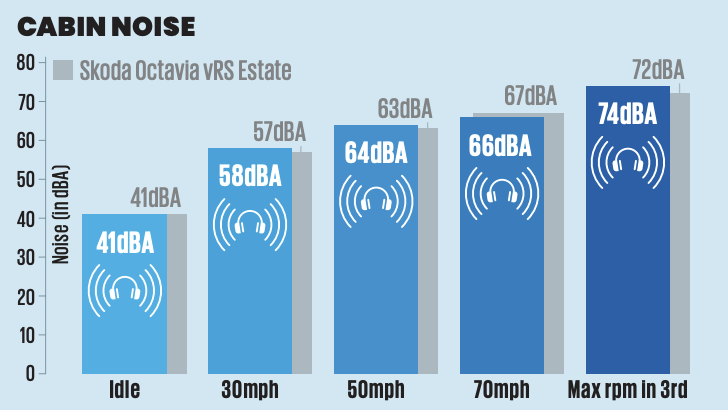
Part of that is down to noise. At 70mph our car recorded 66dBA, compared with 65dBA for the Audi Q5 TDI we tested recently, and exactly equal to the electric Skoda Elroq, riding on smaller wheels.

Having tested the Terramar plug-in hybrid with and without DCC adaptive dampers, there’s a noticeable difference in ride quality. Of course this means a greater outlay for a higher-spec VZ-badged variant, but the twin-valve dampers do make a difference when it comes to ironing our lumps and isolating passengers from potholes. 

On passively damped suspension the plug-in hybrid rides perfectly well at motorway speeds, but comes unstuck when challenged by sharper, consistent imperfections, with a noticeable thunk when dealing with potholes. 

MPG & RUNNING COSTS

8
Cupra Terramar review 2024 001

The Terramar range starts with the 1.5 eTSI mild hybrid in V1 trim at £37,885, which is similar to a VW Tiguan with the same engine, or a BMW X1 sDrive20i. The entry-level hybrid with 201bhp is priced from £44,165, which is slightly more than the BMW X1 xDrive25e, but then the Cupra is better equipped and has a much longer electric range. 

Even the entry-level plug-in hybrid is rated for 76 miles, and during our time with it, we typically saw a range of up to 68 miles once charged, which is impressive. We’d opt for this version of the PHEV, simply because the more powerful version is around £2500 more and simply not worth the outlay. 

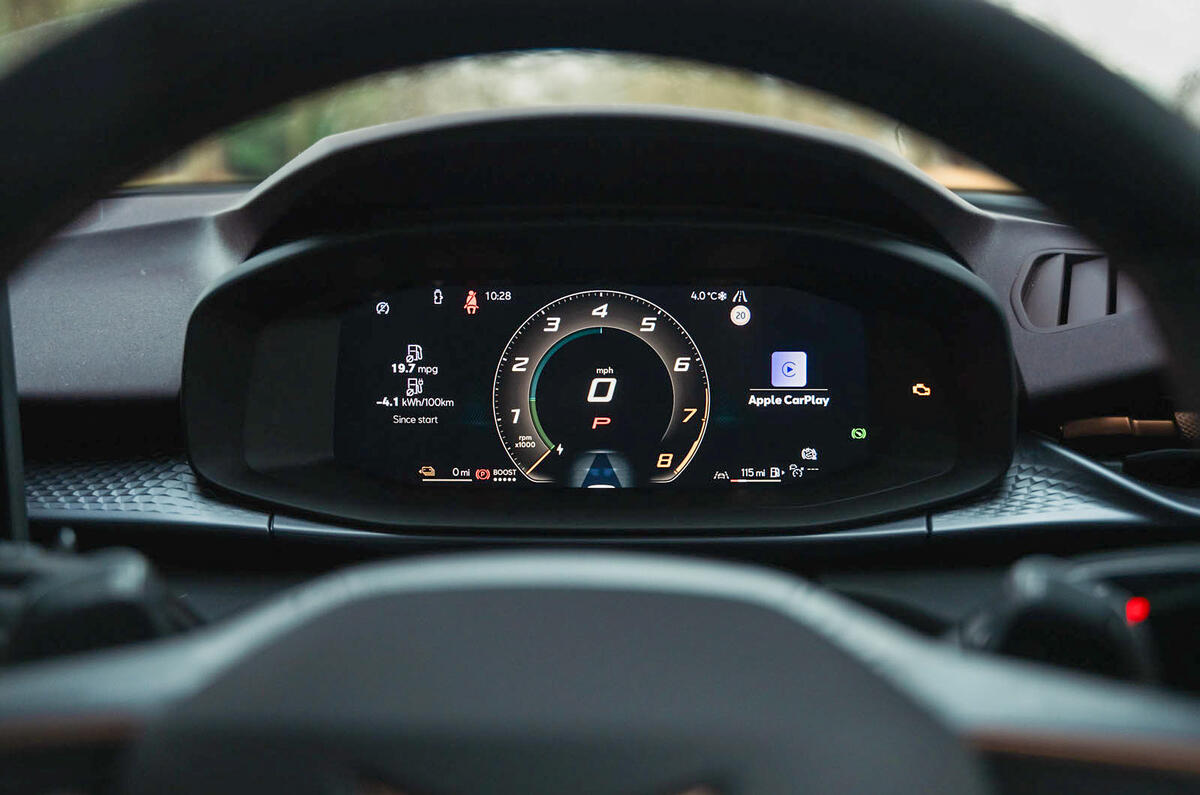
Cupra claims the 201bhp plug-in hybrid will achieve between 595mpg and 706mpg, even though the maximum mpg figure you’ll see on the digital display is 300mpg.

With the battery fully charged and the Cupra set to hybrid mode, you’ll easily achieve more than 100mpg consistently. On a 52-mile journey, which included a mix of sub-urban and motorway driving, the Terramer yielded 228mpg and 3.6mpkWh, which puts it well up there with the best in class in terms of hybrid efficiency. 

Of course this drops dramatically when the battery is empty, so don’t be surprised if you achieved 39-45mpg day to day. Like the current crop of VW Group PHEVs, the Terramar can be charged at up to 50kW, meaning a 10-80% charge should take around 26 minutes. 

The 261bhp high-performance petrol costs from around £46,000, which is a good bit cheaper than the X1 M35, but it's more powerful. Meanwhile, the Mini Countryman John Cooper Works, which shares its mechanicals with the BMW, is slightly cheaper.

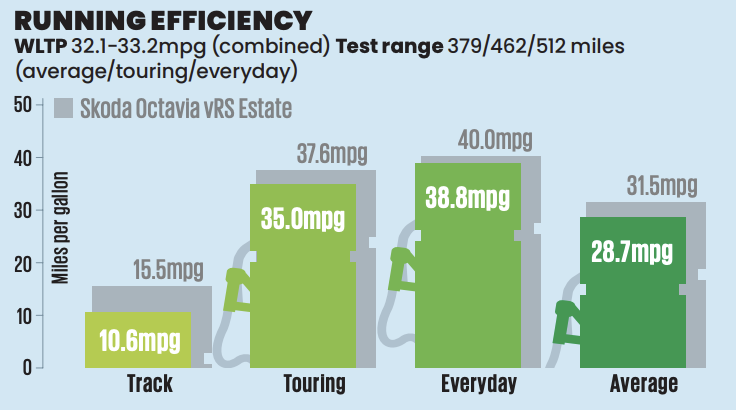
It means that, at £49,395, the VZ2 Terramar, which has the engine you would really want, slots in where you would expect, and comes well equipped. It’s comparatively economical too. A touring economy of 35.0mpg compares well with the 37.6mpg of the Skoda Octavia vRS Estate we tested earlier this year (the same engine but considerably lighter and with a smaller frontal area). In everyday use you can expect to do even better, with our dedicated test returning 38.8mpg, for a range of 500 or miles.

VERDICT

8
Cupra Terramar review 2024 017

The quickest Terramar in the line-up is enviable family transport. It serves up a strong blend of ride comfort, cross-country performance and practicality, and does so with an interior that rises above the slightly staid norms of the class.

There’s attention to detail here too: in the steering and the damping, which would seem to have been set up by people who know the value of driving dynamics that are quietly satisfying and never irksome or tiring. The 2.0-litre Terramar has a breadth that would make it just as at home on a British B-road as on a glass-smooth French autoroute, and we like that about this GT-ish crossover.

Equally appealing is the 1.5-litre e-Hybrid, which has the range, pace and ease of use to succeed not just among company car circles, but families too. Indeed, the lesser-powered and cheaper 201bhp variant is more than up to task for slashing running costs, and for a C-segment plug-in hybrid, you don’t really need the extra power the 268bhp version brings. 

In the main it's relatively comfortable, is roomy enough for adults, and has a more appealing, eye-catching interior that feels upmarket and well appointed. That the entry-level plug-in hybrid doesn't quite tap into Curpa’s sporting ideologies isn’t a bad thing, but it will make you question whether a Volkswagen Tiguan or Skoda Kodiaq would fulfil the role of all-round family PHEV more successfully. 

Sam Phillips

Sam Phillips
Title: Staff Writer

Sam joined the Autocar team in summer 2024 and has been a contributor since 2021. He is tasked with writing used reviews and first drives as well as updating top 10s and evergreen content on the Autocar website. 

He previously led sister-title Move Electric, which covers the entire spectrum of electric vehicles, from cars to boats – and even trucks. He is an expert in new car news, used cars, electric cars, microbility, classic cars and motorsport. 

Sam graduated from Nottingham Trent University in 2021 with a BA in Journalism. In his final year he produced an in-depth feature on the automotive industry’s transition to electric cars and interviewed a number of leading experts to assess our readiness for the impending ban on the sale of petrol and diesel cars.

Richard Lane

Richard Lane
Title: Deputy road test editor

Richard is Autocar's deputy road test editor. He previously worked at Evo magazine. His role involves travelling far and wide to be among the first to drive new cars. That or heading up to Nuneaton, to fix telemetry gear to test cars at MIRA proving ground and see how faithfully they meet their makers' claims. 

He's also a feature-writer for the magazine, a columnist, and can be often found on Autocar's YouTube channel. 

Highlights at Autocar include a class win while driving a Bowler Defender in the British Cross Country Championship, riding shotgun with a flat-out Walter Röhrl, and setting the magazine's fastest road-test lap-time to date at the wheel of a Ferrari 296 GTB. Nursing a stricken Jeep up 2950ft to the top of a deserted Grossglockner Pass is also in the mix.