From £16,8457

Toyota's city car has swapped pure petrol power for a hybrid system. Does that turn it into a rival for new baby EVs?

Whe the original Toyota Aygo X launched in 2022, we wanted to like it more than the reality warranted.

Neat handling, characterful looks and an appealing 'tiny car' feel were undermined by an asthmatic three-cylinder engine and pricing notably above that of the Hyundai i10, Dacia Sandero, Kia Picanto and Suzuki Ignis. It was ultimately difficult to recommend.

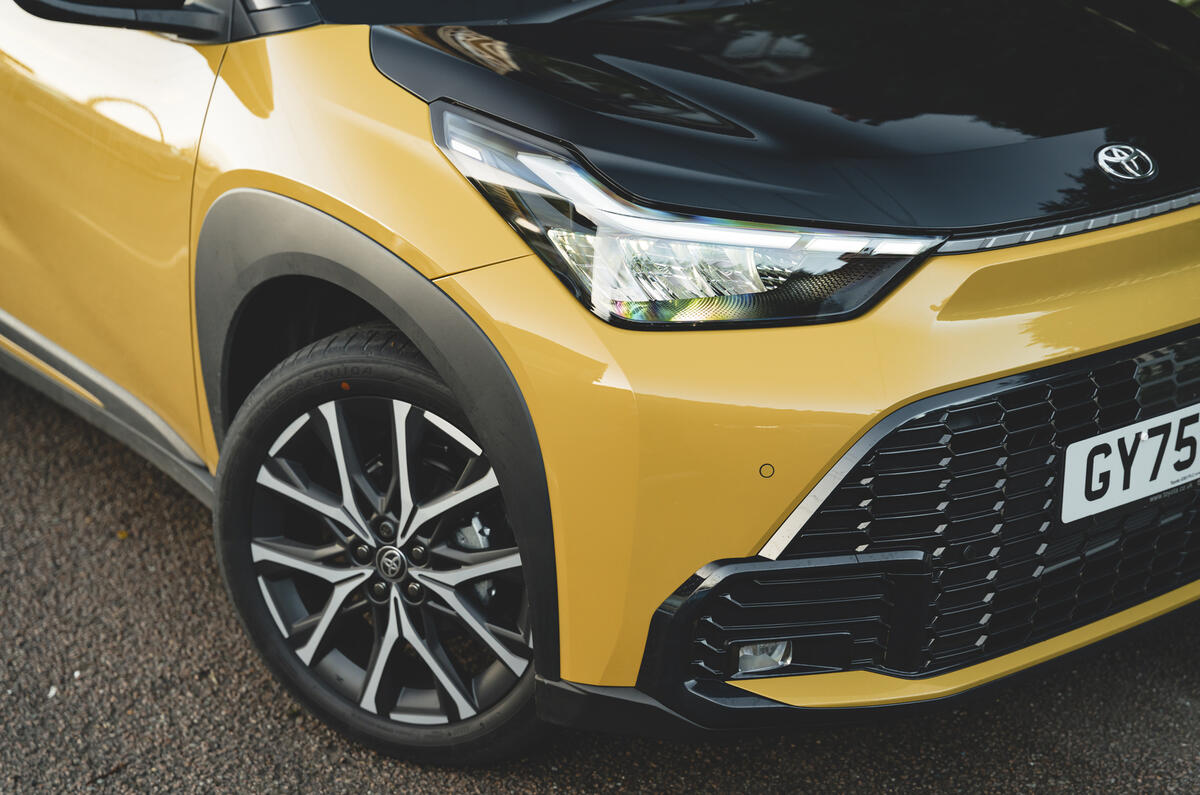
Now there is an evolution of that car, which retains the diddy footprint so fundamental to the Aygo X proposition but pairs it with the superbly economical hybrid powertrain from the Yaris. There's also an updated front-end design inspired by that of the larger, more expensive Lexus LBX. Isolation has been improved too, says Toyota, and there is no shortage of equipment across the range.

The result is rather a rare thing: a true supermini with a full hybrid set-up and grown-up amenities typically seen in higher classes. So has the Aygo X come of age and does it, more than any other, offer real maturity in a diminutive package?

Advertisement

DESIGN & STYLING

7
Toyota Aygo X GR RT 2025   ME 11 1600x1067 3b2dea0c 060e 46db b26f cf9098bcf083

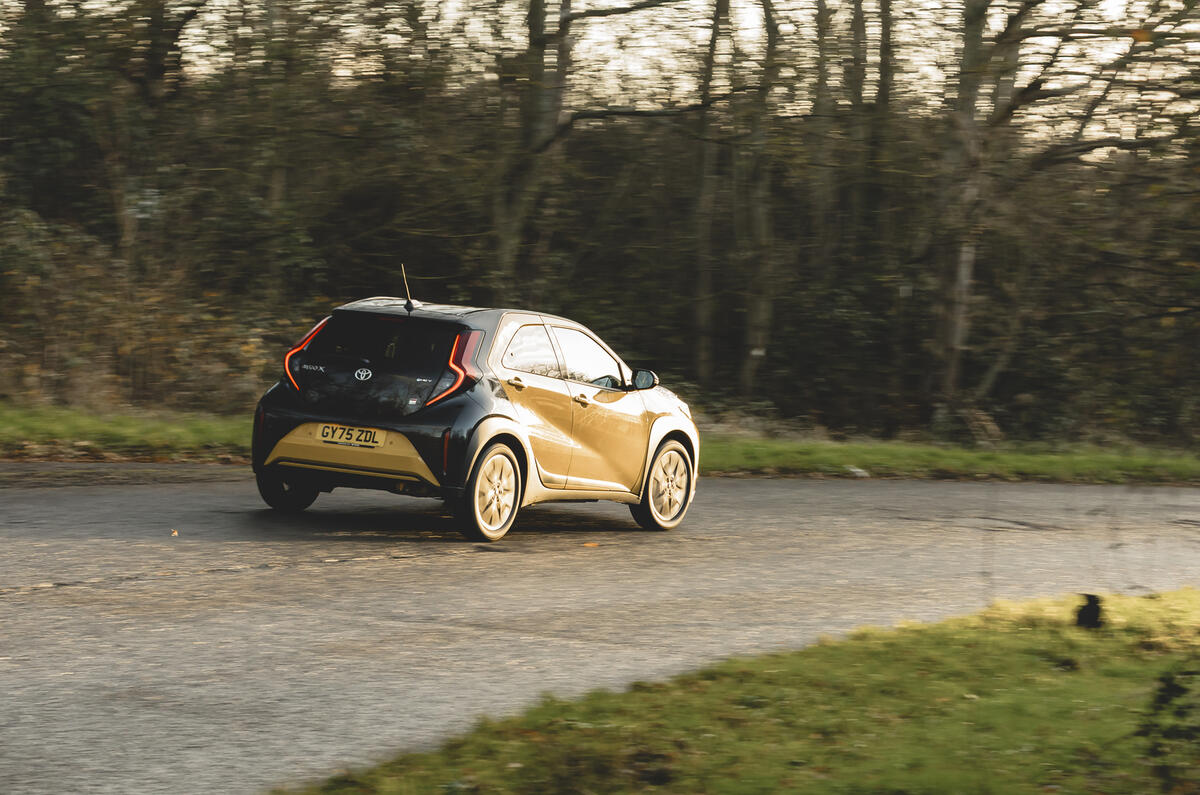
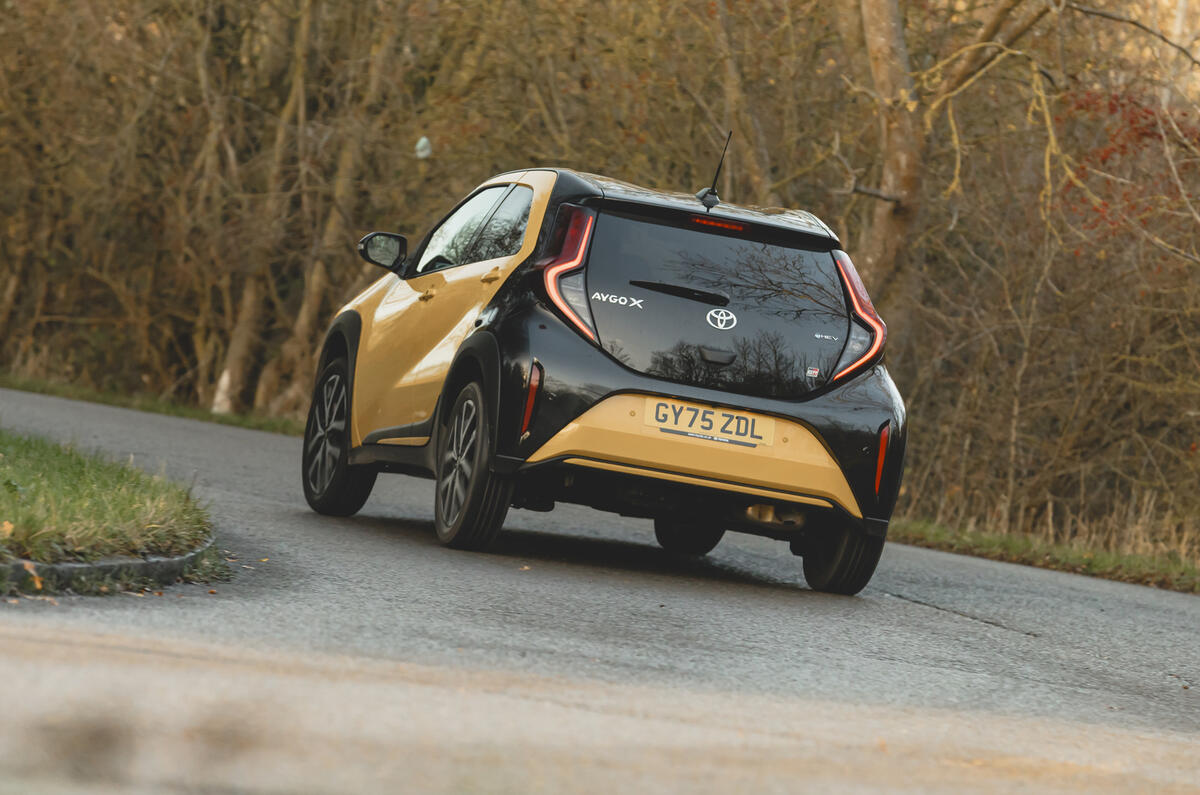
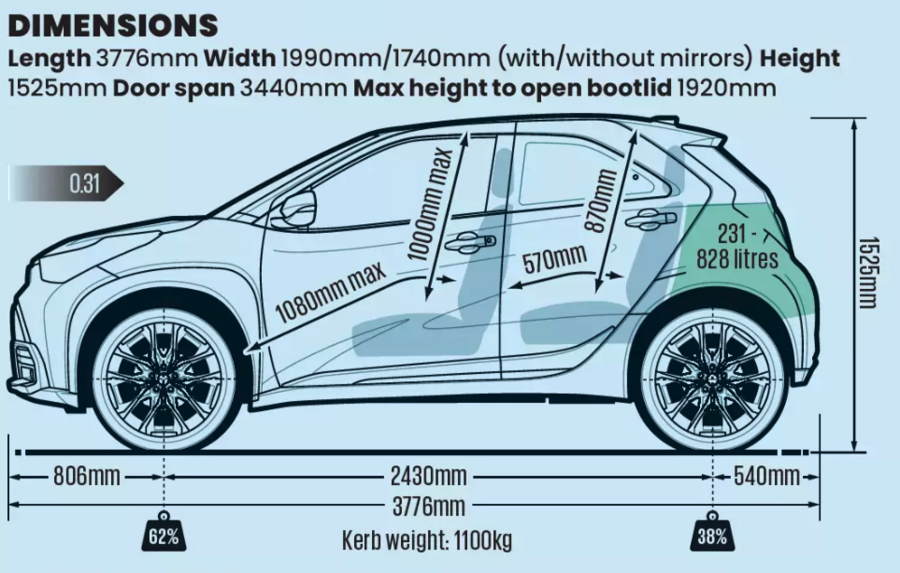
The Aygo X has grown 76mm in length, the entirety of it in the front overhang in order to house the new, considerably larger hybrid powertrain.

Still, at 3776mm the car remains notably shorter than even B-segment superminis such as the Peugeot 208 and the Yaris. To go shorter still, you need to look to the likes of the Hyundai i10 (which also has five doors) and Fiat 500 (which doesn't). Since the demise of the Smart Fortwo, it doesn't get much smaller than this little Toyota.

Or lighter, at least so far as full hybrids go. With its 30-litre fuel tank brimmed, our test car trod the scales at 1102kg. We weighed a high-spec example of the outgoing model, with the old naturally aspirated three-cylinder engine, at 974kg. The 1.0-litre Kia Picanto tested in 2024 was similarly light, at 985kg. Clearly, the new car's extra cubic capacity (now at 1490cc) and addition of a battery pack beneath the rear seats don't come without a weight penalty, though the Aygo X Hybrid is still 300kg or so lighter than an equivalent electric car.

Toyota has had to innovate in order to install a 0.8kWh battery pack into the TNGA-B platform. The two cell modules are stacked in the Yaris and other cars featuring the system, but in the Aygo X they have been placed longitudinally under the rear seats. The cooling system, normally next to the battery, is now below the front part of the rear seats, while the auxiliary battery is placed under the boot floor. The revised layout has also created room for a new air-conditioning system, so higher trim levels have gained dual-zone climate control.

The powertrain this battery feeds is by now familiar: a 1.5-litre Atkinson-cycle petrol engine combined with an electric drive motor, an integrated starter-generator and a hybrid transaxle gearbox with a CVT-like epicyclic power splitter. In fundamental terms, the system has remained unchanged for years and can juggle between bouts of pure-electric running and a blend, though Toyota has become more adept at making the engine behave commensurately with road speed, for a natural feel.

Elsewhere, the Aygo X is largely unchanged. It uses MacPherson struts up front and a torsion beam rear axle, just as you would expect, with passive dampers and coil springs. Toyota hasn't tinkered with the steering for this latest generation, which retains its modest speeding, with 2.8 turns between locks. In fact, the only core mechanical change is an upgrade to the rear brakes, which now use solid cast-iron discs rather than drums.

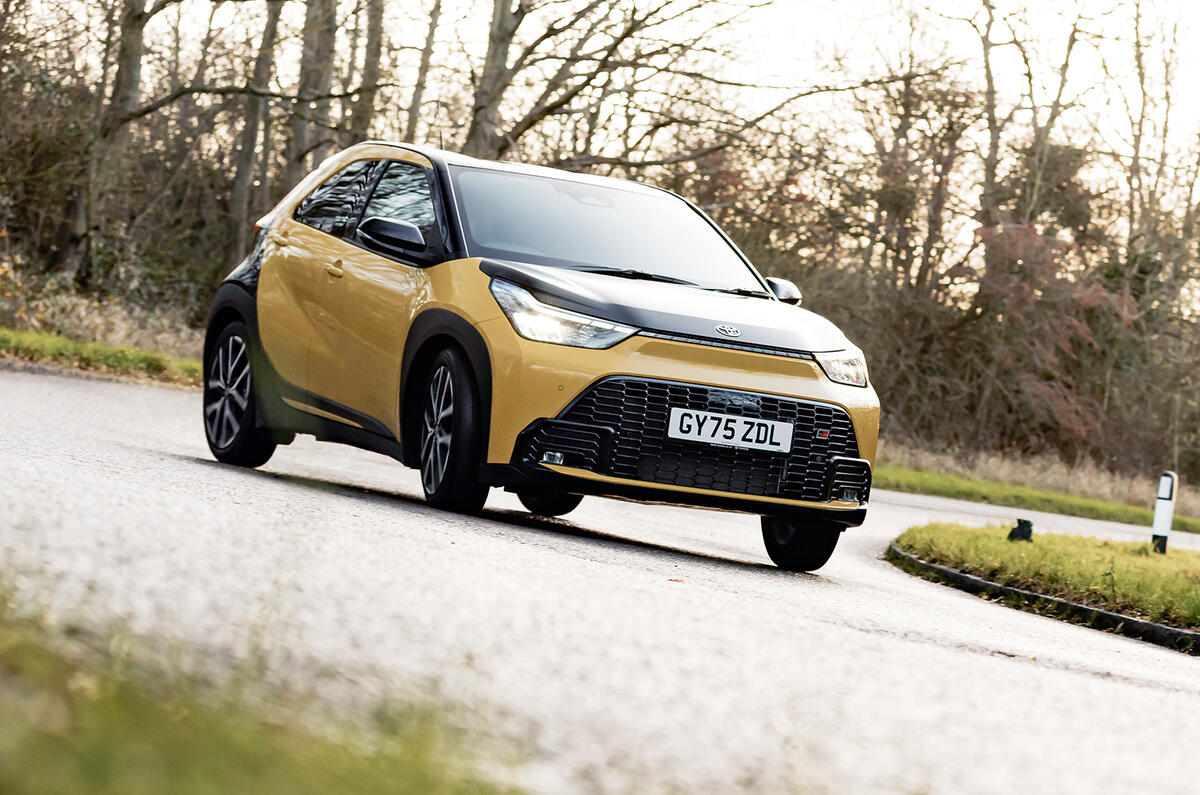
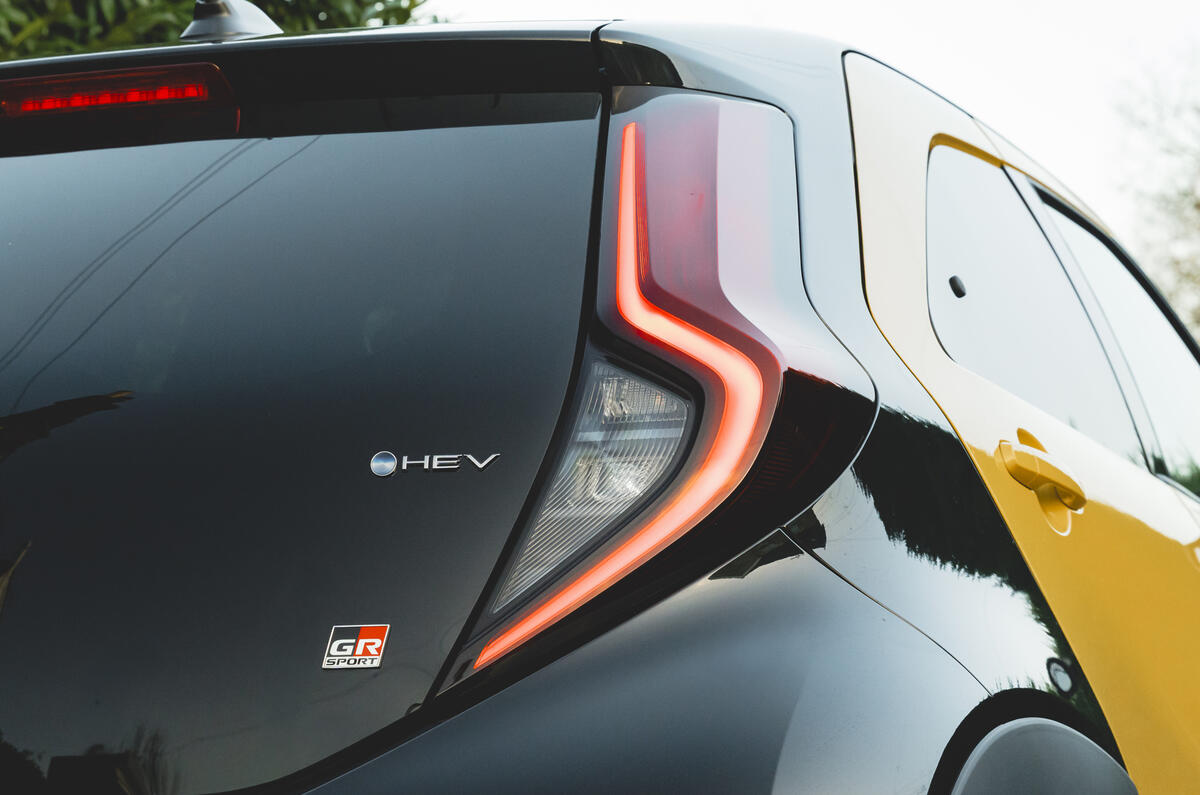
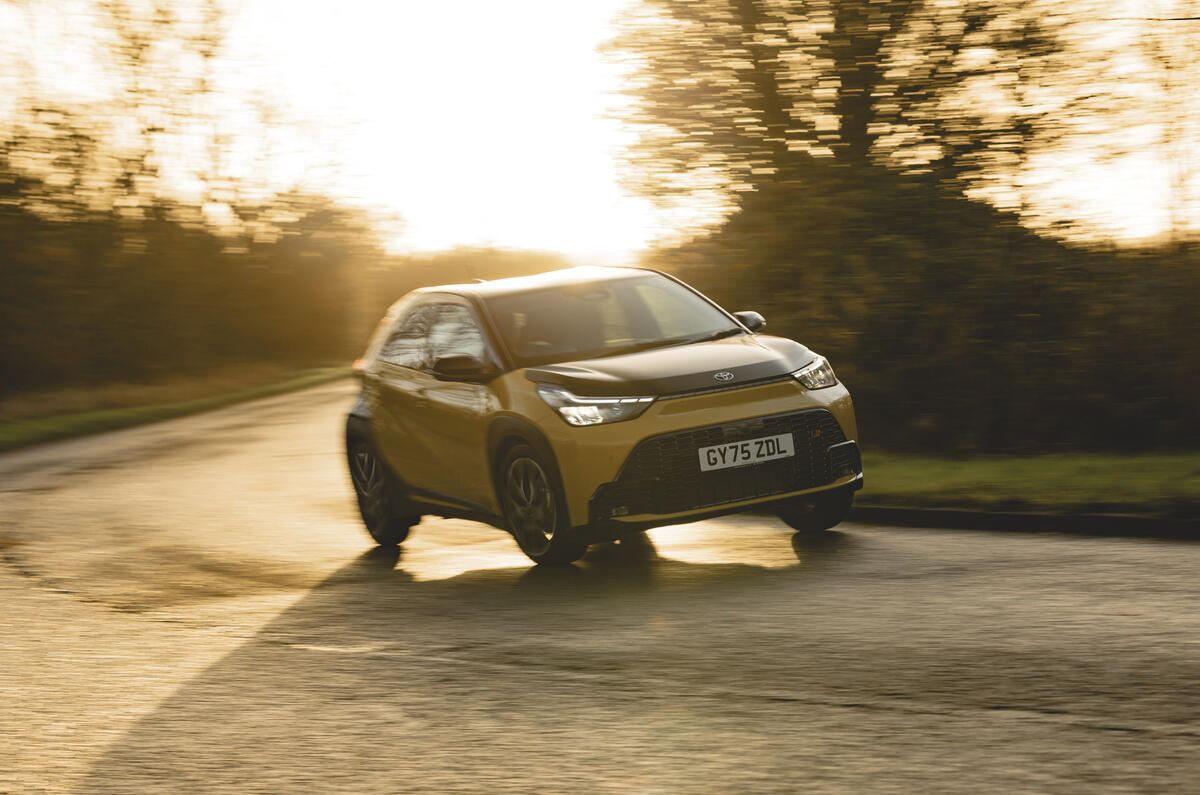
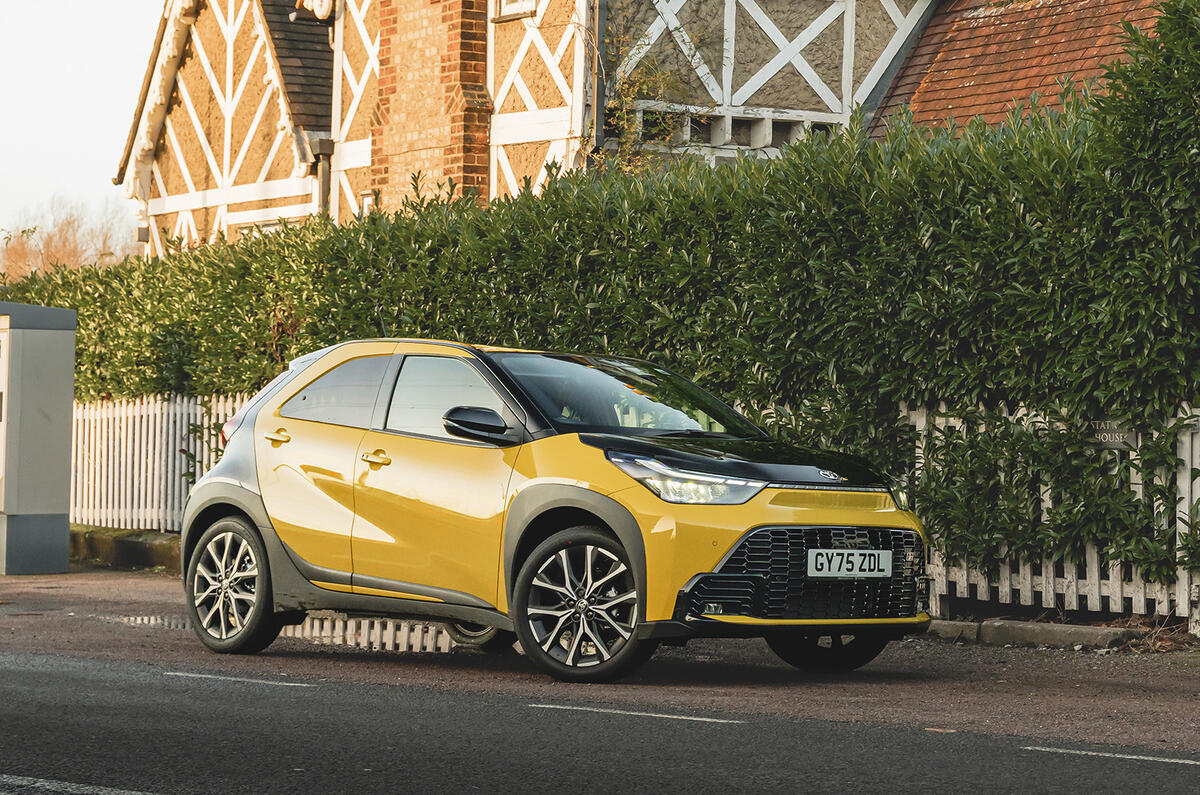
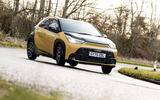
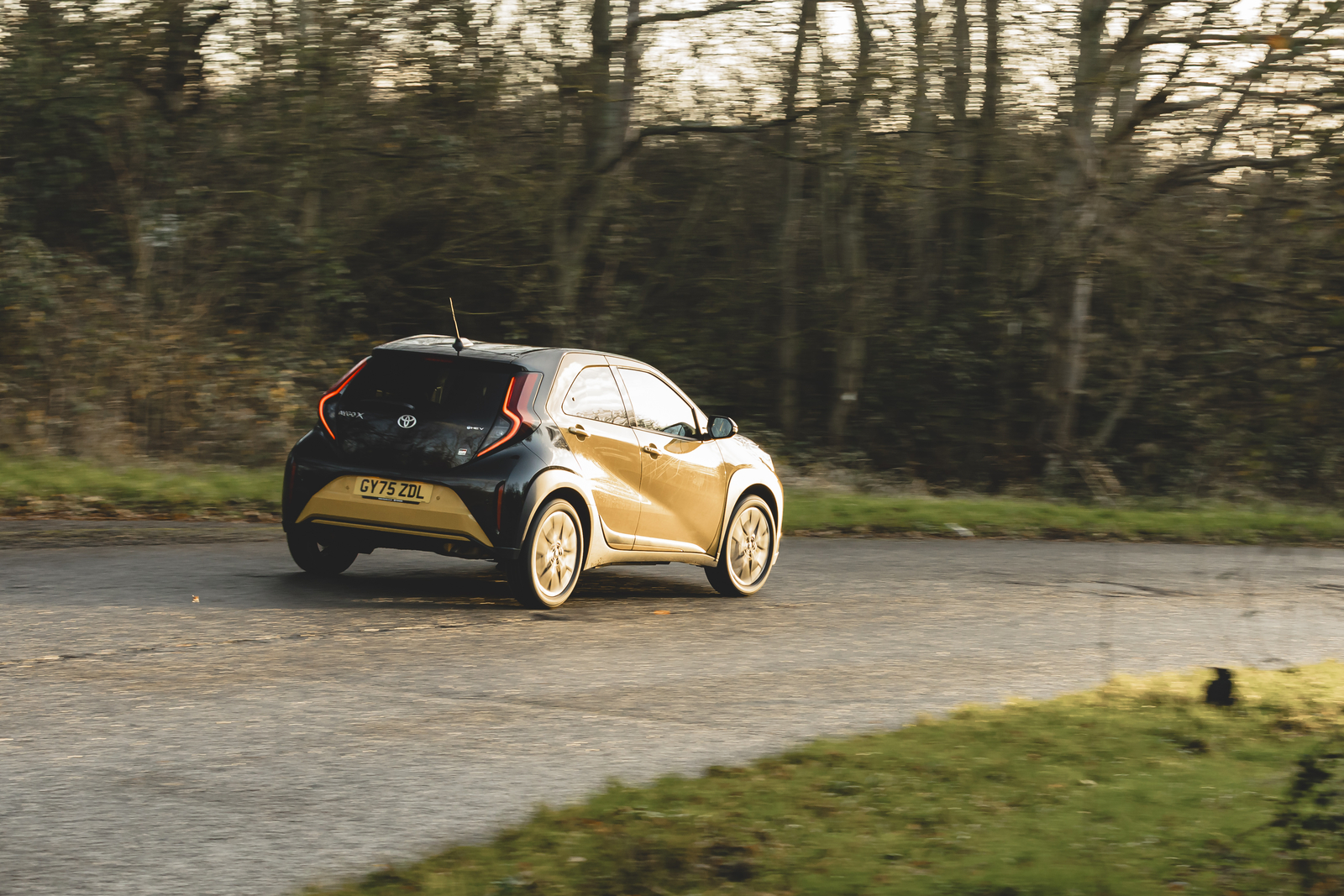
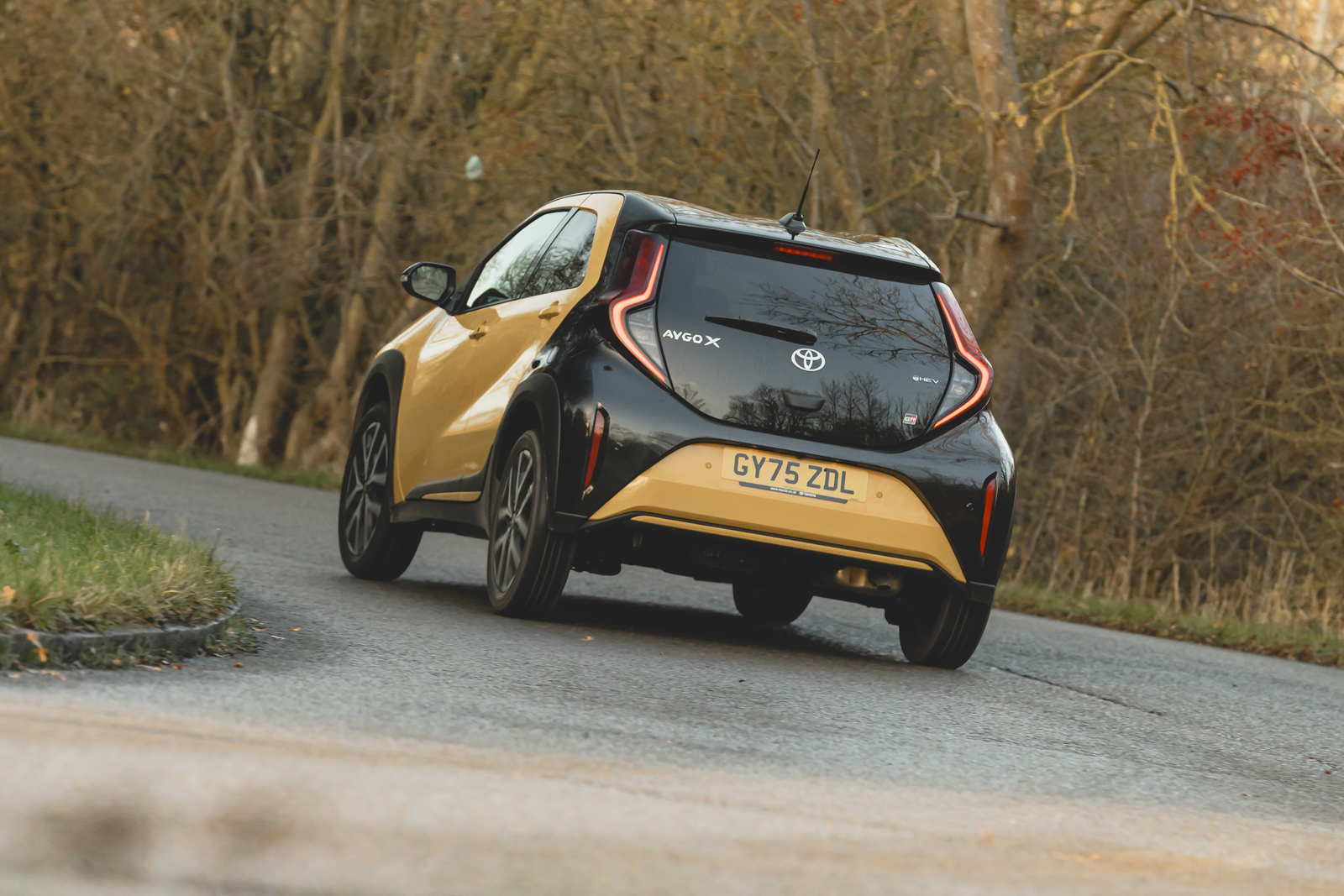
There's also a new GR Sport derivative and it's the one we test here. You can distinguish it by its contrasting bonnet and slightly more aggressive front bumper, but the changes are more than skin deep. The GR Sport doesn't get any more power than the regular car's 114bhp, but it does have its own suspension tune and unique 18in alloy wheels. In short, you trade an element of ride quality for sharper handling. Is the juice worth the squeeze? We'll find out shortly.

INTERIOR

7
Toyota Aygo X GR RT 2025   ME 30 1600x1067 d625d3a9 d7dd 4046 8842 23546472700e

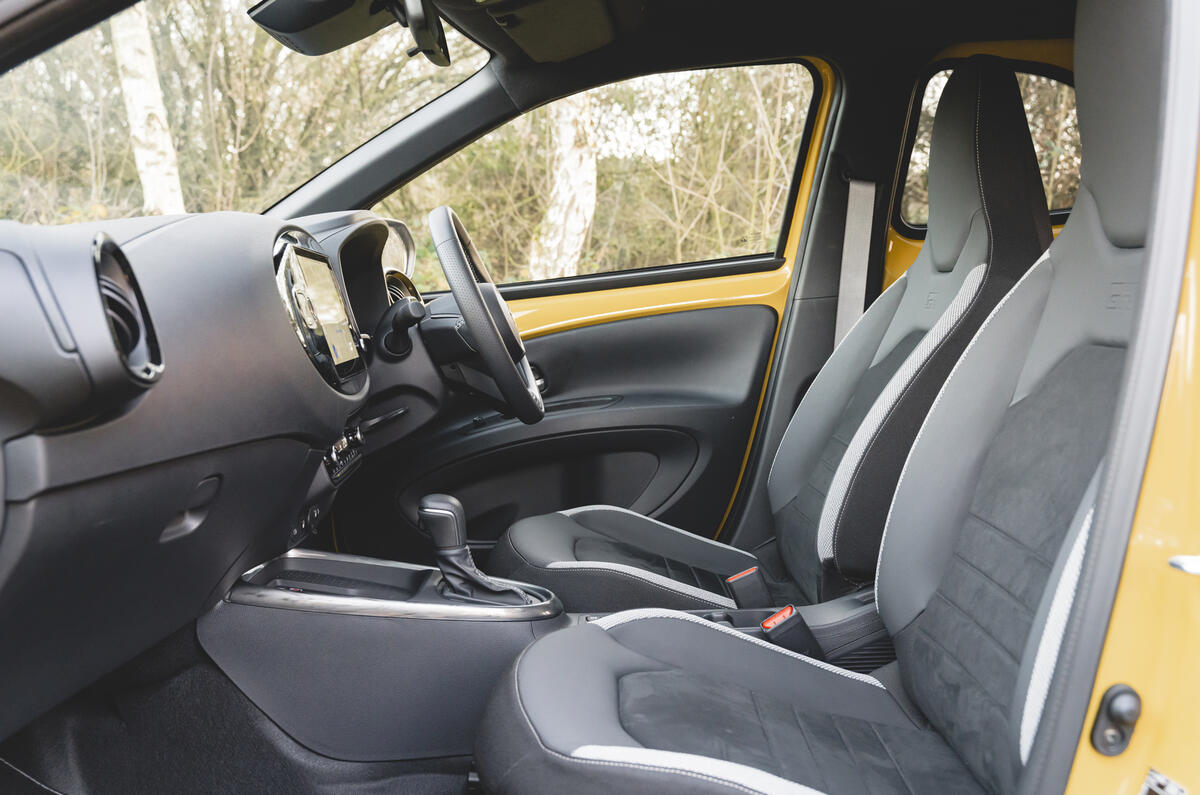
With no modifications to the platform (the wheelbase is unchanged), the new Aygo X's ergonomics are as they have been since 2022 and that's mostly fine by us. Within the constraints of a sub-4m city car, the outgoing model entirely avoided the cramped feeling up front that has often dogged A-segment hatchbacks and it's the same story here.

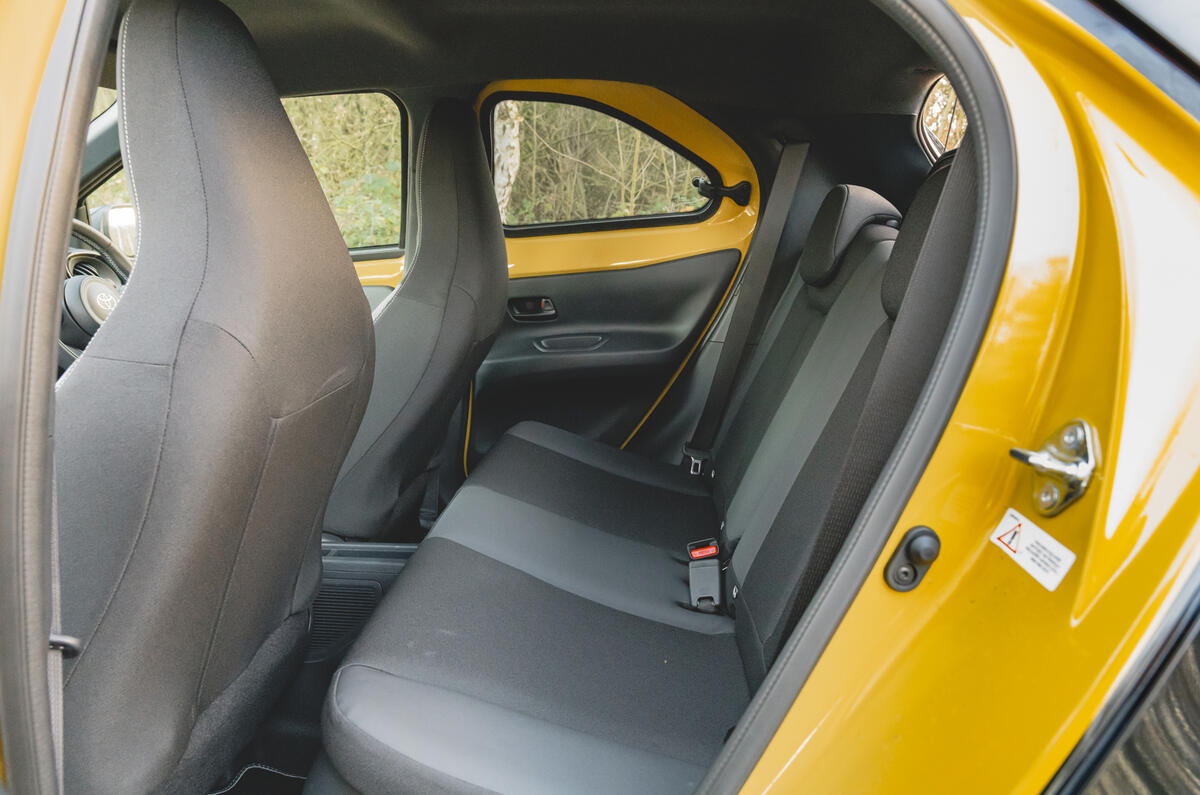
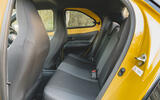
The only architectural change is that the rear bench is slightly more inclined than it was, which in theory should mean a little more leg room, thanks to a more acute bend at the knee. In reality, it's still very tight in the back, with 570mm of leg room as measured, making the Aygo X suitable for only small adults and, ideally, younger children. The new hybrid system has also required a tunnel to be run through the middle of the rear footwell, which will make life even more difficult for anyone trying to squeeze into the middle berth.

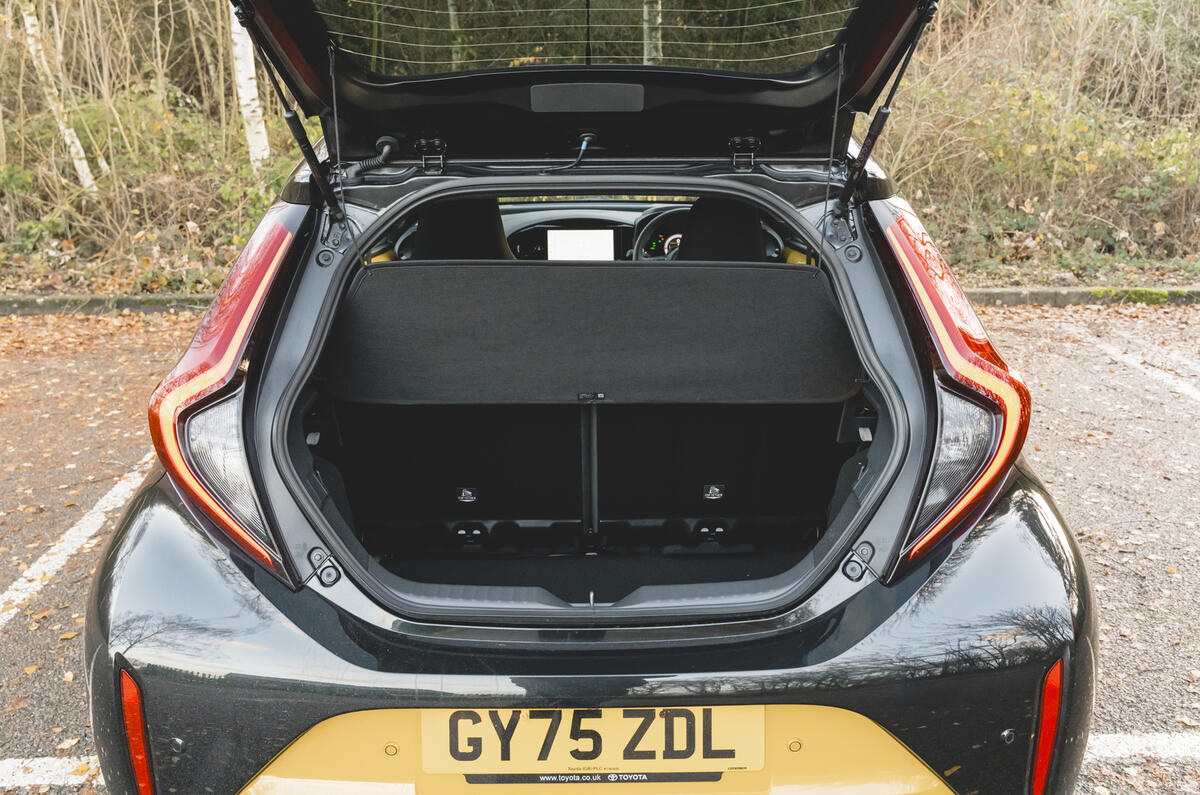
The boot isn't vast, either. At 231 litres, it is just about competitive in the segment but trails the official figures of the likes of Hyundai's i10 and Inster and it is well beaten by larger (but cheaper) options such as the Dacia Sandero.

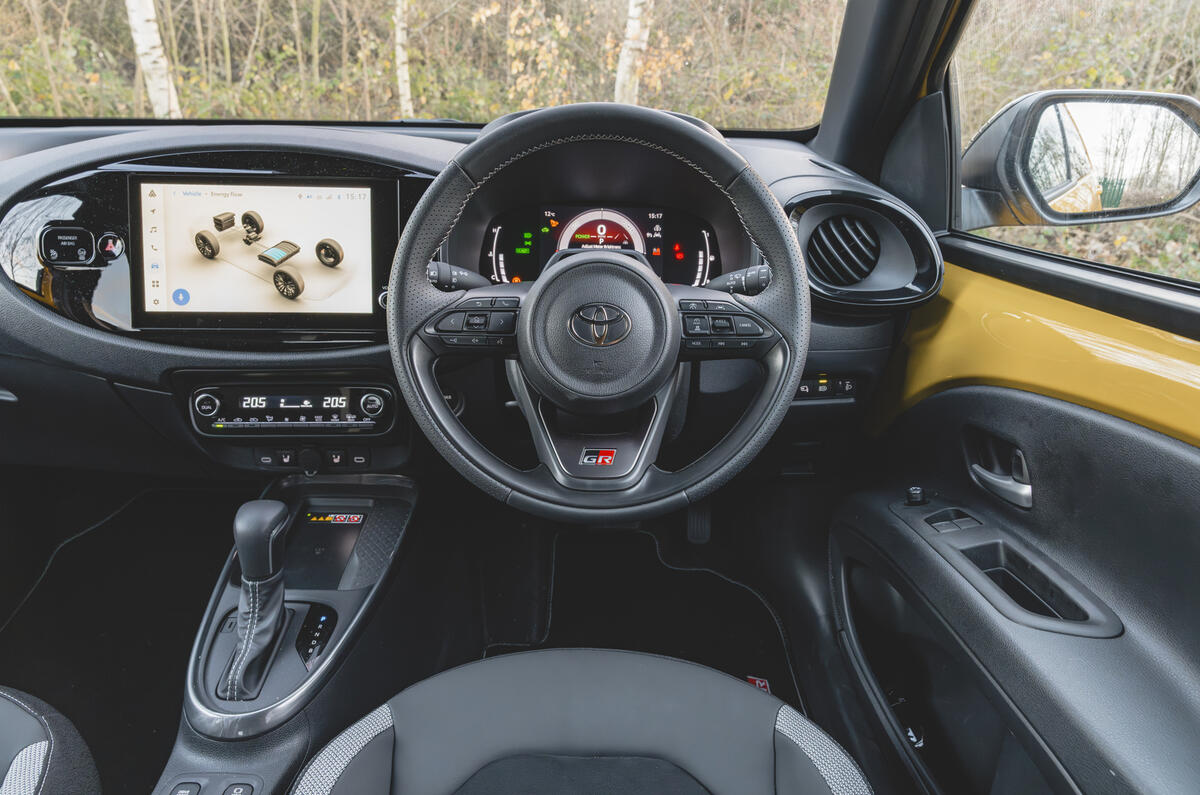
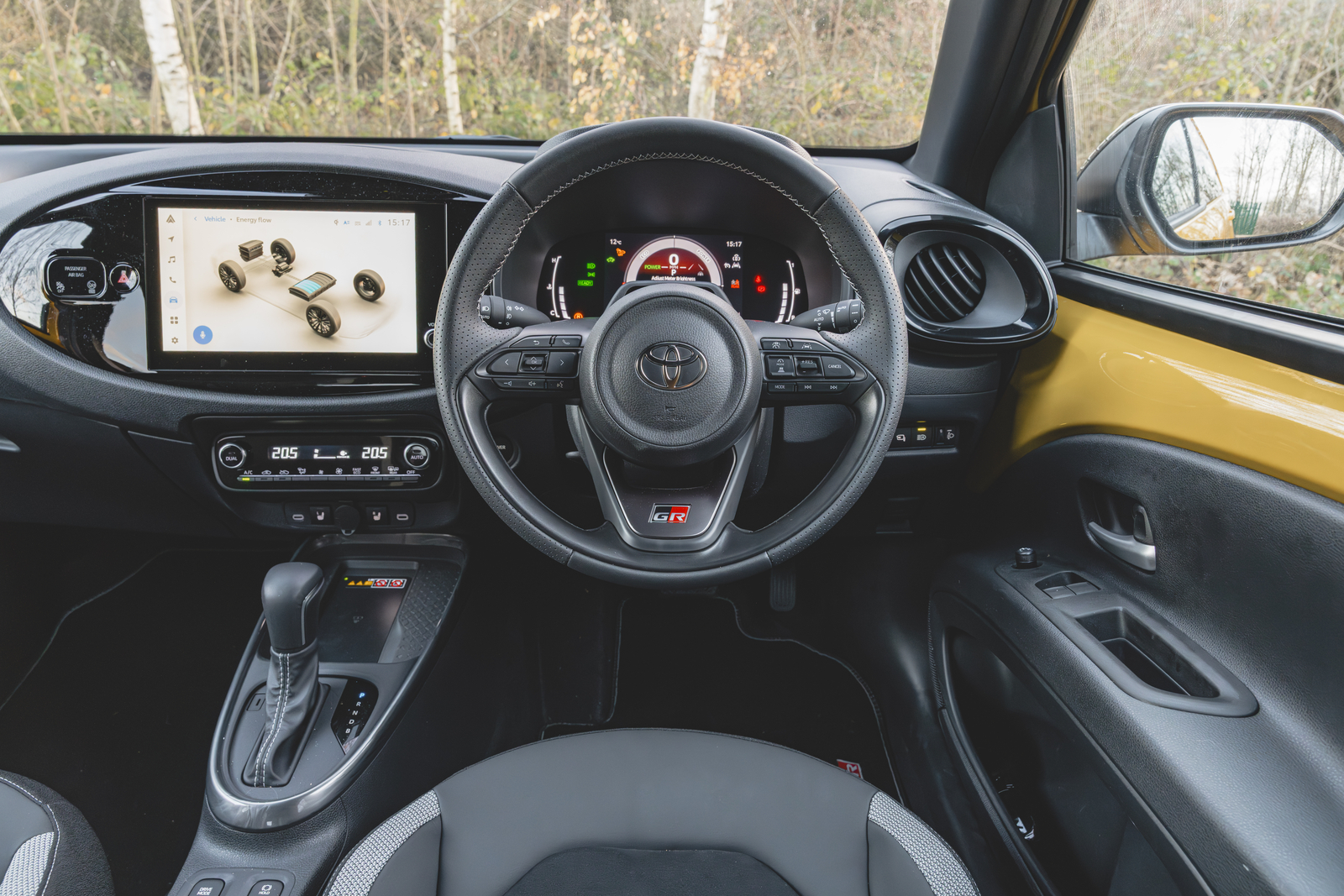
However, you will be tempted to put up with all of that because the cockpit itself is rather a nice place to be, with a dash of colour on the door card to match the exterior. For one thing, Toyota's current generation of small cars has surprisingly expensive-feeling steering wheels and the decently low-slung driving position itself is grown-up—far from guaranteed for this class. Forward visibility is expansive too, with the one caveat that the quarterlight panels are filled in with plastic. (Rear and over-the-shoulder visibility, meanwhile, remain pretty poor in the class.)

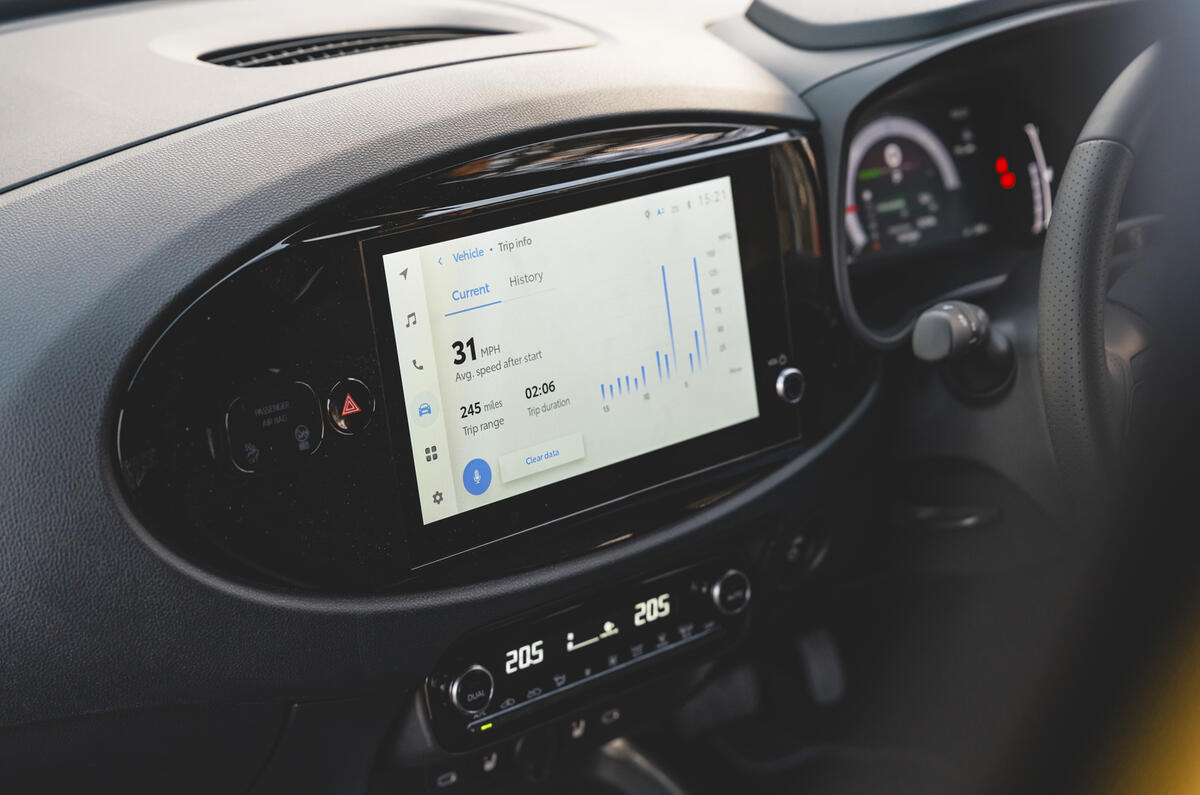
There is also plenty of physical switchgear, including that for the climate controls, which exist on a smart panel between the central touchscreen, with dual-zone control in higher specifications. On the subject of physical switchgear, the substantial gear selector feels a bit of an anachronism in 2025 but does at least mean that moving between drive (there are two modes: regular and a regen-heavy setting) and reverse during manoeuvring doesn't require you to look down.

As for the digital array, you get a 9in display in Icon and Design trim, but that grows to 10.5in in Excel and GR Sport. Both offer Android Auto and Apple CarPlay, and are generally slick, though the owner who has a premium executive saloon on the other side of the garage will certainly notice the slight latency and occasional need to double-press in the Toyota. You can connect your phone via either of the two USB-C ports clearly positioned at the front of the centre console.

Higher trims also get a wireless charging pad, though a deeper oddment bin might have been more useful, given there's no glovebox to speak of. Lastly, the rustic-feeling rev counter of the old car is no longer, the entire instrument binnacle now being digital, rather than a small portion of it. It's clear and easily controllable via buttons on the steering wheel, which is useful because they are what you will be using to turn off the plethora of intrusive ADAS.

ENGINES & PERFORMANCE

8
Toyota Aygo X GR RT 2025   ME 17 1600x1067 6c3c81d7 2bcd 4305 8b8e d2b4bcf4265e

Fitting a hybrid powertrain has had a transformative effect on the Aygo X, which previously made do with 71bhp from a naturally aspirated engine that required frequent gearchanges to keep it what could only loosely be called 'on the boil'.
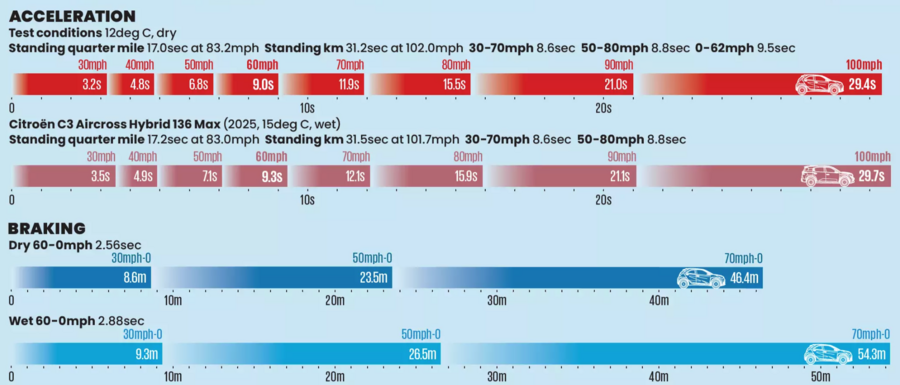
Our telemetry figures shed objective light on an improvement that is instantly discernible from the driver's seat. Where the old Aygo X needed 15.6sec to reach 60mph and an equally dreary 16.5sec to pull from 30-70mph, the new hybrid needs just 9.0sec and 8.6sec respectively.

It's a very different car, improved wholesale apart from the small loss of driver engagement the old manual gearbox offered. But how does this level of performance compare with current rivals'? It is difficult to say, because the answer will depend on whether you're talking about the £21,000 entry point of the Aygo X range or the near-£27,000 price of the GR Sport model tested here (all variants have identical performance).

The Renault 5 is a good comparison: the range of the French car spans the same pricing window as the Toyota. The 148bhp example we tested in 2025 dusted off 60mph in 7.7sec and needed 7.2sec for 30-70mph. Sticking with EVs, the 115bhp Hyundai Inster (in Long Range form) is another alternative to the Aygo X. It needed 9.6sec to hit 60mph and 8.8sec for 30-70mph.

The little Toyota just about holds its own against varied electric opposition, then, and we know it is a stronger performer than purely petrol-powered city cars of similarly small dimensions, many of which remain in double-digit power figures. In terms of full-hybrid alternatives against which to compare the Toyota, the closest we have on record, in terms of price and technology, is the Dacia Duster Hybrid. There's little between them.

Just as significant as how much quicker hybridisation has made the Aygo X against the clock is the way it feels. The electric portion of the powertrain gives the Aygo X gratifyingly sharp throttle response, whisking you off the mark. It's a similar story with roll-on acceleration, during which the new car is an assured and strong performer by city car standards.

As for the character of the engine, it is not exactly sweet on the ears, but Toyota has for some time had a good grasp on how to tune these units to exhibit less of the 'elastic band' effect that plagued early installations of the hybrid set-up. As such, the Aygo X is generally well mannered during all but foot-flat acceleration. You also quickly learn how to get the best from this unit in urban driving, maximising the pure-electric portion of the powertrain with judicious use of the accelerator pedal.

RIDE & HANDLING

8
Toyota Aygo X GR RT 2025   ME 19 1600x1067 29fab104 5bce 41ee 858b 5d0a624644c2

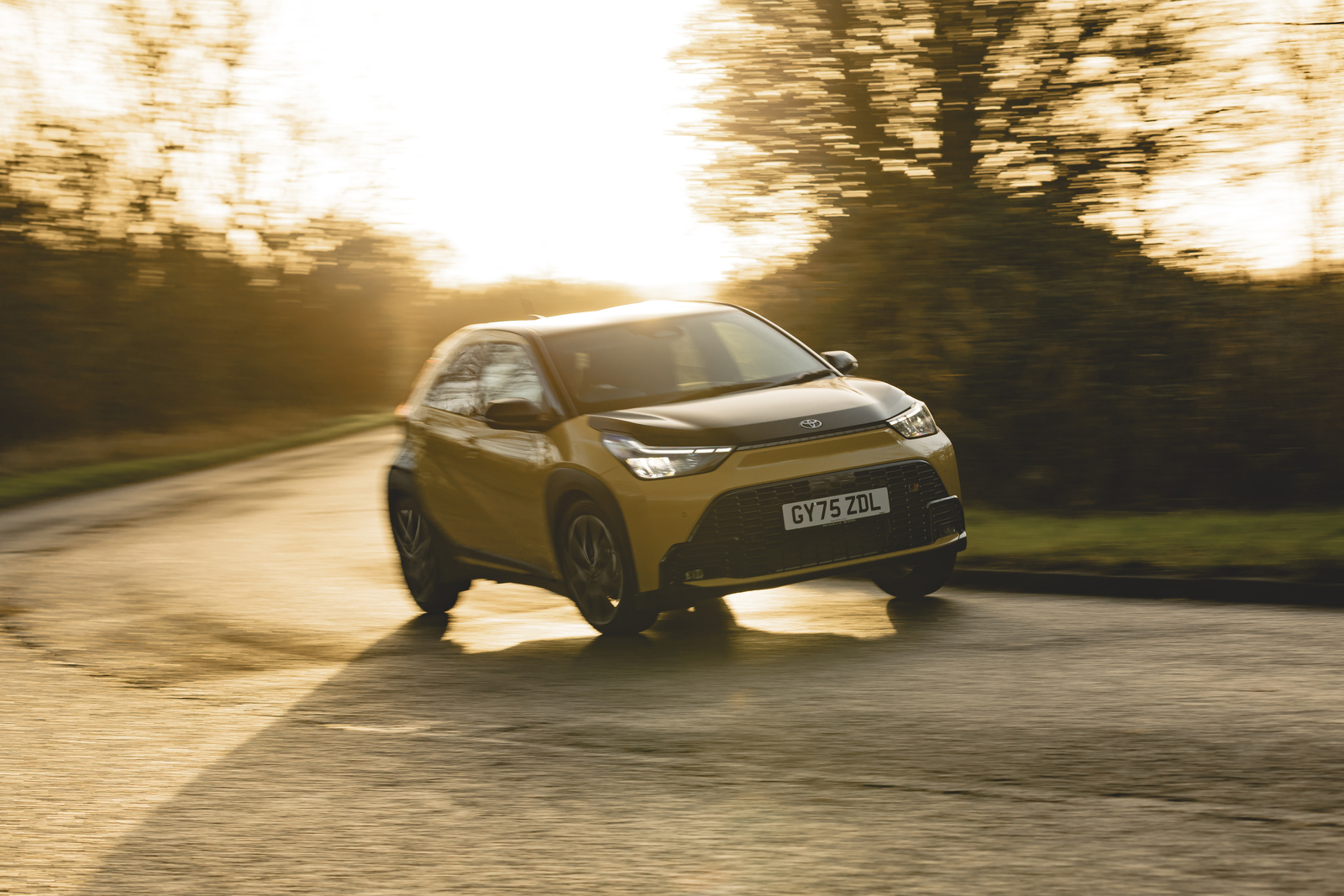
Using the TNGA platform in its various guises, Toyota has given its current range of transverse-engined models a surprising degree of quiet handling appeal. It is most obvious in the Corolla but extends to the likes of the Prius and Yaris. The latest Aygo X is another beneficiary. Whether or not you go for the lightly sharpened GR Sport version, this car has linear and well-weighted steering by class standards and a subtle alertness that sets it apart from rivals.

Making the Aygo X feel more intuitive still is the fact that the rate at which it takes up roll is neatly matched to the speed of the steering. It is, in short, nice to drive. That said, the very modest wheelbase and taller springs of the Aygo X work against it when it comes to keen turn-in and establishing an easy-going cornering balance. Even in GR Sport form, with its retuned suspension, it makes the little crossover less enjoyable and engaging to flow along than the Yaris Hybrid. Naturally, you also have a little more float to contend with in the Aygo X, and while the suspension tune is well judged, the hardware is clearly at the more rudimentary end of the spectrum, as you would expect for a city car.

Comfort and Isolation

While the combustion element of the powertrain is always discernible when in action, the improvement in refinement the hybrid system brings to the Aygo X as an all-rounder is profound. No longer does merely getting off the mark with reasonable haste result in a straining engine, and with the near-silent electric efforts taking place in the background, the car is simply milder-mannered at all times than it once was. The latest superminis in the larger B-segment still have an edge on the Aygo, but the gap is now impressively small.

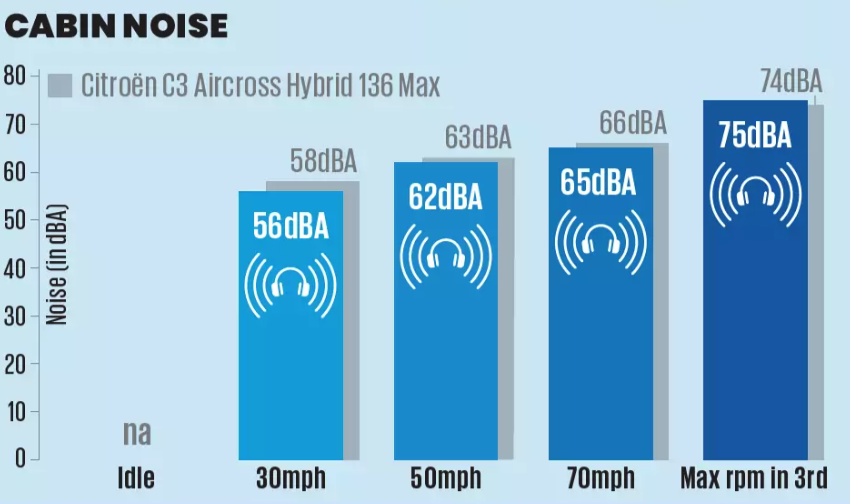
This isn't only down to the hybrid system. All trim levels have more sound-deadening material around the front floor, bulkhead and centre console than in the outgoing car. All but the entry-level Aygo X Icon also have thicker windscreen and side-window glass. There has clearly been a concerted effort here to improve the maturity of the occupant experience and it would seem to have worked. Our microphones demonstrated as much, the Aygo X recording 62dBA at 50mph versus 65dBA for the Kia Picanto and 63dBA for the larger Citroën C3 Aircross Hybrid. Mind you, bouts of committed throttle will still generate something of an agricultural drone from the 1.5-litre Atkinson-cycle engine up front.

As for ride quality, there is no great change. That the Aygo X seems to ride more serenely than before is mostly a trick of perception, on account of the fact that the cabin is quieter. This is not to say that the Aygo X is uncomfortable.

This chassis is in fact more fluid and absorptive than the small car average, and while it can thud over potholes and the like, such impacts are lighter than you would expect, perhaps because the wheel and tyre package is not only large in diameter (18in on our test car) but also so narrow that there isn't much unsprung mass. It's near-certain the 17in wheel would be better still.

MPG & RUNNING COSTS

7
Toyota Aygo X GR RT 2025   ME 8

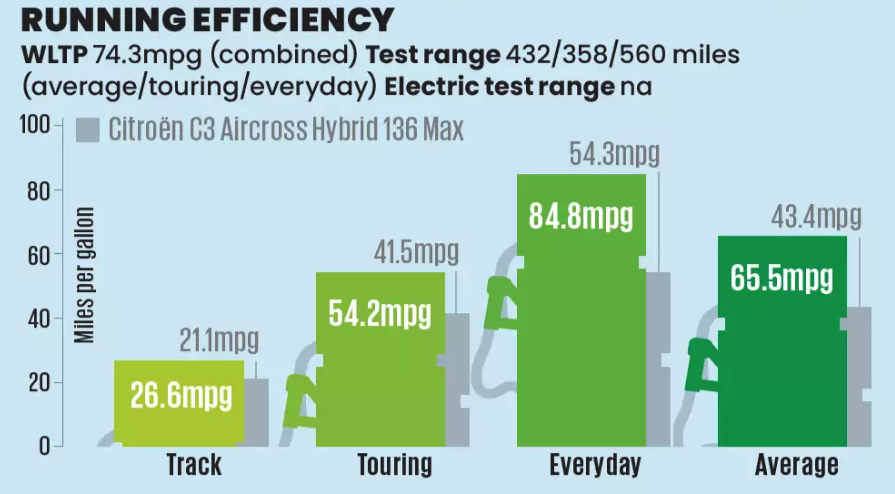
This is a story of two halves. One is efficiency, which is nothing short of tremendous. That our test car returned a 560-mile range on our 'everyday' economy test even though the tank holds just 30 litres of unleaded tells you everything.

That is equivalent to 84.8mpg in mixed suburban driving at speeds between 20mph and 50mph. For context, a non-hybrid 1.0-litre Kia Picanto manages around 58mpg in the same test, so the Aygo X's electrical element clearly works wonders when given the chance. This 1.5-litre hybrid unit is less impressive at motorway speeds but you can still expect comfortably more than 50mpg while touring.

You will be grateful to save money at the pumps because the pricing of the Aygo X remains higher than the class average. The entry-level Icon starts at £21,595, which is nearly £2000 more than the range-topping Hyundai i10 N Line.

And while Dacia's Sandero lacks a hybrid option and niceties such as metallic paint, even a fully equipped one undercuts the Toyota by more than £4000 despite being considerably more practical. By the time you get to GR Sport trim, the price has risen to £26,895. At this point, the Aygo X is up against senior versions of the Skoda Fabia and compelling electric options such as the Renault 4. We suspect most buyers will opt for mid-ranking Design trim.

It provides the bulk of what the Aygo can offer in terms of its digital array, ADAS, creature comforts and exterior styling but stays below £24,000. Even then, prospective buyers will need to be swayed by the car's characterful looks and the promise of its efficiency.

VERDICT

7
Toyota Aygo X GR RT 2025   ME 22

There's no question that the adoption of hybrid power has transformed the Aygo X experience for the better. Helped by such a low kerb weight, the car's everyday efficiency is spectacular and the responsive smoothness with which it operates is certainly welcome.

The same is true for the light but effective visual evolution of this tiny crossover, the cohesive handling and the adoption of amenities and tech more commonly found in cars from the classes above.

And that is just as well, because pricing remains a sticky issue for what is otherwise one of our favourite city cars. The way the range is currently priced puts the Aygo X into the firing line of cars with even better performance and far greater practicality. It makes this small, sprightly and very economical Toyota a little hard to recommend.

Richard Lane

Richard Lane
Title: Deputy road test editor

Richard is Autocar's deputy road test editor. He previously worked at Evo magazine. His role involves travelling far and wide to be among the first to drive new cars. That or heading up to Nuneaton, to fix telemetry gear to test cars at MIRA proving ground and see how faithfully they meet their makers' claims. 

He's also a feature-writer for the magazine, a columnist, and can be often found on Autocar's YouTube channel. 

Highlights at Autocar include a class win while driving a Bowler Defender in the British Cross Country Championship, riding shotgun with a flat-out Walter Röhrl, and setting the magazine's fastest road-test lap-time to date at the wheel of a Ferrari 296 GTB. Nursing a stricken Jeep up 2950ft to the top of a deserted Grossglockner Pass is also in the mix.

James Attwood

James Attwood, digital editor
Title: Associate editor

James is Autocar’s associate editor, and has more than 20 years of experience of working in automotive and motorsport journalism. He has been in his current role since September 2024, and helps lead Autocar's features and new sections, while regularly interviewing some of the biggest names in the industry. Oh, and he once helped make Volkswagen currywurst. Really.

Before first joining Autocar in 2017, James spent more than a decade in motorsport journalist, working on Autosport, autosport.com, F1 Racing and Motorsport News, covering everything from club rallying to top-level international events. He also spent 18 months running Move Electric, Haymarket's e-mobility title, where he developed knowledge of the e-bike and e-scooter markets.