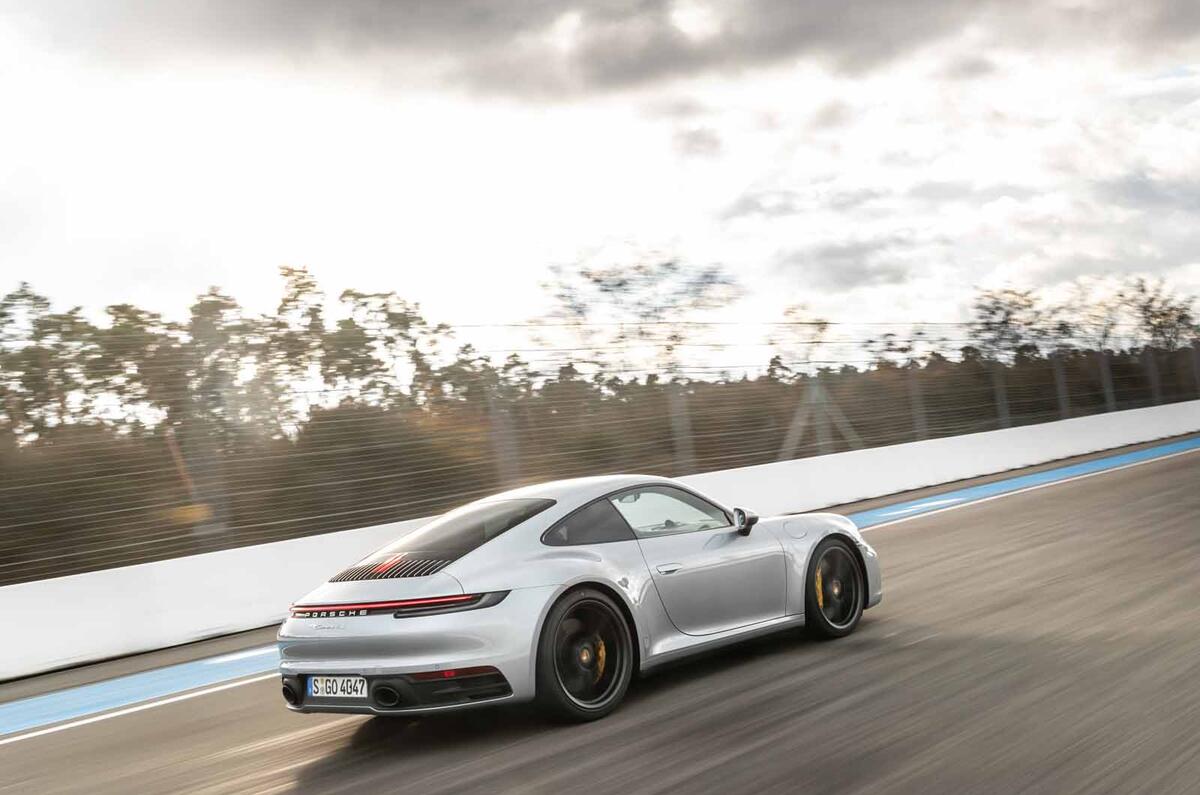
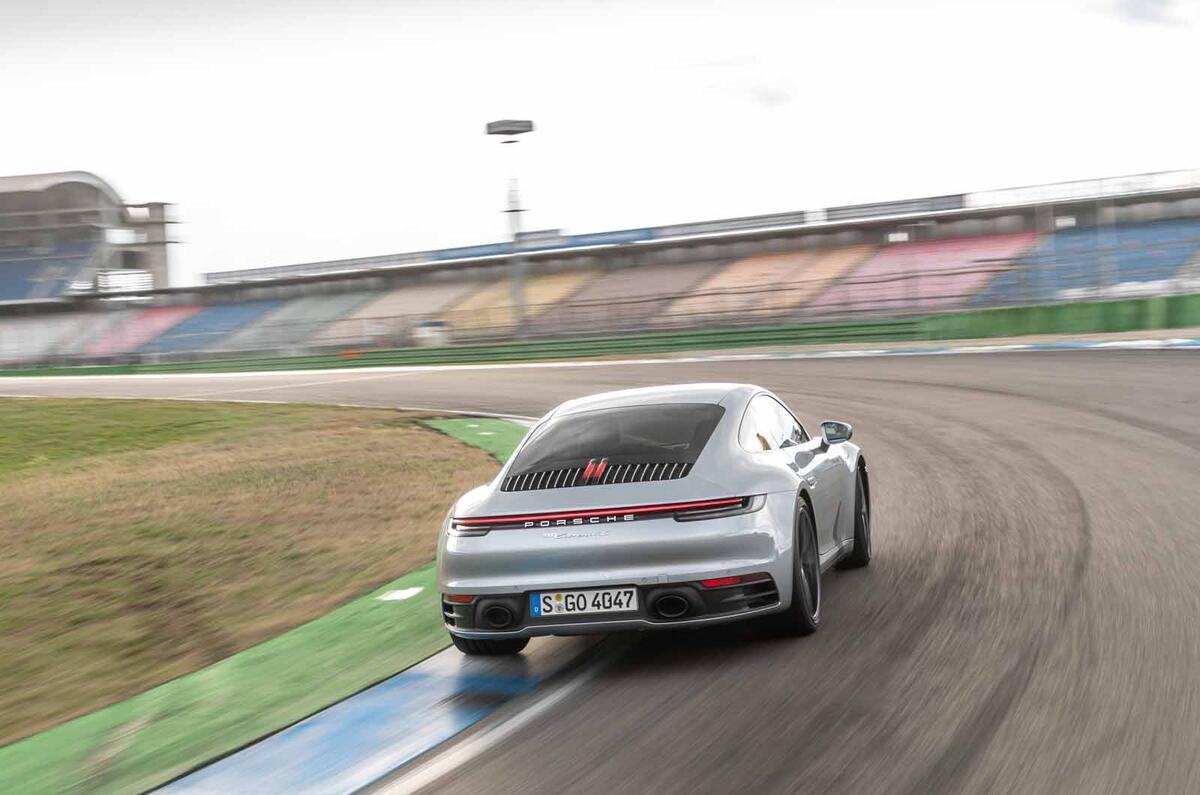
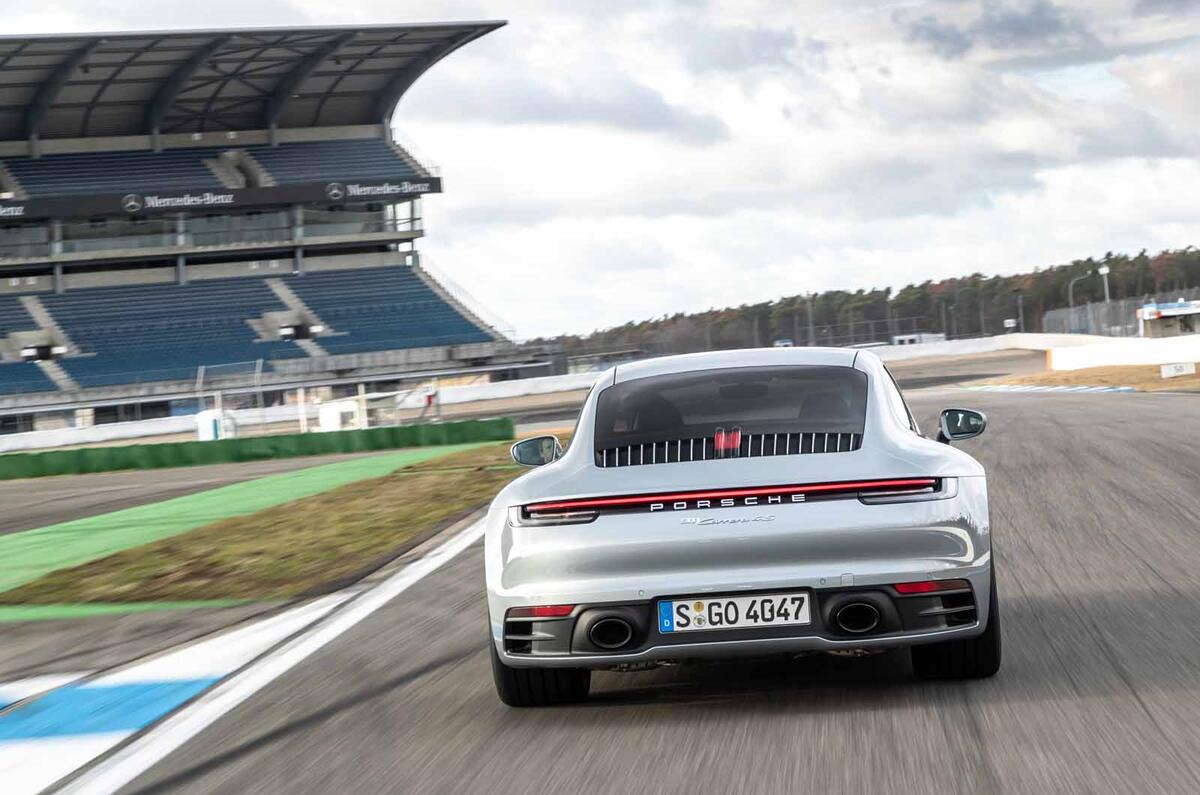
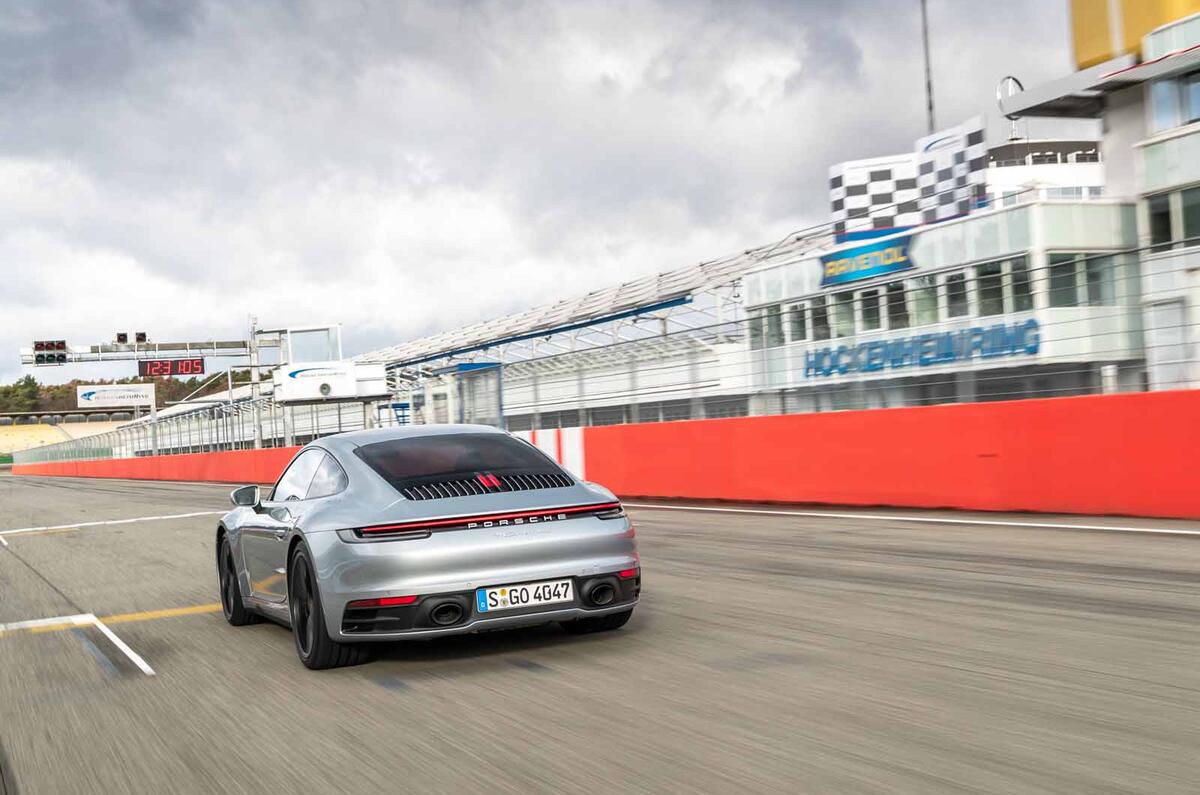
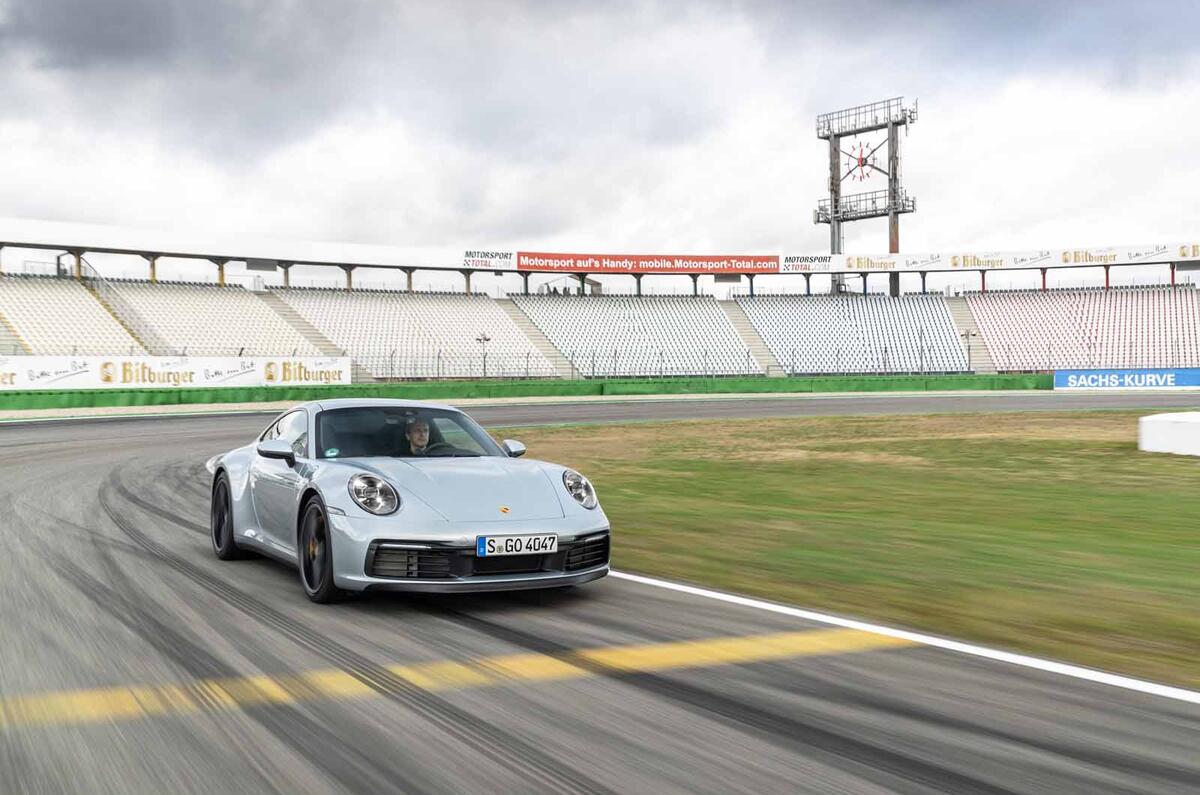
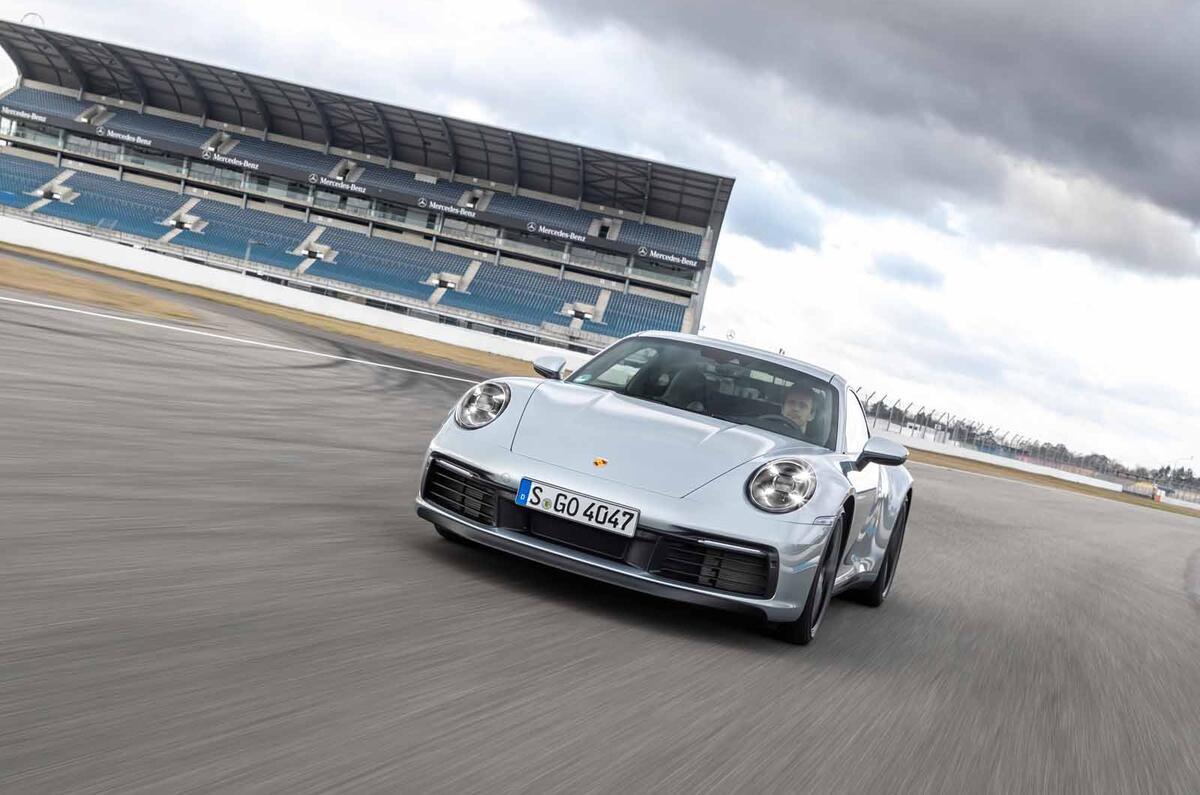
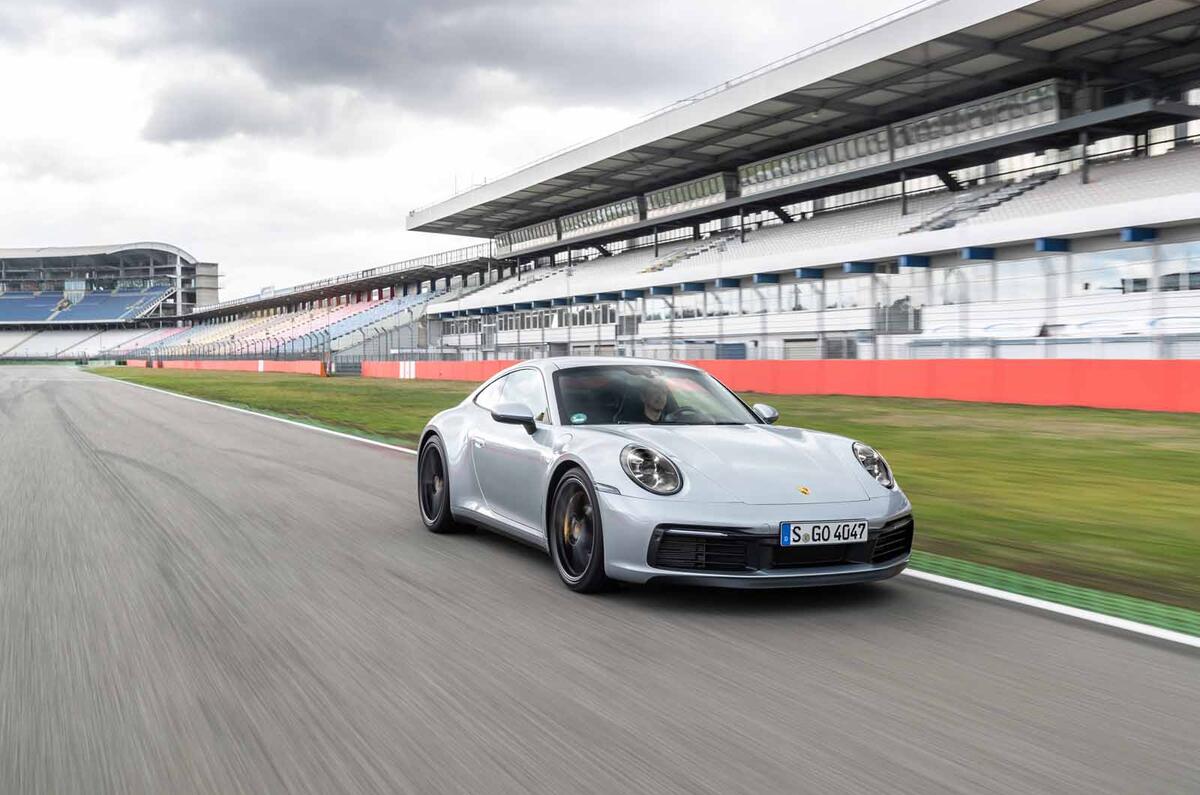
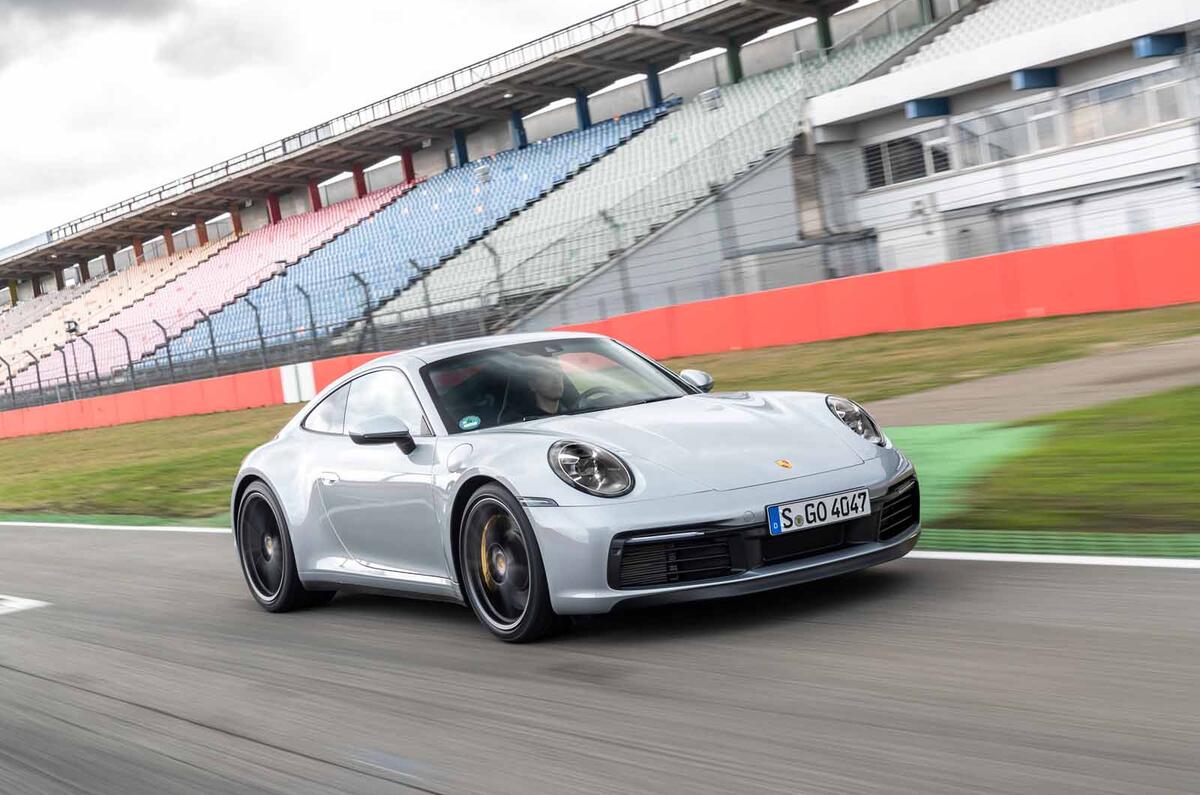
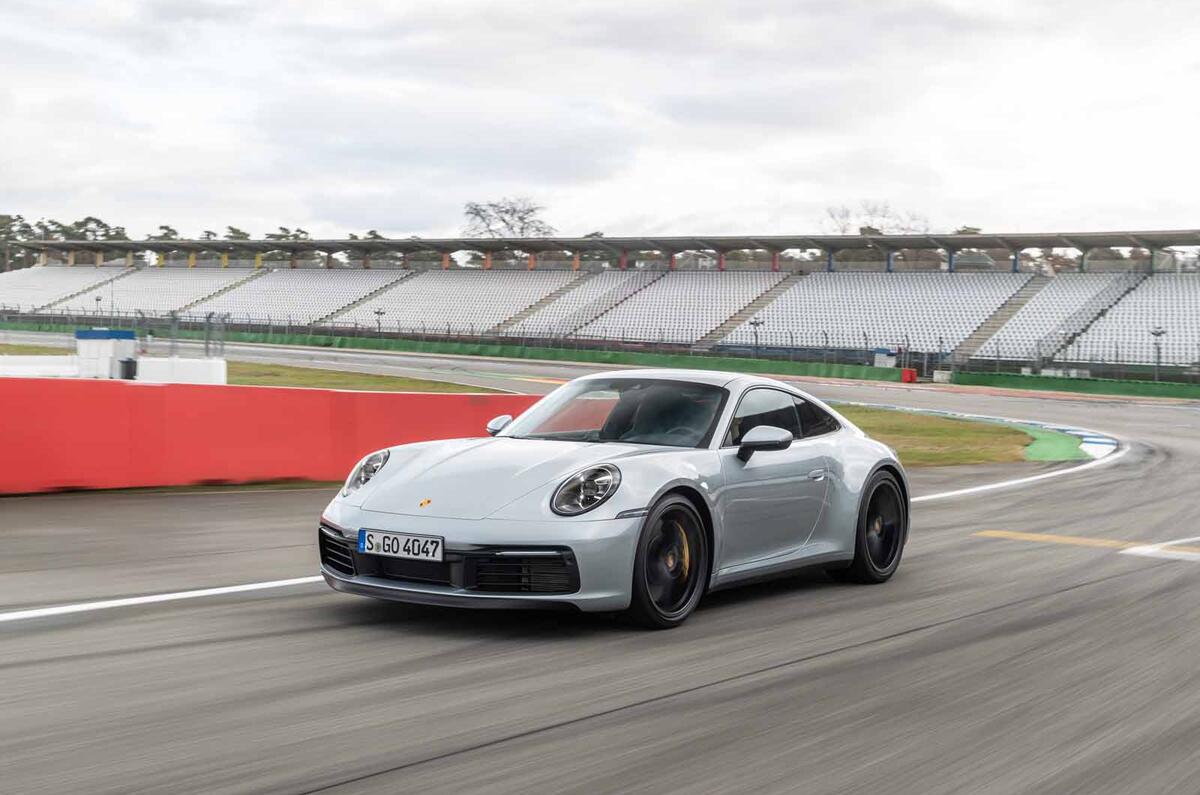
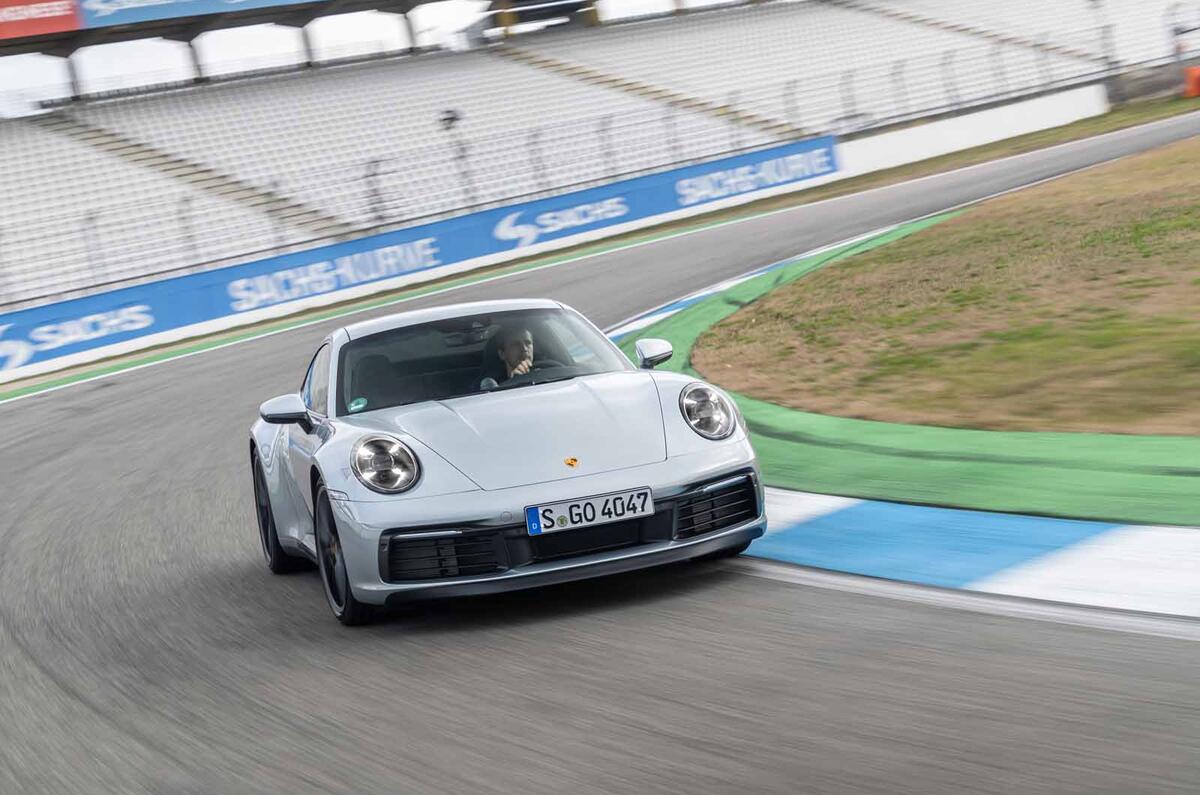
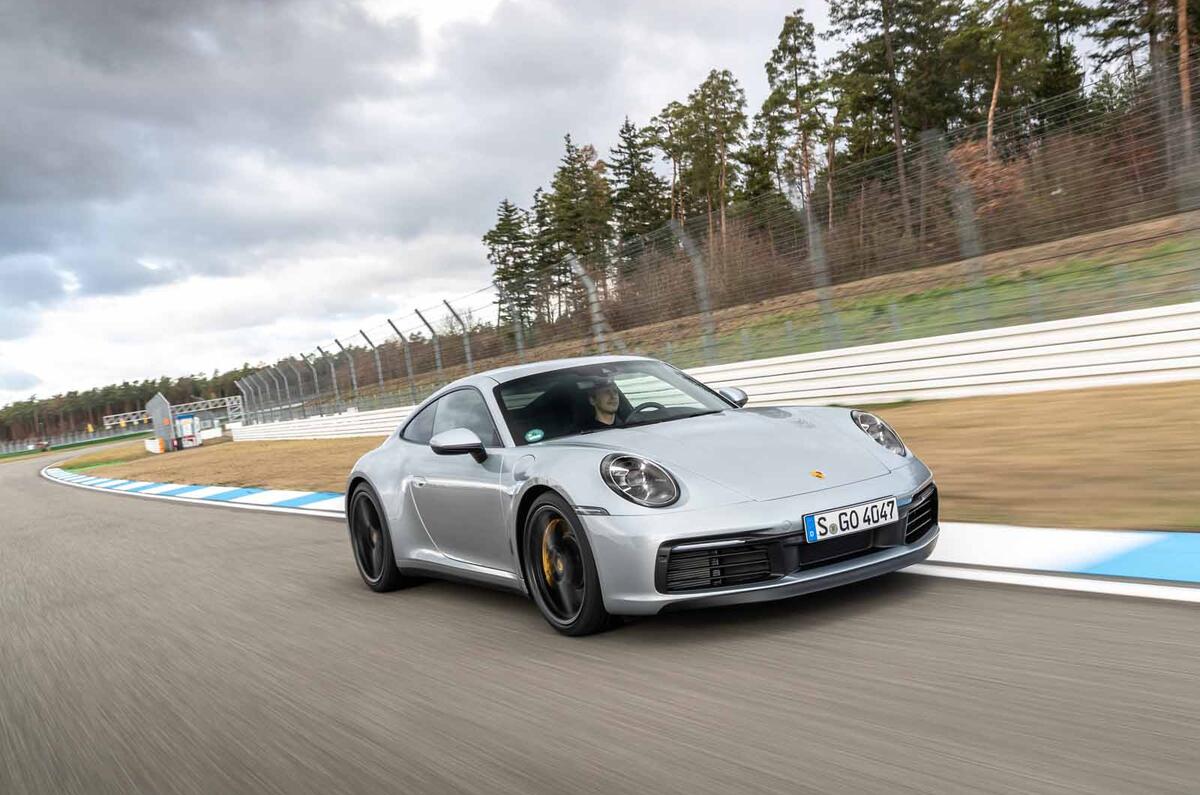
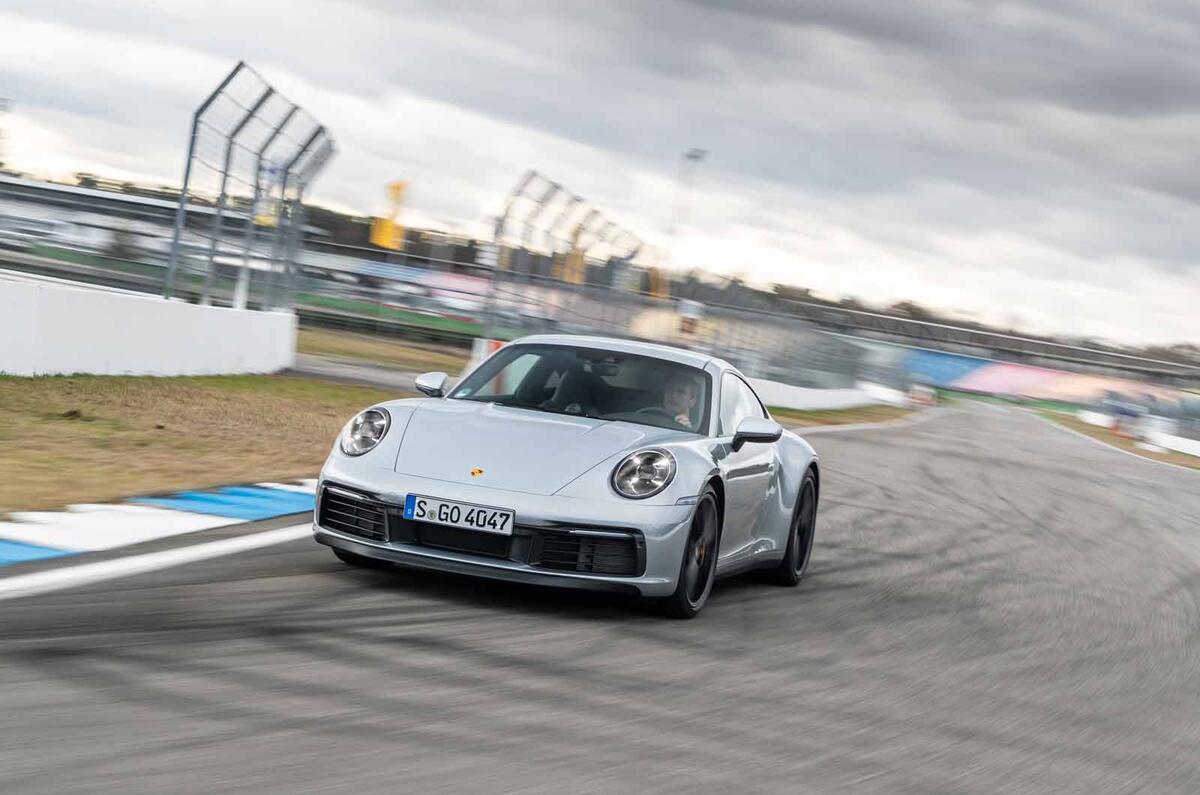
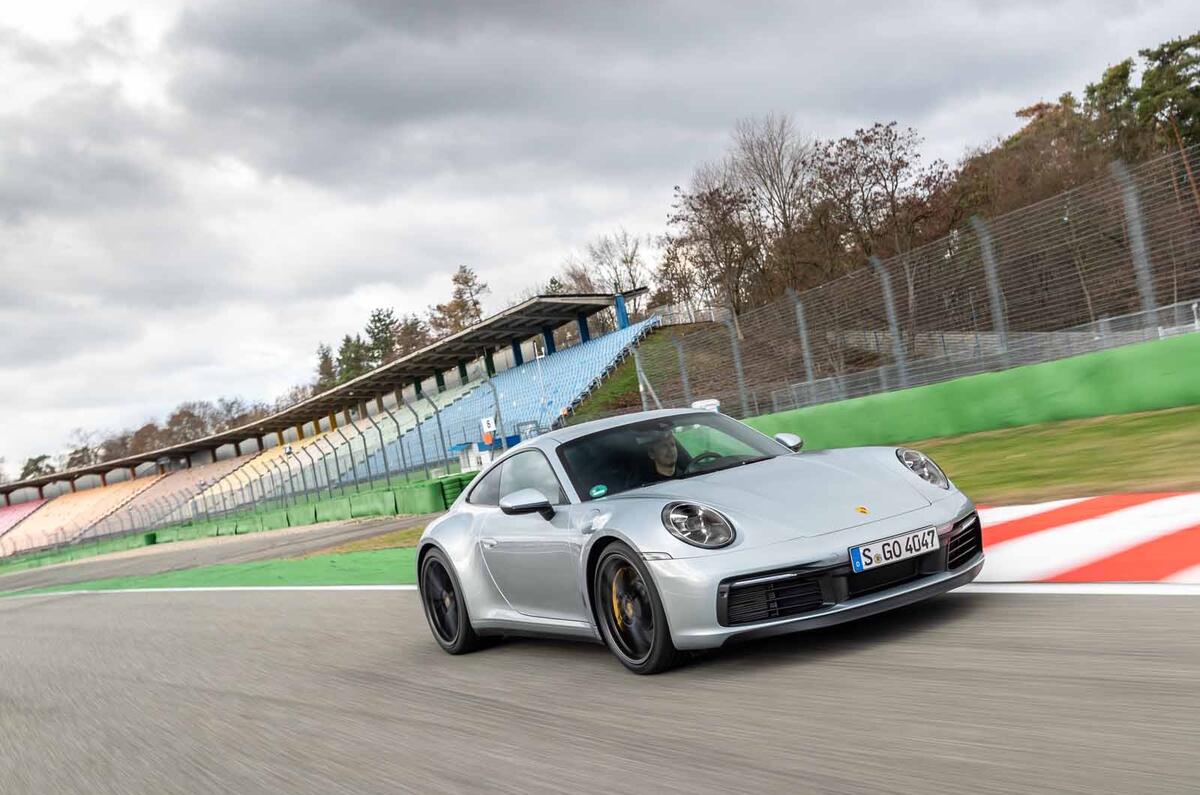
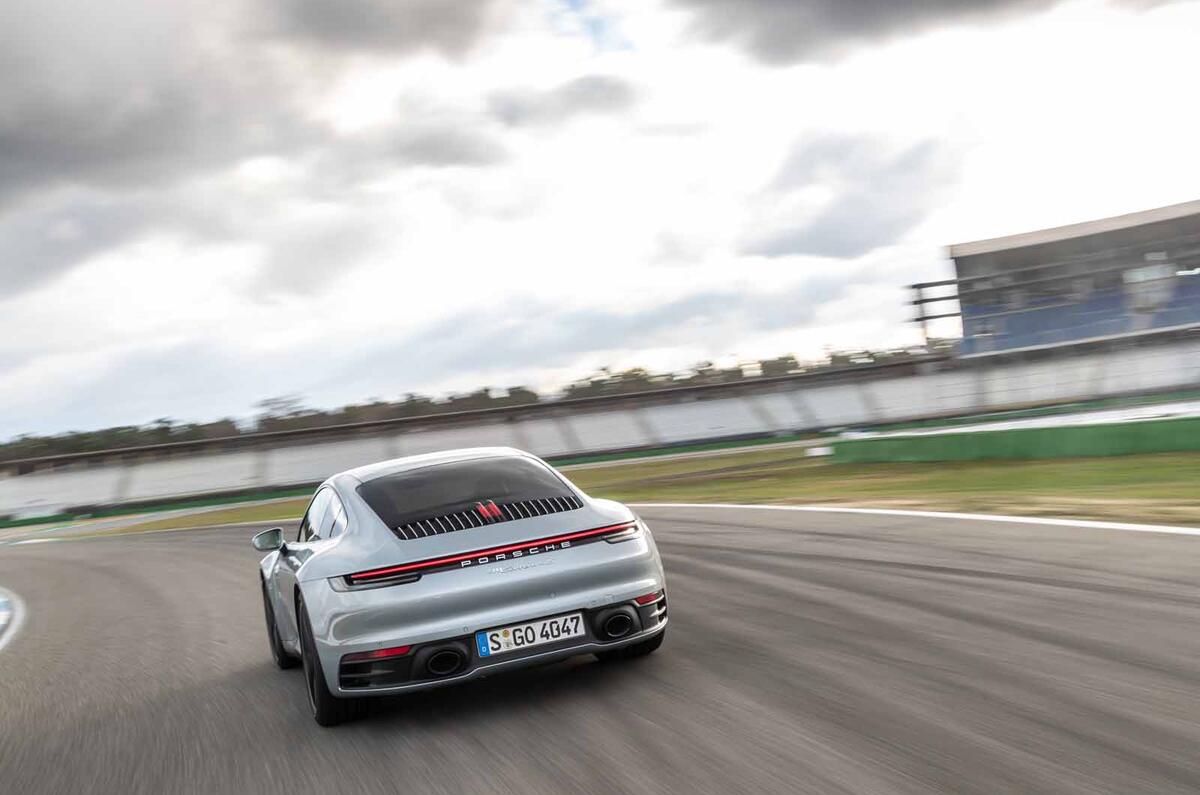
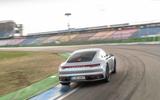
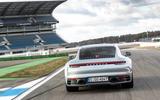
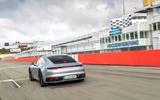
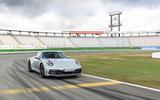
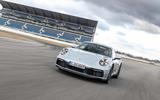
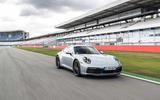
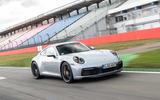
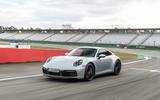
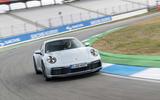
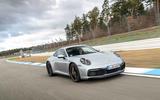
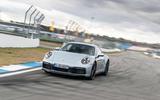
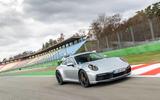
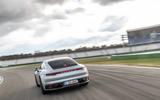

Whether it was the noise of the flat-six engine from behind, or the slight burst of oversteer as my driver attempted to apply that unit’s 444bhp through cold rear tyres, a ride around Hockenheim proved that much is reassuringly familiar about the new Porsche 911 Carrera S.
That’s entirely by design, of course. As Porsche’s R&D boss, Michael Steiner, notes, since it was first launched in 1963, the 911 has “been the main pillar of the brand”.
So the new 992-generation machine is understandably evolutionary, both in terms of design and driving dynamics. But don’t mistake evolution for a lack of change. As with the car’s design, which freshens the 911’s look while respecting the past, under the bodywork there are plenty of small details and changes. Porsche’s engineers believe that these, in the best spirit of ‘marginal gains’, add up to make a big difference.
A good example of that is how the engine is mounted to the chassis. On every previous 911, dating back to the 1963 original, the engine was mounted via a bracket attached to the crankcase. But on the new car, it’s been mounted directly into the longitudinal members, around 20cm further forward.
New 992-series Porsche 911: details of mild hybrid and plug-in hybrid versions
That has been done to reduce the engine vibrations and improve stability. It does so by a matter of degrees, but when combined with the new lightweight yet stiffer shell (which uses significantly more aluminium), Porsche says it makes a notable difference.
How big a difference do all the improvements to the new car make? In Nürburgring terms, about five seconds: that’s how much quicker Porsche says the new Carrera S is around that track than the previous model.
While a 7min 25sec lap of the Nordschleife is impressive, our first chance to experience the finished version of the new machine (we previously had a ride in a late prototype) came at another German F1 track.
First impressions of the new Porsche 911
The design evolution is clear both when you see the 911 in the Hockenheim paddock and when you sit inside it. From the passenger seat, the 911 is comfortable and spacious. The new 10.9in infotainment system is notable, as are the two seven-inch digital display screens on the dashboard – but front and centre behind the steering wheel is a good old-fashioned analogue rev counter.
New Porsche 911 Cabriolet detailed in revealing spy shots
That balance between luxury and old-school sports car is key to the development of the new 911. “We wanted to make it sportier, but also more usable in day-to-day life,” said Steiner.
To achieve that, the 911 features a whole host of new digital and driver assistance systems, which are tuned to widen its performance window, from driver-focused performance at one extreme, to cruising comfort at the other.
So, for example, the new dual-clutch eight-speed PDK gearbox – the only unit available at launch – which Porsche says has been set for faster gearchanges at low speeds, and greater fuel economy at high speed.
If you use the throttle aggressively, it will automatically hold gears longer, and it uses GPS and data gathered from the car sensors to predict traffic, bends or hills ahead, adjusting the shift pattern to ensure maximum response.