
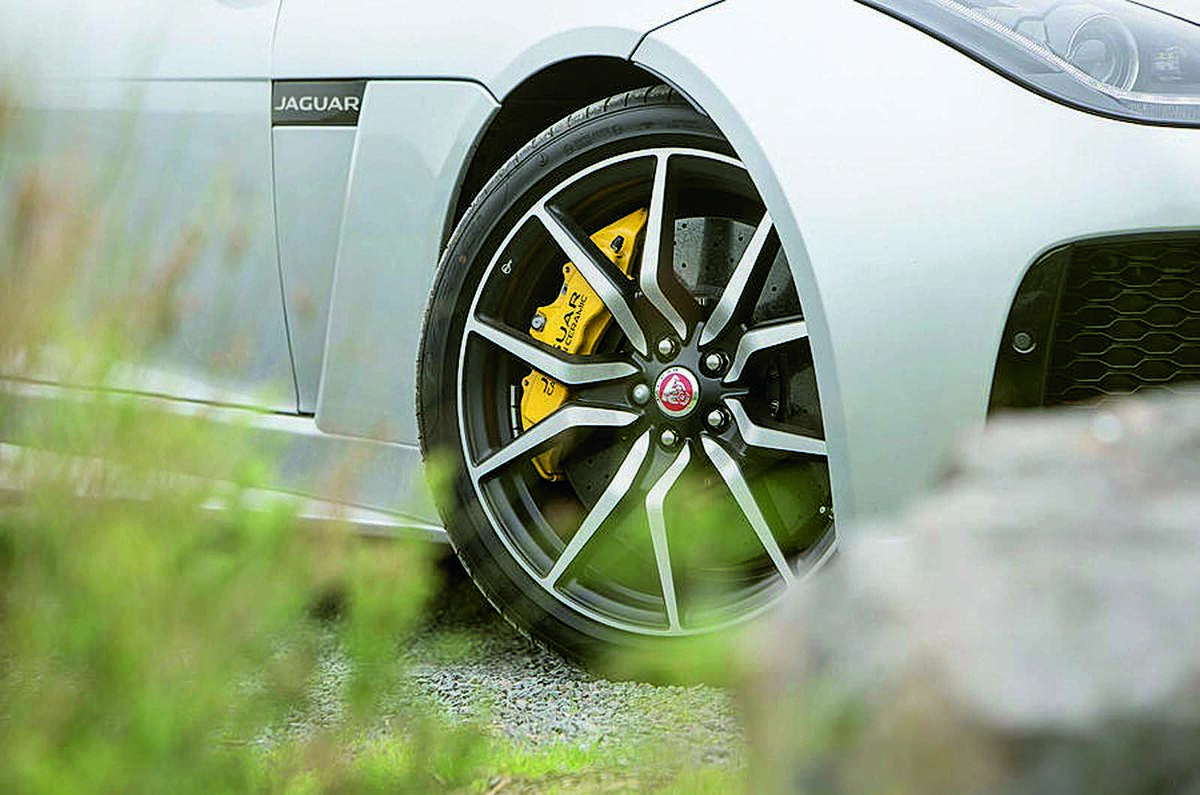













You’ll have read plenty on these pages over the years about how a car’s wheel size affects how it drives. There’s a reason why we bang on about it with such regularity: yes, there may be style benefits to upgrading to the most extravagant rims, but more often than not they have an adverse dynamic impact.
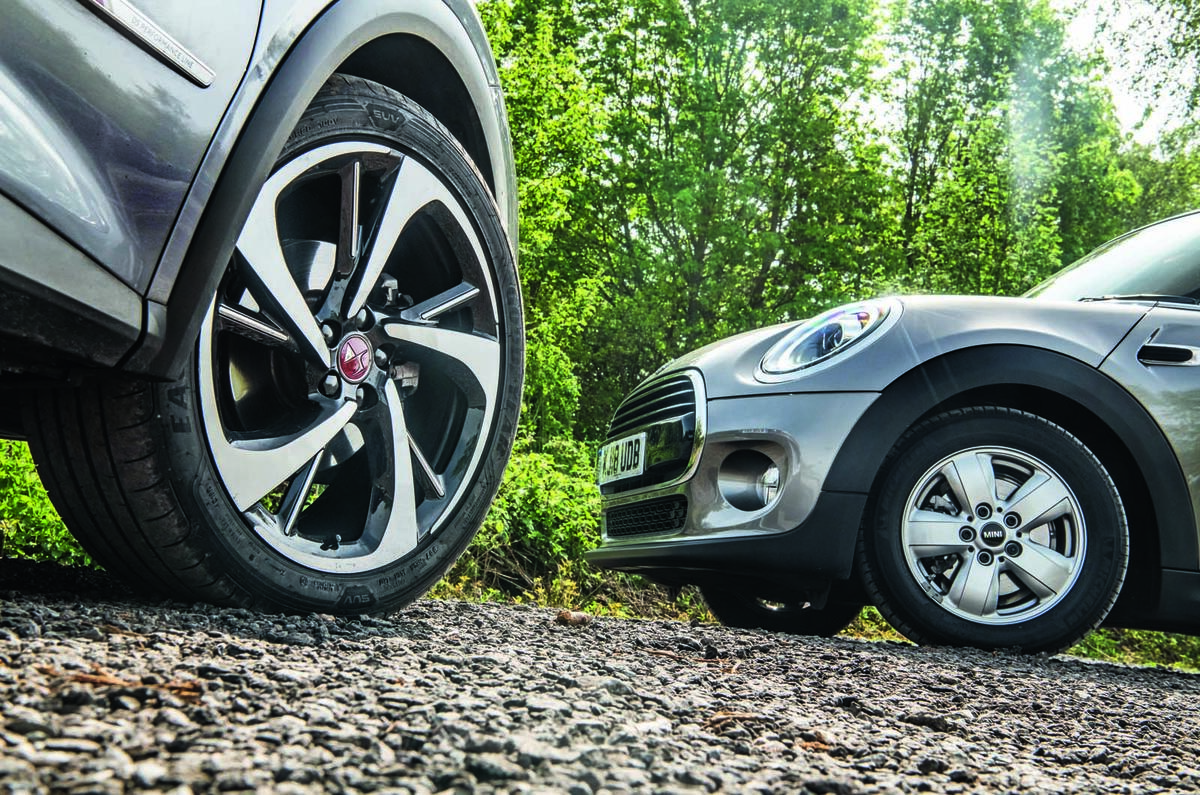
Yet it appears our protestations are falling on deaf ears. Wheels are continuing to get larger across every new car category, and buyers keep on lapping them up. The rise of the SUV has also had a marked effect, with most running wheels and tyres substantially larger than their hatchback or saloon equivalents for that chunky look.
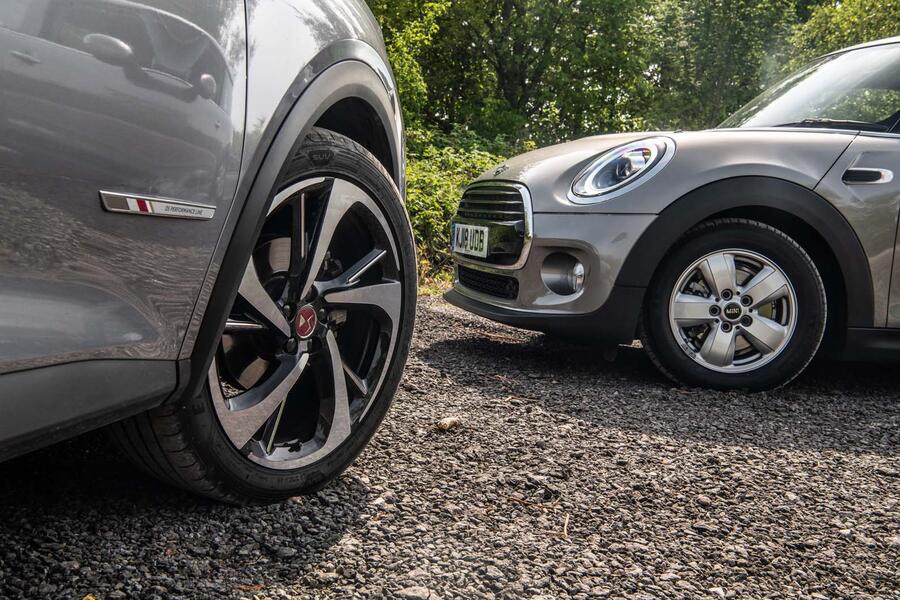
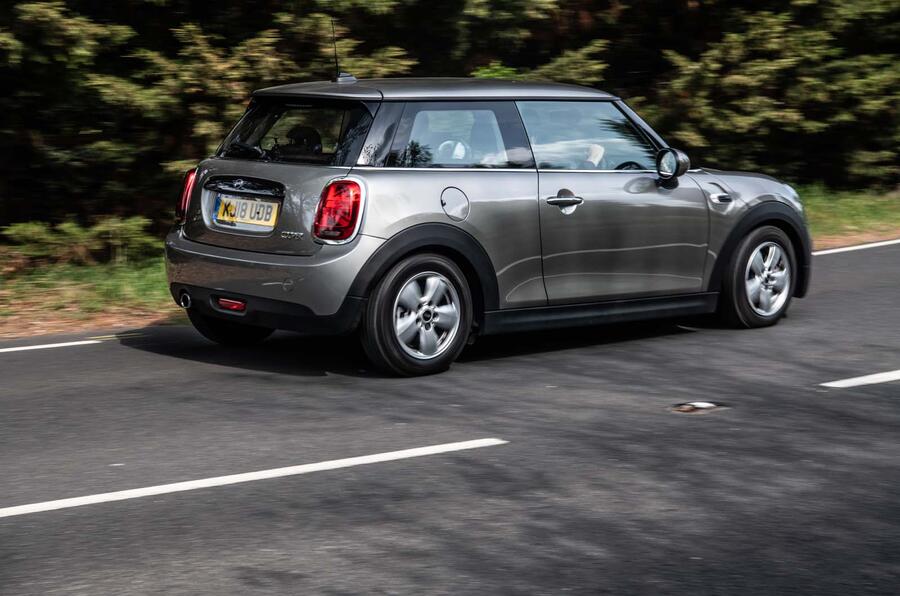
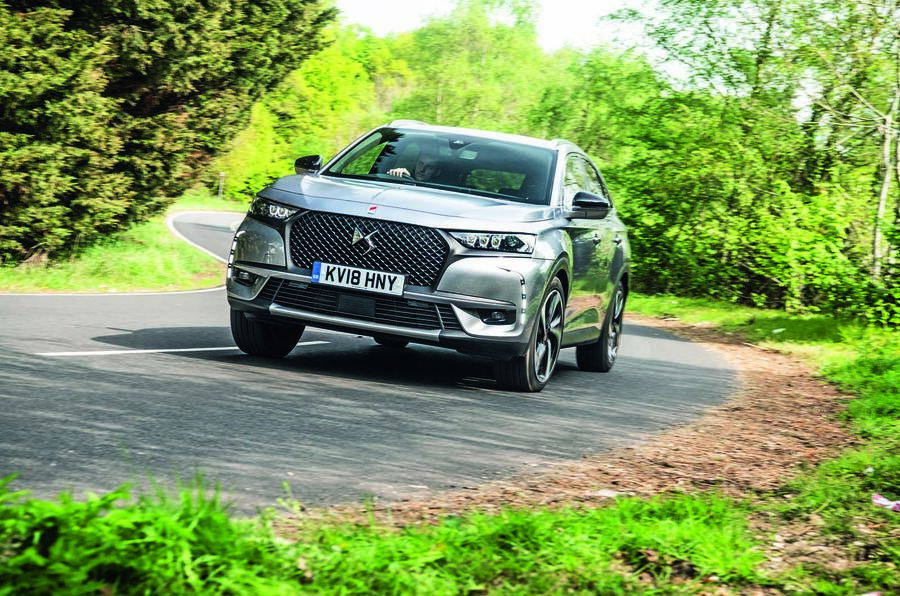
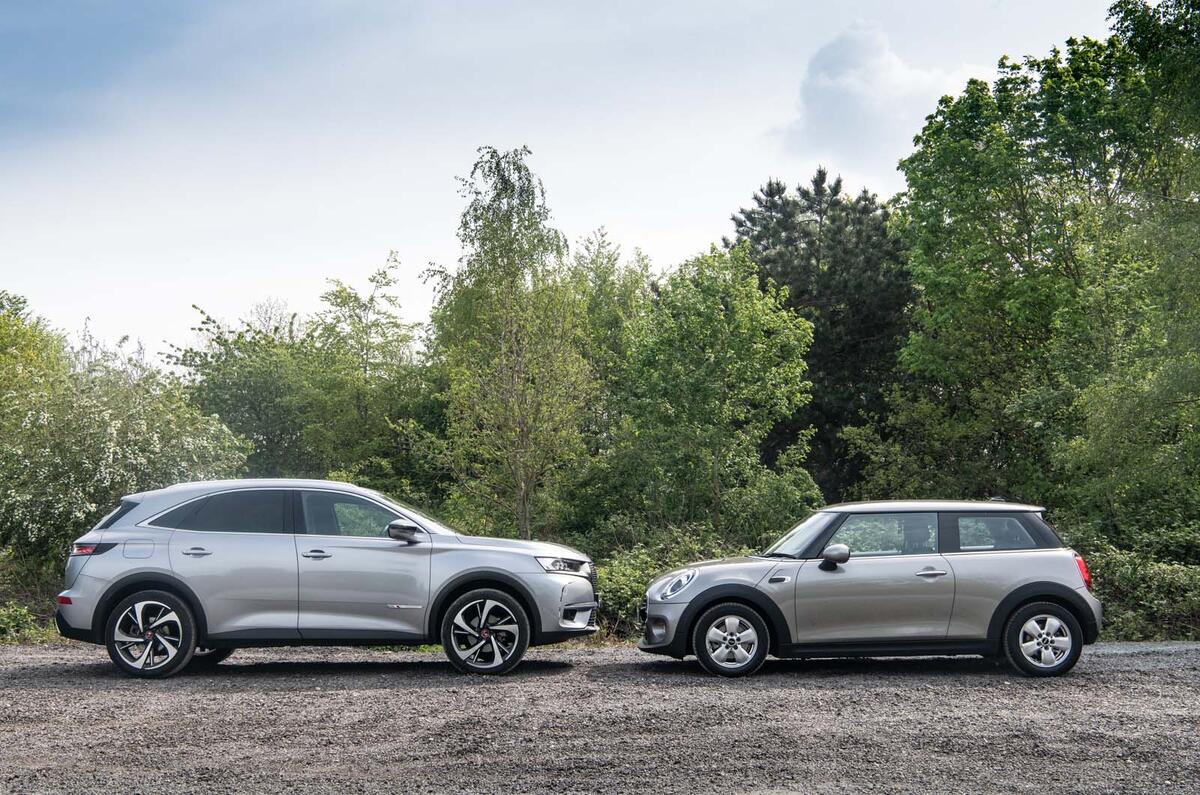
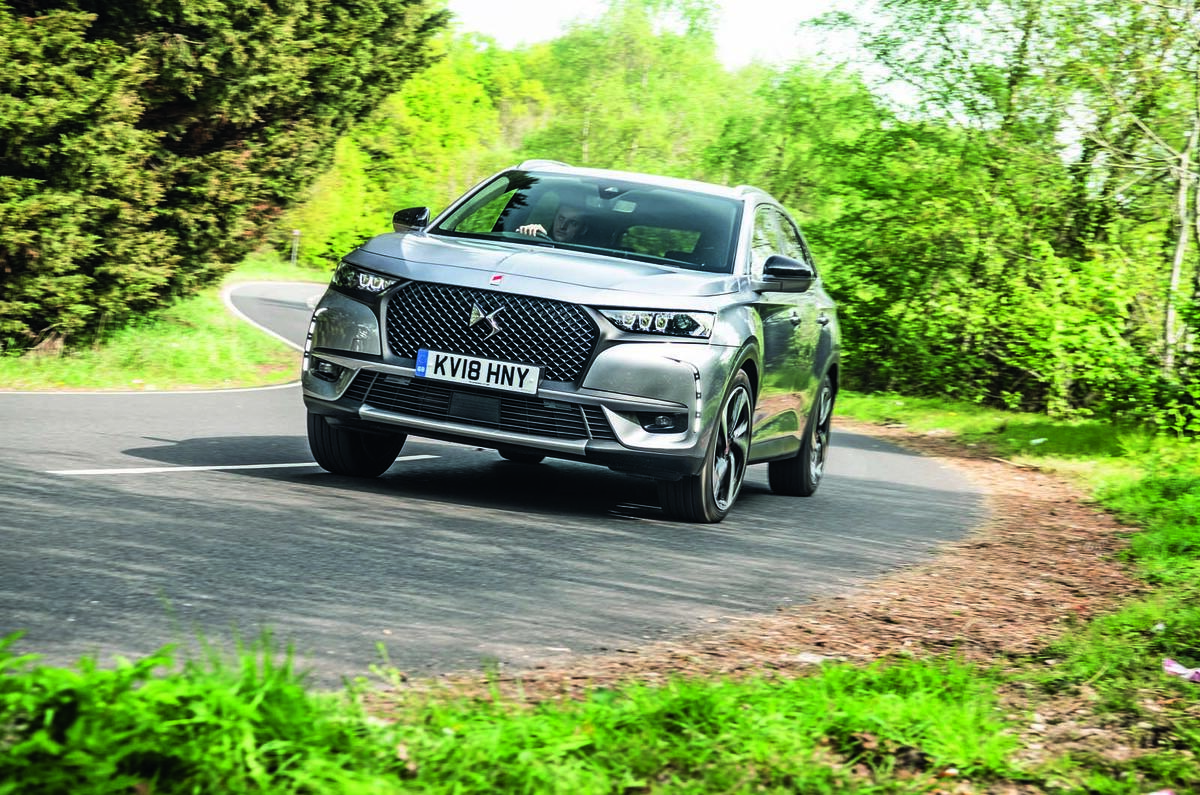
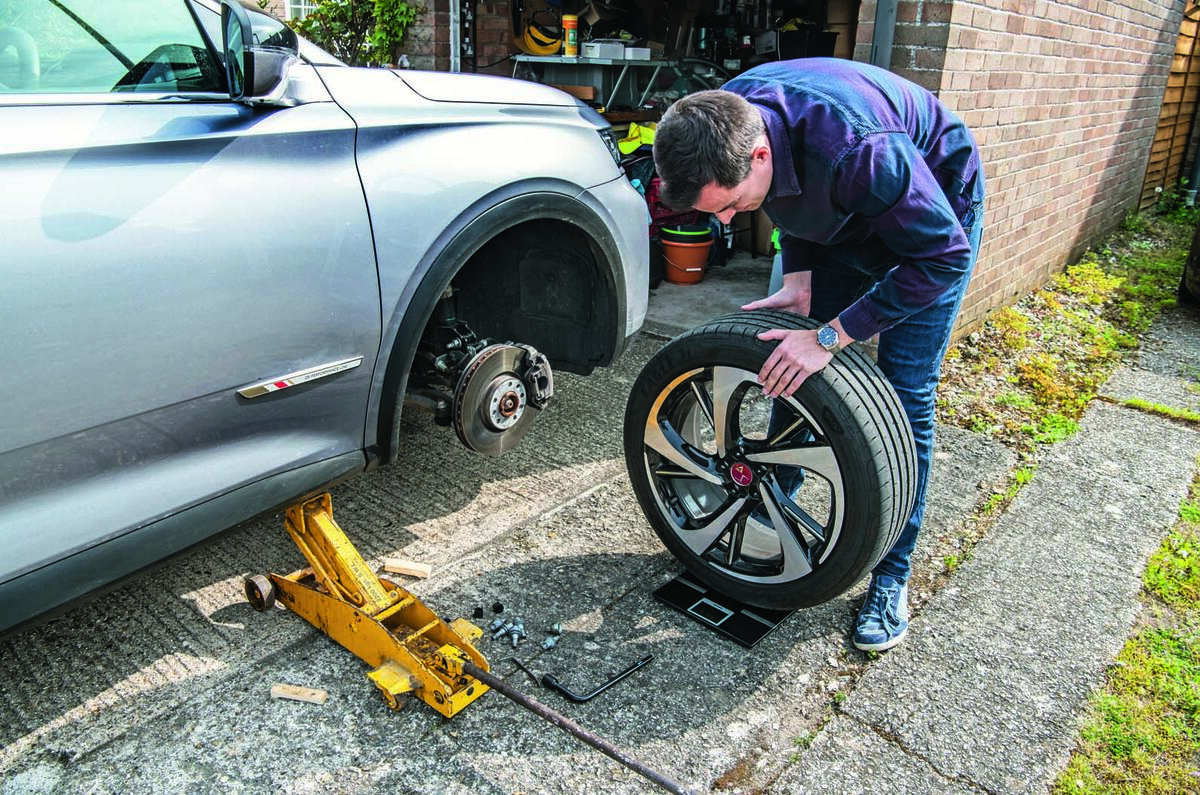
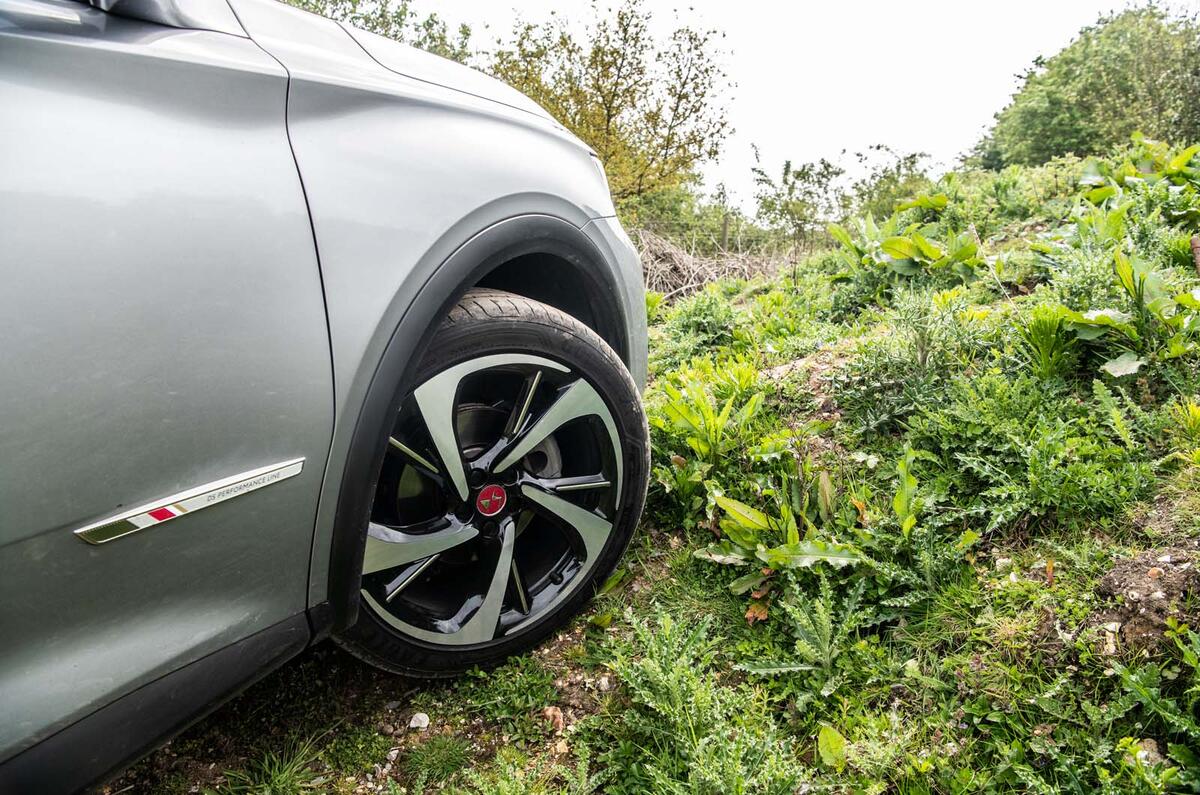
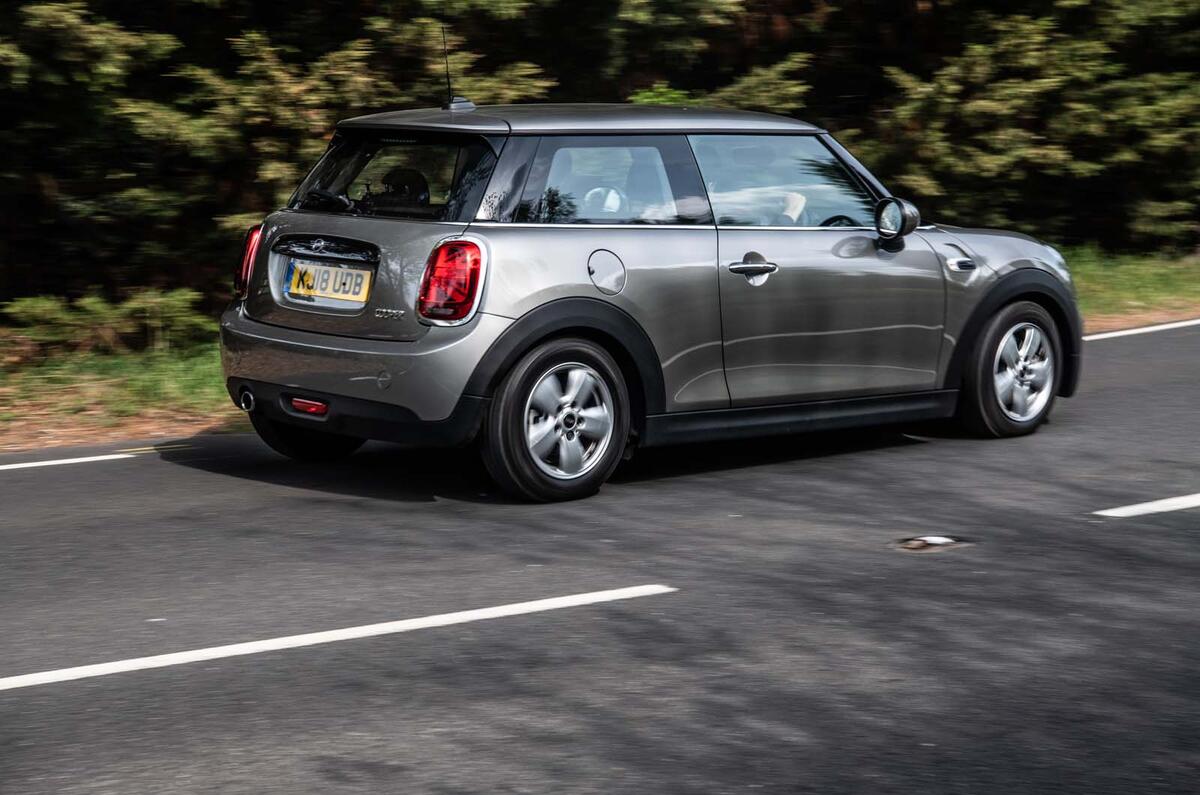
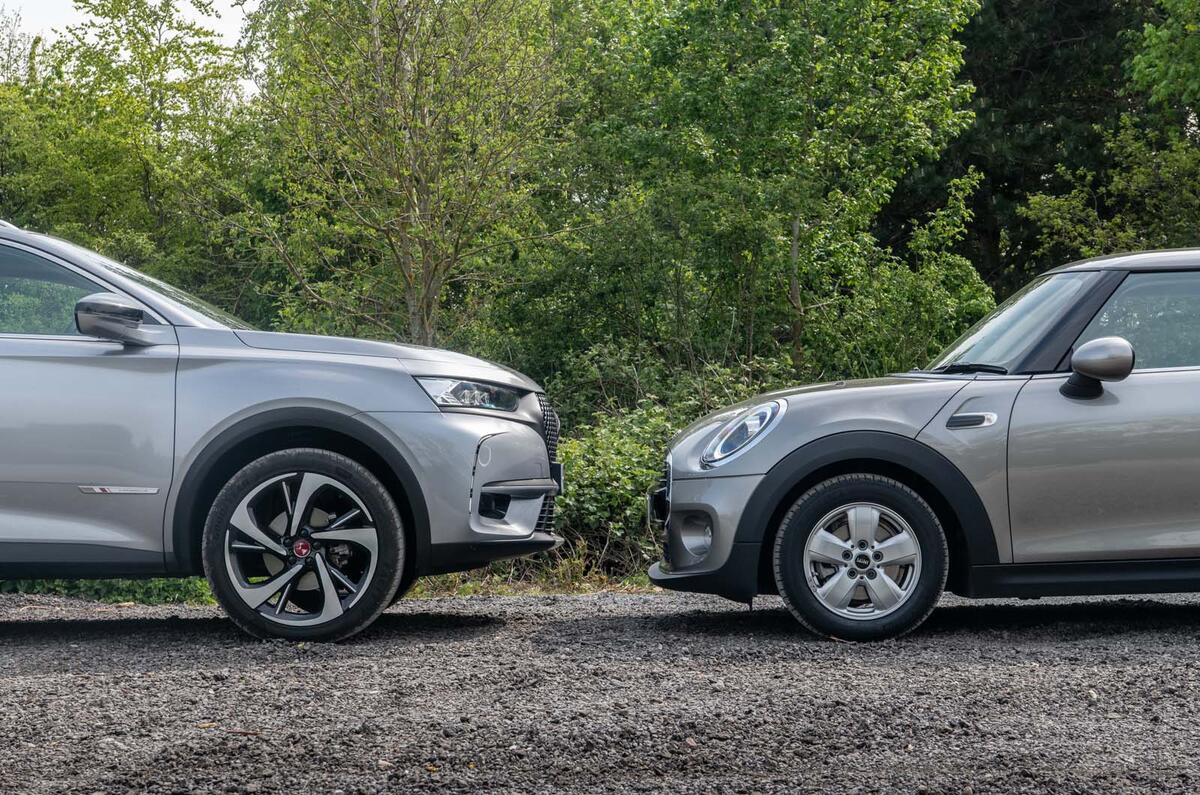
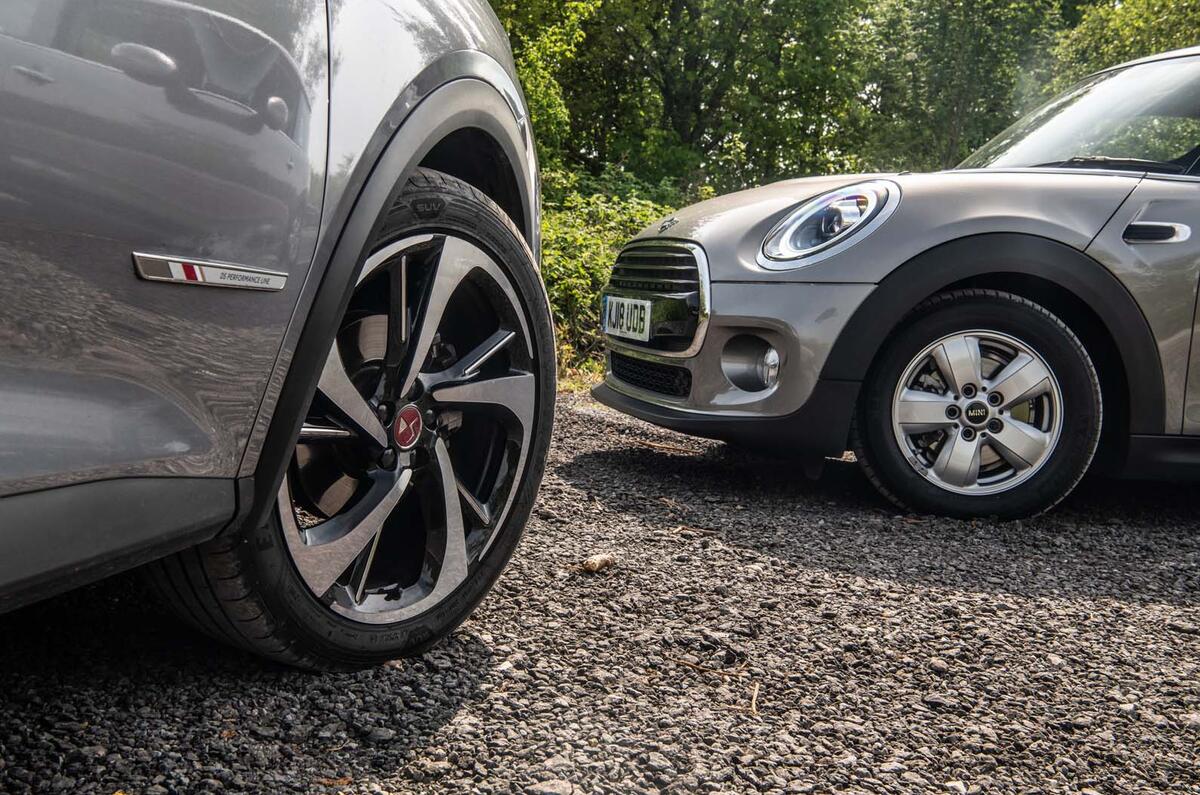
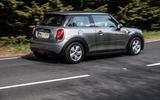
So, we thought the best way to illustrate this was to get two cars together from either end of the spectrum: a Mini Cooper hatchback and a DS 7 Crossback SUV. The latter is running the kind of typical wheel-and-tyre combo that you will find in many well-specced premium SUVs: a 20in alloy shod in 235/45 profile Continental ContiSportContact 5s. The size of the Mini’s, on the other hand, were commonplace a decade ago but are now among the smallest on the market: 15in alloys shod in 175/65 profile Michelin Energy Savers.
Direct comparisons between the two shouldn’t be fair, as one is a sportily set up supermini and the other is a comfort-focused SUV, but here’s the surprise: by our reckoning, the Mini has a smoother, more consistent and ultimately more comfortable ride.
On our control route, mixing town roads with B-roads of varying speed and surface quality, the Mini’s combination of firm-yet-composed damping and squidgy sidewalls shone through. You’re always aware of the road surface passing beneath you, yet both primary and secondary ride comfort is strong, the body stays level, while even the worst surface disruption or potholes are ably dealt with. How much of that is down to the wheels is open to debate, but we’ve tried Minis with larger wheels and tyres that are much less absorptive over nasty potholes.