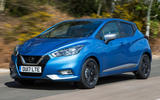
Last week the Advertising Standards Authority (ASA) banned three car adverts, one from Ford, one from Fiat and one from Nissan, all of which, it says, encouraged dangerous driving.
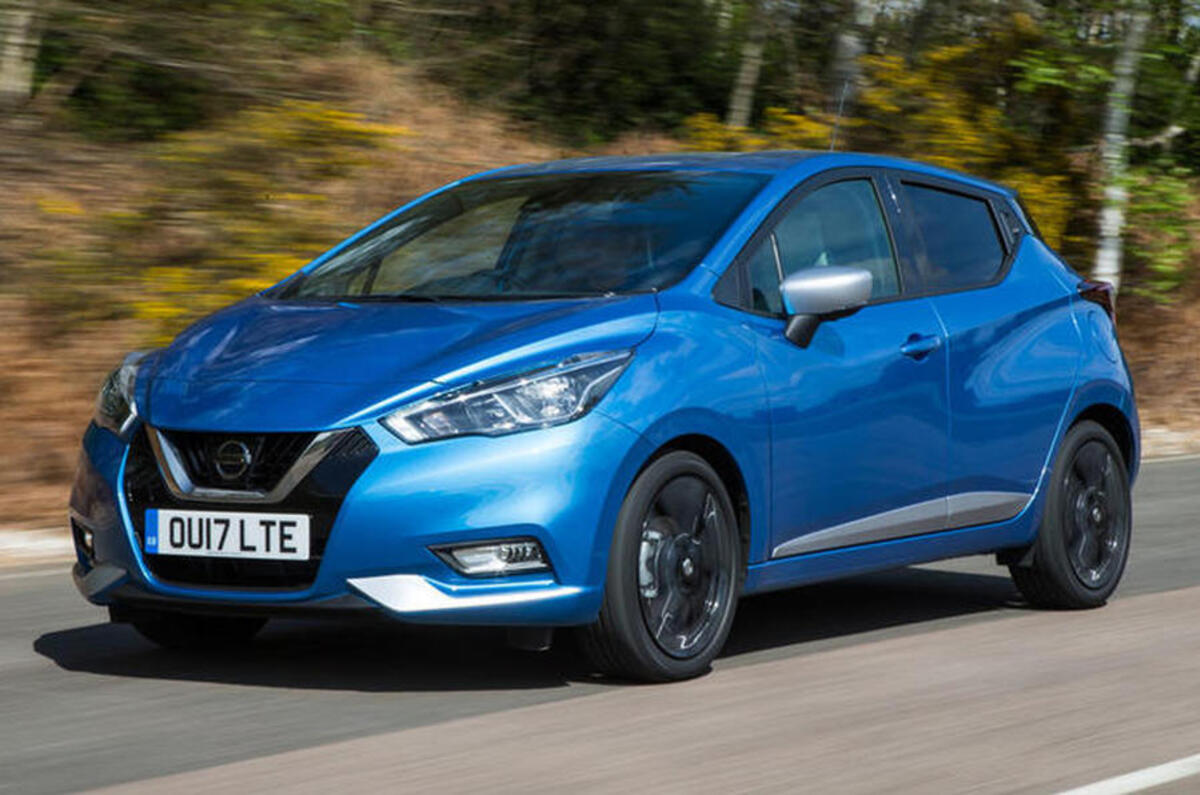
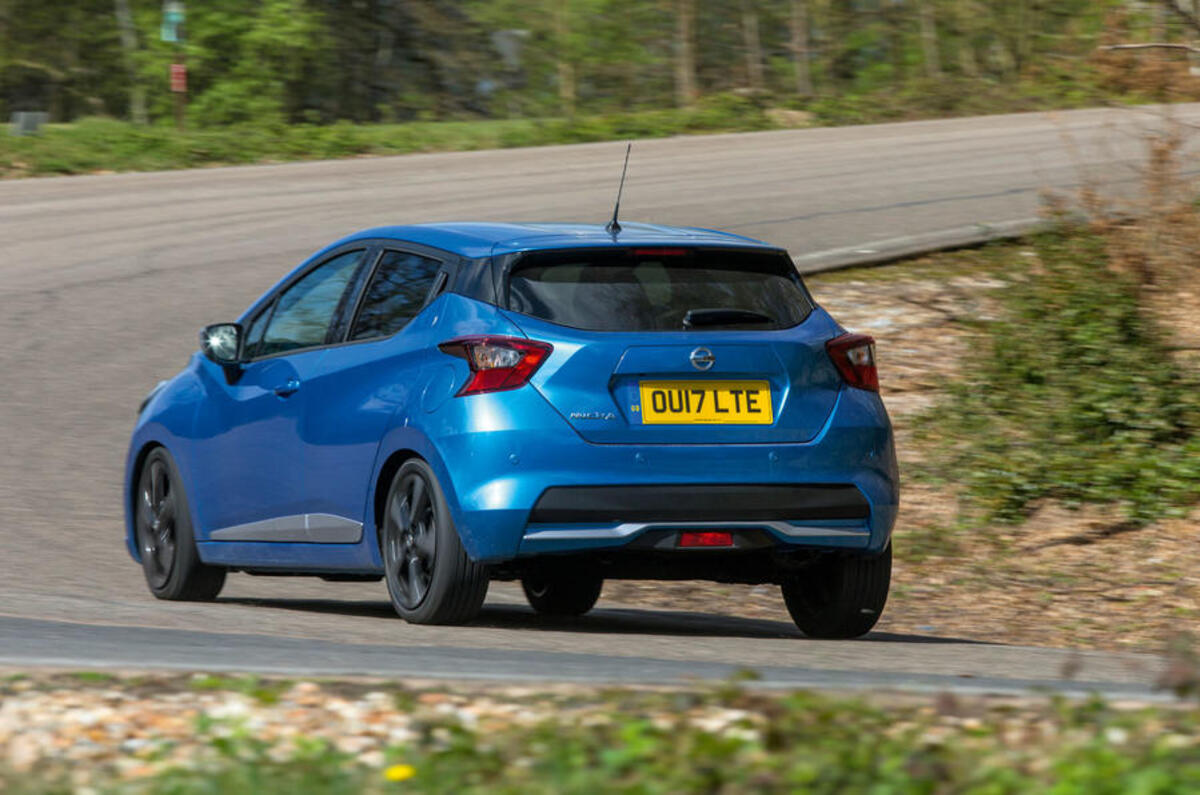
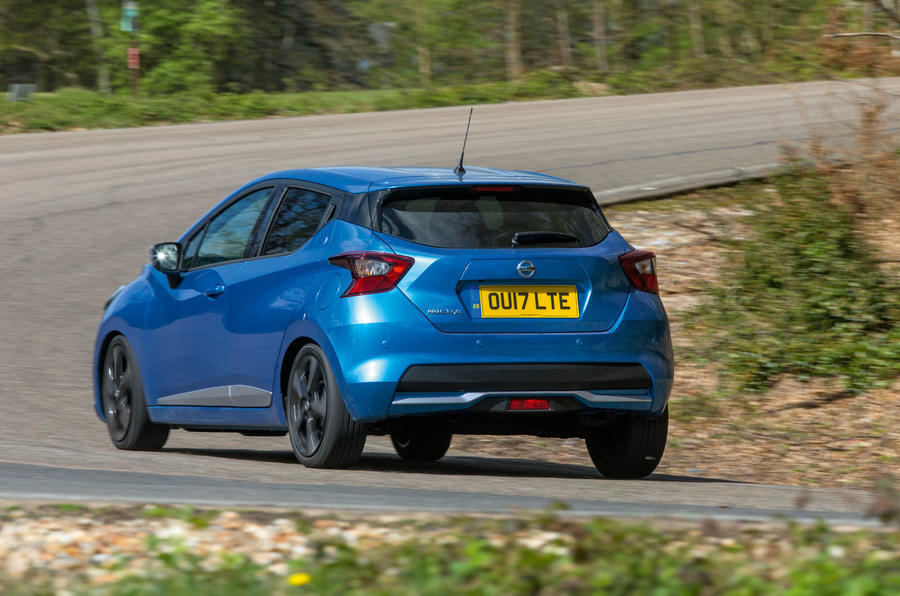
The banning of the Nissan ad in particular raises an interesting question, or at least a question. The ad shows a couple on their way to an airport in their Nissan Micra, and they appear to be in a bit of a rush. They demonstrate some questionable lane discipline at the beginning, then dash into the airport. An airport worker (head down, ear defenders on) steps out in front of the car, which comes to a sudden stop thanks to its autonomous emergency braking (AEB) system activated by Nissan’s pedestrian recognition feature. No one dies and no one misses their plane.
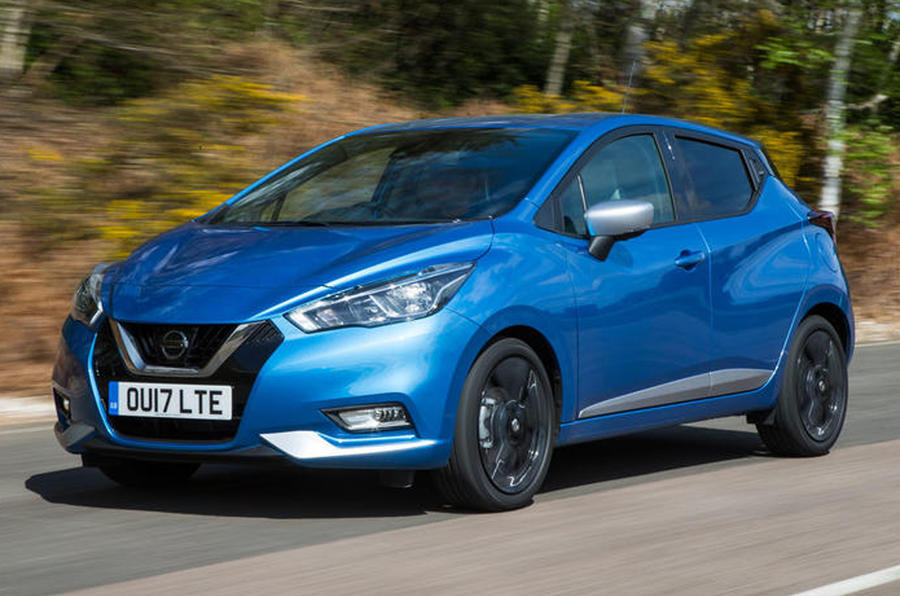
But the ASA ruled that the ad “created the impression that the driver was able to navigate at speed in a rushed or distracted manner and ultimately could rely on the Micra’s braking system intervening to help prevent a collision”.
TV ads can be tricky things to get right. A lot of information has to be presented very quickly, usually in around 30 seconds. Timelines are condensed, edits are quick and the viewer can be required to pick up on sometimes subtle and transient visual cues.
In this case the ASA concluded that Nissan got it wrong, but the ad highlights a dilemma: how do you market AEB and other advanced driver assistance systems (ADAS), which to an extent compensate for your customers’ incompetence and/or idiocy, without suggesting that your customers are, to an extent, incompetent idiots?
Over the past few years a number of manufacturers have had a go, and in pretty much every case the approach has been to blame everyone but the driver of the car – the advertiser’s customer. So we’ve had ‘Sam’ running out in front of a Citroën C3, a farmer’s pick-up parked on a blind corner ahead of an otherwise carefully driven Toyota and, most recently, a city overrun by an invasion of clowns (thanks for the nightmares, Audi). Neither the Citroën driver, the Toyota driver nor the Audi driver are shown doing anything wrong. It all comes across as a bit smug and self-satisfied, but them’s the rules.
The UK Code of Broadcast Advertising rule 20.5 (Motoring) says: “Motoring advertisements must not exaggerate the benefit of safety features or suggest that a vehicle's features enable it to be driven faster or in complete safety.” That suggests we in the UK can’t advertise AEB via the medium of a distracted driver, although the rules must be quite different elsewhere, where we see, for example, drivers ogling movie stars (Hyundai Elantra, US) or throwing coffee all over the place (Volvo XC60, Ireland).

AEB is acknowledged as a life-saver. While a lot of new cars already have it as standard, it remains a cost-option on many others, so pushing it at, or before, the point of sale would have a demonstrably positive effect on road safety – because we’re all incompetent idiots sometimes, right? Earlier this year Thatcham Research called for AEB to be made standard on all new cars, saying it would save ‘hundreds of extra lives’, while in May the European Commission published a list of 11 new safety features it wants mandated on new cars by 2021, including AEB.
There is an argument, though, that while a proliferation of ADAS will save lives by compensating for drivers’ (and pedestrians’, and clowns’) inevitable mistakes, it will also foster an over-reliance on technology in place of careful driving. It’s a concern already highlighted by Thatcham after it demonstrated the shortcomings of some ADAS functions sold as semi-autonomous driving packages and marketed with ‘misleading names’ (their words). At the time Thatcham’s head of research, Matthew Avery, said: “The capability of current road vehicle technologies must not be oversold."
So how do you sell it? Well, not the the way Nissan went about it, at least according to the ASA. Perhaps the answer is not to acknowledge ADAS at all. By pretending it isn’t there drivers might not be inclined to use it as a substitute for paying attention. Unfortunately the cat is already some way out of the bag, so an apparent back-pedal on the technology might look a bit weird. Either way, and whether we like it or not, it’s a technology that will increasingly become a part of our motoring lives. In the meantime, and if the ASA continues to have its way, we’ll just have to carry on blaming someone else for our mistakes.
Read more
Some automatic braking systems have proven to be 'ineffective'
Volkswagen Polo advert banned for 'encouraging irresponsible driving'

Join the debate
Add your comment
@ Scotty5
Toatally agree. The advdert is irresponsible. Not paying attention or driving at excessive speed causes hundreds of deaths a year on our roads and adverts must not condone or encourage such behaviour. Autocar has called this wrong.
The advert is showing
The advert is showing irresponsible driving, which should never be condoned. Now to be more realistic the AEB in a Golf saved my bacon when I was trying to work the touch screen, but they would never put that in an advert would they?
Why?
Why would you be trying to negotiate the touchscreen whilst the vehicle was moving?
What was more important than the road ahead?
100% agree with ASA
Looks like I'm alone in agreeing with the advertising stds on this ocassion. In that Nissan ad, the driver would be at fault - why should the emergency braking system work any better than the driver can operate the brakes? The car is driving at speed in a straight line, the driver is looking straight ahead, a man walks out (pretty slowly I might add) pulling a trolly of containers... to be perfectly honest the driver should have noticed him long before the AEB. It was indeed wreckless driving. Same with changing lanes - the car didn't just move over, it looked like an F1 overtaking in to dirty air. The guys turns the steering wheel thru 90 degrees at high speed on a motorway. It gives the impression these safety systems can somehow encourage poor driving habits. The advert concludes with the words "When you have the right technologies, you can always find a way".
Can be AEB be advertised better? Of course it can - there are times when we're moving forward and we're not looking out the front windscreen - at junctions or roundabouts. If someone (or an animal say) were to step out in front of you whilst you're looking out the side window or you're cheking your rear view mirror then this shows the benefit of AEB. But to suggest it's going to prevent an accident at high speed 'because you have the right technologies"? In the case of the Micra, AEB would not have prevented an accident from occurring - the car was travelling too fast.
The advert is still on youtube if anyone wishes to review it and disagree with the above.