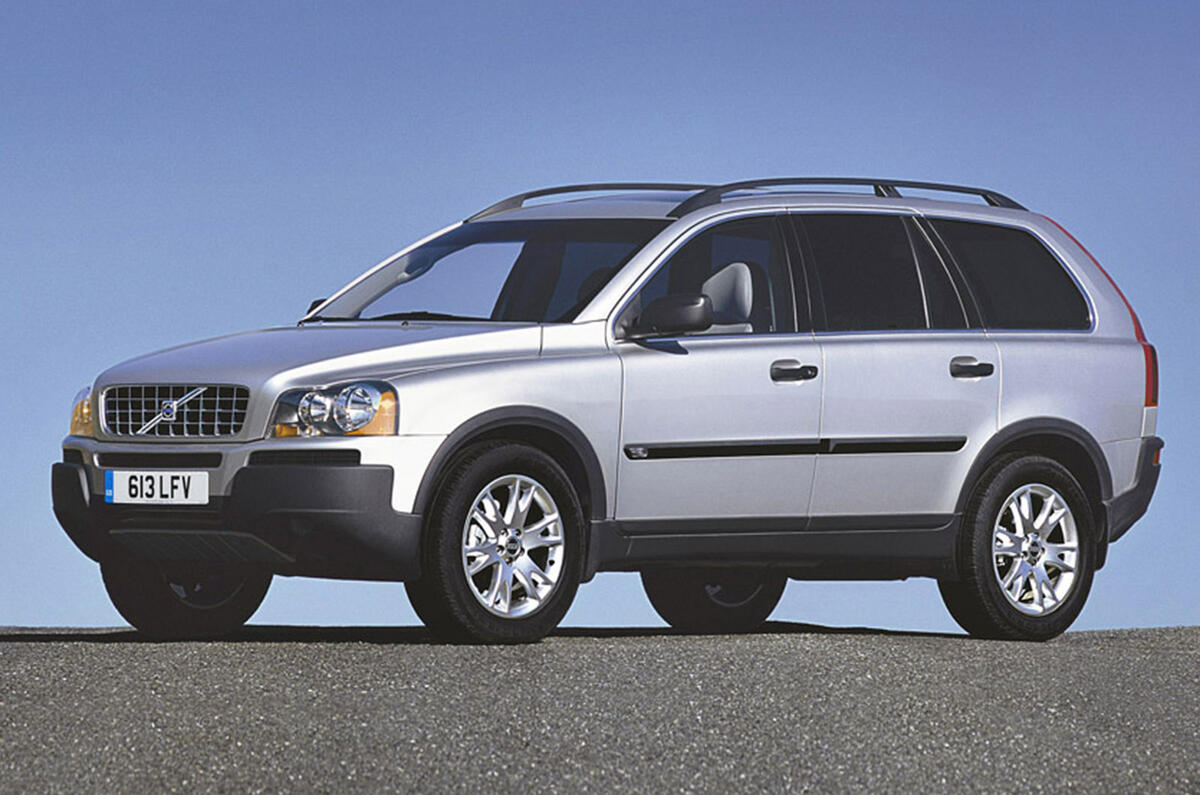


The Volvo XC90 is a distant outlier on the graph. Every dot is scattered closely around a line that shows a steady downward trend in a paper titled Influence of Aerodynamics. Every dot but one.
Covering 1955 to 2010, the graph shows Volvos consistently becoming more aerodynamically efficient – and the XC90, which arrived in 2002 and was way above the norm.
The list of examples shows why. From PV544 and Amazon through 240, 245, 760, 960, 850, S80 and V70, they’re all saloon or estate cars. The drag coefficient (Cd), a measure of slipperiness through air, gradually improved.
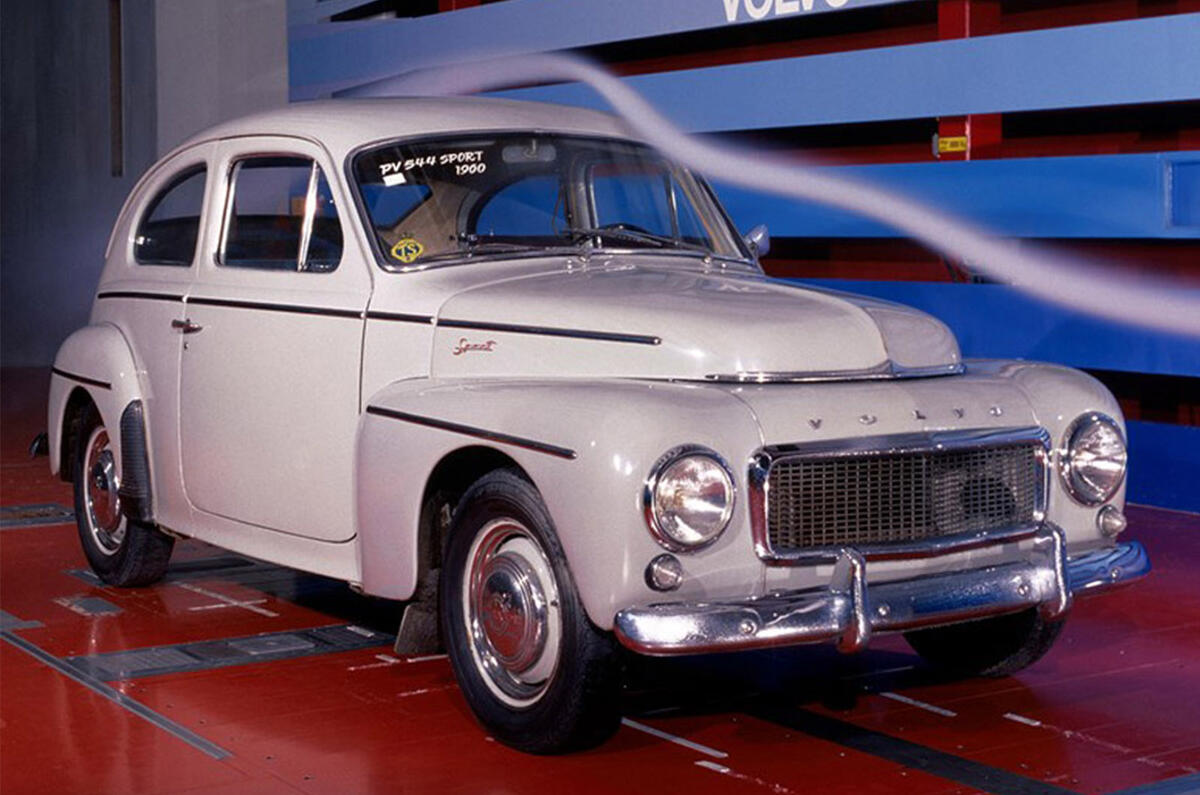
In the late 1950s, the PV544, a handsome two-door saloon, had a Cd of 0.50. The Amazon bettered that, with 0.48Cd. By the 1980s, figures in the low 0.40 range was normal, and Volvo saloons and estates of the early 2000s measured as low as 0.31Cd.
The XC90’s Cd wasn’t tragic, even in that context, at 0.40. But that’s not why it sat where it did.
Overall drag isn’t just about the coefficient, as you’ll probably know. Like drunkenness is a factor of both alcohol percentage and the amount you drink, drag is a factor of both the drag coefficient and the car’s size. The bigger the car’s frontal area (the bit that meets the air square on), the harder it is to push through the air.
In the 1960s, a typical Volvo had a frontal area of 1.75 square metres. That had risen to 2.2sqm by the early 2000s, but this gradual increase wasn’t enough to offset the gains in Cd. When the two numbers were multiplied to obtain a figure called CdA, typical overall drag was still steadily declining – until the XC90 arrived.
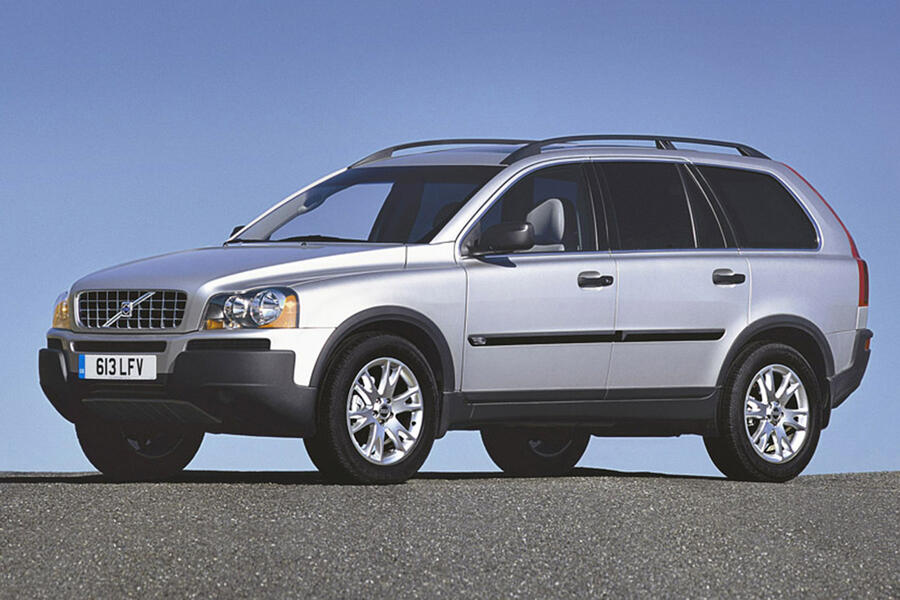
This SUV’s frontal area of around 2.75sqm was a good 25% bigger than other Volvos’ of the time. So while the CdA of a typical Volvo was 0.75 in 2000, the XC90’s was almost 1.1.
That’s 10% worse than even the PV544, a car with a bulky front, various addenda above and below its body and a rear that, while apparently sculpted, is sloped in a way that neither maintains an easy airflow nor cuts it off abruptly.
The shape we describe as a fastback is, ironically, not very fast through the air. It’s why ordinary hatchbacks are given a tailgate spoiler – to cleave passing air away quickly – and one reason why the Volkswagen Microbus has a lower Cd figure than the Jaguar E-Type.
Today’s second-generation XC90 is slipperier (0.30Cd) but bigger again (2.78sqm), so its overall CdA (0.84) is about the same as that of a mid-1980s saloon or estate.
I’m not singling out Volvo, by the way. It’s just that the publication, by a Volvo aerodynamicist for Stockholm’s Royal Institute of Technology, the KTH, is particularly transparent and helpful, because it shows one company’s consistent development of saloon and estate cars built for the same sort of job.
Besides, back in 2002, the XC90 was just one car in one range. Multiply it by a line-up of SUVs and this one manufacturer by all of them. The SUV is no longer one outlier on a single graph but the norm, resulting in a vast fleet whose drag penalty undoes decades of improvements in aerodynamic efficiency.
There’s the argument that there are no tailpipe emissions if you power an SUV by electricity, so none of this matters, but that’s only really true if the power is generated renewably.
Otherwise, fond of some SUVs though I am, they do have a real problem: not the amount of road they occupy but the amount of sky.
READ MORE
Volvo ditches petrol and diesel engines on S90, goes hybrid-only
Why Volvo is redefining autonomous driving
From dependable to disruptive: The reinvention of Volvo

Join the debate
Add your comment
Interesting article, which
Interesting article, which underlines my opinion of SUVs - oversized bathtubs, clone styling, poor efficiency.
It's about time the poor
My company car list is now suv only due to resale values, as a high mileage motorway driver I'm not looking forward to the fuel bills when I have to change.
WTF
is the point of this article?
Manufacturer builds SUV, SUV is not very aerodynamic- No shit Sherlock.
The point is to point out SUV
The point is to point out SUV's inherent inefficiency, and hopefully people will think twice before getting one.
Wow abkq
do you really think 1 article written by Matt Prior berating Volvo for building the XC90 and not making it very aerodynamic will convince millions of people all over the world, of which a large majority of them would never consider a Volvo to change their buying habits, hey perhaps they will all buy EV's to keep you happy..