Currently reading: The best hybrid cars: PHEVs and regular hybrids rated
UP NEXT

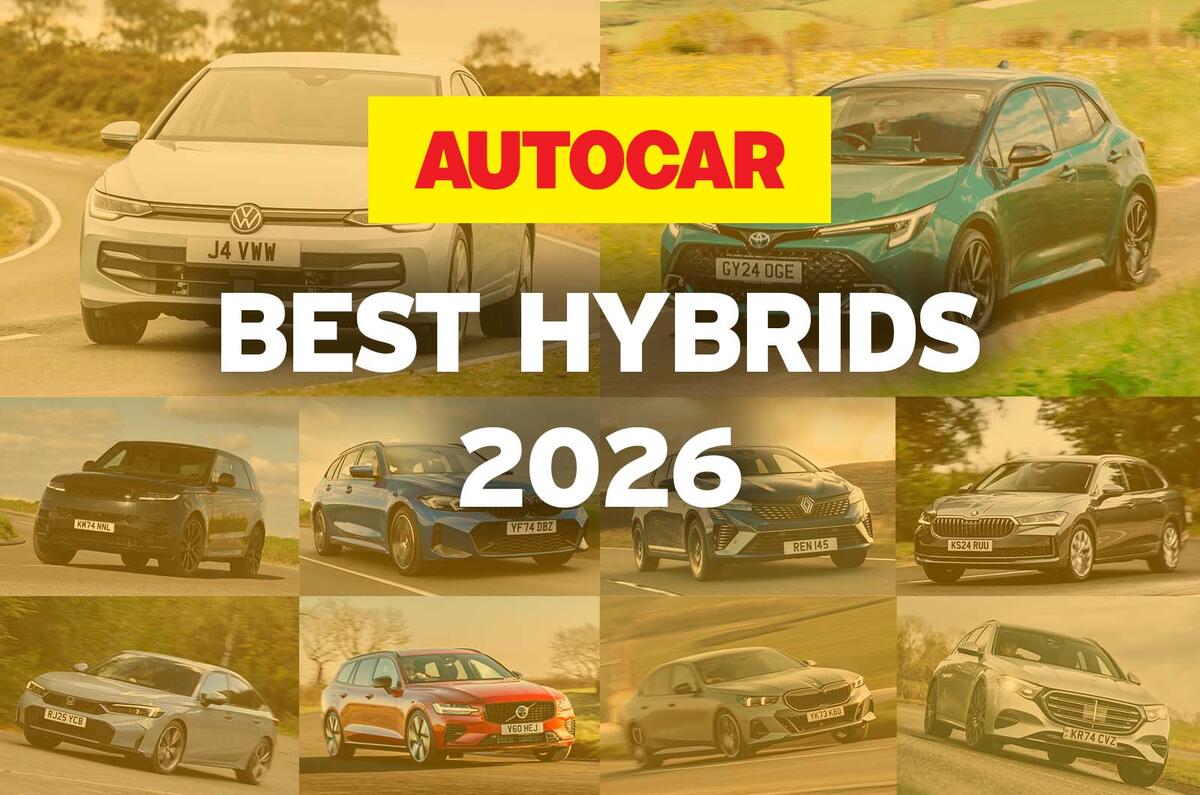
Hybrids combine the convenience of fossil fuel with the appeal of zero-emissions running. Which do we recommend?

In just four years time, new petrol and diesel cars will no longer be sold in the UK, but there’s a lifeline for those who aren’t yet ready to go fully electric: new hybrid cars will still be sold until 2035. 

Whether 'self-charging' or plug-in (PHEV), hybrids are already the go-to choice for those who want to combine green emission ratings with low running costs and the ability to refuel in minutes at a pump. 

For private buyers, they offer a safety net: you can cruise around silently in urban areas while running solely on EV power, then switch to a combustion engine for longer journeys along the motorway.

For company car drivers, PHEVs bring much lower benefit-in-kind (BIK) tax rates, helping drive down running costs further. 

The technology surrounding hybrids and PHEVs has matured significantly in just the last few years, with a handful of new PHEVs now promising an electric-only range of more than 80 miles.

Hybrids like the Honda Civic e:HEV have also risen in popularity, appealing to those who don’t have a driveway for charging, but still want 60mpg-plus.

We think the Volkswagen Golf eHybrid is the best hybrid money can buy today. It’s a practical family hatchback that’s good to drive, easy to use and comes with a truly commendable all-electric range. 

But which other hybrids make our top 10? Read on to find out.

https://images.cdn.autocar.co.uk/
  • Design8
  • Interior8
  • Performance8
  • Ride & Handling8
  • Costs8

Best for: All-around ability

The latest Golf is a real return to form for what was the archetypal family hatchback. It comes in two PHEV forms, the 201bhp eHybrid and the 268bhp GTE, the former of which is our pick of the range - and we think it's the best hybrid you can buy today. 

I'm normally on team manual gearbox, but the automatic found in the PHEV just suits the Golf better.

Named the Best Hybrid at the 2025 Autocar Awards, the Golf eHybrid offers a simply enormous 88 miles of electric range in a package that drives well and has slick steering, assured handling and a reasonably supple ride.

And while it’s not a car that will have you grabbing the keys for an illicit B-road blast, its ability to effortlessly tackle any task is endearing, as is a chameleon-like quality to fit into any surroundings.

Downsides include the touchscreen infotainment is a little frustrating to use and hybrid variants get marginally less boot space, reduced to 273 litres.

Find Volkswagen Golf eHybrid deals with Autocar

Advertisement

Read our review

Car review

After a significant technical overhaul, VW’s baby PHEV looks very compelling indeed

Back to top
https://images.cdn.autocar.co.uk/Toyota Corolla best hybrid cars
  • Design9
  • Interior8
  • Performance8
  • Ride & Handling8
  • Costs9

Best for: Daily economy

Toyota is now well advanced with normalising hybrid power, and no car on sale does it better than the Corolla.

While the 2.0-litre does offers some performance gains, the 1.8 will be sufficient enough for most people.

It combines a healthy dose of visual style with strong perceived cabin quality and has been dynamically developed and tuned – quite successfully – for distinguishing ride and handling sophistication.

In its range-topping 2.0-litre hybrid form, it even performs with a bit of sporting edge. Alternatively, the more humble 1.8-litre hybrid (which even comes in Corolla Commercial van form, for those who need it) will routinely return a day-to-day 70mpg if you drive with one eye on efficiency.

All-round ownership credentials mean Corolla owners can feel equally as good about owning and driving as they do about their outgoings at the pump.

https://images.cdn.autocar.co.uk/
  • Design10
  • Interior10
  • Performance8
  • Ride & Handling9
  • Costs9

Best for: Families

Be it company car buyers or those looking for an efficient, family estate car with an exceptional EV range, the Skoda Superb PHEV is a highly appealing option. 

The iV offers a real-world 70-mile electric range and DC fast-charging for topping up, and it still returns 50mpg when the battery is depleted.

Skoda has a knack for taking Volkswagen Group hardware and software and using it to create a more desirable and usable car, and the Superb iV is no exception.

This PHEV gained big upgrades over its predecessor: with a large 25.7kWh installed in the boot, it promises an impressive electric range of up to 85 miles – and it falls into a very wallet-friendly 6% BIK tax band. 

The addition of such a large battery means the standard car’s 690-litre boot capacity drops to 510 litres, but the Superb remains a brilliant family wagon, and a standout car in the estate class. 

Back to top
https://images.cdn.autocar.co.uk/Volvo V60 best hybrid cars
  • Design8
  • Interior9
  • Performance8
  • Ride & Handling8
  • Costs8

Best for: Versatility

You can spend rather a lot more money on a modern electrified Volvo than this, but the way this particular V60 combines grounded value for money with efficiency, usable electric range and everyday versatility reminds you of the very best family cars that the Swedish firm made so many decades ago, before it became preoccupied with sharp-edged modern design.

It's ultra-responsive on electric power at lower speeds and refined under combustive power thereafter.

Who in their right mind would claim that 345bhp and 0-62mph in 5.4sec isn’t enough for their comfort-first family car, after all?

Who would object to ride and handling that pretty squarely aims at the first of those concepts at the expense of the second but disgraces itself at neither?

Who wouldn’t be delighted by a smart, appealing, well-packaged interior full of neat storage solutions and a 519-litre boot that comes with its own pop-up load-bay-organiser-cum-elasticated-bag-holder?

The V60 T6 Recharge seals the deal here with a hybrid system that delivers 55 miles of lab-verified electric range and plenty of associated running-cost savings potential.

https://images.cdn.autocar.co.uk/
  • Design8
  • Interior8
  • Performance8
  • Ride & Handling9
  • Costs8

Best for: Sporting character

BMW has brought significant updates to the PHEV version of the 3 Series, returning it to a more competitive position within its class in terms of electric range. 

BMW’s one-time default-choice exec is now as recommendable as a 330e as ever it was as a 320d. We may miss the diesels, but at least we needn't mourn them too hard.

With a large 19.5kWh battery, the 330e has a claimed EV range of up to 63 miles, although you will probably get closer to 50 miles in real-world conditions.

What makes the 330e so compelling as a hybrid package is how well it hides the complexity of its powertrain. 

One minute it's a quiet, urban electric cruiser, the next it's a poised, rear-driven saloon or estate with oodles of driver appeal and sporting character. 

The duality of the 330e means that the lack of an efficient 320d diesel model in the 3 Series line-up is no longer an issue.

Back to top
https://images.cdn.autocar.co.uk/
  • Design9
  • Interior8
  • Performance7
  • Ride & Handling8
  • Costs9

Best for: Supermini lovers

The Clio is the smallest car on this list and also the cheapest.

The Clio’s talents are best displayed at urban speeds, thanks to its excellent mid-range torque.

Badged E-Tech Full Hybrid, the hybrid version uses a 1.6-litre petrol engine and two electric motors, which combine to drive 143bhp and 151lb ft through the front wheels.

It can only be had with an automatic gearbox, but performance is strong. It will hit 0-62mph time of 9.3sec while boasting a 67.3mpg fuel consumption figure. 

The Clio's interior is stylish and comfortable, with an intuitive layout and useful buttons.

If you want to put your foot down, the Clio also holds itself well on the road. It's agile and composed in the corners, and while it's not quite as impressive as the Ford Fiesta once was, it's engaging and fun in several scenarios.

Find Renault Clio deals with Autocar

https://images.cdn.autocar.co.uk/
  • Design8
  • Interior9
  • Performance8
  • Ride & Handling9
  • Costs7

Best for: Luxury appeal

The Range Rover Sport delivers everything you would expect of a luxury SUV: practical, supremely versatile, smooth, refined and brilliant to drive. 

Careful tuning of steering weight, pace and feel and supple but surprisingly taut and sophisticated damping are the car’s calling cards.

The plug-in hybrid P460e brings efficiency into the fold, thanks to its large 31.8kWh (usable) battery, which gives it an excellent 76 miles of EV range – more than the rival BMW X5 xDrive50e (64 miles). 

Despite the P460e’s 2660kg kerb weight, it’s still a quick SUV. Its 3.0-litre six-cylinder engine and 215bhp electric motor give a combined output of 454bhp, allowing for a sub-5.5sec 0-60mph time. 

Of course, being a luxury offering, the Sport isn’t cheap (prices start from £90,310), but few PHEV SUVs offer the same level of comfort, refinement and seamless drivability. 

Find Land Rover Range Rover Sport deals with Autocar

Back to top
https://images.cdn.autocar.co.uk/BMW 5 Series best hybrid car
  • Design8
  • Interior7
  • Performance9
  • Ride & Handling9
  • Costs7

Best for: Long commutes

The BMW 5 Series is a real ‘have your cake, eat it and lose weight’ kind of car, and we think the 550e model is one of the best hybrids on sale today.

The 550e is savage when it comes to roll-on acceleration.

The engine range opens with a 2.0-litre four-pot petrol, available as a 205bhp mild-hybrid (badged 520i), followed by the 295bhp, plug-in hybrid 530e.  

At the top of the range sits the 550e xDrive, which takes a 308bhp B58 six-cylinder petrol engine partnered with a 194bhp electric motor. Total output stands at 483bhp, meaning a 0-62mph time of 4.4sec. 

Its strengths are its impressive handling and its cosseting ride, aided by adaptive dampers. Its engines are very refined too and offer substantial pace throughout the range, although the range-topping 550e is quite expensive. 

https://images.cdn.autocar.co.uk/
  • Design8
  • Interior8
  • Performance8
  • Ride & Handling8
  • Costs7

Best for: Comfort

Despite the growing number of SUVs, Honda has stuck to the traditional family hatchback template for the Civic, which recently received a number of tweaks as part of a mid-life update. 

The engine is complex. Sometimes the gearbox behaves like a CVT. Sometimes it's like a traditional automatic gearbox. But most of the time you're not aware of it.

Incredibly, the Japanese machine is in its 11th generation, but it shows no signs of slowing down or resting on its laurels. 

Like the HR-V crossover and Jazz supermini, it uses Honda's clever e:HEV drivetrain, which in most situations uses the 2.0-litre four-cylinder petrol engine as a generator for a 1.05kWh battery that powers an 181bhp electric drive motor. 

Honda claims the Civic is good enough for 56.5mpg, and during out testing it was easy to match this figure without any real effort. 

The Civic is much better to drive than many of its rivals. It offers engaging handling, quick steering and impressive body control. Thanks to its composed ride, it's also one of the most comfortable hatchbacks on sale. 

Find Honda Civic deals with Autocar

Back to top
https://images.cdn.autocar.co.uk/
  • Design8
  • Interior9
  • Performance8
  • Ride & Handling8
  • Costs8

Best for: BIK-busting

The new car market is moving at an alarming pace. New brands are the new norm, all with their different marketing strategies and reasons to buy.

Cutting-edge tech and quality interior marry up with a frugal PHEV powertrain.

The E-Class goes against this and offers steadfast adherence to what it has always done: provide drivers with quality, comfort, space and refinement.  

The E300e is the one to go for company car drivers. It’s rated for 70 miles of EV range and is one of the very few PHEVs to offer 6% company car tax.

It’s frugal in real-world conditions too. We averaged 45.5mpg in most of our testing and frequently saw 60mpg - which makes for a near-900-mile total range.

It averaged 3.0mpkWh in EV mode too  - a figure that some pure EVs would be jealous of.

Find Mercedes-Benz E-Class deals with Autocar

HOW TO CHOOSE THE BEST HYBRID CAR

Choosing the right hybrid depends entirely on your access to a plug and your daily mileage.

Here is what you need to consider:

Hybrid (HEV) versus plug-in hybrid (PHEV)

Why it matters: This is the biggest decision you'll make.

  • Hybrid: If you don’t have a driveway or easy access to a charger, a 'self-charging' hybrid is the most suitable option. They are cheaper to buy and better for those who do high motorway mileages. 
  • Plug-in hybrid: if you have access to a charger at home or work, a PHEV with a good electric range will offer you the best economy overall. If used correctly, you can drive for weeks without ever using a drop of fossil fuel.

Electric-only range

Why it matters: The longer the range, the more you save on fuel and tax.

  • The 50-mile mark: Many modern PHEVs now offer more than 50 miles of electric range. Finding a PHEV with such a range often drops the car into a lower benefit-in-kind (BIK) tax bracket.
  • Winter range: Always assume your real-world electric range will be 20–30% lower in cold weather than the official figures suggest.

Charging Speed

Why it matters: PHEVs usually charge slowly, but some are faster than others.

  • AC charging: Most PHEVs can charge at up to 7kW from a regular slow charger, with a full top-up therefore taking around 3-5 hours.
  • DC rapid charging: Some newer PHEVs can use public rapid chargers. This is a bonus but rarely a necessity, because it will cost you a lot more to boost your battery using a public charger. 

Performance when ‘empty’

Why it matters: A PHEV is rarely fully empty, but once the main battery is depleted, the car relies on its petrol engine.

  • Check the engine size: A small engine in a heavy SUV might feel strained and less efficient once the electric assistance is limited. Look for full hybrid systems that still offer decent MPG even on long motorway runs.

How to decide if you actually need a hybrid

A hybrid makes sense if:

  • You do a mix of city and motorway driving.
  • You aren't ready for a full EV but want to lower your emissions.
  • You're a company car driver looking to slash your monthly tax bill. 

You shouldn’t buy a hybrid if:

  • You do only long-distance motorway journeys.
  • You don’t have a charger at home or work.
  • You generally travel with a full boot.

HOW WE TESTED AND SELECTED

When reviewing hybrids and plug-in hybrids (PHEVs), we focus on the seamlessness of the technology. The best hybrids offer good levels of efficiency while hiding the complexity of their powertrains with a seamless transition between the electric motor and engine.

Here’s what we assessed:

1. Efficiency and real-world range 

For PHEVs, we tested their electric-only ranges against the official WLTP claims to see how many miles they actually cover. For self-charging hybrids, we measured MPG across varied routes – urban stop-start, rural A-roads, and motorways – to ensure they deliver genuine fuel savings over a standard petrol car.

2. Powertrain refinement 

We evaluated the transition between electric and internal combustion power. We looked for systems that switch imperceptibly, avoiding the ‘rubber-band effect'. We also tested performance under full load to ensure the car doesn't feel underpowered once the battery is depleted.

3. Practicality and packaging 

Adding batteries and motors often eats into boot space or fuel tank capacity. We measured the real-world impact on luggage room and passenger comfort. We also tested the ease of use for charging ports on PHEVs and the effectiveness of regenerative braking systems in everyday traffic.

4. Ride and handling 

Hybrids are heavier than their petrol counterparts. We assess each car on challenging B-roads to see how they manage their additional weight. We looked for a balance: a car that remains composed through corners without a wooden ride that crashes over potholes.

FAQs

What is a hybrid? 

A hybrid car uses two sources of power, usually a combustion engine plus an electric motor and battery. Hybrid cars are commonly referred to as 'electrified vehicles' and their innovative powertrain setups allow for improved fuel efficiency, boosted performance in some cases and reduced emissions. 

What are the different types of hybrid cars?

There are three commonly recognised types of hybrid cars: mild hybrids, full hybrids and plug-in hybrids.  Mild hybrids use the least amount of electrical assistance, often no more than a motor to power the wheels at low speeds.  Full hybrids use a larger battery and electric motor to propel the car on electric power only at low speeds, for short distances, such as in traffic or town.  Plug-in hybrids use much larger batteries - some as large as 25kWh - to travel much further on electric power only, as well as provide a substantial power boost for bolstered performance and acceleration. Some cars can travel up to 88 miles on electric-only power. 

What's the longest-range plug-in hybrid on sale?

The longest-range plug-in hybrid on sale in the UK today is the Volkswagen Golf and Audi A3, which both claim 88 miles of electric-only driving. The PHEV Range Rover claims around 75 miles of range, while the Skoda Kodiaq stands at 71 miles. 

Join our WhatsApp community and be the first to read about the latest news and reviews wowing the car world. Our community is the best, easiest and most direct place to tap into the minds of Autocar, and if you join you’ll also be treated to unique WhatsApp content. You can leave at any time after joining - check our full privacy policy here.

Murray Scullion

Murray Scullion
Title: Digital editor

Murray has been a journalist for more than a decade. During that time he’s written for magazines, newspapers and websites, but he now finds himself as Autocar’s digital editor.

He leads the output of the website and contributes to all other digital aspects, including the social media channels, podcasts and videos. During his time he has reviewed cars ranging from £50 - £500,000, including Austin Allegros and Ferrari 812 Superfasts. He has also interviewed F1 megastars, knows his PCPs from his HPs and has written, researched and experimented with behavioural surplus and driverless technology.

Murray graduated from the University of Derby with a BA in Journalism in 2014 and has previously written for Classic Car Weekly, Modern Classics Magazine, buyacar.co.uk, parkers.co.uk and CAR Magazine, as well as carmagazine.co.uk.

Sam Phillips

Sam Phillips
Title: Staff Writer

Sam joined the Autocar team in summer 2024 and has been a contributor since 2021. He is tasked with writing used reviews and first drives as well as updating top 10s and evergreen content on the Autocar website. 

He previously led sister-title Move Electric, which covers the entire spectrum of electric vehicles, from cars to boats – and even trucks. He is an expert in new car news, used cars, electric cars, microbility, classic cars and motorsport. 

Sam graduated from Nottingham Trent University in 2021 with a BA in Journalism. In his final year he produced an in-depth feature on the automotive industry’s transition to electric cars and interviewed a number of leading experts to assess our readiness for the impending ban on the sale of petrol and diesel cars.

Matt Saunders

Matt Saunders Autocar
Title: Road test editor

As Autocar’s chief car tester and reviewer, it’s Matt’s job to ensure the quality, objectivity, relevance and rigour of the entirety of Autocar’s reviews output, as well contributing a great many detailed road tests, group tests and drive reviews himself.

Matt has been an Autocar staffer since the autumn of 2003, and has been lucky enough to work alongside some of the magazine’s best-known writers and contributors over that time. He served as staff writer, features editor, assistant editor and digital editor, before joining the road test desk in 2011.

Since then he’s driven, measured, lap-timed, figured, and reported on cars as varied as the Bugatti Veyron, Rolls-Royce PhantomTesla RoadsterAriel Hipercar, Tata Nano, McLaren SennaRenault Twizy and Toyota Mirai. Among his wider personal highlights of the job have been covering Sebastien Loeb’s record-breaking run at Pikes Peak in 2013; doing 190mph on derestricted German autobahn in a Brabus Rocket; and driving McLaren’s legendary ‘XP5’ F1 prototype. His own car is a trusty Mazda CX-5.

Join the debate

Comments
33
Add a comment…
romanjack1150 31 December 2025

Such a pleasant and informative read. It captures the same modern approach that sendwishonline free online bridal shower invitations offer.


juan365live 28 December 2025

The structure of the article keeps things easy to follow. That organization helps when learning about Juan 365 Promotions.

juan365phil 28 December 2025

There’s a calm confidence in how the topic is presented. That tone works well when talking about Juan 365 PAGCOR.