


Currently reading: Next-gen Porsche 718 EVs being reworked for petrol power

Porsche will install petrol power into its previously electric-only new duo

Back to top

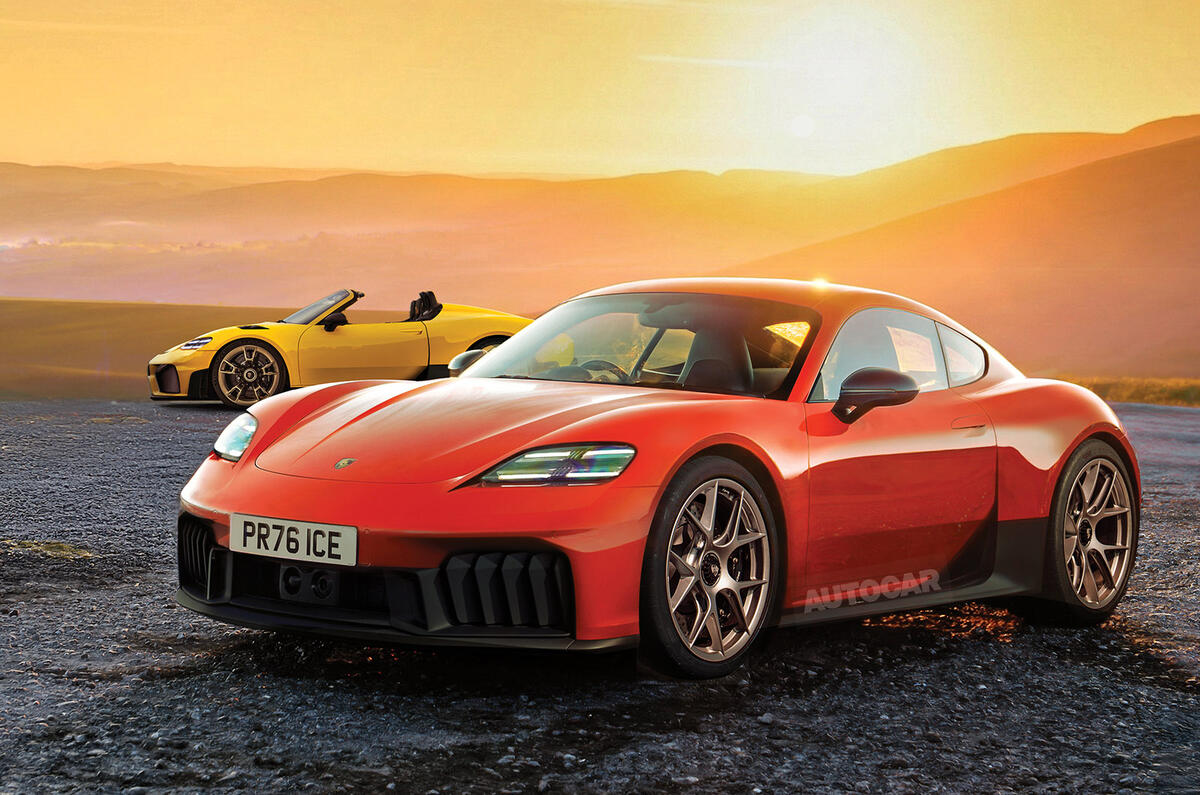
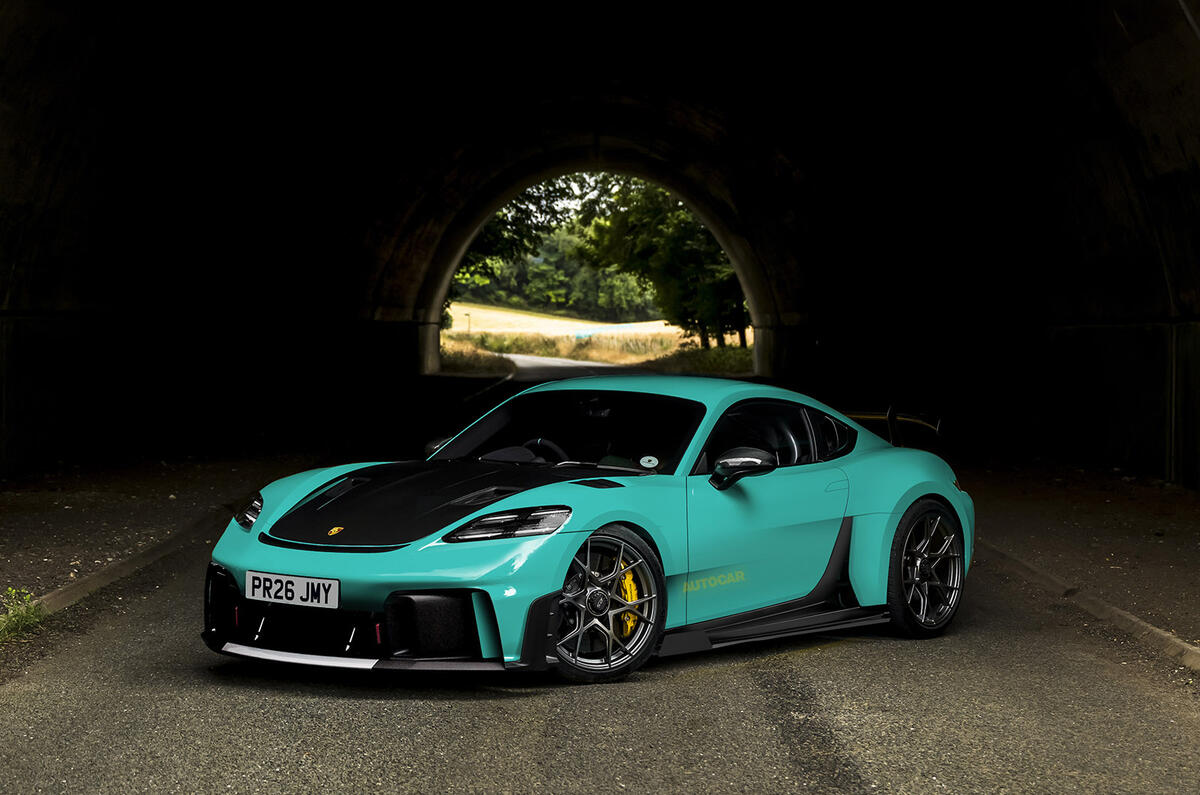
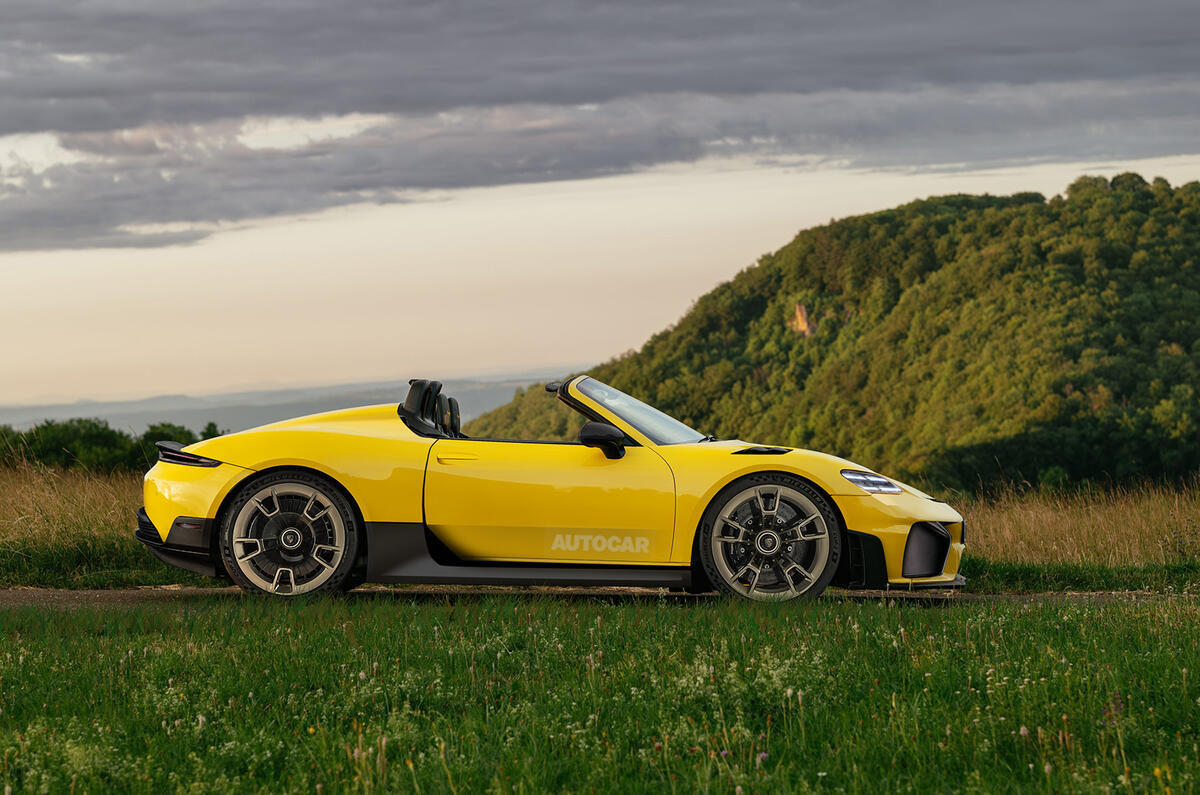
Porsche is preparing to adapt its next-generation 718 Boxster and Cayman platform to accept petrol engines, in an abrupt U-turn on plans for the models to go EV-only.

Production of the fourth-gen Boxster and Cayman ended last month, with new bespoke electric versions due this year. But with EV demand waning, Porsche had already announced it would continue selling "top" variants - tipped to be the RS and GT4 RS versions - of the current models.

That was part of a "strategic realignment" that included Porsche rolling back a number of EV plans, taking a £6.65bn hit in the process.

Now, senior sources at the company's Weissach engineering centre have told Autocar that Porsche is also working on returning the petrol duo to the line-up by reverse-engineering the EV-only PPE Sport platform, developed for the 2026 electric successors, to accommodate a mid-mounted engine.

The move is aimed at ensuring maximum production efficiency and volume of scale on key components and it represents one of the most radical drivetrain reversals in Porsche's history. It follows the route taken by other car makers, including Fiat with the 500 Hybrid and Mercedes-Benz with the Viano.

The decision is part of a wider recalibration of Porsche's previous new-model strategy. Other models in the line-up that were previously earmarked to go exclusively electric, including the Macan, are now also set for an internal combustion engine reload.

Indeed, these new PPE Sport-based 718s are different from the "top" 718 variants that Porsche said were in the works during September's "strategic realignment". Those models are expected to be the continuation of the current-generation RS and GT4 RS, which are being positioned to sit above the 2026 EVs. This new information suggests they will be used as a stopgap until the upcoming fifth-generation models arrive towards the end of the decade.

Porsche insiders stress that, to be viable, the new fifth-generation ICE models must achieve dynamic parity with their electric siblings - a high bar, given what they described as an "ultra-low centre of gravity" provided by the electric architecture.

Achieving that will be no small task. The PPE Sport platform uses a stressed, load-bearing battery pack and a flat floor, so removing the battery would significantly weaken the entire bodyshell.

As a result, the proposal from Porsche engineers centres on developing a new structural floor section that bolts into the platform's existing hard points, effectively adding the rigidity back in. A redesigned rear bulkhead and subframe will then support the engine and transmission, Autocar has been told.

Major packaging constraints remain, not least because the electric structure provides no central tunnel, nor provision for a fuel tank, fuel lines or exhaust system. Engineers suggest these measures require the development of a completely new rear section because the architecture was never designed for a petrol engine.

Porsche had previously determined that its naturally aspirated 4.0-litre flat six would not survive under the EU's original Euro 7 emissions proposal, which required oversized particulate filters and after-treatment hardware. But the diluted final regulation, together with the EU's post-2035 e-fuel exemption, now makes a business case for new petrol-powered sports cars viable.

One senior engineer told Autocar: "The electric Boxster and Cayman risked becoming a niche. Euro 7 changed the arithmetic."

Which engine will be used by the new models is still being decided. However, new plans presented by outgoing Porsche CEO Oliver Blume suggest the leading candidate is a development of the 4.0-litre flat six, which was introduced to the 718 in 2020 and could make up to 493bhp in the GT4 RS.

Advertisement

Read our review

Car review

Engine downsized, turbo added and chassis tuned. Has Porsche made all the right moves, or is the 718 Boxster a worthy soft-top successor?

Advertisement

Join the debate

Comments
29
Add a comment…
Ruaraidh 15 December 2025

Sounds like it will be a horribly confused heavy mess of compromised decision making.  To do a multi-powertrain platform, you have to do all the options from the start.

Making a load bearing floor to replace the battery and add sufficient rigidity to replace the (non-existent) transmission tunnel sounds very heavy indeed.


Chris576 15 December 2025

So they've lobbied their way to a position where they think they'll be allowed to destroy the planet? May their factory be flooded in the next round of extreme weather triggered by climate change. 

DVB78 15 December 2025

@chris576 - what utter crap you spout!

the staggering arrogance of the climate zealots who think we insignificant humans are able to alter the climate on a planet that has existed for millions of years!

jason_recliner 16 December 2025
DVB78 wrote:

@chris576 - what utter crap you spout!

the staggering arrogance of the climate zealots who think we insignificant humans are able to alter the climate on a planet that has existed for millions of years!

If you can understand science you'll realise that although the planet seems huge the atmosphere is relatively miniscule, fragile, and certainly is being impacted by unprecedented burning of organic compounds.

DVB78 16 December 2025

The Earth's atmosphere consists of 97% water vapour. the other 3% is gases etc..

Over 90% of those gases are NATURALLY occuring, less than 10% are man-made! 

IPCC Report AR4 states that man-made CO2 is only 3.6% of total CO2., the rest is naturally ocurring

the current climate zealotry is basically the tail wagging the dog - its nonsense, and its NOT science - Its based on the Multi billions of our tax dollars being thrown at these people. They are hardly goiung to say  Dont worry, its all natural, and lose their massive funding...

jm0u812 16 December 2025

Your argument confuses atmospheric percentages with causation. Small changes in trace gases, specifically human-added CO₂, are responsible for the observed increase in atmospheric CO₂, regardless of larger natural background fluxes.

- 97% water vapor claim: False. Earth’s atmosphere is ~78% nitrogen and ~21% oxygen. Water vapor is variable and typically 0–4% by volume (~0.25% by mass), not 97%.

- “Over 90% of gases are natural”: Technically true but misleading. Major atmospheric gases are natural, but climate impact depends on changes in trace gases, not bulk composition.

- “IPCC says man-made CO₂ is only 3.6%”: Misleading. That figure refers to annual CO₂ fluxes, not the cause of the increase in atmospheric CO₂. Nearly 100% of the rise from ~280 ppm to >420 ppm since the industrial era is due to human emissions; natural sources and sinks were roughly balanced before.

- “Climate science is funding-driven nonsense”: Unsupported. The conclusion that human activity drives recent CO₂ increases and warming is based on independent measurements, carbon isotopes, mass balance, and multiple datasets, not funding claims.


CanuckRacer 15 December 2025

I agree with others that it will be quite a long wait for a new-platform ICE Boxster/Cayman. I'm almost completely ignorant about the e-fuel paradigm, but assuming it's viable I still haven't got a clue what it means for availability or pricing of any new offerings.Porsche prices have been climbing dramatically so if anything one would expect the sports cars (not the SUVs) to sell in smaller numbers. That's not necessarily a bad thing, maybe Porsche needs to scale back on those product lines to stay in the black.