
Banning the sale of hybrid cars from 2030 would've been "too soon”, the prime minister has said, as his government confirmed they can remain on sale until 2035 as part of a substantially relaxed zero-emission vehicle (ZEV) mandate.
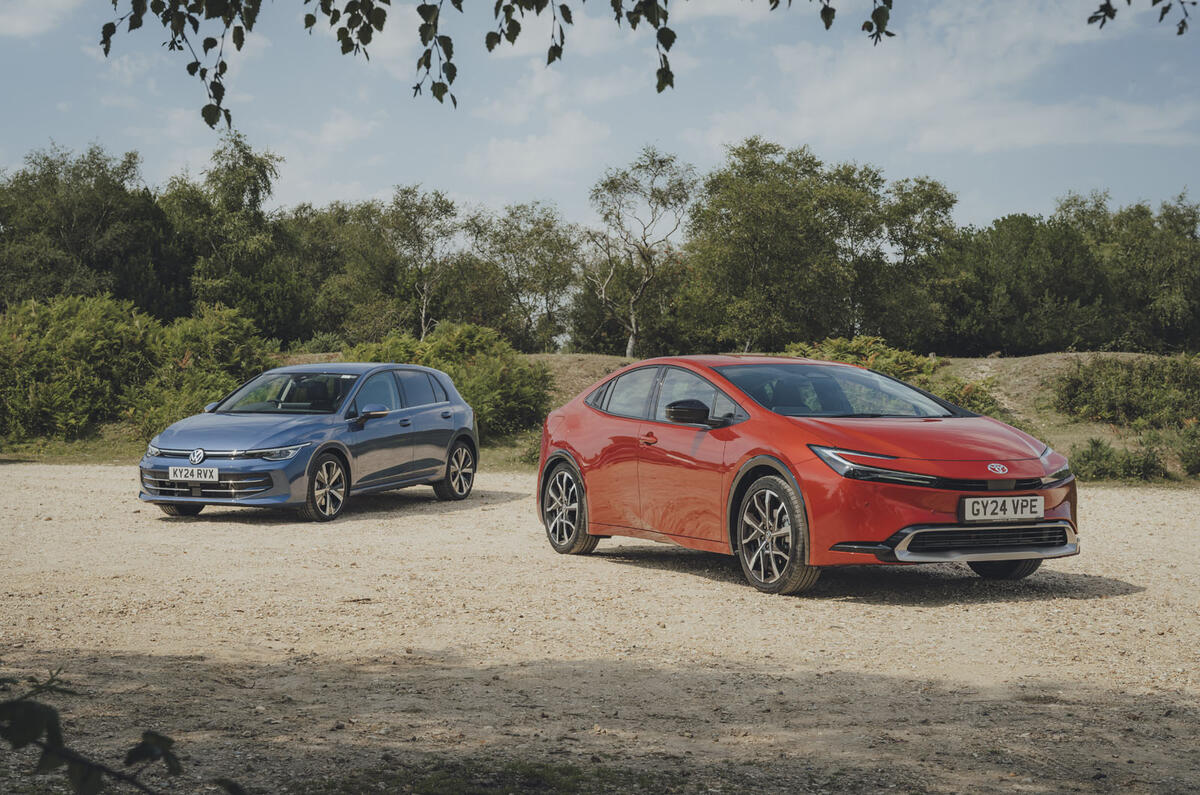
Speaking on Monday afternoon from JLR’s Solihull plant, Keir Starmer said that hybrids “make a massive difference to reducing emissions”.
Former prime minister Boris Johnson had previously announced some hybrids with a "meaningful electric range" would be able to remain on sale past 2030, without ever publicly defining "meaningful".
The move was described as a show of support to the automotive industry, following the imposition of 25% tariffs on all vehicles imported into the US.
As part of the shake-up, originally announced on Sunday night, Starmer has confirmed that "all" hybrid cars can remain on sale from 2030-2035; low-volume car makers will be exempt from the need to achieve an 80% electric car sales mix in 2030; and all manufacturers have greater flexibility in how they can meet the annual EV sales targets imposed by the ZEV mandate.
Late last year, the government pledged to rework the ZEV mandate in consultation with the car industry, in light of organic demand for EVs falling well below the mandated targets and threatening car makers' ability to trade profitably. It launched a public consultation and has now brought forward its response.
Under the terms of the ZEV mandate, car makers must achieve a 28% EV sales mix in 2025, but recent industry figures reveal that demand is running more than eight percentage points behind that.
The government had already pledged to make the changes as a matter of urgency, after car makers spent billions on discounting EVs to boost demand and hit last year's 22% EV mix target. But the need for action became more acute last week when US president Donald Trump announced swingeing 25% import tariffs on all foreign-made cars – a huge blow to the UK car industry, which sent 27% of its output Stateside last year.
As a result, Starmer has accelerated the changes, saying that "the new era of global insecurity means that the government must go further and faster reshaping our economy through the Plan for Change".
The government said the changes will "make it easier for industry to upgrade to make electric vehicles, while delivering the manifesto commitment to stop sales of new petrol and diesel cars by 2030, which will help even more British consumers access the benefits of cheap to run electric vehicles".
It will follow up the revamped ZEV mandate with the unveiling of a "modern industrial strategy" in the summer, "which will help British businesses realise the potential of industries of the future".
The government is still attempting to negotiate a new trade deal with the US in a bid to neutralise the impact of the tariff, but ministers are drawing up a list of retaliatory measures that the UK could put in place in the coming weeks if it's unsuccessful.
The government said: "Support for the car industry will be kept under review as the impact of new tariffs become clear."