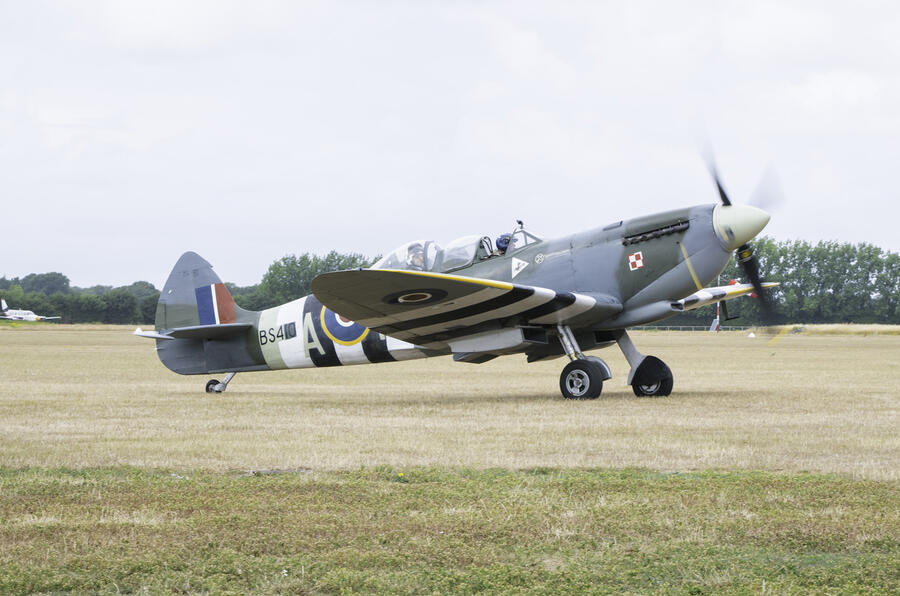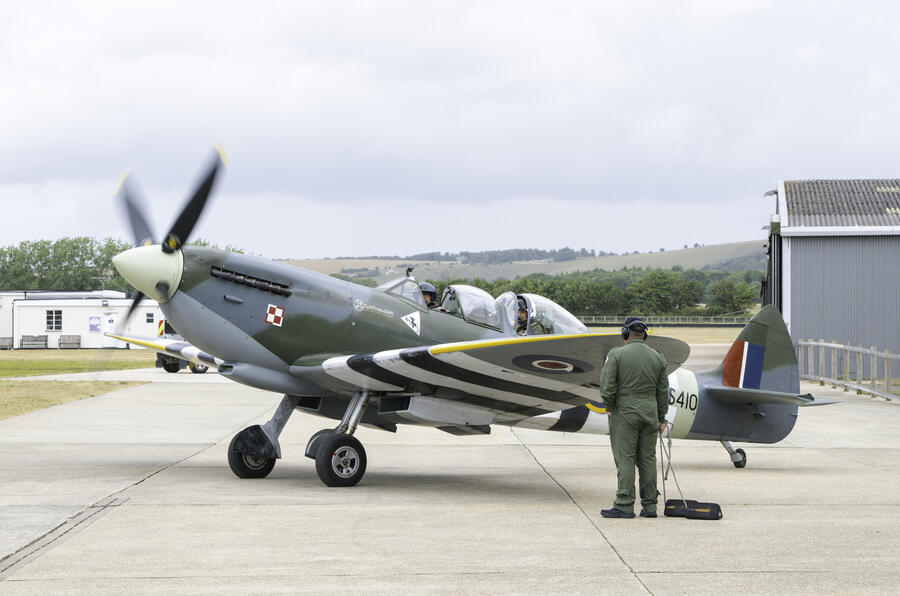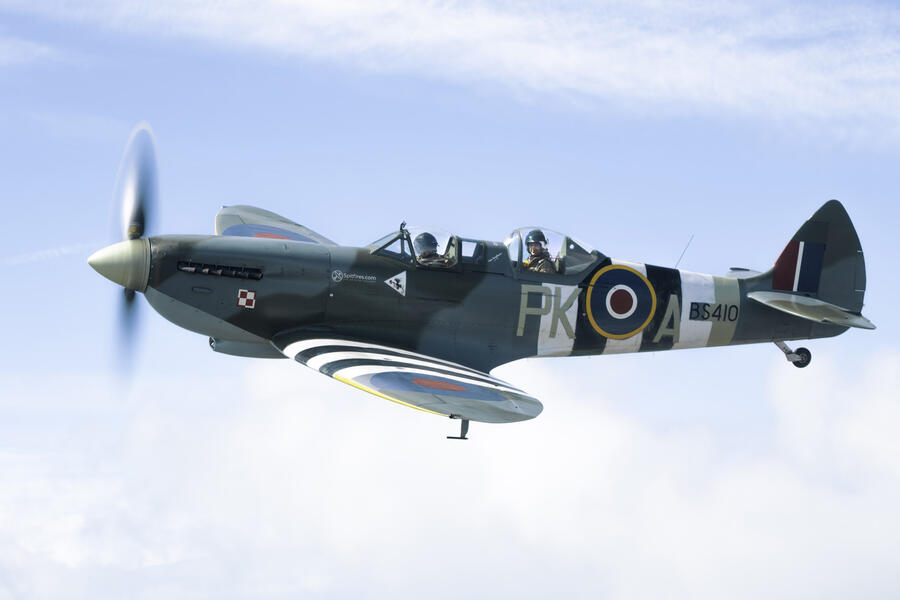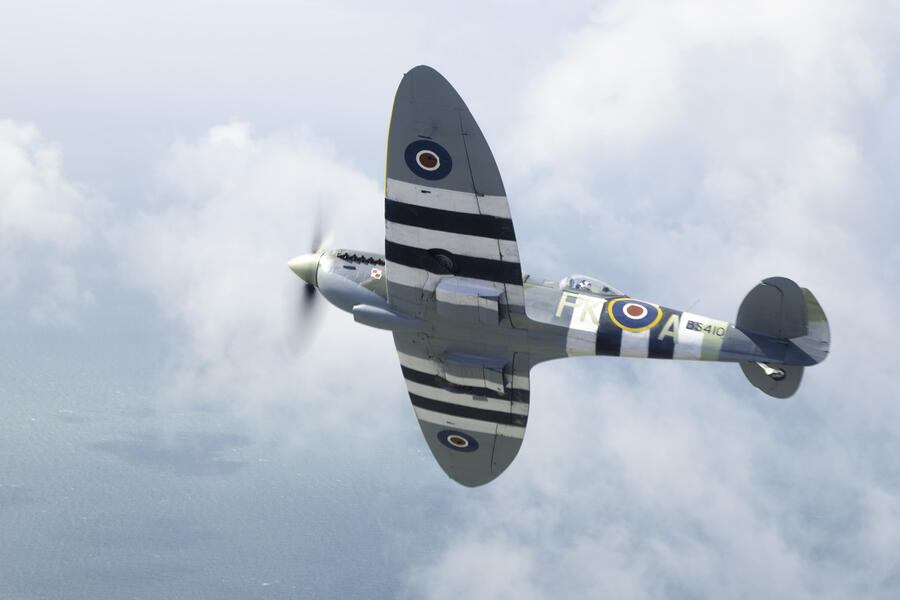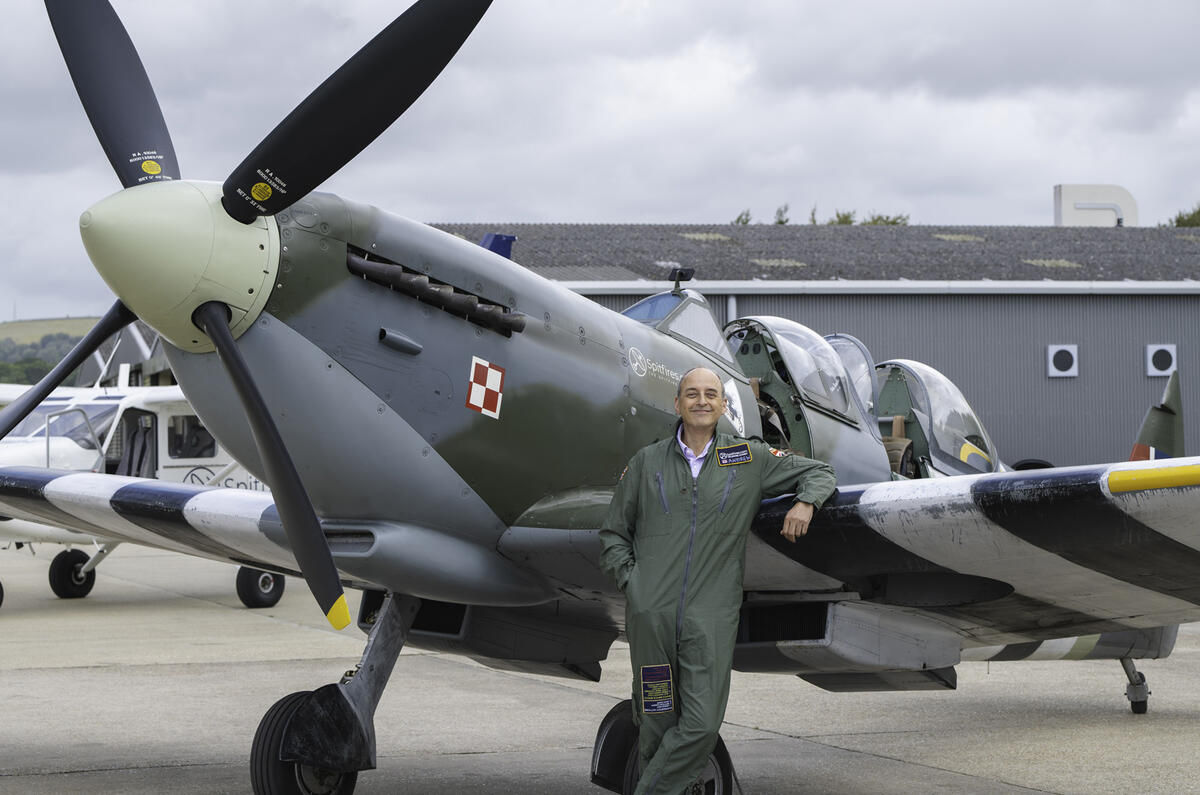

A cough. A splutter. A jet of flame for good measure and the Merlin is prised from its slumbers and into rambunctious life. Many of you, perhaps even most, will have heard one of these engines, at Goodwood or an airshow. But unless you’re physically strapped into an aircraft boasting one, you can never claim to have felt one too. But I have. For I am in a Supermarine Spitfire, parked on the grass that forms the infield at Goodwood and, very shortly now, I shall be flying it.
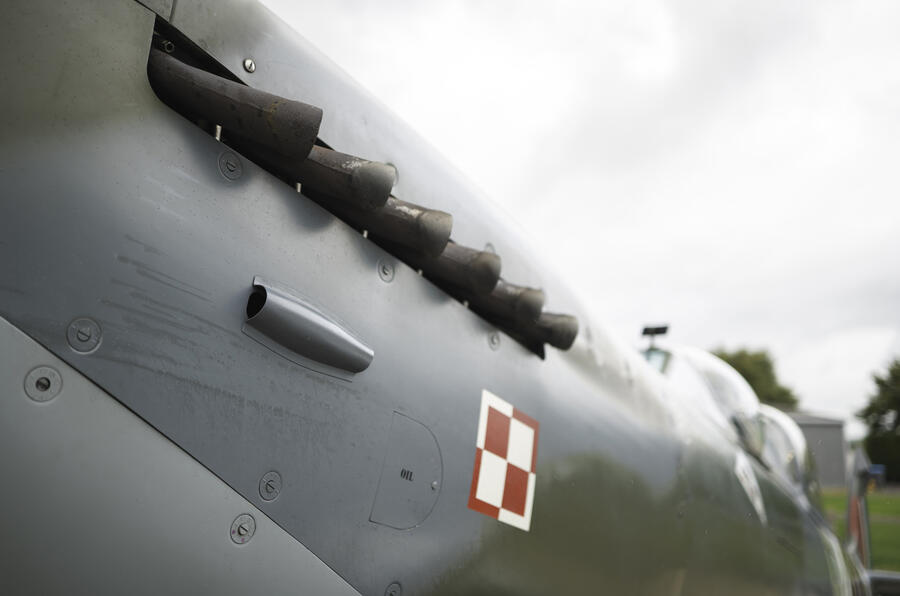
We know the Goodwood aerodrome for the wonderful Revival and Members’ Meetings it hosts, but before any of that, it was RAF Westhampnett, a Spitfire base and, indeed, from where the double-amputee flying ace Douglas Bader departed for his final flight before spending the rest of the Second World War as a prisoner of war. Old aerial photos of the base show that what is today a race track was then the airfield’s perimeter road – what you drove around to get to where your kite was parked. In this case, it’s a Supermarine Spitfire MkIX, complete with 27-litre, twin-stage-supercharged, 48-valve, V12 Rolls-Royce Merlin 61 engine.
We all know the Merlin was named after the wizard of Arthurian legend, and in that regard, if no other, we are all wrong. It’s actually named after Europe’s smallest falcon. It was produced in a dizzying array of forms, including one used in tanks, from 1936 to 1950, in which time almost 150,000 were built, most famously for the Spitfire, Hawker Hurricane, de Havilland Mosquito and Avro Lancaster. Although a Rolls-Royce engine, it was built under licence by Packard in the US and by Ford in Manchester. Rolls-Royce facilities included factories in Derby, Glasgow and, of course, Crewe.
Indeed, it was to make the Merlin aero engine, and not cars at all, that the Crewe factory was built as re-armament took place in the face of Nazi aggression and the increasing realisation that war was coming. The factory opened its doors in 1938 and was camouflaged to look like residential housing from the air.
The disguise was an almost complete success: the factory was significantly bombed just once, with 17 workers tragically losing their lives. During the war, more than 25,000 Merlins were made there, with an untold effect on enemy forces. Only once hostilities had ceased did thought turn to car production, at which point the factory was adapted to make the Bentley MkVI and Rolls-Royce Silver Wraith from 1946.
It seems strange that anything manufactured by Rolls-Royce could be making such a racket, but the Merlin was loved by the pilots it powered, both for its performance and for its reliability. Indeed, it had just one notable flaw: a tendency to flood its bucket-sized carburettor during negative-g manoeuvres. This was fixed when a gifted engineer and car and motorcycle racer called Beatrice Shilling invented a restrictor that limited the flow of fuel in such circumstances, allowing Hurricanes and Spitfires to keep up with enemy aircraft that used fuel-injected engines. The device has been known ever since as Miss Shilling’s Orifice.