




The Indian car market has been dominated by small low-cost cars for some time, but the prominent role of SUVs at this year’s Auto Expo in Delhi suggests the character of Indian roads could change.
Domestic manufacturers, like Tata, Mahindra, and Maruti Suzuki, which is the biggest car manufacturer in the country, led the SUV charge on the home front. Tata owns Jaguar Land Rover, but is only a modest carmaker itself. It displayed the Nexon compact SUV to much fanfare and praise. It also announced a marketing set-back with the news that it will change the name of its soon-to-launch Zica hatchback because of the association with the Zika virus.
Mahindra, owner of SsangYong and now Pininfarina, unveiled the XUV Aero concept, an SUV with coupe-like styling designed by Mahindra and built by the Italian design house and coachbuilder.
But the biggest interest from the domestic market was always going to be around Maruti Suzuki because of its dominance in this country, and the manufacturer took the opportunity to use the very first press conference of the Auto Expo to unveil perhaps the biggest star of the show.
The Suzuki Vitara Brezza is a compact SUV that’s 3995mm in length – to avoid the extra tax on vehicles in India over four-metres long – and will go on sale this year. It’s unlikely to come to Europe, though. Maruti also unveiled the Baleno RS, with a sporty bodykit and Suzuki’s 1.0-litre Boosterjet engine.
Hyundai, another big player in India, also unveiled a compact-SUV concept at the show. The HND-14 is also under four-metres in length and will lead to a production version in the future, one that in all probability will go on sale in 2017.
Mercedes-Benz, SsangYong and Hyundai all showcased SUVs currently on sale outside of India before their respective launches in the country; the Mercedes-Benz GLC, Ssangyong Tivoli and Hyundai Tucson are all set to arrive in the near future.
The increase in SUV sales has triggered a general decline in the MPV market globally, but the Toyota Innova remains a huge success story in India, and the second-generation model attracted a lot of attention at the Toyota stall, becoming one of the most popular cars at the show.
More eye-catching imports included the Audi R8 and Ford Mustang which, although unveiled some time ago globally, were displayed to the mass Indian market ahead of their showroom debut there. In India, both are subject to import tax which puts a 120% premium on their UK prices.
Foreign manufacturers face a struggle to make an impact in India because of these exorbitant import tax laws, but Renault has taken the market by storm.
The French manufacturer released the low-cost locally-built Kwid hatchback in India to huge acclaim last year, scooping the Autocar India Car of the Year award and perfectly tailoring itself to the country’s insatiable appetite for affordable small cars, while also giving it the much sought-after styling of an SUV, all for a bargain basement price equivalent of around £2500.
Built on the flexible Renault-Nissan CMF-A platform, and made from 98% localised Indian parts, there are rumours it will be sold in Europe, but nothing is confirmed yet.
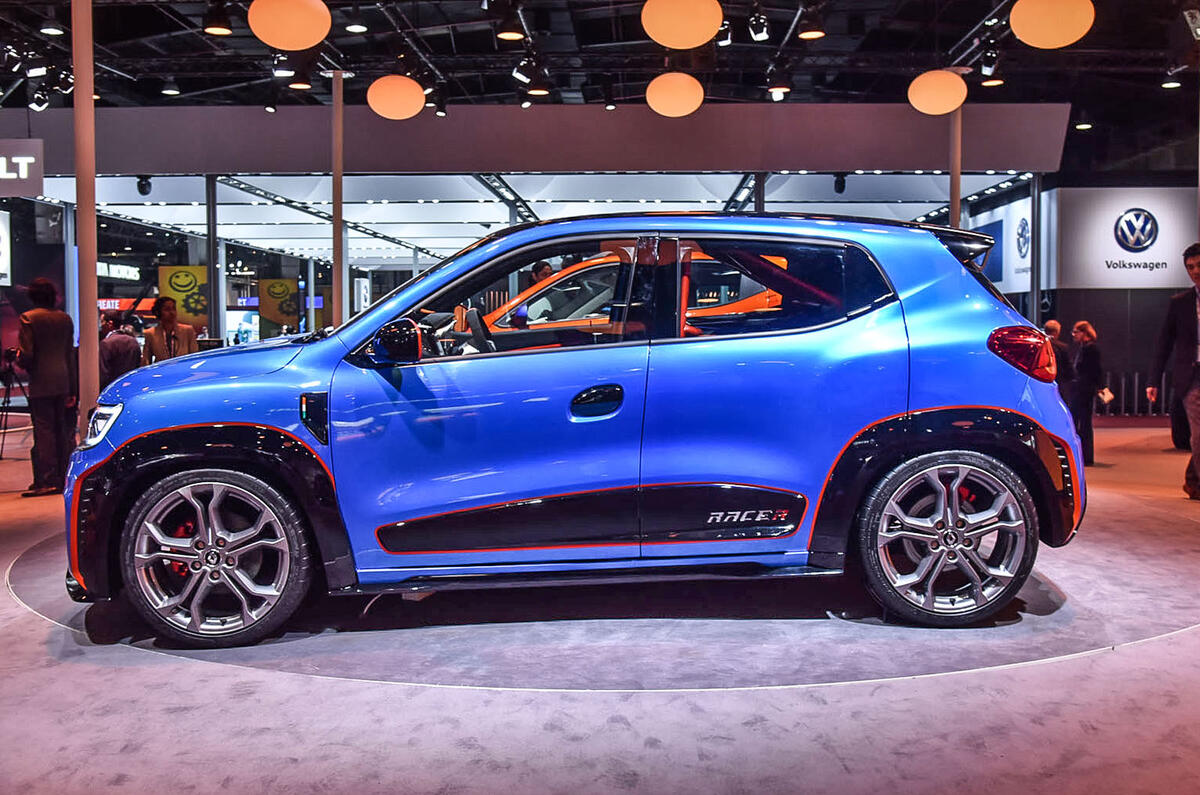
Renault revealed two concept cars based on the hatchback at the Auto Expo: the Climber and Racer. The Climber is an off-road concept to illustrate the potential for the Kwid’s all-terrain ability, while the Racer previews a performance-focused version with 18in alloys, an Alcantara, aluminium and carbon interior, bucket seats, and improved aerodynamics. Neither is expected to result in a production version, but features from both could end up in future models.