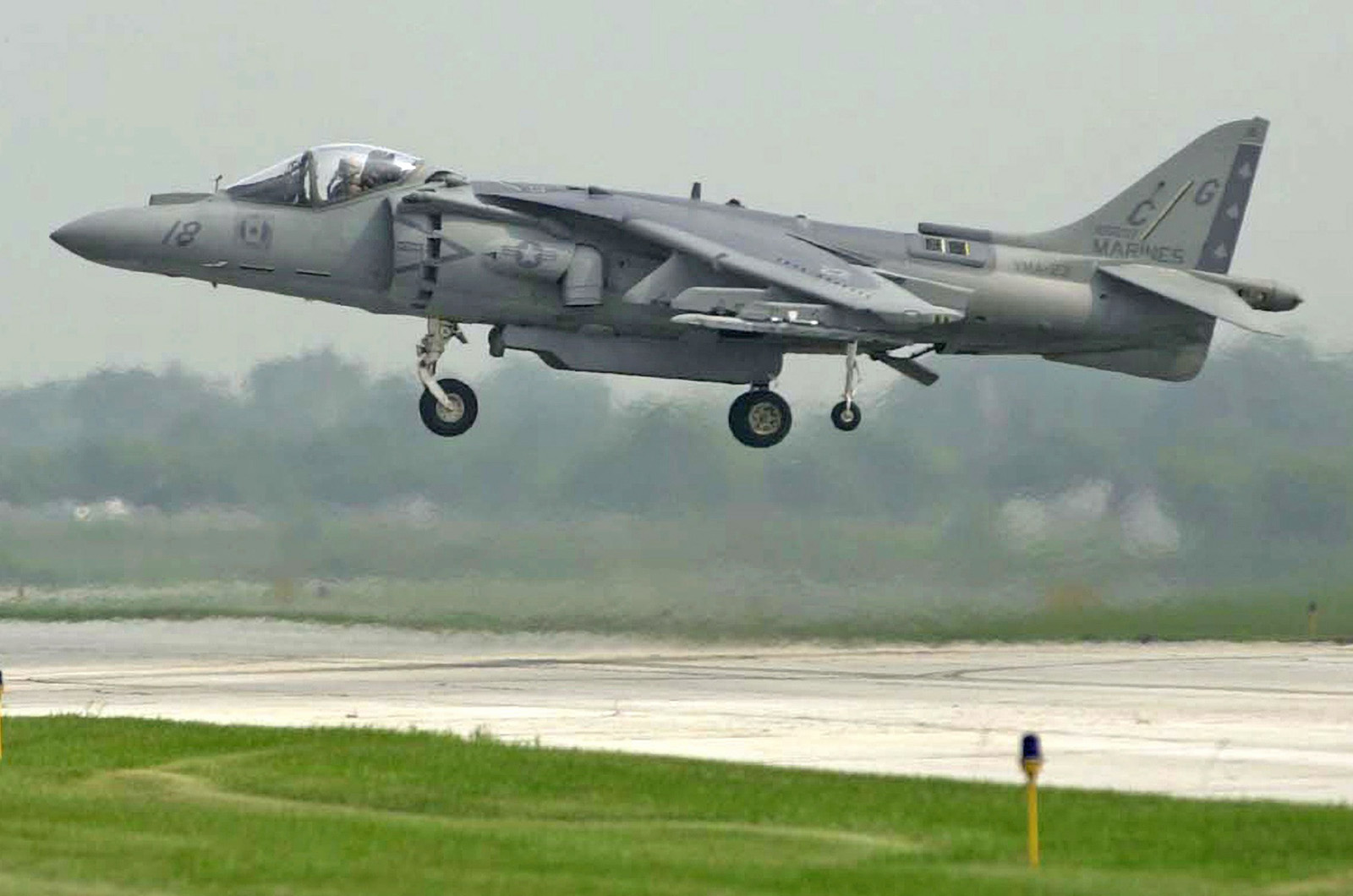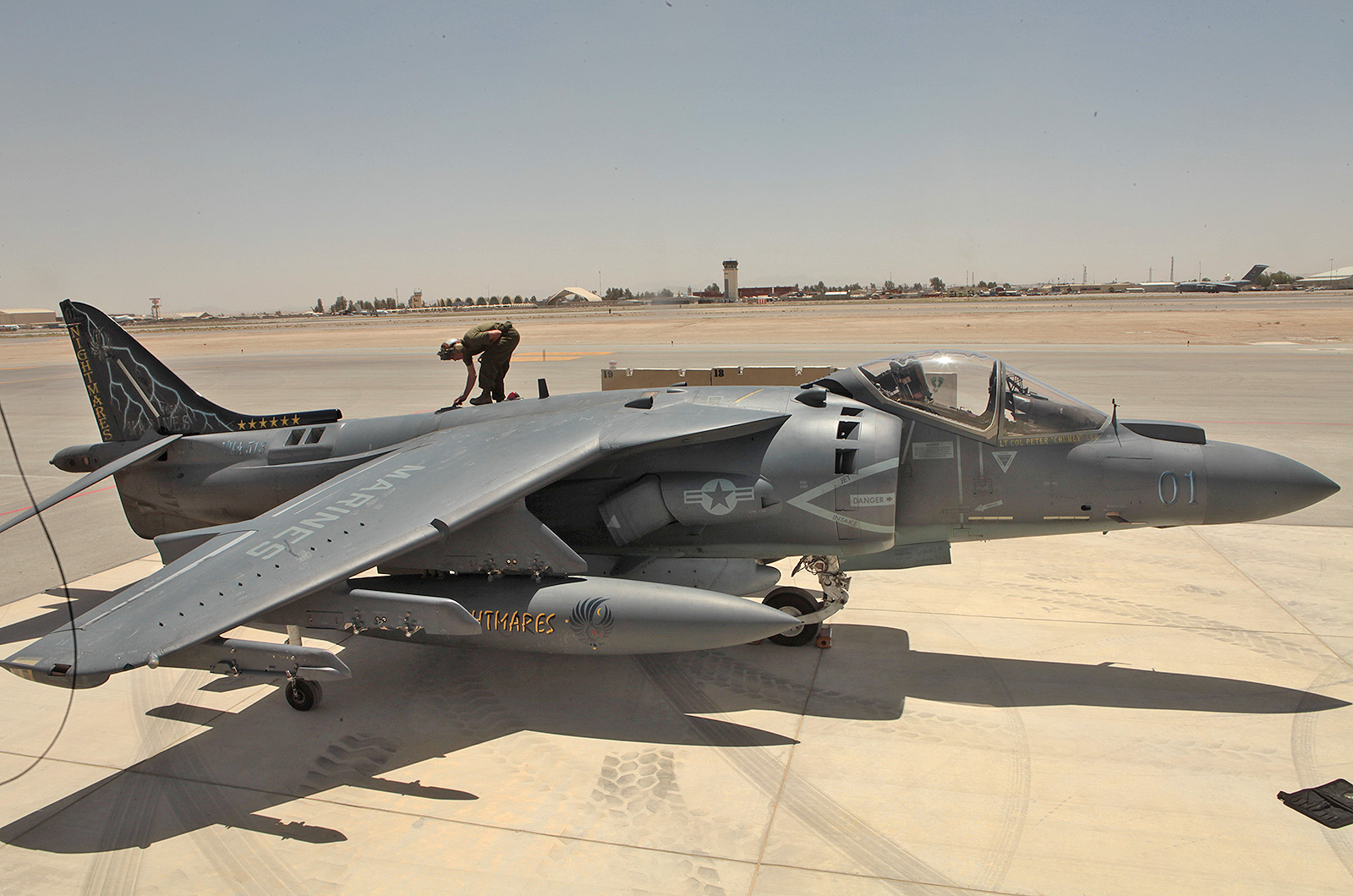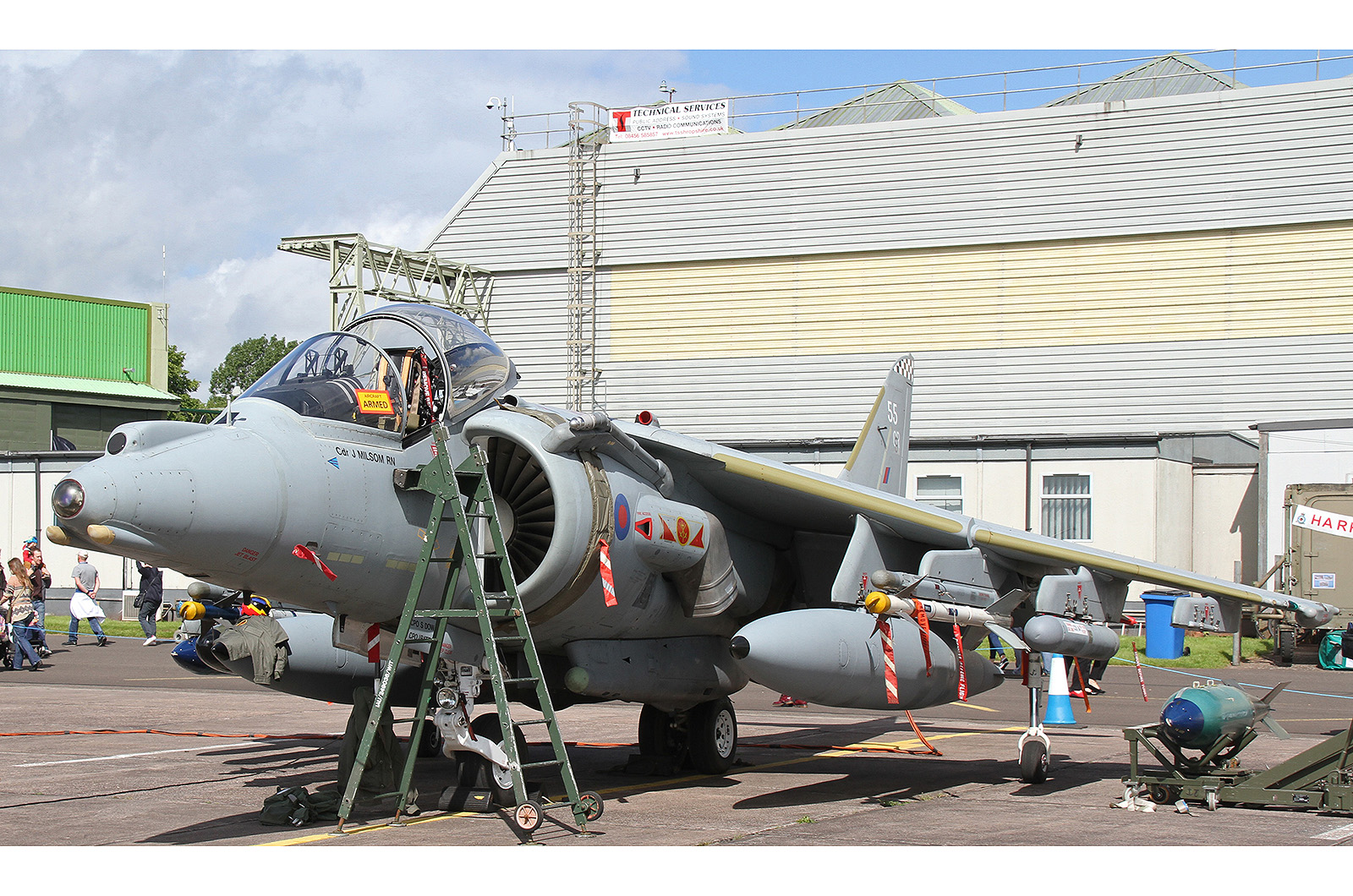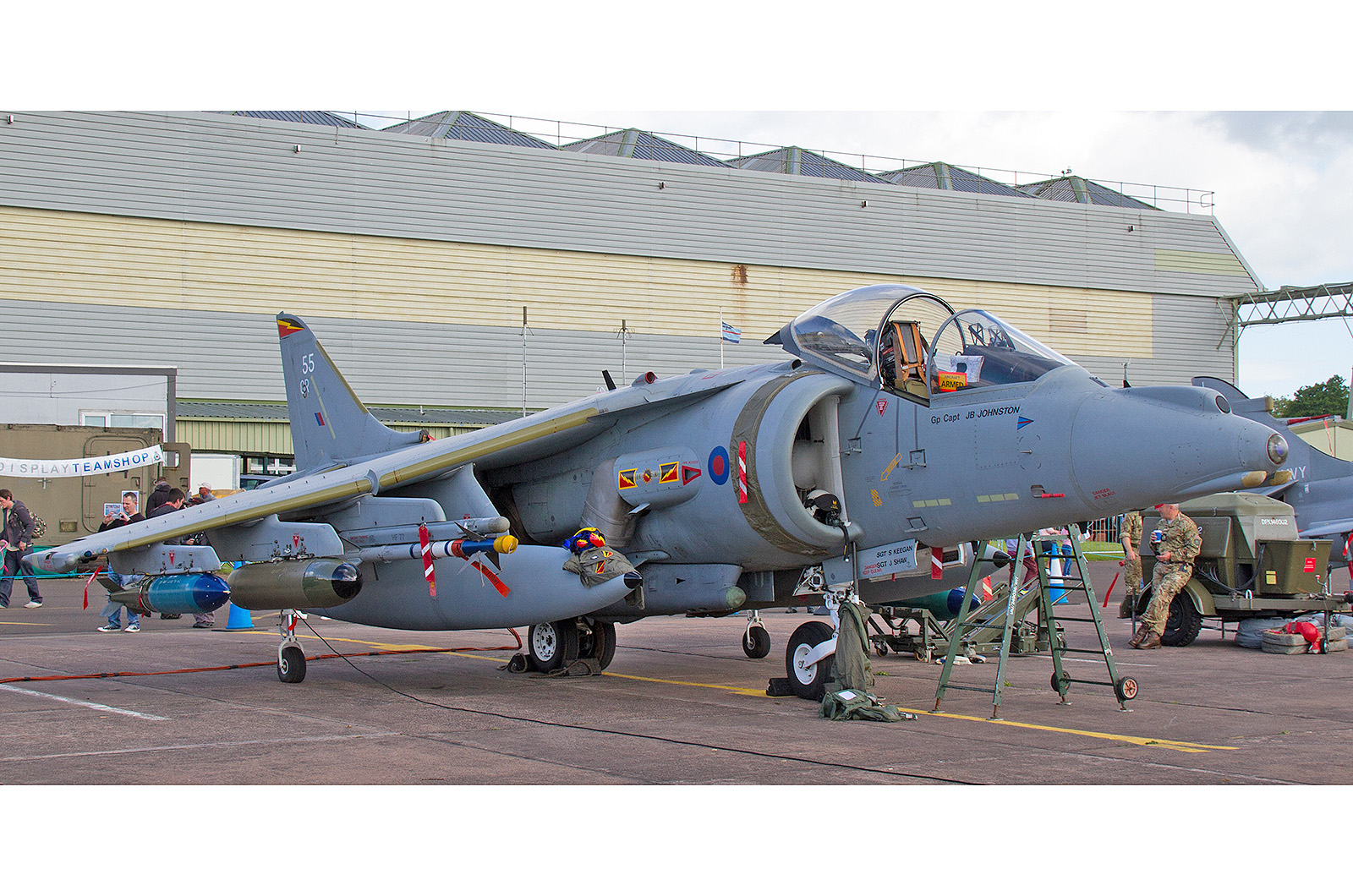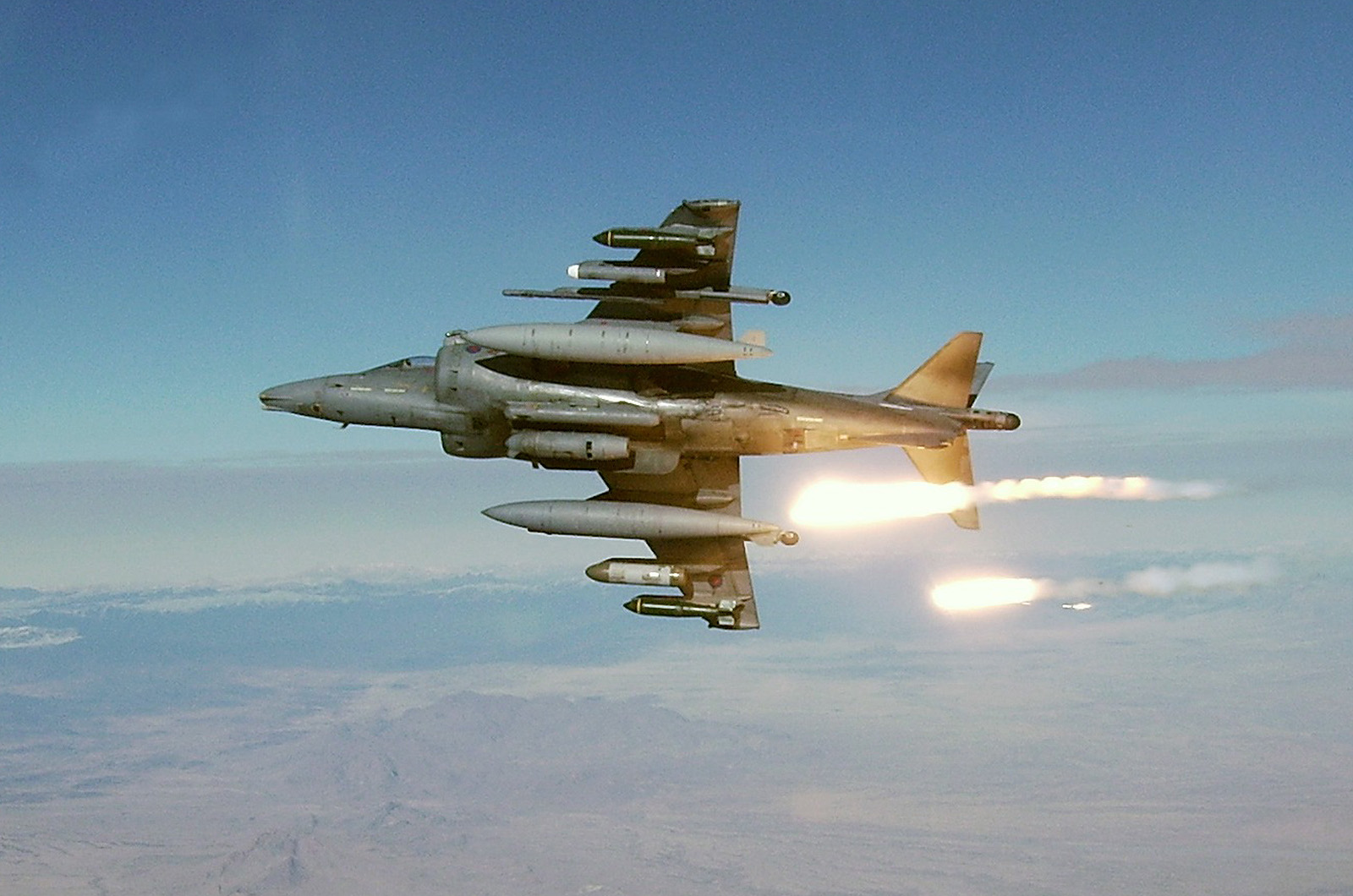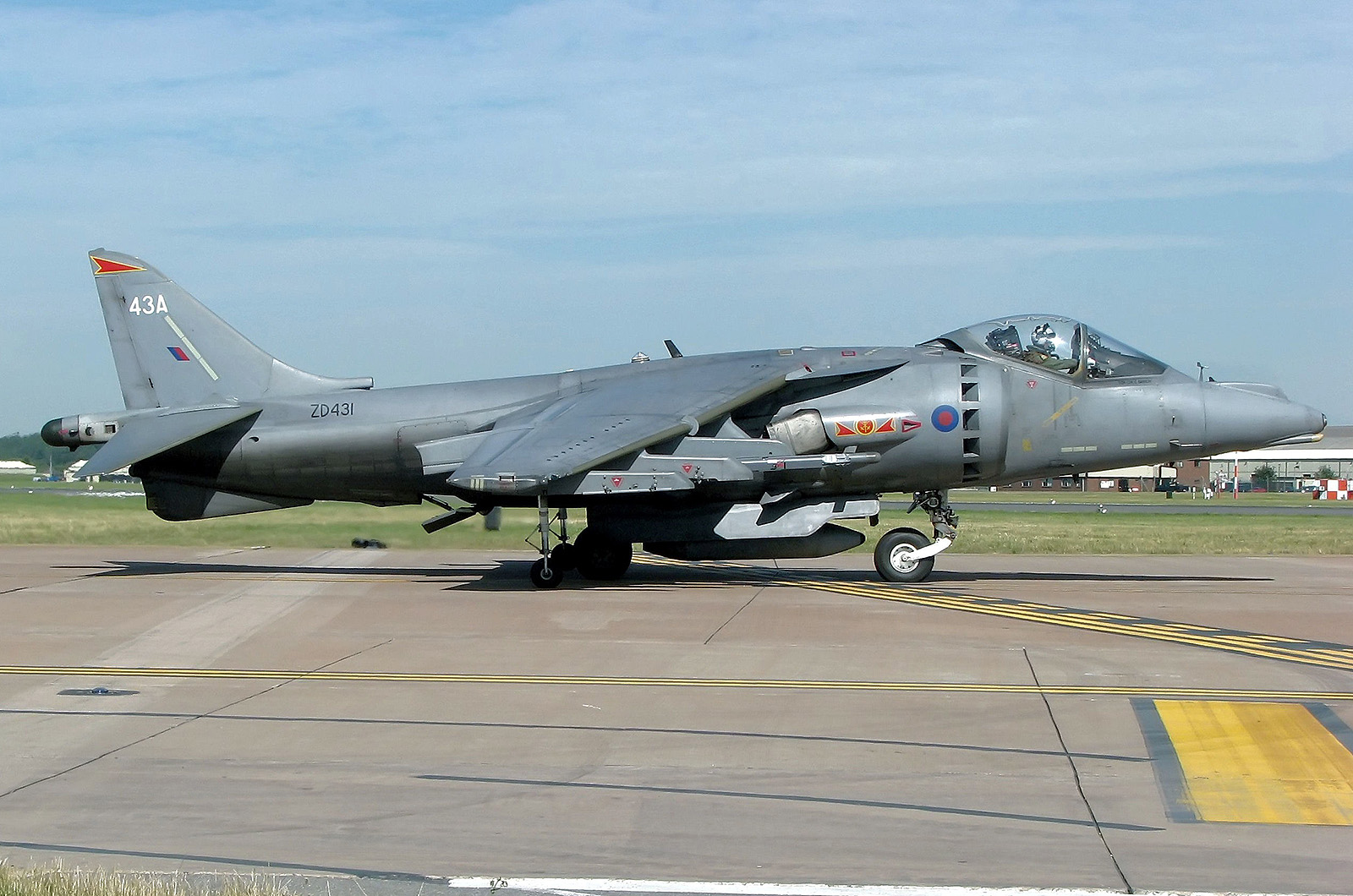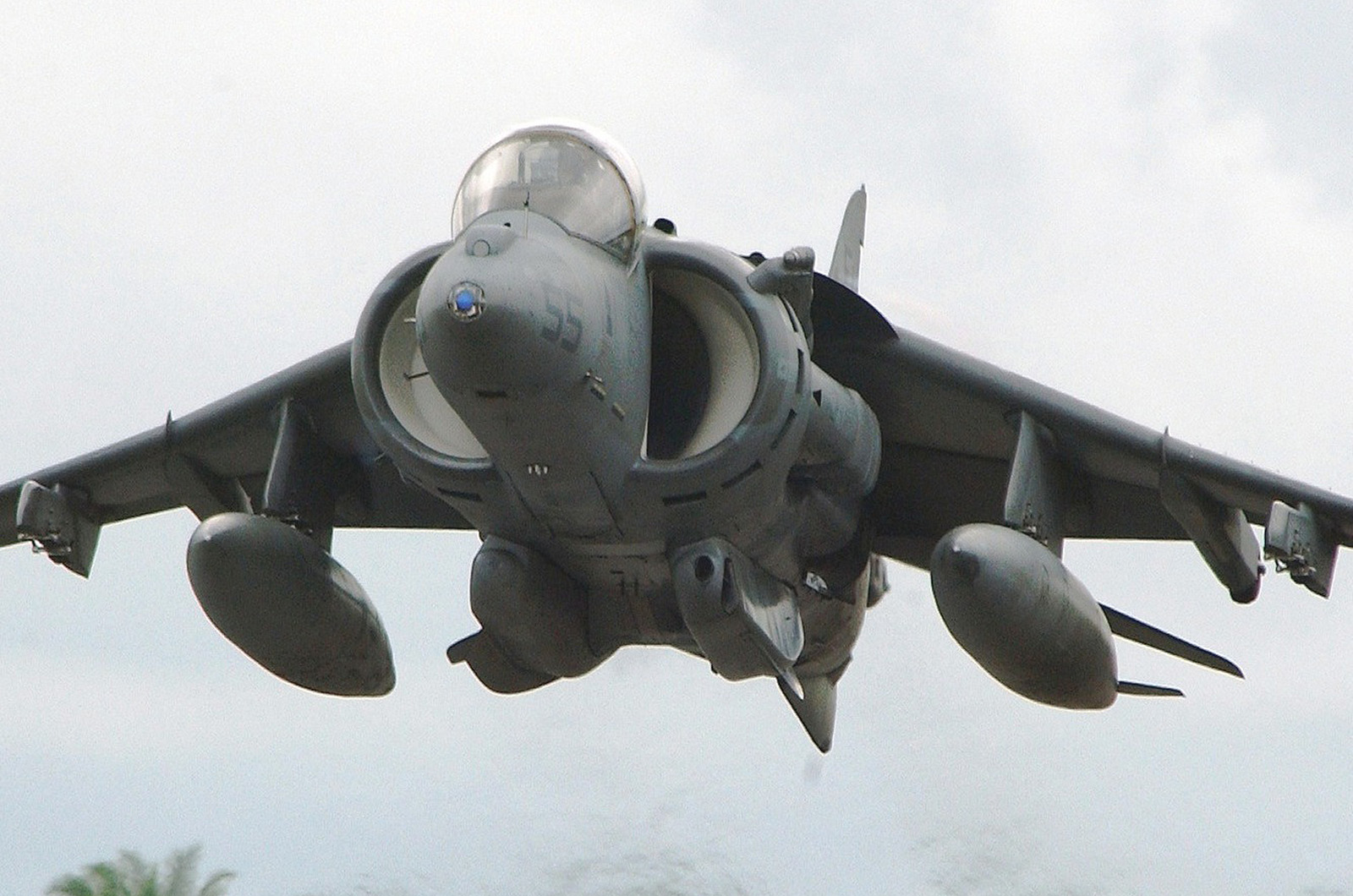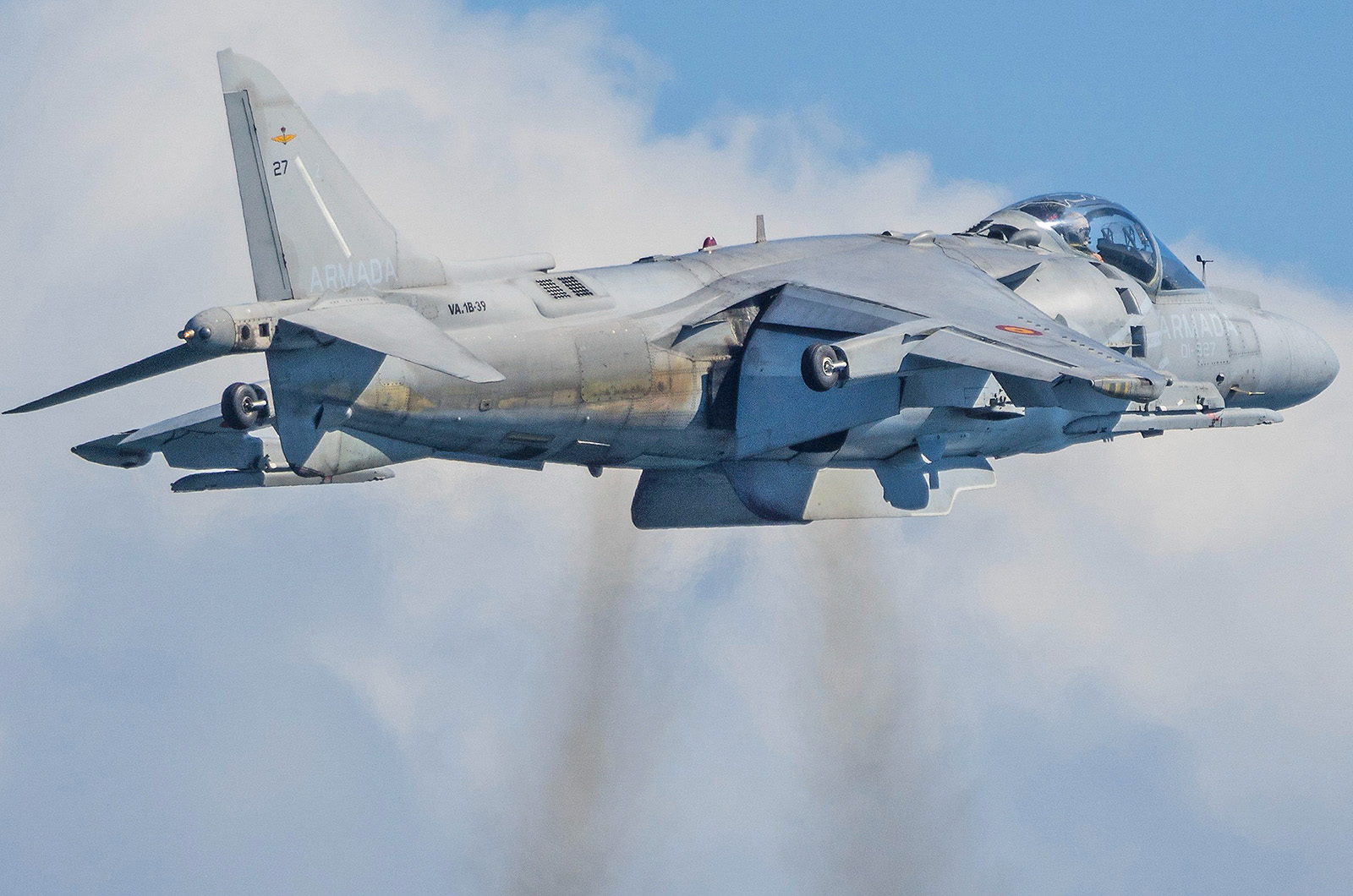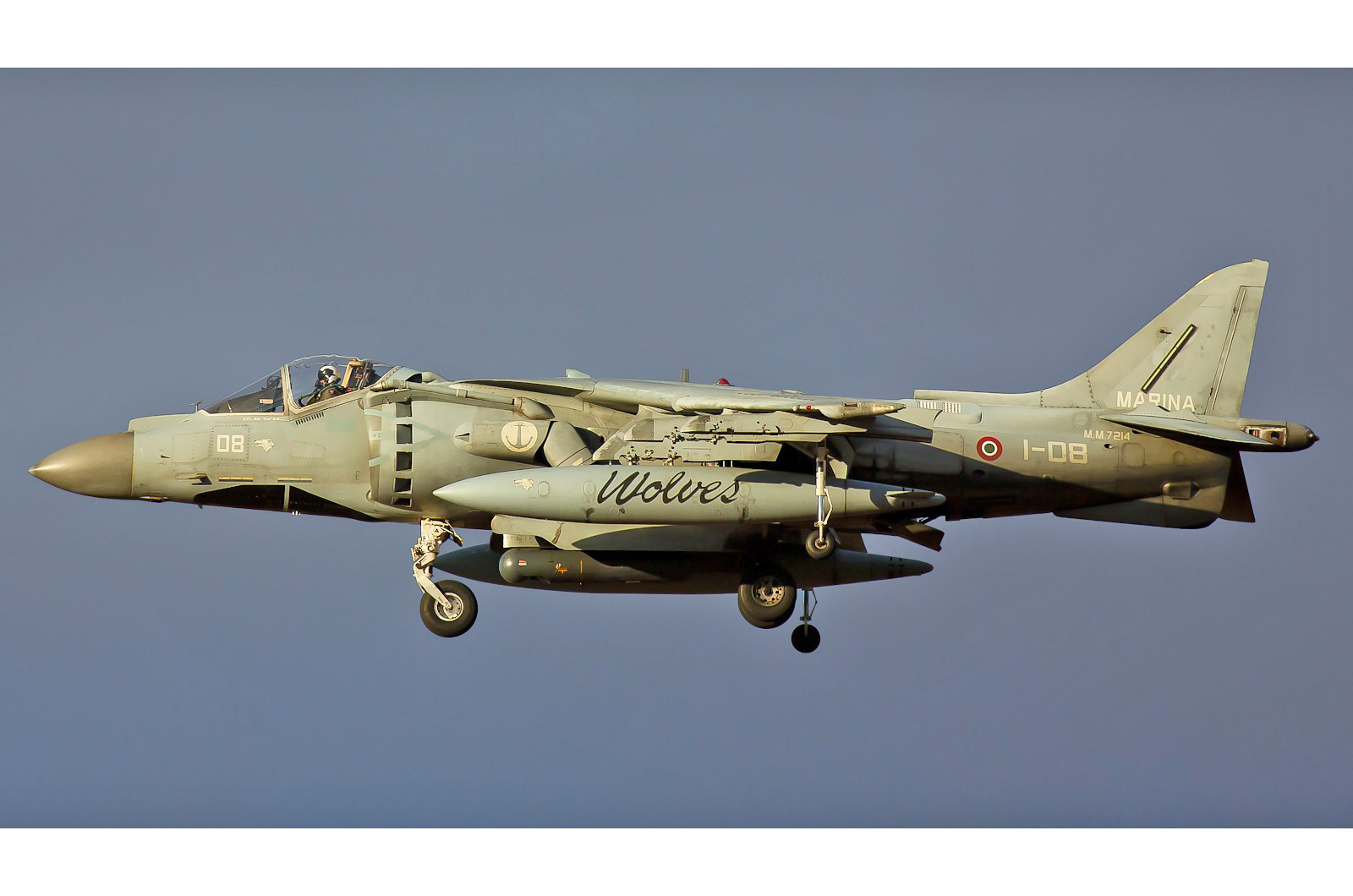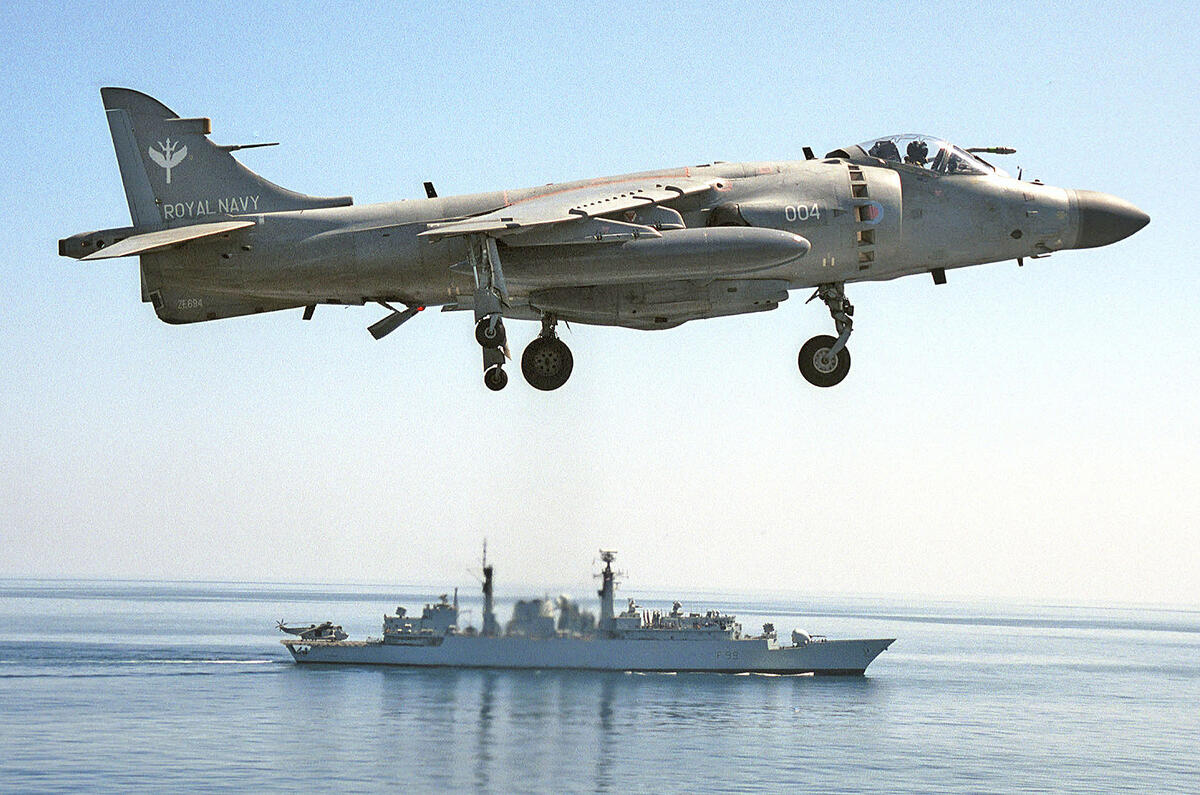
We spoke to former Harrier pilot Paul Tremelling to find out the deal with the Harrier ‘Jump-jet’. Over to Paul:
The trouble you have when describing the Harrier is that people immediately assume that you are trying to mount a defence of an icon based on heartfelt fondness, and not hard facts. The battle lines are pretty rigid. Harrier fans and critics never seem to agree. To bridge this divide, I write today to argue a rarely argued point: the Harrier was brilliantly adequate:
10: Being there
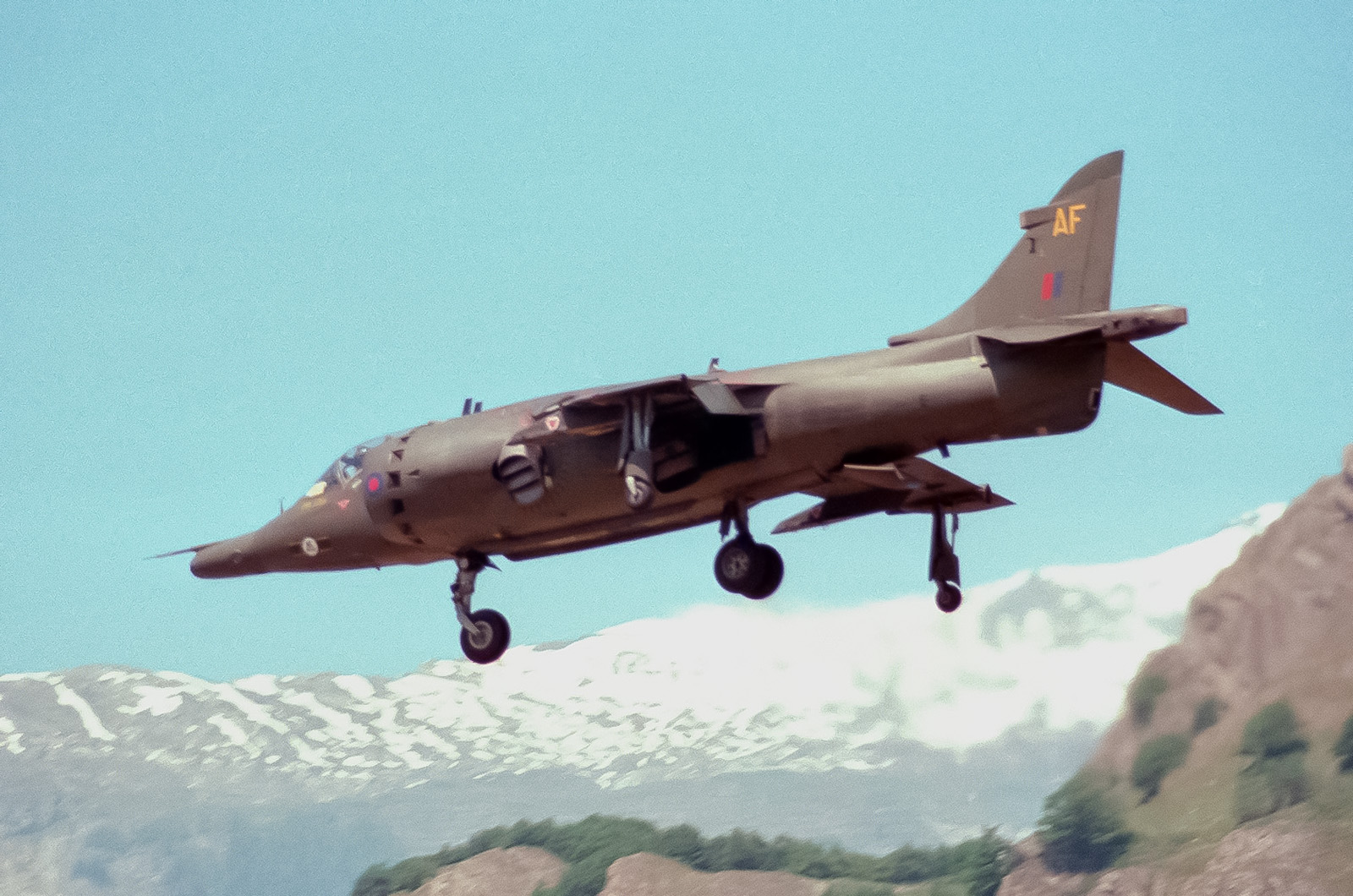
Sometimes, something is much better than nothing, and, as the Harrier GR3 and its FRS Mk 1 Sea Harrier stablemate proved in Britain’s Falklands crisis in 1982 – you can be the best at what you do if you’re the only show in town. The Harrier was pretty good at being there.
With an engine designed to hover and it could use short runways to operate from. That meant it could do dispersed operations, and austere and sea-based operations.
10: Being there
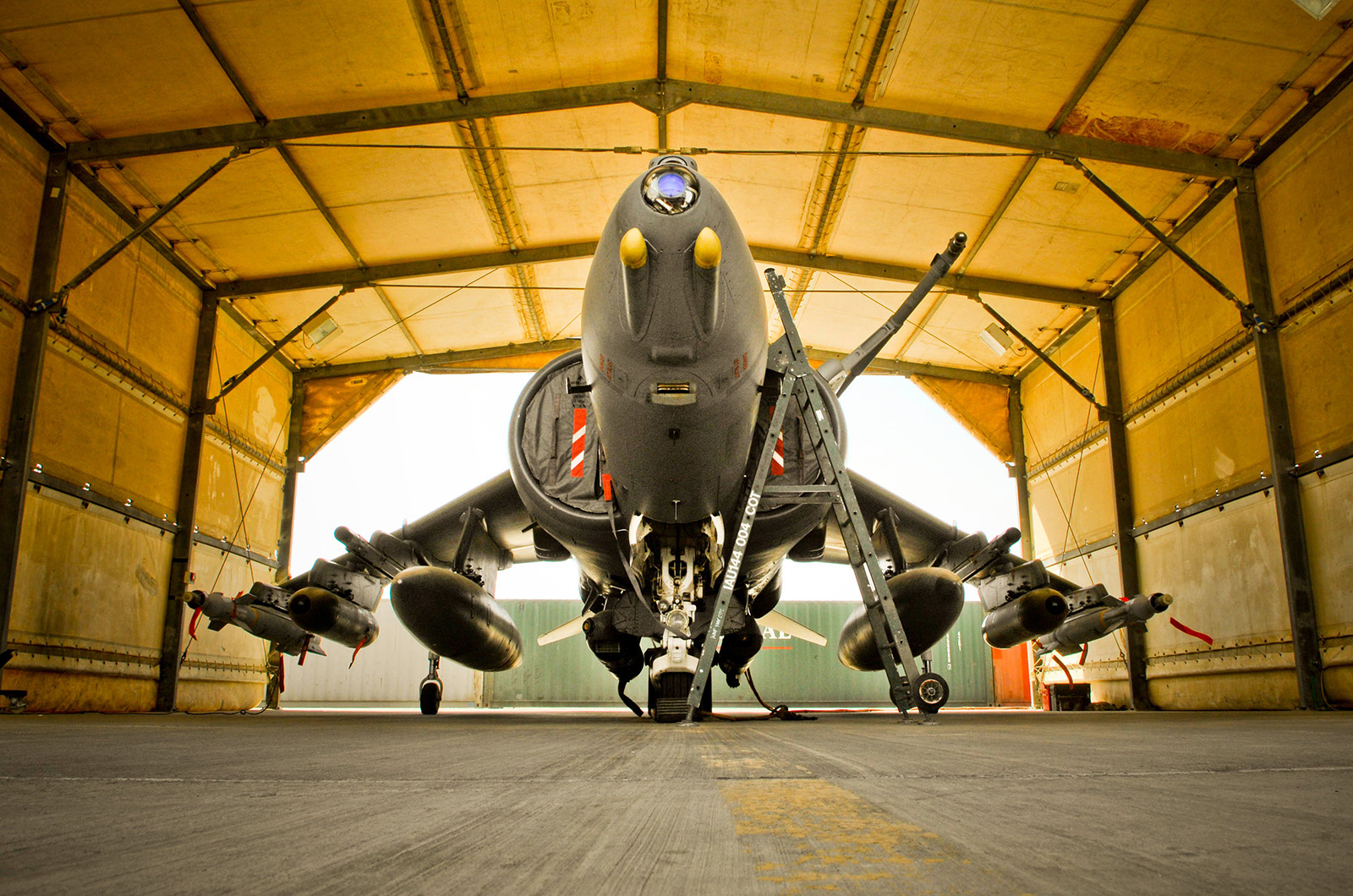
I cannot speak for the customer, but a JTAC or a ground commander would probably be very glad indeed to have Close Air Support (CAS) aircraft at hand in some out-of-the-way locations (Belize, the Falklands, and Kandahar amongst others) whilst someone else worked out how to get the best in class to the fight, let alone into it.
Short strips and small regional runways do not equal large weapon loads, but on the other hand – rapid turn rounds at austere locations can give you ‘belt-fed’ CAS if you’re good at it. There are other considerations, such as it being possible to base yourself a little too close to the enemy, but, by and large, the Harrier’s ability to be there probably takes us into adequate, maybe even beyond.
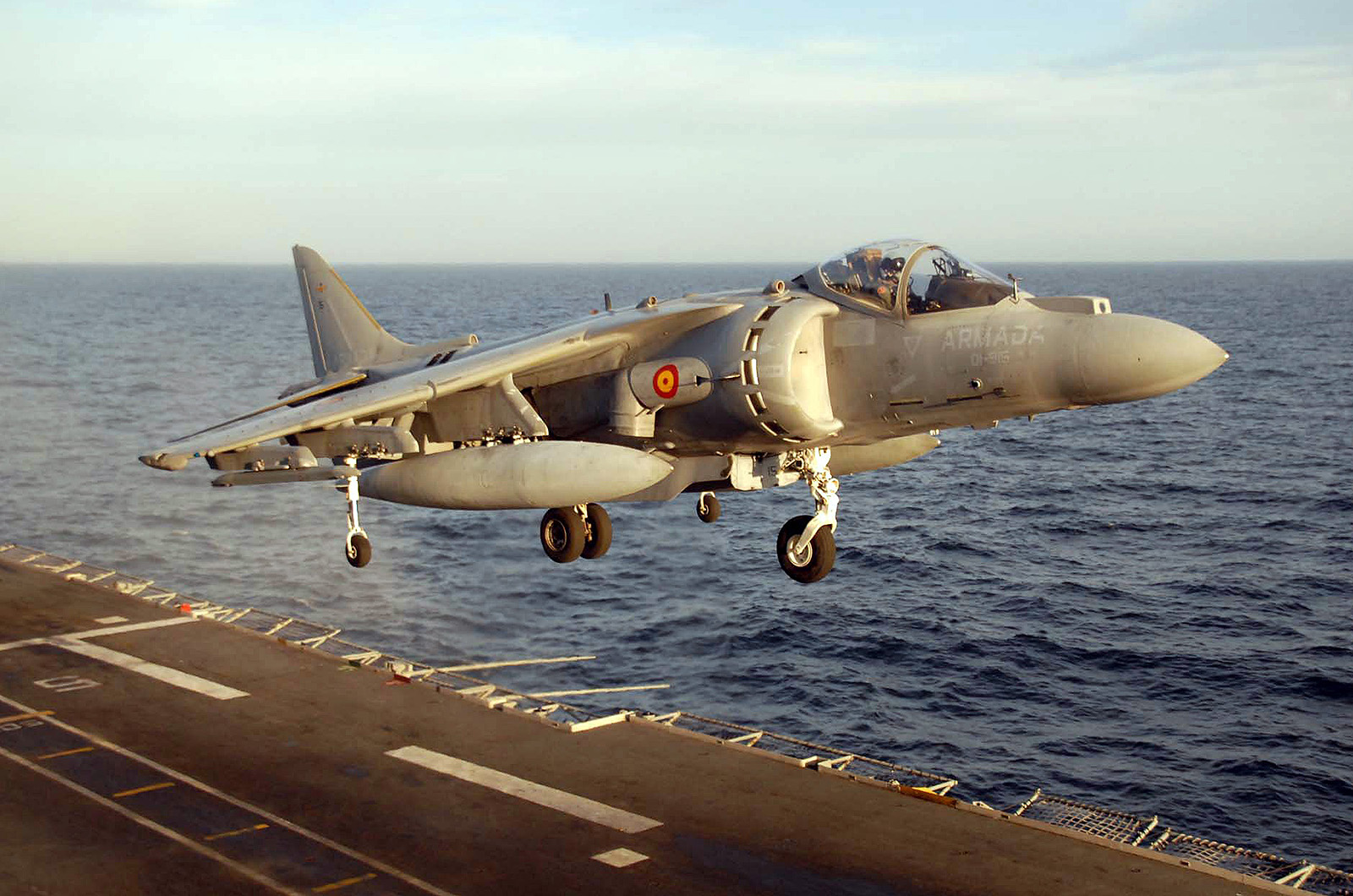
9: The boat
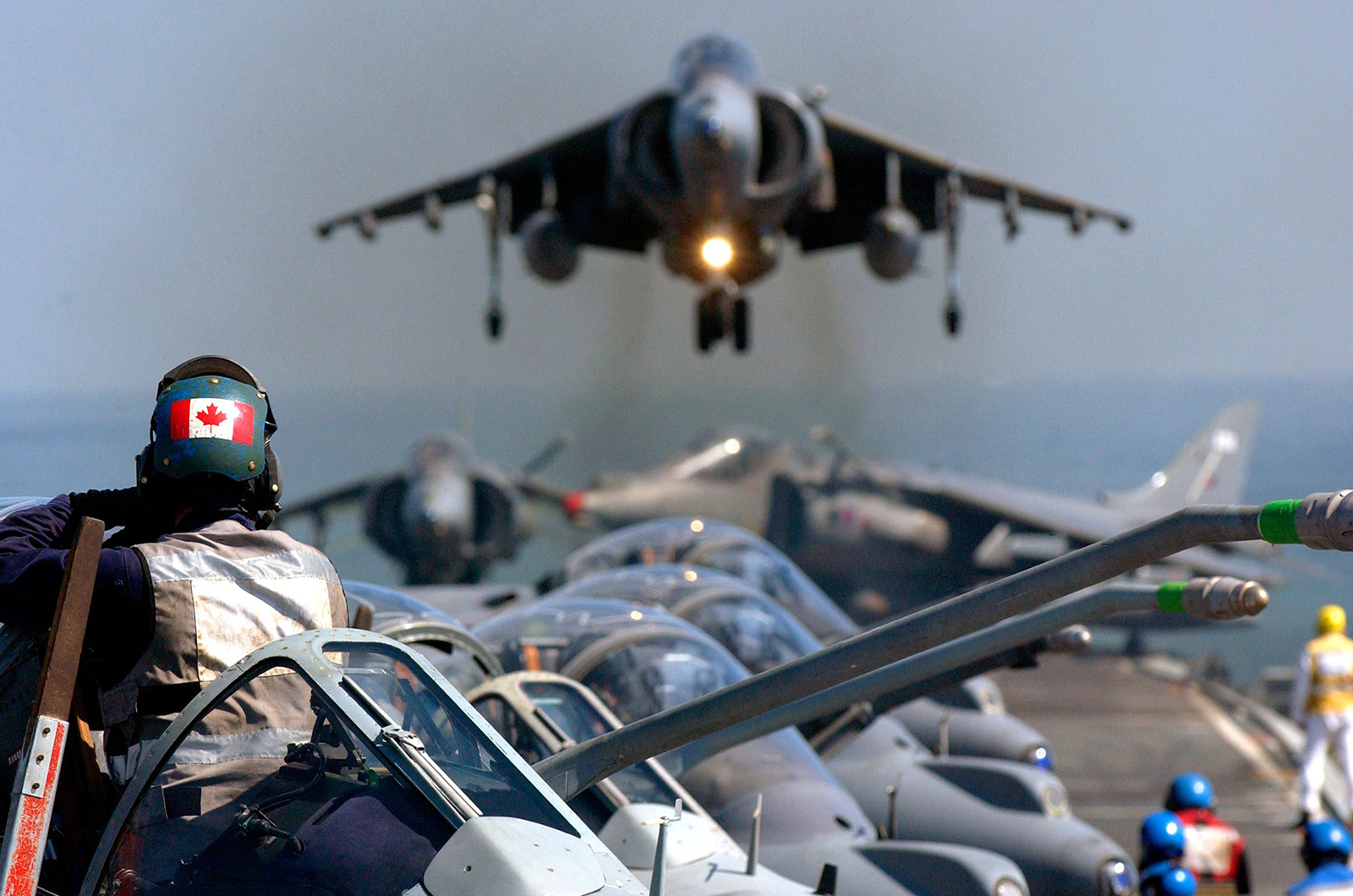
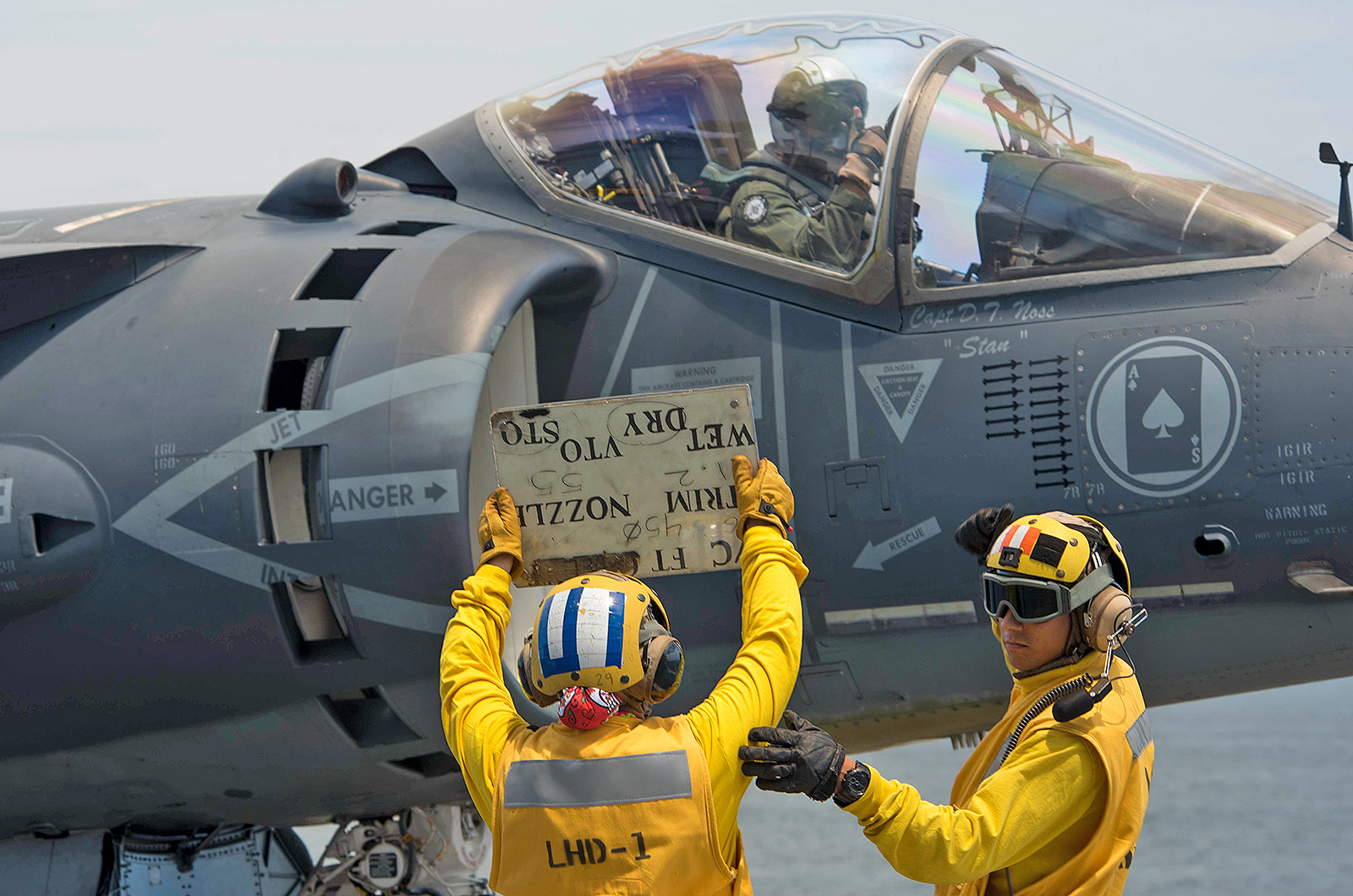
There are a lot of odd things written about being based at sea. On the one hand, it’s argued that aircraft carriers are far too vulnerable to be viable, and on the other hand, only carriers can give you worldwide freedom of manoeuvre. Neither is true.
The ability to base a V/STOL fighter at sea and move it around gives you some flexibility in the direction you may appear from, and surprise, in war, is worth achieving. Even better, moving around could allow you to attack someone without asking a third party’s permission to overfly or, indeed, base yourself there for the fight.
9: The boat
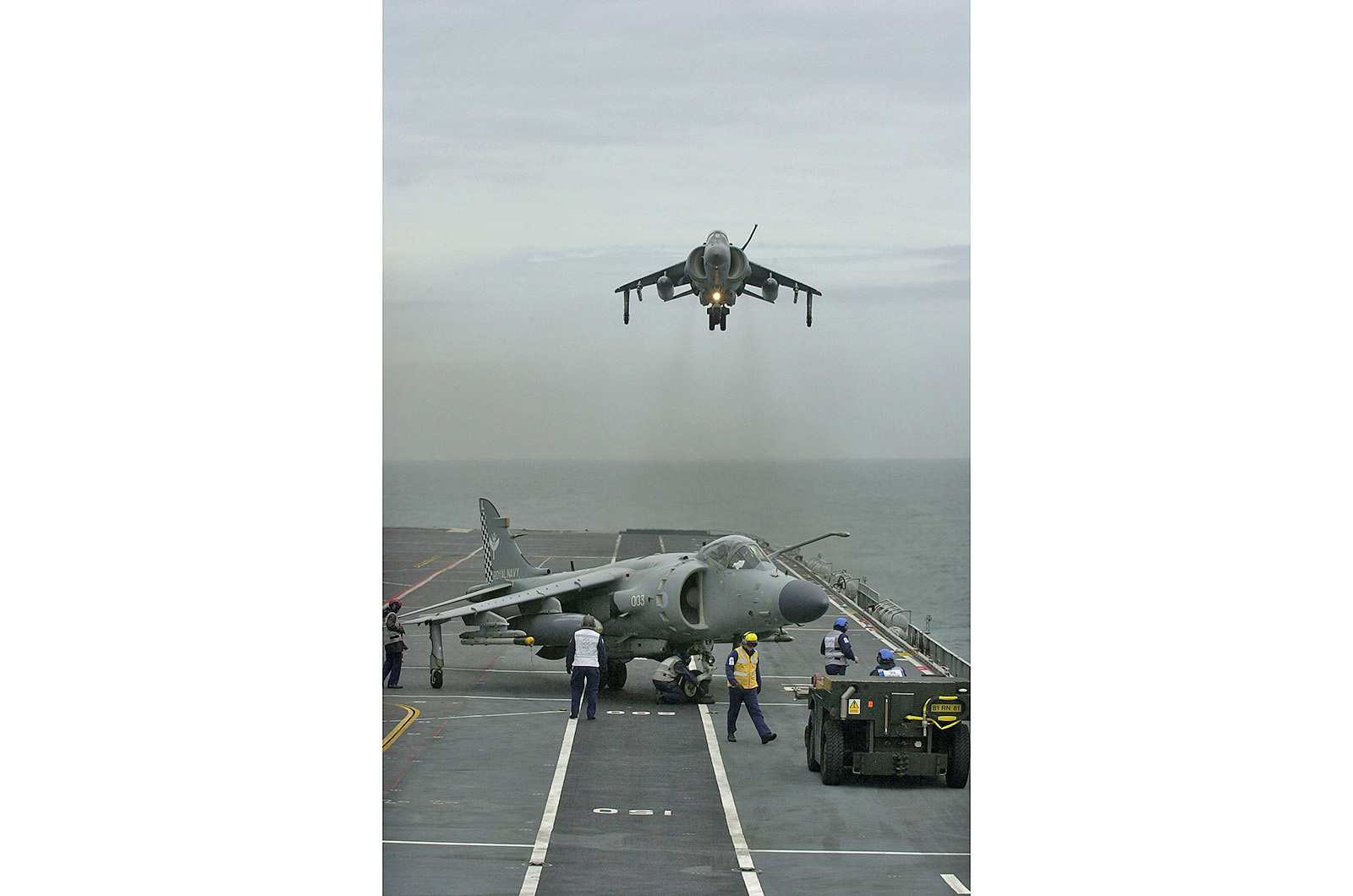
Sea-basing is a bad idea if the aircraft isn’t designed for it, or the crews and maintainers aren’t trained. But with a V/STOL aircraft, you probably have a sea-baseable aircraft, and you may roam the high seas looking for trouble. And you can roam the oceans, land on the land, and patrol the skies.
8: Vertical/Short Take Off Landing (V/STOL)

The main benefit of V/STOL is nothing to do with airshows or aircraft carriers. It takes a little explaining. Aircraft carry more fuel than they need. This is obviously inefficient and everything on an aeroplane should be vital for the type’s operation.
If that’s not the case, then you are carting stuff around you don’t need, which means less space for stuff you do need and more work for engines pushing things you don’t need through time and space. It has to do with redundancy when things go wrong or when the enemy gets a vote. So long as you’re happy to take it along with all that entails.
8: Vertical/Short Take Off Landing (V/STOL)

Fuel is very similar, and people carry more than they need to in case the weather is bad, the crosswind exceeds limits or someone ahead of you crashes. V/STOL removes at least two of these reasons, and V/STOL aeroplanes carry less contingency (wasted) fuel than their conventional counterparts. There is no crosswind in a vertical landing, and if the guy ahead of you crashes, you can land on the taxiway or any other surface.
I once read about a particular high-level ISR (Intelligence, Surveillance and Reconnaissance) aircraft operating over Afghanistan whose crew used a taxiway as a divert option. Whilst innovative for that type – that’s always been the Harrier fuel plan! So V/STOL, underwritten by true engineering genius is a useful tool. I’d call that adequate. Possibly better than adequate.
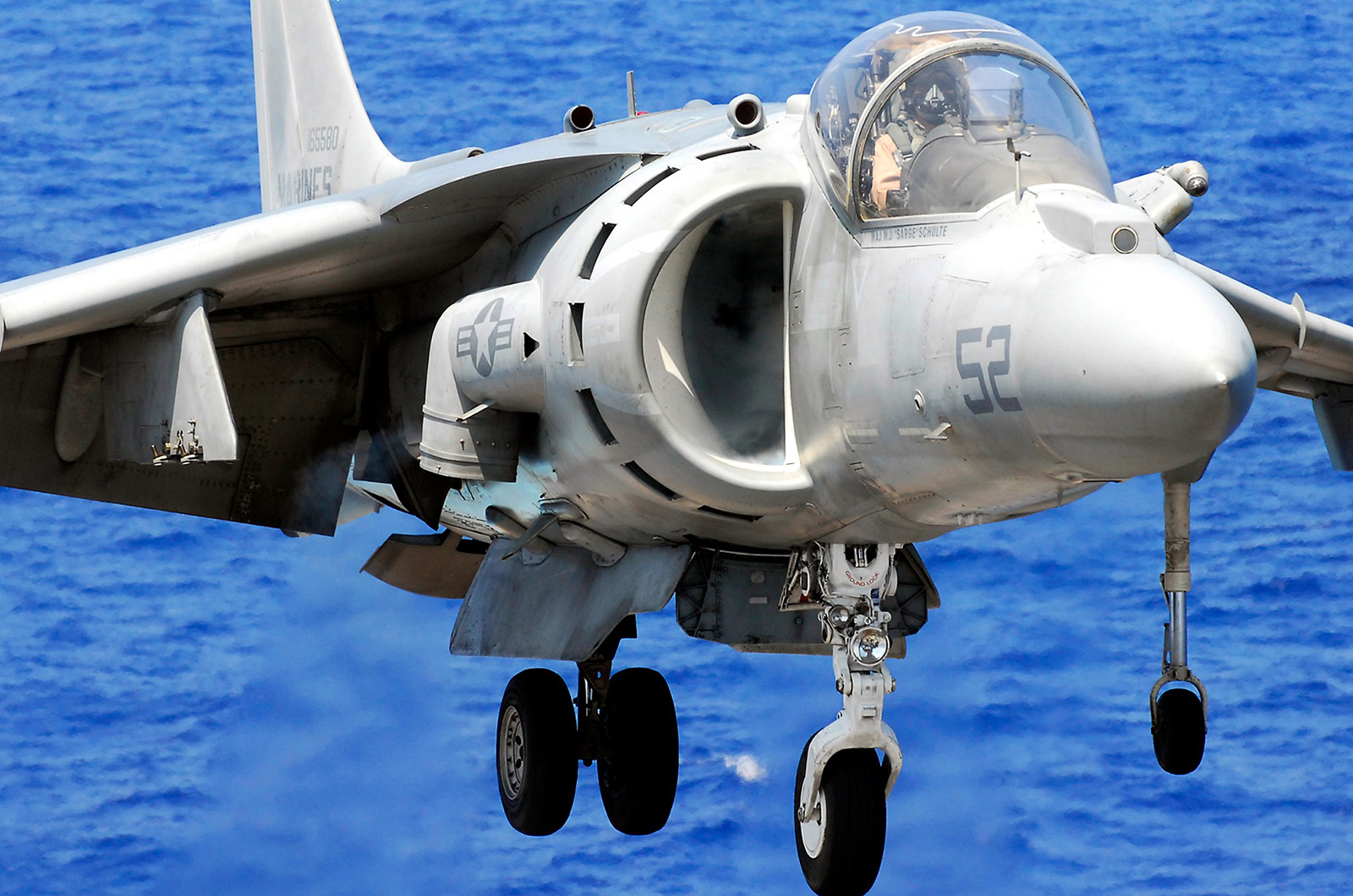
7: Canopy

Have you ever looked at a hunched aircraft and wondered what they were thinking? The Soviet Su-25 ‘Frogfoot’ (still widely used today) is a particularly strong example of a hunched aircraft. The Harrier cockpit as modelled by the AV-8B and Harrier GR5/7/9 were, and are, superb.
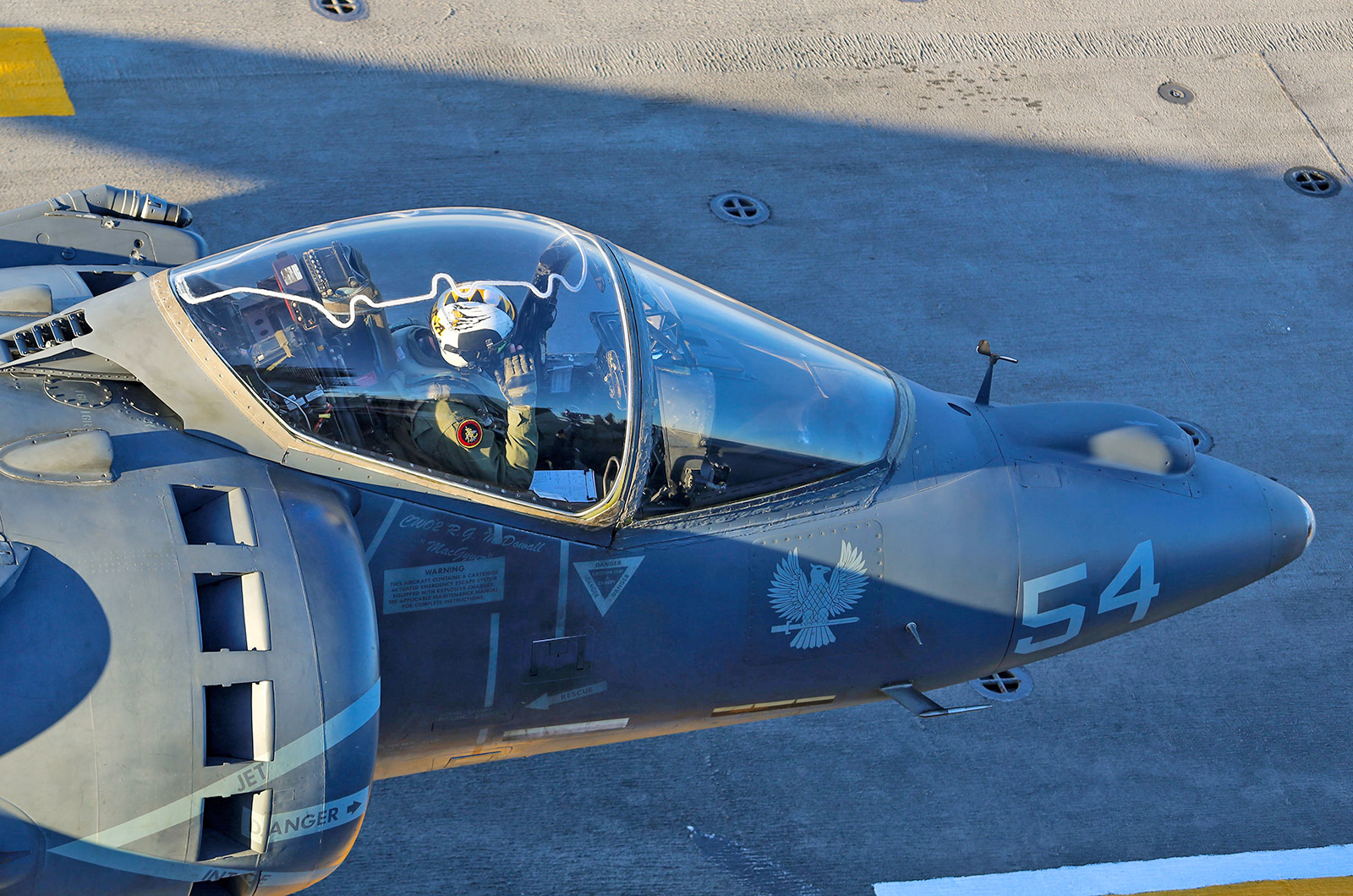
The canopy is simply excellent for Close Air Support and the much-underrated skill of looking out of the window. If the transparency surrounds you, then it is a natural contributor to Situational Awareness, and SA is what you need to build to win battles.
7: Canopy

Yes, there is a canopy rail, but apart from that, no forward supports get in the way, so maybe not up there with the ‘good’ F-16 beauty, but certainly not poor either. Rearwards visibility is fine, some would say, for good reason as you may spend a fair amount of time scurrying around hiding from people.
That’s a separate point. The long and the short of it, though, is that the canopy was just the job, whilst accepting that the Viper (F-16) community probably have a cooler one. The largely unobstructed view from the Harrier is superb.
6: Cockpit

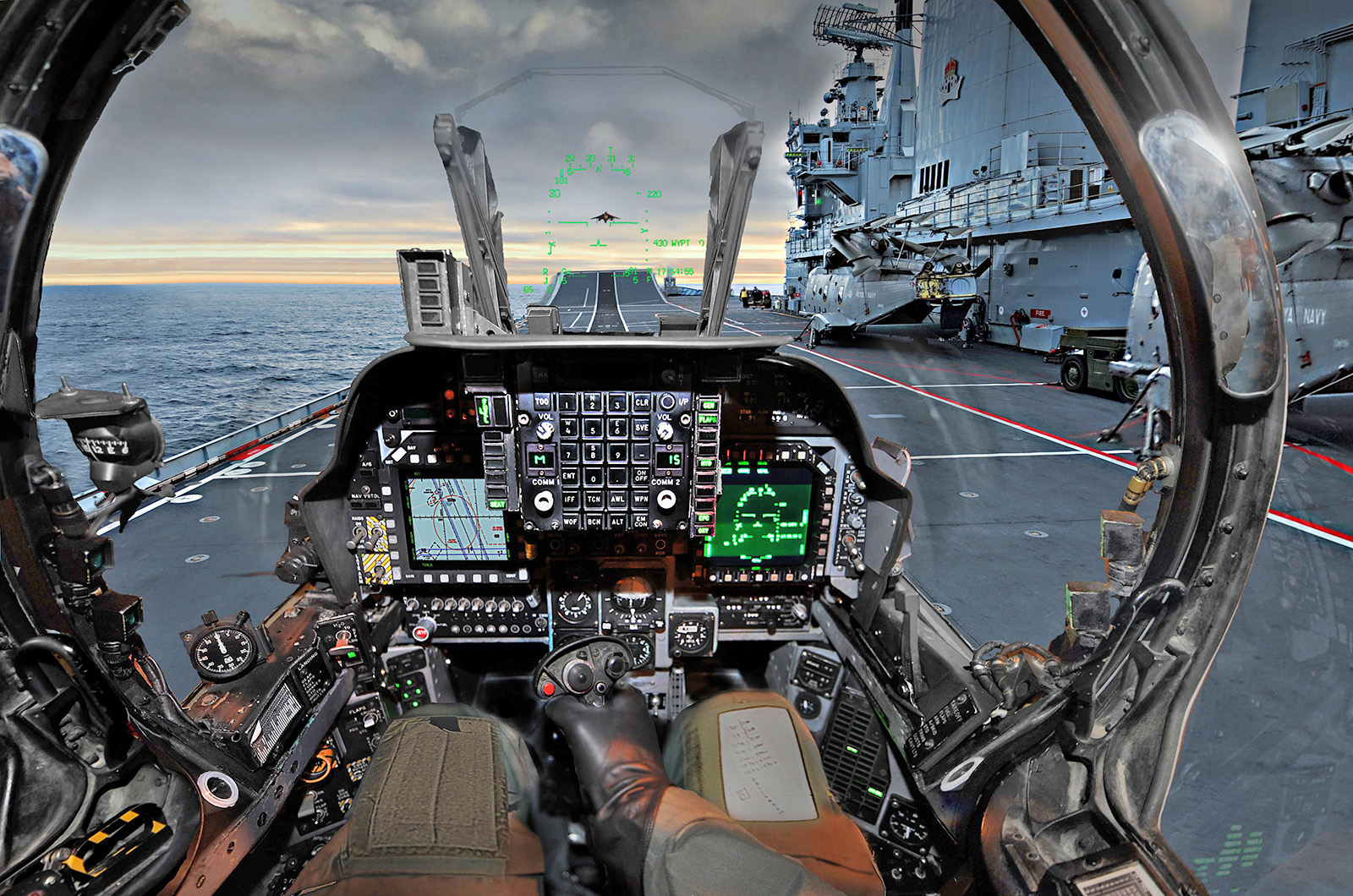
What do you need for the Close Air Support mission? Nice big TV screens, Sniper Pod picture direct to the pilot. Mission computer able to accept Latitude/Longitude and grid references. A decent moving map. A Digital Terrain Elevation Database and all of a sudden, you have all you need.
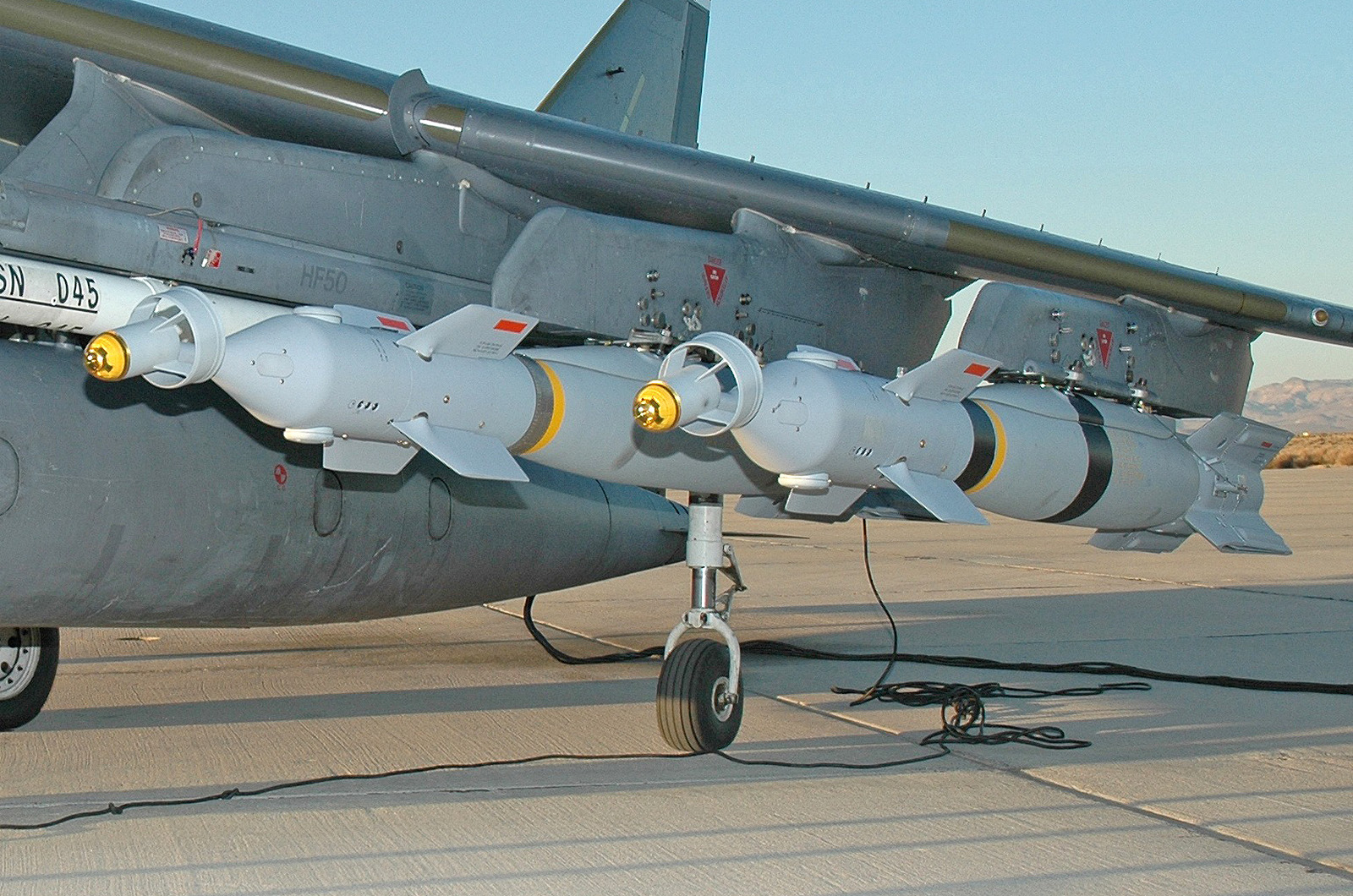
The same could be said of a strike mission with up to six Paveway IV bonbs. Want to use a spare weapon on a different target because the Tornados are a jet short (again), no dramas you can load the target directly to the weapon using the predictive text function – you just have to know what it’s called.
6: Cockpit

These sorts of things are important because they free up time for other activities such as flying the jet, although, to be honest, that’s quite straightforward (insert VSTOL joke of your own here), so no major dramas. The jet will need a communications fit of frequency-agile and secure radios, hopefully with Saturn and Have Quick available.
Another system you may want to consider was Forward Looking Infra-Red. The ability to see through dust is a useful one, as is the ability to see whilst flying at a low level into the sun in winter. The ability to have a spare Head-Up Display on one of your TV screens was a good thing to have for ramp launches.
5: Single seat

There are plenty of good multi-crew aircraft. B-1 and B-52 are great examples as are aerial refuelling aircraft and transport aircraft. In tactical flying, there are fewer great examples of world-class twin-seat platforms and a huge list of those that aren’t. Spitfire, P-51, A-10, F-15C, F-16, F-18, F-22 are all single-seat examples of greatness.
To be fair, though, one does have to think of greats such as the Mosquito, Tomcat and F-15E when making sweeping generalisations. However, the crux of this is that if the platform can present the pilot with all the information they need, then you’d be daft to design a twin-seater if you could avoid it.
5: Single seat

Have you ever felt the need to order an Uber and then give someone else your phone so they can tell you where it is? No. Why? Because it’s a simple and effective bit of Human-Machine Interface that works and doesn’t need complicating. This is similar to a CAS situation where a mind meld between pilot and JTAC is what is required. There are other boring reasons why single-seaters are better for air forces than multi-crew.
These range from the simple maths of it being half as likely that one of your formation might be ill in the morning, to the need for the HQ to only provision for one pension instead of two… not very interesting but worth considering.
4. Air-to-Air fighting

Now remember, we aren’t trying to be good. We’re aiming for adequate for now. The Harrier could carry various 118, 218 and BOL countermeasures, had a Missile Approach Warner, and even carried a TERMA pod with another missile detection device. That probably takes it out of poor.
With the addition of two Sidewinder in the AIM-9L and AIM-9M guise one really wouldn’t want to be thinking of taking on roles such as Offensive Counter Air but you could certainly have a crack at other muds (an often derogatory term for ground attack aircraft) if you saw them.
4: Air-to-Air fighting

The jet was actually very good at certain aspects of Basic Fighter Manoeuvres, particularly the single circle and slow-speed fights. No, the Harrier was not a fighter - you wouldn’t believe how many people have reminded me of that since my book came out - but for a striker, it had an adequate air-to-air capability.
Until someone gave it the APG-65 radar and the ability to carry the AIM-120 AMRAAM medium-ranged missile. That’s right, the air-to-air weapon of choice for almost every Western fighter today.
3: Weapon loads

The Harrier could find a way of cracking most tactical nuts. Full disclosure, the second-generation Harrier, didn’t have a cannon in UK service – which was odd considering the earlier GR1, GR3, FRS1 and FA2 all did, as does the American AV-8B. That’s a minus. However, there were lots of pluses. Where to start?
540 and 1000-lb freefall and retarded weapons with impact or air burst fusing. (Please don’t be suckered into the ‘everything must be precision guided’ story. It really doesn’t have to be, not for accuracy. There are plenty of scenarios where an unguided munition will be just fine if you can drop, loft or scrape it onto the target accurately.)
3: Weapon loads

CRV-7 rockets in either training pods of 6 or operational pods of 19 rockets. The warheads could be high explosive semi-armour piercing or point detonating. Precision Guided Munitions (PGMs) include Paveway, Enhanced Paveway, Enhanced Paveway Plus, Paveway III, Paveway IV, and Maverick missiles in TV and IR-guided guises.
And yes, carriage of some would require the use of a balancing store or, in the case of Paveway III, a lower-than-ideal fuel load – but all jets have their shortcomings. It has to be said, though, that medium-level strikes were boring, even with a Deck Landing to look forward to. That leaves the Harrier as a competent striker. For now, let’s assume competent and adequate are about the same.
2: The big engine

There are some truisms in military aviation. It usually makes things more difficult if you try them at night; it usually helps if you add more power. That’s precisely what they did with the Harrier. The GR7 and 9 became the more powerful GR7A and 9A.
Some GR7s were equipped with uprated Rolls-Royce Pegasus engines, and redesignated as GR7A, these had improved take-off and landing capabilities, and could carry greater payloads. There were fewer engine limits and the amount of thrust the engine could produce was now even more staggering than the amount we started with. So what?
2: The big engine

V/STOL was easier and safer, because there was more thrust available. The aircraft’s ability to operate off short strips was improved. Bring back (the ability to return to base while still carrying unused weapons or fuel) was improved. Survivability was improved as one could get above the threat faster.
The aircraft’s already adequate handling in air-to-air was improved. In short, a system that was hovering (pun intended) system at the higher end of the adequate range was made better. Now, it would be wrong to argue that the threat hadn’t increased or that this modification took us into good. Let’s just say it nailed on adequate. Even in the heat, even when high (jet engines struggle more in such conditions).
1: The sum of all brilliant adequacy

If you end up with a single-seat striker that can look after itself in the air-to-air arena, that has a broad range of weaponry, that through unique characteristics, is able to get to almost any fight and contribute when it gets there.
You’ve got a reasonable machine. If you can carry a countermeasure pod, a recce pod and a targeting pod along with your war load from a ‘hot and high’ strip, you’ve got a reasonable aircraft.
1: The sum of all brilliant adequacy

If your designers and engineers have created the ability to land with minimum fuel reserves and have given you a machine that can operate in dust and at night, you’ve got a reasonable machine. If you have the ability to come from a highway strip, a gap in the trees or from the vast expanses of the open ocean, you have a reasonable machine.
If the cockpit gives the pilot everything he needs and superb visibility, you have a reasonable machine. You know what? I’ve argued myself to a standstill. If you wrap up all of the above, I don’t think the Harrier is adequate. I think it is brilliant.
Follow Hush-Kit's incredible aviation stories on Substack and X
If you enjoyed this story, please click the Follow button above to see more like it from Autocar
Photo Licence: https://creativecommons.org/licenses/by/4.0/deed.en

Add your comment