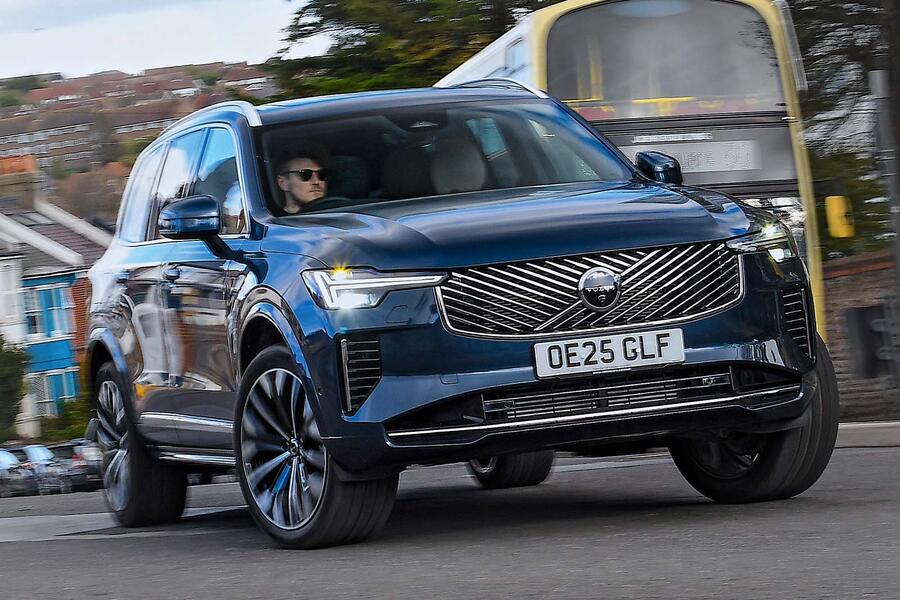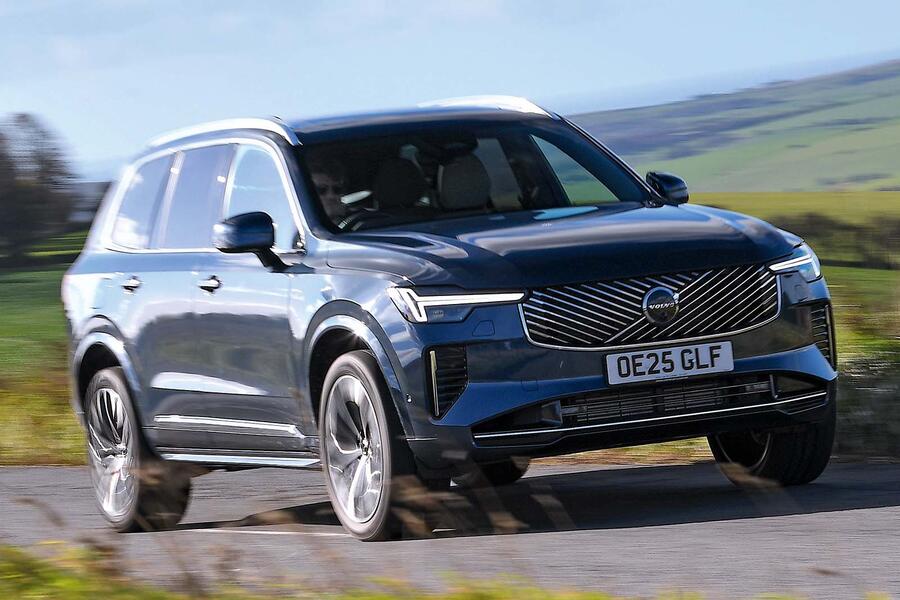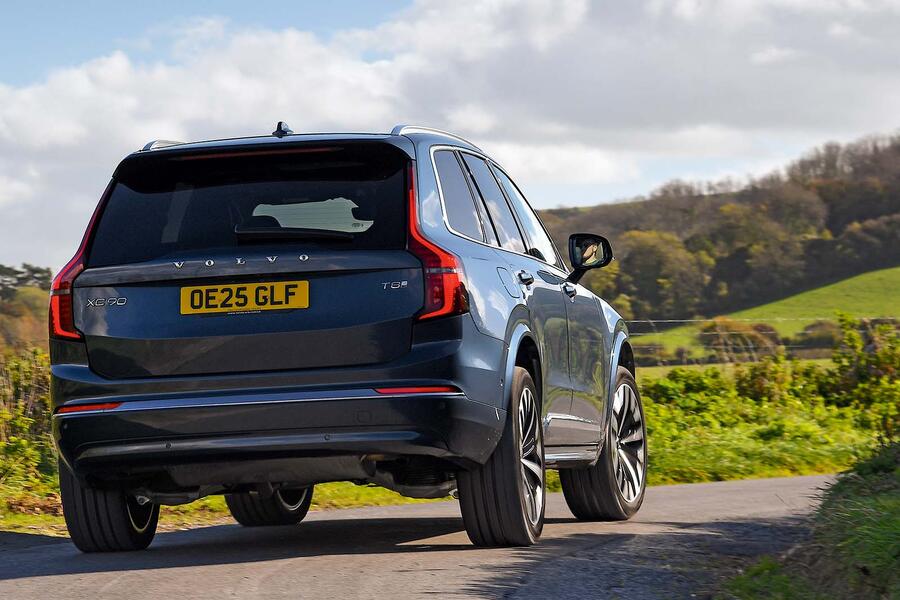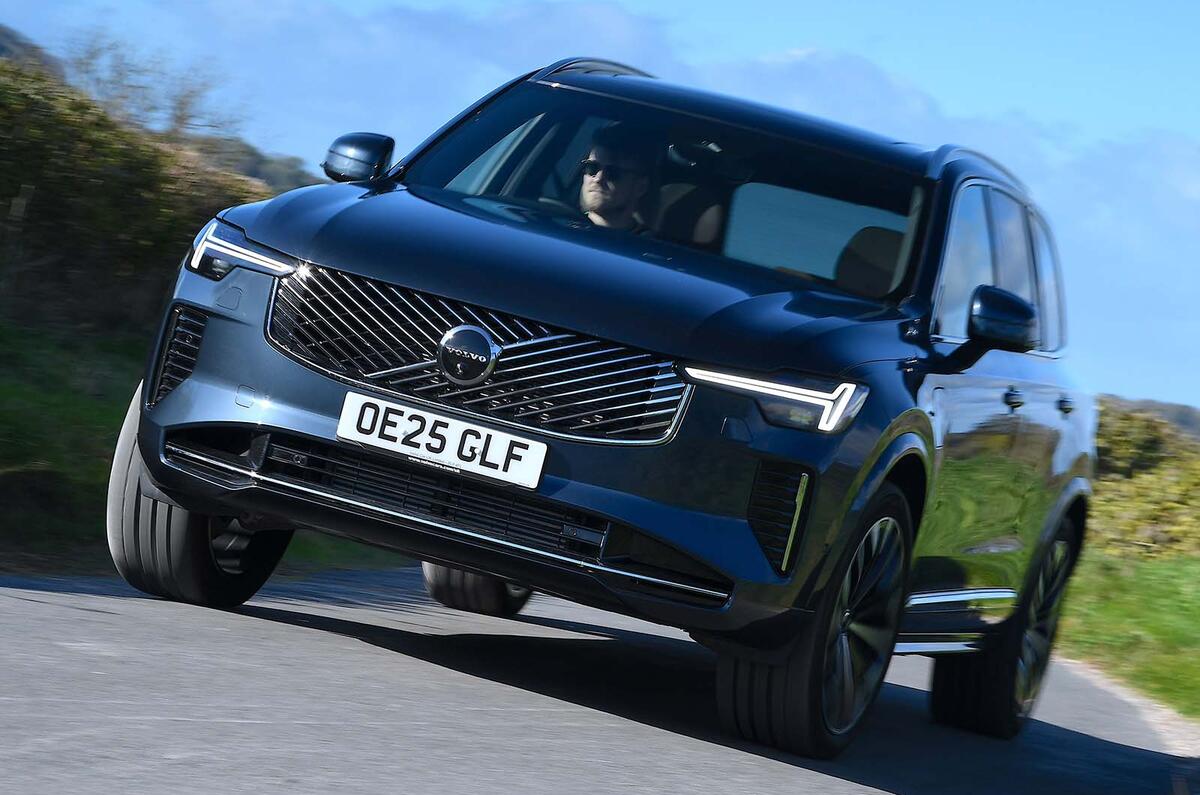
Has the sun finally stopped shining on this suave seven-seat Swede?

I’ve said an awkward ‘sayonara’ to one seven-seat plug-in hybrid SUV and an enthusiastic ‘hej’ to another one, these two being the fresh but underwhelming Mazda CX–80 and the decade-old yet still entirely relevant Volvo XC90.

The big Swede recently underwent a second facelift–but thankfully this surgery hasn't had the alarming result often seen on Graham Norton's couch, instead being subtle and very sympathetic to the handsome original design that so contributed to this car's remarkable popularity.

It has also noticeably slimmed down, shedding its B6 petrol and B5 diesel engine options, while lightly updating the B5 mild-hybrid four-cylinder petrol and the T8 PHEV, both of which come exclusively with four-wheel drive. Perhaps surprisingly, considering the ongoing plug-in hybrid renaissance, the T8's battery has been left at just 14.7kWh, providing an electric-only range of 43 miles.

Then again, such EV capability still means it's green enough in Westminster's eyes to attract just 9% company car tax. That battery feeds a 143bhp permanent magnet synchronous motor that works in conjunction with a 306bhp turbocharged four-cylinder petrol engine. As with the CX–80 PHEV, I've already found the combination can be incongruously accelerative if asked to be.
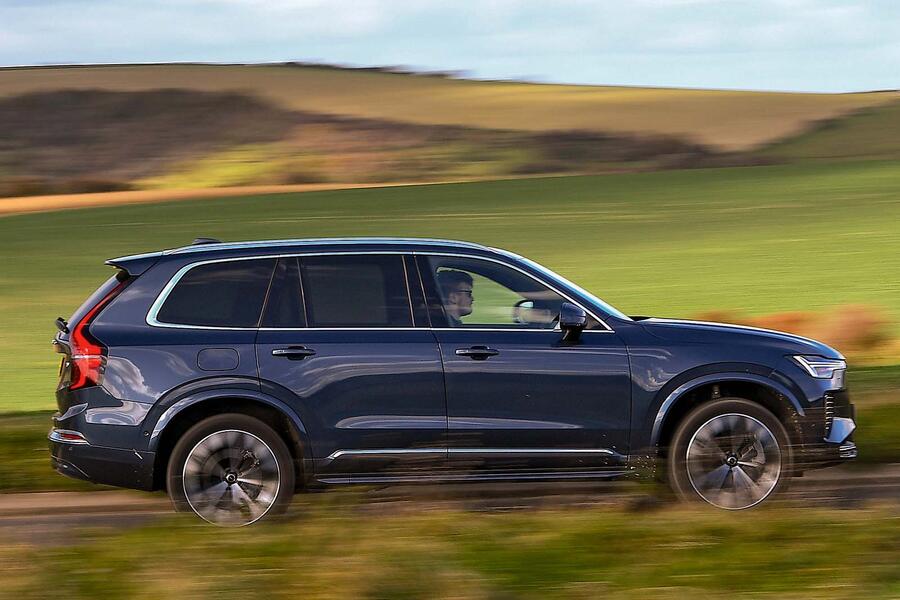
One significant change that Volvo has made is to the suspension: a new double-wishbone arrangement up front, an integral link at the rear and frequency-selective damping are claimed to make this already comfort-biased car even comfier.

Extra soundproofing measures now feature as well. However, my XC90 is in range-topping Ultra trim and therefore has swapped the standard springs for active air suspension that scans the road and reacts accordingly up to 500 times per second.

Advertisement

Read our review

Car review

Facelifted seven-seat old-stager gains an indefinite stay of execution

Back to top

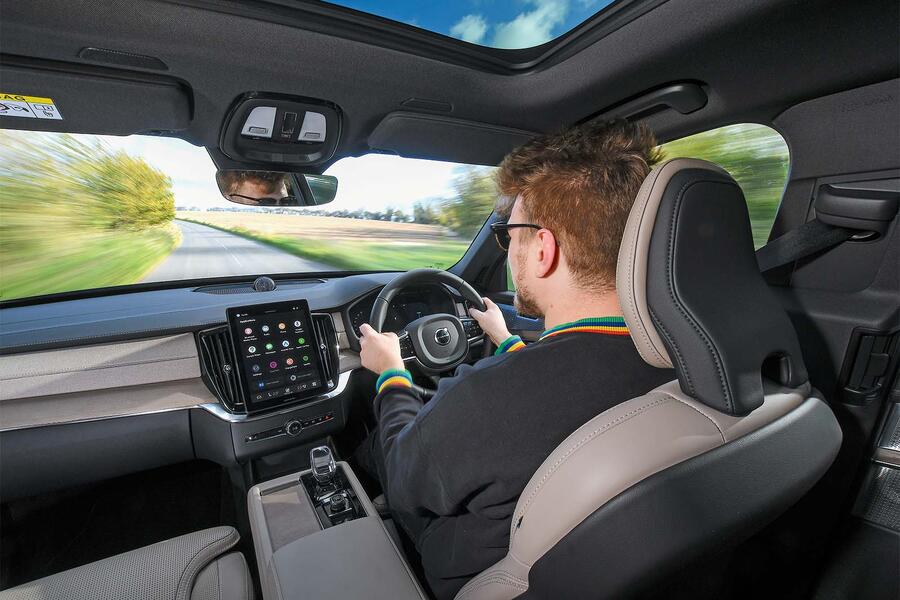
In brief summary, this car is in a different league from the CX-80 PHEV in terms of ride and refinement. Interestingly, Mazda and Volvo appear to have cut their interiors from the same cloth, figuratively and almost literally too. Both espouse a kind of restrained luxury and employ ‘alternative’ materials that really do it for me, and both my test cars were specified with light-coloured materials, which beat the dark options any day.

The major difference between them is their makers' attitude towards physical switchgear: while Mazda has kept all of it in the CX-80 and even disables touchscreen functionality on the move (making you use a rotary dial instead), Volvo has caught touchscreen fever to the extent that there are now very few buttons left in the XC90. I probably don't have to tell you which I prefer; well organised though Volvo's software may be here, it has already caused frustrations.

On the bright side, Ultra trim provides an absolutely stonking Bowers & Wilkins sound system, which will be perfect for my long commutes, and even massaging front seats, ditto for my drives home from the gym. Absolutely spoilt, eh? Well, so anyone should be after forking out £84k.

Even the T8 Core is £73k, while the B5 Core is £65k. Then there's the similarly conceived but technically unrelated electric EX90 at £83k to £96k.

Back to top

There's no debate about it: Volvo is firmly a premium brand nowadays. The supreme comfort and refinement of the XC90 T8 resoundingly justify that positioning, as indeed does the performance. Only its suitability for a user with limited charging opportunities remains in question.

Volvo has form with keeping cars going for much longer than the German premium brands, and going in good health, yet it's still incredibly impressive that this old-timer, based on initial impressions, remains objectively better than some brand-new PHEV SUVs. The CX–80 PHEV compelled me to write a particularly downbeat final report; the chances of the XC90 T8 doing likewise after the next few months running it seem slim to nil.

Please, don't let it stumble...

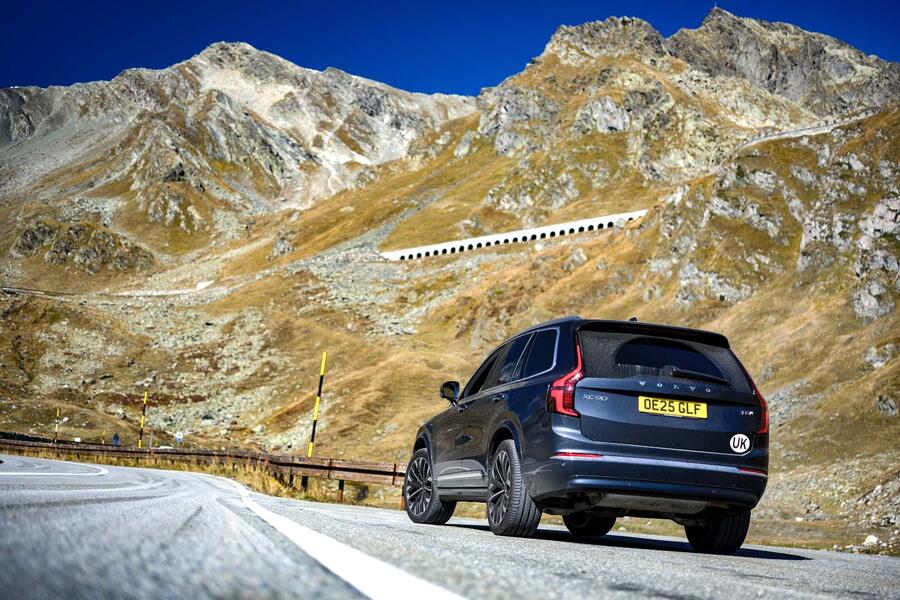
To Italy via Wales

Averaging 230 miles daily for nearly a fortnight is a foolproof way of exposing any car's weaknesses. 

This near-£90k Volvo certainly has its share – alongside plenty of strengths – but how will it handle a 3000-mile road trip to Italy via Wales?

Read the full feature here

Software, spiders and screws

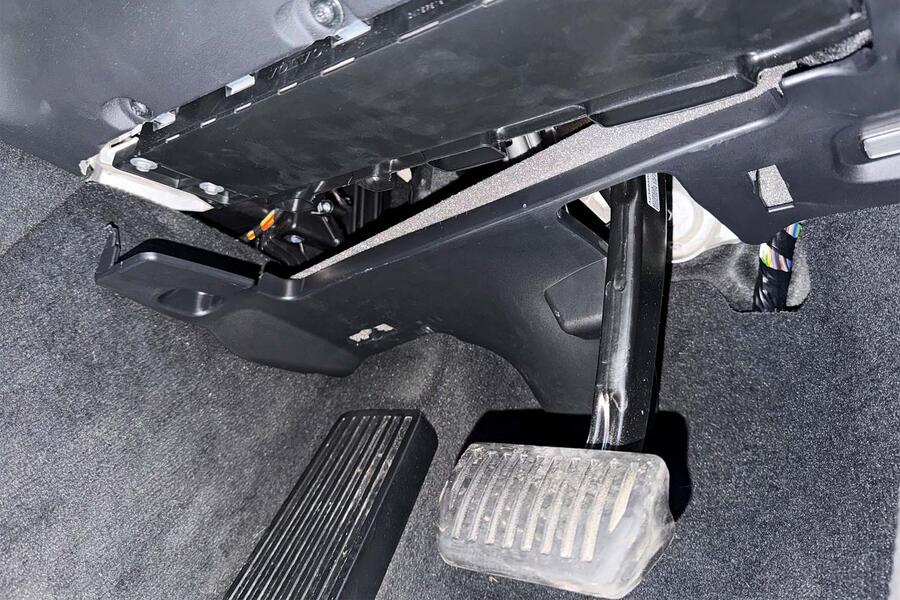
Sudden loud screaming is possibly the last thing you want to hear while driving. Thankfully I managed to avoid crashing while jumping out of my skin on this occasion. And I was at least a bit sympathetic, because I am arachnophobic just like my poor girlfriend, who had just discovered the sickening cause of the tickling on her left leg in the dark footwell.

Back to top

The tarantula in question reacted as instinctively as I had, rapidly retreating back through a trim gap somewhere. He's about as welcome to stay in my car as a politician would be in my home, but unfortunately he's much harder to kick out-as evidenced by the occasional webs that I continue to find atop the dashboard.

You can understand, then, why my blood ran cold when I felt something fall onto my leg while driving on a motorway recently. To my relief, the culprit was not the horrifying chief suspect but a large screw. Although that relief didn't last for very long, because screws are there for a reason - holding together two things that need to be held together, usually.

The relevant components here were the dashboard and a large trim piece. Whether the screw had been left loose by the factory or the Volvo Assistance technicians who had come out to fix the in-built Google sat-nav (Autocar, 31 December 2025), I couldn't say, but I would assume the latter, given the timescales involved. Either way, not ideal. Especially because I don't seem to own the required screwdriver head.

Yet this is actually pretty low down on my list of problems with the XC90. Since early on, I've had trouble getting it to play my music. Initially I connected my iPhone to Volvo's system via Apple CarPlay - not wirelessly, annoyingly - and listened from Spotify. Then one day this functionality was confiscated. The connection was acknowledged by my iPhone but not the car.

Back to top

An unintentional by-product of the technicians resetting the electrical system? Again, I can't be sure. Consequently I had to switch to Volvo's simple Bluetooth media player, which meant no more WhatsApp communications on the move - again, annoyingly. This software also had a curious habit of displaying album artwork one track late.

Of course this doesn't strictly matter, but if you're going to offer such functionality, you should at least make it work properly. Then, after a few weeks, suddenly Apple CarPlay began working again. Same phone, same wire, same everything... so bafflingly random.

That is the usual nature of glitches in my XC90. As a result, I've started to doubt my own sanity, or at least my memory. On one journey, the internal indicator ticking noise just didn't register. At least I think it didn't. It has worked perfectly every other time, so... Worst of all, though, particularly now that winter has descended, is the adjustment of the interior brightness.

There's a digital slider that's meant to dim or brighten the touchscreen and instrument display, but it doesn't actually do anything. Hence the touchscreen stays uncomfortably, distractingly bright, and sometimes the other screen follows suit. I presume its changing behaviour is linked to the automatic headlights' day-or-night sensing system, as in most cars.

Actually, maybe the touchscreen also goes dim sometimes? Honestly, I can't keep track any more. What I do know for sure is that I now have to drive home from work with plain-black 'screen cleaning mode' active to prevent my photophobic eyes from being painfully strained.

Back to top

Volvo has told me "the issue has been identified and will be fixed in a forthcoming over-the-air software release". Software, eh? You gotta love it.

Comfortable but confusing

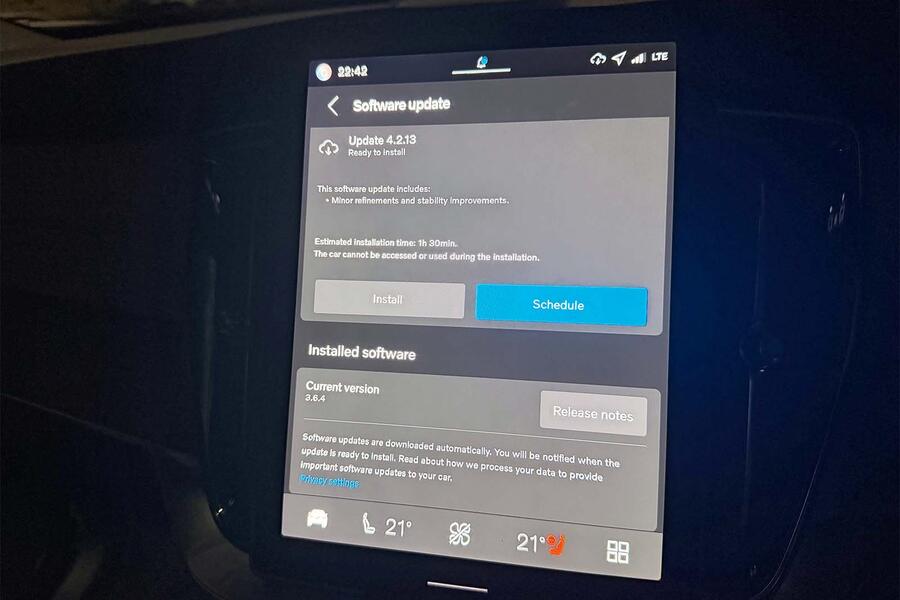
Not long after Volvo promised me an over-the-air software update to fix the non–functioning touchscreen brightness adjuster in my XC90, a message appeared on that very screen offering me the enticingly named Update 4.2.13, which would make "minor refinements and stability improvements".

On average, promises Volvo, owners will receive four such updates per year. An XC90 will download any update automatically (using its mobile data connection) before offering its installation. Even so, this update would render my car inaccessible and unusable for an estimated 90 minutes – significantly longer than the 25–minute duration of my last over-the-air update, a few years ago, in a Peugeot 408.

What it did have in common with that update, however, was the subsequent absence of any obvious changes. Yes, to my immense annoyance, the screen stubbornly remains at its painful brightest. Sadly, Volvo's website offers nothing more specific about the 4.2.13 package than the screen had done.

But I'm hoping whatever links the indicator stalk to the blinkers received some attention because, while on a main road pre–update, flicking for an overtake prompted this warning message on the dash: "Right turn indicator malfunction." Crikey – that's a new one.

Back to top

The orange bulbs did appear to be illuminating for the rest of my journey and then passed an exterior check once I got home, so whether there really had been a temporary outage or the warning was triggered in error, I shall never know.

It's such a shame that I'm having to report yet another negative about this car, because there are so many positives waiting to be discussed. Primarily they concern comfort.

Although the standard active air suspension doesn't handle potholes particularly deftly, it generally gives a comfortable, settled and quiet ride, taking some of the stress out of the rush–hour rat race. Similarly it's very refined, in the sense of quietening road noise – so much so that swapping it for a supermini recently had me checking that all the windows were fully closed.

Then there's the absurd PHEV performance. Merging onto main roads from petrol station slip roads always makes me chuckle: people see a big old Volvo bus indicating to join in front of them and move over into the middle lane, only for it to launch itself so rapidly that they needn't have taken any precaution.

Indeed, the XC90's energy levels sometimes continue to surprise even me, because its decidedly soft and laid–back character means I rarely exploit anything like its full, 449bhp potential. The reality that a Volvo seven–seat SUV has considerably more horsepower than a current Porsche 911 is bizarre, and even at 2.3 tonnes it's a scant 1.5sec slower in charging from 0–62mph.

Back to top

Cancel the removal van

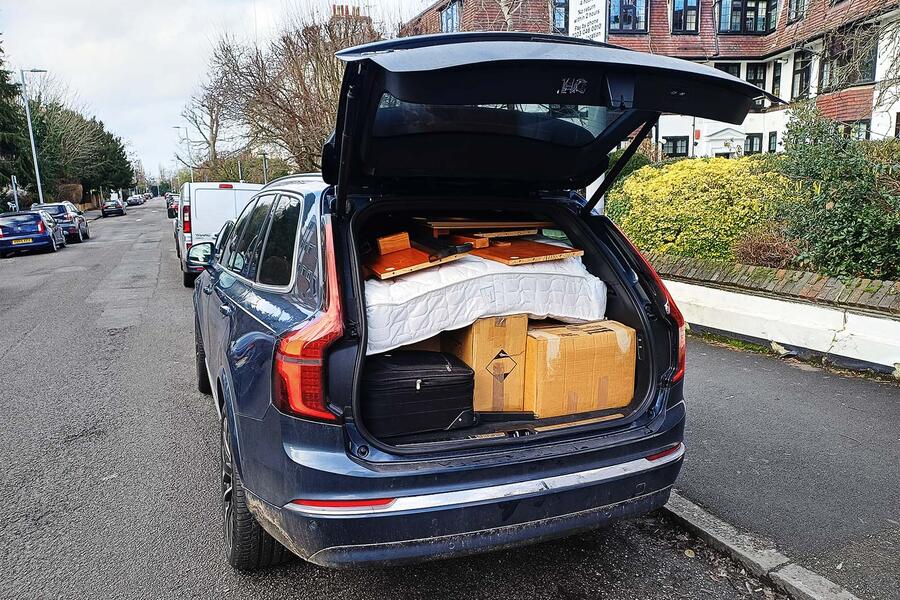
There's quite the array of itinerant renters here at Haymarket Automotive, so flat moves are frequent and begging for temporary use of large test cars is inevitable. On the scrounge for a big car last month was Classic & Sports Car's Aaron McKay and there are few cars bigger than my Volvo XC90, with its greedy 4953mm by 2140mm seven-seat SUV footprint.

There was some irony in Aaron's request, because I commit the fourth deadly sin whenever I see his own car: a 1985 BMW 325i with those wheels. But the biggest piece of furniture he could fit in his saloon's boot would be a footstool, whereas he could almost park his whole car's petite form in my Volvo's load bay at full extension (2040mm long, 1192mm wide, 816mm high).

It's interesting to note, by the way, that those internal dimensions are exactly the same for the conventionally powered versions of the XC90: unlike many plug-in hybrid models, the T8 doesn't demand any practicality compromise here, because its battery is not lazily lumped into the boot but stacked atop the driveshaft.

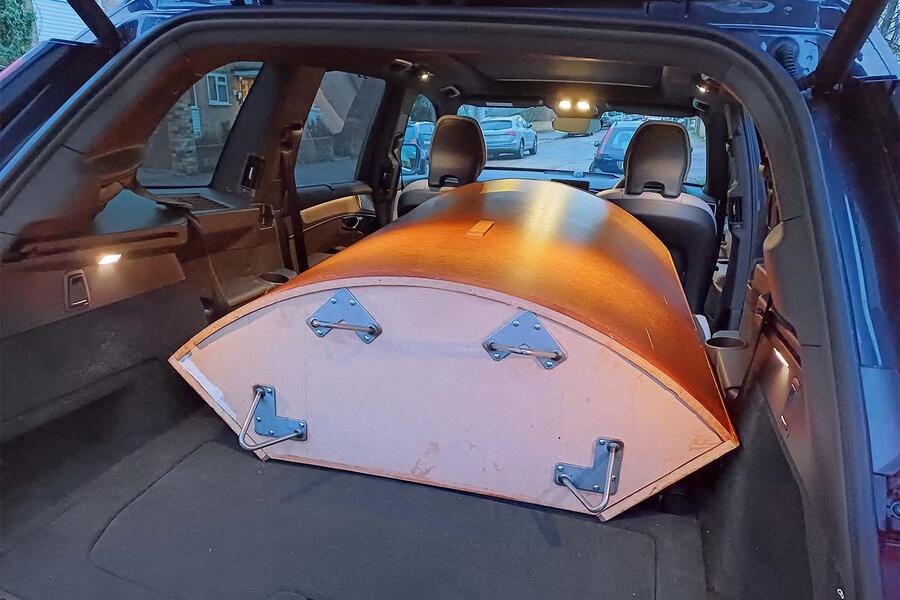
"My outrageously large and awkward corner bookcase – 1100mm corner to corner, 450mm deep and goodness knows how tall – was swallowed neatly," reported Aaron, "with enough space left over for my former flatmate's dismantled double bed frame and folded mattress – off to the tip – plus loads of boxes and two large suitcases."

Back to top

For boring logistical reasons, Aaron's move from London to elsewhere in London required his stuff to be temporarily stored back home in Wales, so it wasn't just the XC90's outrageous capaciousness or free use that had swayed him away from simply renting a van – Ford doesn't do a near–500bhp Transit with massage seats and active air suspension, you know. You can even command the XC90's springs to sink lower for easier loading (via a touchscreen menu, obviously).

I imagine that seven adult men would weigh significantly more than all of Aaron's worldly possessions (actually, they could take the Volvo close to its three–tonne maximum gross weight), but we were nevertheless impressed that it did 32mpg on a flat battery when cruising to Wales.

That's no different from what it had been averaging with just me aboard. Better still, the car "never felt excessively heavy, underdamped or underbraked" in the way it drove when fully loaded – Volvo evidently designed the XC90 with heavy–duty usage front of mind.

Any complaints at all? Well, perhaps some would quibble about having to manually fold away and re–erect the third–row seats, having paid £85,000, but look, I didn't build these huge muscles for nothing...

Goodbye

Gambling has never been one of my vices, which is most definitely a good thing on the evidence of my prediction for life with a Volvo XC90 plug-in hybrid.

Back to top

Initially delighted by it, I concluded my first report thus: "The Mazda CX–80 PHEV compelled me to write a particularly downbeat final report; the chances of the XC90 T8 doing likewise after the next few months running it seem slim to nil."

If I were a betting man, I would have lost some money, because my relationship with this biggest of Volvo SUVs steadily deteriorated over the ensuing months to the extent that I was glad to see it go.

"Please, don't let it stumble," I had prayed, but it stumbled not just literally over every pothole but also figuratively with several faults, admittedly minor but nevertheless unacceptable.

Considering that the XC90 is one of the oldest cars on the UK market, having been launched way back in 2015, you might expect any flaws to have long since been rectified, but naturally Volvo has continually updated its technology through the years and, as we all know, new software is rarely perfect. Hence it was from that all–controlling touchscreen that my troubles stemmed.

First the in–built Google Maps sat–nav failed to realise the car had returned from a trip to Italy, necessitating a visit from Volvo Assist mechanics to perform a hard reset of the car's electrical system.

Then the Apple CarPlay suddenly stopped communicating with my iPhone, only to resume relations randomly some weeks later. And the brightness adjustment slider was impotent, leaving that expanse of pixels fully aglow at all times, which made driving in darkness very uncomfortable on my eyes.

Back to top

The worst thing about all this, really, is that these glitches distracted from what was otherwise a generally pleasant car that performed admirably enough in the important fields of practicality, comfort, refinement and performance – if not, it must be said, economy, particularly by the standards of the freshest plug-in hybrid SUVs. 

The XC90 T8 was born with a battery capacity of 9.2kWh and an electric range of 24 miles, but it was early to the PHEV party, when those numbers were impressive.

The T8 powertrain has been updated a few times since, shedding the supercharger from its four-cylinder petrol engine and gaining in battery capacity through 11.6kWh to 18.8kWh–where it has stayed since 2023, despite a significant facelift for the XC90 last year and new rivals having more than triple that.

That's the compromise you make to have that third row of seats, but it means the electric–only range is 43 miles on paper and, as my colleague Alastair Clements found to his disappointment, barely more than half that on suburban streets. It hardly seemed worth the effort for me to charge – not having access to a home charger– especially since the fastest–possible charging rate is a mere 3.7kW and my local lamp–post chargers are very expensive.

I therefore mostly ran around on a flat battery. Defeating the point? Perhaps, but perhaps not when you consider that many PHEV drivers will be in the same situation as me, having chosen a car purely due to the questionable manner in which company car tax is apportioned.

Back to top

Life was much less stressful simply driving the T8 around like a conventional petrol luxury car and accepting the financial pain of 30mpg.

Luxury is no exaggeration: this is an £85k purchase that rides smoothly on active air suspension (well, until it encounters a pothole) and in impressive quietness, despite having only four cylinders at its disposal and weighing nearly two and a half tonnes.

One with big, cosy, massaging seats upholstered in nappa leather, bathed in sunlight from a full–length glass roof, with seemingly endless space for rear passengers and capable of really entertaining all aboard with a truly exquisite premium sound system.

And also one capable of stonking performance once both its engine and its rear–mounted electric motor are called upon. Its accelerative potential was silly back in 2015, when it had 316bhp; nowadays, despite having lost that supercharger, it's laughably absurd at 449bhp.

In its time with us, this XC90 T8 proved its touring talents by taking deputy road test editor Richard Lane to Italy, its outstanding capaciousness by helping Classic & Sports Car's Aaron McKay move to a new flat and its suitability for everyday mundanity by taking myself up the motorway to work and through town to the shops and the gym.

What the XC90 T8 hasn't done, though, is entirely convince us that it in itself warrants its recently granted stay of execution. 

Volvo XC90 T8 AWD Plug-in Hybrid Ultra

Prices: List price new £84,260 List price now £83,765 Price as tested £85,055 

Options: Denim Blue paint £795, Blond nappa leather interior £0, Bright exterior £0 

Economy and range: Claimed economy 201.8mpg Claimed electric range 43 miles Battery 18.8/14.7kWh (total/usable) Test average 30.2mpg Test best 55.3mpg Test worst 28.6mpg Real–world range 24 miles (electric), 470 miles (ICE) 

Tech Highlights: 0–62mph 5.4sec Top speed 112mph Engine 4 cyls in line, 1969cc, turbo, petrol, plus electric motor Max power 449bhp Max torque 523lb ft Gearbox 8–spd automatic, 4WD Boot 298/977/1941 litres Wheels 9.0x21in, alloy Tyres 275/40 R21, Continental PremiumContact Kerb weight 2365kg 

Back to top

Service and running costs: Contract hire rate £855 pcm CO₂ 28g/km Service costs None Other costs None Fuel costs £685.91 Running costs including fuel £685.91 Cost per mile 20 pence Faults Several software glitches, one of the dashboard trim screws fell out

Join the debate

Comments
1
Add a comment…
Cobnapint 16 April 2026
Lucky you didn't encounter the ERAD issue as well, although that is usually found on older models.