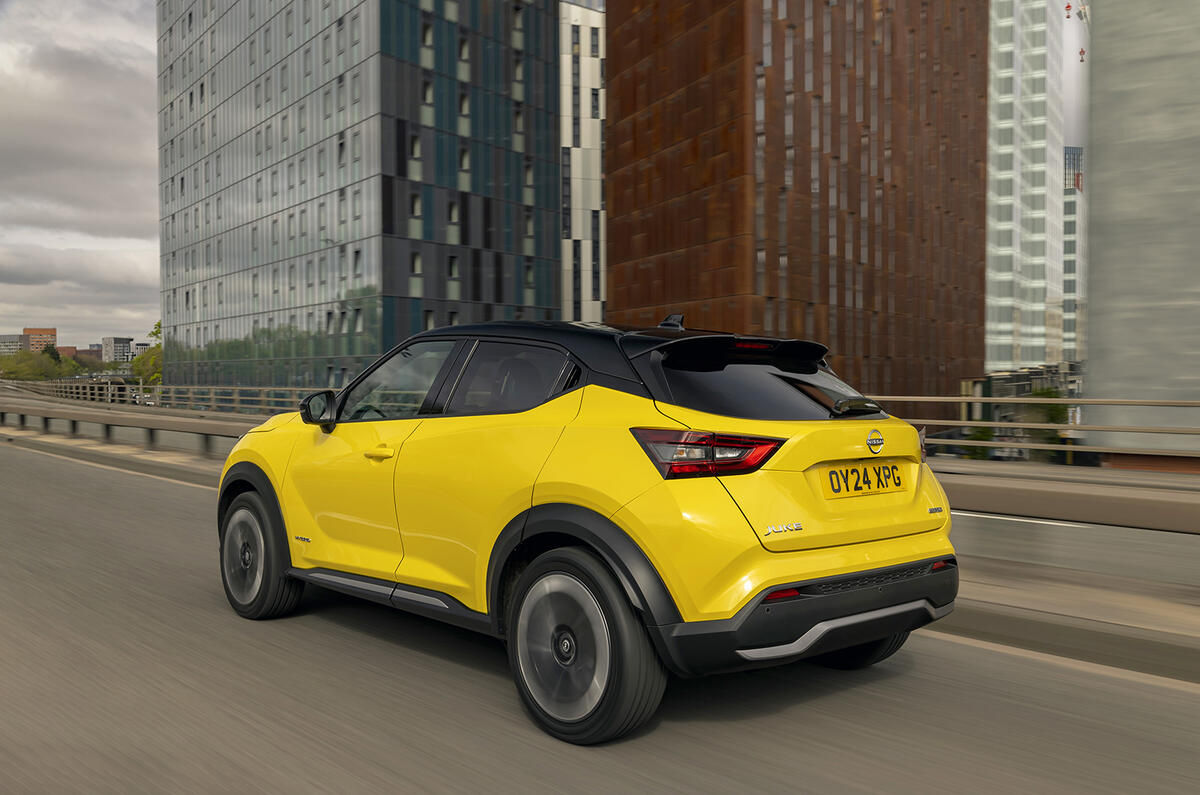
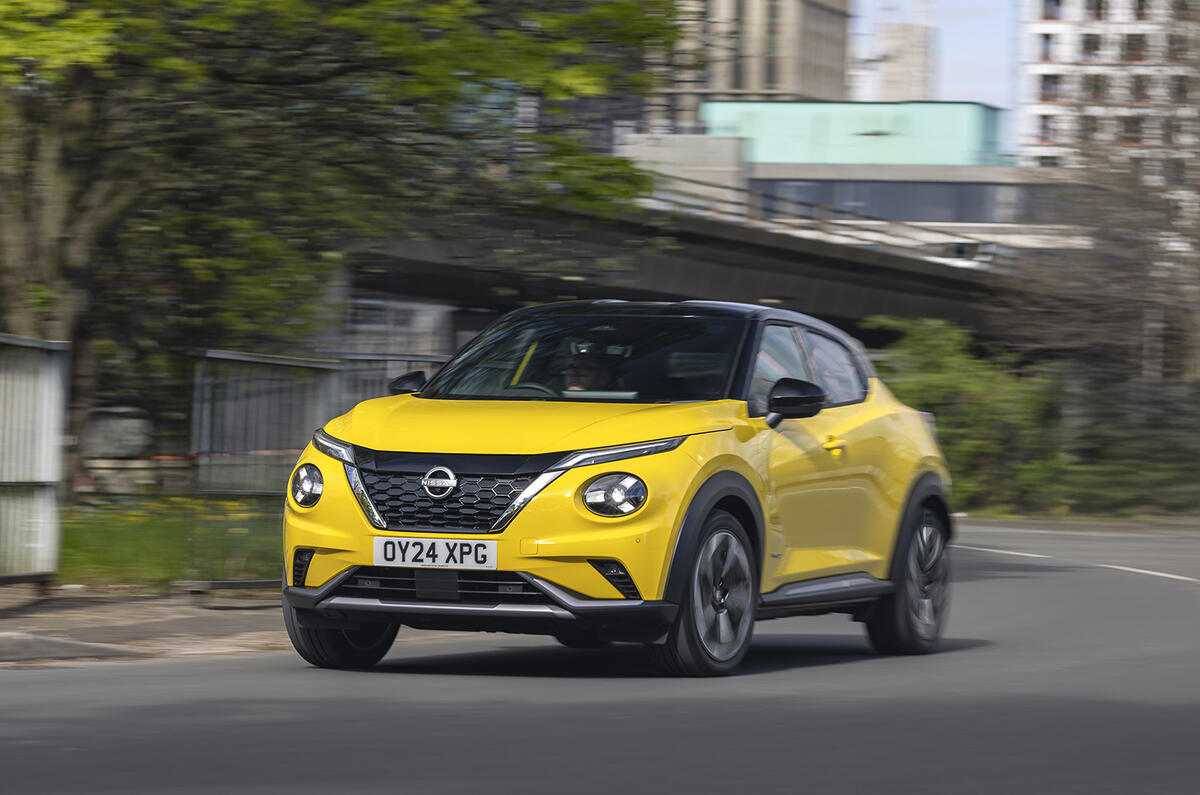
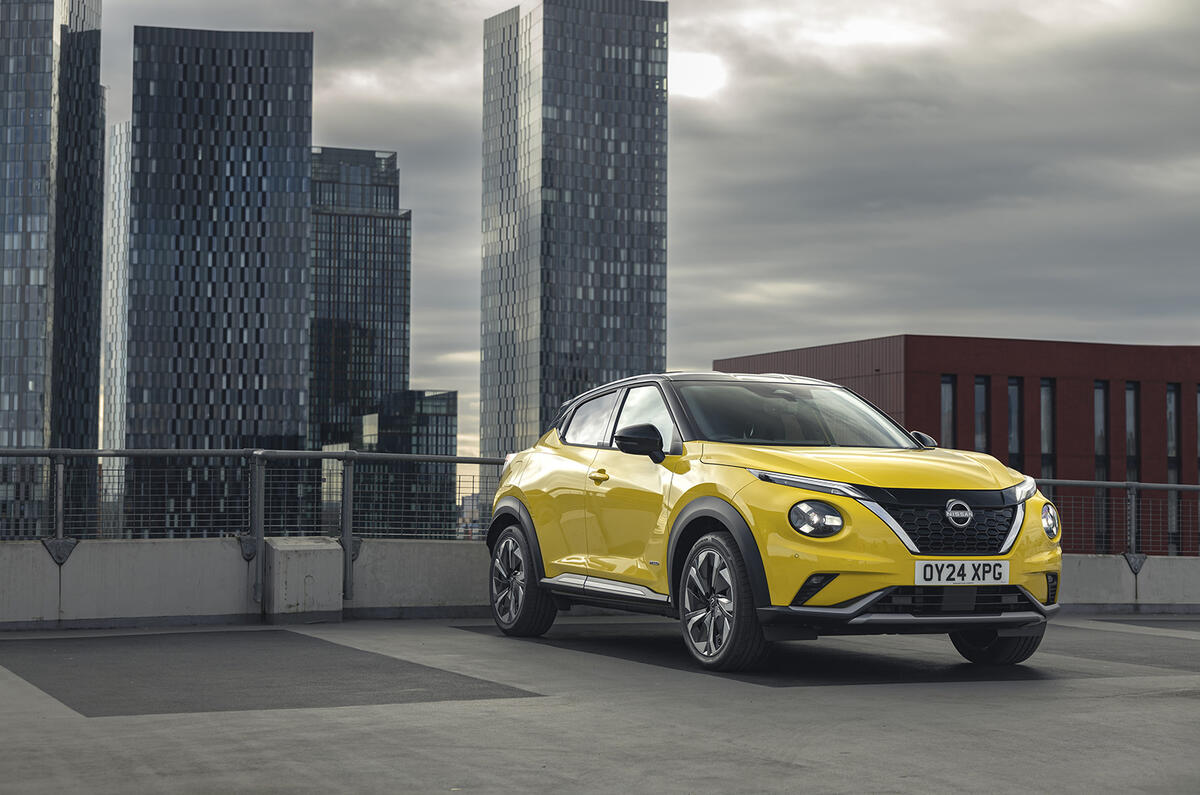
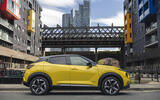
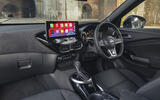
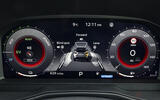
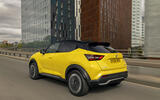
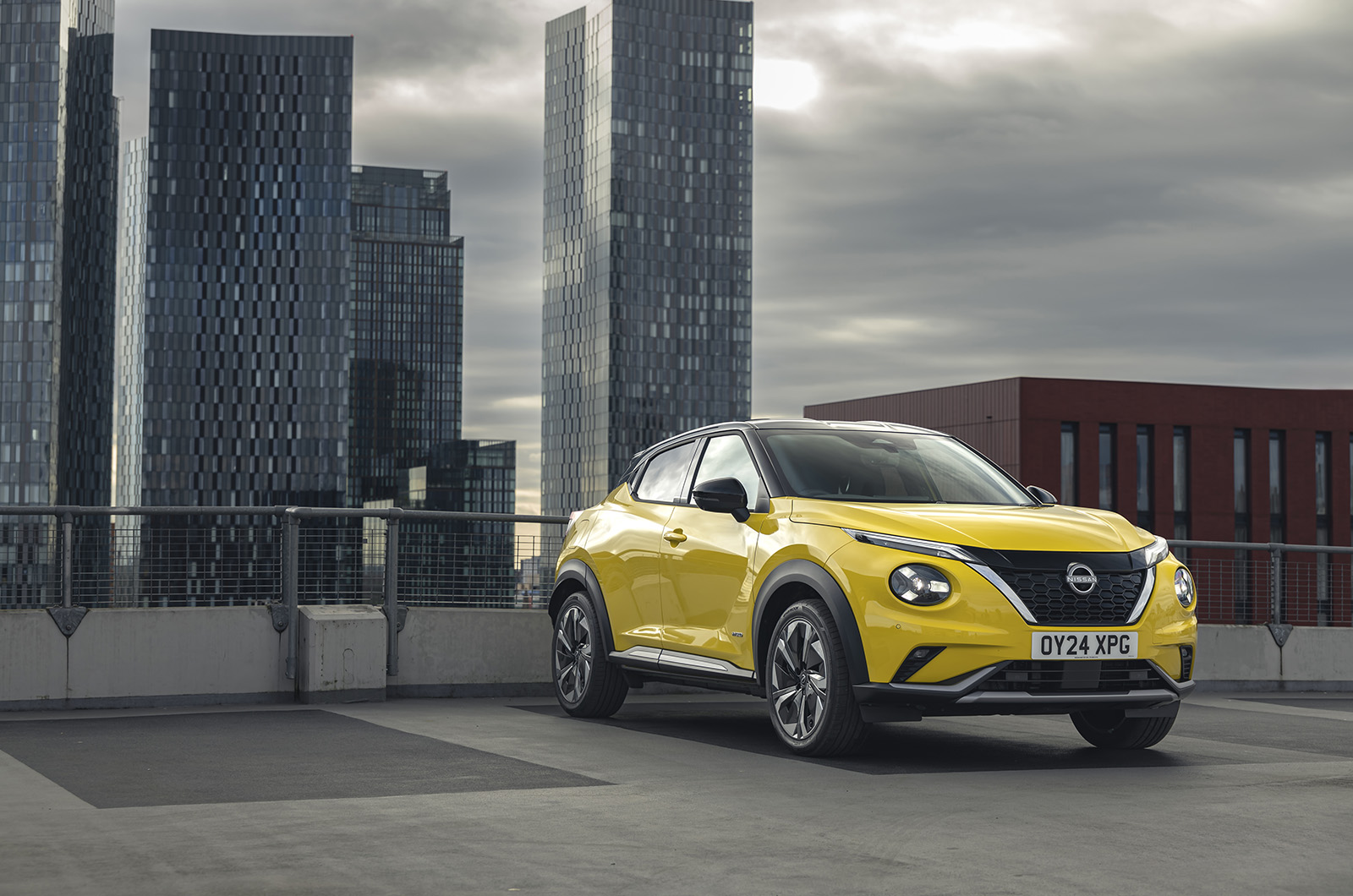
The 1.0-litre Juke’s vital statistics indicate that it should perform quite well relative to the competition, but our real-world experience suggests otherwise.
In our on-track performance tests (albeit in wet and chilly weather), it missed Nissan’s claimed 0-62mph sprint time of 10.4sec by a full 1.5sec. It also failed to get within 1.0sec of the less powerful Seat Arona 1.0 TSI when accelerating through the gears from 30-70mph.
At full power, the Juke’s three-cylinder motor seems to work keenly enough from a subjective standpoint, revving freely up to about 5000rpm, although not with what you’d call genuine enthusiasm.
It suffers with some notably slow turbo response at low crank speeds, though – enough to represent a slight drivability hurdle until you’re used to the way the engine responds to part-throttle.
It’s less problematic in the short term if you avoid using the Sport driving mode, though, and isn’t really a problem at all once you’re used to taking particular care with the first couple of inches of accelerator travel.
Operating the car’s other pedals is easier and more intuitive, thankfully – they show evidence of more harmonious and attentive tuning – and the shift quality of the six-speed manual gearbox is fairly light, slick and well defined.
The dual-clutch automatic provides rapid, well-judged shifts. However, it struggles at lower speeds, often delivering a shunt as you try to exploit a gap at a roundabout or pull away from a junction. It’s even worse during manoeuvres such as reverse parking, which can bring you to a juddering halt.
The Juke's 1.6-litre hybrid powertrain has a combined output of 141bhp: a useful increase in power, you might think, over the 1.0-litre DIG-T.
That said, it's not exactly eager to use that extra power. If you accelerate hard, the machine will draw on its electric reserves, but the petrol engine takes its time to respond, resulting in a slightly laggy feel. Once you do get the petrol engine working, it is quite gruff as it delivers its power and can feel slightly strained when hauling through the long intermediate ratios of the four-speed automatic gearbox.
But it's easy to drive. You just put it in Drive and, most of the time, the software does a decent job of keeping everything rolling. It avoids the elastic feeling of the CVTs in the rival Toyota Yaris Cross.
That said, try to engage in some spirited driving on a winding road and you'll soon confuse the unit, which will sometimes fail to change up when you want it to, or shift down quickly when needed. Here, it often doesn't feel like you're getting 141bhp at the front wheels.
Nissan Juke assisted driving notes
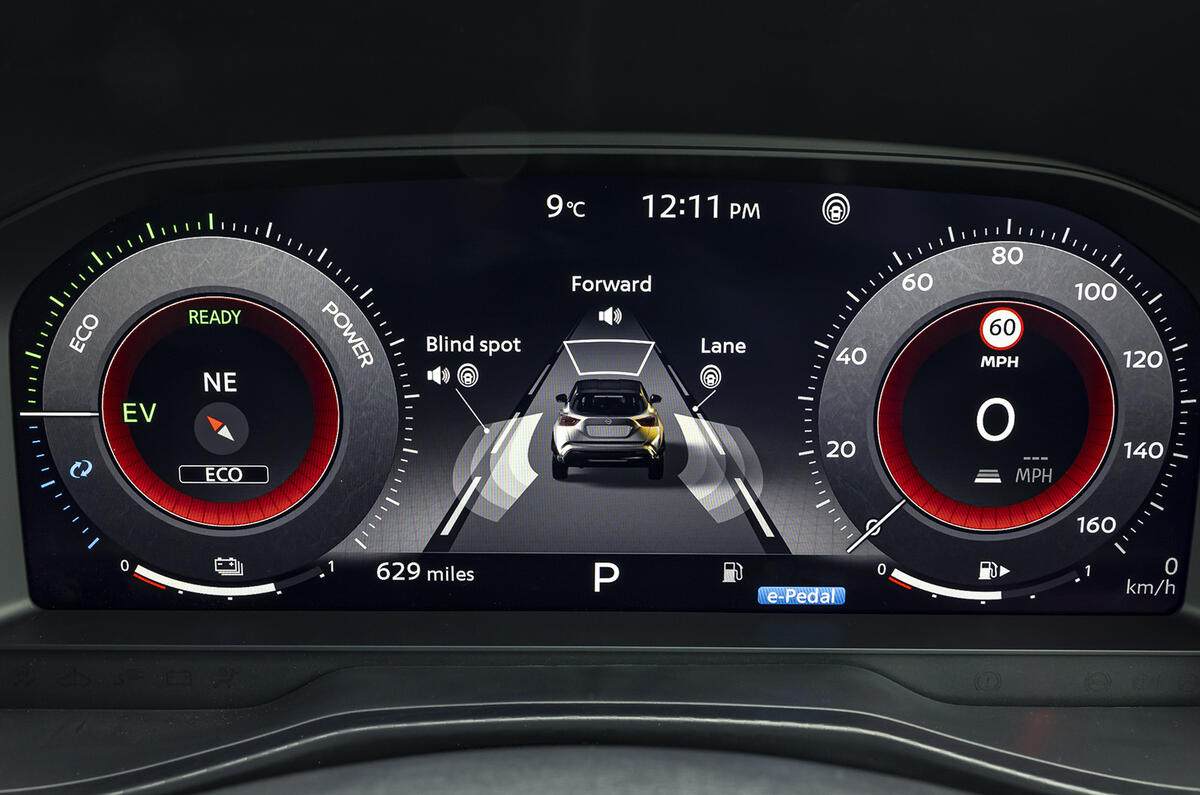
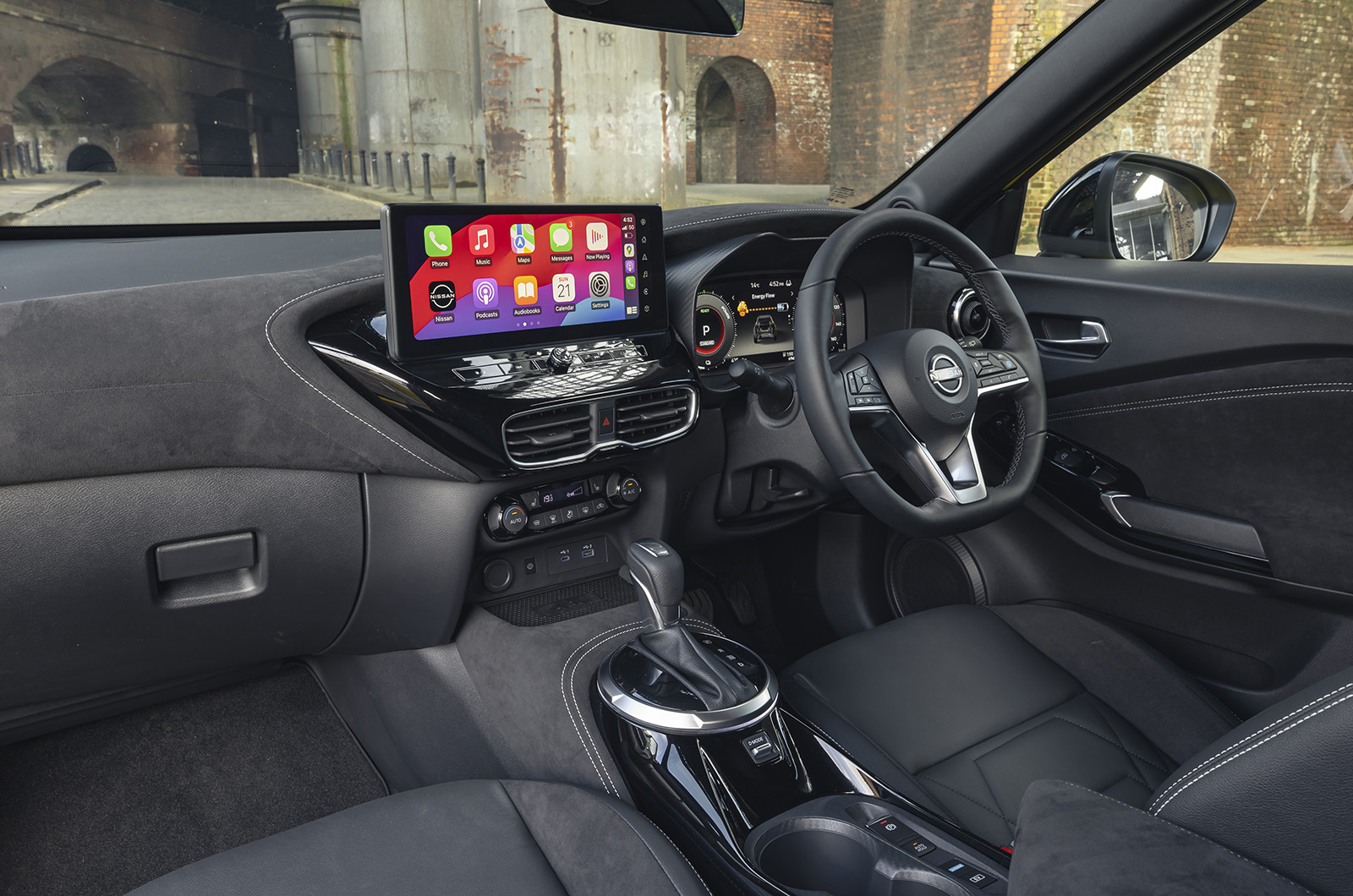
Compared with rivals, the Juke is well provisioned and tuned for active safety – and the 2024 facelift has brought some new driver assistance kit too.
Some of the updates are driven by regulations, such as the new intelligence speed assist, which bongs at you if you exceed the detected speed limit (based on the last sign the car saw). Nissan does at least allow you to press the 'OK' button on the steering wheel to stop the bonging. Although you do have to do that every time it occurs, and turning the system off via the trip computer console isn't as straightforward a process as it really should be.
The autonomous emergency braking has been updated, and there's a new event data recording system that will store info in the case of an accident (it operates on a caching system, so doesn't store data long term). Another new addition is cybersecurity protection to prevent the likes of relay attacks, although Nissan hasn't given details on how that works.
The lane keeping system on our N-Sport test car seemed a bit erratic in deployment. It did feel like it was trying to help but activated inconsistently and was easily flustered.
Two more changes driven by the regulations: the lane keep assist and active steering support have to be set to 'on' when you start the car. Like the speed limit buzzer, they really should have a physical shortcut button for easy deactivation.