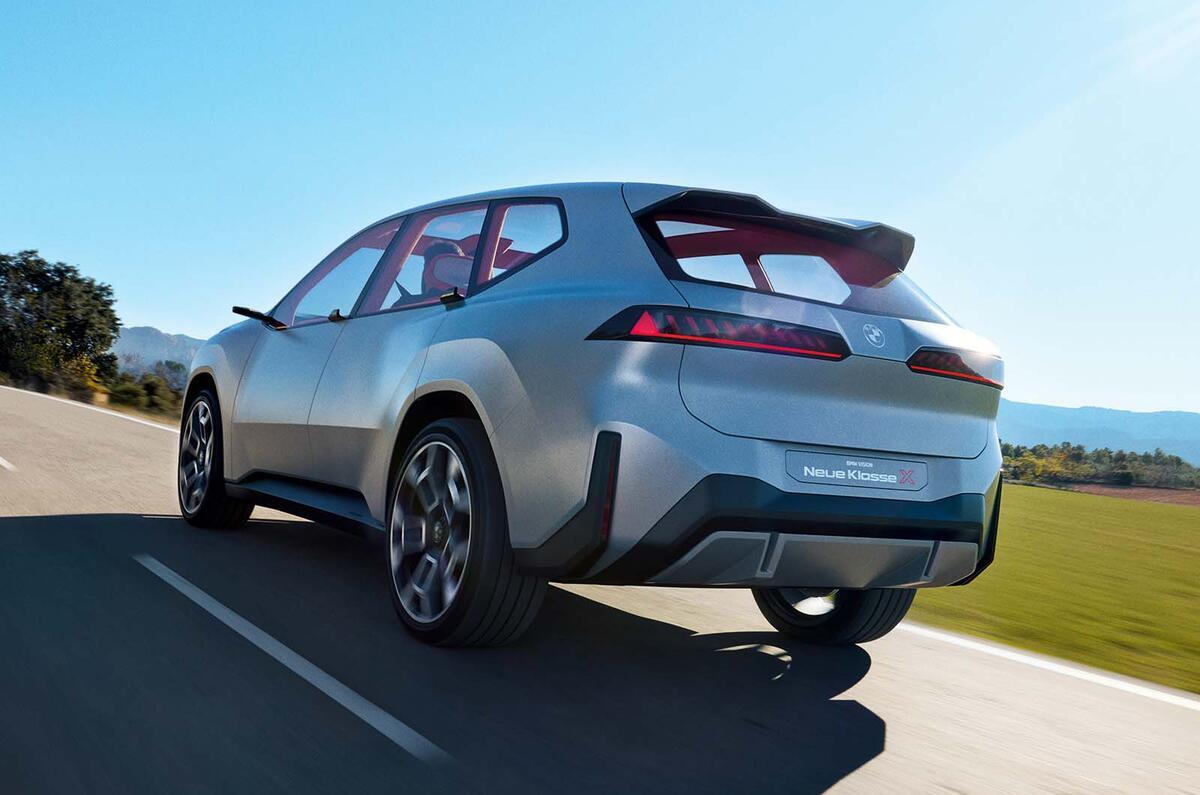

New electric powertrain technology will allow the BMW Group to launch electric cars at a cheaper price while offering more range and better efficiency than today's cars, the firm has claimed.
The Munich company has been working on an entirely new electric vehicle architecture, which will start to be rolled out with its forthcoming line of Neue Klasse models. Now labelled ‘Gen6’, the platform will first be used for the next BMW iX3, which will be unveiled in September and was previewed with the Vision Neue Klasse SUV concept.
The 800V platform is claimed by BMW to be a “quantum leap forward” in terms of technology compared with today’s offerings.
“Neue Klasse is not just a new car: it is a new technology,” said BMW Group purchasing and supply board member Joachim Post. The scalable platform will eventually be used by all BMW, Mini and Rolls-Royce EVs from their respective next generations.
It is centred around a new nickel-manganese-cobalt (NMC) battery that uses cylindrical cells that are 20% denser and easier to package than modules (made up of square cells) found in today’s 'Gen5' lithium-iron packs.
The headline figures are that these new batteries increase range by 30%, efficiency by 20% and charging speeds by 30% (with bi-direction capabilities) and they reduce production costs by up to 50% compared with today’s packs. BMW has yet to disclose a capacity for the batteries that will be fitted.
These reduced costs - achieved by most of the development and assembly now being done in-house – will be passed onto buyers, said Post, instead of being swallowed as extra profit. “It is important to be competitive in the market from the price range in terms of reachability for the customers,” he said, adding that this will allow the firm to push for price parity between ICE cars and EVs.
To give an idea of the technology’s advancement, that range boost applied to the recently refreshed BMW iX – which in xDrive 60 form offers the most miles per charge in the brand’s stable – would increase its maximum range by 129 miles to 555 miles, with the ability to also add 186 miles in as little as 10 minutes.
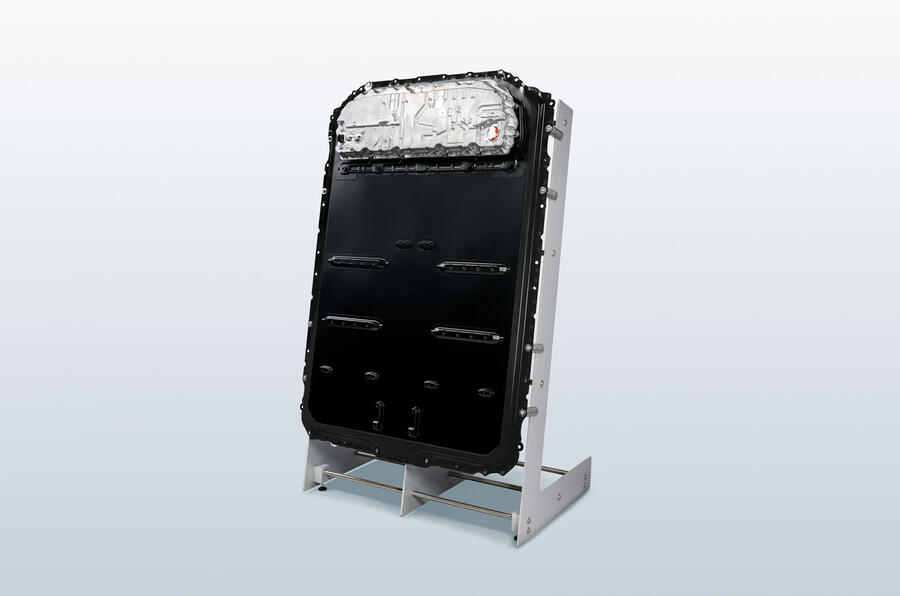 Key to the technological advancements are the new cylindrical cells. They are built in-house in two sizes: either 95mm or 120mm tall and 46mm wide. In both instances, they are easy to package because they do not require modules to fit them together like today, said BMW. As such, they can be attached directly to the pack (called cell-to-pack) which not only saves money because fewer parts are used, but also reduces the weight and size of the batteries, allowing for slimmer batteries.