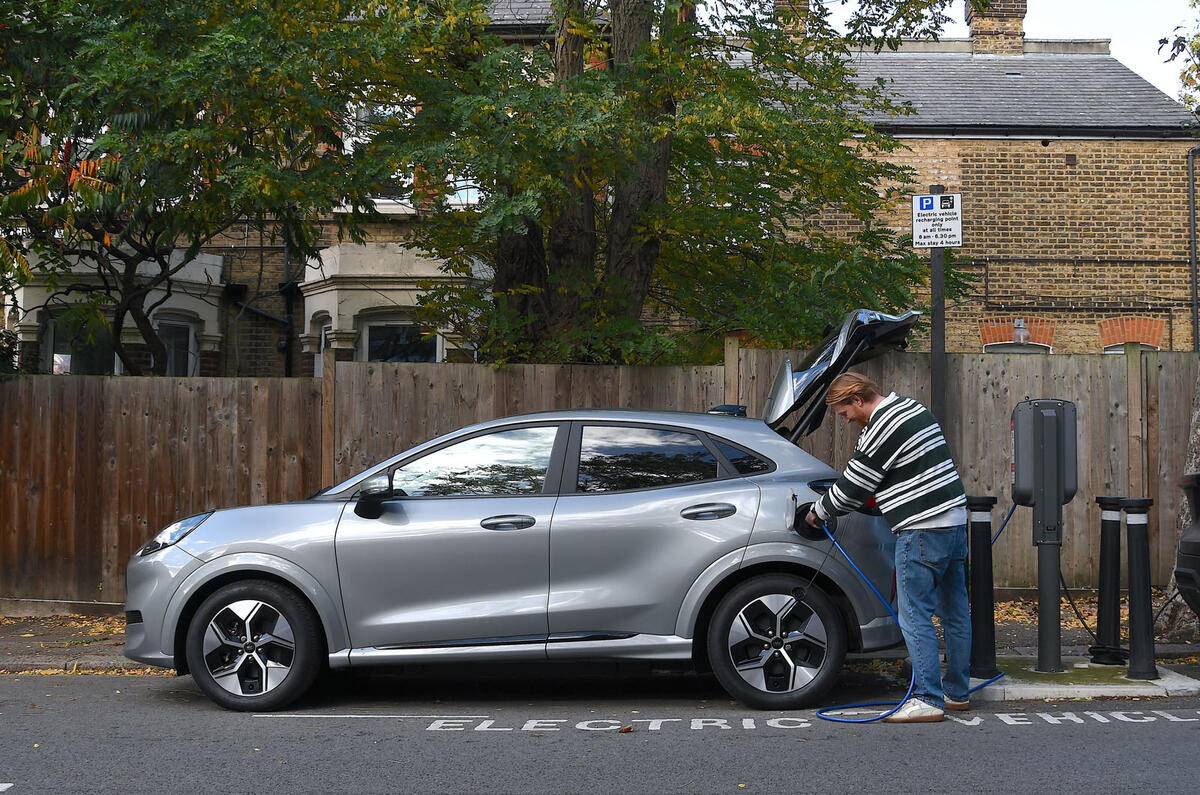

The government’s reported plan to cut VAT at public chargers has been hailed as a major breakthrough by the boss of one of the UK’s fastest-growing EV brands – but he has called for even more incentives to be brought in, including scrapping congestion charges for EVs, in an effort to drive sales.
According to The Telegraph, chancellor Rachel Reeves is readying several cuts to the cost of public charging, in response to the backlash the government faced after announcing the introduction of eVED, a pay-per-mile tax on EVs and plug-in hybrids.
This is due to come into force from 1 April 2028, but the Office for Budget Repsonsibility (OBR) has estimated that it will reduce EV sales by some 440,000 between November 2025 and March 2031, due to drivers being put off switching.
The reported measures to reverse that swing include reducing the 20% VAT rate on charging to 5% – the same levy applied to home electricity – and cutting the network charges imposed by charger providers.
Industry experts are currently in talks with the government, and one person involved in those discussions told The Telegraph that the Treasury fears eVED will “kill EV demand”. They added: “The way we convince people to switch to EVs is by showing people it is easy and it is cheap. There are savings to be had here for many people.”
In response, Polestar UK boss Matt Galvin has told Autocar that the move is “brilliant, brilliant news for those who cannot charge at home”.
According to the RAC, 35% of Brits don't have access to a driveway or some type of off-street parking, and not all of the remaining 65% will be able to install a home charger – for example, those using a shared parking area at a block of flats. The number of UK drivers unable to reap the benefits of home charging is therefore low enough to spark worry in the industry.
Public charging is consequently seen as a key area the government must address if EV sales are to rise to the levels that it has mandated (80% of the UK's total new car market by 2030).
VAT parity will mean huge savings for those without a home charger. Those who charge via a driveway wallbox presently pay around 8p per kWh, while those who use public chargers pay 54p per kWh, according to data from Zapmap.
While there are other options for those without a driveway (such as charging gullies across pavements), many of these require a guaranteed parking space outside the driver’s home, which is often unrealistic.
While the government has recently brought in incentives for EV buyers, such as the Electric Car Grant (ECG), which provides up to £3750 off the price of a new EV, Galvin said it needs to go further still.
He suggested that EV drivers shouldn't be billed congestion charges (Transport for London began doing this on 1 January) and the ECG should be extended to used EVs, which he believes would protect residual values – a growing worry for both car makers and owners.
Galvin concluded: “The messaging coming out of government is confusing. ECG was great but it is confused by PPM [pay-per-mile taxation]. With these confusing messages, it is hard for those moving towards EVs. What we need now is consistency.”