Currently reading: New Giulia and Stelvio: lowdown on crucial new Alfa PHEVs

Executive saloon and Stelvio SUV sibling are due in 2028, having been redeveloped for choice of ICE or EV power

The next-generation Alfa Romeo Giulia will arrive in 2028 alongside a new Stelvio SUV – and the wild, range-topping Quadrifoglio super saloon is set to return to rival the BMW M3 with a choice of electric and petrol power.

The new Giulia and Stelvio were originally due to be launched this year exclusively as EVs, but the Italian brand has revamped its plans as part of a wider rollback by parent firm Stellantis, prompted by the uneven uptake of electric cars.

The current models will remain on sale until next year. The two new Alfas will still switch to an advanced new platform that will allow for massively upgraded electric technology, including ultra-fast charging, but the architecture has now been reworked so that the brand can continue to offer plug-in hybrid powertrains.

Alfa Romeo boss Santo Ficili told Autocar that "we need to consider the entire world because the brand is global", adding that "the world is not ready everywhere" for EVs.

He declared that the firm would continue to offer combustion cars for as long as there is demand, saying: "We need to find a way to satisfy the needs of our customers. What does this mean? It means BEV and it means all the other kinds of endothermic [powertrains], so ICE, PHEV, BEV. So that's the direction."

Life after the Giorgio platform
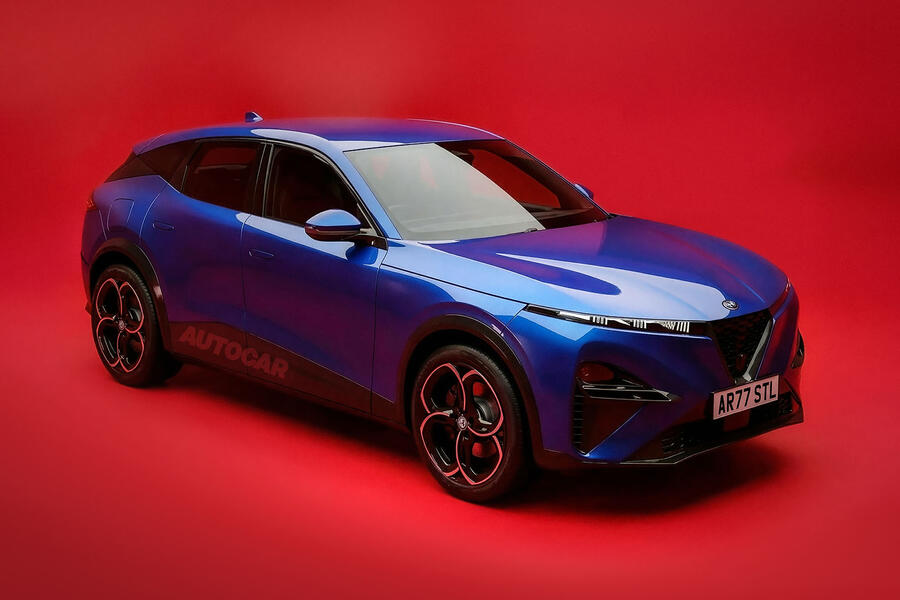
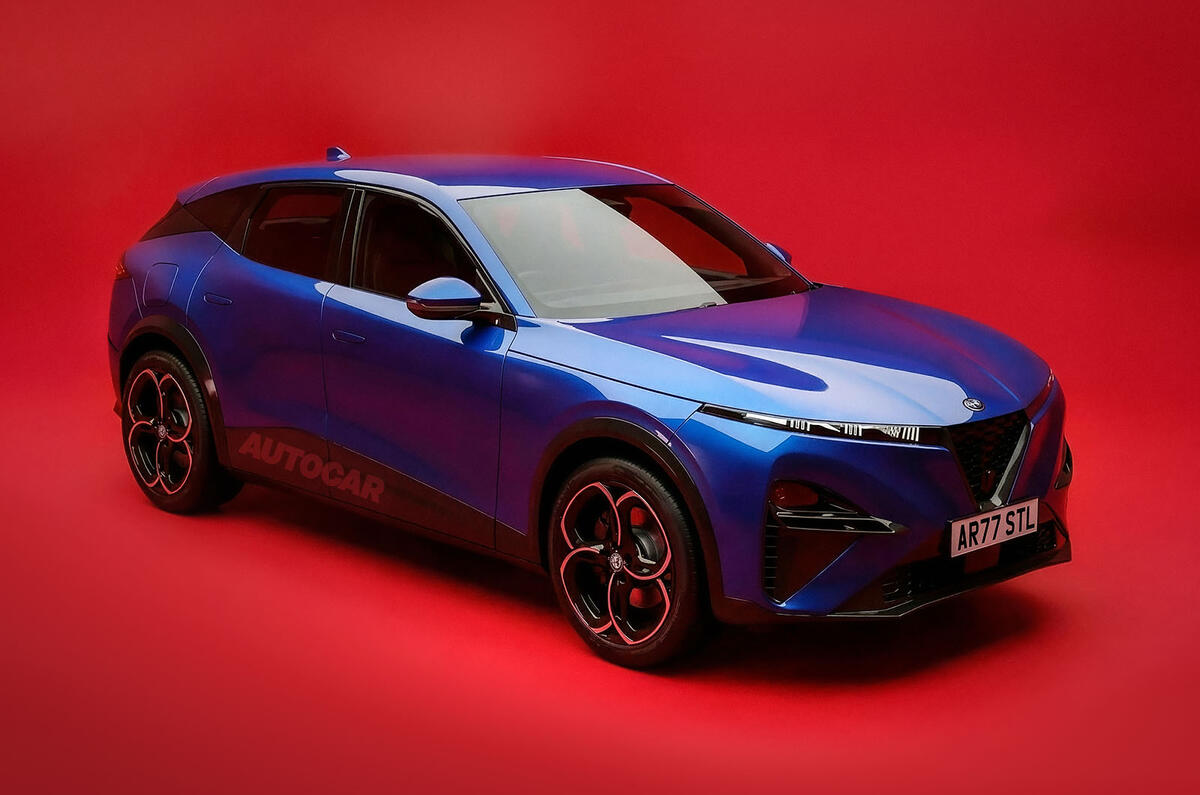
Autocar rendering of next Alfa Romeo Stelvio

The existing Giulia and Stelvio first went on sale in 2015 and 2016 respectively and use the ageing Giorgio platform, which was developed by FCA before the company became part of the Stellantis empire.

The next-generation models will move onto Stellantis's new STLA Large platform, which was developed as an electric-biased multi-powertrain architecture. The long delay to the model launch is so that the cars can be adapted to fit plug-in hybrid powertrains.

While the platform can accept PHEV technology, Autocar understands the issue for Alfa concerned re-engineering the body itself to allow more cooling for combustion powertrains. As such, design revisions such as new front fascias to open up the grilles and allow more airflow were required.

Both the Giulia and Stelvio will grow in size as a result of switching platforms, and they will also feature more aerodynamic designs in an effort to reduce drag and maximise range for the electric versions.

Furthermore, they will adopt the new Alfa design language introduced by the Junior small SUV. Both models will feature split headlights and daytime-running lights up front, a set of arrow-shaped lights at the rear and a ducktail-style lip spoiler.

Alfa's trademark grille will also be revamped, in part because, due to European Union rules, manufacturers are no longer allowed to fit numberplates offset on the wings of a car. Instead, the numberplates of the Giulia and Stelvio will be located under the grille.

Inside, screen use will largely be kept to a single central display with Alfa's signature 'cannocchiale' (telescope) instrument binnacle retained, albeit most likely digitised.

Breadth of powertrains
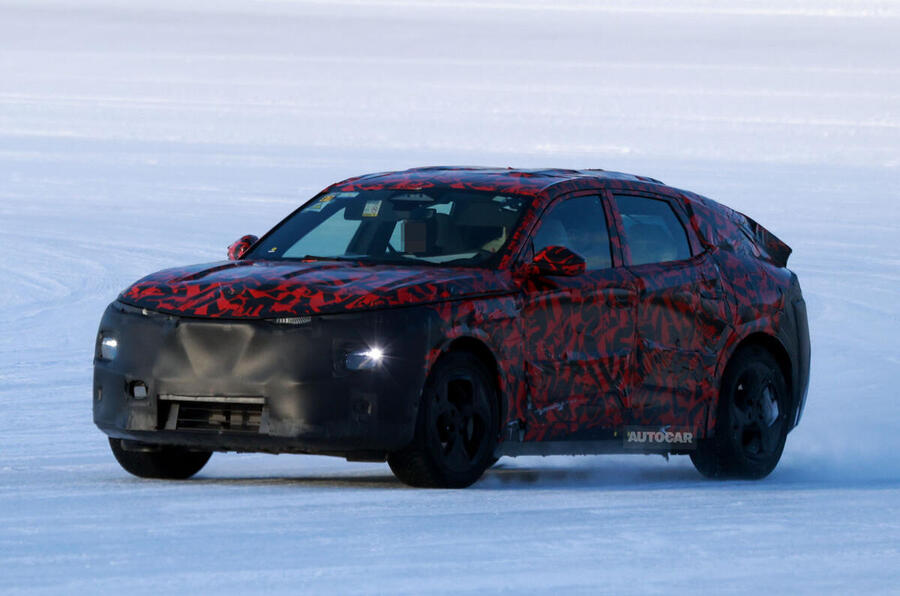
Alfa Romeo Stelvio in camo

The next-generation Giulia and Stelvio will be available with the largest choice of powertrains yet offered by an Alfa Romeo.

Advertisement

Read our review

Car review

Italian saloon looks as enticing as ever, but can it still objectively compete with BMW and Audi after a decade on sale?

Back to top

The line-ups are expected to open with turbocharged four-cylinder petrol engines, but these will gain mild-hybrid technology in order to keep emissions down.

What will power the plug-in hybrid versions of the Giulia and Stelvio is still up for debate, but they could adopt an uprated version of the 222bhp powertrain used by other STLA-based PHEVS, such as the Vauxhall Grandland.

That combines a 1.6-litre four-cylinder turbo petrol engine with a rear electric motor and a 21kWh battery to offer an electric range of 51 miles.

For the EVs, the STLA Large platform can accommodate battery packs with a capacity ranging from 85kWh to 118kWh. This should result in a range of more than 400 miles for the most efficient electric Giulia and Stelvio-key to keeping them competitive against technically advanced rivals, especially the new BMW i3 saloon, which has a headline range of 560 miles.

Clover goes electric

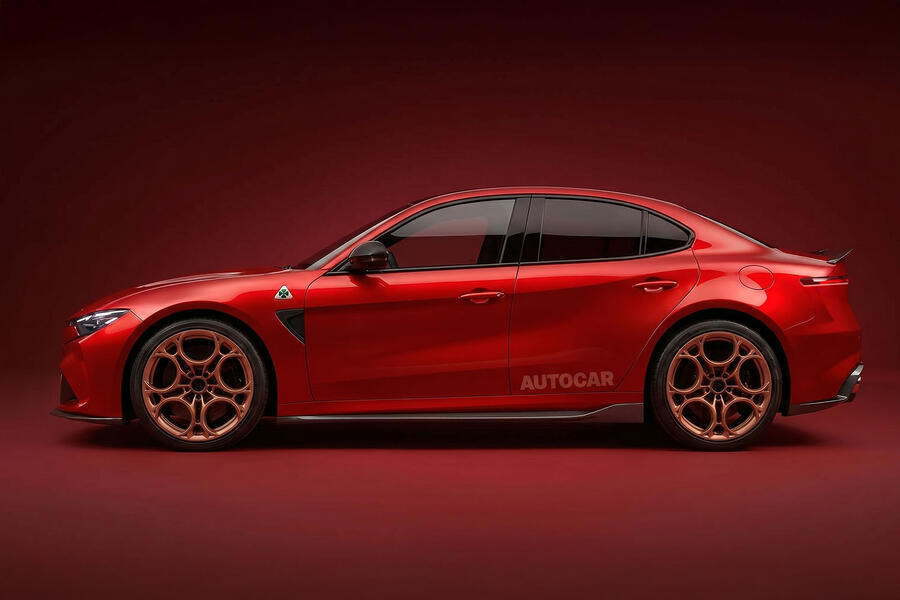
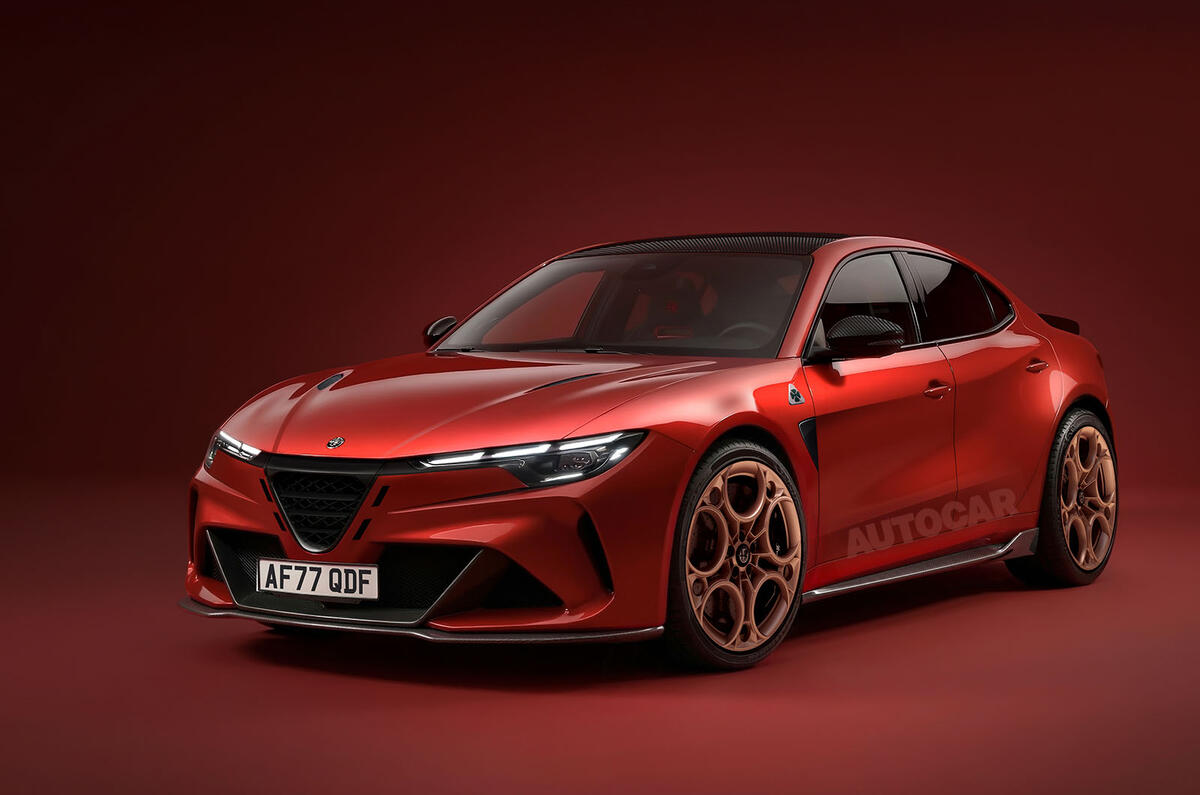
Autocar rendering of next Alfa Romeo Giulia Quadrifoglio

The good news for performance enthusiasts is that the Giulia and Stelvio will continue to be crowned by hot Quadrifoglio (QV) versions, and they will be equipped with both electric and combustion powertrains.

The quickest electric cars on the STLA Large platform can crack the 0-62mph sprint in around 2.0sec, claims Stellantis - almost twice as quick as the 3.8sec and 3.9sec times quoted for the current V6 petrol-engined Giulia QV and Stelvio QV.

The US-market Dodge Charger Daytona EV - the first performance car to use the platform-makes up to 670bhp with a dual-motor set-up.

With that power, the electric QVs would match the Hyundai Ioniq 6 N and most potent Porsche Macan.

There have previously been suggestions that the Giulia QV could deliver as much as 1000bhp from a tri-motor system, which would make it a close rival to the Porsche Taycan Turbo GT and upcoming BMW M3.

However, no model in the Stellantis stable currently produces that much power. The combustion-engined QV models are expected to continue with the same 513bhp 2.9-litre V6 as fitted to today's versions.

Back to top

Notably, that powertrain has recently been made compliant with incoming Euro 7 emissions standards. However, some sources suggest Alfa is looking at other options, including the 550bhp twin-turbo 3.0-litre straight six used by the combustion variant of the Charger Daytona.

Due to emissions rules, it's possible that such a version could be offered only in certain markets, such as the US.

Game-changing technology

The Giulia and Stelvio will be first to use Stellantis's new STLA Brain software architecture, which Alfa said would enable a more flexible dynamic character -particularly for the performance versions.

This advanced, centralised on-board computing system will use artificial intelligence to actively manage the car's chassis dynamics, torque vectoring and active suspension damping in real time.

This, claims Alfa, will allow the electric versions to match the dynamic capabilities of lighter ICE siblings while mitigating against the added weight brought by an electric powertrain. The cars will also be updated over the air throughout their lifetimes for further refinement.

The STLA Brain is also expected to power a next-generation augmented reality head-up display. Notably for track-day enthusiasts, this system could potentially project a 'ghost car' onto the Tarmac ahead, showing drivers the optimal braking points and racing lines on a circuit.

The STLA Large platform uses an 800V electrical architecture – a first for Stellantis.

The smaller STLA Medium, which underpins cars ranging from the Peugeot e-3008/3008 to the DS N°8, has a 400V system.

Primarily, the 800V wiring will mean a substantially faster maximum charging rate, potentially beyond the 270kW of today's fastest-charging Stellantis EVs.

However, it's also important for the range-topping QV pair, as the higher voltage allows for thinner wiring and therefore a significant reduction to each car's weight.

Both the Stelvio and Giulia will be built at the Cassino plant in italy alongside one or more Maserati models, also based on the STLA Large platform. 

Join our WhatsApp community and be the first to read about the latest news and reviews wowing the car world. Our community is the best, easiest and most direct place to tap into the minds of Autocar, and if you join you’ll also be treated to unique WhatsApp content. You can leave at any time after joining - check our full privacy policy here.

Will Rimell

Will Rimell Autocar
Title: News editor

Will is Autocar's news editor.​ His focus is on setting Autocar's news agenda, interviewing top executives, reporting from car launches, and unearthing exclusives.

As part of his role, he also manages Autocar Business – the brand's B2B platform – and Haymarket's aftermarket publication CAT.

Add a comment…