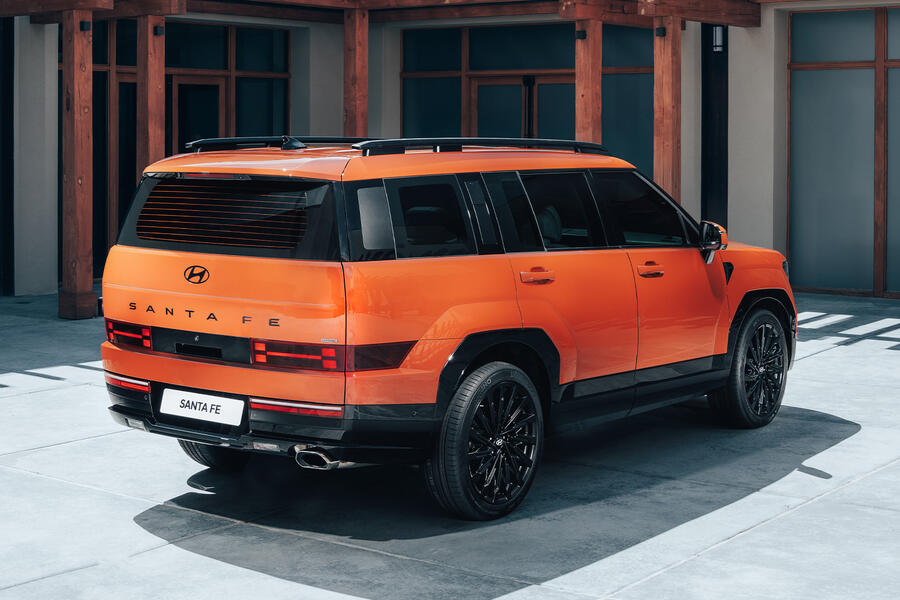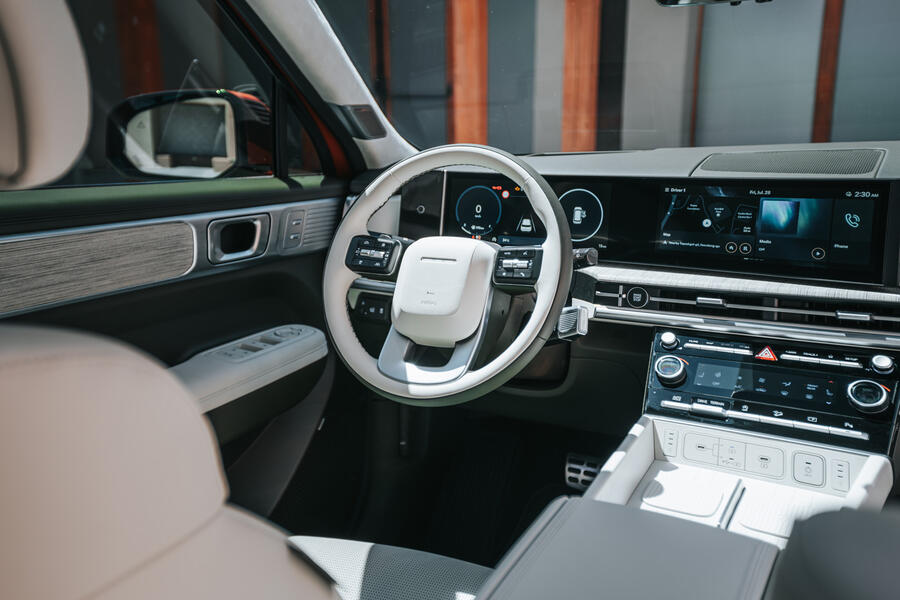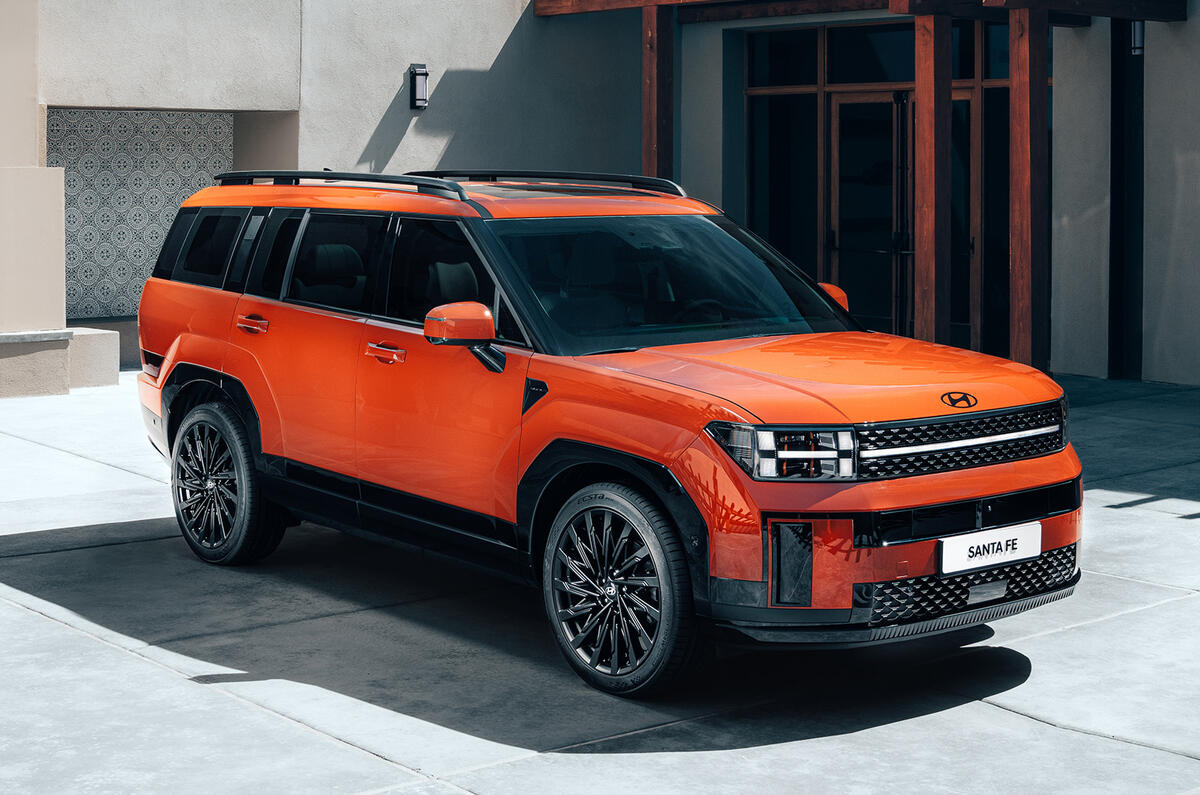
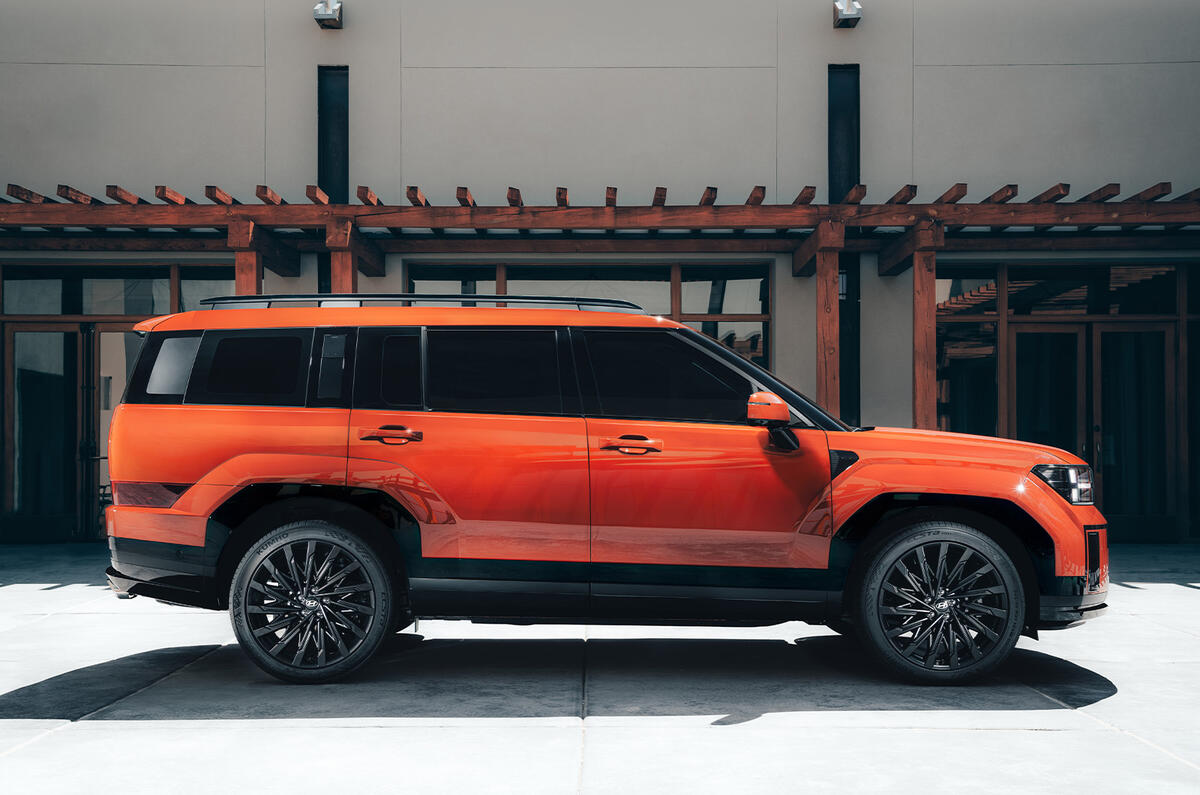
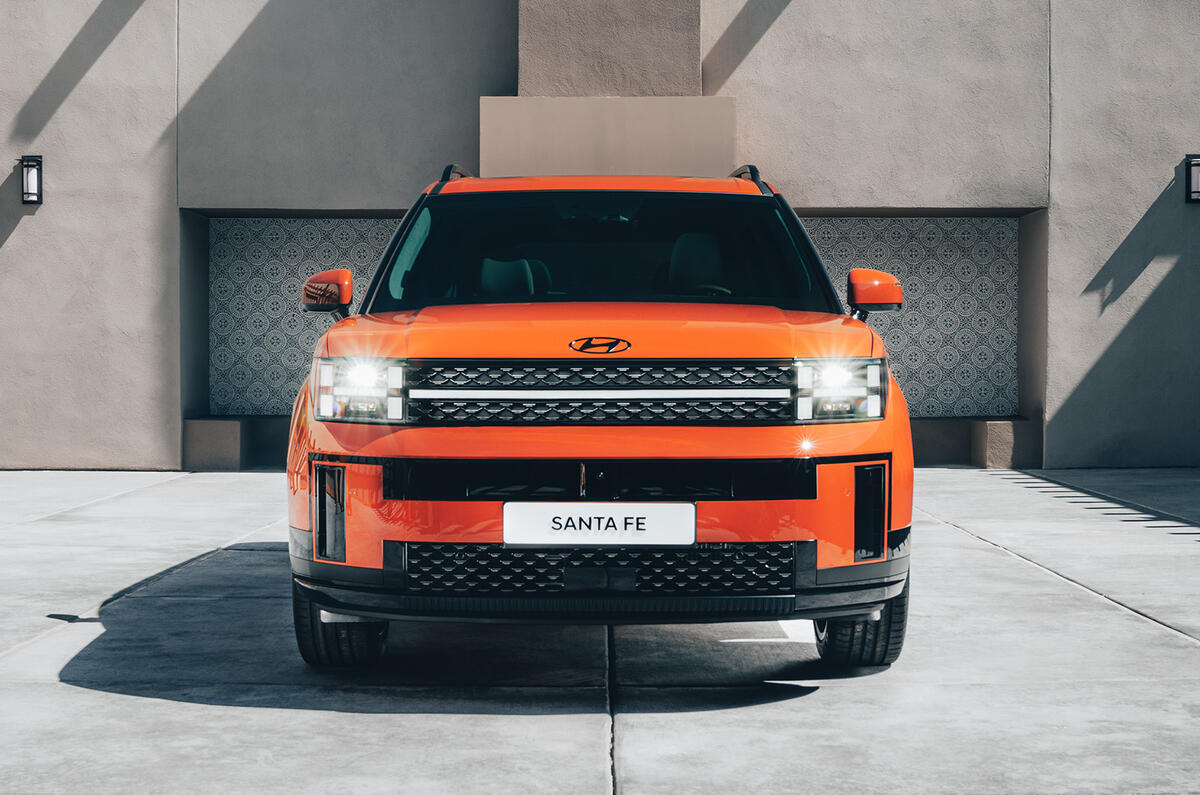
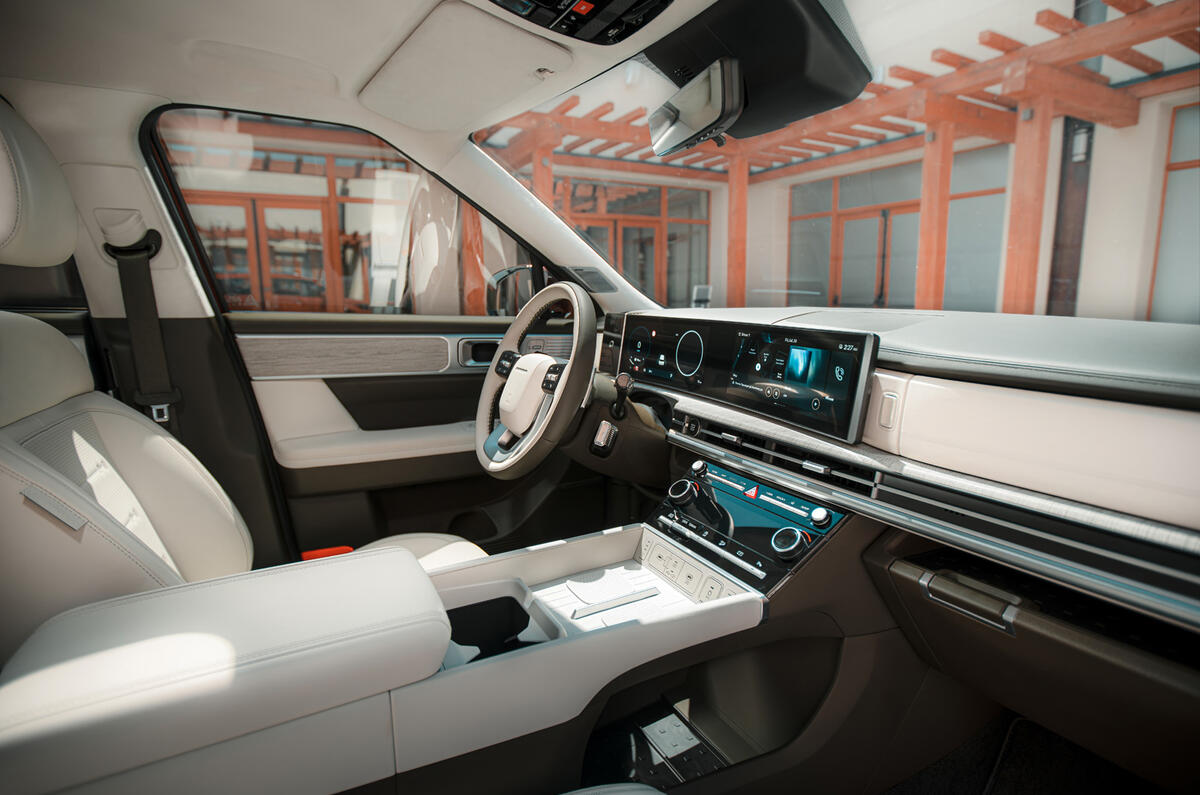
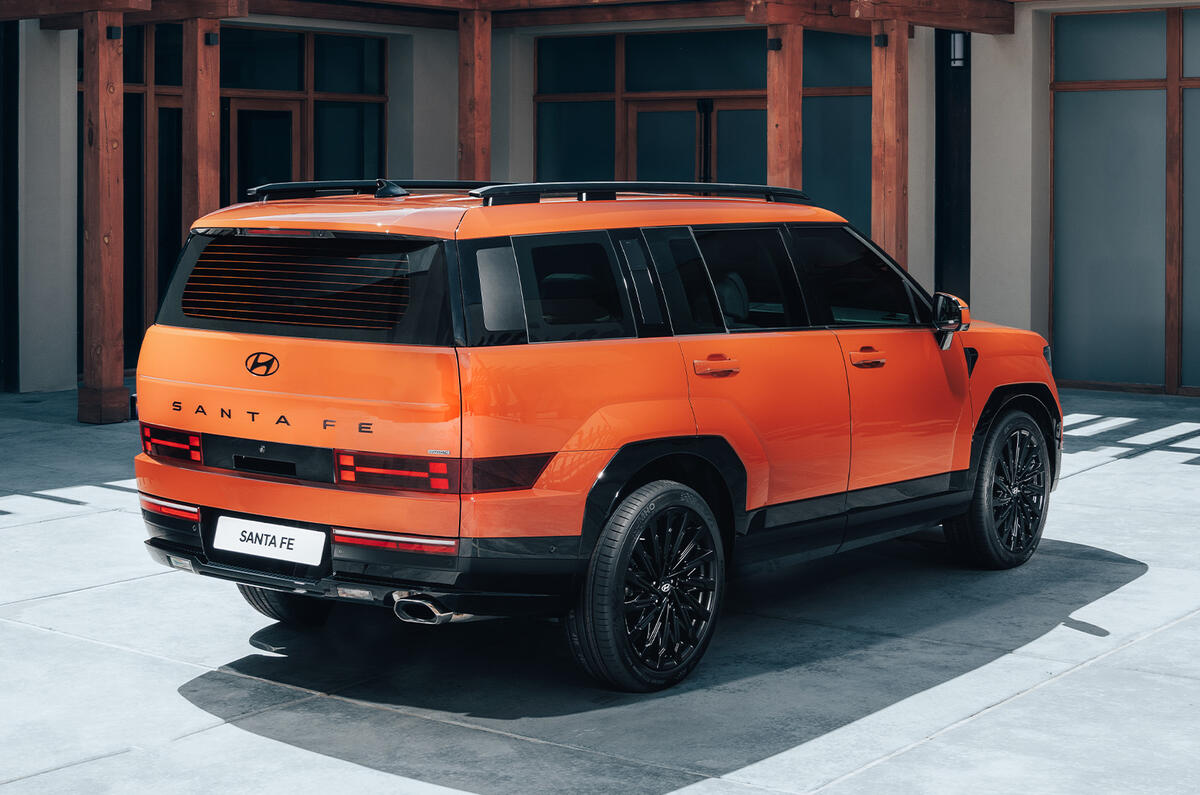
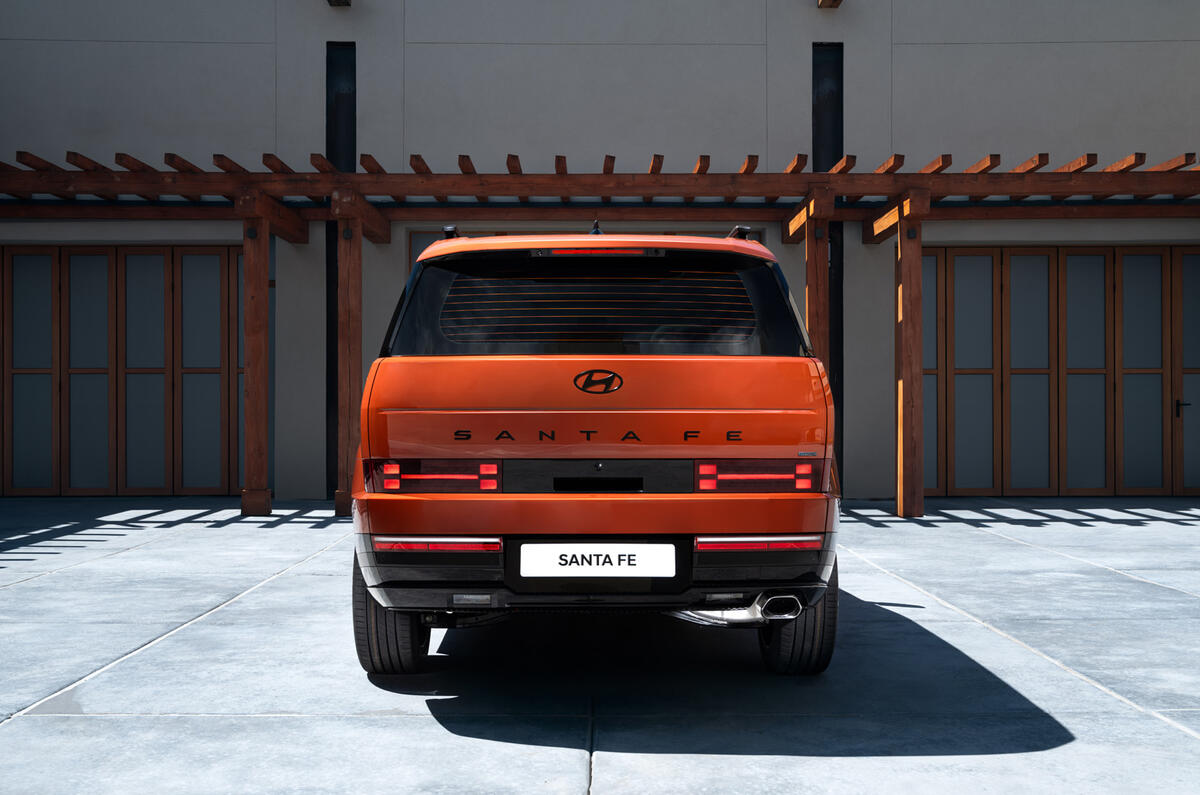
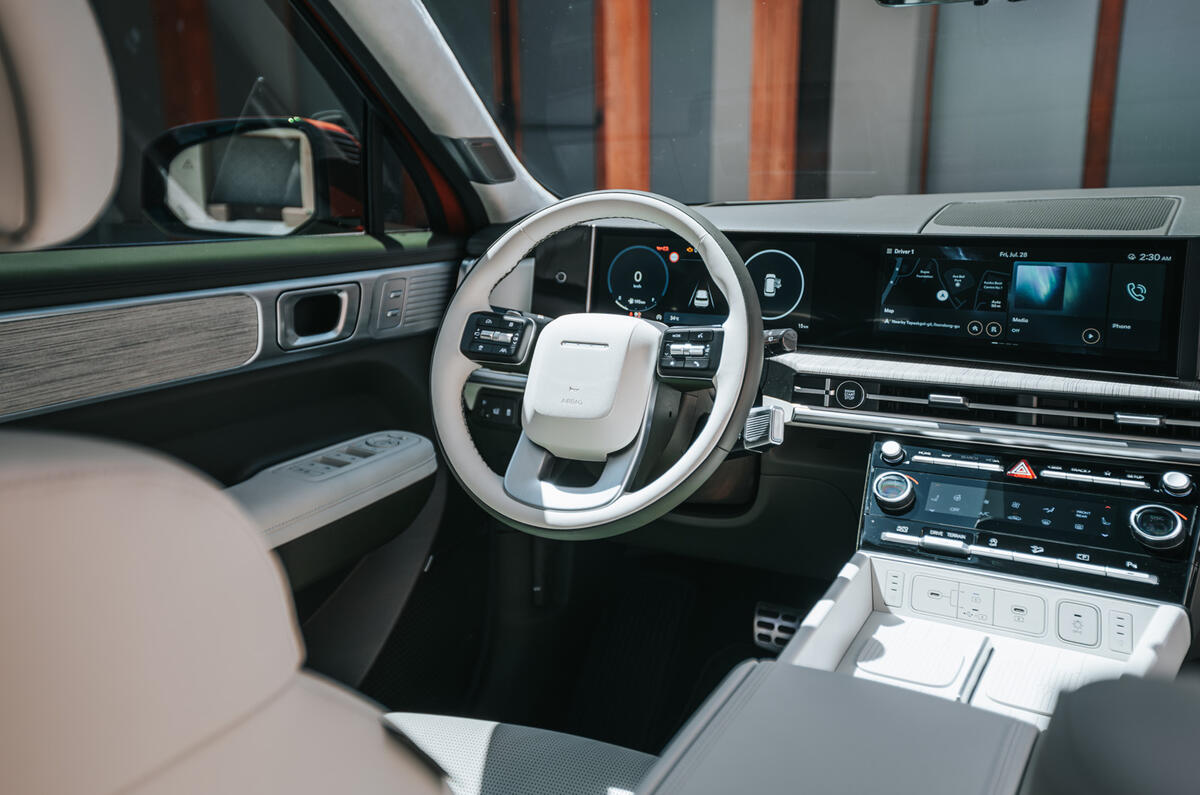
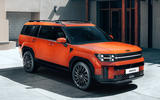
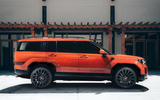
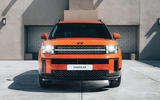

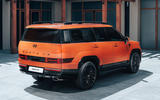
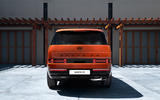


SangYup Lee, design head of Hyundai and Genesis, talks us around the outside of the new Santa Fe, whose design represents a radical departure from models that precede it and others in the Hyundai line-up.
The seven-seater – more details of which have been released today – has a less rounded, more rugged stance than Hyundai’s previous 4x4s and SUVs.
“It’s a big change compared to the previous model,” Lee says, and its design direction represents “taking a risk” – one that was later justified by the appearance of the modern Land Rover Defender and Ford Bronco SUVs.
“This is one of our biggest models,” says Lee. “It can’t fail. So this was very important.”
“Four-and-a-half years ago, we first started this project,” he explains. “We always check the big data information to forecast future trends. This was before the pandemic, and one key word that really pops is how ‘outdoors’ culture has become mainstream. We chose the direction to cover both the urban and the outdoors.”
We went to Santa Fe to explore the – you guessed it – next-generation Hyundai Santa Fe!Here is our @matty_prior to show you five of its features... pic.twitter.com/SpY7LH9DCj
— Autocar (@autocar) August 12, 2023
“When you have a box-style SUV, the proportional balance is so important,” says Lee. “It has a very simple body surface with a lot of volume, supported by up to 21in wheels, which is unheard of in this segment.
“Even though it’s boxy, we want to add more precise details touches. And a lot of the challenges are aerodynamics. From an aero engineers’ perspective, they call a boxy car an ‘aero disaster’. So this is one of our challenges.
"This car has a 0.29Cd drag coefficient. We challenged a lot in aerodynamics. It has an active aero shutter on the front, which is quite unusual for this segment, and also it has a vertical air curtain which helps, and we have round wheel openings, which is a significant aero gain as well.
"It’s like back in the day, with the Porsche [911] 993: the rear fender flare has a lot of softness towards the back. Originally it was more angular, but we realised it’s not really helping the aero.”
“This design is all about form following function and emphasising what an SUV can do.”
We asked Lee how the car looks so big in pictures but not in reality, whereas the Ioniq 5 is the other way around.
“That is so true," he replied. "When you first look at [the] Ioniq 5, it’s so solid and tight [that] nobody thinks it has a three-metre wheelbase. It has lots of corner work. The corners are round as much as possible to create this compact character. The Santa Fe appears to be big because the corners are pulled out as much as possible. You saw the big tailgate: it’s a slab-sized surface and the full width is used as a design element.
“Depending on product determines what design tool we want to use. But obviously the intention for an SUV is to say ‘I’m a big boy’.”