






Currently reading: New Peaq driven: Skoda's new era starts with a three-row winner

Promising first taste of the new-look flagship SUV that could become a benchmark seven-seat EV

Who doesn’t love a literally named car? Smart Fortwo, Hyundai Coupe… erm, Toyota (M)id-Engined, (R)ear-wheel-drive (2)-seater? There’s a lot to be said for a consumer product that just does what it says on the tin and doesn’t have over-blown aspirations of universal applicability, so you immediately know what it is.

Here’s another good example: the new Skoda Peaq - so called, obviously, because it’s the largest, plushest and most expensive car the Czech firm has yet made (and not, as some thought, as a contrived phonetic tribute to the late VW Group supremo Ferdinand Piech). It’s a characteristically no-nonsense approach to model designation that’s in keeping with the brand’s ‘Simply Clever’ ethos - even if, slightly confusingly, it’s launching at the same time as a much smaller crossover called the Epiq - a name with similarly superlative connotations. And where does Superb fit into that? Maybe ‘Good’, ‘Gooder’ and ‘Goodest’ would’ve been cleaner.

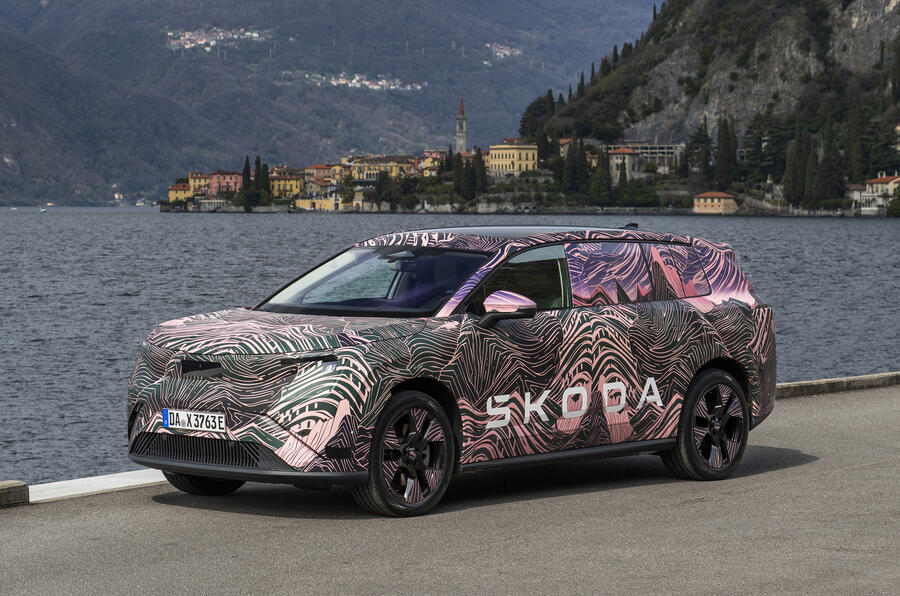
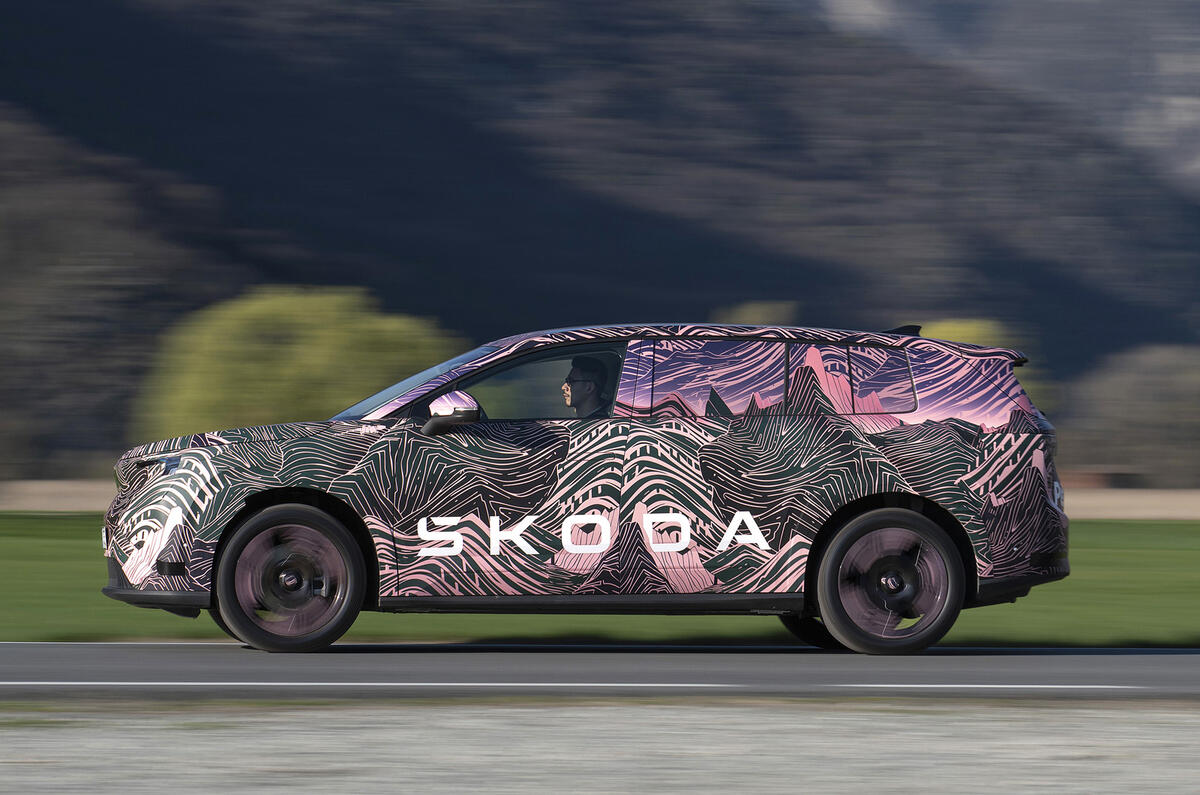
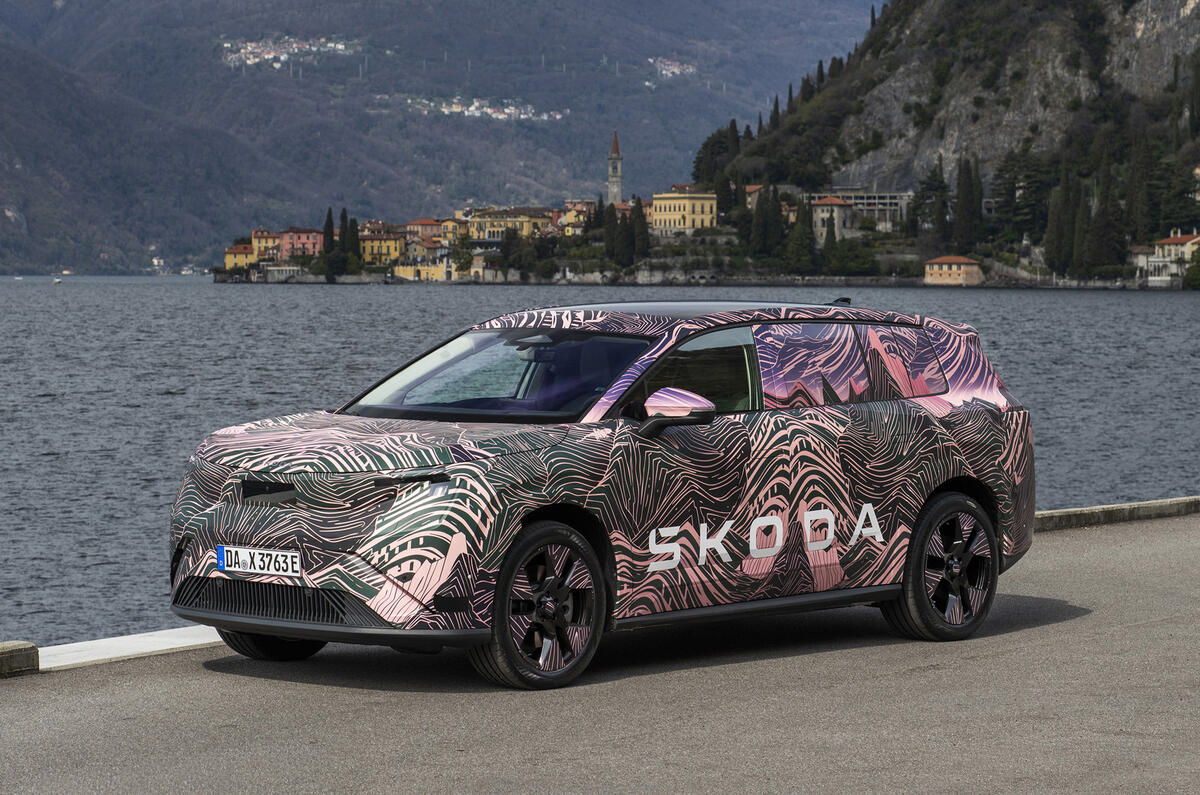
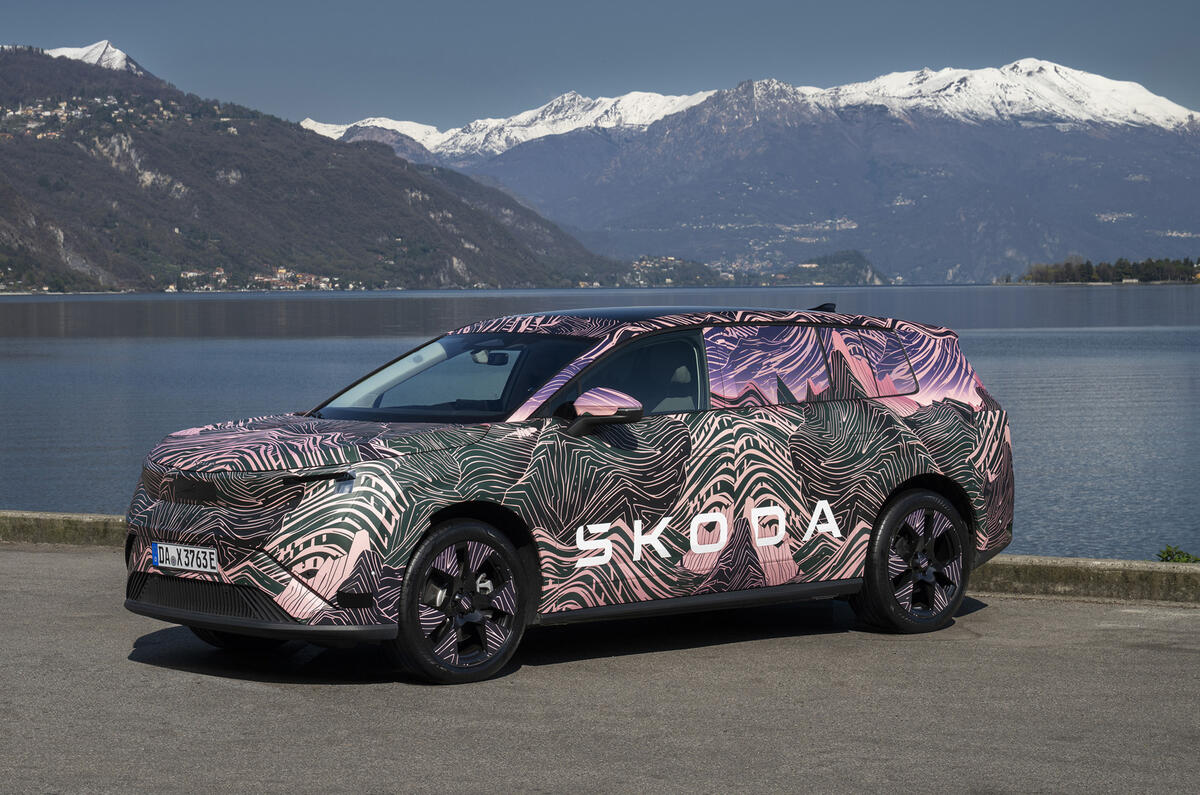
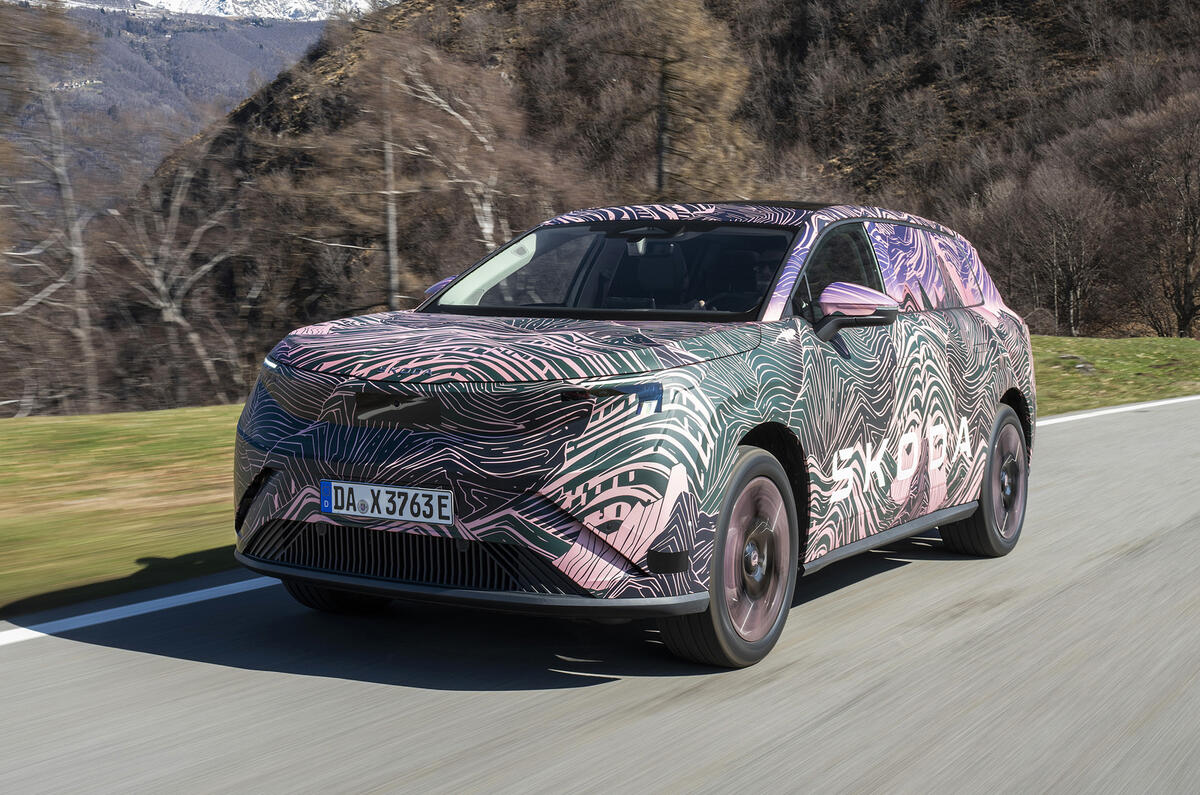
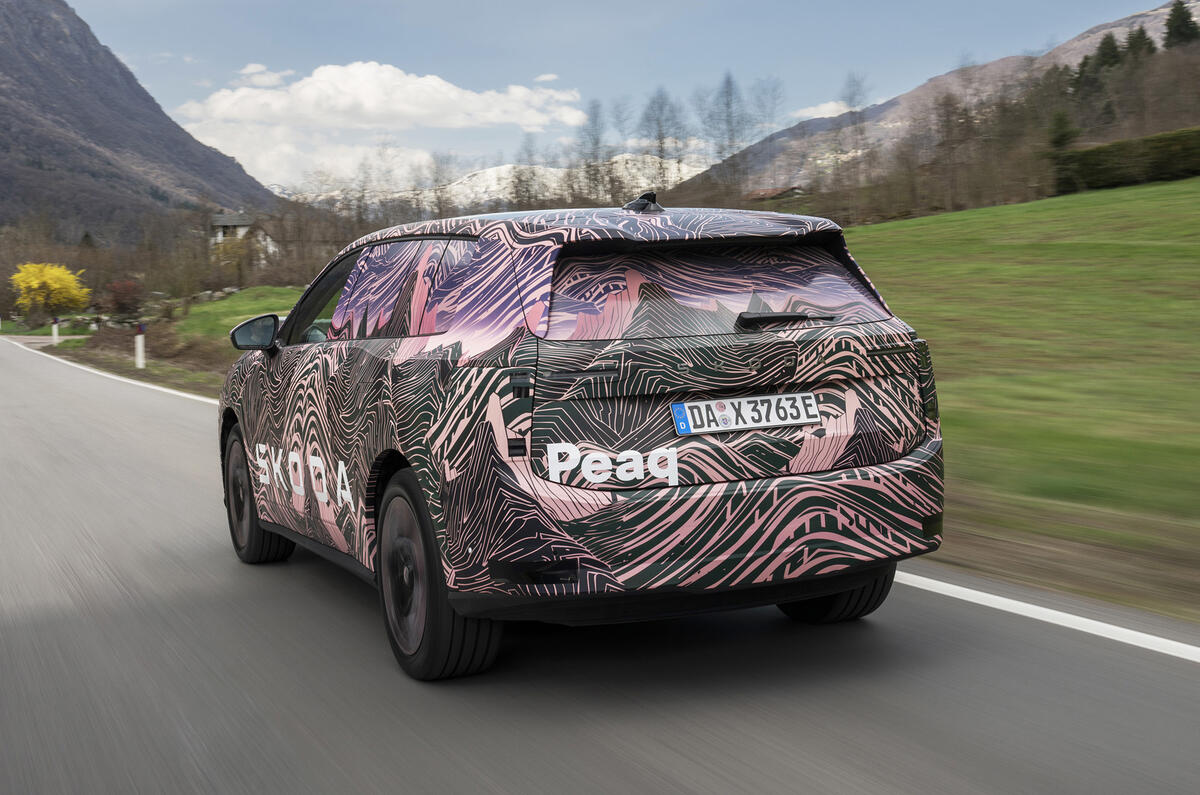
Anyway, the Peaq will be unwrapped in summer as the fourth entrant into Skoda’s swelling family of pure-electric models. At 4.9m long, it’s around 250mm longer than the Enyaq, Skoda’s current EV flagship, and 110mm longer than the combustion-engined Kodiaq, to which it will basically serve as the electric equivalent - complete with seven seats. 

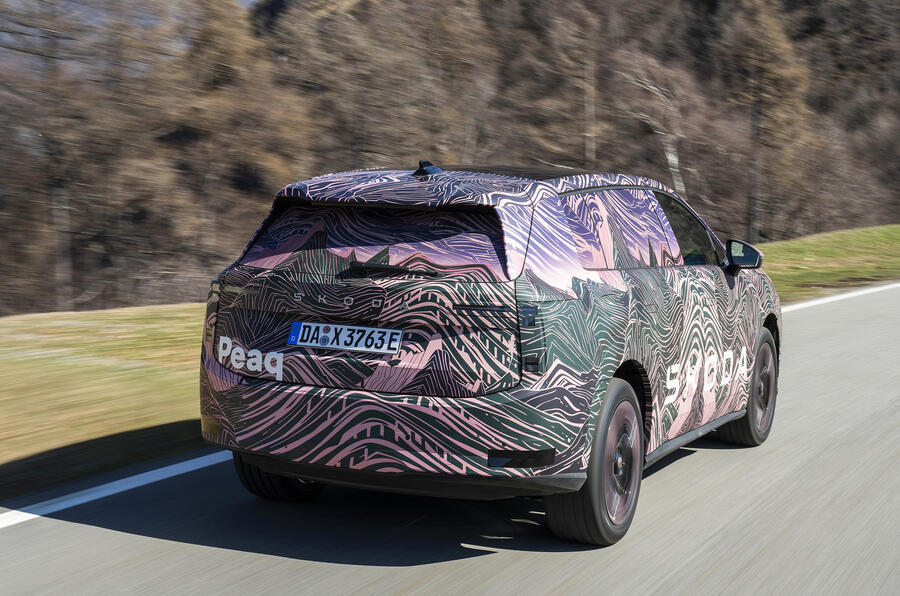
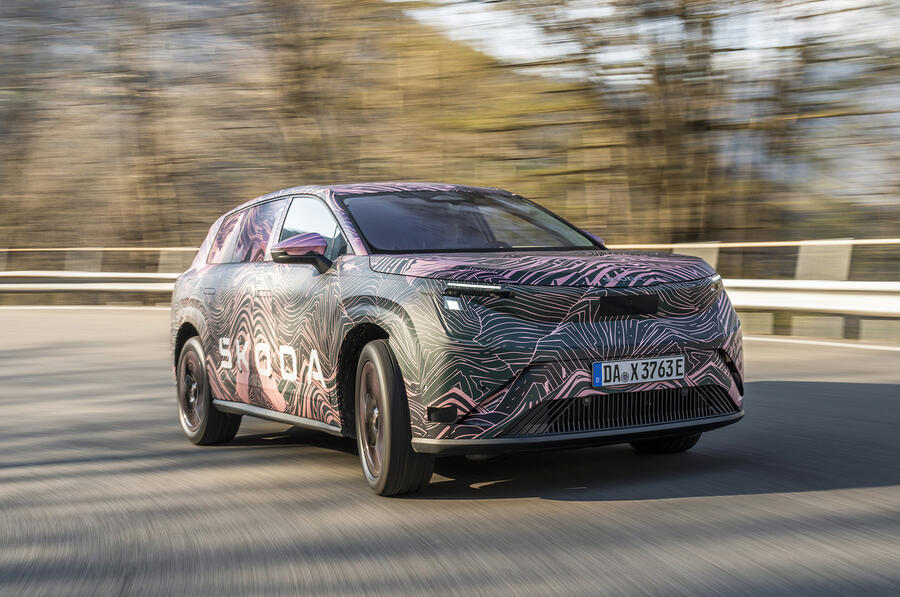
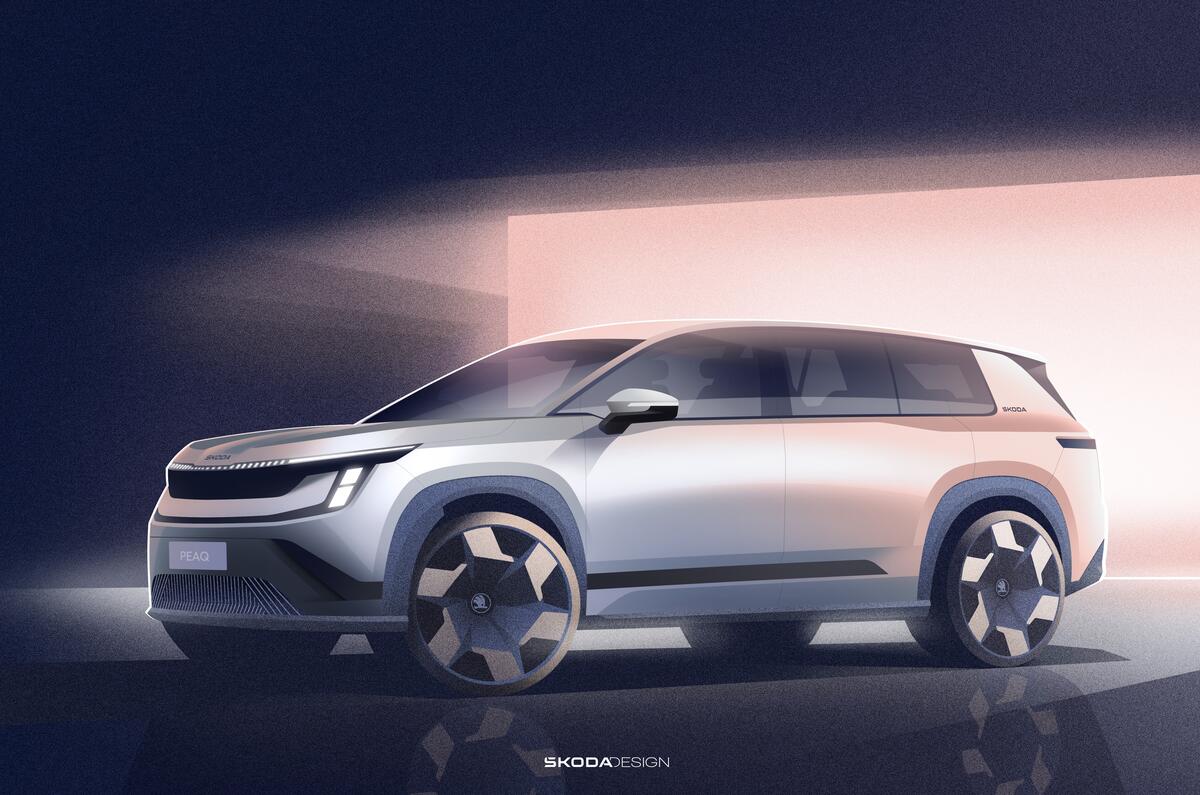
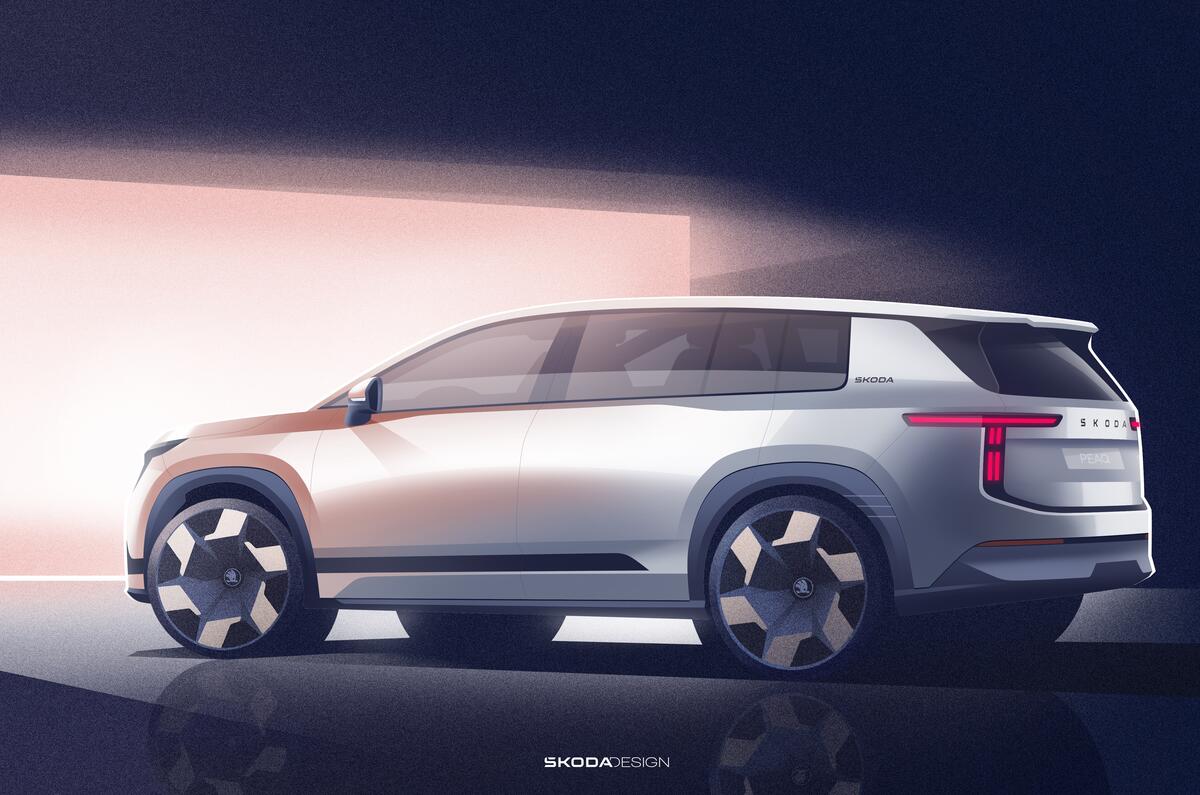
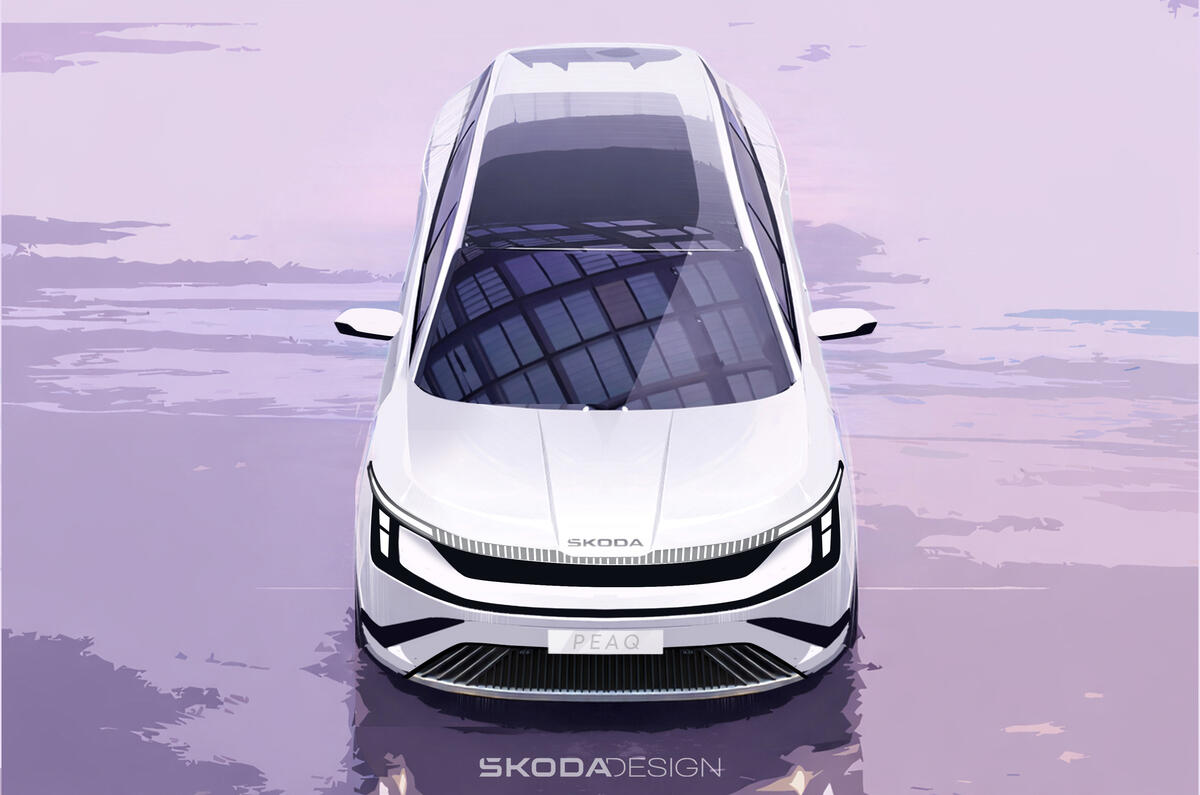
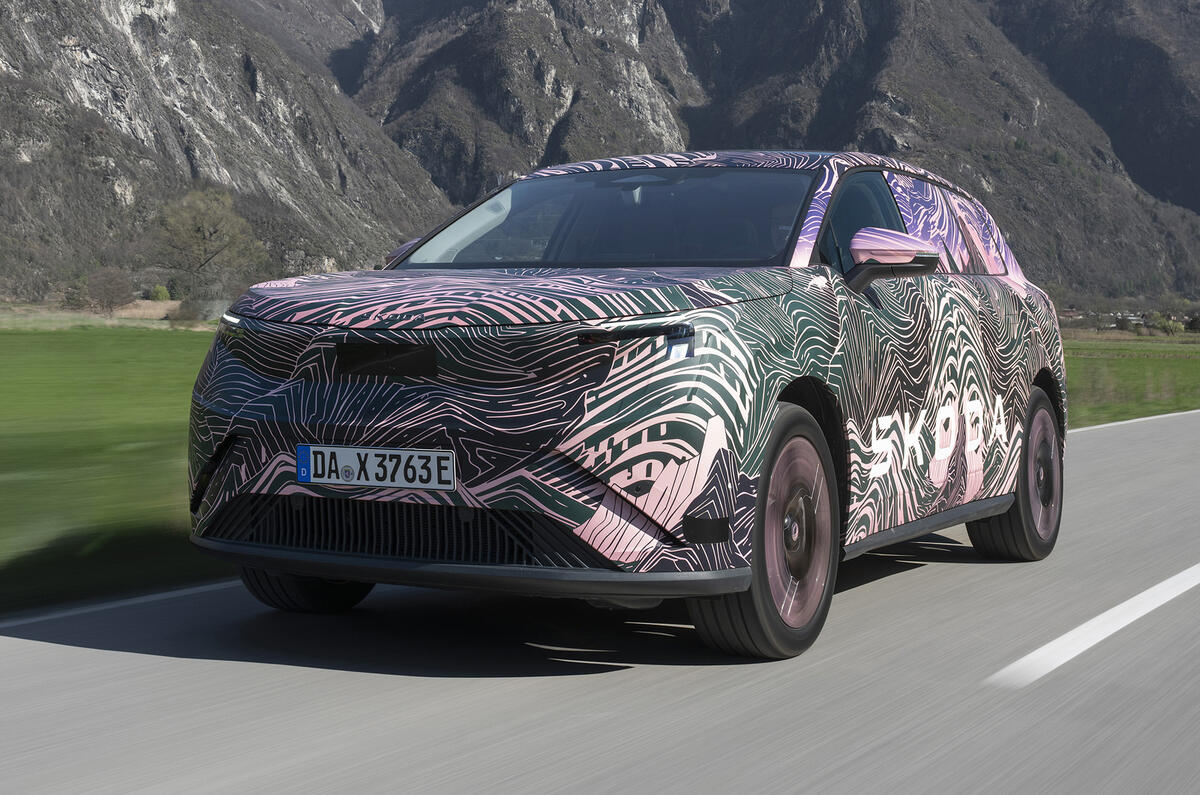
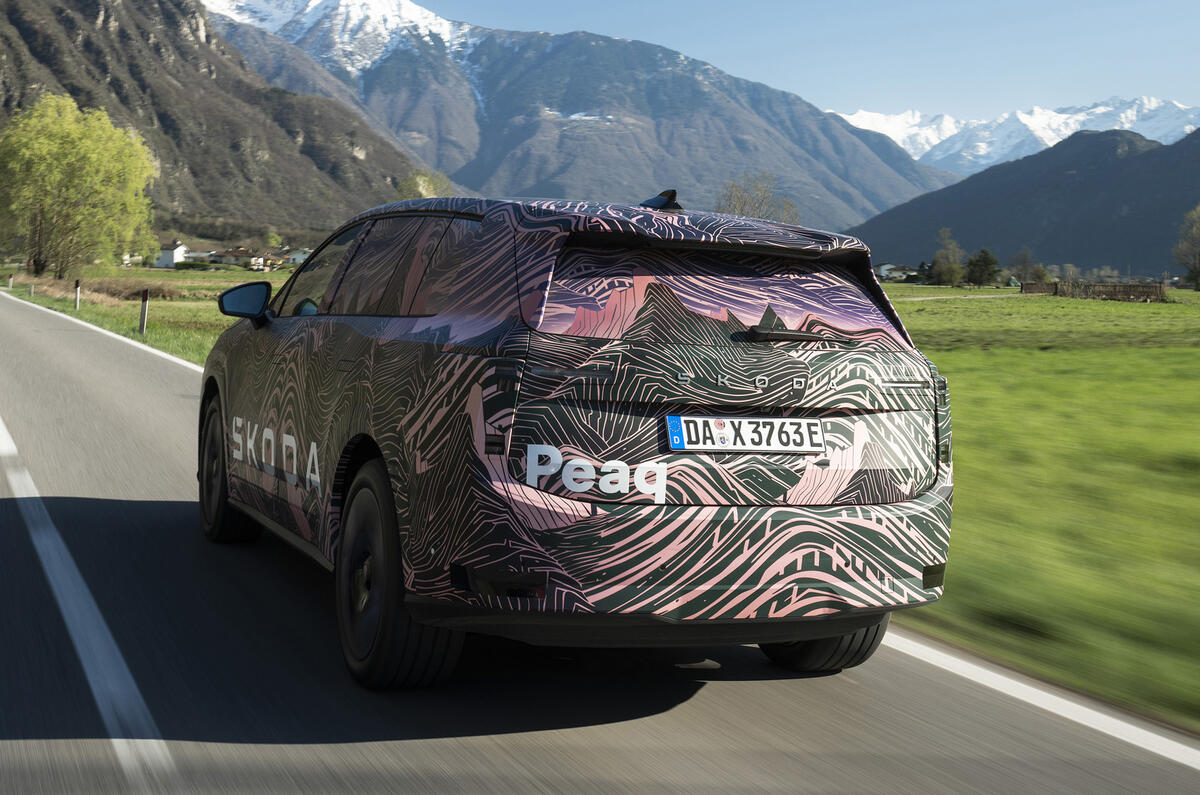
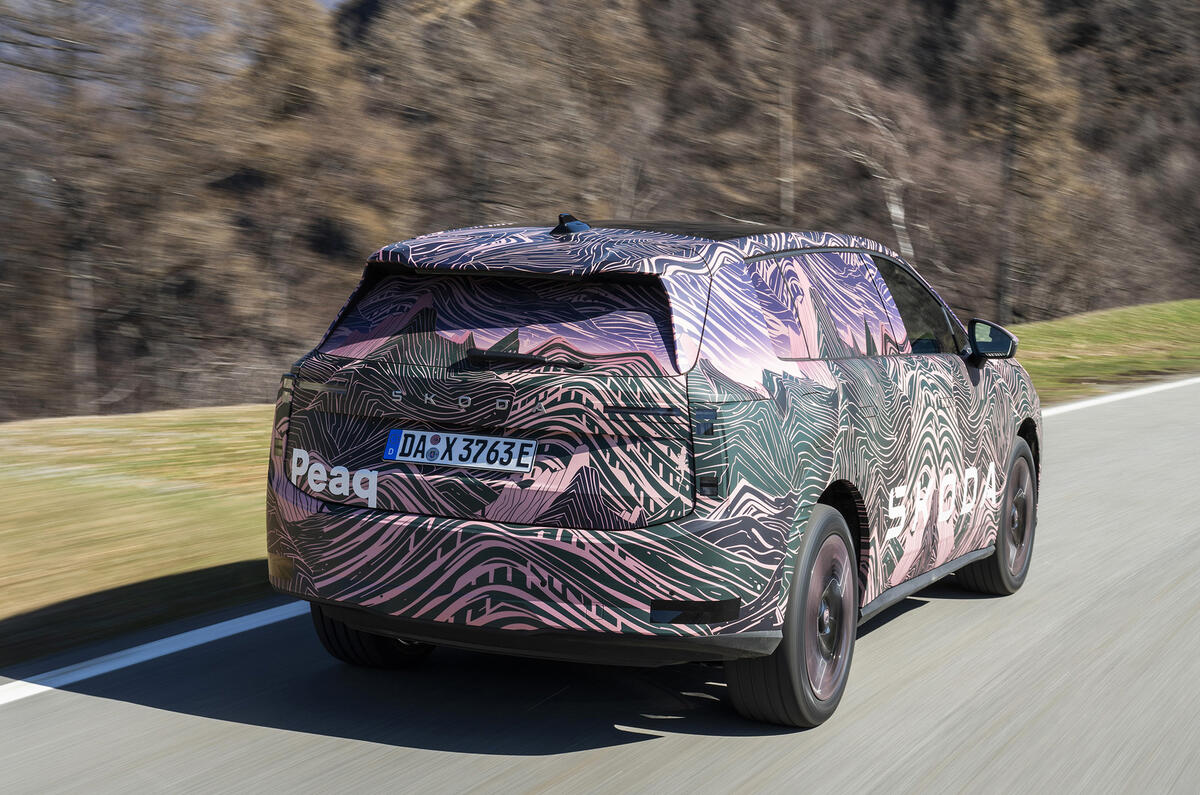
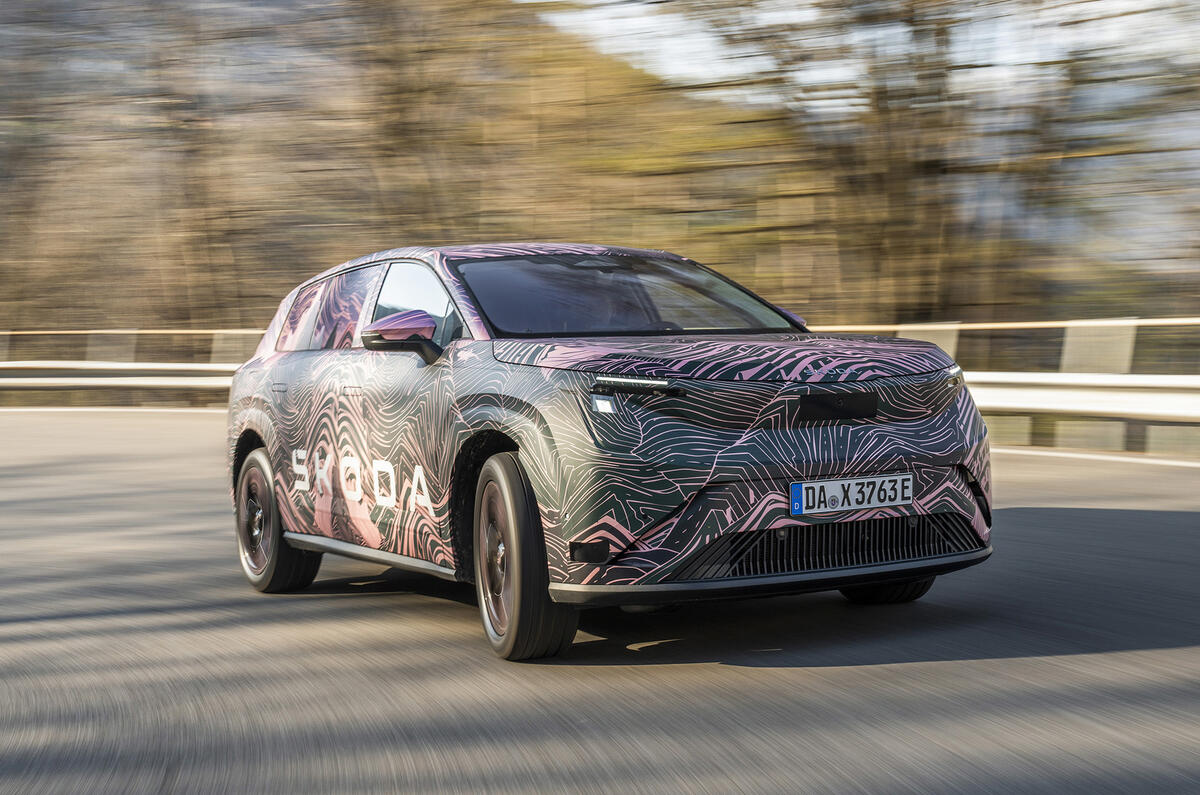
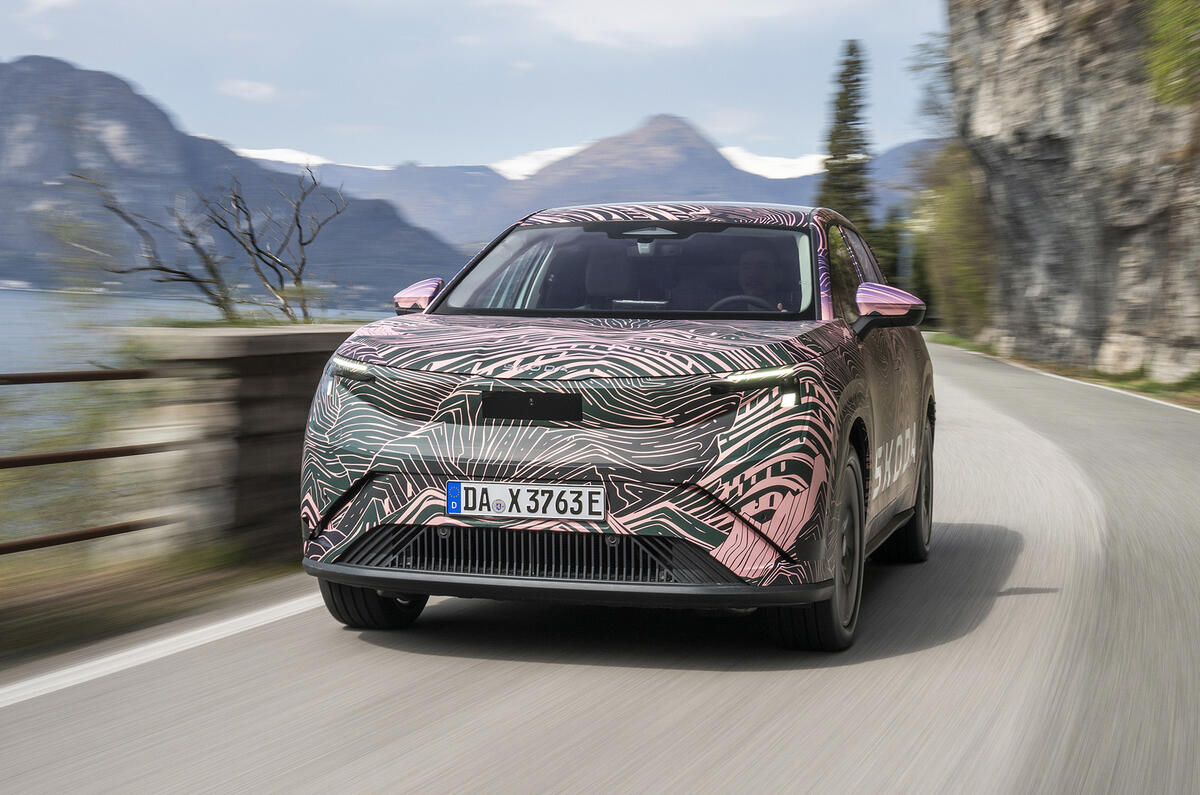
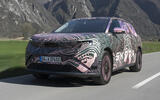
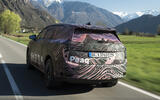
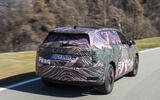
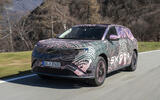
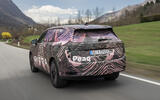
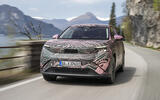
The heavy camouflage of our test car leaves a lot to the imagination, but the finished product won't be too far removed from the Vision 7S concept which previewed it – and Skoda’s new ‘Modern Solid’ design language – in 2023. You can see the bold new T-shaped light clusters, for a start, and the Peaq will follow the Epiq in wearing the striking ‘Tech Deck’ motif on its front end.

The Peaq rides on the same VW Group MEB platform that underpins Skoda’s other EVs - albeit with a bit more metal between the axles. My test car had a single 282bhp motor on the rear axle and an 86kWh battery which claims more than 380 miles of range, and can charge at up to 195kW. This battery will also power the 90X twin-motor range-topper, with 295bhp, while the lower-powered ‘60’ entry version will use a smaller, slower-charging 59kWh battery and a single 201bhp motor. Expect prices to range between £50,000 and £60,000 - in line with toppier versions of the Kodiaq, and significantly undercutting the likes of the Kia EV9, Volvo EX90 and Hyundai Ioniq 9

Probed on the possibility of a hot vRS version, product bosses would only grin and tell us that “anything is possible” - so expect that to follow closely behind the standard car.

Back to top

So far, so familiar - but aside from being its biggest model yet, the Peaq does introduce a number of significant firsts to the Skoda range: there’s a one-pedal driving mode, vehicle-to-load charging functionality, an electrochromatic panoramic roof, a pair of magnetic phone chargers, a Relax package with a reclining seat and fold-out table, a jazzy Sonos sound system, and the door handles are electrically retractable (don’t worry, they have a hammer function to bash themselves out when frozen, and will deploy automatically in the event of a crash). 

The 13.6in touchscreen is vertically oriented for the first time, as well, which Skoda says allows for clearer segmentation of content: you can have the map or camera views at the top, in your line of sight, and the buttons at the bottom, so you can reach them easily without lifting your arm from the sliding centre armrest - which does feel much more natural and gives you a better chance of jabbing the icon you were aiming for. 

Otherwise, though, the crisp graphics and logical menu structures are all familiar from other Skoda models, so broadly speaking the upright screen makes little difference to how you interact with the car while moving, the only real negative being that installing the screen this way meant there wasn’t enough space for the neat, clicky Smart Dials from the Superb and Kodiaq. 

A 170mm increase in wheelbase and flatter floor translates to a tangibly roomier cabin than that of the Kodiaq: Skoda claims 58mm more legroom in the second row and a significant 84mm increase out back. I had to slide the middle row all the way forwards to get comfortable in the rearmost seats, so they’re definitely still off limits for taller passengers, but kids will find them plenty spacious - and there’s still a decent 299 litres of capacity behind them (measured to the roof). That rises to a whopping 935 litres with them folded – slightly up on the Kodiaq – and there’s a 35-litre front boot, too, but that’s best just used for the charge cables. 

Back to top

On the road, it feels predictably (and pleasingly) like a big Enyaq - which is to say impressively composed, sensibly tuned and surprisingly manoeuvrable. The satisfyingly weighted steering is responsive and quick enough to help mask some of its substantial bulk, even on the tight and highly congested roads around Lake Como, and the 9.9-metre turning circle of this RWD version – smaller than a Golf’s – means you don’t miss the rear-steer systems that are fitted to some more expensive cars of this size. 

It rides as smoothly as its smaller siblings, too; no Peaq will come with air suspension, but even on steel springs and with chunky 20in wheels (you can also have 19s or 21s), it was commendably unfussed by the more challenging sections of our route - if a little boomier inside, perhaps, by dint of its more cavernous cabin.

My test car was equipped with adaptive dampers as part of the Dynamic Chassis Control package, with 14 levels of adjustment ranging between Comfort and Sport, but as tends to be the case with such systems the default middle-ground setting provides the best real-world balance - the sportiest setting being overly twitchy in its reactions and the other extreme a bit too treacly and languid.

As for outright shove, there’s more than enough of it. I didn’t get much beyond 40mph in my time at the wheel, and didn’t have an opportunity to prove the incongruous 7.1sec 0-62mph time, but the Peaq feels decently energetic off the mark - with smooth take-up and a nice, linear acceleration curve that mitigates the tiresome, dizzying head-lolling you sometimes get with generously endowed EVs.

Back to top

I’d wager this mid-rung powertrain will emerge as the sweet spot in the line-up, with the cheaper version likely to feel a bit short on puff and stamina, and the 4WD variant sacrificing a good chunk of range and refinement for the sake of a few extra bhp and improved rough-road ability.

Skoda cites the Peugeot E-5008 as the only real direct rival for the Peaq, with Europe’s EV seven-seater market otherwise largely composed of high-priced premium options and Chinese newcomers. Much rests on our first exposure to the finished car, which we’ll drive towards the end of the year, but all signs point to this being a real contender for supremacy in a segment that’s still in its early days.

Join our WhatsApp community and be the first to read about the latest news and reviews wowing the car world. Our community is the best, easiest and most direct place to tap into the minds of Autocar, and if you join you’ll also be treated to unique WhatsApp content. You can leave at any time after joining - check our full privacy policy here.

Felix Page

Felix Page
Title: Deputy editor

Felix is Autocar's deputy editor, responsible for leading the brand's agenda-shaping coverage across all facets of the global automotive industry - both in print and online.

He has interviewed the most powerful and widely respected people in motoring, covered the reveals and launches of today's most important cars, and broken some of the biggest automotive stories of the last few years. 

Add a comment…