
5.3 Zagato Convertible 2dr Petrol Manual (288 bhp)
Submitted by dev_editor on
"I came here from South Africa in 2007 with £312.98 to my name. I've always remembered the pennies!" says Manni Azizi, a retired entrepreneur.
"I couldn't afford a car so I rode a bicycle." Today, 18 years later, he has considerably more than £300 to his name at least enough to afford his rather fine, £225,000 Aston Martin Vanquish V12.
"It is my first Aston," he says. "I had a couple of Bentleys before - a GT and a GTC - but I'd always wanted an Aston. In South Africa, a Vanquish was my poster car. When I decided to buy my own, it had to be a second-generation model. I wanted the naturally aspirated V12 engine, because it marked the end of an era. The car had to be in the colour combination of red with a pale interior. This one took me months to track down."
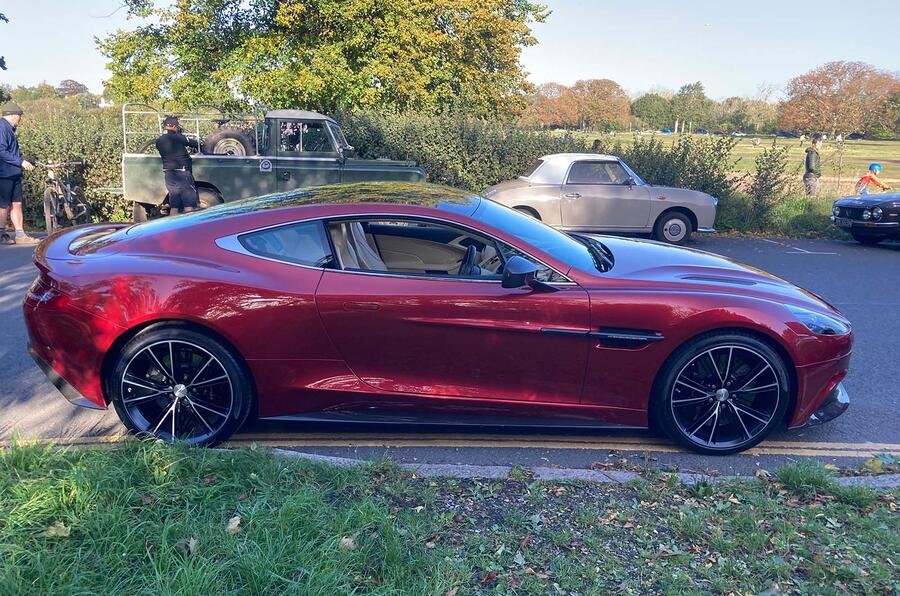
Manni has owned his Vanquish for a little over a year. He can't recall when it was first registered (that's a mere detail when you're spending nearly a quarter of a million pounds) but says it was showing around 15,000 miles when he bought it from Aston Martin Sevenoaks. He has since added 7000 miles.
"It's my daily driver now I'm retired," he says. "It's garaged, but I always use my cars: I put mileage on them. If the Vanquish gets marked, I'll just have it repaired. I love it, but I'm not precious about it."
Of course, ownership of a Vanquish doesn't stop with paying for it. There are running expenses to consider too. On that point, a recent service cost Manni around £1000 and he has just spent £1300 on a new set of tyres.
He appears quietly accepting but brightens up when he tells me what his insurance premium is. "It was £1500 through a comparison website!" he says. "I was pleasantly surprised. The cover is limited to 8000 miles per year, but that's as much as I drive anyway."
And when he does, he says the Aston never disappoints: "It's amazing and everything I'd hoped for. The power is everywhere and, unlike in my turbocharged W12 Bentleys, so linear.
"The engine sits much farther back in the car than you think. It corners flat and is extremely comfortable. It's rear-wheel drive, and in the wet the back gets a little squiggly but not in a dangerous way."
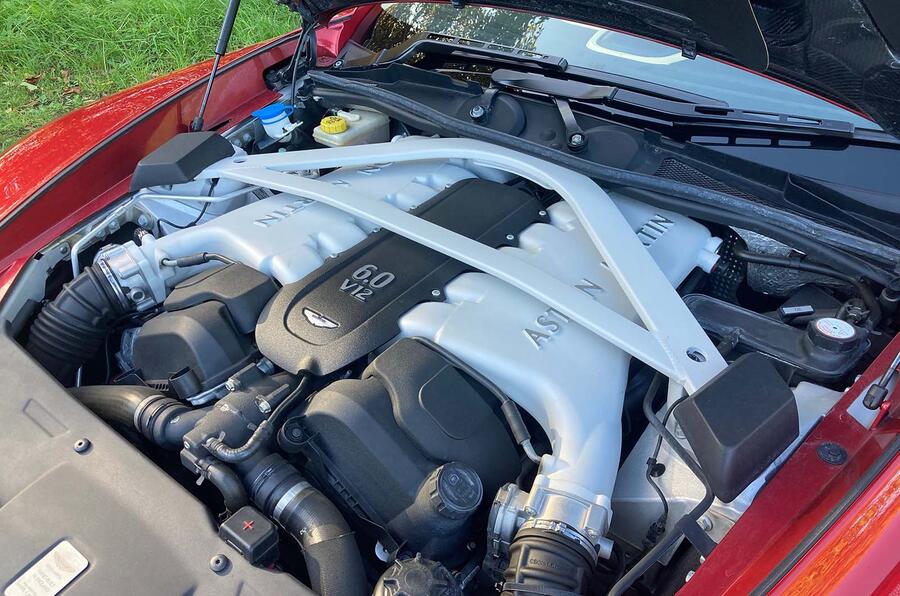
Can he imagine selling it one day? "I want to say it's not a keeper but, at the same time, I might just hold onto it for what its naturally aspirated V12 engine represents," says Manni.
He would like to do a European road trip next year, possibly with fellow Aston Martin owners. "I met some members of the Aston Martin Owners Club at the Guards Polo Club in Windsor recently. They were all really nice people and I think a road trip with them would be fun," he says.
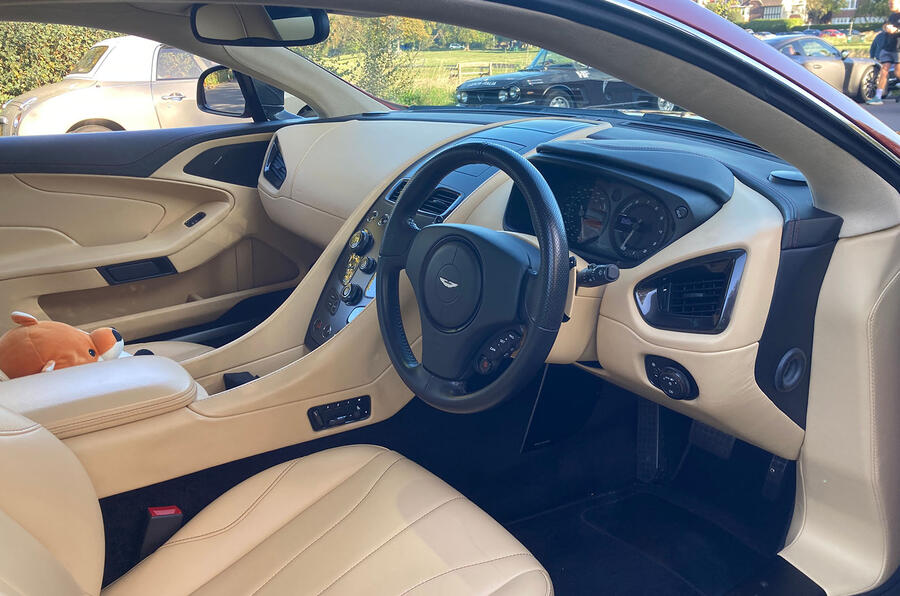
I wonder what they would make of the fluffy toy propped up on the Aston's passenger seat. Manni explains: "Two years after I arrived in the UK, I bought my first car, a BMW 330i. For some reason, I put a little teddy bear in it, and since then I've put a toy in each of my cars. They're like guardians. I put a duck in my Bentley GT that I called Dorothy. This one is Foxy Fox."
I reckon a man who can go from £300 and a bicycle to a £225,000 Vanquish in less than 20 years deserves his fun.
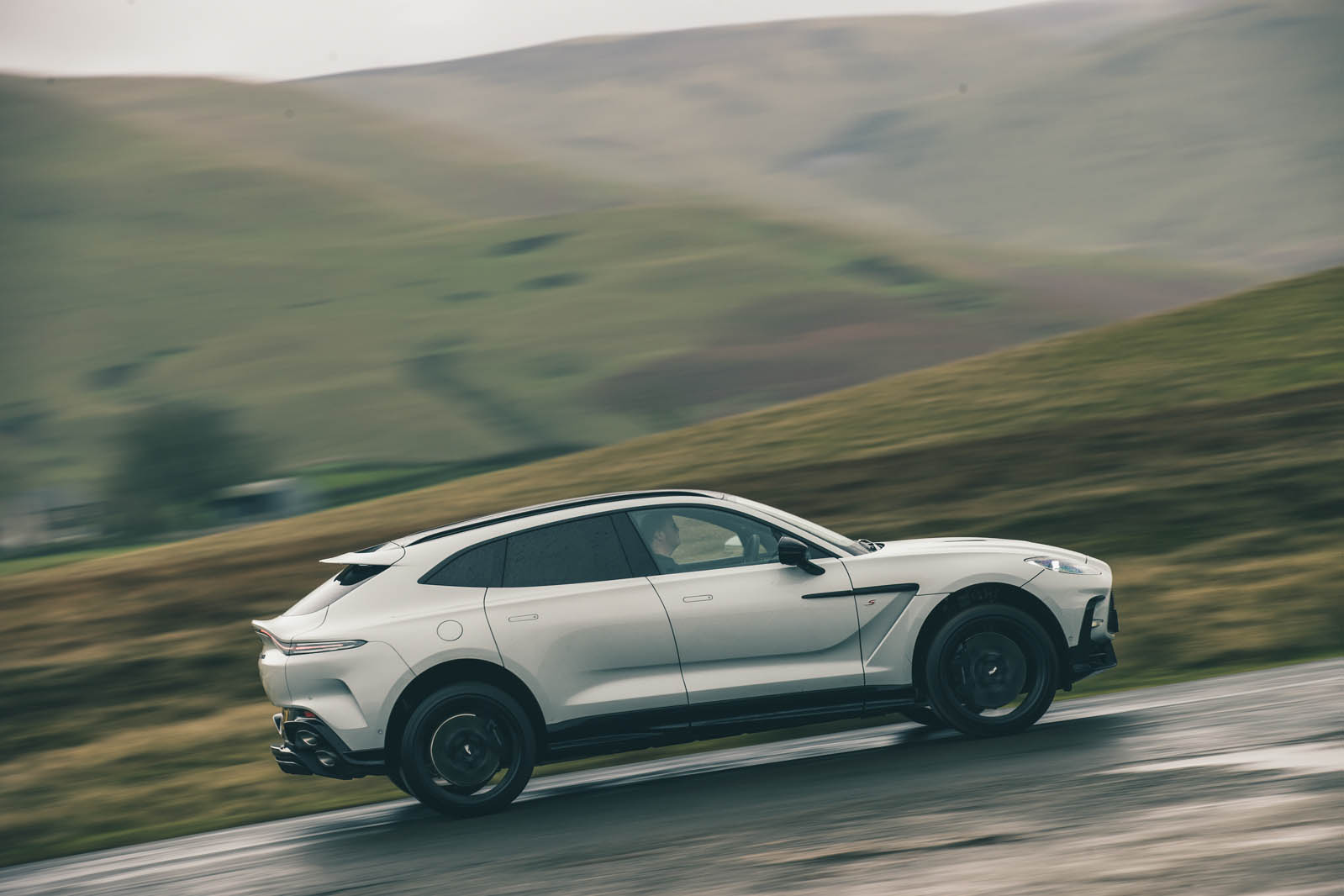
The last 25 years have brought us some of the most influential cars in modern motordom.
While they might not be the fastest or indeed the best machines yet, they’ve had a cultural or technological impact on the car industry that cannot be overlooked.
These cars have morphed into brilliant used buys: there's performance car bargains, value-for-money supercars and cheap all-rounders that will do it all.
Stay with us as we share some top tips on how to buy some of the best cars of the last quarter century.
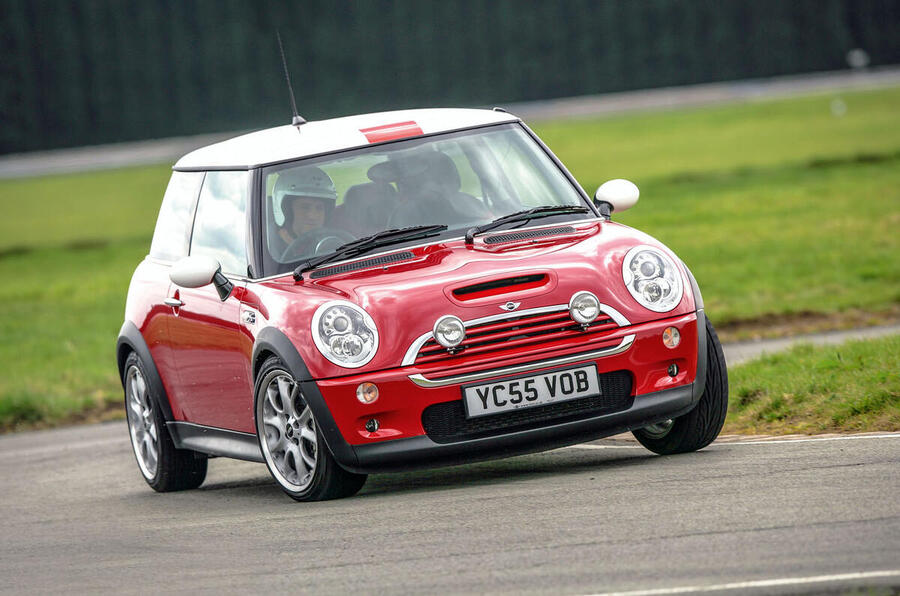
BMW's reincarnation of the storied Mini hatchback is the ideal choice for any savvy shopper on the hunt for a fun, warmed-up supermini. Fine handling, precise steering and a torquey 1.6-litre engine can cost from as little as £500, although buying a Cooper or Cooper S for anything less than a grand will tie you to high mileage examples with plenty of battle scars.
Rusty sills are common, and clutches can wear prematurely. Watch out for oil leaks from the valve cover gasket and oil pan gasket. The R53 Cooper S is a real hoot on a rural back road; its Eaton supercharger boosts power to 163bhp, which is a full 48bhp more than the standard Cooper.
Even today a good example feels incisive, agile and quick, and it was something of an underdog in the early-noughties hot hatch class. You can snap up a tidy Cooper S for around £2500, but be wary of high mileages and find one with a strong MOT and service history. Make sure the supercharger has been serviced with new drive belts, and watch out for overheating. The more hardcore John Cooper Works GPs have rightfully gained modern classic status, and as a result prices for those start from around £12,000. Worth every penny, though.
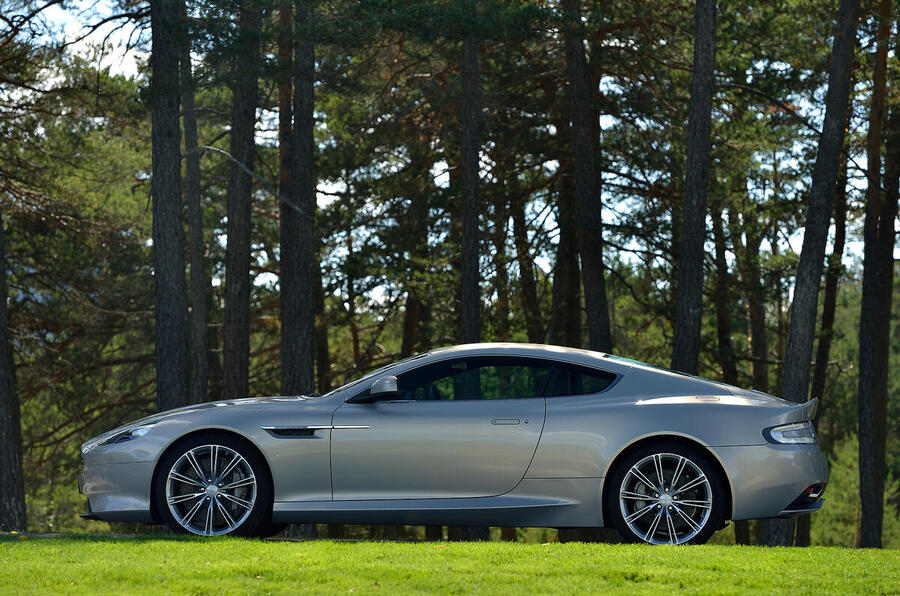
A V12 grand tourer for a few quid more than a new Dacia Spring? Okay, buying a leggy Aston Martin DB9 is a bit of a gamble, but low-mileage cars are still good value at around £25,000.
Watch for corrosion on the wheel arches and opt for the reliable auto 'box because the manual's clutch will only last around 20,000 miles.
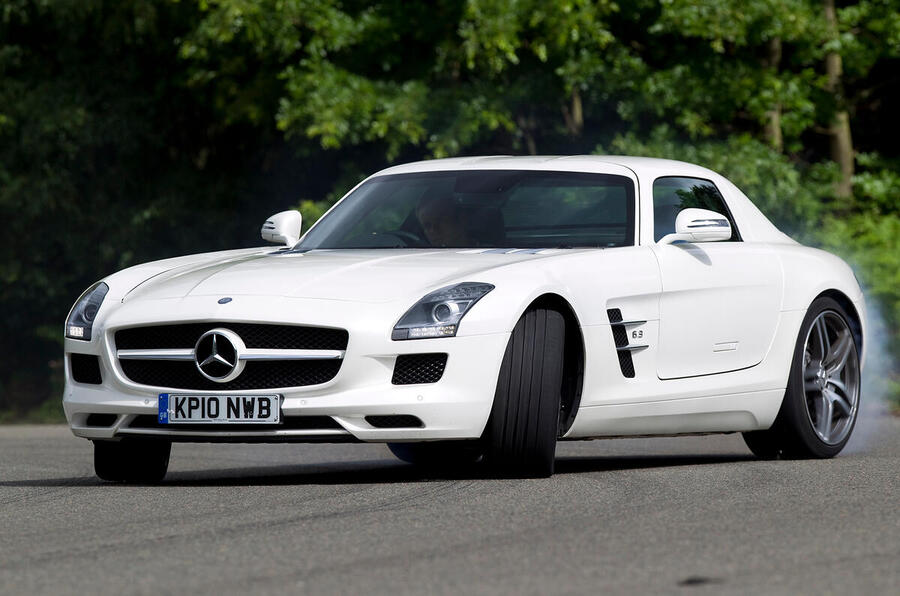
The 458 below is on the brink of collector's item status, but the SLS may well be there already.
Rag-tops are cheaper, but it's the coupé you want. They cost from about £150k, but rarer colours and lower miles can drive the price closer to £200k. The 6.2-litre 563bhp atmo V8 is highly strung but robust. Make sure the DCT 'box has had a software update to iron out the slow shifts that affected early cars and steer clear of cars fitted with expensive carbon-ceramic brakes.
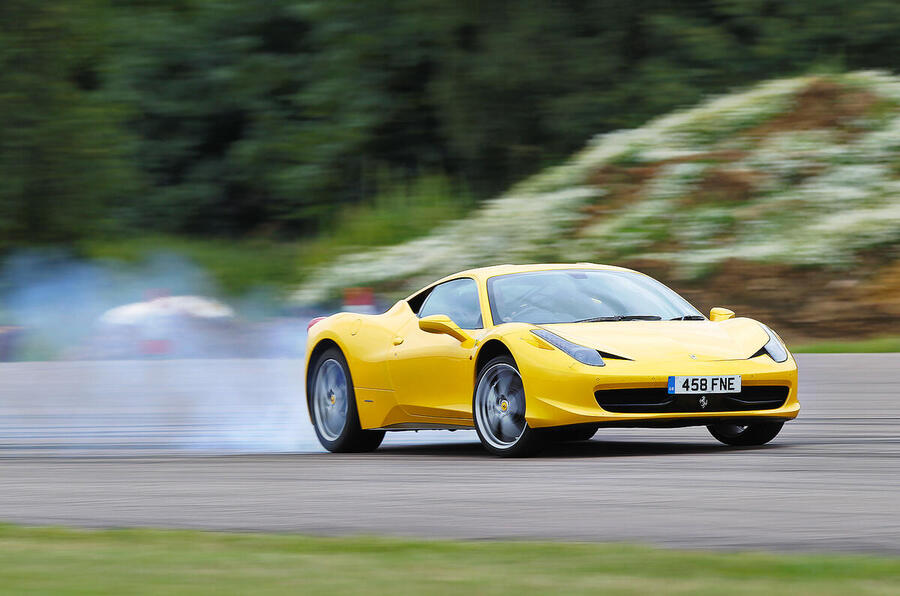
If you want Maranello's hedonistic naturally aspirated V8 supercar in your garage, you better strike now because the 458 is tipped to become a modern classic in years to come.
A budget of around £120,000 is enough for an immaculate example with a full service history. The Getrag dual-clutch automatic 'box should deliver razor-sharp gearchanges, so watch for missing gears or jerky shifts on a test drive.
Corrosion on the wheel arches isn't uncommon, and if buying a drop-top 458 Spider, make sure the roof doesn't jam open.
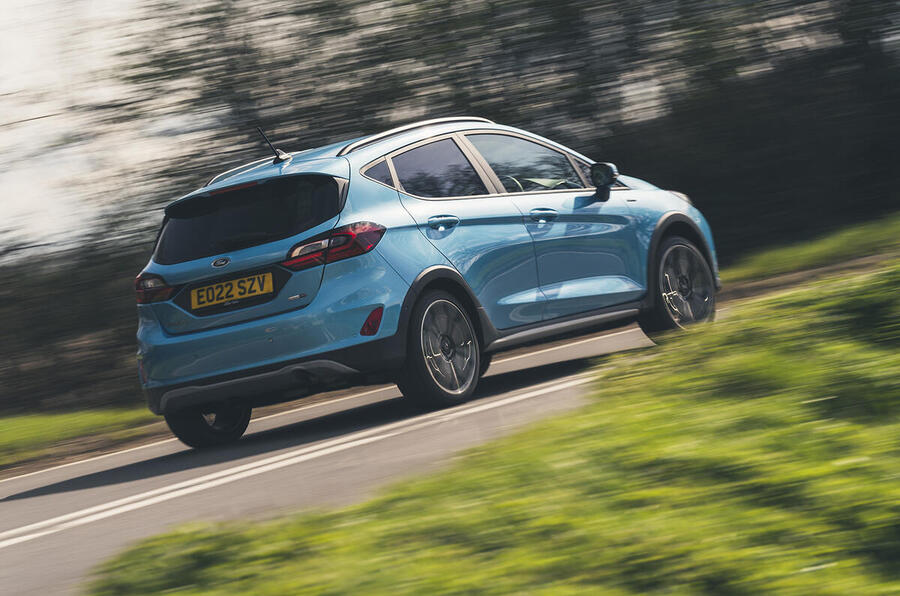
With a stylish exterior, excellent ergonomics and class-leading dynamics, Ford's vivacious little supermini neatly balances deft handling with a supple ride.
As one of Britain's best-selling cars, the classifieds are abundant with examples of varying age, condition and price. The 1.0-litre Ecoboost (available with 98bhp, 123bhp and 138bhp) is a brilliant little engine that's peppy, efficient and characterful, but it's tarnished by wet belt issues and coolant leaks. Aim for a low-miler with a solid service history.
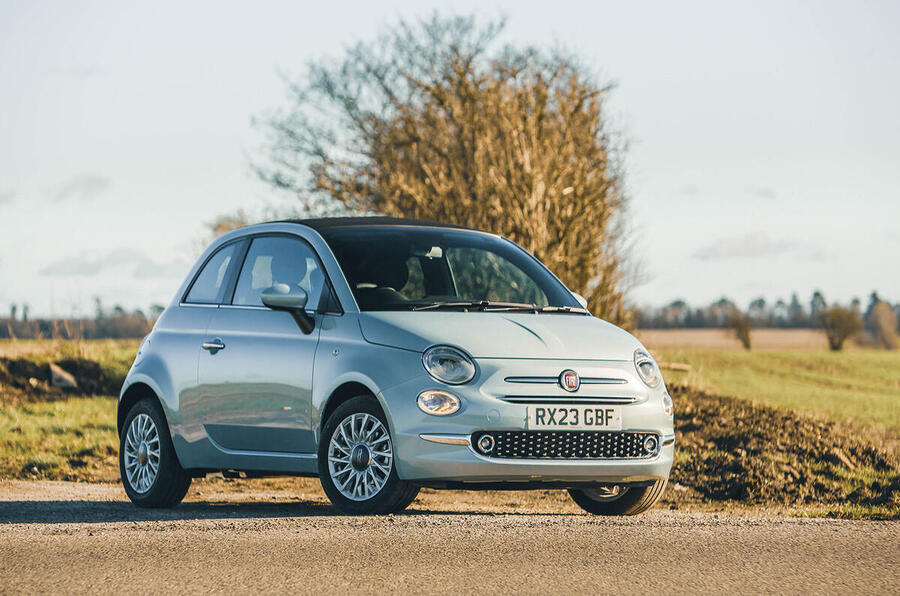
The Fiat 500 brought the ailing Italian brand back from the brink when it was launched in 2008 the model won the hearts of more than three million buyers worldwide thanks to its retro charm.
Prices for our pick - the characterful 900cc Twinair - start from around £1200, and the classifieds are packed full of cars with bright colours, liveries and strong kit rosters.
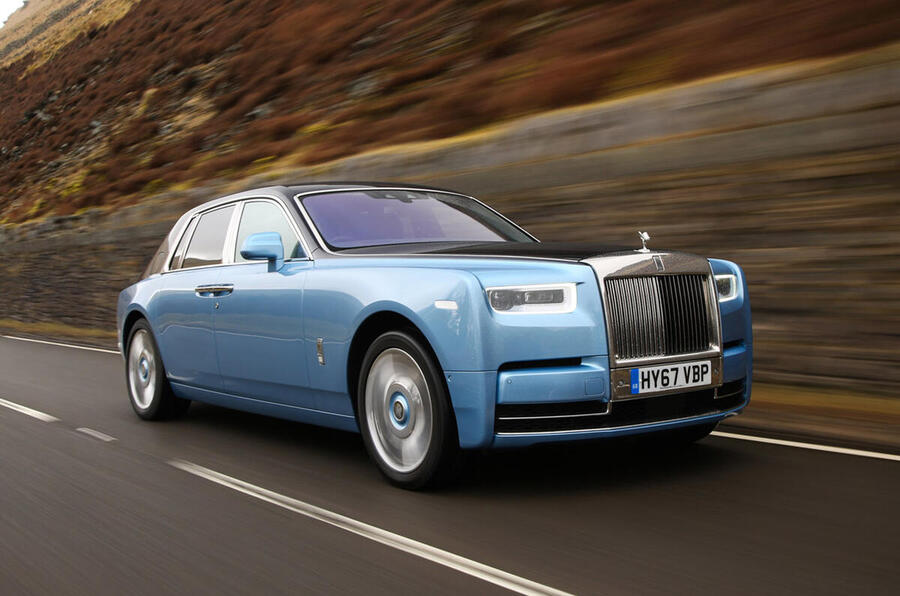
Once a £215,000 stately home on wheels, the Rolls-Royce Phantom VII is now a bargain super-luxury super-saloon that can be found being offered for sale for less than £50,000. Ride and refinement are second to none, and even well-used examples feel as opulent inside as a modern-day Range Rover.
Avoid high-milers and ensure any car you buy has a full service history. Maintenance costs and parts can be astronomically expensive, with some engine repairs costing up to £9000.
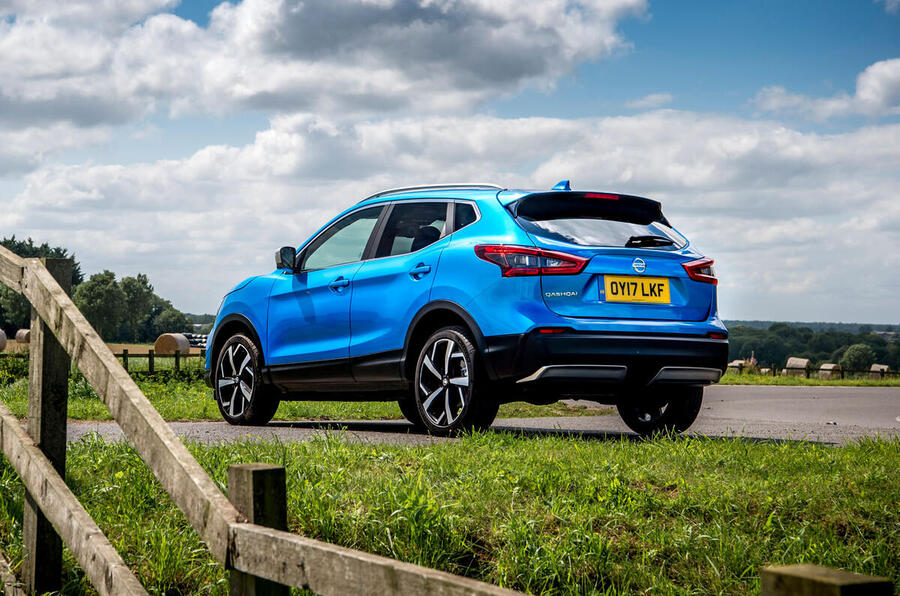
This SUV-cum-hatchback sparked the crossover revolution and became Britain's favourite car. The classifieds are full of tired-looking, sub-£1500 early examples that look rather dated nowadays, so we would opt for a facelifted car from 2010, one of which will cost upwards of £2500.
Older cars suffer from shock absorber failure, and clutches don't last very long, so shop with care. Rain leaks into the cabin are common, and clogged diesel particulate filters can taint the popular 1.5-litre dCi.
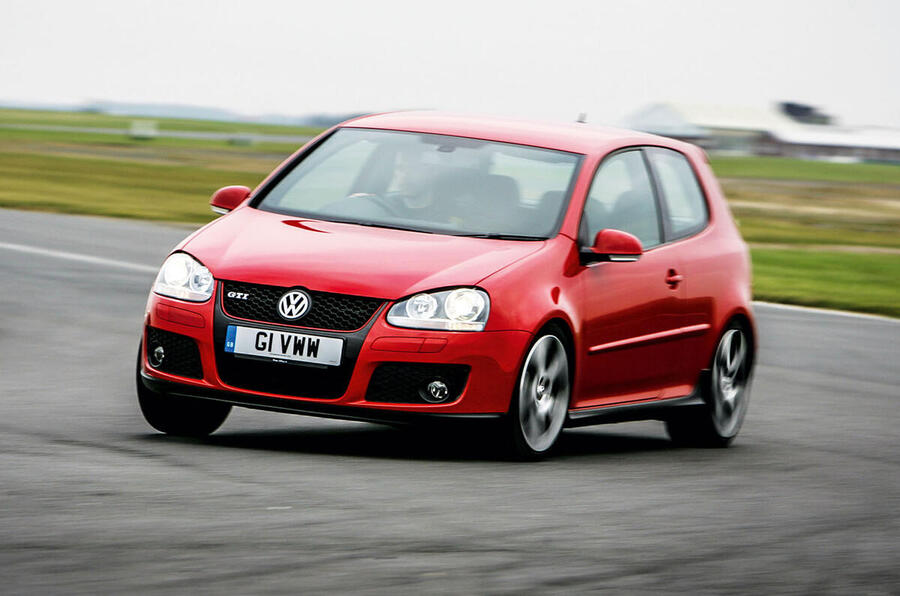
As hatchbacks go, the Golf is the out-and-out leader when it comes to build quality, refinement, space and practicality.
Factor in its user-friendly technology and strong ergonomics and it's easy to see why this multi-talented Volkswagen is so popular. It also caters to a broad range of buyers: the GTI is a superb all-rounder, being both fast and relatively frugal, while the lower-powered petrols make everyday commutes efficient and hassle-free. Diesels are best for those who cover big miles, and many cost only £20 to tax.
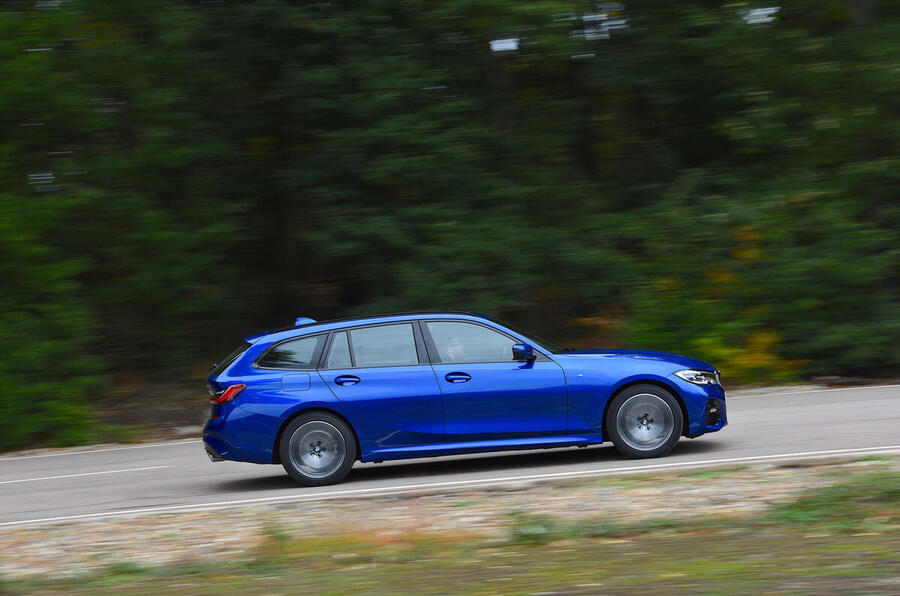
The 'all-rounder' moniker is bandied around rather nonchalantly, but for the G20 BMW 3 Series it couldn't be more apt.
While many will gravitate towards the refined and abstemious 320d oil-burner, the 330e plug-in hybrid is a tempting alternative thanks to its 37-mile electric range. Keen drivers will be drawn to either of the two six-cylinder options, which also get four-wheel drive.
The B58-powered, 369bhp M340i petrol is fast and acceptably frugal and handles beautifully, but the less powerful but more torquey M340d diesel is just as entertaining. You can buy one for less than £10,000, and overall reliability is good. Diesels can be knocked back by timing chain-, and EGR-related DPFproblems, while infotainment glitches and oil leaks aren't uncommon.
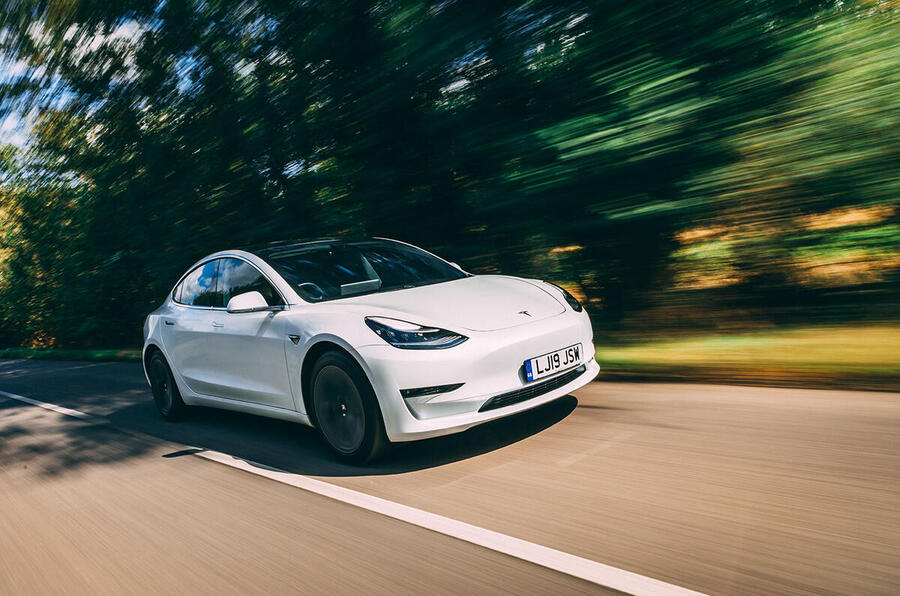
High-mileage Tesla Model 3s can already be found for less than £10,000, but you can pick up a well-maintained dual-motor Long Range, which can travel up to 348 miles on a full charge, for around £17,000.
Software glitches are common, and the build quality on early examples is poor, so check the standard of the paintwork and consistency of the panel gaps. Battery degradation is unavoidable, so charge to 80% where you can in order to boost longevity.
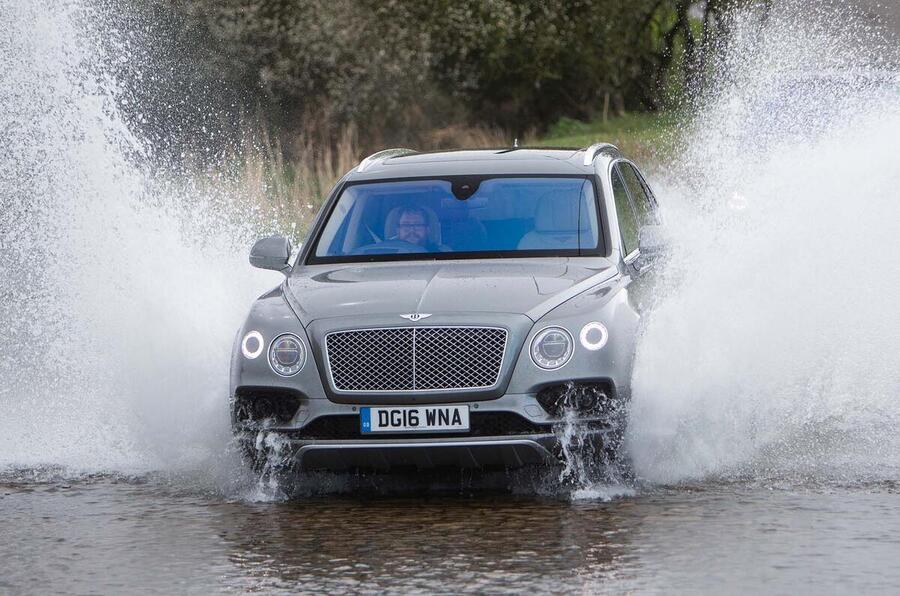
While the 600bhp W12 can now be found on sale for a smidge under £50,000, its 18mpg, £760 yearly road tax and significant annual servicing costs make it hard to justify in (relatively) conventional used car buying terms. The rich and characterful W12 engine suits the opulent Crewe-made SUV, but the silky-smooth 4.0-litre V8 diesel is by far the better buy and it produces the same amount of torque as the W12 anyway.
If petrol is more your thing, the 543bhp 4.0-litre V8 is widely available and, thanks to its cylinder deactivation technology, is surprisingly efficient. It's not too expensive to tax, either. The diesel is cheaper to run (35mpg and £190 road tax), but just be wary of cars that have been used mainly for short hops, because EGR valve failures and clogged DPFs are common. Walk away if you feel any vibrations under load: this could spell issues with the dual-mass flywheel or the torque converter in the eight-speed automatic gearbox.
Supple ride comfort is one of the Bentayga's hallmarks, so make sure the air suspension is free of any unusual noises and the adjustable ride height operates consistently; the struts can leak and can cost anywhere between £1200 and £2000 to replace.
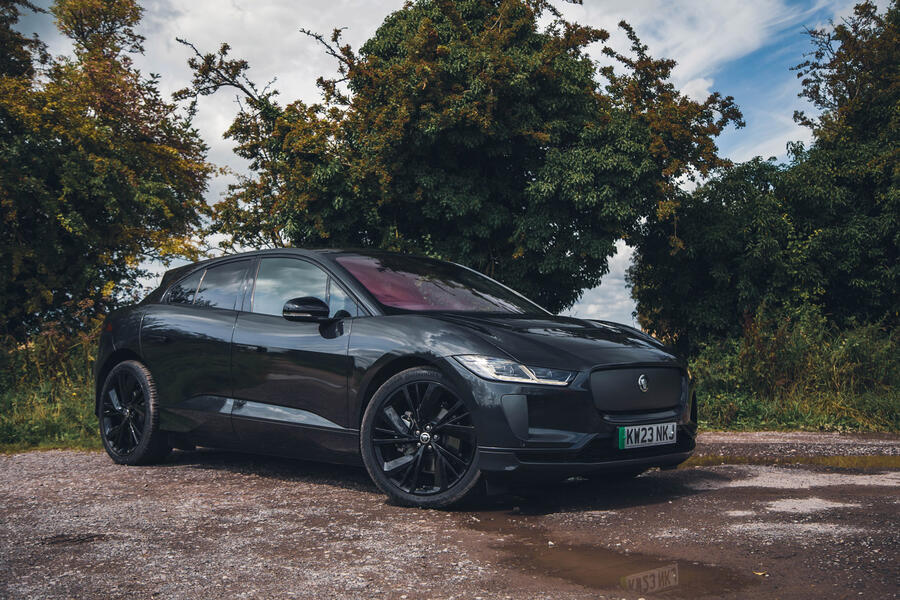
Value for money is high on the agenda when it comes to used I-Paces. Software gremlins and water ingress are its main foibles, and watch for dodgy charging ports refusing to unlock cables.
The I-Pace is one of the more engaging electric SUVs you can buy: it's quick, poised and, thanks to adaptive suspension, comfortable. A to 200-250-mile real-world range is achievable, and the cabin is pure luxury, with high-quality materials and crisp touchscreens.
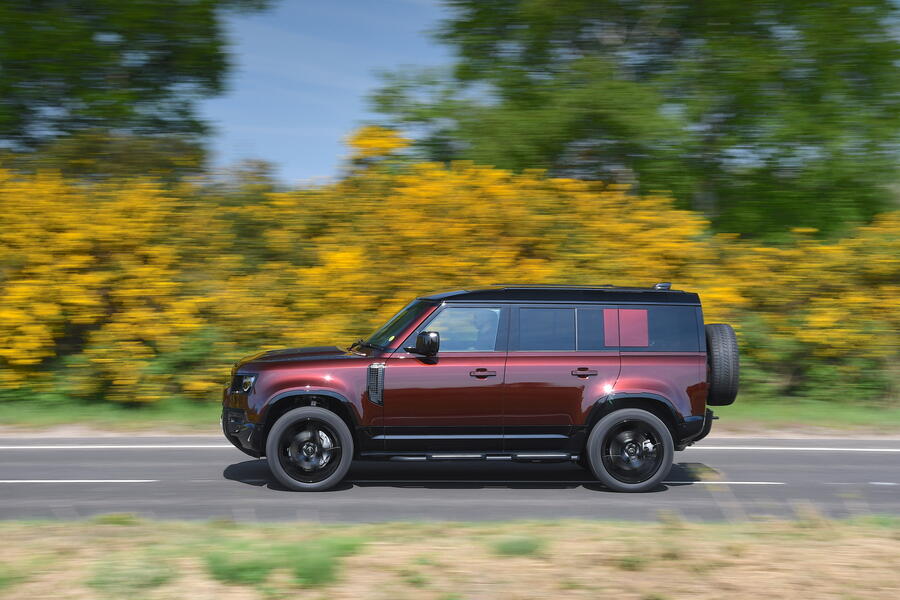
Mightily impressive off road, suave and sophisticated on it: the reimagined Defender is one of the most versatile 4x4s you can buy, and you can snap one up for around £35,000. Spend £50k and you'll get a 90 or 110 with a better service history and fewer miles under its wheels.
Later D250 and D350 diesels are more reliable and suit the Defender's character and find a car with adaptive dampers if you can, because these add an extra layer of ride comfort.
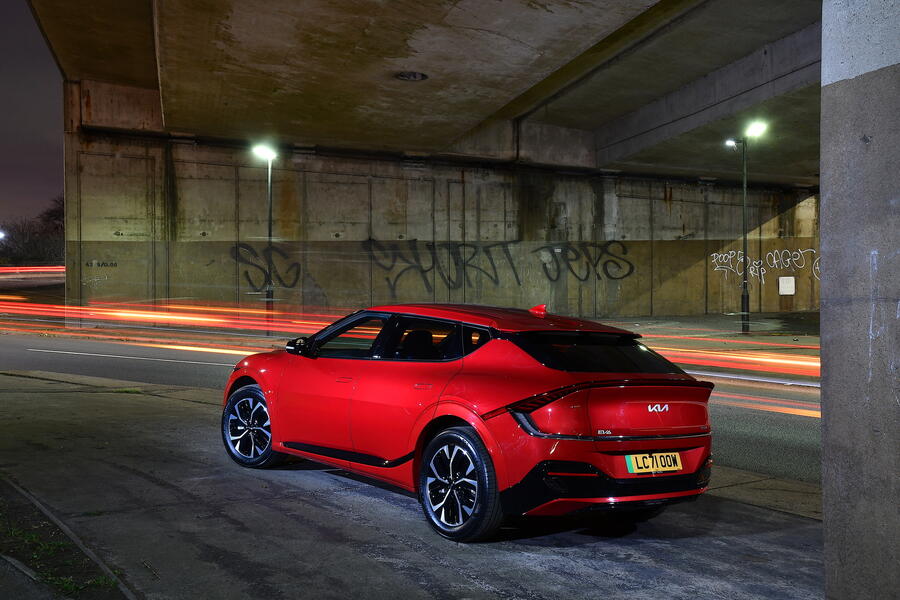
The 577bhp dual-motor EV6 GT is the enthusiast's choice, but for everyday use the EV6 has greater appeal in rear-wheel-drive form.
"One of the most engaging-handling family EVs of the moment," we said of the EV6 GT-Line RWD, when we road tested it in 2022. The EV6 also has ultra-fast charging speeds, a spacious interior and a decent real-world range. Prices start from around £16,000.
The mercury is climbing steadily into the high twenties, and above us, the blue sky is dotted with only a smattering of little fluffy clouds.
At last, summer is here. Better still, we’ve got the scenery and roads to match: the B4518 scythes up, through and around rolling Welsh hills before depositing us at a viewpoint overlooking the stunning Clywedog reservoir, its gently wind-whipped waters glinting and sparkling in the sun a few hundred metres below us.
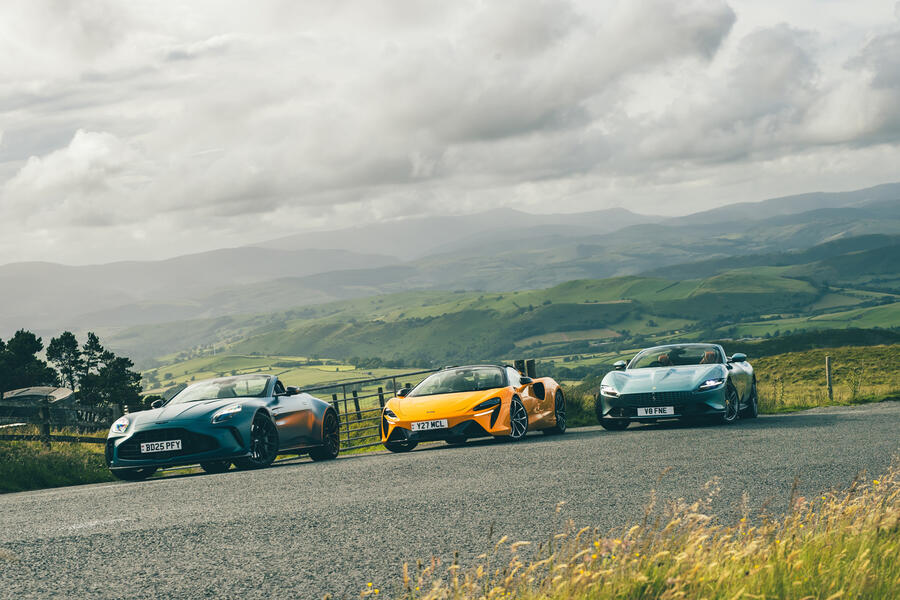
Behind us, their exhausts and engines pinging away like a distant steel band as metal components cool and contract, are three of the fastest hair dryers £200,000 (and a bit more) can buy.
Effortlessly combining game-on driving dynamics, drop-top glamour and power outputs north of 600bhp, this open-air trio could just be – right here and now, on these roads and in this weather – the best cars in the world.
However, this is an Autocar group test, so there has to be a winner. But which one?
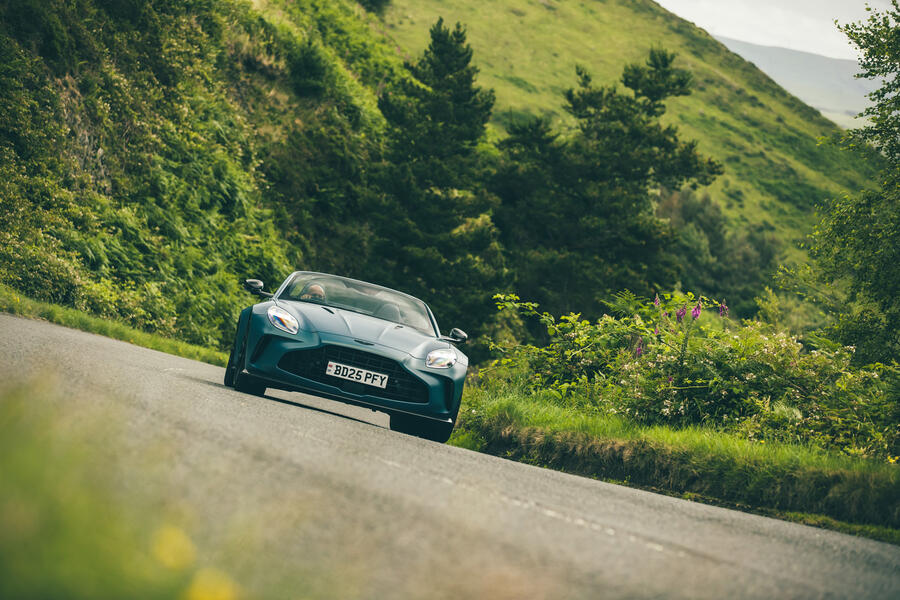
Well, we’ll get to that, but first let’s take a look at the contenders, starting with the car that inspired this gathering of upper-class alfresco entertainers: the new Aston Martin Vantage Roadster, the latest offering from the resurgent and newly confident British brand.
As the name suggests, it’s essentially a convertible version of the recently launched coupé. In fact, it’s so closely related that, addition of a fabric roof and 60kg of strengthening aside, the handsomely thuggish Roadster shares pretty much the same set-up as its tin-top sibling.
The rear damper’s operating software has been tickled, but in all other mechanical respects, Aston’s cloth-topped contender is identical. That means it gets the same 656bhp ‘hot-vee’ twin-turbocharged 4.0-litre V8 that’s been donated by Mercedes-AMG, driving the rear wheels through an eight-speed automatic ZF transaxle.
Also carried over are the looks, which are given an extra edge by our car’s matt blue paintwork. The fabric roof itself is neatly integrated and, at just 6.8sec to raise or lower, is the quickest here, allowing you to worship the sun or avoid the rain at the drop of a hat.
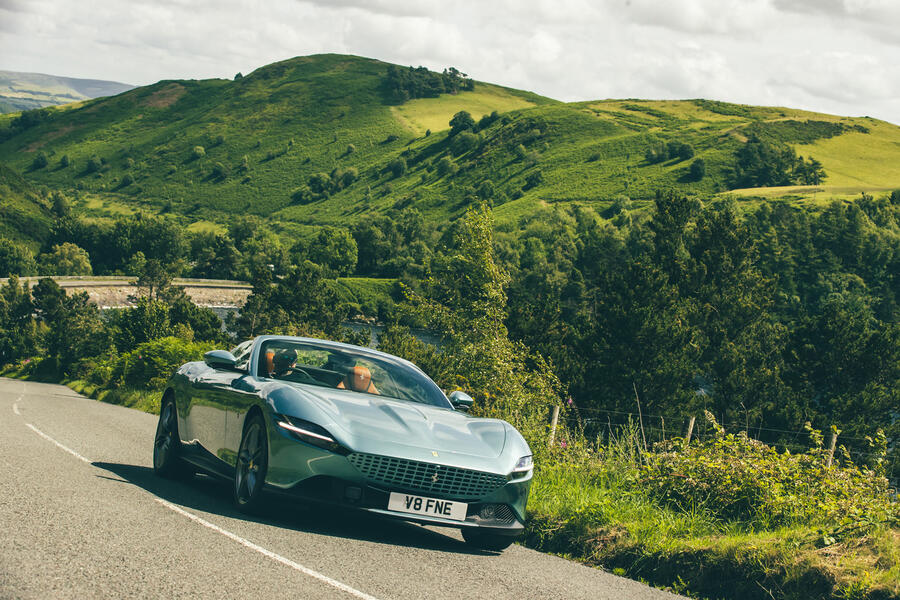
Acting as an elegant counterpoint to the brutish Aston is the Ferrari Roma Spider. Its classically proportioned GT lines mean the curvaceous Italian is less attention-grabbing than its British rivals, but it’s far from unattractive.
Launched in 2023, it is based on the coupé version that had its debut in 2018 and which is already in line for retirement – Maranello has announced it will be replaced by the all-new Amalfi next year – although this rag-top version of the Roma is destined to soldier on for a while yet.
Like the Aston, the Roma features a forced-induction V8 and an eight-speed gearbox (a dual-clutch auto here, rather than a torque converter) that combine to drive the rear wheels. It also has a powered cloth covering (with five-layer insulation, no less), but at 13.5sec to stow or open, it’s the most sluggish here.
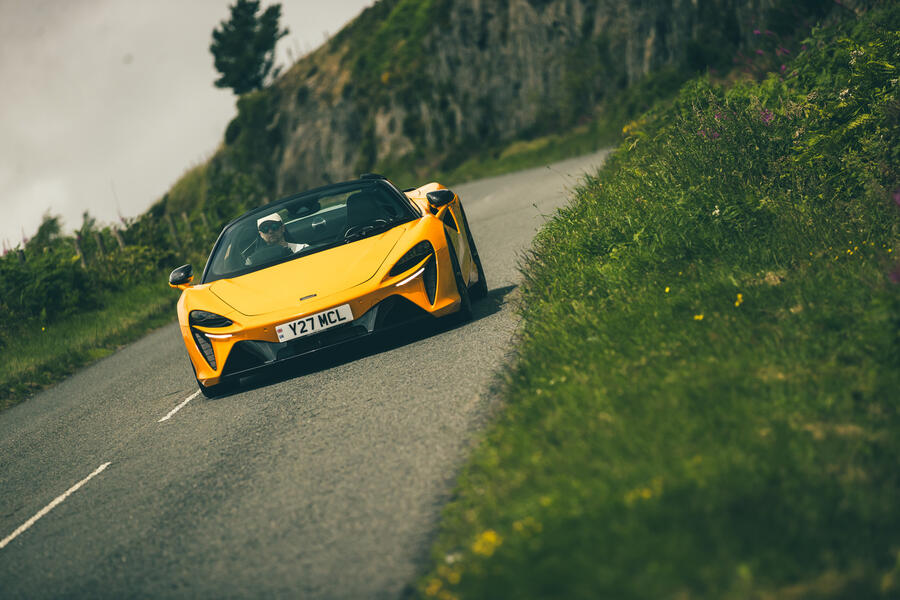
For jaw-dropping kerb appeal, both the Ferrari and Aston have to give best to the bright orange McLaren, which has a magnetic attraction to smartphone-wielding supercar spotters. Acting as the outlier in this contest, the carbonfibre-tubbed Woking wonder goes about its business of delivering fast fresh-air thrills in a very different way.
Not only is its engine mid-mounted, the 3.0-litre turbocharged V6 has the smallest capacity and the fewest cylinders. Moreover, the McLaren Artura is also a hybrid, and a plug-in one at that. That means both 21 miles of electric running and a combined power output of 690bhp, making the Spider the spiciest of our sun-seekers.
Speaking of which, McLaren favours a folding hard-top (actually it’s more of a targa panel) for the Artura, which means its convertible conversion adds the fewest extra kilos – the roof and associated mechanism weigh 62kg for an overall kerb weight of 1560kg.
Next up is the Ferrari, which at 1556kg (Maranello only quotes a ‘dry’ figure, so let’s say somewhere around 1600-and-a-bit with fluids) weighs 84kg more than its coupé cousin. Heaviest Hector is the Aston, which is a scale-creaking 1805kg all in.
Perhaps the Aston’s extra avoirdupois is down to its lavishly trimmed cabin, which is slathered in soft leather and rich-feeling materials.
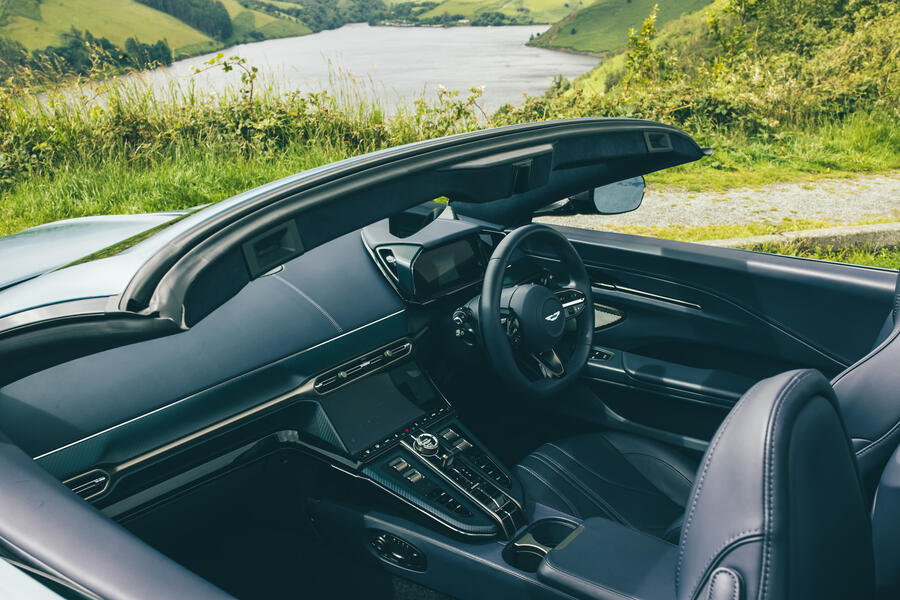
As a result, it matches the more expensive Roma for club-class appeal, each giving you the feeling that you’ve climbed into an expensively tailored suit – although only the Fezza offers four-up practicality.
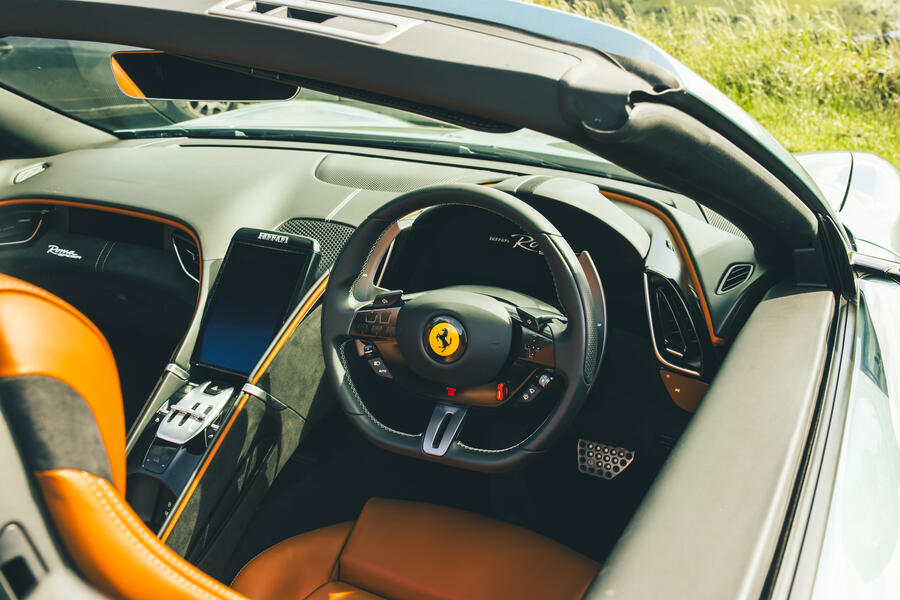
The McLaren, on the other hand, feels a little minimalist by comparison, although it’s nicely finished, with plenty of Alcantara and carbon fibre accents.
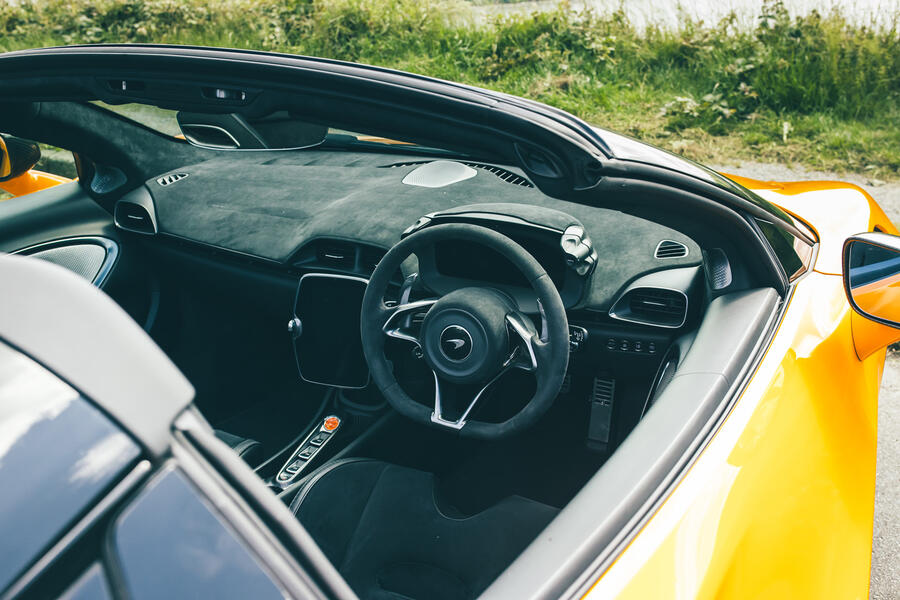
Okay, that’s the showroom tyre-kicking done; it’s time to get moving. On the drive westwards to our mid-Wales destination, it’s the long-legged Ferrari that draws first blood: its mix of plush damping and remarkable roof-up refinement make it the most relaxed cruiser – the only intrusion is the distant backbeat of the V8.
The Aston can’t compete. Its adaptive dampers remain fairly uncompromising in all modes, leading to a fidgety firmness that means the Vantage struggles to settle.
Surprisingly, the McLaren comes closest to matching the Roma’s cushioned ride. Its low-speed stiffness (even in the dampers’ so est setting) gives way to a supple yet tautly controlled gait.
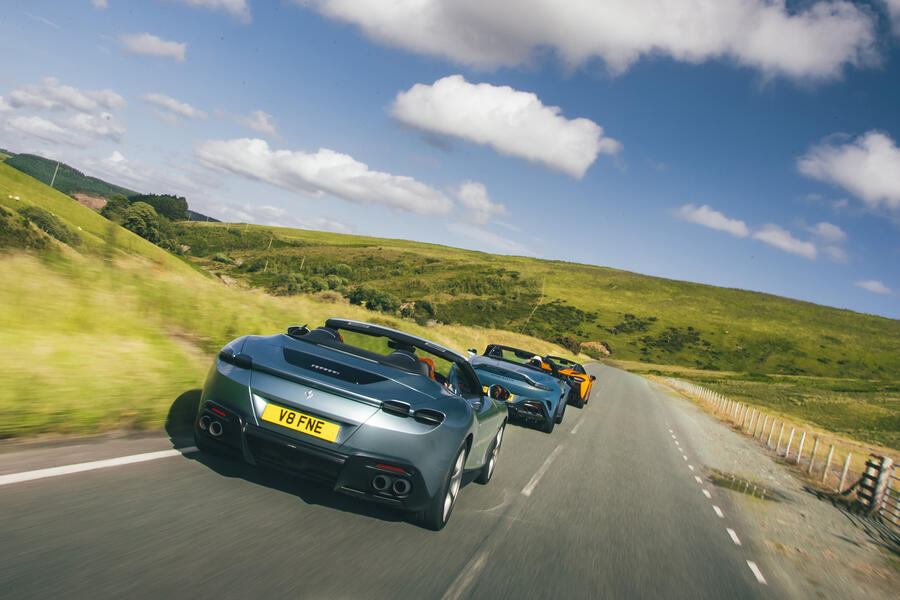
The downside is that the carbon tub transmits a fair bit of road noise. Top down, there’s little between the three when it comes to keeping your hairdo unharmed: each one opens you up to the elements with surprisingly little buffeting from fast-flowing air.
Each has a wind deflector that can be deployed to help keep the cabin calm, although the Ferrari’s set-up is rather Heath Robinson in its operation – it can be automatically activated at the touch of a button but requires you to twist around in your seat and manually push it back into place when no longer needed.
Best is the McLaren’s powered glass window, which can be lowered with the roof in place to allow some open-air vibes even in inclement weather. To get the best out of this trio, however, you’ll want to travel topless most of the time – and today’s fine weather demands it.
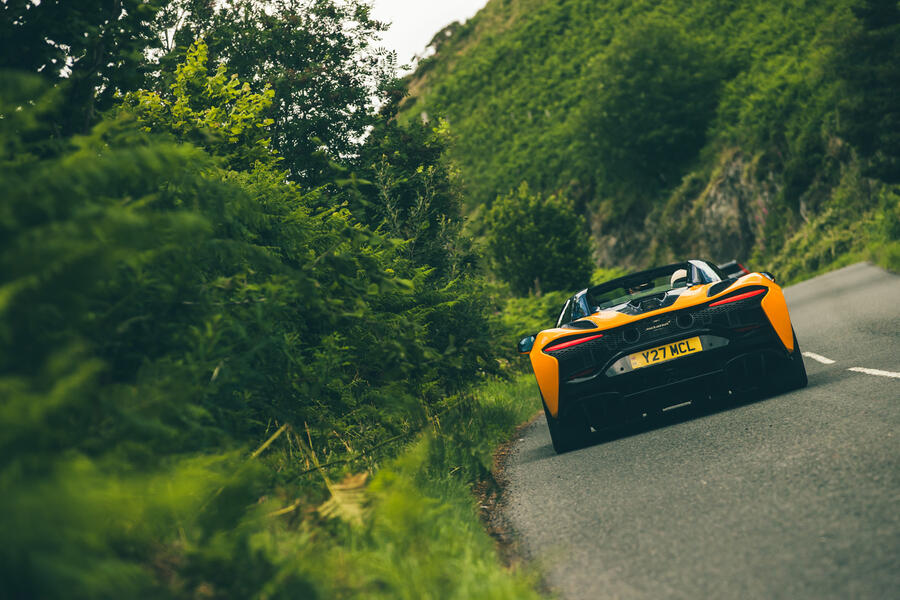
Not only does it add the extra stimulation of the sights and smells of the great outdoors, but it also gets you closer to the aural action – and no car here puts on a greater sonic show than the bombastic Vantage.
This isn’t one of the all-time great vocalists (think Lemmy from Motörhead rather than Annie Lennox), but the way it barks, pops and cracks never fails to elicit a giggle – although extended and use in shouty Sport+ mode could land you with an asbo.
It has substance to match the sounds, too, and despite the need to move a lot of mass, the Aston’s 656bhp V8 accelerates with a muscular, deep-chested urgency.
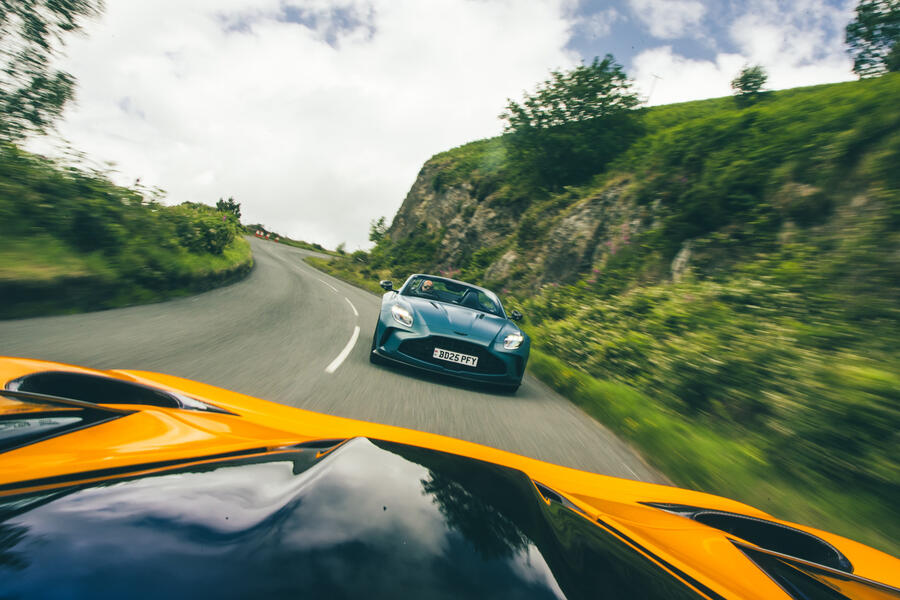
The sense of instant energy is enhanced by the carefully chosen and closely stacked ratios of the Roadster’s eight-speed automatic gearbox. It can’t quite match the whip-crack ratio changes of the dual-clutch units used in the Roma and Artura, but it offers greater smoothness and civility in low-speed manoeuvres.
That said, neither the Aston nor the Ferrari can match the McLaren’s all-electric party trick, which makes early morning getaways less wearisome for your neighbours. The novelty of being able to slip silently through city traffic never really wears off in the Artura, and it’s a USP that will endear it to many who will use these cars for more than high days and holidays.
Better still, when the V6 does fire into life, it reveals itself as one of the firm’s sweeter-sounding units. The older V8s have a certain industrial quality to their delivery, but the Artura Spider’s engine takes on an ear-pleasingly harmonious howl as it spins quickly and eagerly towards 8000rpm. And, boy, is it fast.
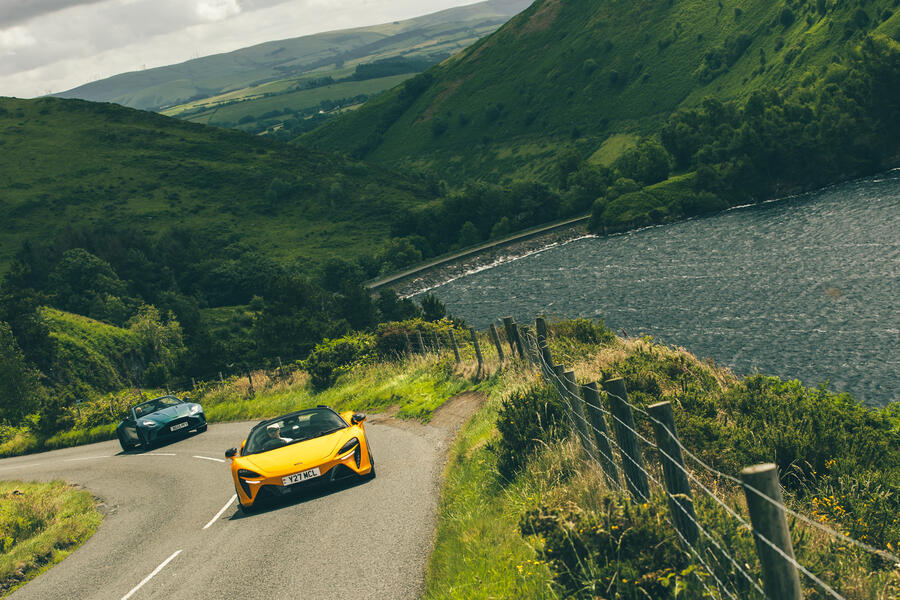
By using its 94bhp electric motor to add low-speed torque, the McLaren avoids the laggy wait-and-whoosh that characterises the firm's other wares, meaning there’s instant get-up-and-go in any gear and at any revs: the Artura is a proper card-carrying supercar.
With 612bhp the Roma looks a little weak-kneed in this company, and there’s no denying that in an all-out, hell-for-leather sprint the Fezza would come home in third spot. Yet all things are relative, and anyone feeling short-changed by the Spider’s accelerative abilities needs their adrenal gland checked for signs of drought.
It’s not the most musical of Maranello’s motors – it sounds more like a couple of fruity four-pots stitched together – but the firm’s mastery of turbocharging means it has an almost naturally aspirated response and appetite for revs that encourages you to work for your rewards.
Of our topless triumvirate, it’s the Roma that should be the least focused and fun in the corners, owing to Ferrari’s assertion that the Spider is more of a GT than the fine-handling coupé version.
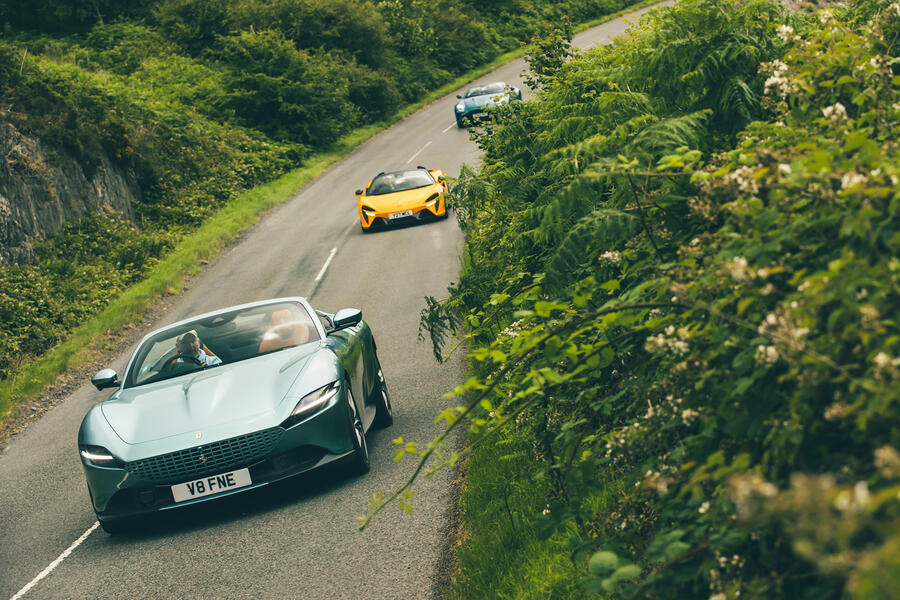
Its bodyshell’s static rigidity has been reduced by 30% as a result of roof removal, and the adaptive dampers have been slackened across the board to compensate.
And yet… If anything, the Roma’s more forgiving suspension, especially in Bumpy Road mode, makes it feel right at home on the UK’s raggedy highways, and that offsets some of the admittedly very minimal scuttle shake.
It’s almost as if Ferrari’s chassis engineers have spent as much time on this route out of Llanidloes as they have lapping Fiorano. It sounds like damning with faint praise, but there’s something of a supersized Mazda MX-5 about the way the Spider slices through corners: the Ferrari’s so yet beautifully controlled chassis allows you to more clearly feel the car approaching its limits and so more confidently exploit its natural balance.
The steering is quick and light but not flighty, which allows you to place the nose of the car just so. And as the cornering forces build and your confidence grows, you can use the V8’s predictable power delivery to subtly alter your cornering angle with a delicate right foot.
Yet it’s the way the Ferrari flows down the road, working with the surface rather than against it, that really impresses. Climb into the Aston Martin immediately afterwards and the contrast couldn’t be clearer.
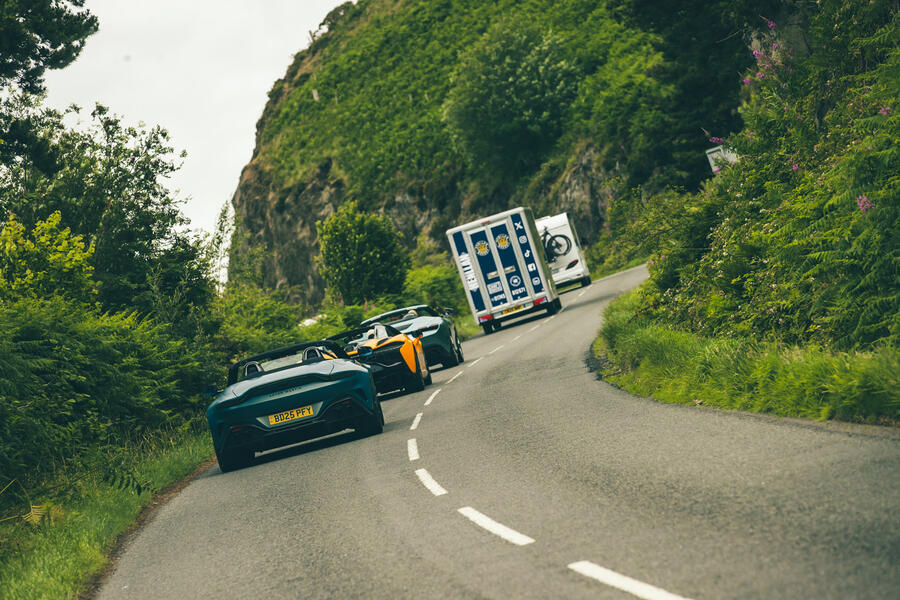
There’s the same classic front-engined, rear-wheel-drive balance that allows you to throw some oversteery shapes on corner exit, but the Vantage is a more overtly aggressive proposition that leaves you in no doubt that it wants to be taken seriously as a sports car.
There’s no more feedback through the steering compared with the Roma, but it requires more muscle to turn. You also get a smidge less understeer: the Vantage’s nose responds more quickly and crisply.
At sensible speeds, it feels a fraction more agile and alert, and that sense is underlined by a damping set-up that veers between stiff in baseline Sport mode and brainshakingly rigid in Track.
In all settings, the extra firmness highlights the slightly weaker shell (the Roadster’s structure shakes the most over bumps), which also results in quite a few creaks and squeaks from the cabin architecture.
Go a little harder over these bucking and weaving Welsh roads and the Aston’s mass starts to tell. You sense the Vantage’s brakes working harder to slow it down, while mid-corner bumps and crests cause brief heart-in-mouth moments as the suspension skips over rather than soaks up imperfections, causing a little step sideways that leaves the already wide Aston with even less margin for error on its side of the road.
It’s an exciting and extroverted thing but, like a manic comedian who’s always ‘on’, it can become tiring. Slip into the McLaren’s trademark low-slung driving position and you know you’re behind the wheel of a proper driver’s car.
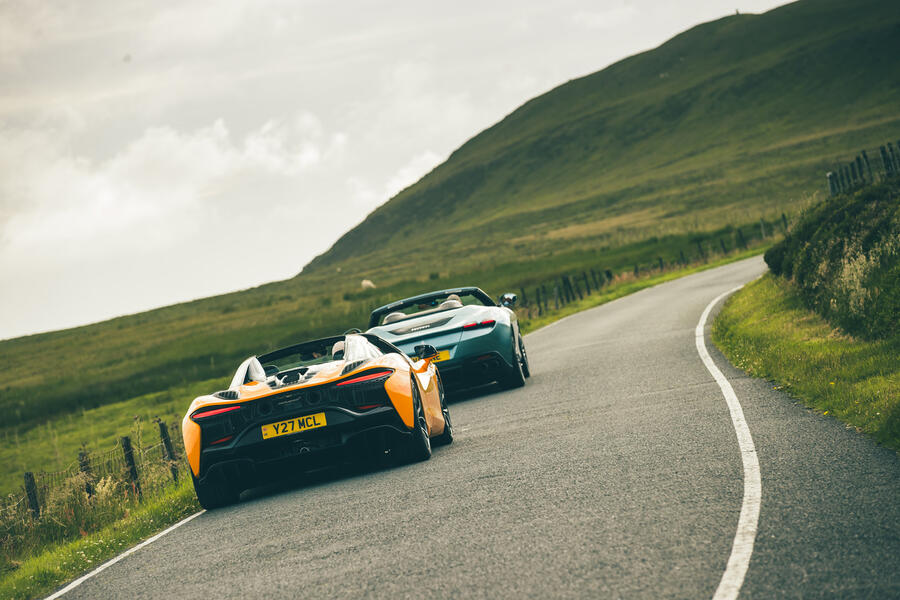
The straight-legged layout, perfectly placed and slim-rimmed steering wheel and panoramic view ahead make you feel right at home immediately. With its carbon-fibre tub, the Spider is also pretty much as structurally solid as the coupé, which is our reigning Britain’s Best Driver’s Car champ, and that means this drop-top is every bit as brilliant to punt down these wicked Welsh roads.
It offers a very different experience from its rivals here, though. The Artura is perhaps the most expressive McLaren yet, but its dizzyingly high limits mean on-the-road pleasure is derived not from its ability to be steered at will by your right foot but in its tactility and precision.
The hydraulically assisted steering offers exceptional weighting and feel, writhing gently in your hands, while there’s an equally uninhibited flow of information through the seat of your pants.
With a low polar moment of inertia and Gorilla Glue grip, the Artura doesn’t really do understeer or oversteer on the road: you simply point the nose where you want to go and the rest of the car follows in a beautifully neutral stance.
It’s hugely satisfying, but there’s also a sense you’re scratching the surface and that to really extend and exploit the Spider you need the gloves-off, helmet-on environs of a circuit. Does that undermine the McLaren’s bid for victory in this company?
That’s a tough one because – cliché klaxon alert – there are no real losers in this test. Each of these cars has a distinctive character and, depending on your needs and mood, you could happily make space on your driveway for any one of these special sun-worshippers.
However, we don’t pull punches here at Autocar, so here we go… Bottom step of the podium, if only just, is the Aston. It’s a hugely charismatic machine and the least costly to buy, but the firm ride, extra weight and shouty exhaust mean it can become just a tad overbearing with continued exposure.
As for the other two, can we have joint winners? No? Oh, okay. The thing is, each is different enough in its approach that those with deep enough pockets could make an argument to justify having both.
Let’s assume, though, that you’ll use these cars more often than not, in which case the Ferrari’s narrow practicality advantage and ability to serve as both sybaritic luxury saloon (of sorts) and spirit-lifting sportster means it gets the nod by the width of one of its many layers of roof insulation.
Ask the question again tomorrow, however, and the answer may change. Either way, getting a tan has never been so much fun.
The mercury is climbing steadily into the high twenties, and above us, the blue sky is dotted with only a smattering of little fluffy clouds.
At last, summer is here. Better still, we’ve got the scenery and roads to match: the B4518 scythes up, through and around rolling Welsh hills before depositing us at a viewpoint overlooking the stunning Clywedog reservoir, its gently wind-whipped waters glinting and sparkling in the sun a few hundred metres below us.
Behind us, their exhausts and engines pinging away like a distant steel band as metal components cool and contract, are three of the fastest hair dryers £200,000 (and a bit more) can buy.
Effortlessly combining game-on driving dynamics, drop-top glamour and power outputs north of 600bhp, this open-air trio could just be – right here and now, on these roads and in this weather – the best cars in the world.
However, this is an Autocar group test, so there has to be a winner. But which one?
Well, we’ll get to that, but first let’s take a look at the contenders, starting with the car that inspired this gathering of upper-class alfresco entertainers: the new Aston Martin Vantage Roadster, the latest offering from the resurgent and newly confident British brand.
As the name suggests, it’s essentially a convertible version of the recently launched coupé. In fact, it’s so closely related that, addition of a fabric roof and 60kg of strengthening aside, the handsomely thuggish Roadster shares pretty much the same set-up as its tin-top sibling.
The rear damper’s operating software has been tickled, but in all other mechanical respects, Aston’s cloth-topped contender is identical. That means it gets the same 656bhp ‘hot-vee’ twin-turbocharged 4.0-litre V8 that’s been donated by Mercedes-AMG, driving the rear wheels through an eight-speed automatic ZF transaxle.
Also carried over are the looks, which are given an extra edge by our car’s matt blue paintwork. The fabric roof itself is neatly integrated and, at just 6.8sec to raise or lower, is the quickest here, allowing you to worship the sun or avoid the rain at the drop of a hat.
Acting as an elegant counterpoint to the brutish Aston is the Ferrari Roma Spider. Its classically proportioned GT lines mean the curvaceous Italian is less attention-grabbing than its British rivals, but it’s far from unattractive.
Launched in 2023, it is based on the coupé version that had its debut in 2018 and which is already in line for retirement – Maranello has announced it will be replaced by the all-new Amalfi next year – although this rag-top version of the Roma is destined to soldier on for a while yet.
Like the Aston, the Roma features a forced-induction V8 and an eight-speed gearbox (a dual-clutch auto here, rather than a torque converter) that combine to drive the rear wheels. It also has a powered cloth covering (with five-layer insulation, no less), but at 13.5sec to stow or open, it’s the most sluggish here.
For jaw-dropping kerb appeal, both the Ferrari and Aston have to give best to the bright orange McLaren, which has a magnetic attraction to smartphone-wielding supercar spotters. Acting as the outlier in this contest, the carbonfibre-tubbed Woking wonder goes about its business of delivering fast fresh-air thrills in a very different way.
Not only is its engine mid-mounted, the 3.0-litre turbocharged V6 has the smallest capacity and the fewest cylinders. Moreover, the McLaren Artura is also a hybrid, and a plug-in one at that. That means both 21 miles of electric running and a combined power output of 690bhp, making the Spider the spiciest of our sun-seekers.
Speaking of which, McLaren favours a folding hard-top (actually it’s more of a targa panel) for the Artura, which means its convertible conversion adds the fewest extra kilos – the roof and associated mechanism weigh 62kg for an overall kerb weight of 1560kg.
Next up is the Ferrari, which at 1556kg (Maranello only quotes a ‘dry’ figure, so let’s say somewhere around 1600-and-a-bit with fluids) weighs 84kg more than its coupé cousin. Heaviest Hector is the Aston, which is a scale-creaking 1805kg all in.
Perhaps the Aston’s extra avoirdupois is down to its lavishly trimmed cabin, which is slathered in soft leather and rich-feeling materials.
As a result, it matches the more expensive Roma for club-class appeal, each giving you the feeling that you’ve climbed into an expensively tailored suit – although only the Fezza offers four-up practicality.
The McLaren, on the other hand, feels a little minimalist by comparison, although it’s nicely finished, with plenty of Alcantara and carbon fibre accents.
Okay, that’s the showroom tyre-kicking done; it’s time to get moving. On the drive westwards to our mid-Wales destination, it’s the long-legged Ferrari that draws first blood: its mix of plush damping and remarkable roof-up refinement make it the most relaxed cruiser – the only intrusion is the distant backbeat of the V8.
The Aston can’t compete. Its adaptive dampers remain fairly uncompromising in all modes, leading to a fidgety firmness that means the Vantage struggles to settle.
Surprisingly, the McLaren comes closest to matching the Roma’s cushioned ride. Its low-speed stiffness (even in the dampers’ so est setting) gives way to a supple yet tautly controlled gait.
The downside is that the carbon tub transmits a fair bit of road noise. Top down, there’s little between the three when it comes to keeping your hairdo unharmed: each one opens you up to the elements with surprisingly little buffeting from fast-flowing air.
Each has a wind deflector that can be deployed to help keep the cabin calm, although the Ferrari’s set-up is rather Heath Robinson in its operation – it can be automatically activated at the touch of a button but requires you to twist around in your seat and manually push it back into place when no longer needed.
Best is the McLaren’s powered glass window, which can be lowered with the roof in place to allow some open-air vibes even in inclement weather. To get the best out of this trio, however, you’ll want to travel topless most of the time – and today’s fine weather demands it.
Not only does it add the extra stimulation of the sights and smells of the great outdoors, but it also gets you closer to the aural action – and no car here puts on a greater sonic show than the bombastic Vantage.
This isn’t one of the all-time great vocalists (think Lemmy from Motörhead rather than Annie Lennox), but the way it barks, pops and cracks never fails to elicit a giggle – although extended and use in shouty Sport+ mode could land you with an asbo.
It has substance to match the sounds, too, and despite the need to move a lot of mass, the Aston’s 656bhp V8 accelerates with a muscular, deep-chested urgency.
The sense of instant energy is enhanced by the carefully chosen and closely stacked ratios of the Roadster’s eight-speed automatic gearbox. It can’t quite match the whip-crack ratio changes of the dual-clutch units used in the Roma and Artura, but it offers greater smoothness and civility in low-speed manoeuvres.
That said, neither the Aston nor the Ferrari can match the McLaren’s all-electric party trick, which makes early morning getaways less wearisome for your neighbours. The novelty of being able to slip silently through city traffic never really wears off in the Artura, and it’s a USP that will endear it to many who will use these cars for more than high days and holidays.
Better still, when the V6 does fire into life, it reveals itself as one of the firm’s sweeter-sounding units. The older V8s have a certain industrial quality to their delivery, but the Artura Spider’s engine takes on an ear-pleasingly harmonious howl as it spins quickly and eagerly towards 8000rpm. And, boy, is it fast.
By using its 94bhp electric motor to add low-speed torque, the McLaren avoids the laggy wait-and-whoosh that characterises the firm's other wares, meaning there’s instant get-up-and-go in any gear and at any revs: the Artura is a proper card-carrying supercar.
With 612bhp the Roma looks a little weak-kneed in this company, and there’s no denying that in an all-out, hell-for-leather sprint the Fezza would come home in third spot. Yet all things are relative, and anyone feeling short-changed by the Spider’s accelerative abilities needs their adrenal gland checked for signs of drought.
It’s not the most musical of Maranello’s motors – it sounds more like a couple of fruity four-pots stitched together – but the firm’s mastery of turbocharging means it has an almost naturally aspirated response and appetite for revs that encourages you to work for your rewards.
Of our topless triumvirate, it’s the Roma that should be the least focused and fun in the corners, owing to Ferrari’s assertion that the Spider is more of a GT than the fine-handling coupé version.
Its bodyshell’s static rigidity has been reduced by 30% as a result of roof removal, and the adaptive dampers have been slackened across the board to compensate.
And yet… If anything, the Roma’s more forgiving suspension, especially in Bumpy Road mode, makes it feel right at home on the UK’s raggedy highways, and that offsets some of the admittedly very minimal scuttle shake.
It’s almost as if Ferrari’s chassis engineers have spent as much time on this route out of Llanidloes as they have lapping Fiorano. It sounds like damning with faint praise, but there’s something of a supersized Mazda MX-5 about the way the Spider slices through corners: the Ferrari’s so yet beautifully controlled chassis allows you to more clearly feel the car approaching its limits and so more confidently exploit its natural balance.
The steering is quick and light but not flighty, which allows you to place the nose of the car just so. And as the cornering forces build and your confidence grows, you can use the V8’s predictable power delivery to subtly alter your cornering angle with a delicate right foot.
Yet it’s the way the Ferrari flows down the road, working with the surface rather than against it, that really impresses. Climb into the Aston Martin immediately afterwards and the contrast couldn’t be clearer.
There’s the same classic front-engined, rear-wheel-drive balance that allows you to throw some oversteery shapes on corner exit, but the Vantage is a more overtly aggressive proposition that leaves you in no doubt that it wants to be taken seriously as a sports car.
There’s no more feedback through the steering compared with the Roma, but it requires more muscle to turn. You also get a smidge less understeer: the Vantage’s nose responds more quickly and crisply.
At sensible speeds, it feels a fraction more agile and alert, and that sense is underlined by a damping set-up that veers between stiff in baseline Sport mode and brainshakingly rigid in Track.
In all settings, the extra firmness highlights the slightly weaker shell (the Roadster’s structure shakes the most over bumps), which also results in quite a few creaks and squeaks from the cabin architecture.
Go a little harder over these bucking and weaving Welsh roads and the Aston’s mass starts to tell. You sense the Vantage’s brakes working harder to slow it down, while mid-corner bumps and crests cause brief heart-in-mouth moments as the suspension skips over rather than soaks up imperfections, causing a little step sideways that leaves the already wide Aston with even less margin for error on its side of the road.
It’s an exciting and extroverted thing but, like a manic comedian who’s always ‘on’, it can become tiring. Slip into the McLaren’s trademark low-slung driving position and you know you’re behind the wheel of a proper driver’s car.
The straight-legged layout, perfectly placed and slim-rimmed steering wheel and panoramic view ahead make you feel right at home immediately. With its carbon-fibre tub, the Spider is also pretty much as structurally solid as the coupé, which is our reigning Britain’s Best Driver’s Car champ, and that means this drop-top is every bit as brilliant to punt down these wicked Welsh roads.
It offers a very different experience from its rivals here, though. The Artura is perhaps the most expressive McLaren yet, but its dizzyingly high limits mean on-the-road pleasure is derived not from its ability to be steered at will by your right foot but in its tactility and precision.
The hydraulically assisted steering offers exceptional weighting and feel, writhing gently in your hands, while there’s an equally uninhibited flow of information through the seat of your pants.
With a low polar moment of inertia and Gorilla Glue grip, the Artura doesn’t really do understeer or oversteer on the road: you simply point the nose where you want to go and the rest of the car follows in a beautifully neutral stance.
It’s hugely satisfying, but there’s also a sense you’re scratching the surface and that to really extend and exploit the Spider you need the gloves-off, helmet-on environs of a circuit. Does that undermine the McLaren’s bid for victory in this company?
That’s a tough one because – cliché klaxon alert – there are no real losers in this test. Each of these cars has a distinctive character and, depending on your needs and mood, you could happily make space on your driveway for any one of these special sun-worshippers.
However, we don’t pull punches here at Autocar, so here we go… Bottom step of the podium, if only just, is the Aston. It’s a hugely charismatic machine and the least costly to buy, but the firm ride, extra weight and shouty exhaust mean it can become just a tad overbearing with continued exposure.
As for the other two, can we have joint winners? No? Oh, okay. The thing is, each is different enough in its approach that those with deep enough pockets could make an argument to justify having both.
Let’s assume, though, that you’ll use these cars more often than not, in which case the Ferrari’s narrow practicality advantage and ability to serve as both sybaritic luxury saloon (of sorts) and spirit-lifting sportster means it gets the nod by the width of one of its many layers of roof insulation.
Ask the question again tomorrow, however, and the answer may change. Either way, getting a tan has never been so much fun.
Submitted by dev_editor on
Submitted by dev_editor on
Submitted by dev_editor on
Submitted by dev_editor on
