4.0 V8 High-Performance 25.9kWh GTC Azure Convertible 2dr Petrol Plug-in Hybrid Auto 4WD Euro 6 (s/s) (680 ps)
Submitted by dev_editor on
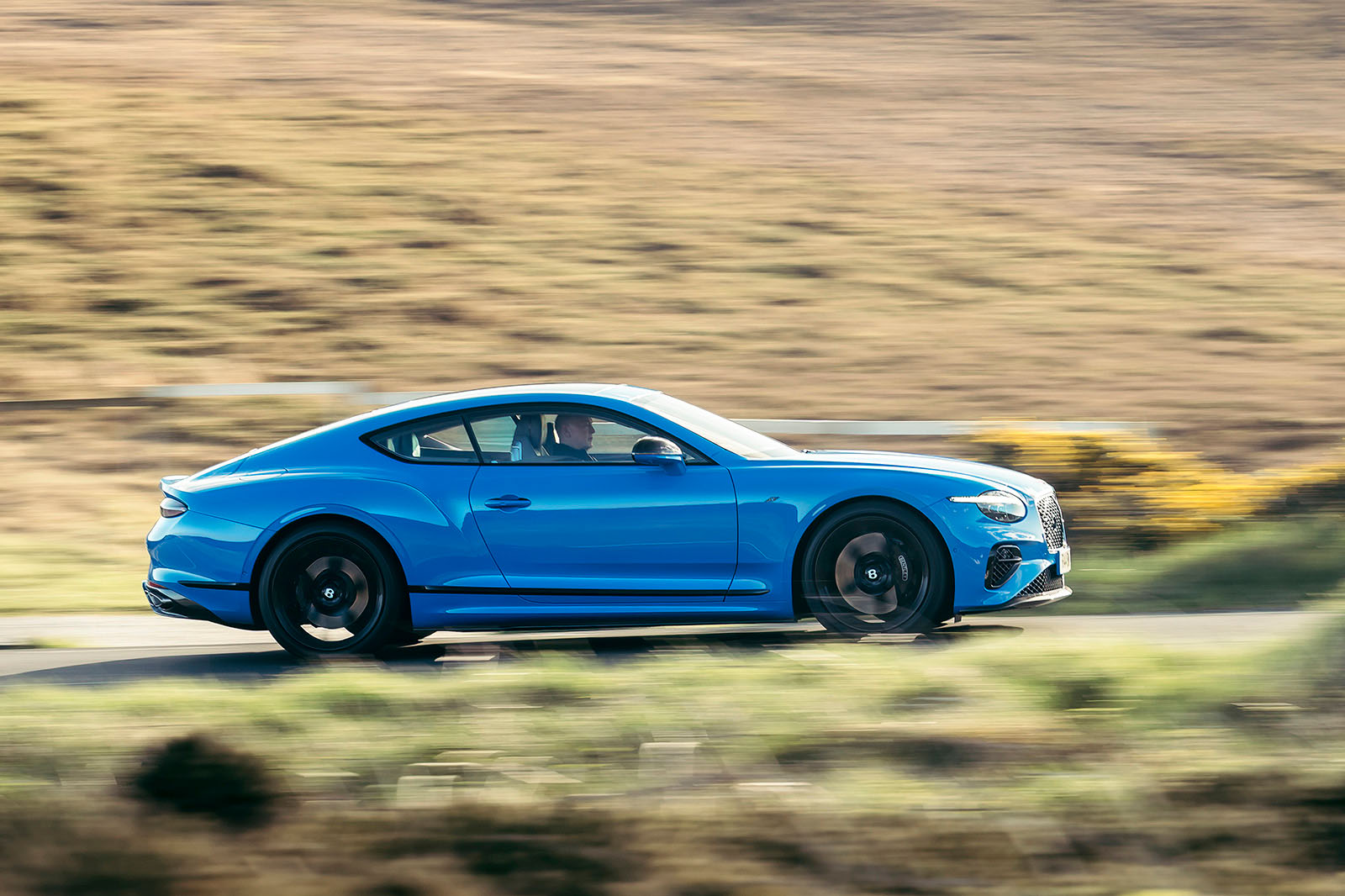
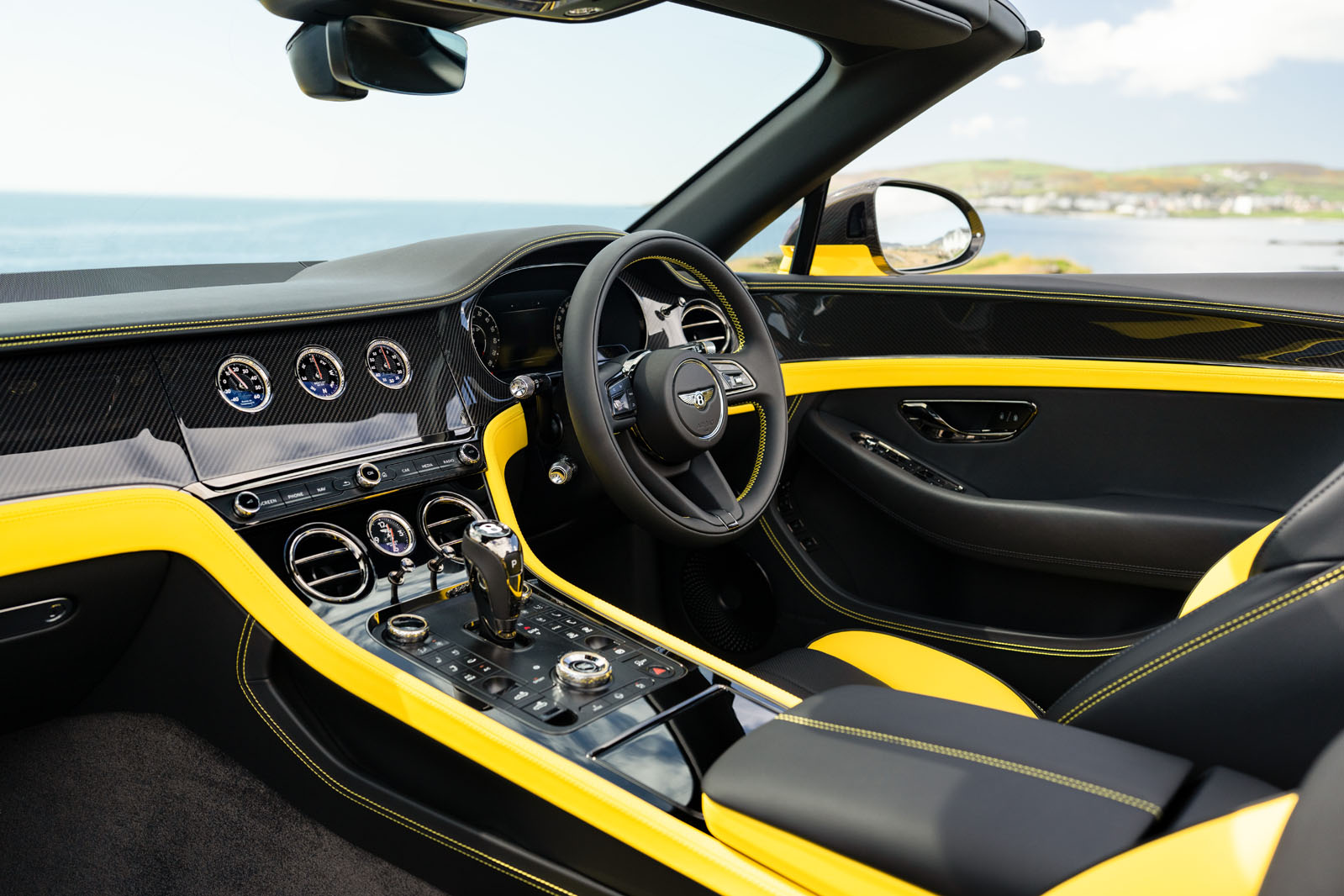
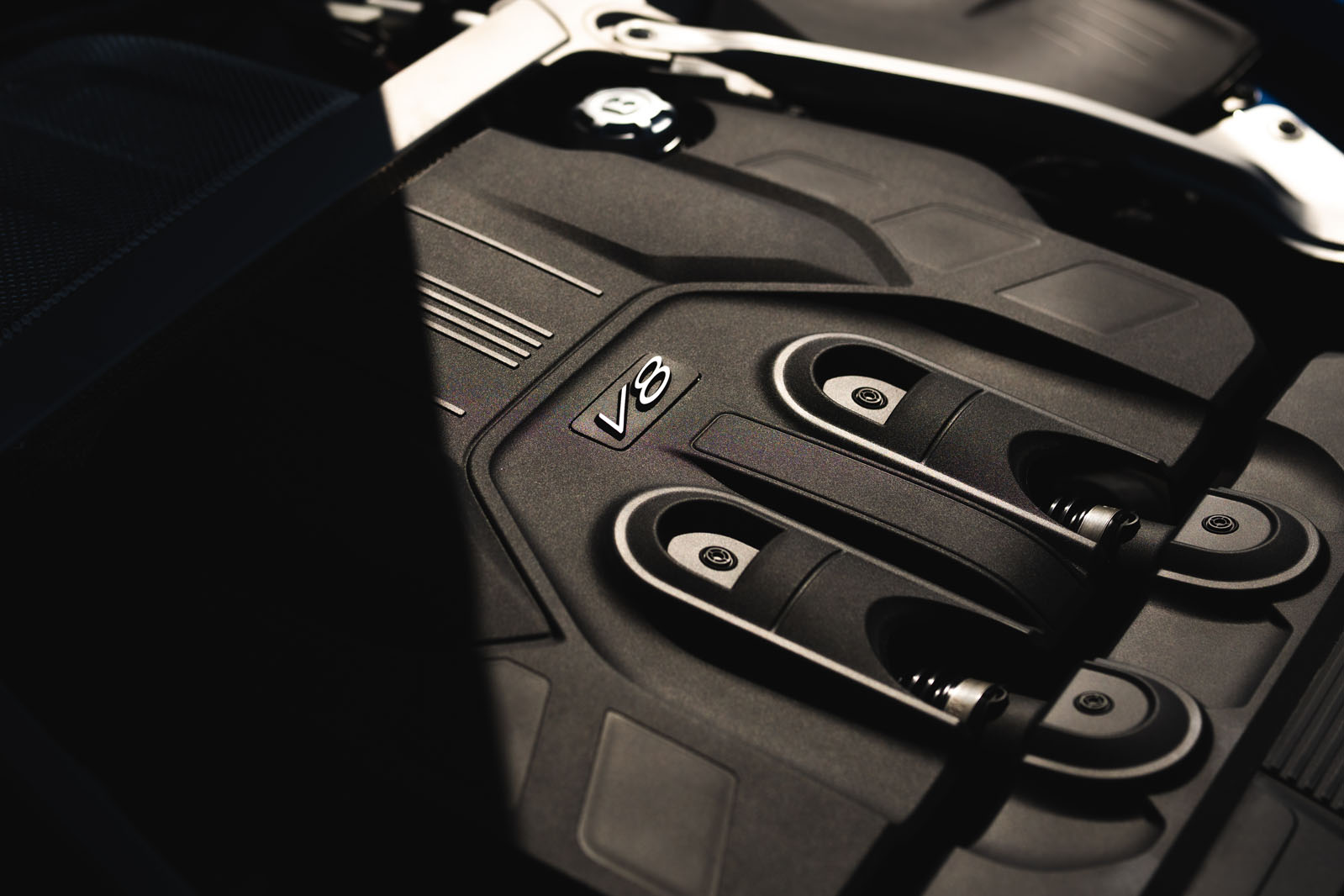
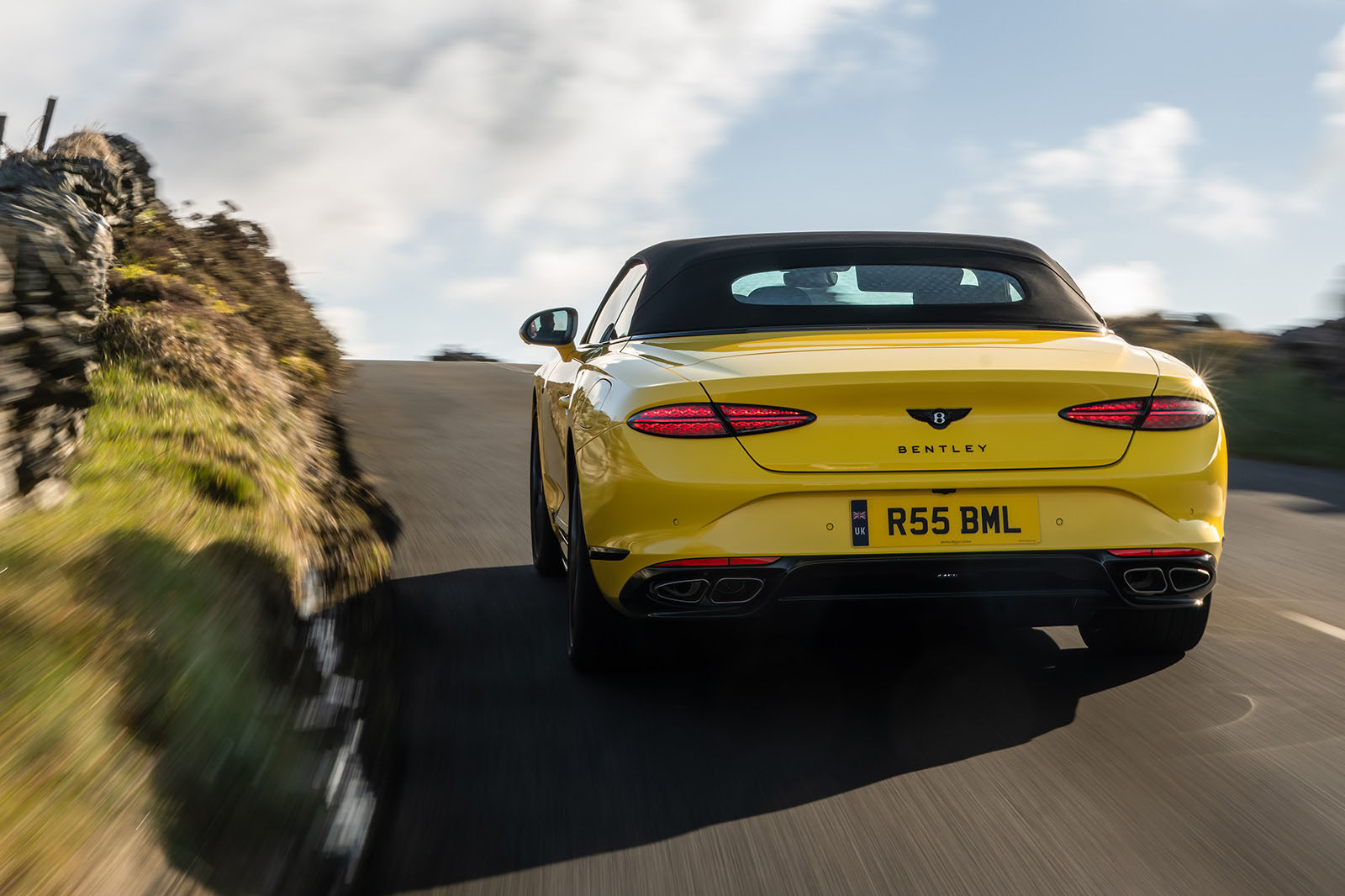
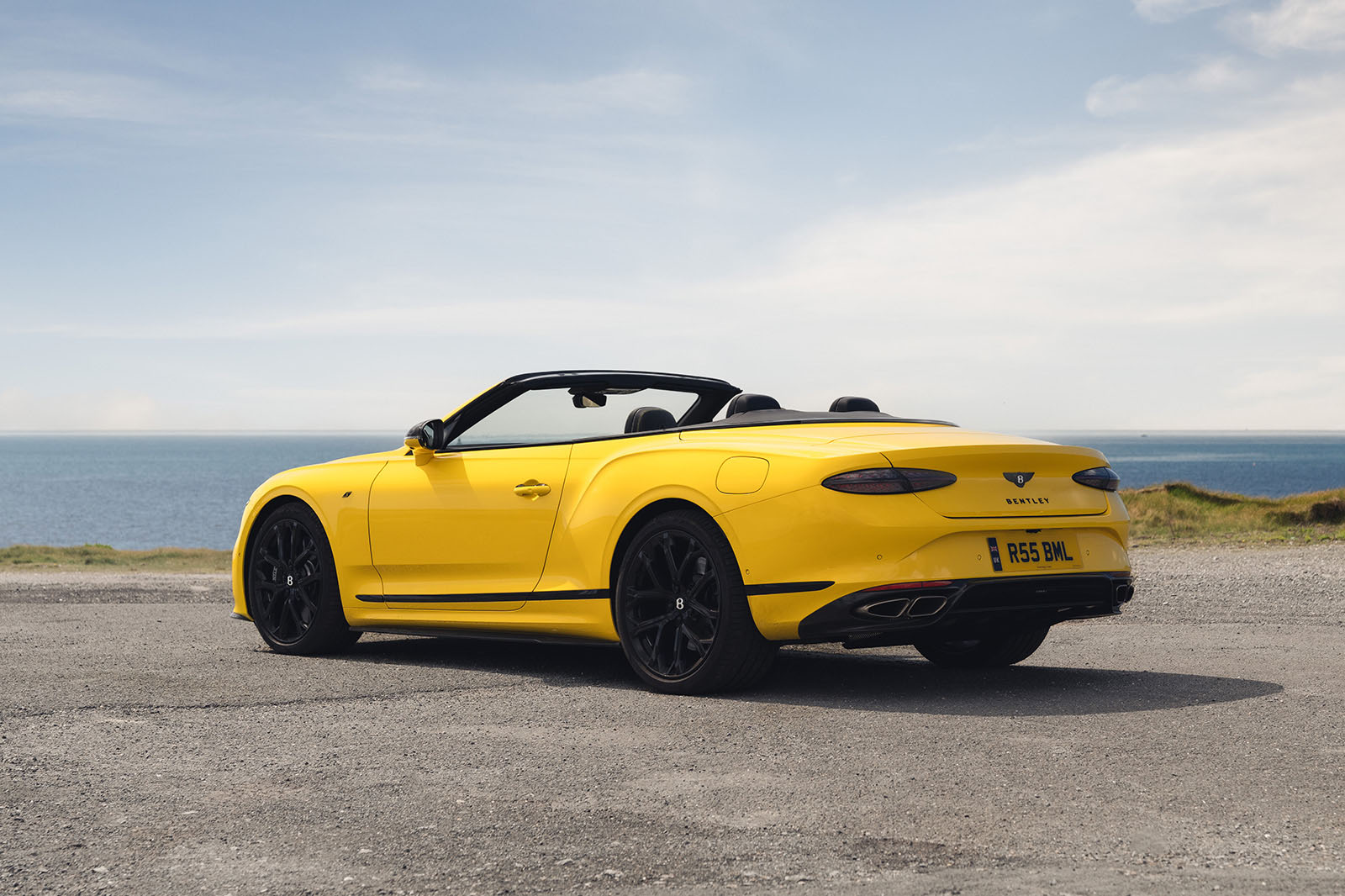
The first product of a newly German-owned Bentley needed to be the best in years and it needed to be authentic to the brand.
Thankfully, it was both. Having acquired Bentley in 1998, the Volkswagen Group set about reinventing the storied but staid British brand as a thoroughly modern and highly profitable luxury marque to rival Rolls-Royce and Maybach.
Bentley now had easy access to up-to-date chassis and powertrain technology and could profit from huge economies of scale.
Traditionalists may have baulked, but that was a big factor in making the Continental GT (2003-2011) the most affordable Bentley in a long time - its £110,000 price made possible by shared architecture with the Audi A8 and VW Phaeton.
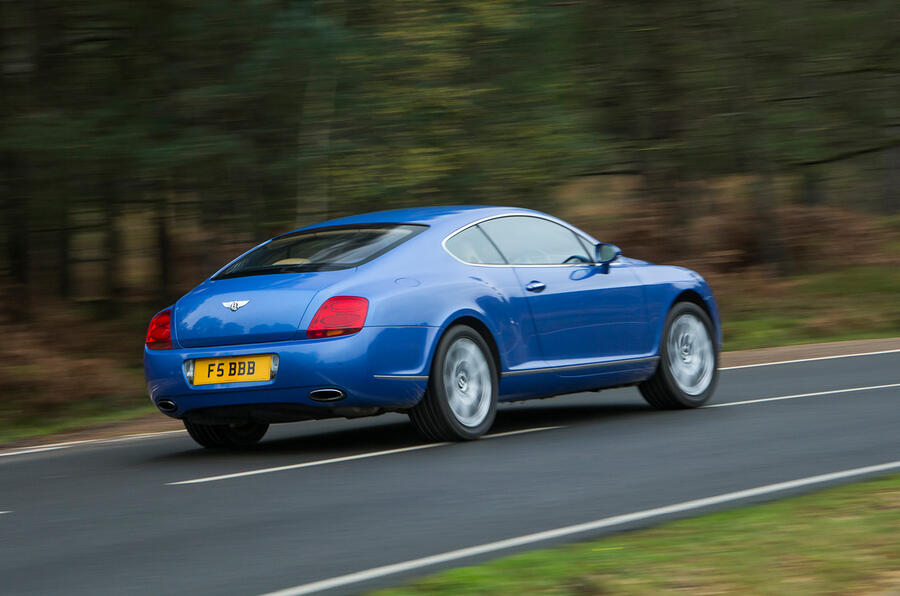
But was it a real Bentley? The figures from our 2003 test suggest so: 13.9mpg (for a real-world range of around 275 miles), a 2385kg kerb weight and a 6.0-litre twin-turbocharged W12 pumping out 552bhp and 479lb ft.
Big, boisterous numbers to back the flying B, and stats that seem especially towering in light of the piffling £9000 you can pay for a Conti these days.
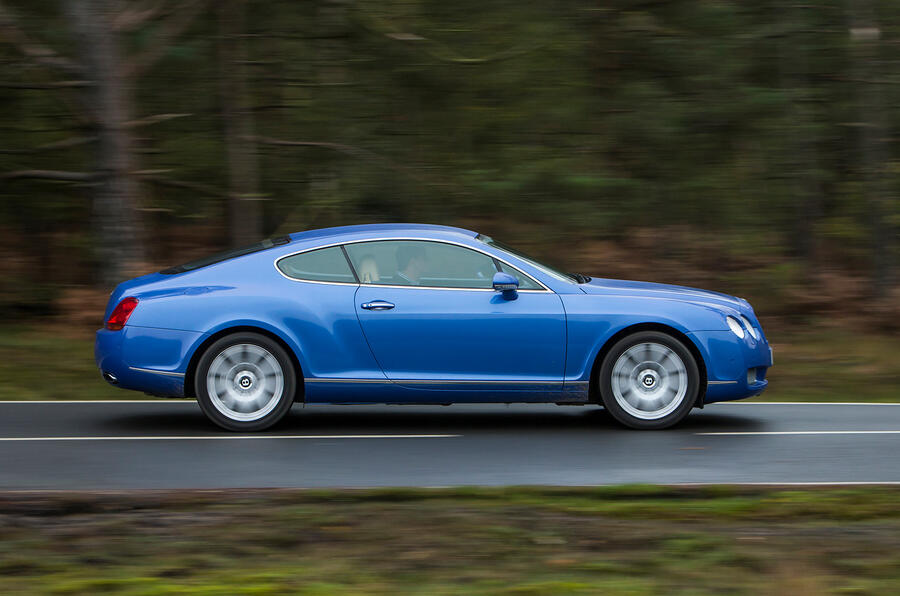
Many thought the exterior brash at launch, but nowadays it appears right-sized and restrained. At 4.8m it's barely longer than an Audi A5, and at under 2.0m wide it fits easily into the average parking spot.
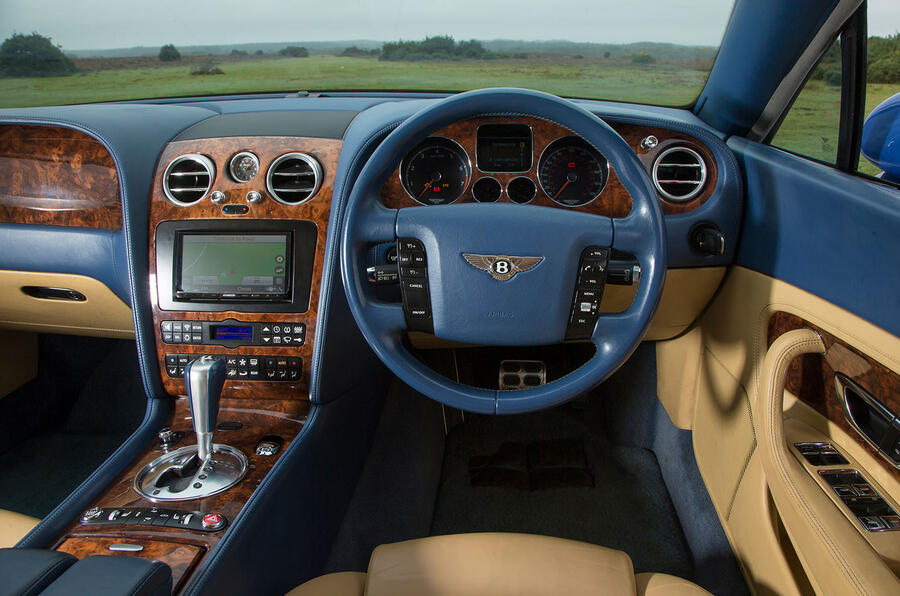
The interior is Bentley-esque, though, and holds up brilliantly today. The leather upholstery (from 10 cows) still looks impressive, although this is not a large cabin, especially for those in the back.
Everything you touch feels appropriately expensive, and if you find one with more metal than wood, it won't feel too out of date, ignoring the ancient infotainment.
Many will have been swapped for a more modern system, though. Just check it's well integrated.
A used Conti holds up well as a daily driver too. It's powerful, the boot is large and the roadholding is excellent thanks to standard four-wheel drive and adjustable air suspension.
It rides well, has surprisingly communicative steering and grips for longer than ought to be possible at this weight, although refinement isn't up to par against alternatives like a Mercedes CL or Range Rover.
Otherwise, even the six-speed ZF automatic doesn't feel antiquated, being sufficiently geared to allow a 196mph top speed.
In 2006, a convertible GTC joined the range and we felt it was the best and most authentic Conti we'd driven to date. Yes, the 2546kg kerb weight is frightful, but it is brilliantly insulated, keeping the cabin calm even at 175mph.
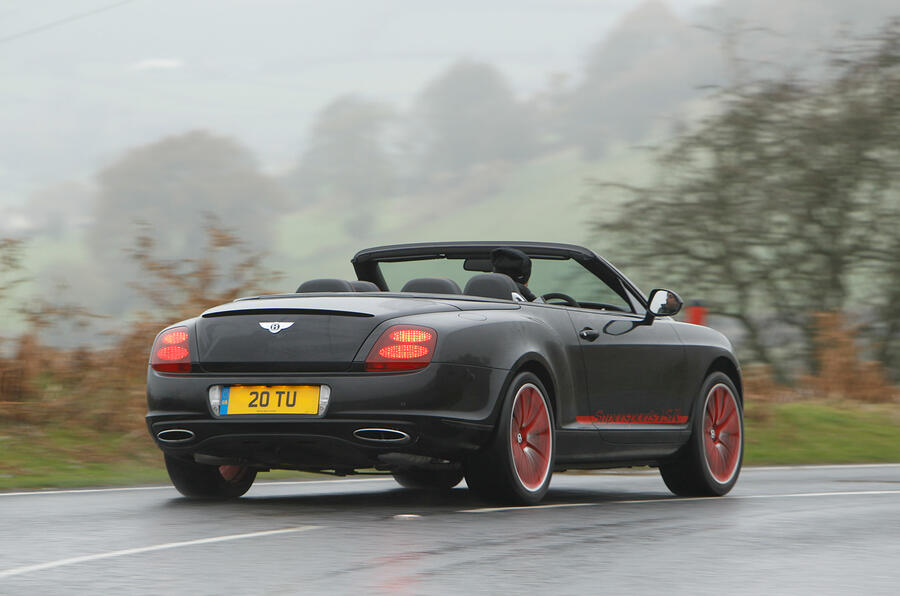
In 2007, Bentley facelifted the range, lightly altering the styling and interior and improving the ride. A new Mulliner Driving Specification option included drilled alloy sport pedals, a knurled chrome gearlever and diamond-quilted leather for the seat facings and doors.
The 600bhp, 553lb ft Speed was also introduced, which combined with suspension changes made the GT properly enjoyable so long as it wasn't pushed too far.
For even more performance, the Supersports arrived in 2009 with 621bhp and 590lb ft and the capability of running on E85 biofuel. It shed 110kg (including the rear seats) and a genuinely exciting Bentley was created.
Don't buy a cheap Conti without being prepared to spend what you paid for it all over again, but you'll still have one of the best bargains on the road, looking and feeling a million dollars.
Water ingress: The most notorious and costly fault involves water ingress in the front left-side footwell, which houses large sections of the wiring loom and ECUs. Any evidence of damp, a musty smell, or flickering electronics could mean a massive, £15,000-plus wiring loom repair.
Air suspension: The multi-mode air suspension is complex and prone to failure, usually due to leaking air struts or a failing compressor. Listen for knocking noises (worn bushes/drop links) and check if any corner of the car sits lower after being parked overnight. Replacements are very costly.
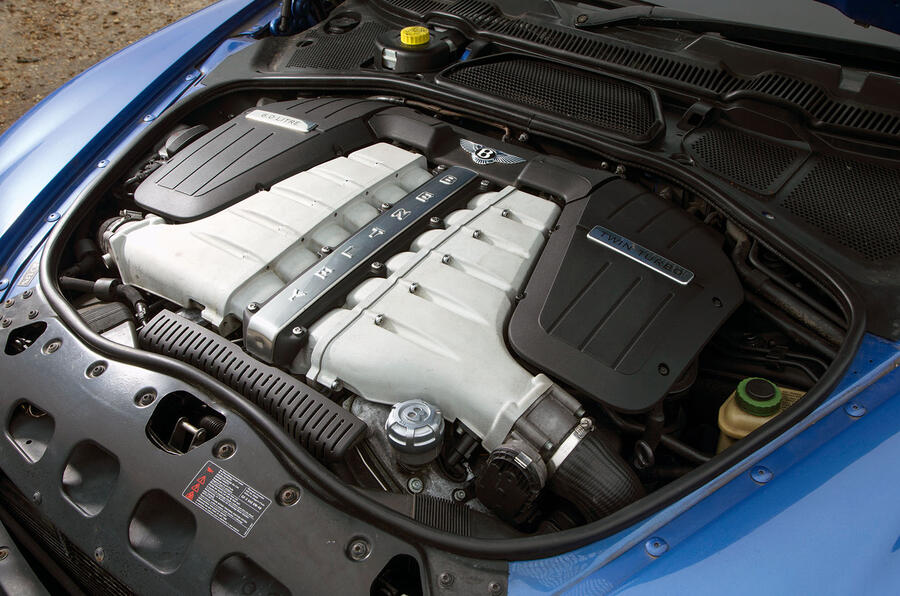
Cooling system: The W12 is densely packed and generates huge heat. Common failures include the water pump, coolant leaks from brittle vacuum hoses and radiator corrosion. Due to the engine's packaging, accessing these parts is hugely labour-intensive, exponentially inflating the repair bill.
Battery: The GT uses two batteries and is notorious for draining them if left standing. Flat batteries can cause electrical systems and modules to throw error codes. Ensure both batteries are healthy and budget for a trickle charger if the car is not a daily driver.
Brake wear: The brake discs are immense 405mm steel units as standard. Budget £1000 for replacements all round, or £10,000 for the carbon-ceramic ones.
Electrics: Check that all complex electronics - the electric seat motors, the infotainment (prone to freezing) and the GTC soft-top mechanism (where applicable) - are fully functional. Replacing a failed convertible roof hydraulic system or motor will result in a five-figure bill.
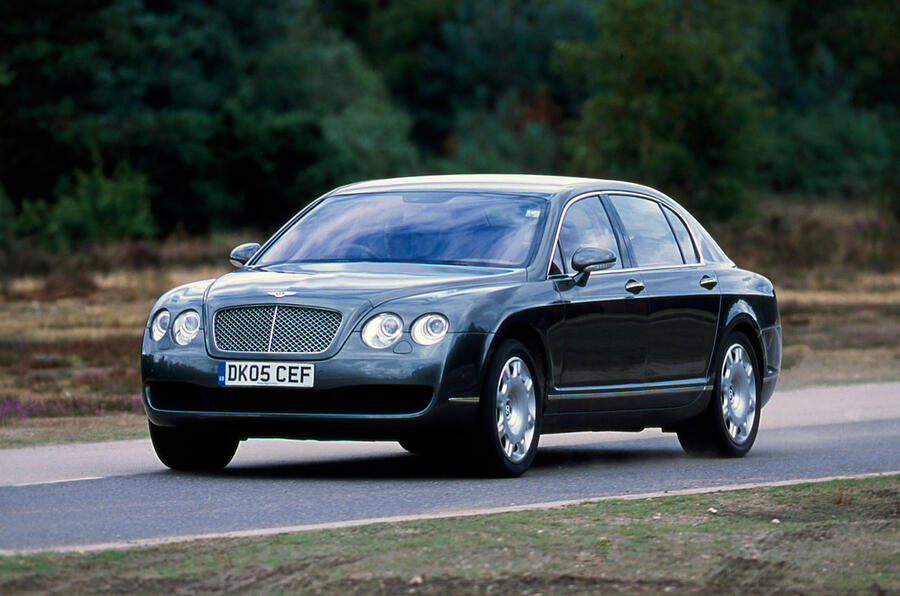
There's a third Continental in the family: the Flying Spur. It's pretty much a GT stretched by 300mm with added doors and a traditional saloon-shaped boot. At the time, we regarded the muted W12 as a perfect fit for a limo and the acres of rear leg room appealed. But because of the slightly gawky styling, they're now the cheapest of the Contis.
Ben Richards: "I've owned my '06 GT for four years and have clocked up 25,000 miles, pushing it to 75,000. I bought it knowing the running costs would be astronomical and they are. My yearly maintenance, even at an independent specialist, is about £4000. But the feeling of the W12 pulling on the motorway is intoxicating. Nothing else feels so solid, so rapid, and so effortlessly luxurious. I'd do it again."
£9000-£14,999 Early, generally high-mileage cars or those with a poor service history. The biggest risk of major failures but also the biggest depreciation already absorbed.
£15,000-£24,999 This could be the sweet spot. Lots of low-mileage and well-cared-for cars, including facelifted ones. Look for desirable options like the Mulliner Driving Specification.
£25,000-£34,999 Late pre-facelifted cars and plenty of Speeds. Spending more than the lower end of this budget could net you the improved second-generation GT instead.
£35,000-£60,000 Mostly very clean Speeds and Supersports, but it's doubtful that these will ever turn into proper collectors cars because of the numbers they were built in.
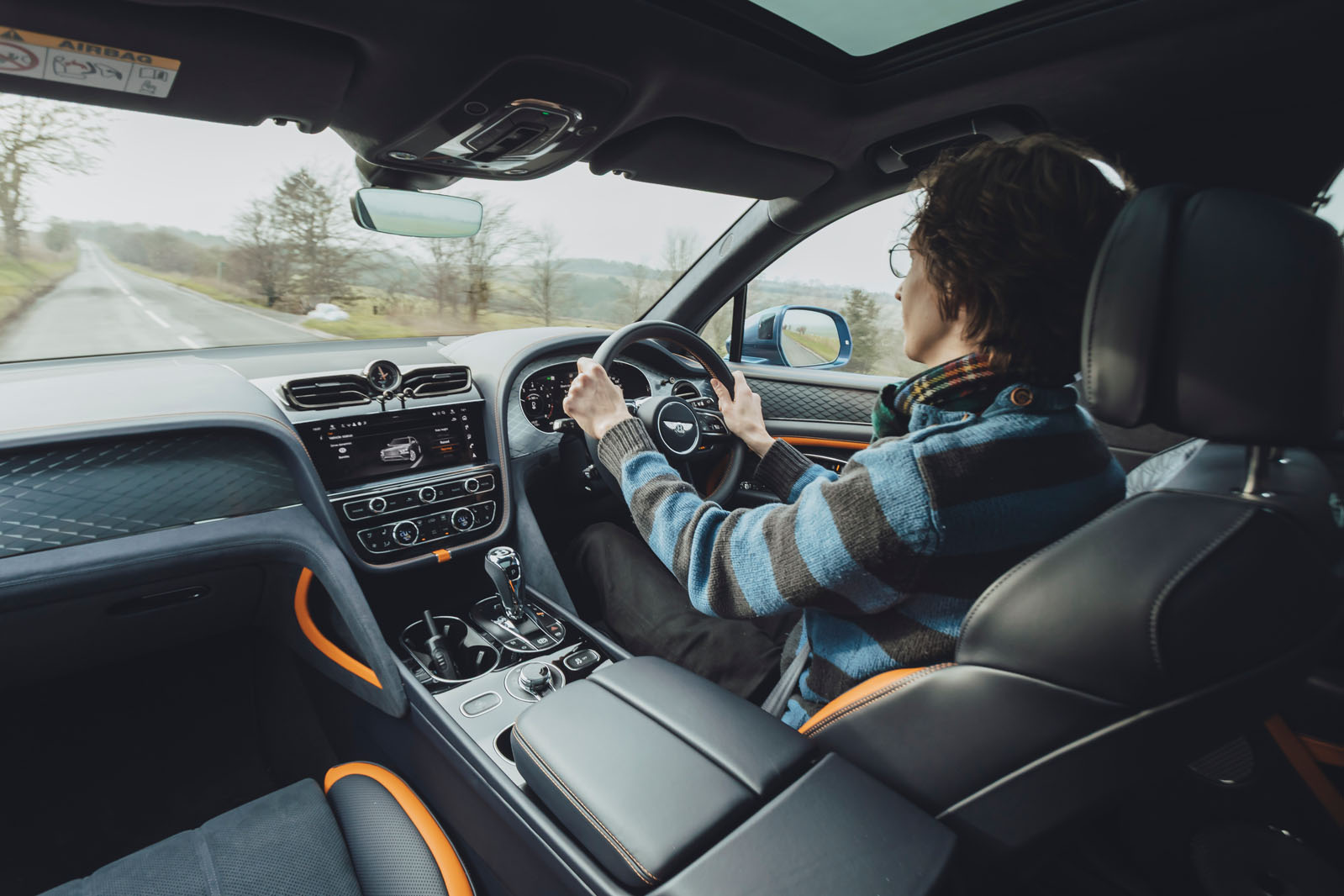
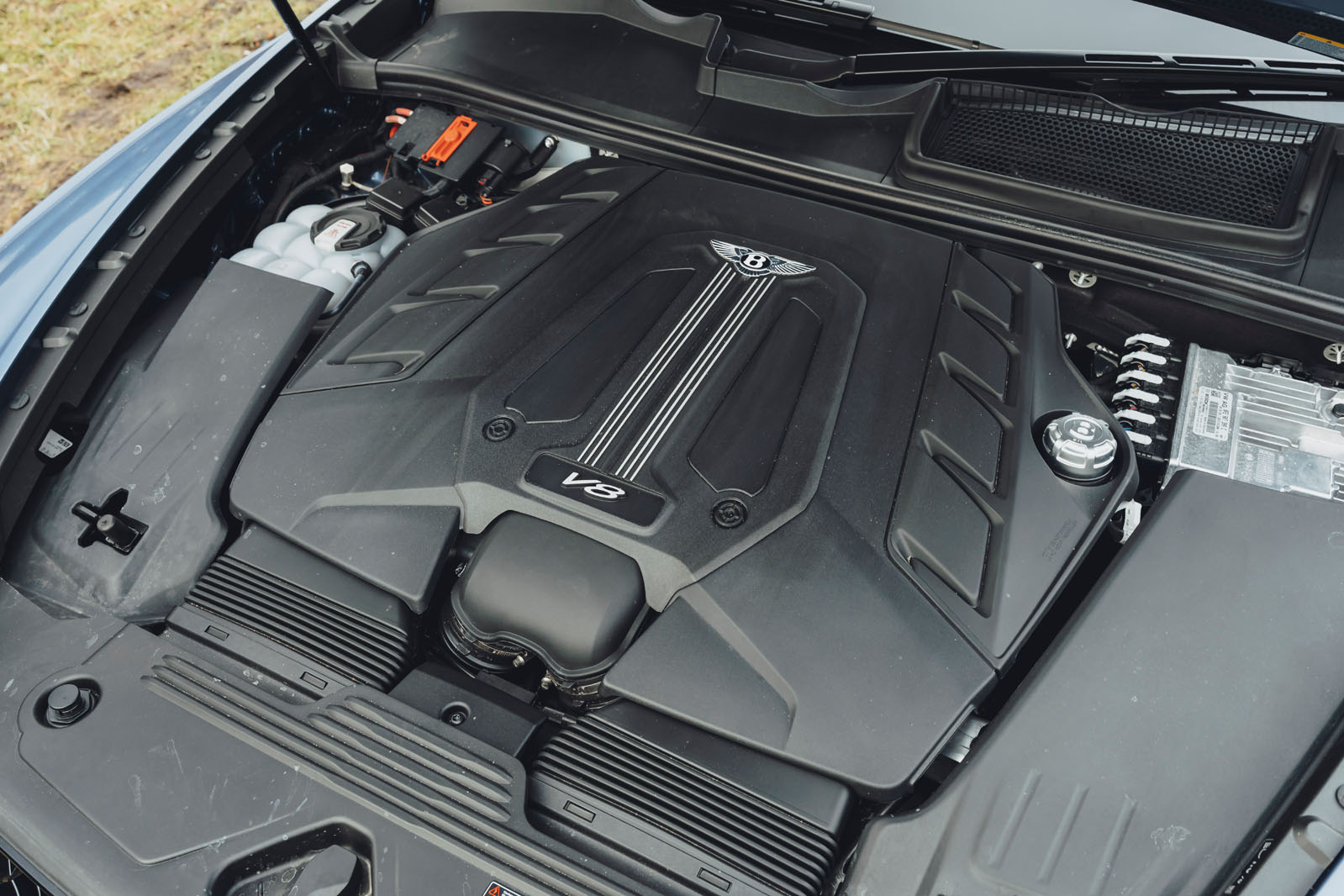
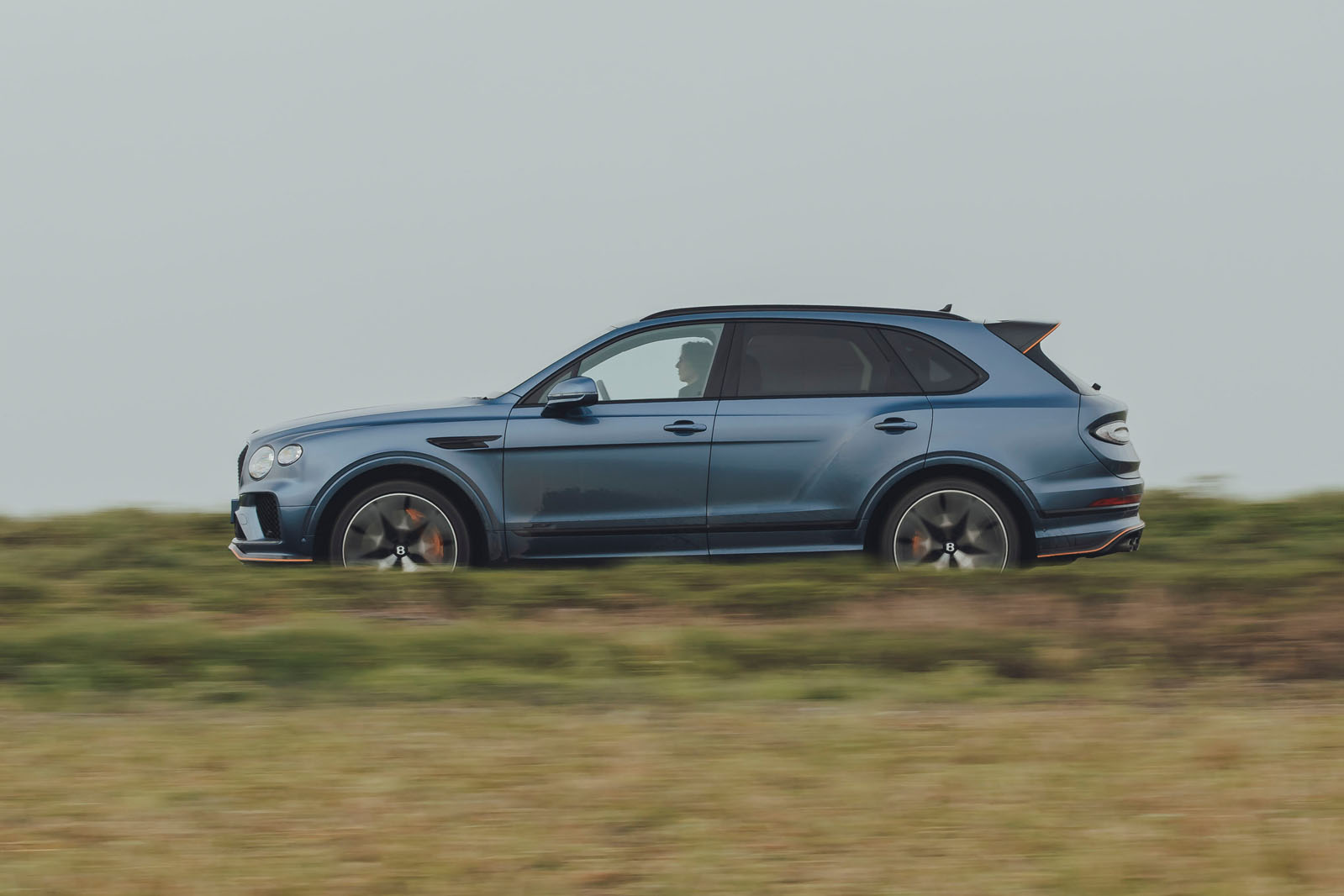
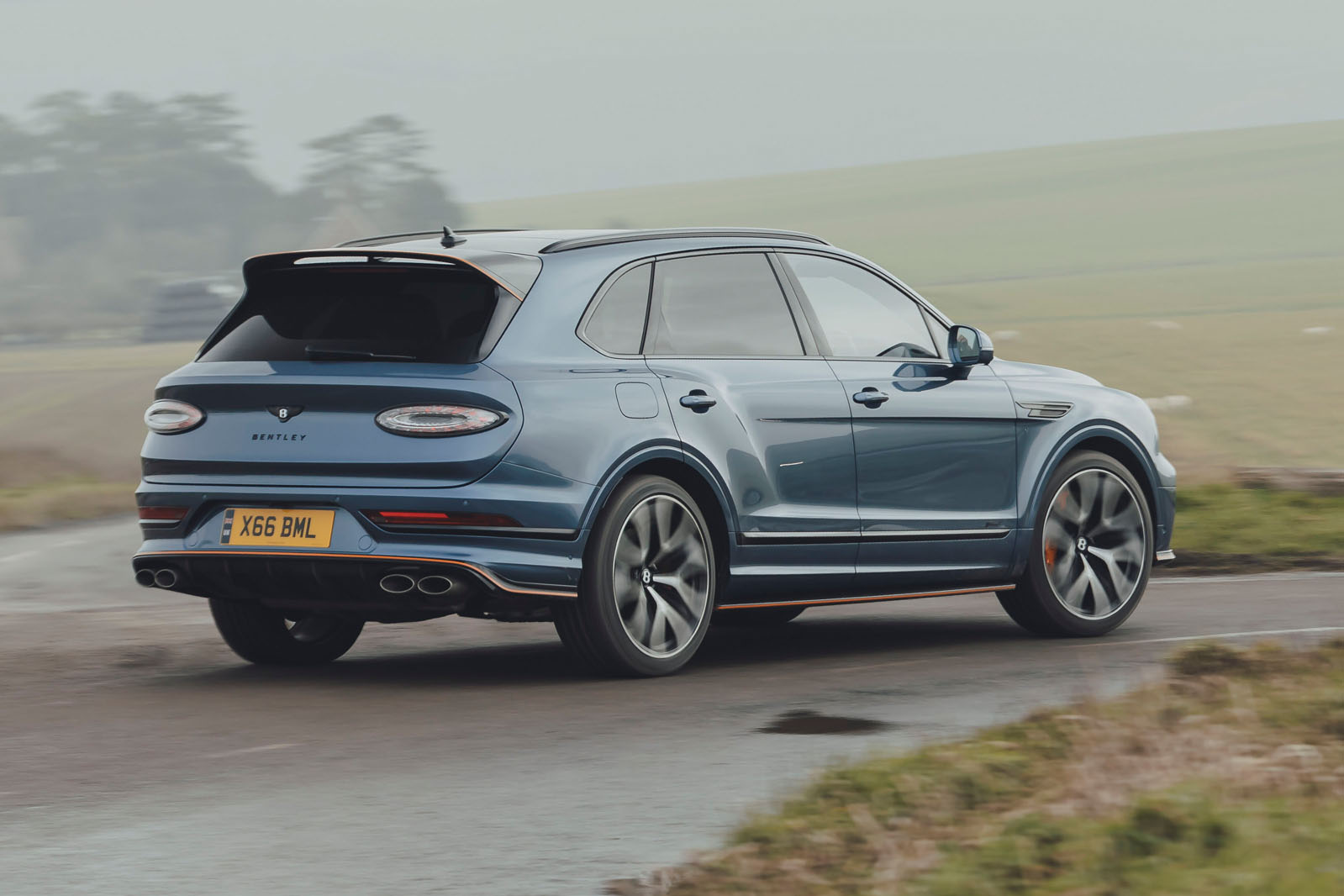
Bentley recently revealed its "most driver-focused" car so far, a 675bhp V8-powered, rear-wheel-drive, carbonfibre-covered coupé known internally as... Mildred.
No, the codename was not inspired by the long-suffering wife in George & Mildred but a swashbuckling hero of road and track – and sky and sea.
She was born as Mildred Petre in 1895 but found fame as Mrs Victor Bruce following her 1926 marriage to the test driver of British sports car maker AC, a son of Baron Aberdare. Having learned to ride motorbikes and drive cars in her privileged childhood, she immediately joined in with her husband's motorsport escapades – a veritable stack of court convictions proving her aptitude for high-speed driving.
With her husband beside her, Bruce entered the Monte Carlo Rally in January 1927, aiming to prove the AC Six tourer's worth by starting all the way up at John O'Groats – and would finish sixth, earning the Coupe des Dames.
As if this wasn't already a mad idea for a honeymoon, she then pressed on into Italy, over the sea to Tunisia, Algeria and Morocco, then back north through Spain, Portugal and France to the banked track at Montlhéry – where she would average 50mph over 1000 miles.
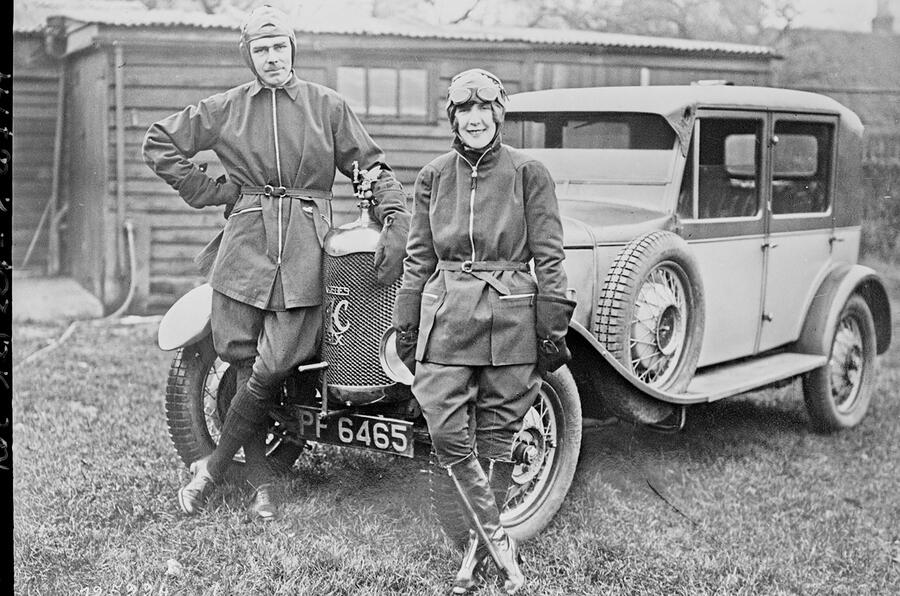
AC ads boasted that this was "a feat of endurance at which many of the so-called 'sterner sex' might hesitate", and Autocar agreed that it was "the greatest drive by a woman" yet. What next? The Arctic Circle, obviously.
Bruce drove the AC up through Sweden until the road ran out and then "by dint of Herculean labour" another three kilometres until it became totally stuck in a swamp by the Arctic shore. "It was impossible to proceed," she wrote, "and we had achieved our objective: to penetrate further north than any car had ever been before."
Little wonder that she promptly became Autocar's regular writer on women's motoring matters. Bruce rounded off her annus mirabilis back at Montlhéry in the second week of December, as she and her husband lapped the AC Six – treated to a few choice bodywork modifications – for 15,000 miles straight, breaking the record by an astonishing 48 hours 26 minutes.
"British pluck and a British car rouse the enthusiasm of the French," ran Autocar's headline, and indeed the Bruces had battled through "rain, heavy fog, cold winds, sleet and slow" – and at one point Victor actually flipped the car, fortunately without serious harm.
Enjoy full access to the complete Autocar archive at the magazineshop.com
"There is a keen rivalry between the two, Mrs Bruce claiming that she ought to be at the wheel as long as her husband, and, it may be mentioned, generally succeeds in getting her own way," we noted. Over 220 hours 32 minutes, they had averaged 68mph. Throughout 1928, Bruce raced at Surrey's Brooklands circuit and rallied in the Coupe des Alpes, both for AC.
Then in 1929 she set yet another record at Montlhéry, this time in a 4.5-litre Bentley (the big beast that won fame at Le Mans), single-handedly covering 2150 miles in 24 hours – an average of 89mph.
"The principal things which I feared might be difficult to overcome were not so much the physical strain as the monotony and sleepiness, but so far as the latter was concerned I suffered only once, and then slightly; and as to the former, well, there was literally no time to become 'fed up' with the continual circling," she reported.
Thereafter Bruce doubled down on her 'woman of steel' pursuits. In summer 1928, she had bought a newfangled motor speedboat from American firm Elco, competing in trophy races held on a London lake, then broke the record for a double Channel crossing, taking 1 hour 47 minutes. Still this wasn't enough: next was a 24-hour record-breaking run, as she covered 694 nautical miles on a circuit in the Solent.
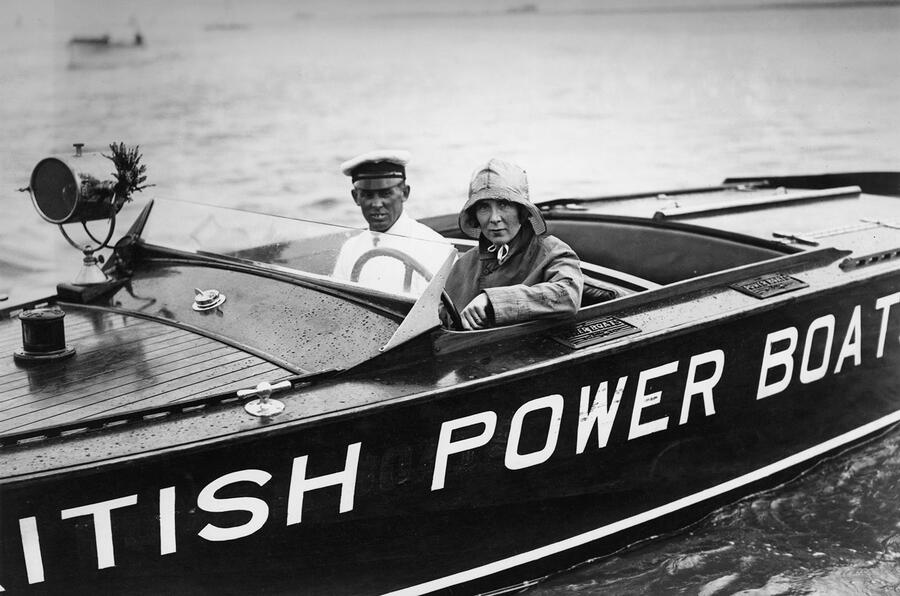
Then in 1930, Bruce earned her flying licence, bought a Blackburn biplane – and promptly set off on a round-the-world flight. Stupefying. She reached Tokyo from London in 25 days, despite a crash landing in Persia and a bout of jungle malaria.
Autocar columnist 'Vagrant' went "hero worshipping" upon Bruce's return, noting reverently: "She was looking very fit and happy, though the Society for the Prevention of Cruelty to Plucky Little Women missed a great chance by not taking action against the culprit who made her wear about half a hundredweight of medals and things which had come her way in outlandish parts of the world. However, she clanked about bravely, smiling at all."
You'll never think of the name Mildred in the same way again.
The information I’m sent before I collect the Bruder EXP-7 (I feel a little strange calling it a caravan, but we’ll come back to that) contains some surprises.
There’s no bedding or kitchenware inside, I’m told, but there is a washer-dryer.
Now, I went caravanning when I was a kid, and I can still remember the noise of the pump when we had to pedal a lever repeatedly to draw water to the tap.
People with water containers that were round barrels so they could be rolled rather than carried across the campsite were positively flash gits. But now I’m going to try a caravan with a washing machine? Swoon.
I’m sure things have moved on a bit in the conventional caravan world, but even by today’s standards the Bruder EXP-7 is a bit special.
It’s from an Australian company founded by two brothers – hence the Bruder logo with kangaroos as umlauts – who grew up camping and being driven around the outback, and who kind of haven’t stopped.
They would go to places that would quickly leave a conventional caravan looking like it had been used in one of those novelty banger races, so what they make, it says here, are described as “luxury off-road expedition trailers”. Sometimes companies over-egg a description, but maybe not this lot, I think, as I have a nose around the EXP-7 outside Bentley’s Crewe factory.
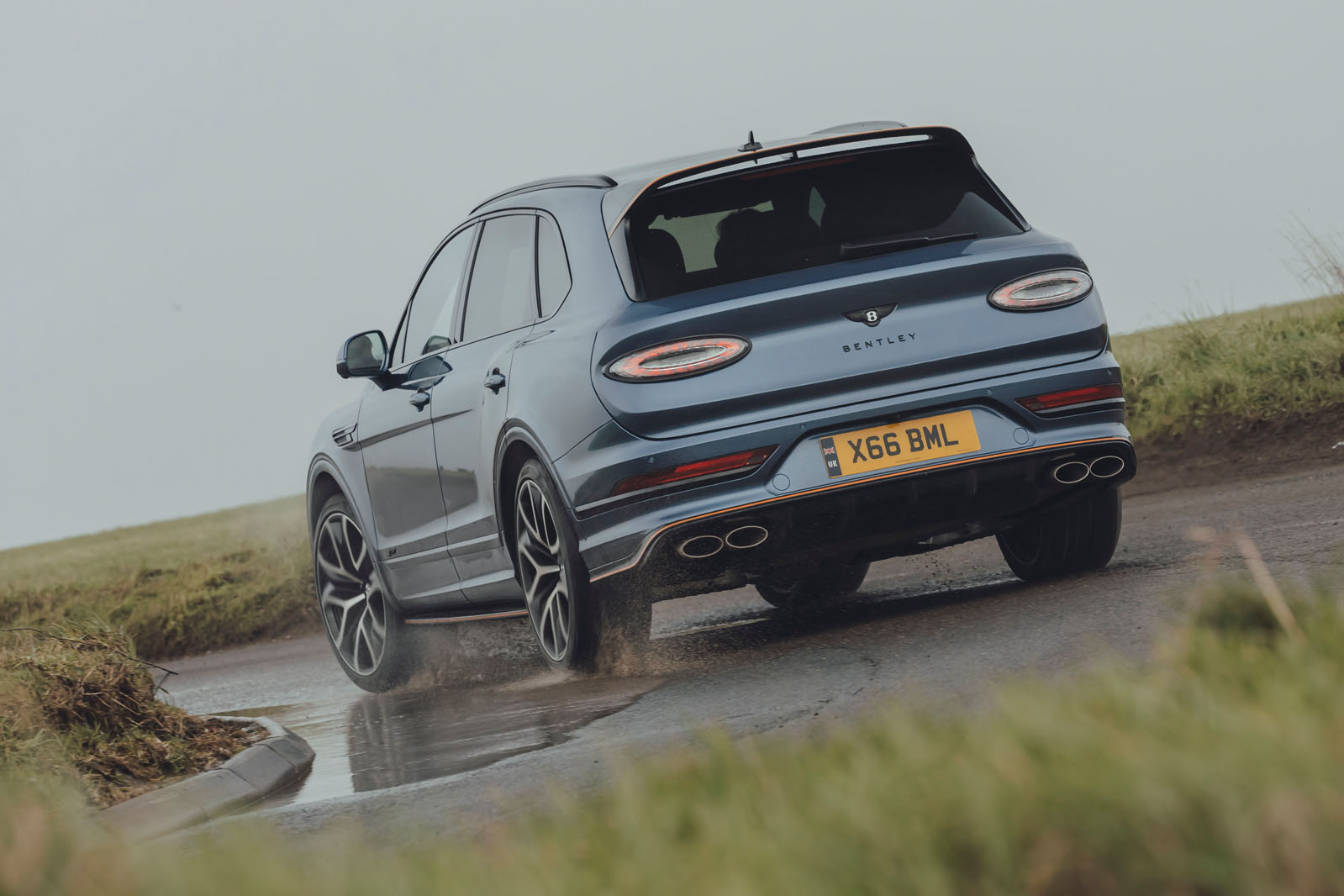
There’s no official tie-in with Bentley, by the way. The people there just thought the Bruder was quite the thing, and I think they’re keen to remind people that the Bentayga is a properly accomplished tow car and off-roader.
There is a perception sometimes that luxury is about five-star hotels and restaurants you can’t get into. I’m not sure that’s the only case: luxury, for me, is naffing off from all of that, being in a wide open space, on your own terms, in your own time, where the office can’t find you and you can’t get social media fomo because there’s no phone reception.
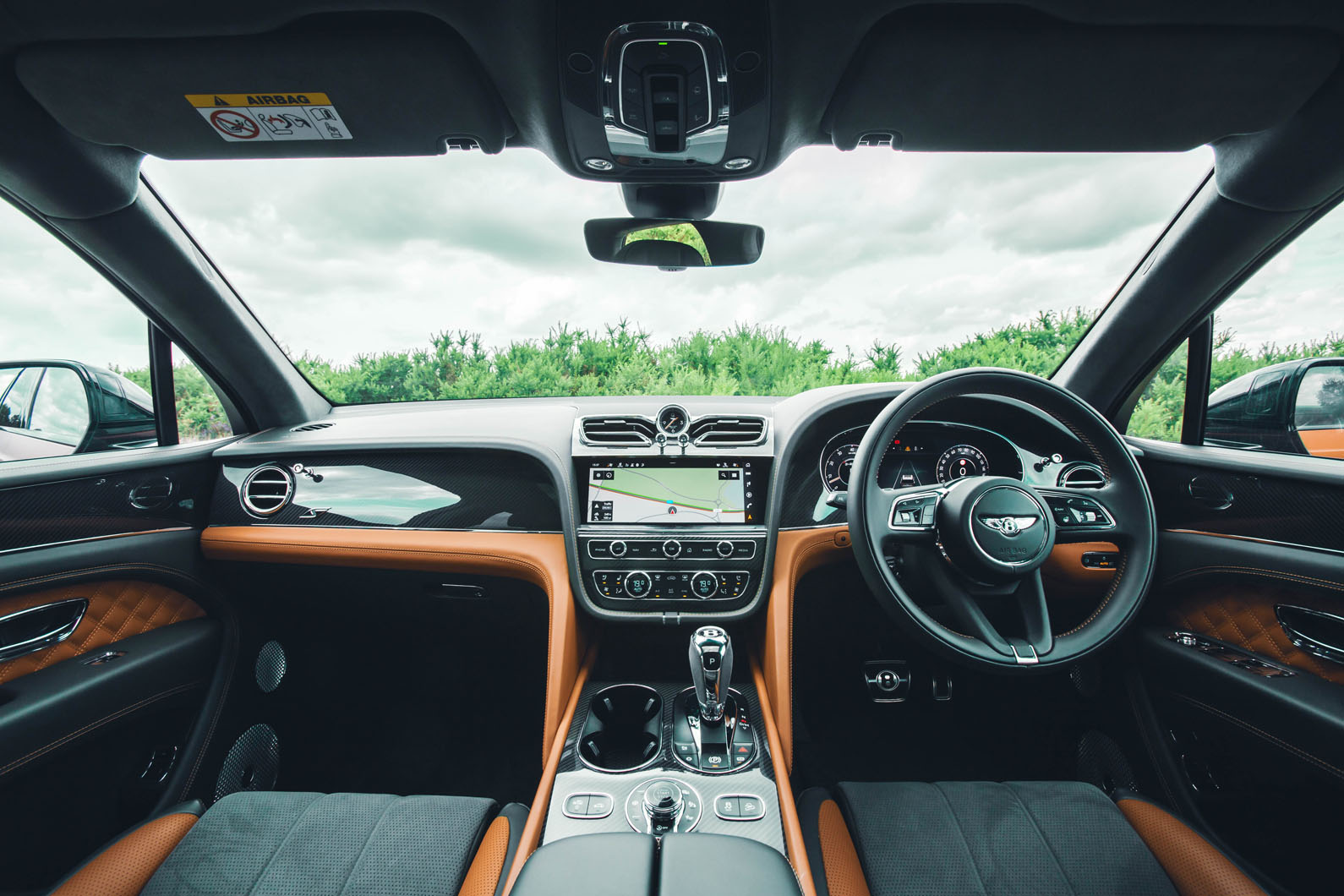
There’s a reason some Bentleys have a rotating dashboard that can hide away the infotainment. It’s unusual these days to find that nobody knows where you are.
It is not only unusual but also quite difficult in and around Cheshire, I grant you, but we’ll do what we can; Bruder models usually go a bit farther than this.
There are five trailers in the basic line-up, but then you can get creative and ask them to do bespoke luxury designs or, if you’re a commercial user, something more utilitarian.
They’re all expensive: the cheapest is around £75k, but depending on exchange rates this one is about £190,000 after taxes. But the military, mobile laboratory operators and royal families are all Bruder customers, and all for very different reasons.
Then there are chumps like us, out for some giggles and very quickly realising that I’m not likely to exhaust the capability of the EXP-7.
You just have to take a look underneath it: instead of a lightweight aluminium chassis so it can be towed by a Ford Focus, there is huge, beefy, sealed box-section tubing generously welded and clearly visible under the wheel arches, where individual trailing arms suspend each of the four wheels, which have 12in of travel and use a double-damped and air-sprung configuration that can withstand five times the weight of the trailer.
There’s a composite body on top, 5.76m long, and the whole caboodle from nose to stern is 7.0m. It weighs 2700kg, so a couple of hundred more kilos than the Bentayga – if you were going exploring, convention dictates you’d load more into the car than the van.
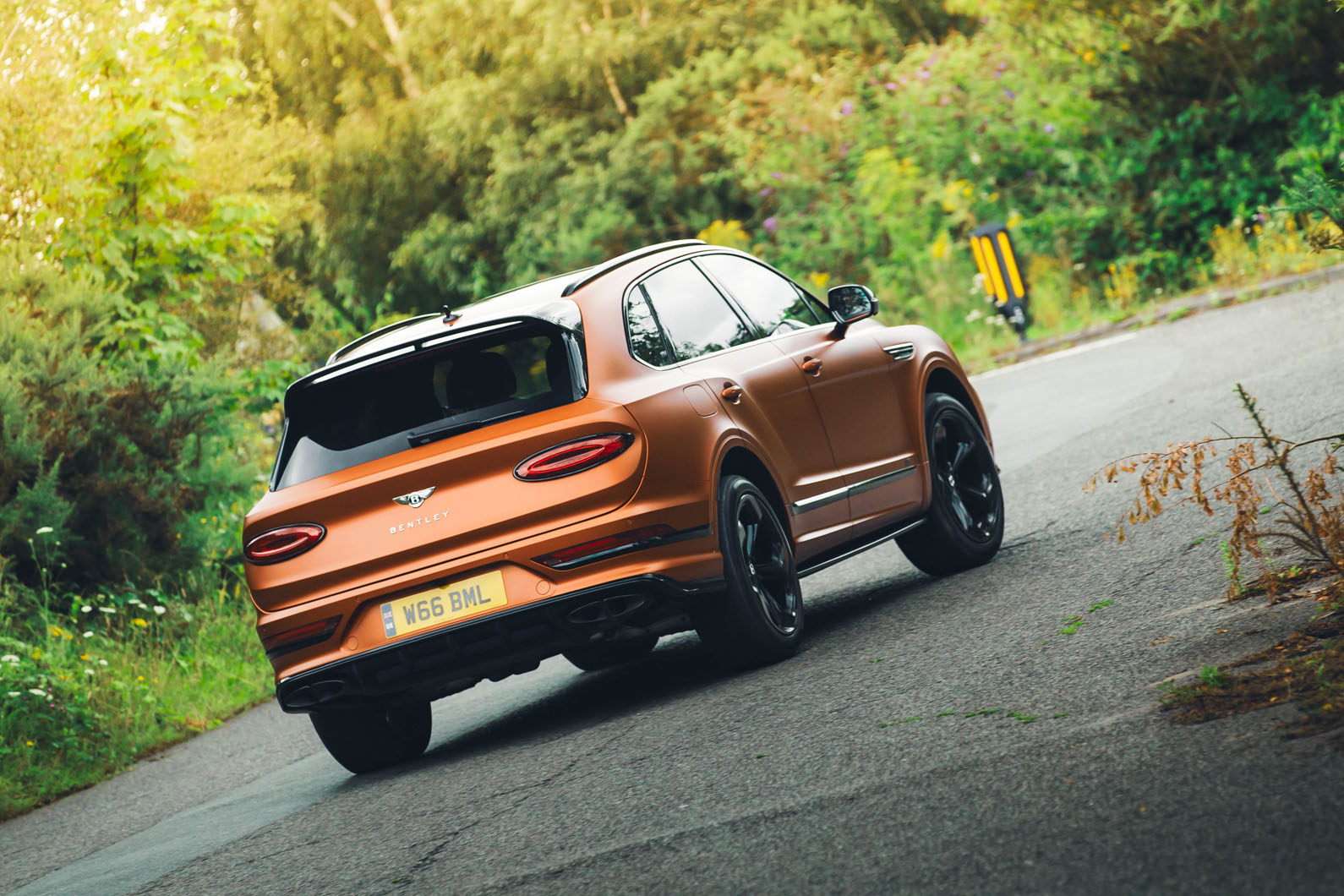
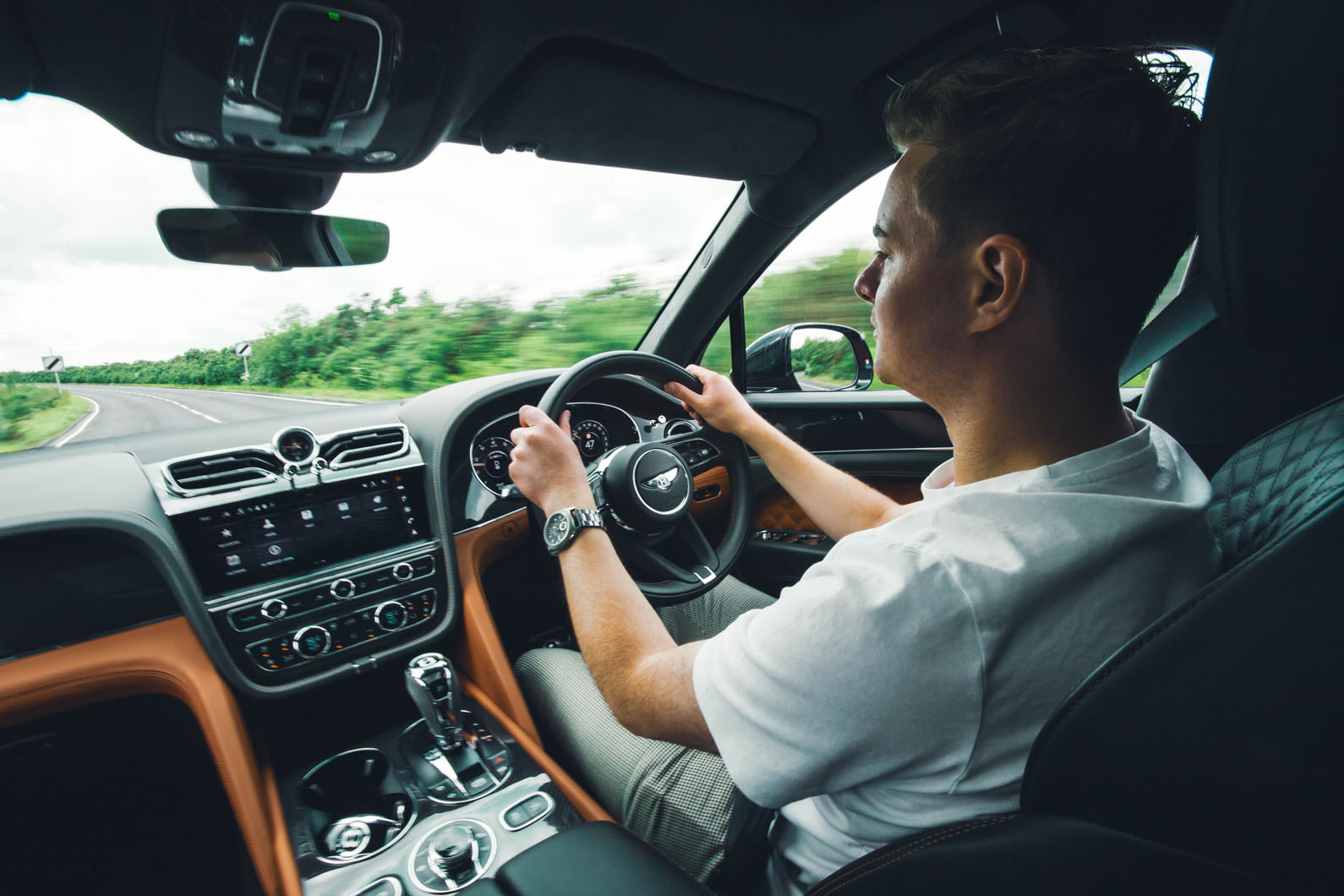
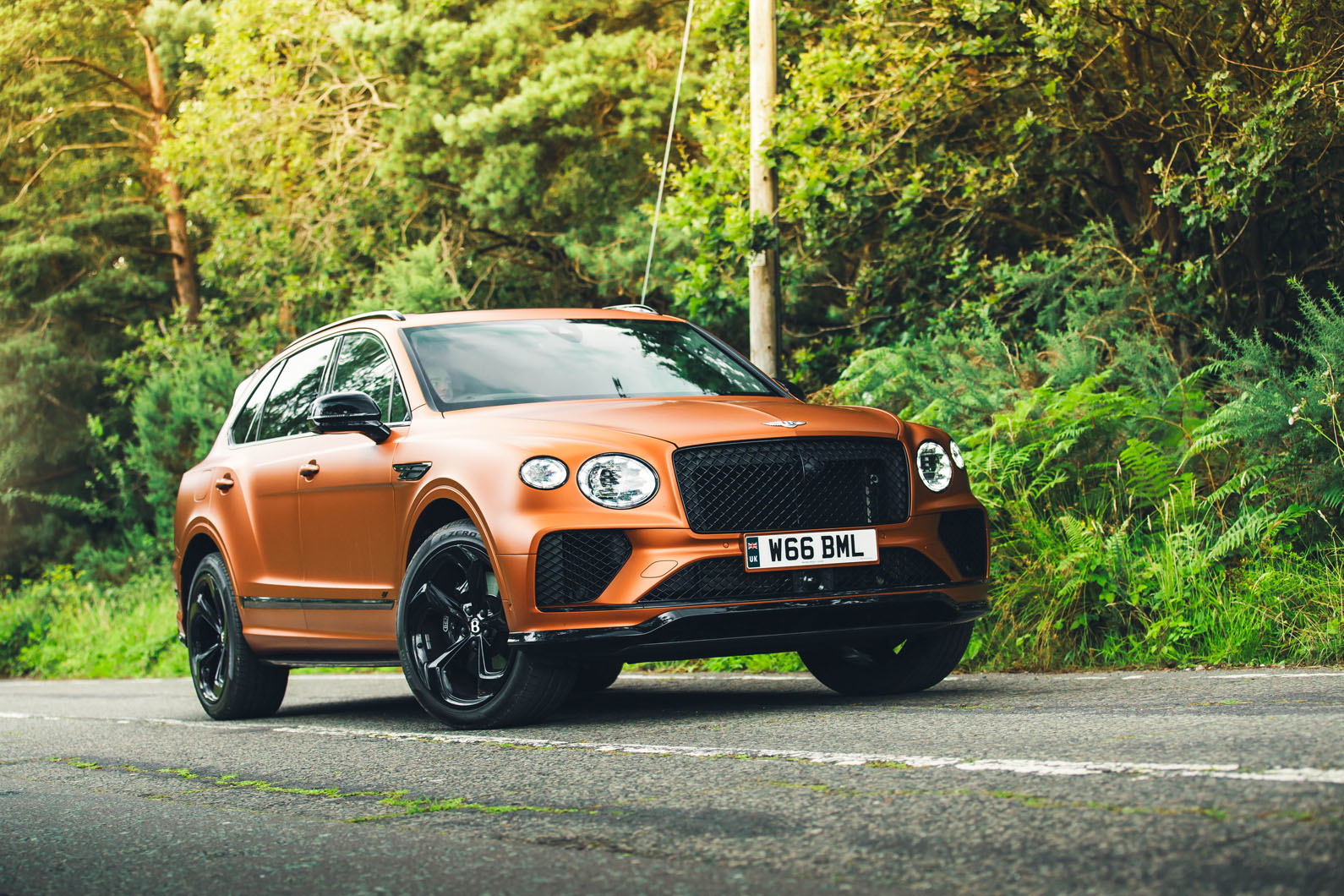
I’m not sure a duvet and a packet of risotto rice is going to make a huge difference, but I load it in the Bentley along with photographer Max Edleston in the passenger seat. And off we go exploring.
I’m glad I’ve got the shopping in already, because I’m not sure I fancy my chances of finding space outside Waitrose in Nantwich. Together this set-up is comfortably over 12m long, and while sometimes in a car I’ll say “oh, you wouldn’t know the trailer was there”, that is not a position I find myself in with the Bruder.
I’ve never towed anything quite this blocky before. I’ve pulled horse trailers, but they’ve been shorter, I think, and car trailers, but they’ve been lighter and lower. The EXP-7’s bulk never quite leaves you.
That it’s finished in what appears to be skateboard grip tape, absorbing light as it goes, doesn’t help. It’s intimidating, like being chased by one of the four horsemen, this big black indeterminate void occupying every mirror. It would look like we were off to launch missiles at a neighbouring state, were it not for the satin-orange Bentley doing the towing.
It’s not that it’s too unwieldy; at 1.9m wide it’s no wider than the Bentley, which itself has a good turning circle. But you might note that on the roof it has solar panels, and they charge 10kWh worth of lithium ion batteries, and there’s an on-board compressor for the air springing, and I suspect it’s those as much as the chassis (and washing machine) that contribute to the weight.
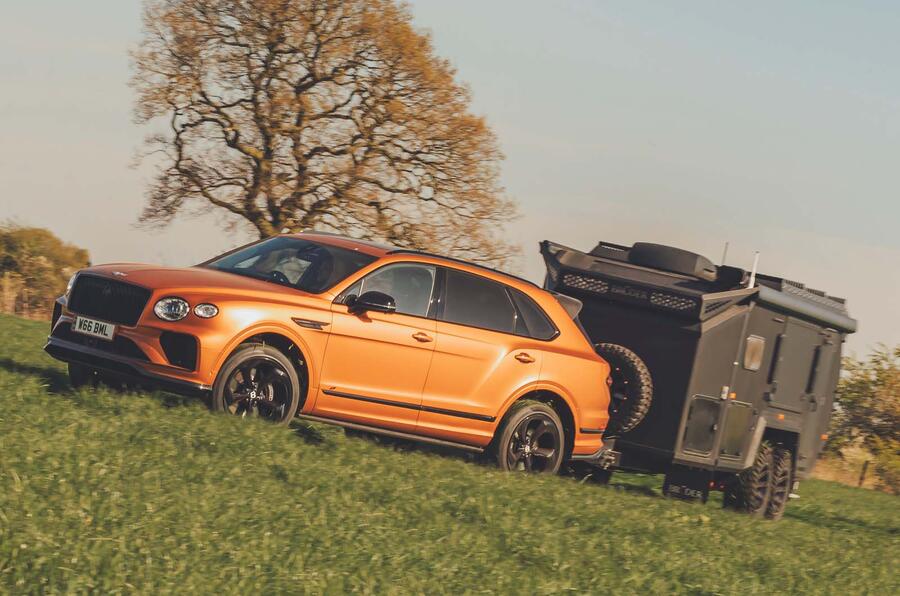
The whole caboodle is stable, but even with the Bentley’s tyres pumped up a bit and the dampers in their firm mode, on really bumpy roads the trailer reminds you its there by gently shaking hands with the towbar.
By and by we get to some fields chosen for the occasion. Some up and some down, but none challenging the capability of the Bruder. The Bentayga runs out of traction before the trailer runs into trouble, because it’s running on Pirelli P Zero tyres rather than chunkier off-road rubber. But you wouldn’t be as daft as us if you were doing this for real.
But there’s fundamentally no reason why you wouldn’t use a Bentayga for this kind of thing. It has got the right towing capacity, can raise its suspension, has good visibility and has oomph to spare.
And one of the reasons you choose a caravan or trailer over a motorhome is that you can set up camp and then head off in the car – and it’s nicer to head out in a Bentley than most other things, isn’t it?
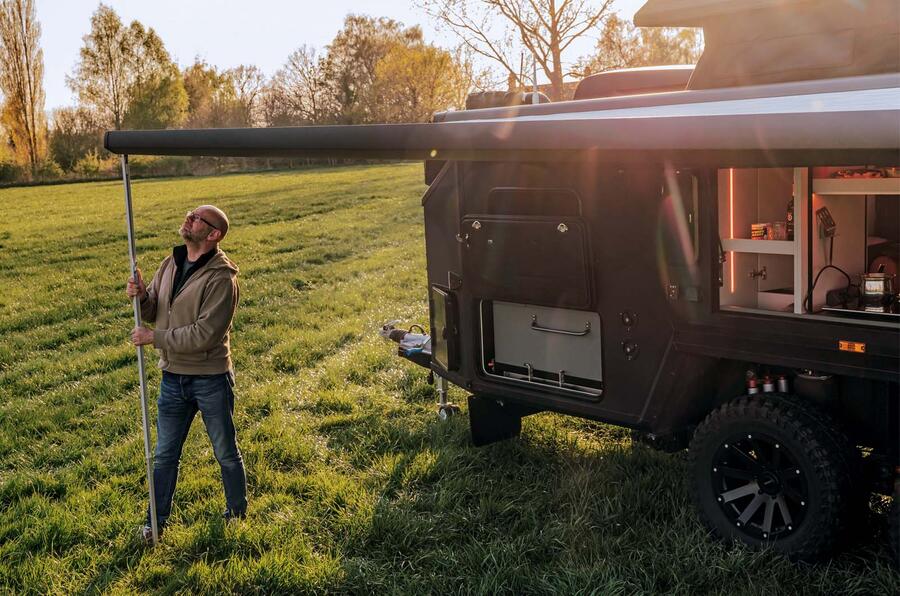
We set up camp on a flattish bit of field, but the EXP-7’s air suspension automatically levels out the van anyway. It’s got an electric awning both sides and is described as having an ‘indoor/outdoor’ kitchen.
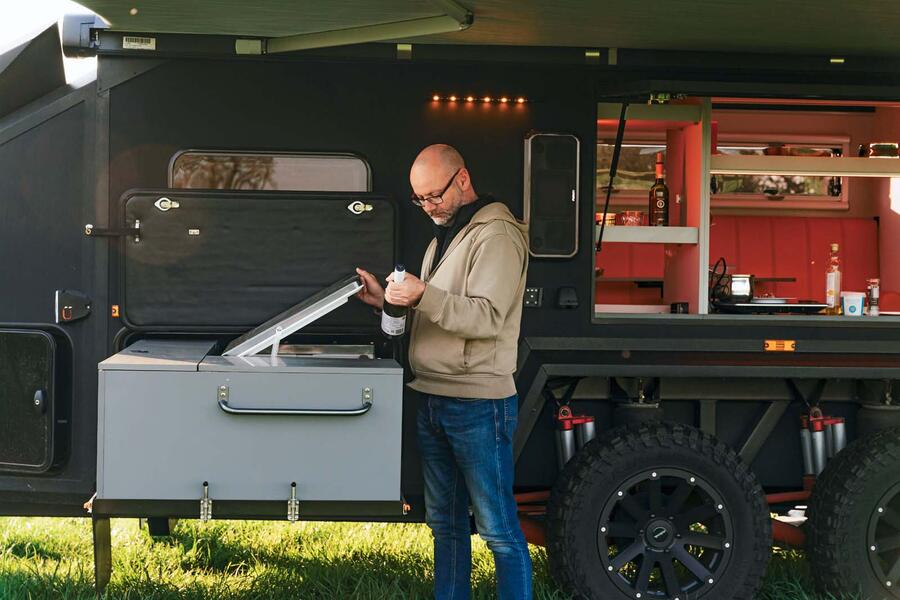
There’s a fridge-freezer inside and another one that pulls open like a mortuary drawer outside. Then you flip up a panel and decide which side of it you want to work: outside for the barbecue experience or inside if you want burger van vibes. I go for the latter and plug in the induction hob.
The solar panels are so good and the battery is so big that you could cook for a party and wouldn’t flatten the battery overnight. At 10kWh capacity, I wonder how far the EXP-7 could drive itself off road if you connected a motor to a wheel.
The trailer can also hold 280 litres of water, there’s a shower, a loo, a door directly into the wet room, two sinks and a diesel heater. And did I mention the washing machine?
The EXP-7 gets two choices of roof: one with an electric pop-top like ours, which makes for a lower roofline, or a hard top, which is better insulated but will always be tall. I think it depends how many low bridges or trees you want to go under.
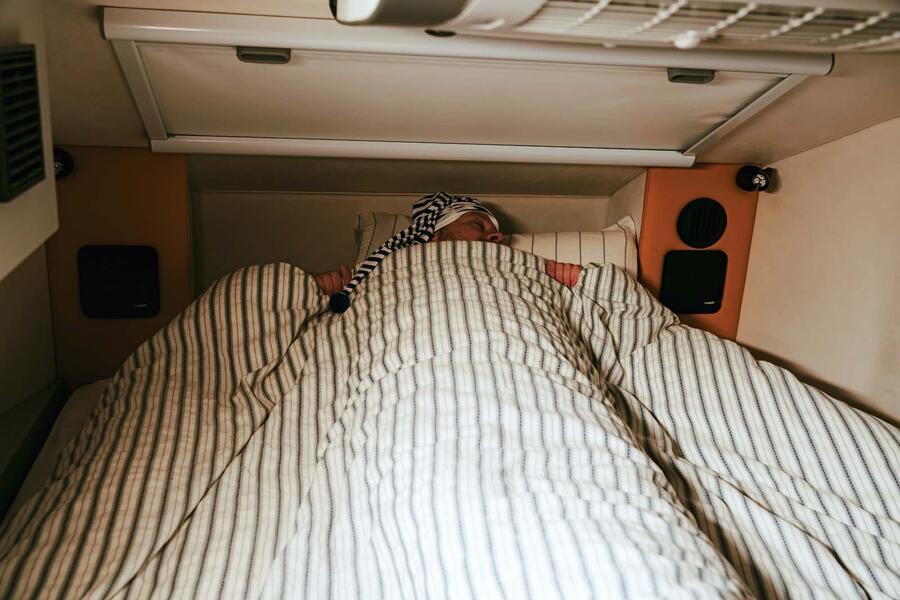
In the British spring I might recommend the hard top. After an evening of good food and terrible jokes I climb into the double bed (the sofa also converts to bunks) with the heater on; at 2am I wake to the faint smell of diesel in either my nostrils or my imagination, so I turn it off, then I wake again at 6am glad I wore a nightcap as a novelty photo prop.
In truth, the EXP-7 feels a little over-engineered for the UK. I love the idea of overlanding, or 4x4 touring, but you’ll never be more than 5.6 miles from a road in Britain and no more than 70 miles from the sea, and you’ll keep tripping over towns all the time.
But there are wilds within a day or two’s drive, where this third-of-a-million-quid convoy wouldn’t look quite so conspicuous. Or, if it did, there’d be nobody to see it.
And I get the appeal: to feel on the edge of civilisation; to sit, relax, eat, sleep and do the laundry, in splendid isolation.
Submitted by dev_editor on
Submitted by dev_editor on
Submitted by dev_editor on