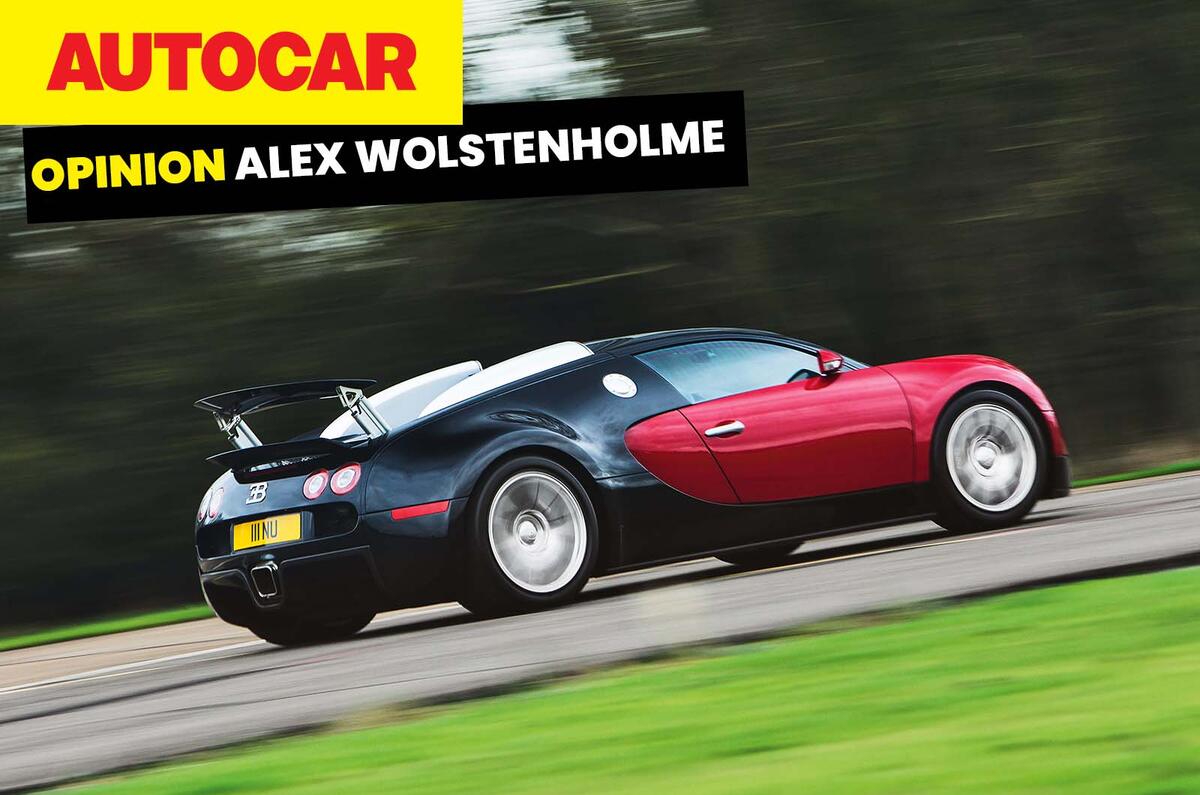
Two decades ago, Autocar drove the Bugatti Veyron for the first time – and it blew us away.
“The noise – a peculiar cacophony that sounds a bit like two TVRs on full reheat plus an industrial-strength air hose – is accompanied by mind-bending, heart-stopping acceleration, the like of which has never been felt before in a road car,” gushed our tester.
And yet they didn’t love it. “Despite the titanic performance and refinement, it doesn’t grab you emotionally like it should” was the conclusion.
Surely there can be no criticism to level at this mega-powered monument to mechanical excellence, which, even at 20 years old, still feels every inch the soul-stirring headline-maker it was at launch.
To me, the most impressive thing about the Veyron is not that it has a 13mph greater top speed than a McLaren F1, nor that it was the first production car to break 250mph. Nor even that it had an 8.0-litre engine, four turbos and 16 cylinders (all of which had been seen before).
And although its 1000 metric horsepower was a first for a car with a warranty, tuners had been getting that much out of Toyota Supras for years. So no, the most impressive thing about the Veyron to me is not the big numbers that have always been bandied about, but the attention to detail, the sumptuous interior and its civility.
The fact that it weighed almost two tonnes, had 10 radiators, held 15 litres of engine oil and cost well over £1 billion to develop might seem silly given the 240mph McLaren F1 was so much less resource-intensive yet not much slower.
Except an extra 13mph at 240mph isn’t like an extra 13mph at 70mph. The force needed to accelerate a car rises exponentially with velocity. It’s a quadratic relationship, so for every tiny increase in speed beyond 200mph, you must do an ever-increasing amount of work to achieve it.
Pursuing a top speed record is a vicious cycle. It requires more power and therefore a larger, heavier engine. Then you need bigger brakes to bring it all to a halt, beefier suspension to hold it to the road and better cooling to keep it from overheating – and that’s before you’ve factored in the effects of downforce, friction and a plethora of other factors that get bigger and potentially more dangerous at speed.
But the Veyron was 800kg heavier than the F1 not just because of its greater top speed potential. It was also because never in automotive history had such a luxurious car topped 170mph, let alone gone 50% faster than that.
Volkswagen Group boss Ferdinand Piëch gave Bugatti an intimidating brief to create a car that could crack 400kph but he also stipulated that it should be able to take two people to the opera house in supreme comfort later the same day.
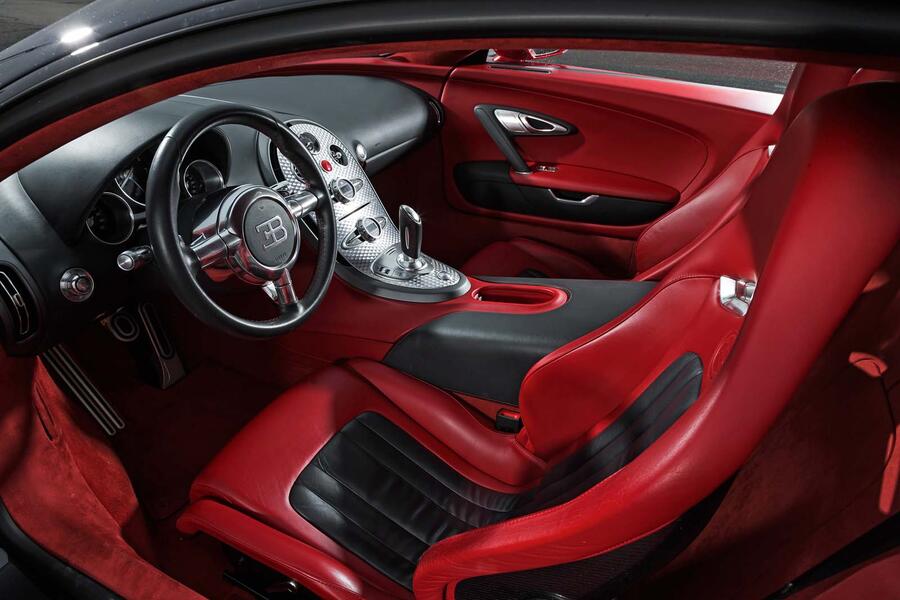
That we labelled the Veyron’s interior “the most exquisite cabin on Earth” is testament to this near-unfathomable duality of purpose.
In so many ways the Veyron was unnecessary: not only unnecessarily fast but also needlessly difficult and expensive to engineer, precisely because of Piëch’s mandated dichotomy, a brief none of the world’s fastest cars had ever been set.
So I love the Veyron not just because it was faster than anything else, but also for the way it did it. We may never again have our minds blown by a car with numberplates in quite the same way.

Join the debate
Add your comment
Inmay sound like a hypocrite here but, yes making Deisel engines work better or ICE for that matter,but a vanity a because we can isn't all that bad, the cost to develop cars like these compared to the Bread n butter stuff is ok, the car World would be a boring place without these creations.
Good. The VW Group was pumping out V8 engines that couldn't even break 60,000 miles without catastrophic timming chain issues, while simultaneously taking a press-sponsored victory lap thanks to this vanity project.
Ev cars are have no soul, they don't make me excited to see there just another EV , there shape, there sterile interiors, the Veyron and other like it have shape, the Veyron engine was at the time a marvel a 1000hp effortless acceleration and that 250mph top speed,ok, yes it had a drink problem,yes tyres servicing etc were five figure bills,but, if you bought one you knew the big bills were part of it,maybe some of today's ev's will get legend status in the future but for the wrong reasons.
People have been calling new cars soulless for decades. I remember the Porsche 959 was described as soulless back in the 80s. So was the V12 BMW 850 a few years later.
No car has a soul. Why not be honest and say "I don't like EVs because I don't like EVs"?
I don't like EV's. One of my vehicles is a 3.6 V6 Nissan that makes me smile every time I drive it. I also have a Chevy Spark that is a bag of shite but is great fun when wringing its neck around country lanes when it is not being towed behind my motorhome. Cars do have souls.