
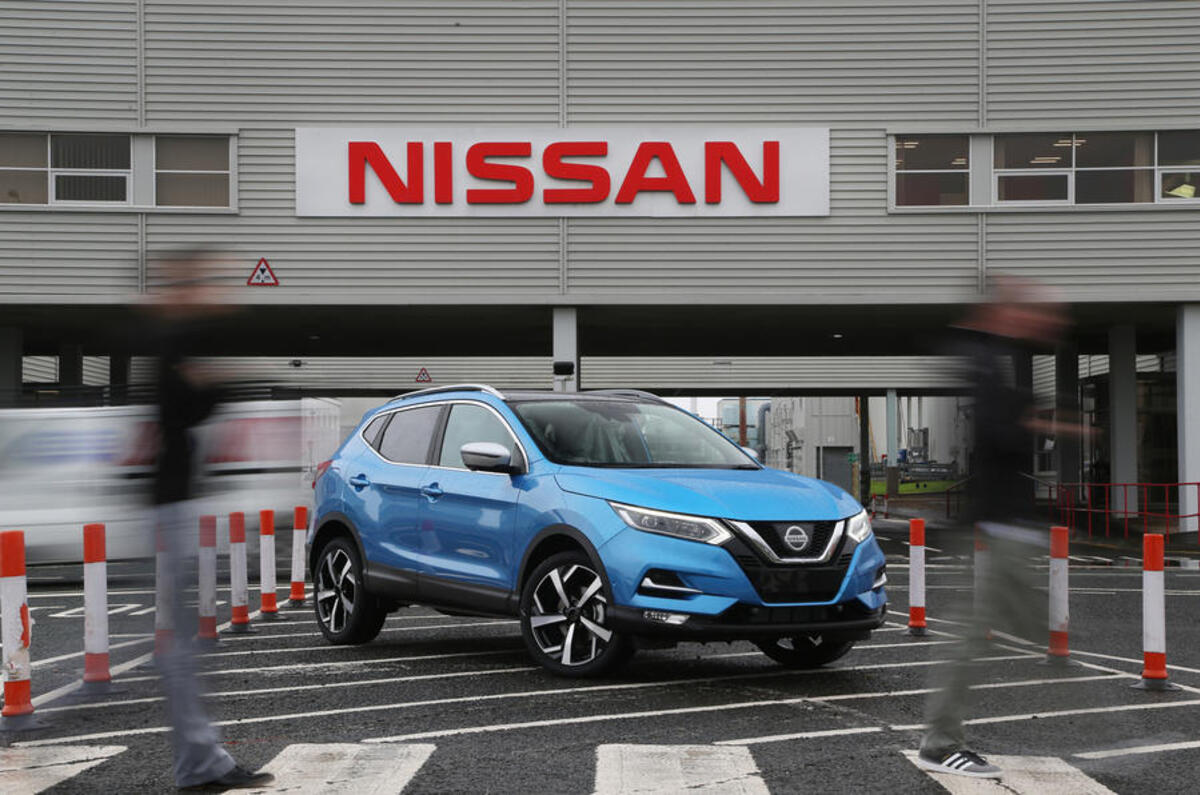
A strong case could be made for no foreign car maker having backed the UK automotive industry as strongly or over a longer period of time as Nissan has.
Not only does it have the mighty Sunderland plant, the annual output of which has regularly passed half a million cars, but also the Cranfield engineering centre and the Paddington design studio where many of its global hits, like the Nissan Qashqai and Nissan Juke, have originated.

Nissan's commitment to the UK goes back decades (next February, it will be 40 years since the deal was signed to create the Sunderland plant), and it's a commitment that will run for many years yet, with future electric car production already secured and Nissan involved in the creation of a battery factory to help supply these cars.
But it's not only EVs that Nissan is investing in in the UK: alongside the Nissan Leaf, the Qashqai and Juke are produced, typically among the very best selling models in the UK and solely ICE-powered, save for a bit of hybrid assistance.
The Qashqai is in its third generation and the Juke in its second, and both should be replaced towards the end of this decade. Given that development times of new cars are typically around four-and-a-half years, now is the time that Nissan will be deciding exactly what form the fourth and third generations of these models respectively will take.
These cars will then stay on sale deep into the 2030s, by which point all new cars sold in most major markets will have to be all-electric; and in the lead up to that date, an increasing majority will have to meet mandated zero-emissions targets or car makers will face fines. In 2030 in the UK, that means 80% of new cars sold in the UK must be electric.

With that in mind, it's inconceivable that Nissan would take any other decision but to launch only electric cars from now on, as it this week committed to do so in Europe. Whatever the make-up of Sunderland is now, it's only ever going to go one way, and that's all-electric - just as the legislation dictates.
Such is the significance of the UK to Nissan that its global CEO, Makoto Uchida, chose Paddington as the place to announce its future powertrain strategy for Europe.
The news made national headlines and the front pages of websites, seemingly with an element of shock attached, following the government kicking back the ban on the sale of ICE cars from 2030 to 2035.
Yet the devil has remained in the details. The headline of the ban has changed but not the substance behind it, as Nissan Europe boss Guillaume Cartier made clear that "2030 is not changing". "The ZEV mandate remains," he said. "We took our decision with this milestone."
What decision could Nissan have made: the one to suit 80% of its business or the 20% that's ever decreasing in significance? The planning into decisions like these runs deep, and they aren't impacted by whimsical policy changes.
A week on, it's still hard to see who the government's decision to push back the ban has helped serve. As this column detailed last week, it has been bad for business and extremely unhelpful for the industry, whose job in selling electric cars in the short term has just got a lot harder, due to this knock on consumer confidence.

Unhelpful and also misleading, because whatever the headline says about the ability to be able to buy an ICE car from 2030 to 2035, announcements like Nissan's show that there simply won't be any to buy.
Remember, the Qashqai was the number-one-selling car in the UK in 2022, a title that for decades was held by the Ford Fiesta. Neither will get past its current generation as the ICE car the public knows it as.
Forget 2030 or 2035, it's 2024 where the real issue lies. Car makers must sell 22% of their volumes as zero-emissions vehicles. To date, electric cars are running at a 16.4% market share, up from a 14% share in the same period last year. That's 41% growth in volume terms, but at this run rate, there's still the same gap again to make up.

Add your comment