


All-new urban electric crossover is straight-laced sibling of Cupra Raval

Skoda has developed an effective habit of reworking and fine-tuning EV hardware and software from Volkswagen Group and using it to create a more complete package. 

We saw it first with the Enyaq SUV and subsequently the smaller Elroq, and now Skoda is aiming to repeat this trick in the urban car segment with the Epiq, a 4.1m-long crossover

Skoda is aiming to achieve price parity with the petrol-powered Kamiq, which costs from around £25,000.

The Epiq is the smallest member of Skoda's EV line-up and effectively the electric equivalent of the petrol engined Kamiq

Positioned as the entry-point to the Czech brand’s electric line-up, the Epiq will join the likes of the technically-related Volkswagen ID Polo, ID Cross and Cupra Raval in the sub-£25,000 affordable EV market.

Advertisement

DESIGN & STYLING

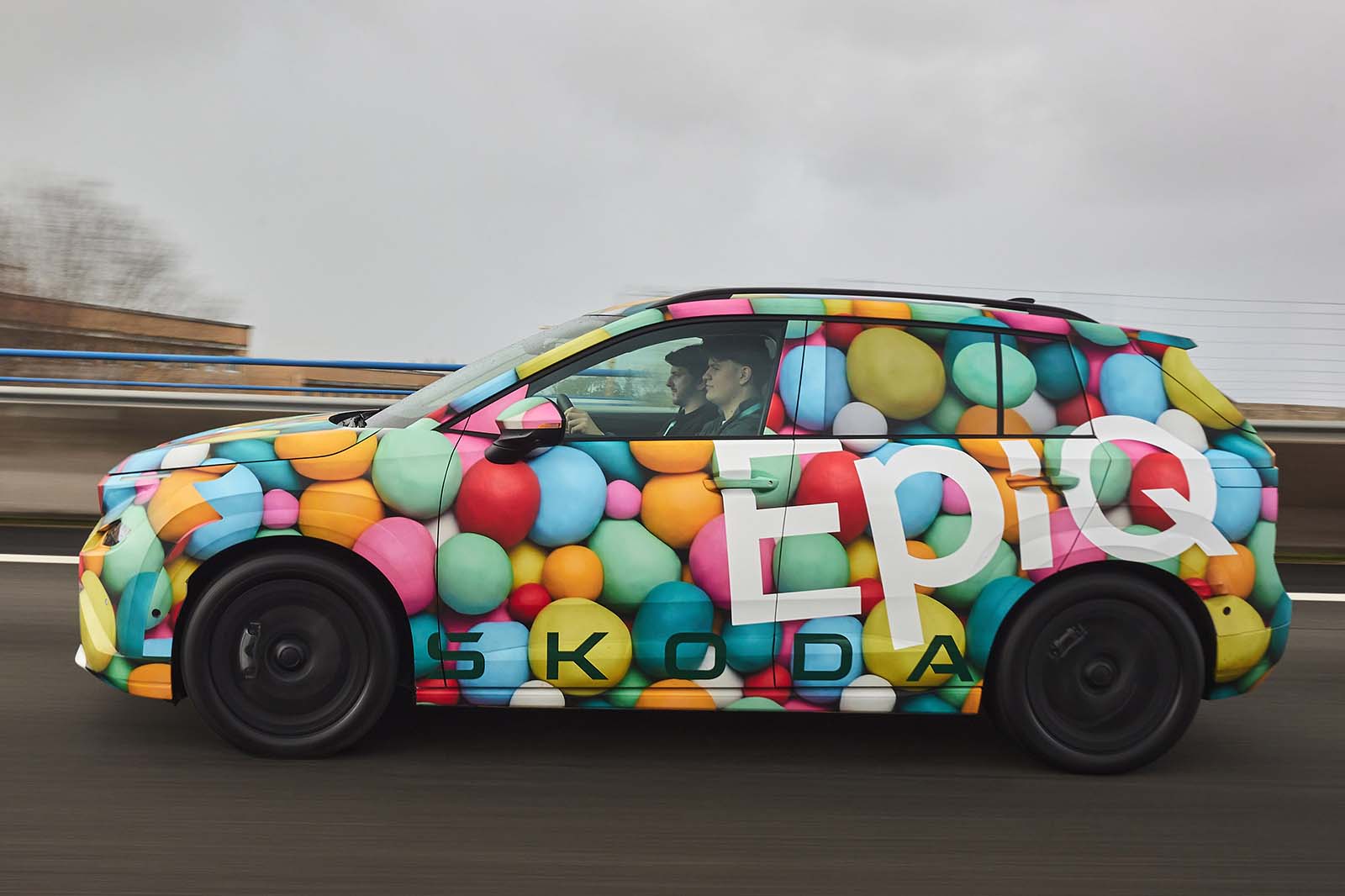
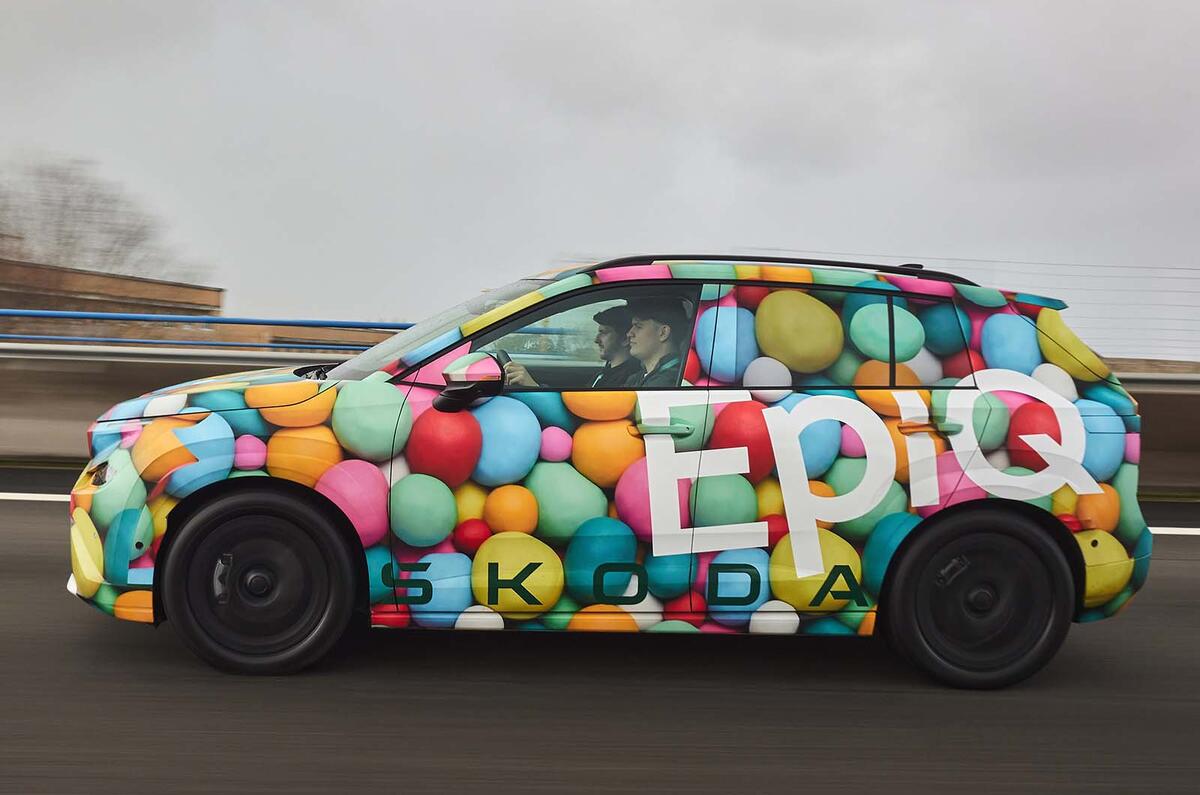
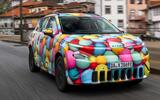
Skoda Epiq proto drive side

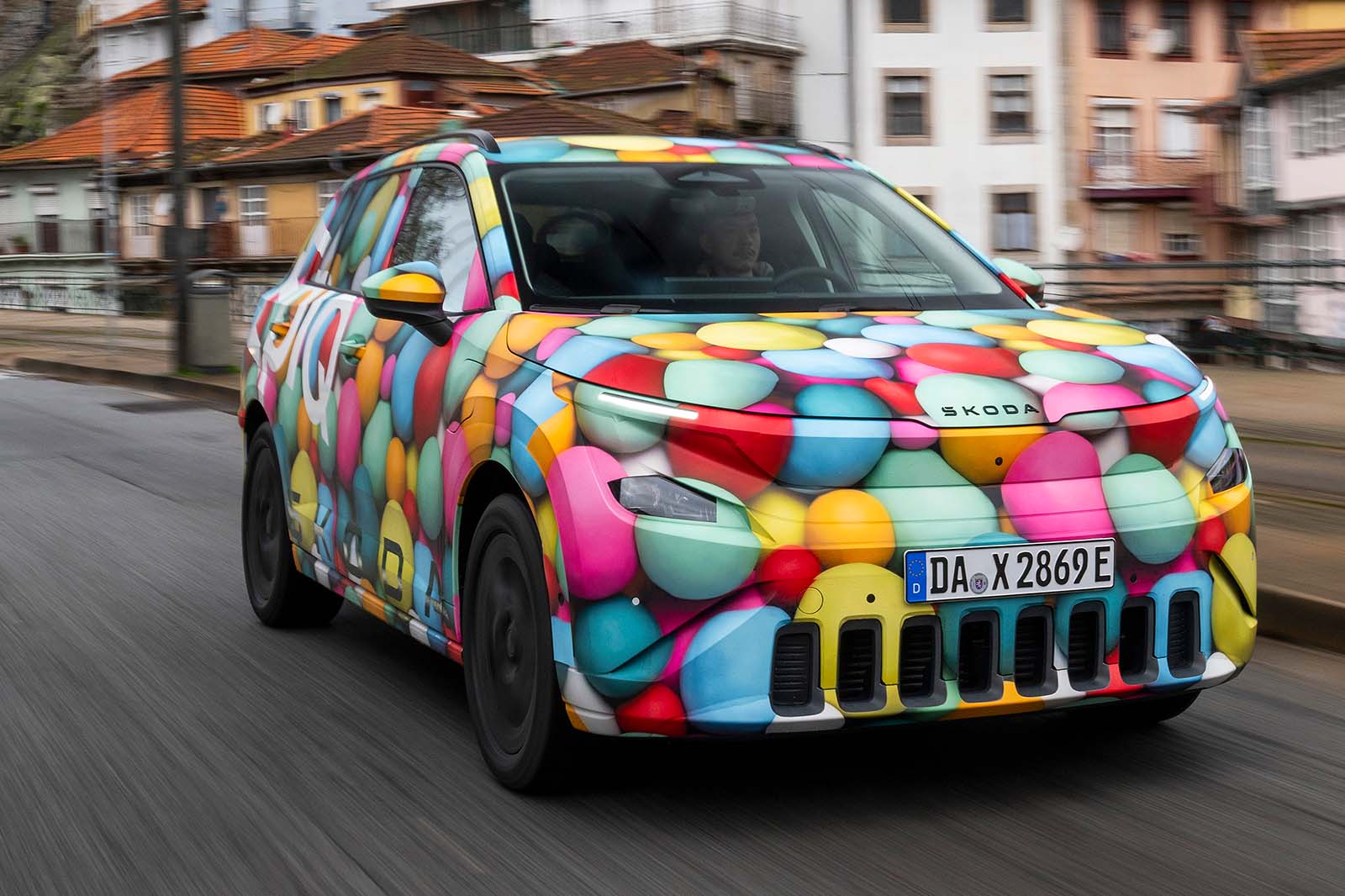
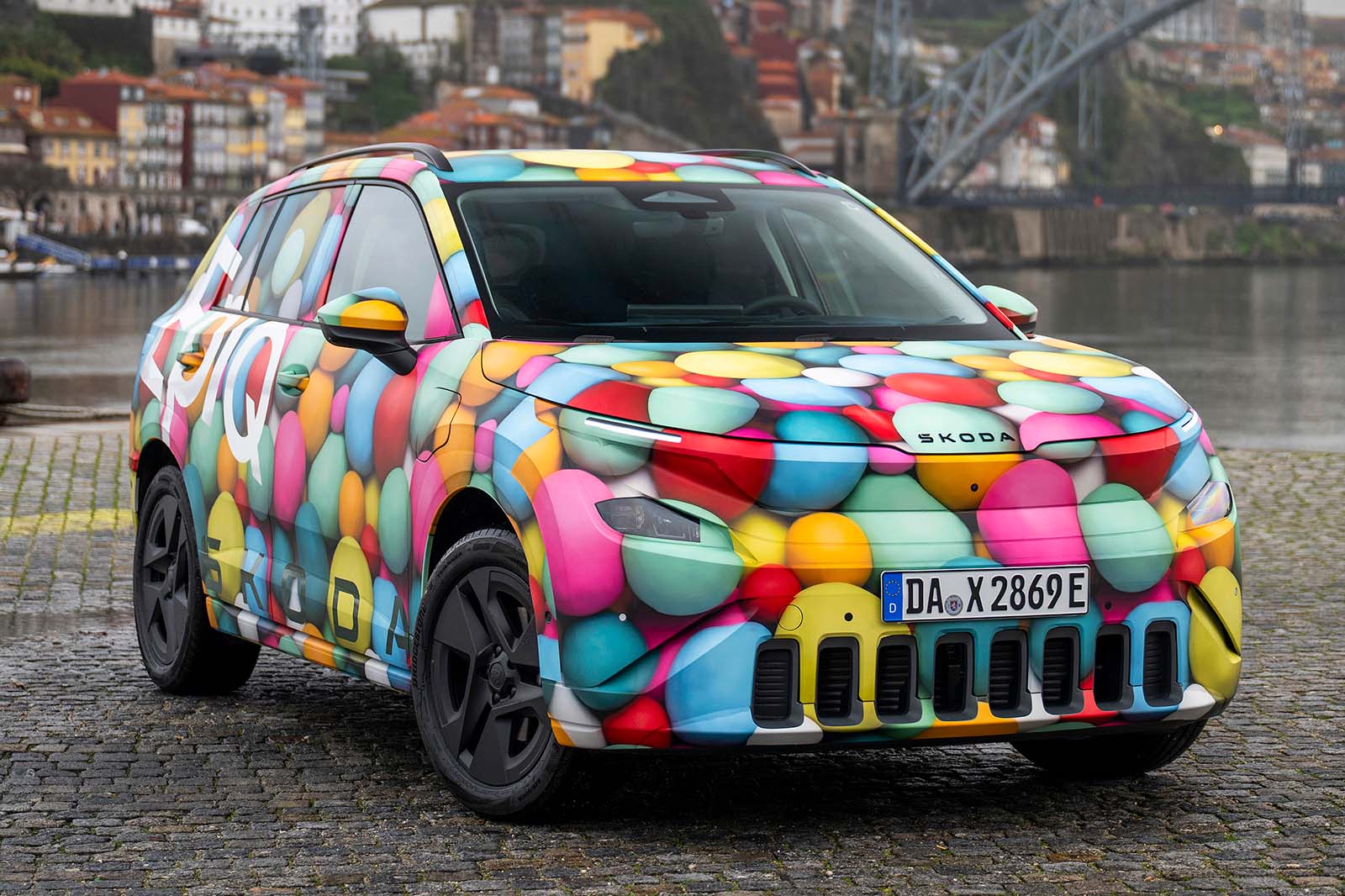
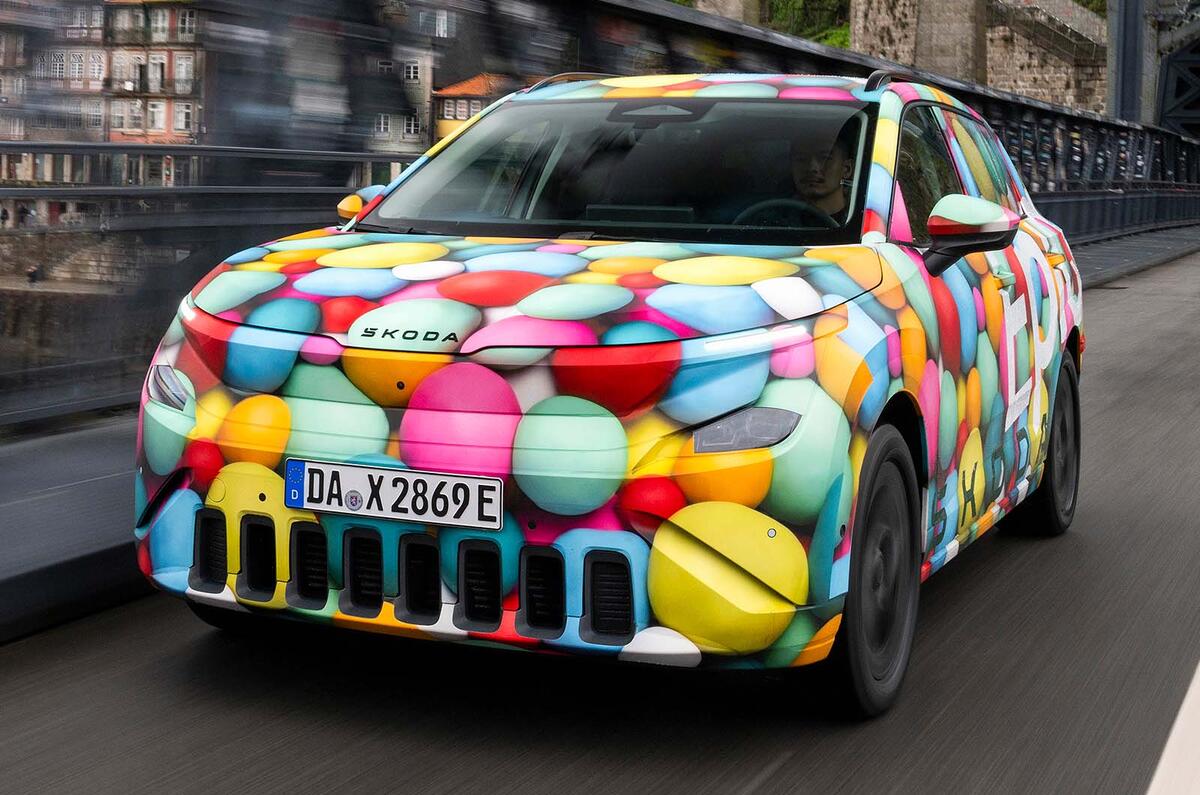
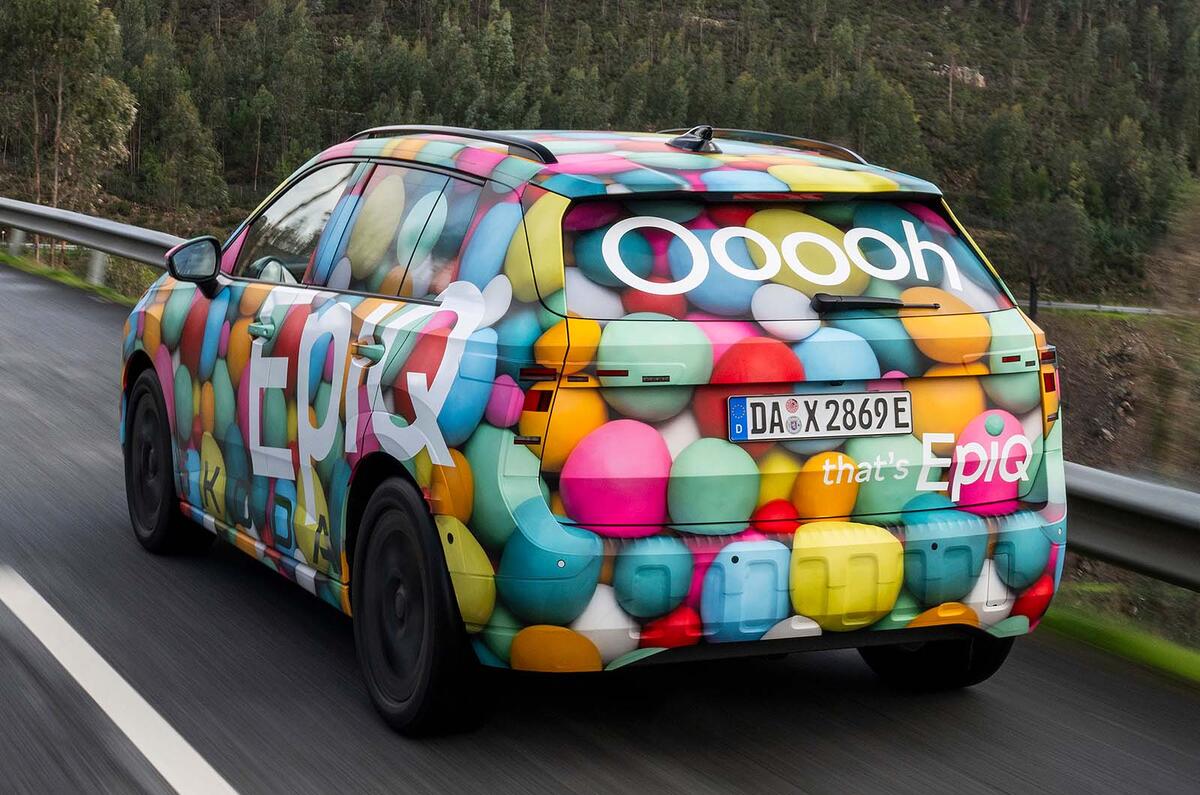
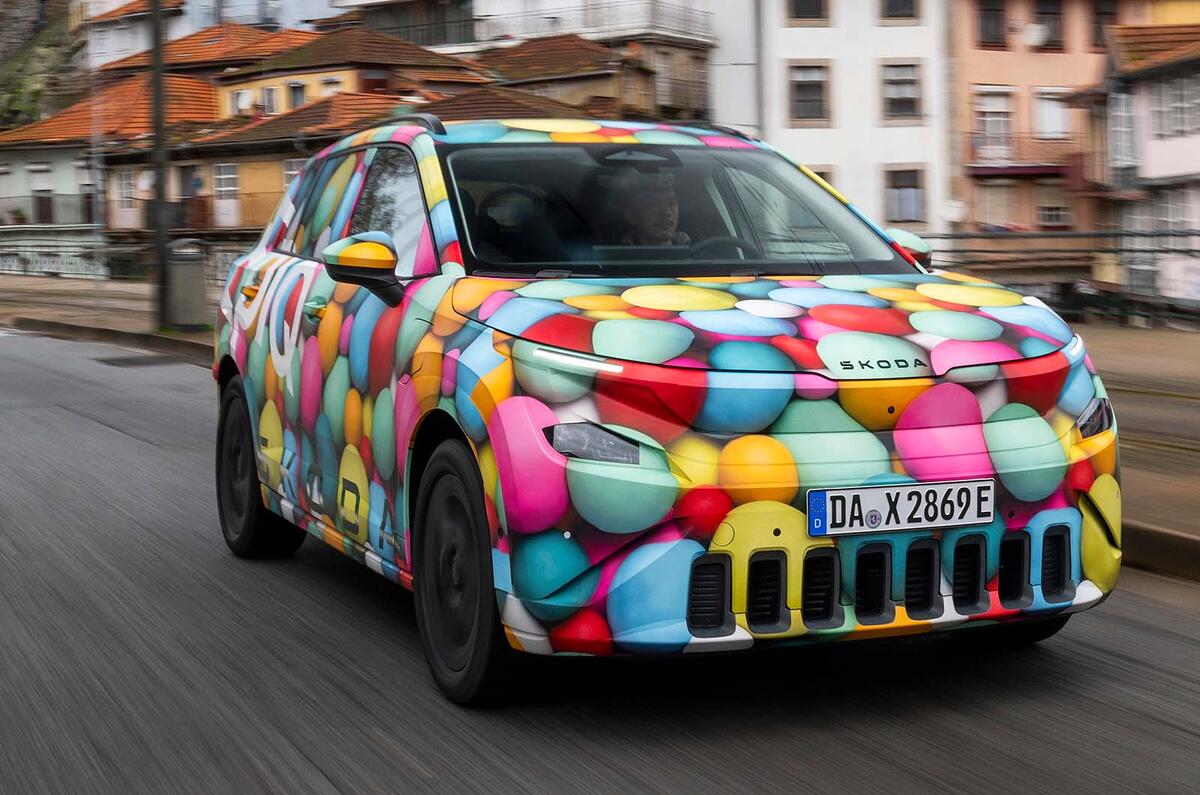
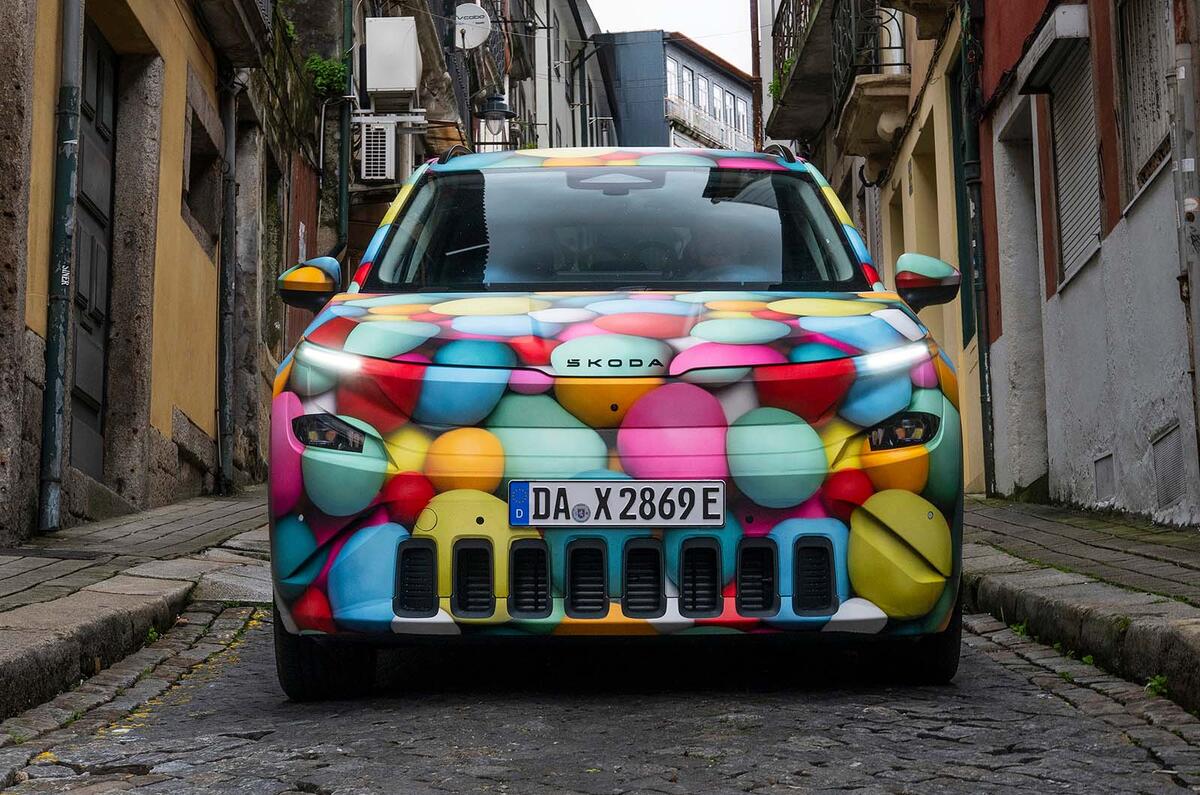
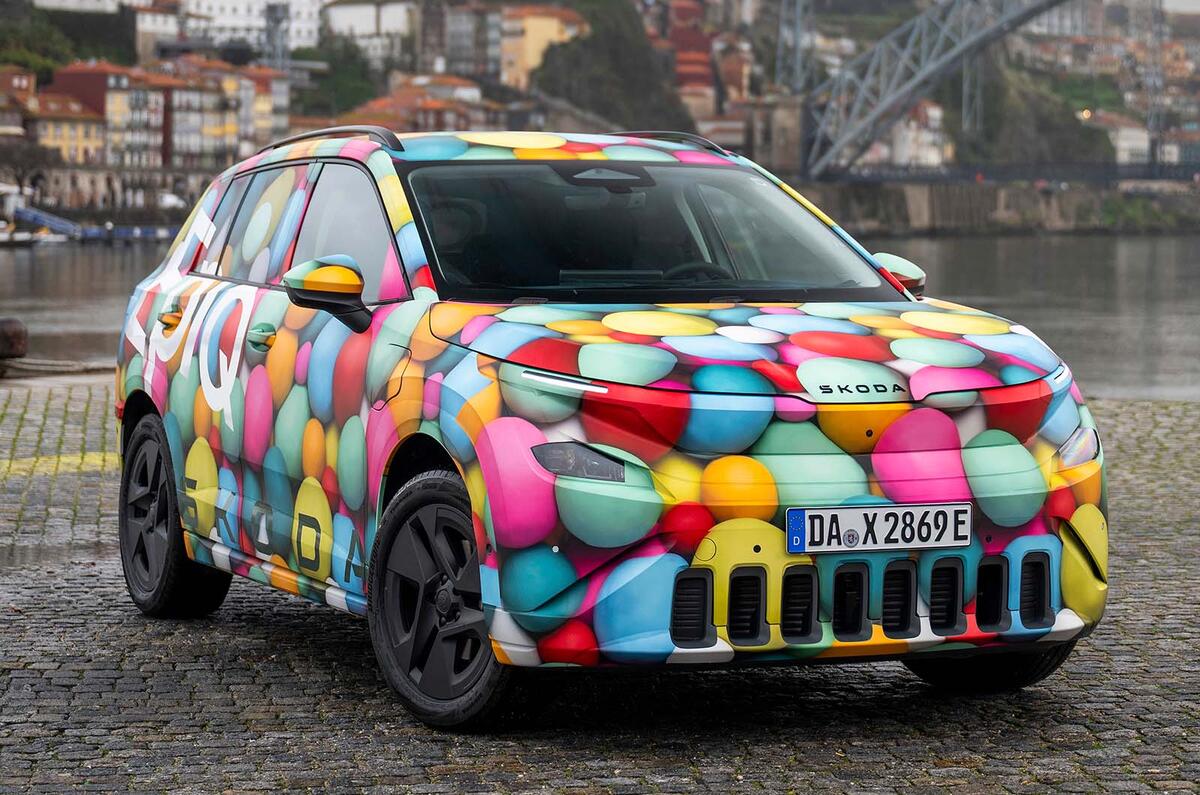
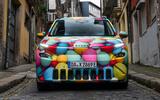
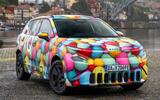
Like the Elroq and Enyaq before it, it embraces Skoda's new Modern Solid design theme- not that I could see any of its cues under the colourful camouflage of my pre-production test car. 

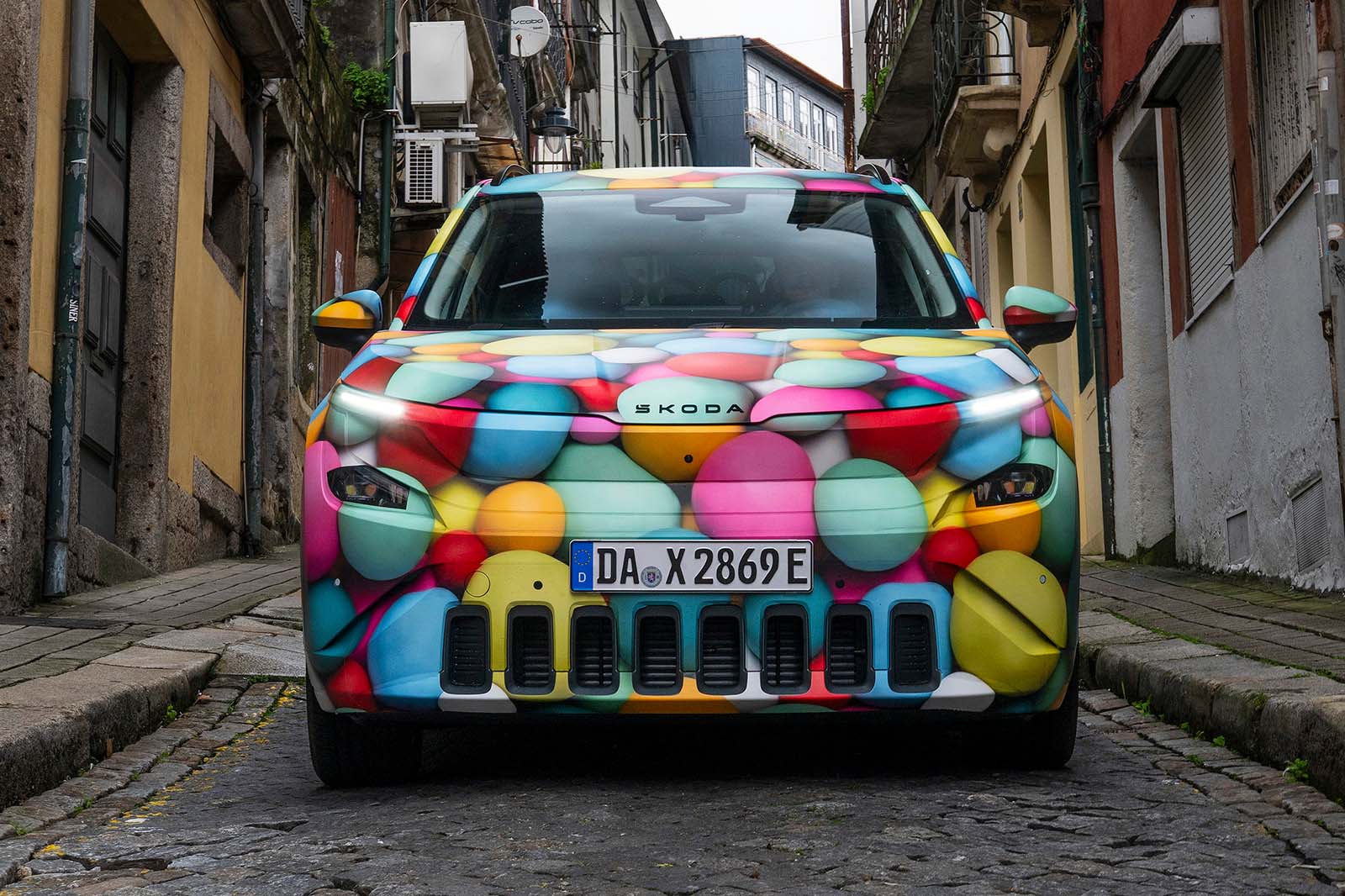
We know the Epiq has adopted the Czech brand's Tech Deck face, its T-shaped light signatures and the familiar gloss black panel housing sensors for active safety systems. 

The Modern Solid design principles have optimised the Epiq's aerodynamics too, with the O-shaped air intakes in the front bumper covering active shutters, helping the car achieve an enviable drag coefficient of 0.27.

The Epiq sits on the Volkswagen Group's new MEB+ platform, along with the inbound Cupra Raval and Volkswagen ID Polo and ID Cross. Like its counterparts, the Epiq marks a departure for Skoda's EVs, having a front-mounted motor as opposed to the Enyaq and Elroq's rear-driven set-up. 

Trim levels and battery options for the UK are still unconfirmed, but the line-up opens with the Epiq 35, which uses a 37kWh lithium-iron-phosphate (LFP) battery and 114bhp motor for a 192-mile range. 

Skoda is aiming for price parity with the Kamiq, which means this base model should start from around £25,000 when it goes on sale in the second half of 2026.

The Epiq 40 gets the same 37kWh battery but a 133hhp motor, while the range-topping Epiq 55 gets a larger 52kWh nickel-manganese-cobalt (NMC) battery and 208bhp motor for a range of 267 miles. We expect this to cost around £30,000.

The LFP-batteried 35 and 40 models can be charged at rates of up to 50kW and 90kW respectively, while the 55 peaks at 133kW, which is faster than both the Renault 4 and Citroën ë-C3. As such, it's supposedly capable of charging from 10-80% in just 23 minutes. 

INTERIOR

Inside, the architecture is very similar to that of the Epiq's rangemates. 

Like the Elroq, the Epiq will be available with Studio, Loft and Suite interior specifications, all of which embrace recycled materials. While most of the innards in our pre-production car were covered up, the Epiq felt well-built and comfortable. 

While the Elroq has paddles behind the wheel for adjusting the regenerative brakes, you have to use the screen to do this on the Epiq.

We didn't get to play around much with the digital on-board tech, but as standard a 5.2in digital instrument cluster and a 13in infotainment touchscreen – although Skoda hasn't yet said what software it will use. 

While the second row is slightly perched, an indent in the roof means there's ample head room for taller adults, and there's more leg room in the back than in the Renault 4. I imagine having three adults in the back would be a squeeze, though... On the plus side, the Epiq's 475-litre boot trumps both that of the 4 (420 litres) and the ë-C3 (310 litres). 

ENGINES & PERFORMANCE

dsc 1230 997ac418

Making 208bhp and 214lb ft of torque, the 55-spec motor allows for a 7.4sec sprint to 60mph, and in the main it feels brisk, building speed in a progessive manner that's not dissimilar to the Elroq. 

The Epiq’s regenerative braking system offers you two modes, Standard and High, but neither reined in the car that aggressively. The brake itself is also a bit mushy with a lot of travel in the pedal. 

Traction is good, with only the odd squirm from the front when pulling away in wet conditions. Rolling refinement impressed as well: there was just a hint of wind intrusion at motorway speeds. 

RIDE & HANDLING

Skoda Epiq front ahead

My time in the car was only short, hence I can't claim to know every dynamic characteristic of the Epiq, but I can tell you that from this early drive, it feels inherently like a Skoda. 

The steering is precise and consistently weighted, albeit with an absence of some feedback and a bit of dead weight around the straight ahead position. 

As my test route was confined to towns and motorways, lateral body control was a bit harder to judge, but vertical body control is good and the Epiq feels settled at higher speeds and over longer undulations.

Around town, the ride is pliant and reassuringly controlled, with the more conventional suspension arrangement of front MacPherson struts and a torsion-beam rear axle providing a good middle ground between firmness and comfort. There's a clear distinction in how the Epiq filters the road surface. 

It does a good job of ironing out lumps and bumps, as well as larger imperfections, but struggles to deal with sharp, consistent intrusions like potholes. In many ways, it feels a bit firmer than the Elroq but remains well-damped. 


VERDICT

Skoda Epiq proto drive static

This may have been only a short drive of a pre-production car, but the Epiq clearly has a lot of potential. 

There's an air of common sense running through every element of the car, from its sensible, albeit unstimulating drive to its large boot and its decent range. 

We will need more time in it to deliver a more definitive verdict, but if Skoda can offer the Epiq at a competitive price and with the same level of polish as the Elroq and Enyaq, it could well be right up there with the best in its class.

Sam Phillips

Sam Phillips
Title: Staff Writer

Sam joined the Autocar team in summer 2024 and has been a contributor since 2021. He is tasked with writing used reviews and first drives as well as updating top 10s and evergreen content on the Autocar website. 

He previously led sister-title Move Electric, which covers the entire spectrum of electric vehicles, from cars to boats – and even trucks. He is an expert in new car news, used cars, electric cars, microbility, classic cars and motorsport. 

Sam graduated from Nottingham Trent University in 2021 with a BA in Journalism. In his final year he produced an in-depth feature on the automotive industry’s transition to electric cars and interviewed a number of leading experts to assess our readiness for the impending ban on the sale of petrol and diesel cars.