
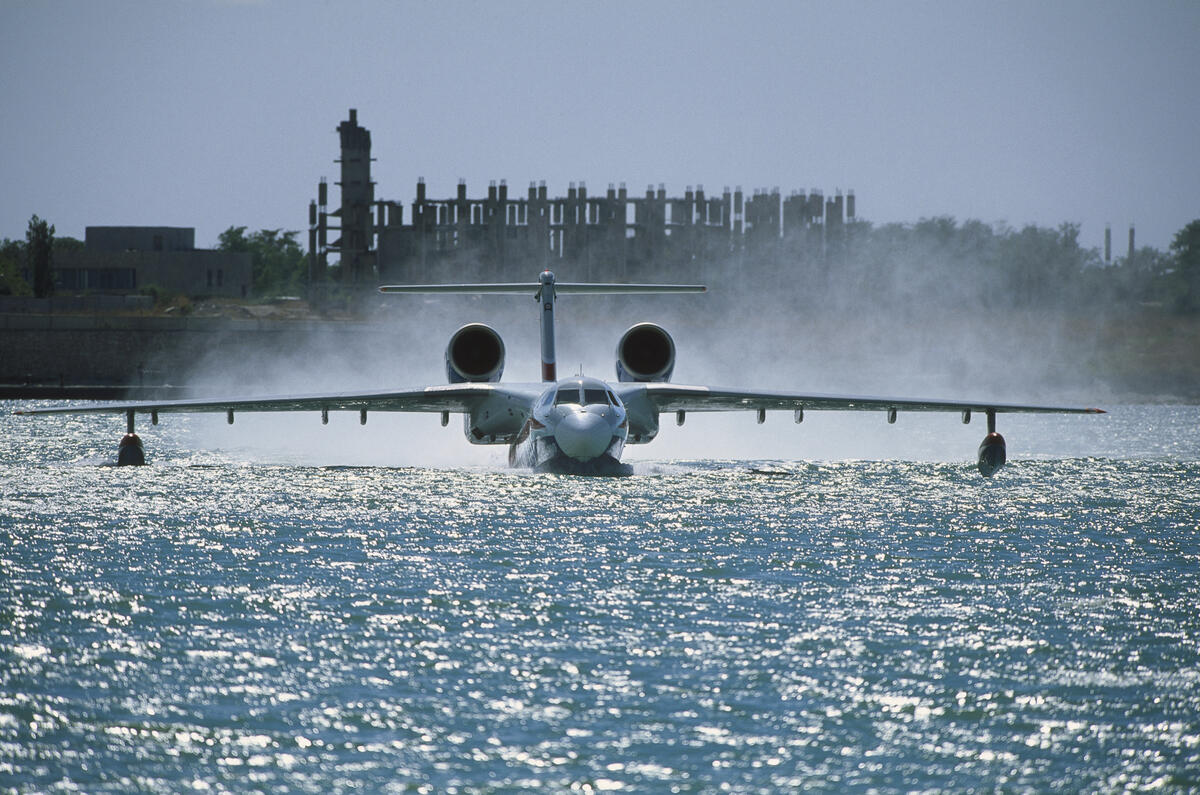

Among the wildest sights in aviation is a high-performance aircraft taking off from a lake or the sea.
The exciting ability to take off from water frees aeroplanes from needing a runway, airfield, or airport. It offers incredible flexibility but comes at a huge cost, as a seaplane must also function as a boat.
This adds weight and involves large hydrodynamic, aerodynamic, configuration, and structural compromises, yet somehow, quite miraculously, some were built that offered impressive speed. One even held the absolute world airspeed record for all types of aeroplanes… Let’s take a look:
10: Spitfire floatplane - 377 mph
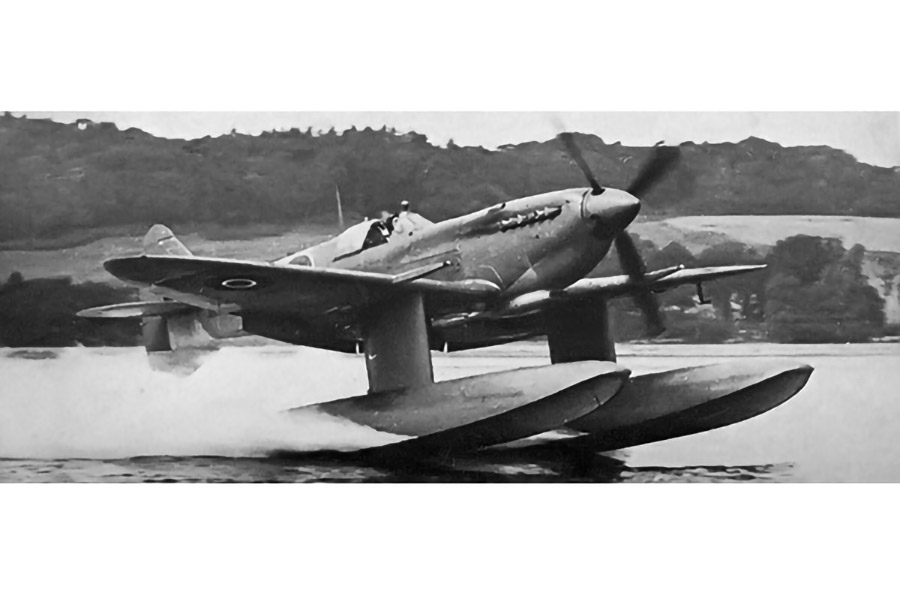
The German attack on Norway in 1940 and the alarming lack of RAF airfields to use in the resultant campaign made the need for a floatplane fighter one of the highest orders. An urgent scheme to fit floats from the Blackburn Roc to the Spitfire was hatched, but before these new Spitfire floatplanes even flew, the Norwegian campaign was over, and there was a more significant need for landplanes.
The converted Spitfires were changed back to regular wheeled undercarriage. But this handy idea refused to go away. Subsequently, the Spitfire floatplane was looked at again when war in the Pacific against Japan kicked off in late 1941, and this time a Mk.V, was converted.
10: Spitfire floatplane
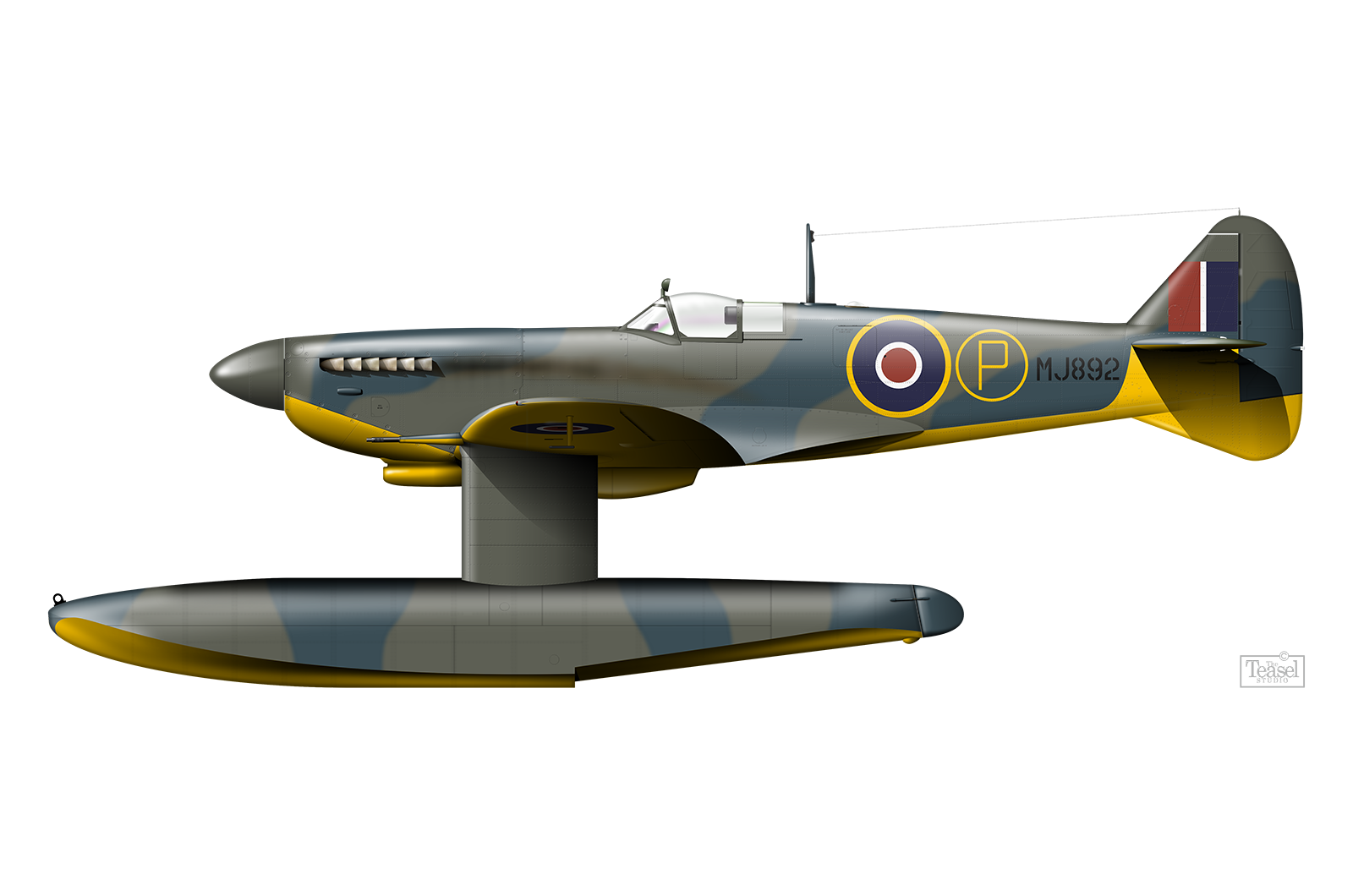
By the time three Mk.V had been converted to floatplanes, the plan had changed, and instead of the Pacific, the Spitfires were to operate from discreet island bases in the Aegean. Unfortunately, the Germans stymied the idea by capturing all the appropriate islands. Attention turned to the Pacific again for the final and fastest Spitfire conversion.
In 1944, a Spitfire Mark IX (serial MJ892) powered by a Merlin 45 engine was fitted with floats. The result was spectacular: the machine reached 377mph, making it the fastest floatplane of the war. Sadly, the concept was shelved, and despite becoming the third fastest floatplane ever built, the waterborne Spitfire was abandoned in late 1945.
9: Saunders-Roe SR.45 Princess - 380mph
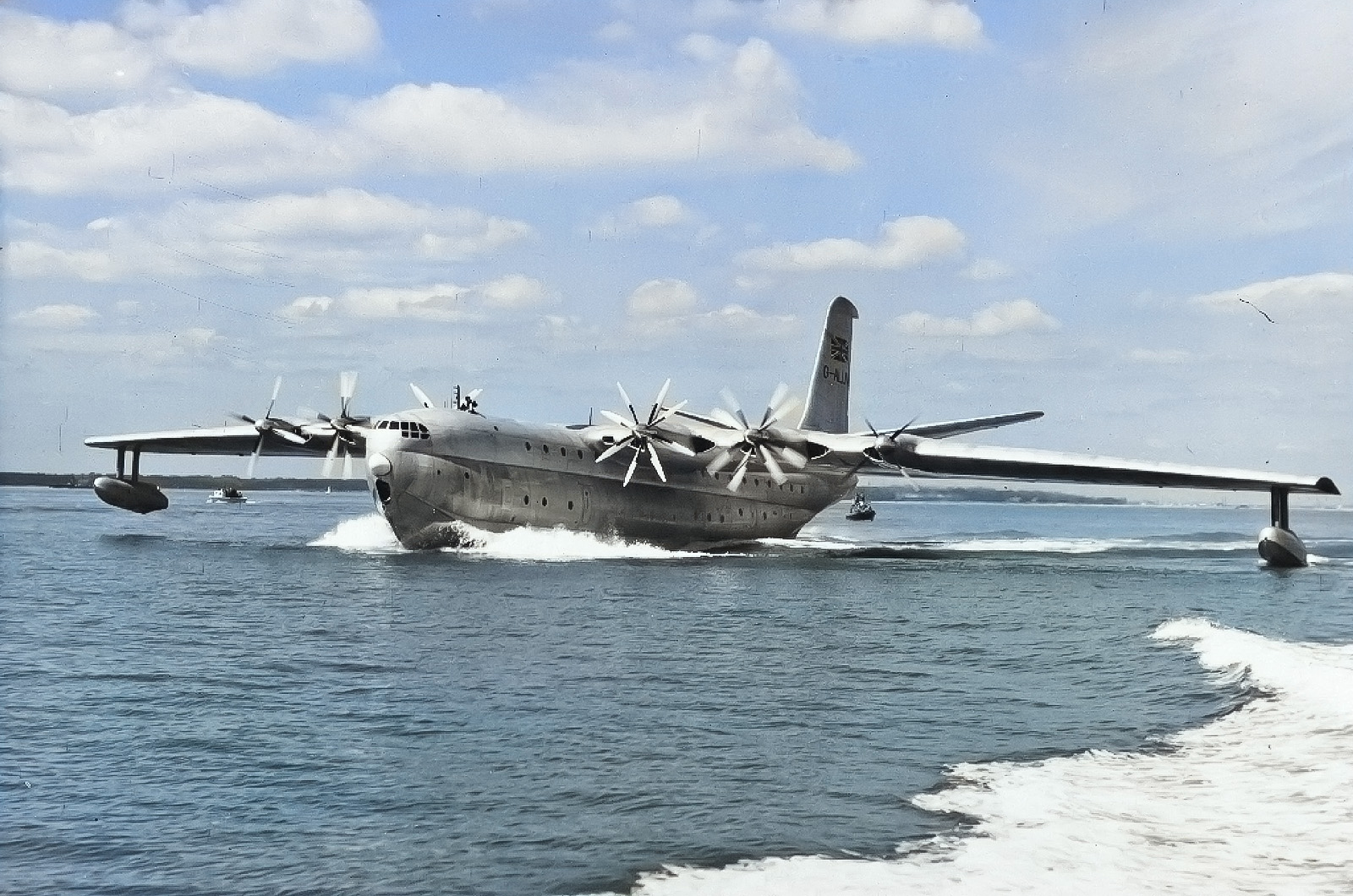
The Saunders-Roe SR.45 Princess was a magnificent machine of epic proportions. Weighing 86,000 kg, the same as 33 Spitfires, and with a greater wingspan than a Boeing 747, blessed with an endurance of 15 hours and a range of almost 6000 miles, the Princess was utterly impressive.
The Princess was planned as a luxurious airliner to serve the transatlantic route. To carry 100 passengers over such a long route in style, the Princess needed to be big and heavy and required a massive amount of power. Eight massive Bristol Proteus turboprop engines were mounted in four ‘coupled’ pairs, along with two regular uncoupled Proteus.
9: Saunders-Roe SR.45 Princess
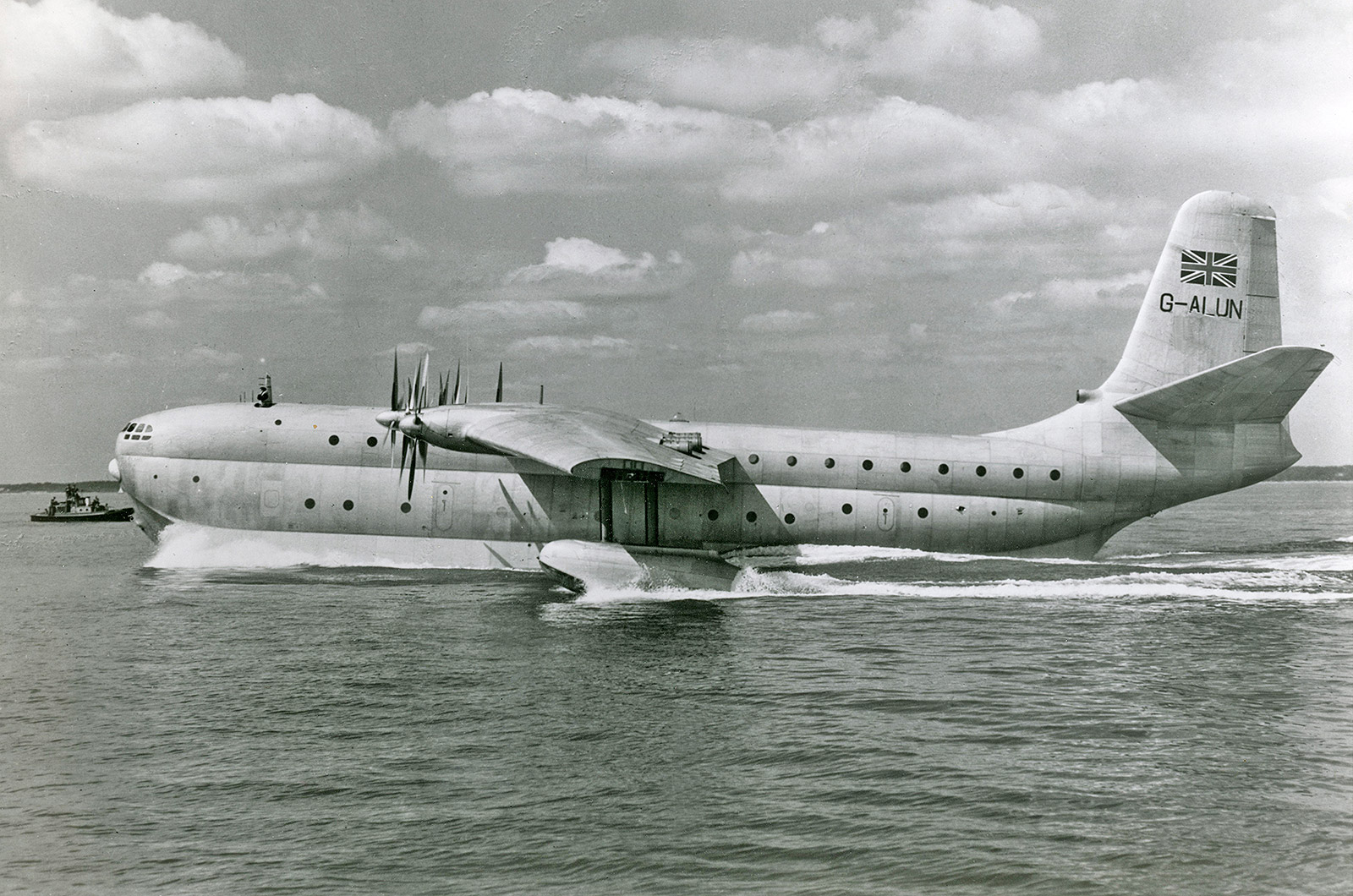
The Princess first flew in 1952, unfortunately coinciding with the dawn of the land-based jet airliner age. Large airports and runways, able to accommodate the far more efficient land planes, were becoming increasingly common. The Princess, though impressive, was the last and grandest example of a dying concept that was rapidly becoming obsolete.
Remarkably, despite the myriad compromises a flying boat must endure, the Princess was capable of a racy 380 mph, a mere 69mph slower than the jet-powered land-based de Havilland Comet I. Saunders-Roe were nothing if not persistent and considered even larger (jet-powered) flying boats before finally accepting defeat, and moving to another technological cul-de-sac: mixed propulsion fighters.





Add your comment