

Three years ago, Nissan celebrated building 250,000 Leafs at its Sunderland plant by using one to power a giant Christmas tree, complete with reindeer, outside the factory.
There was snow (real, not fake) on the ground too, making the whole scene look very festive - well, as festive as a grass verge next to a chain-link fence and a security hut can look.
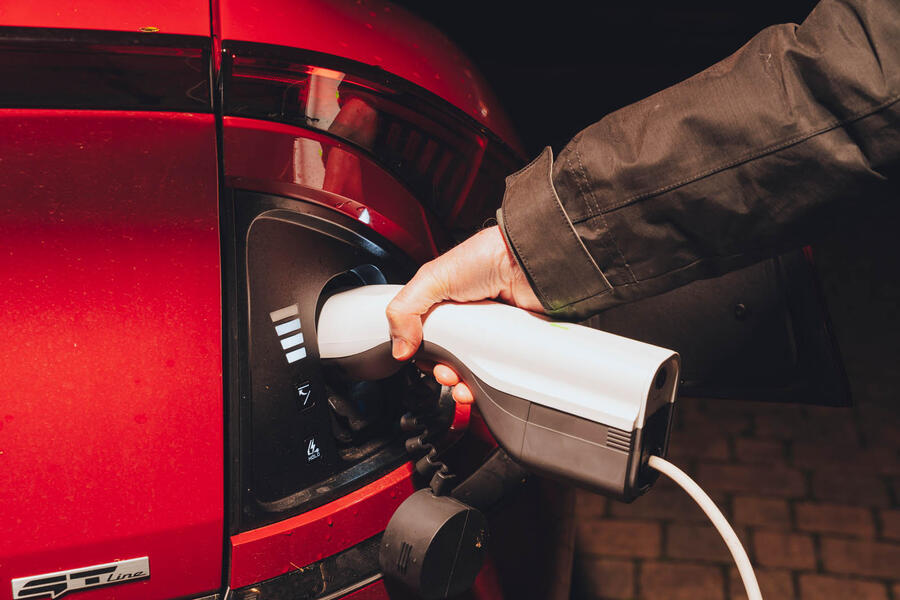
To use an EV's drive battery in this way requires the vehicle to have V2L (vehicle-to-load) capability. This enables it to convert the DC current that powers it back to AC, the form it received it in the first place unless it was provided by a DC fast charger.
The AC power is drawn via a special adaptor, one end of which plugs into the car's charge port while the other has a conventional three-pin socket into which external devices or equipment can be connected. Some EVs also have a three-pin socket inside the car, allowing power to be drawn directly, even when the vehicle is moving.
It's all rather clever, although, of course, it's also possible to power external things from the battery of a petrol or diesel car fitted with an auxiliary socket. However, in this case, the maximum output is just 12V, making it suitable for only light-power applications such as charging a mobile phone or powering a tyre inflator or portable cooler, compared with the 240V available from an EV.
Autocar tried V2L last year when we joined Genesis for a demonstration of the technology at a star-gazing event on Dartmoor. Two Electrified GV70s kept the lights, kettles and coffee makers on at a temporary campsite. It's this kind of application - powering an outdoor location such as a campsite or boot-sale stand or charging electric bikes, scooters or even a stranded EV - that V2L is perfect for.
However, inspired by Nissan, this Christmas Autocar dreamed up another use for V2L - powering a home's Christmas light display.
Not my home, however. Unfortunately for my family, every Christmas I resist their demands to illuminate the outside of it because, quite frankly, the idea of ascending a tall ladder with an armful of lights terrifies me. (A few years ago, I fell off one painting the bathroom window.)
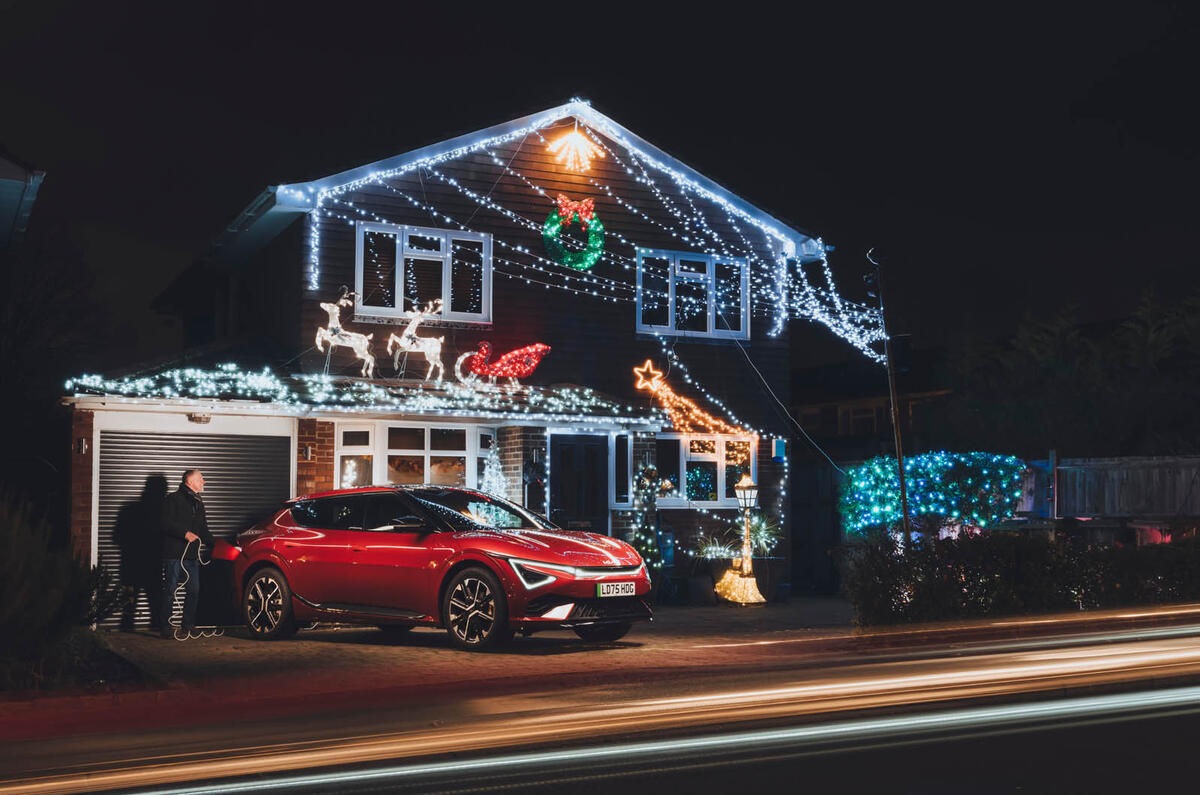
However, around the corner from where I live is a house whose owners go nuts for Christmas, rigging up their home with hundreds of lights, a sleigh and reindeer... even ye olde Victorian street light. Would they allow me to power their Christmas lights with an EV? Happily, they agreed. It helped that they own a Skoda Enyaq.
Although the model isn't V2L-enabled, a demonstration of the technology couldn't hurt. So, after they had rigged up their lavish light display, Autocar rocked up one day in late November with a Kia EV6 with V2L - the special adaptor is extra but we ensured it was supplied with one - to see just how easy it is to power Christmas lights with an EV.