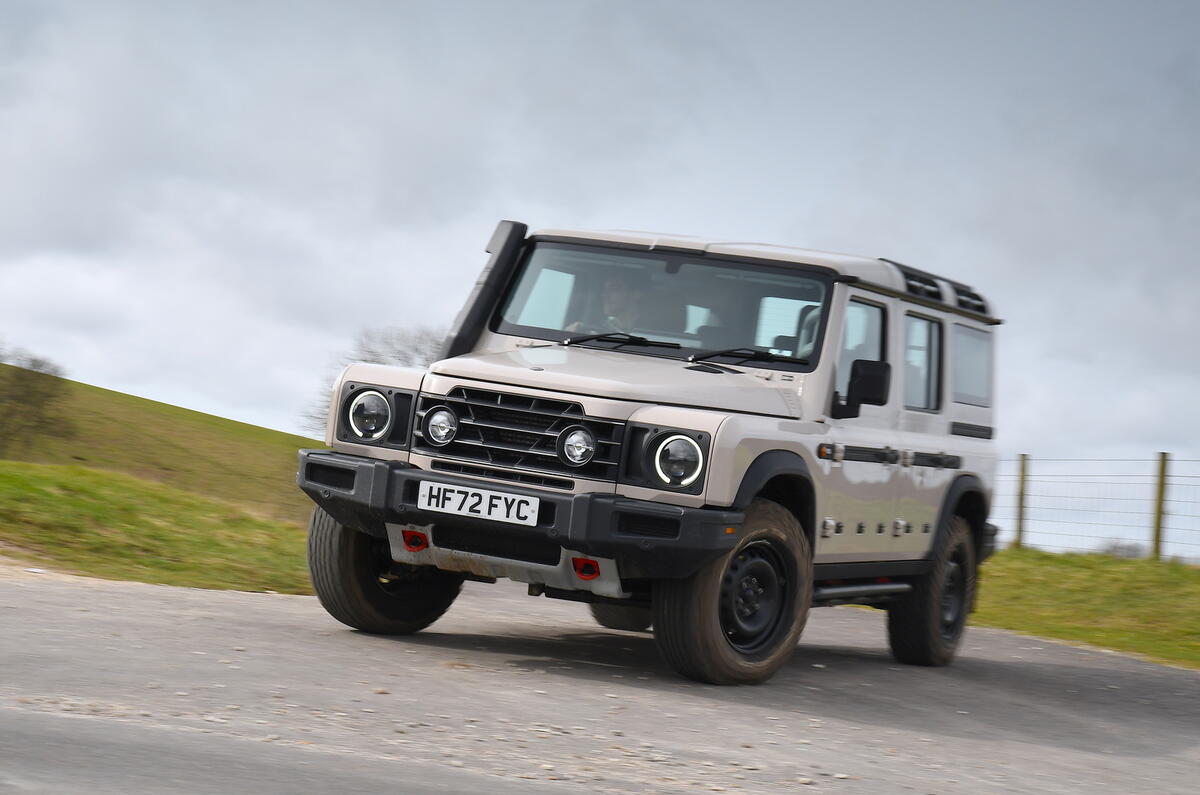
At last, I found myself at the right place and time to drive an Ineos Grenadier. It was only a short drive but long enough to find that I liked it and its off-road capability.
All serious modern 4x4s would have completed the chalky course that I drove but not all with such ease.
I drove a Utility Wagon, which lacks a Station Wagon’s locking front and rear diffs but still has a locking centre diff, a low-ratio gear set and hill descent and stability control systems. It’s not the full terrain-adjustable gamut you would find on a Land Rover or a Jeep, but the hardware is strong.
Still, I wondered whether Ineos would find enough buyers for a £70,000 car that’s not plush enough to be a luxury off-roader yet not cheap enough to be a utility pick-up. Until yesterday, when I ran into another new owner.
I’m suspicious of anecdotal evidence, but he’s the fourth I know who’s enjoying the car, is realistic about its on-road performance (better than an old Land Rover Defender, as good as a Mercedes-Benz G-Class) and who likes the blocky switchgear.
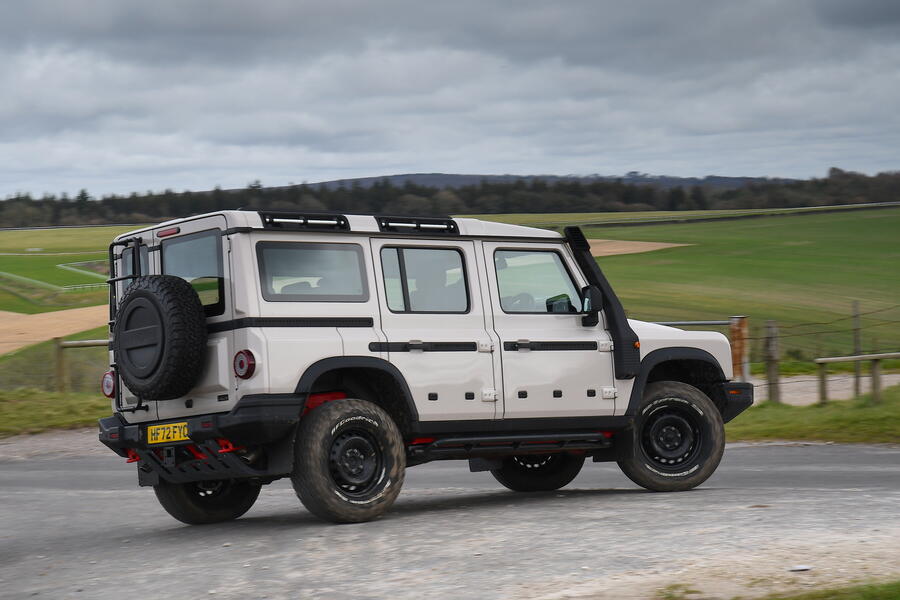
Plus, he joked, if you only open the smaller of the two boot doors, you can slide a sausage dog in without swinging open the bigger door.
On a serious note, that’s handy if you have a trailer: my 2005 Defender’s rear door quickly whacks a trailer’s jockey-wheel handle.
That Ineos is aware of ‘flippers’ – people who intend to sell cars quickly for profit – even though it will have built 15,000 Grenadiers by the year’s end suggests that demand is strong.
The new Quartermaster pick-up and a chassis-cab variant for those who need to affix their own utility equipment will further boost appeal.
Still, “we recognise that one car line isn’t going to make the automotive business that it’s our vision to be, so we will invest in a portfolio of products and the technology they need,” Ineos Automotive CEO Lynn Calder recently said, referencing the “probably smaller” battery-electric SUV that will follow in 2025.
Anecdotal again, but I know a few people who dislike the Grenadier for looking like an old Defender. It does, but it also has a bit of G-Wagen, big Suzuki Jimny, early Toyota Land Cruiser… They can’t all look that different, can they?
Anyway, I think that regardless of how you feel about it, Ineos deserves admiration for having had the nous and the will to make it at all. Few firms would put up the resources and the nerve.
Maybe it takes a privately owned one like Ineos to do it, given the risks, ever-changing regulatory requirements and necessary long-term capital investment.
When it comes to the smaller SUV, Ineos will have to commit to buying about £15 billion worth of batteries. Who knows when it will start paying that back? Fair play to them for doing it.
Rolls-Royce's customer base continues to get younger
A recent snippet about the Rolls-Royce Spectre: the average age of a Rolls customer is now just 43.
Granted, that doesn’t sound that young in isolation. It’s roughly when I started worryingly Googling ‘when does middle age start?’. But it’s young for an average car buyer.
“When I joined Rolls-Royce [in 2010], the average was 56,” CEO Torsten Müller-Ötvös told me. “43 is spectacularly young, because [it means] for every one in their 60s, we need one who is 20.”
It’s funny how that translates to companies with a more youthful reputation. As Müller-Ötvös said: “Our buyers are now younger than Mini’s.”

Join the debate
Add your comment
There are two major issues with the Ineos Grenadier.Firstly it looks wrong. The old discontinued Land-Rover Defender looks great. That's one of the reasons old Land-Rovers are cult vehicles. But the Ineos Grenadier has a Lada-like quality which doesn't make it desirable in the same way. Secondly, the Ineos Grenadier has combustion engines. This is a major faux pas for a new vehicle, as it was out of date before it even launched. If they were smart, it would have been built it on a dedicated EV platform, like a Rivian, or a Ford F150 Lightning.But then Jim Ratcliffe owns a petro-chemical company (Ineos), so he is part of the problem, not part of the solution.