











From £43,9407

Does revived estate hit sweet spot between classic and modern appeal?

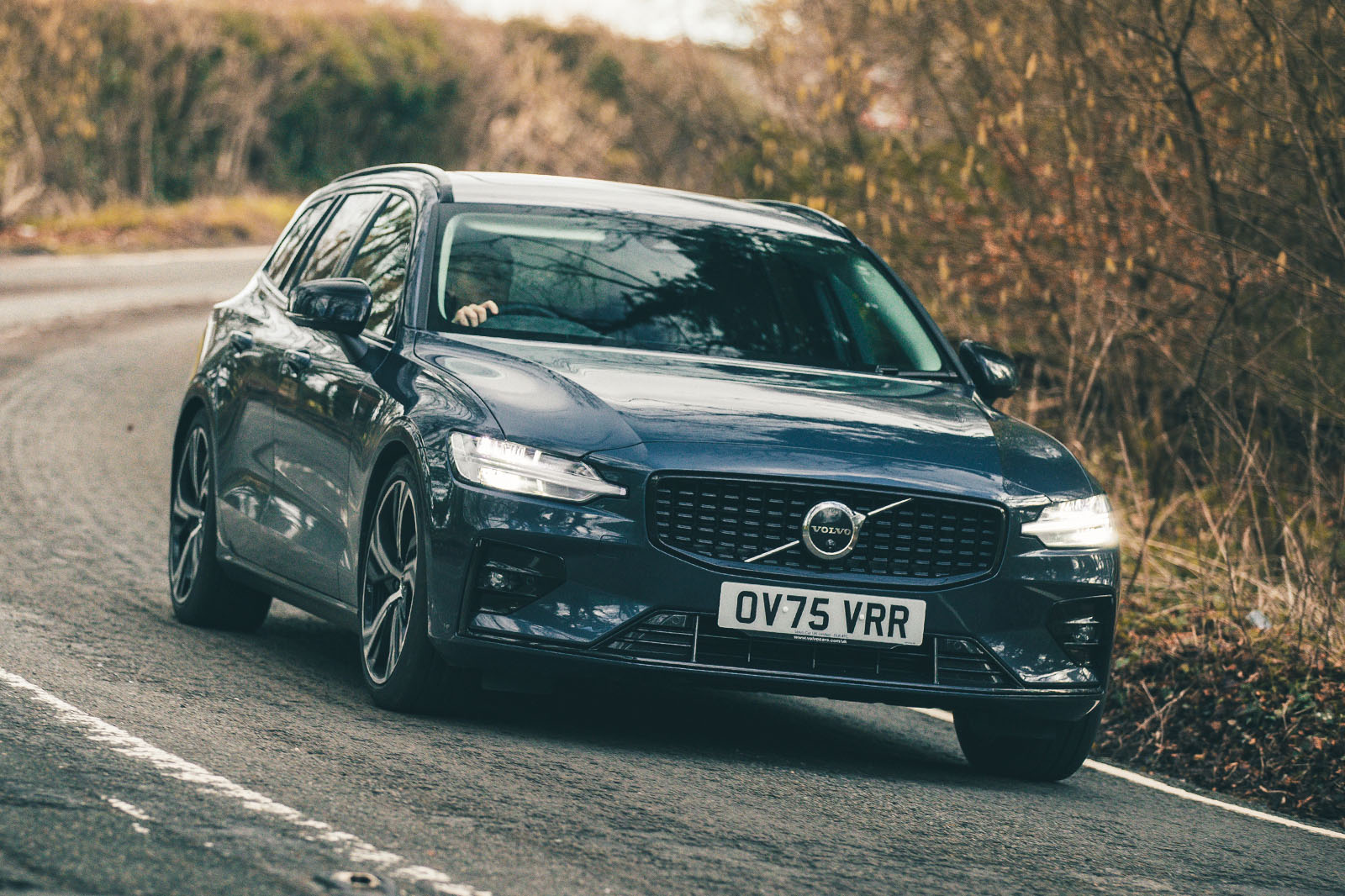
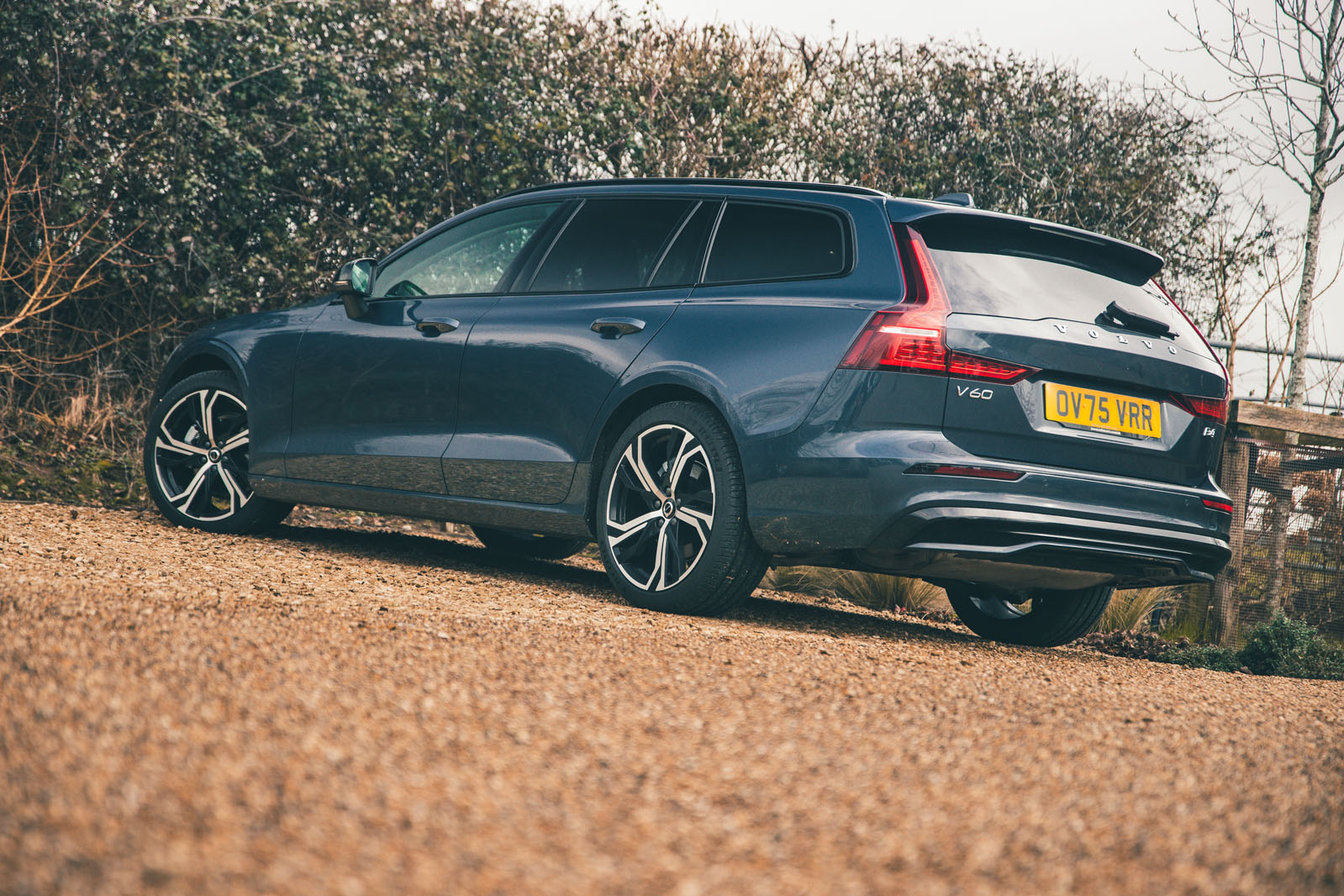
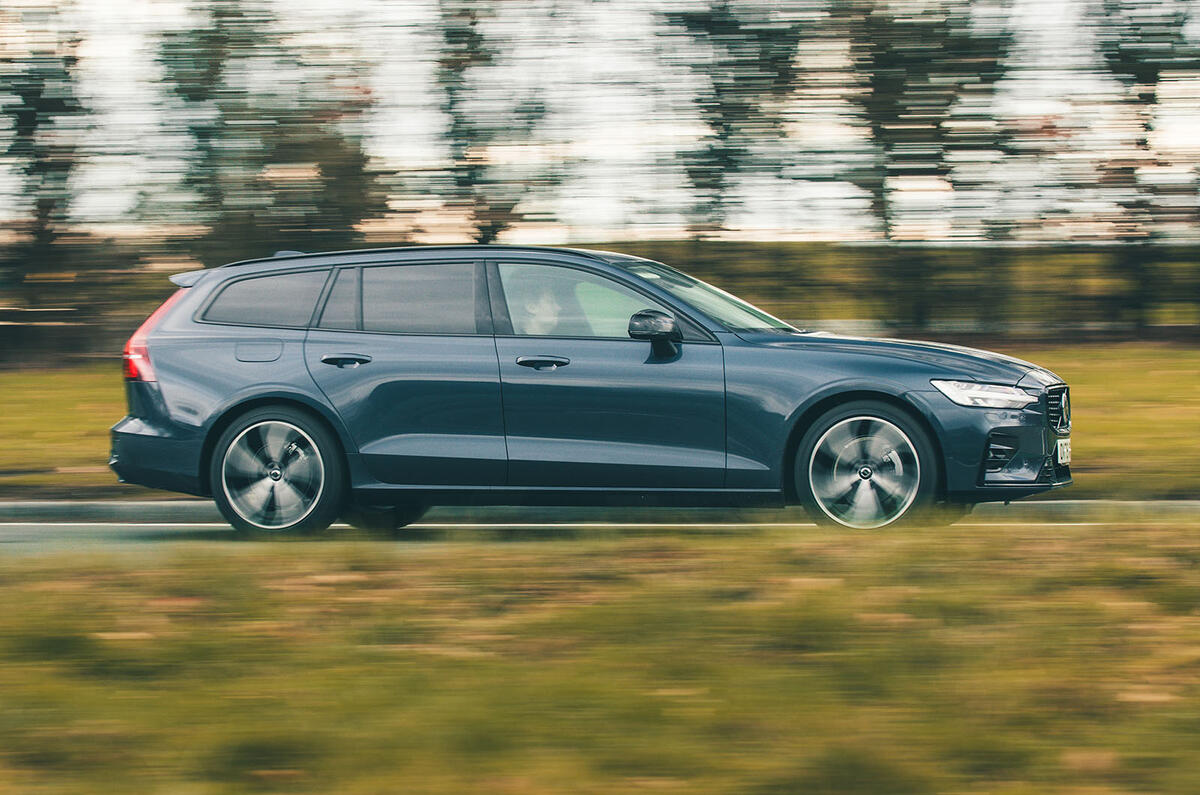
We’re not in the habit of road testing cars fully eight years old, but in the case of the Volvo V60 we’re willing to make an exception on the basis of its era-ending status.

The much-loved middle-ranking Swedish estate is not long for this world, and in fact its maker has already made one attempt on its life. In 2023, Volvo’s UK operation temporarily became SUV-exclusive, unless you were the lucky plod, in which case the order book for one of the company’s enviably svelte, cosseting wagons remained quietly open. Cue much outrage, as well as wagon-related capital flight to Audi, VW and Mercedes.

Given Volvo’s reputation was built on the estate format, it was a peculiar decision – Black Sabbath going acoustic, if you like – but also one that has since been reversed. It means that, at least for the time being, you can again order a V60 from new.

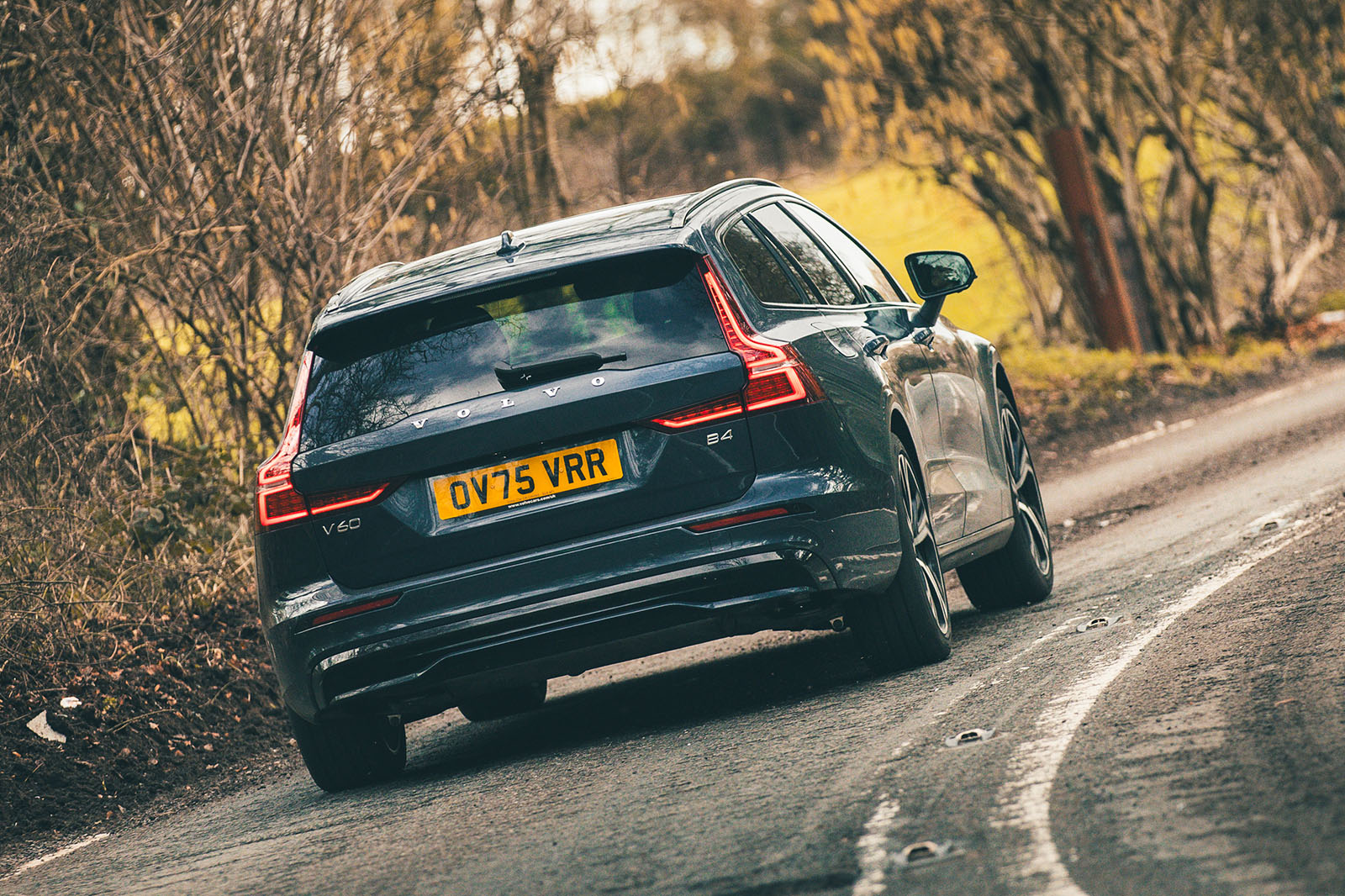
Having road tested a diesel model in 2018, and then a powerful postfacelift PHEV variant in 2022, here we turn our attention to the 194bhp, front-driven mild-hybrid B4 petrol – an increasingly rare bird in a world of plug-in powertrains, even though BMW, Audi and Mercedes still all offer comparably straightforward versions of their mid-size estates.

On paper this is the lowliest model in the V60 line-up, but for anyone who likes the idea of an attractive, uncomplicated family estate unencumbered by a heavy drive battery and that is reasonably cheap to run, the B4 might appeal.

Advertisement

DESIGN & STYLING

7
Volvo V60 review 2026 002

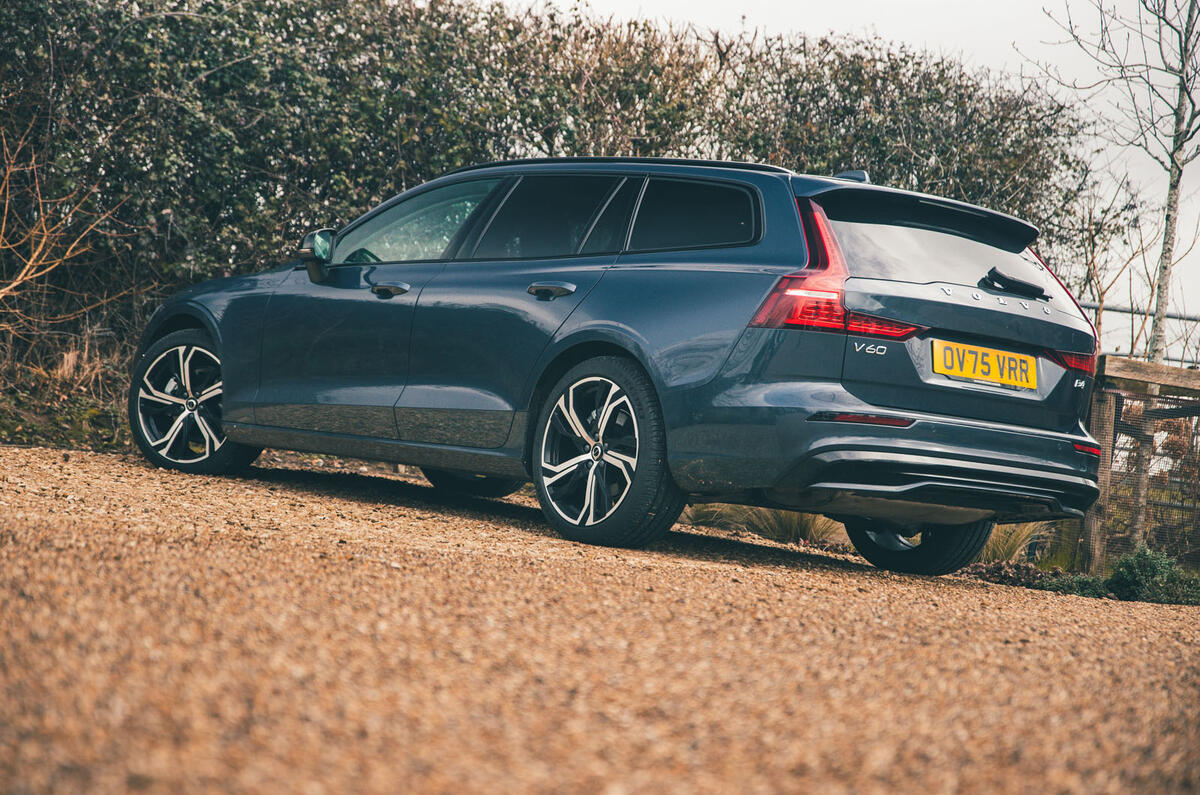
The resurrection of the V60 in summer 2024 brought about a streamlining of the range. Today there are just two trim levels – Plus and Ultra, Core having been dropped – and three powertrains.

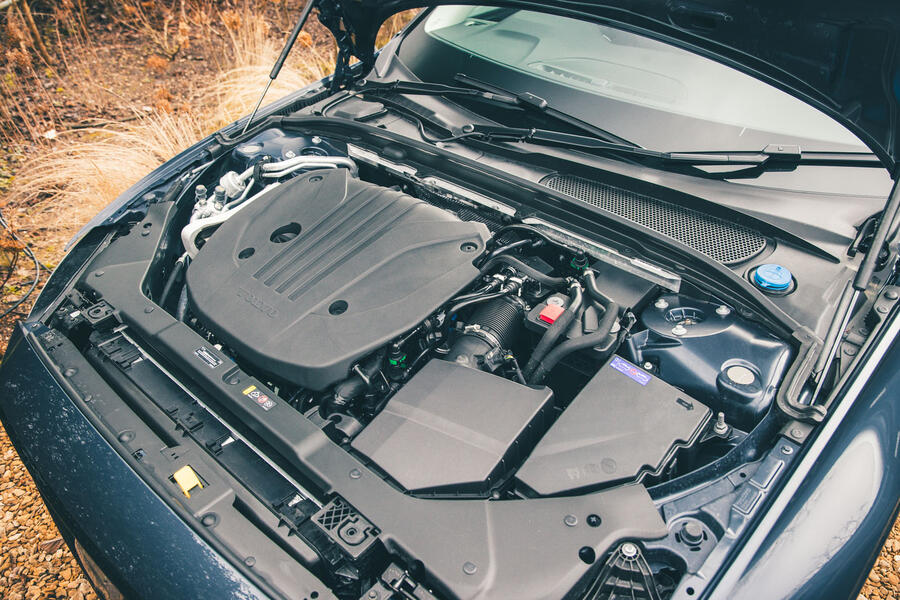
The B4 tested here carries the familiar B420T5 four-cylinder turbo petrol engine, tuned to 194bhp and 221lb ft. As ever it is mounted transversely and drives the front wheels. The mild-hybrid element is an integrated startergenerator (ISG) fed by a 48V battery. It can either help slow the car with regenerative force or inject torque into the driveline under acceleration, as well as providing enhanced stop-start functionality.

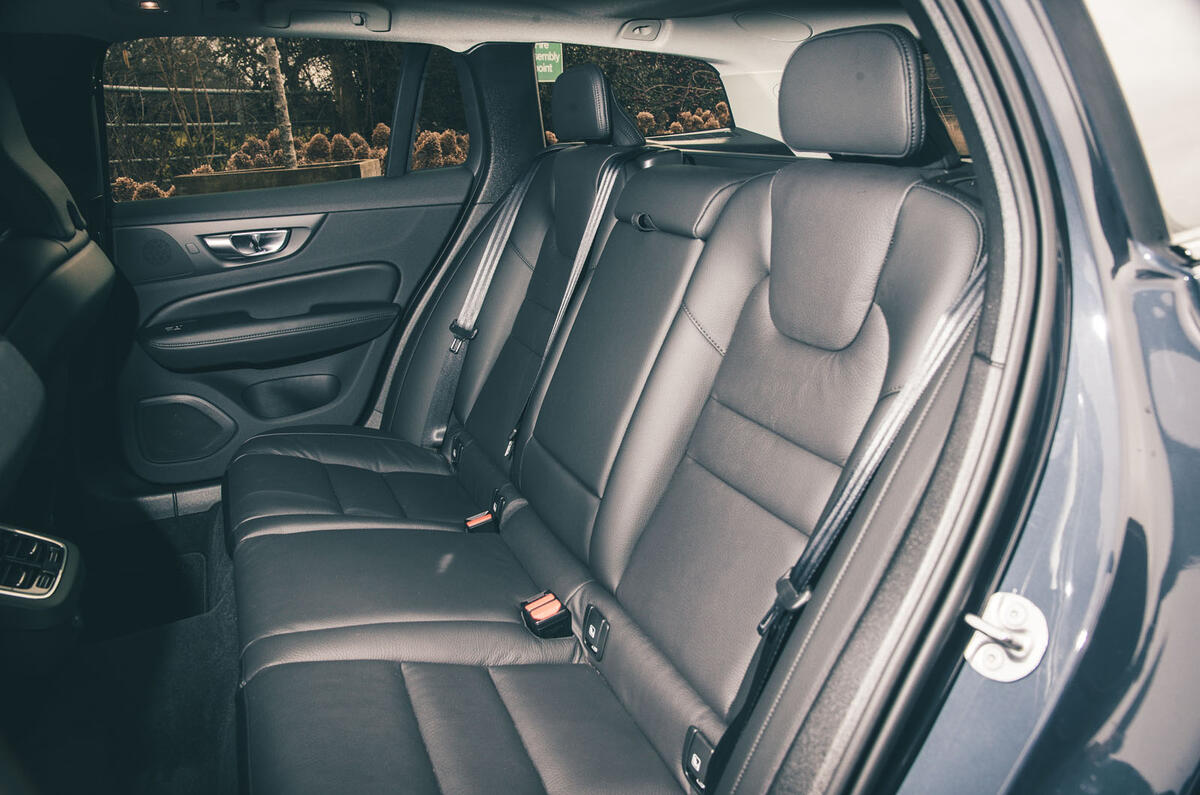
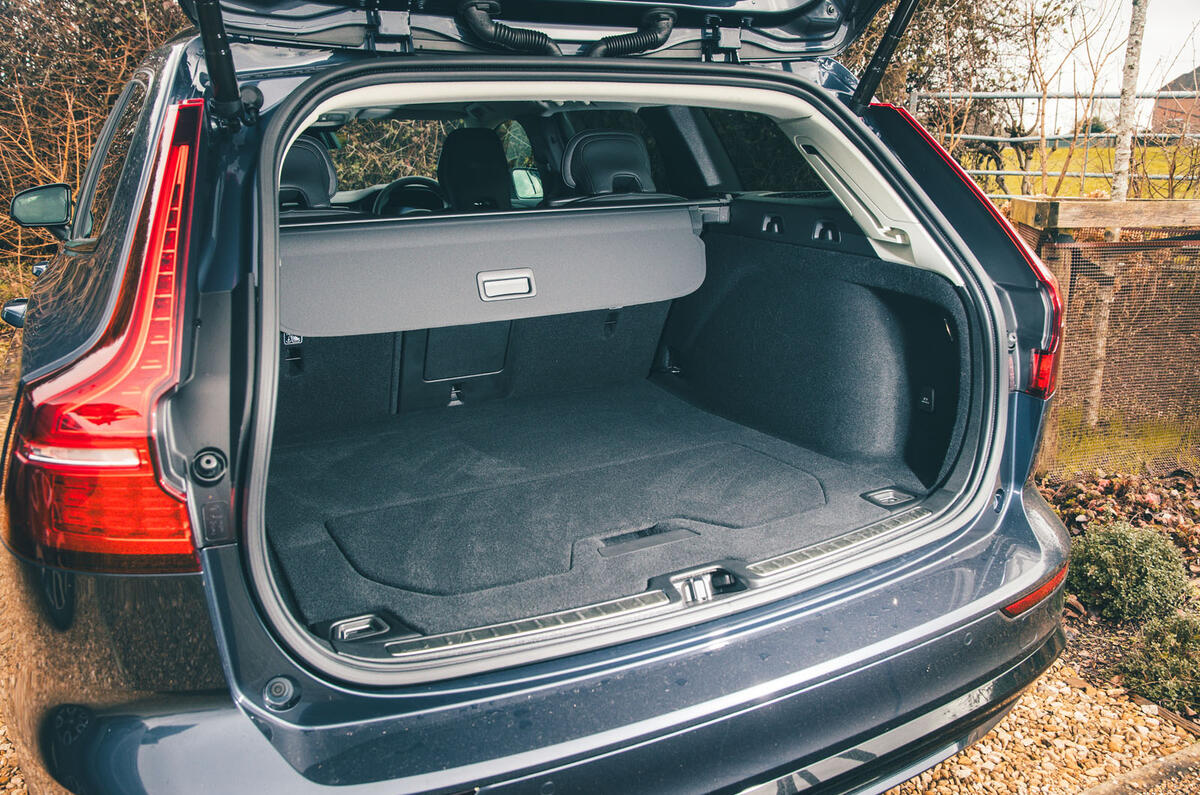
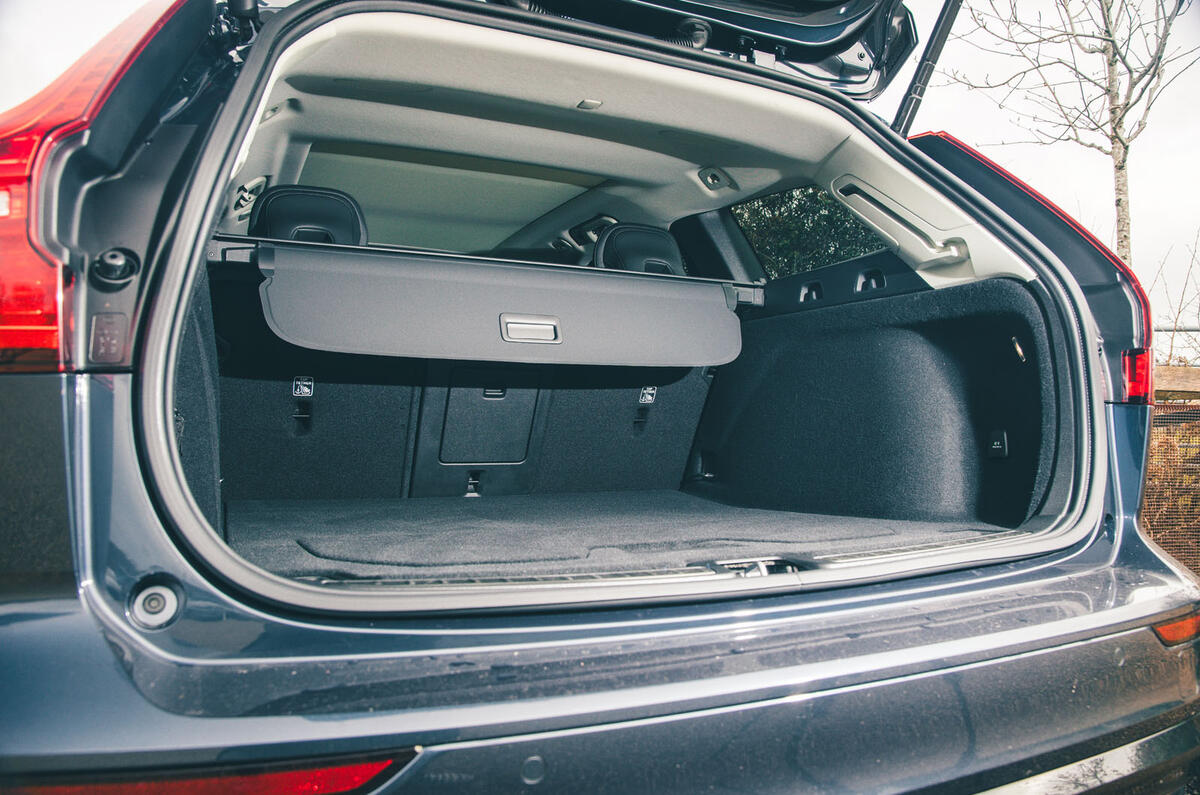
The V60’s practicality features really impress me, but it is a shame that its 40/60 folding back seats are split for the benefit of left-hand-drive markets. A 40/20/40 split would solve it.

For four-wheel drive you need to opt for either the T6 or T8 PHEVs, which take the B4 layout (minus the ISG) and augment it with a permanent magnet synchronous motor that drives the rear wheels directly. A few years ago the V60 PHEV was given a considerable boost in usable battery capacity to 14.7kWh, for a real-world EV range of around 50 miles. Today that looks less impressive in light of the BMW 3 Series 330e’s recent upgrade to 19.5kWh – a figure the Mercedes C-Class C300e matches. Both rivals will generally achieve 60 or so EV miles in everyday driving.

Downstream of the B4’s engine is a seven-speed dual-clutch gearbox by HYCET, a subsidiary of Great Wall Motor in China. The T6 and T8 still use an eight-speed automatic from Aisin, allowing for a lower crank speed at 70mph (2101rpm in the B4, 1837rpm in the T6/T8). The transverse orientation of these engines has always made the V60 less inherently sporting than the BMW 3 Series Touring, and perhaps less quietly well balanced than the Mercedes C-Class. However, the V60 has never felt unsophisticated in dynamic terms, and it continues to use the doublewishbone front suspension layout with a multi-link plus composite transverse leaf-spring arrangement at the back.

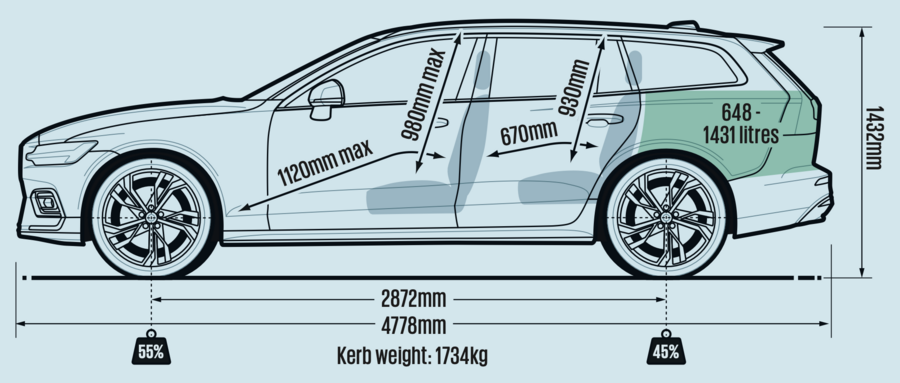
Note that, with the sidelining of the old trim hierarchy, and there no longer being an R-Design V60, you can’t have the car on shorter, sportier springs any more: in our book, a good thing. With the 60-litre tank full, our test car weighed a creditable 1730kg – four kilos under claimed – with a 55:45 distribution, front to rear.

INTERIOR

7
Volvo V60 review 2026 006

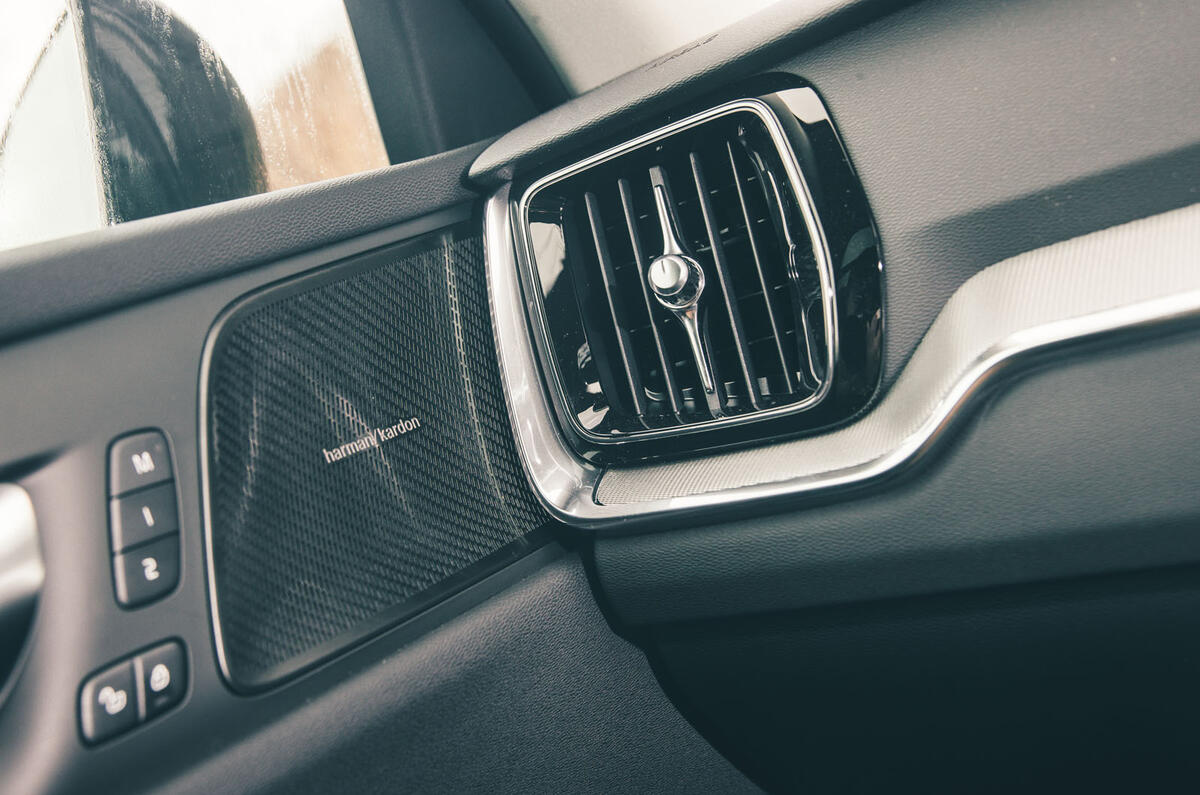
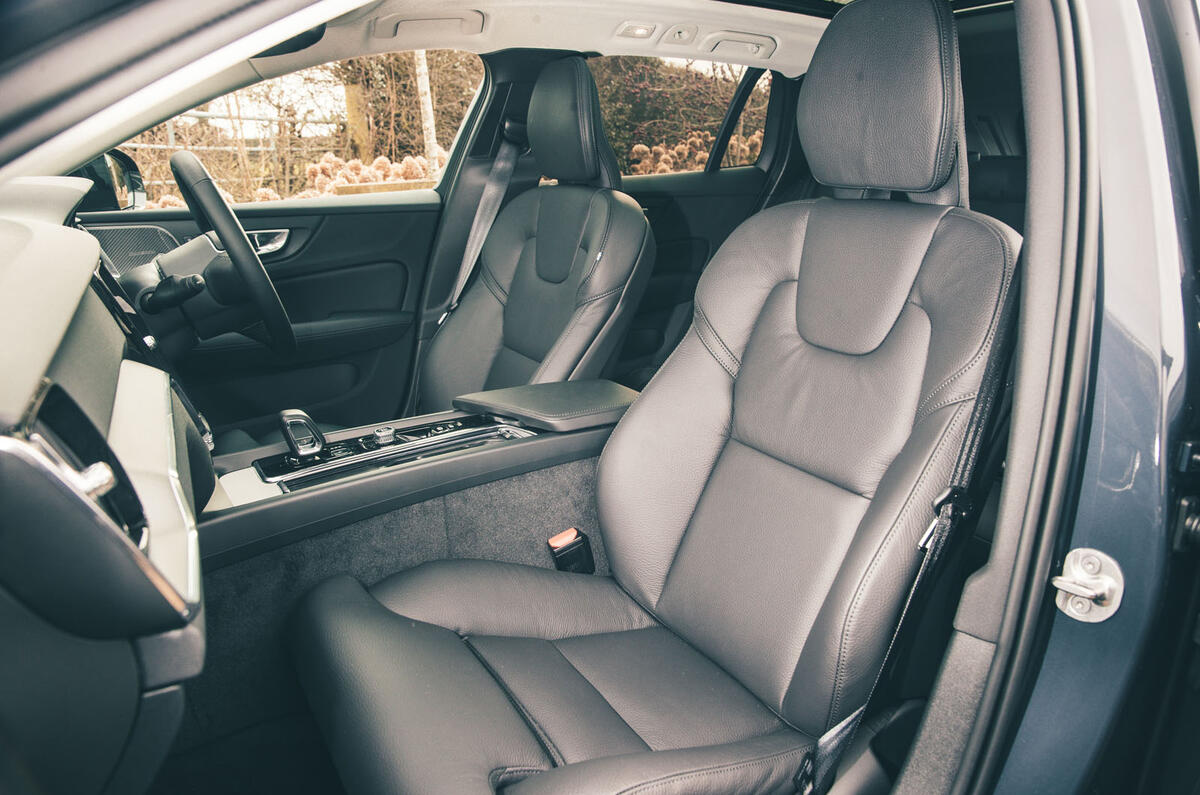
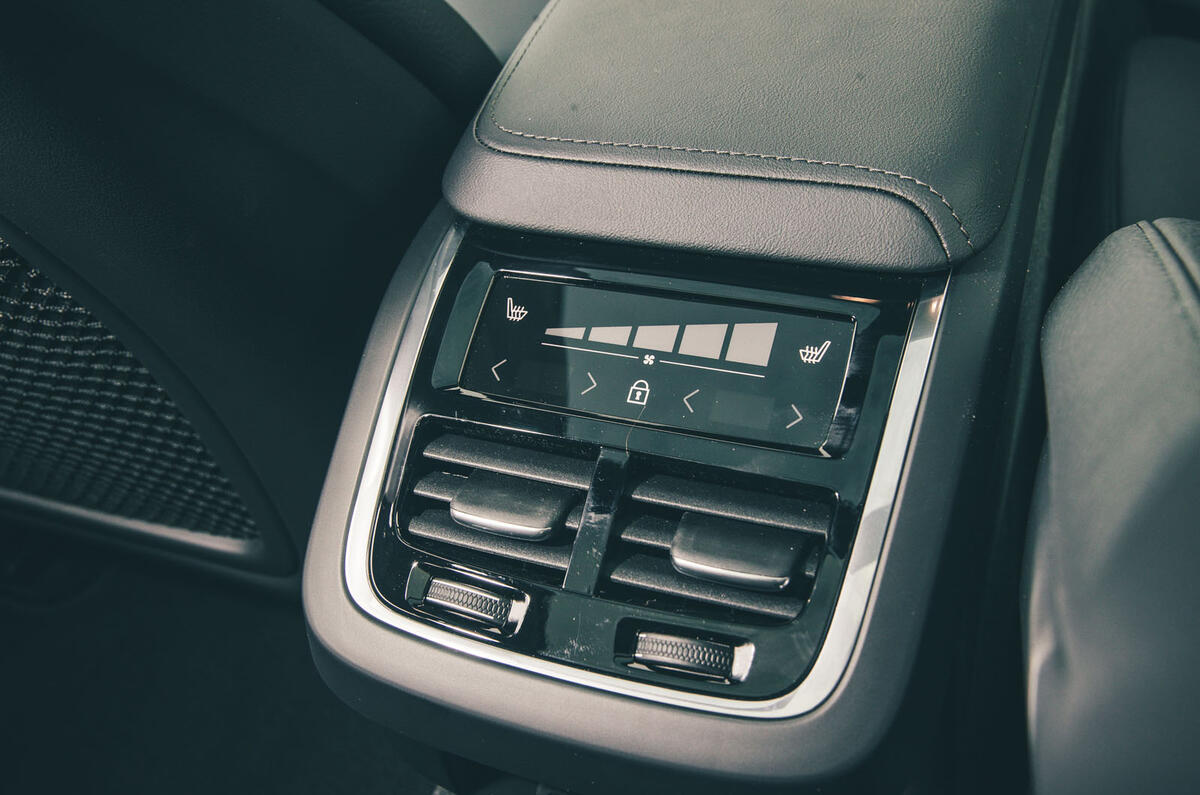
Depending on your outlook, in 2026 you’ll find the V60 cabin to be either reassuringly traditional or a touch long in the tooth.

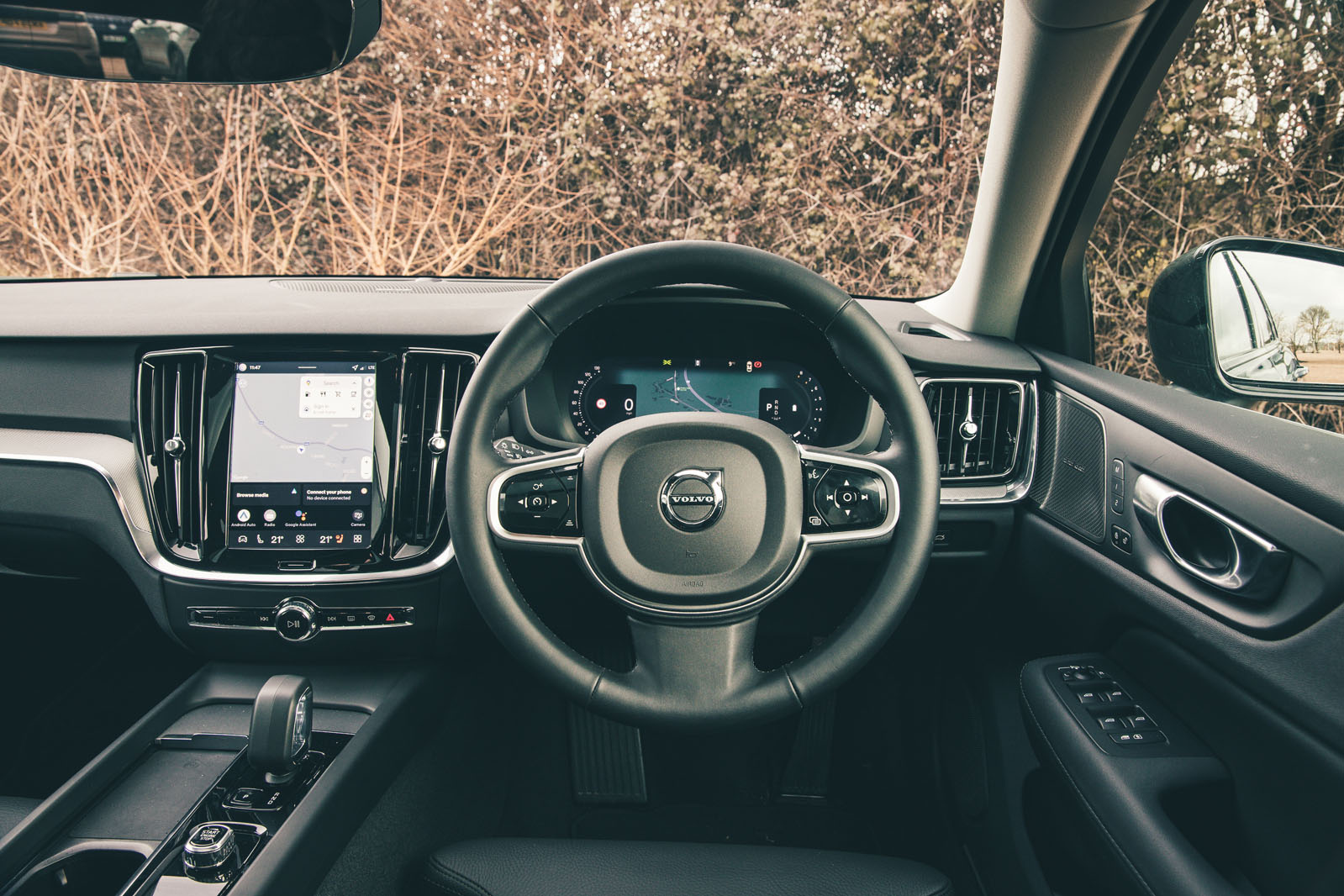
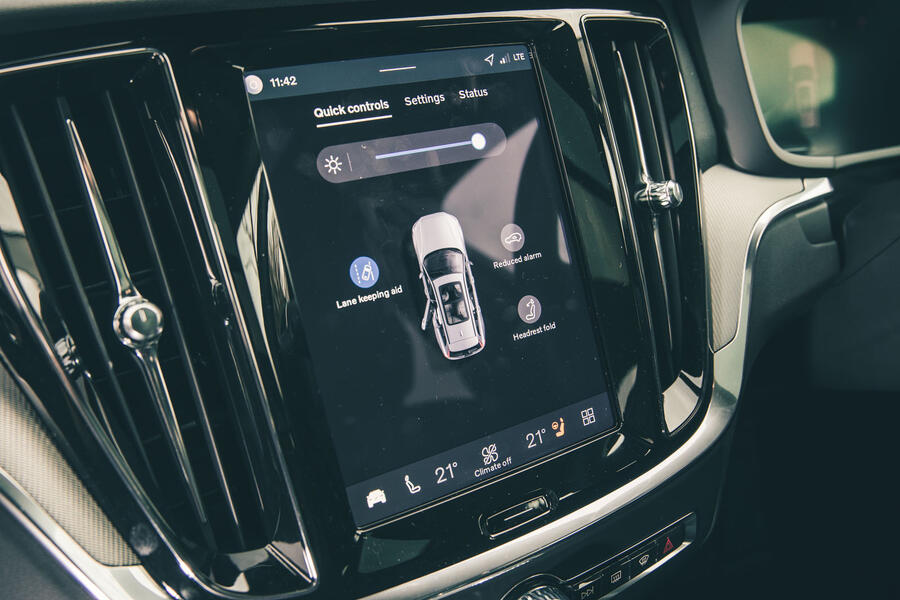
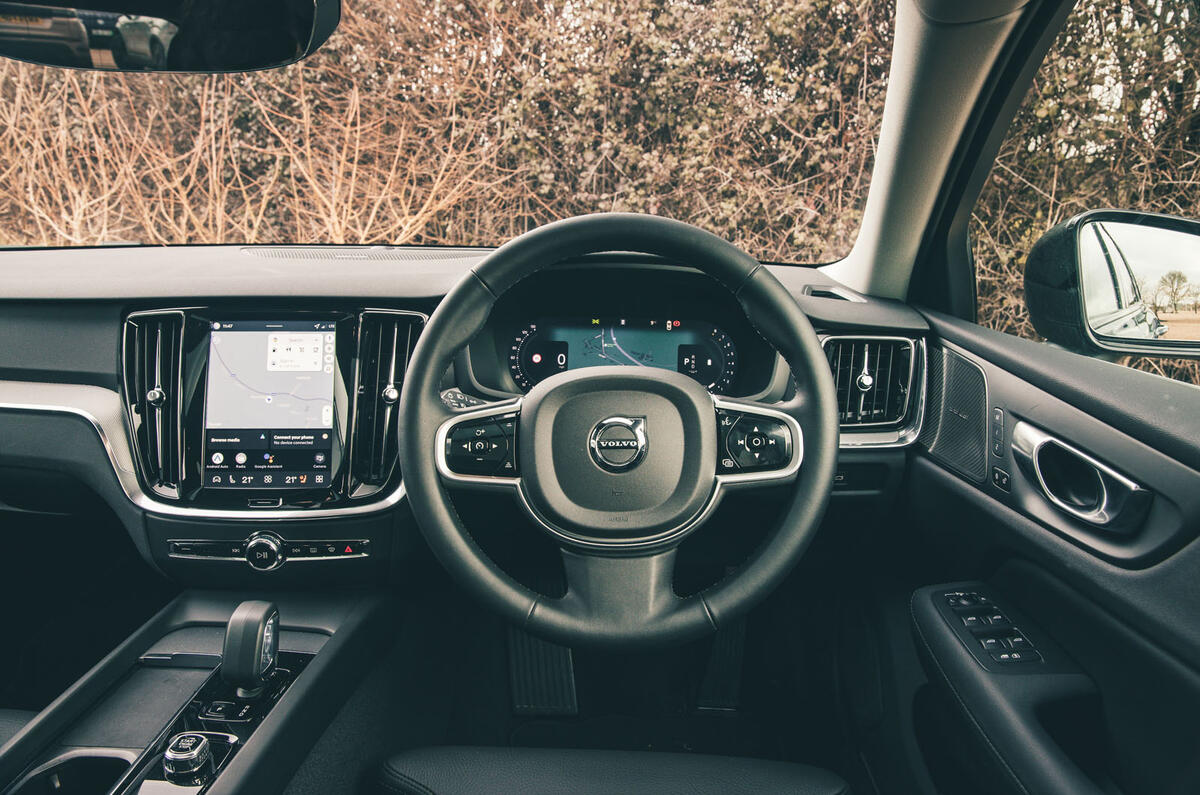
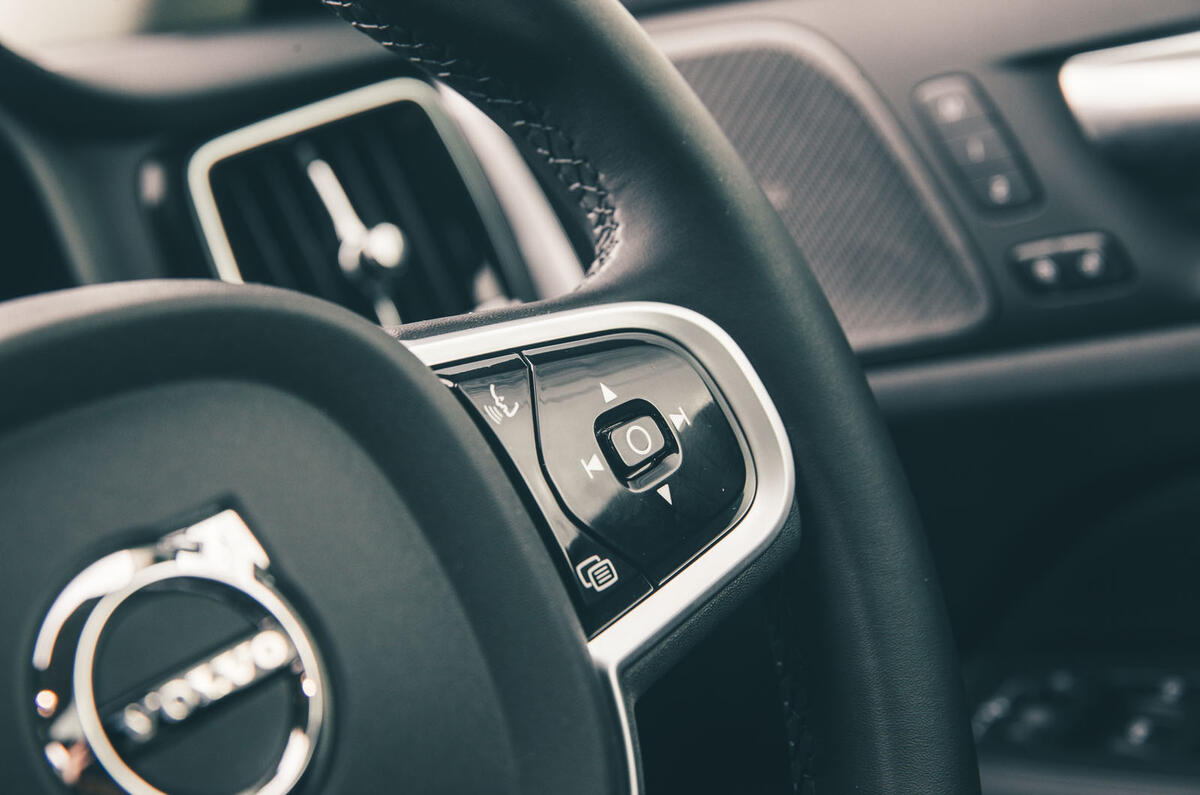
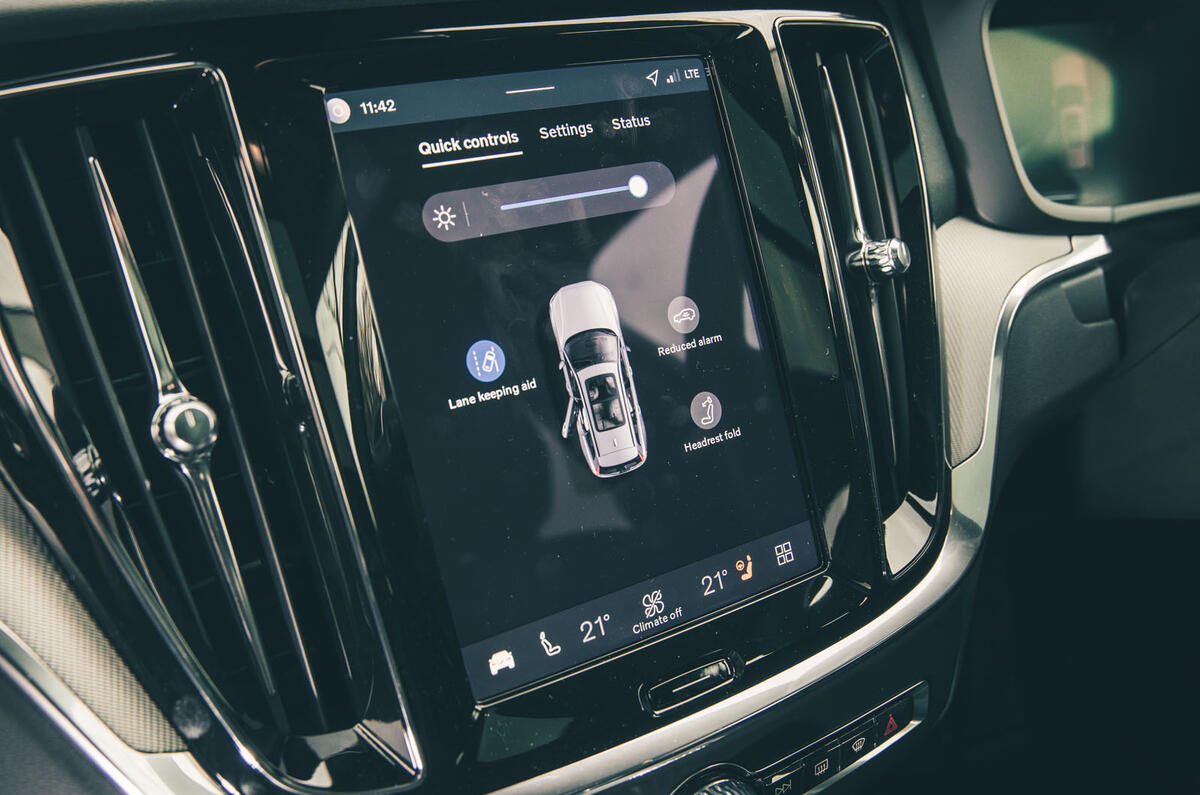
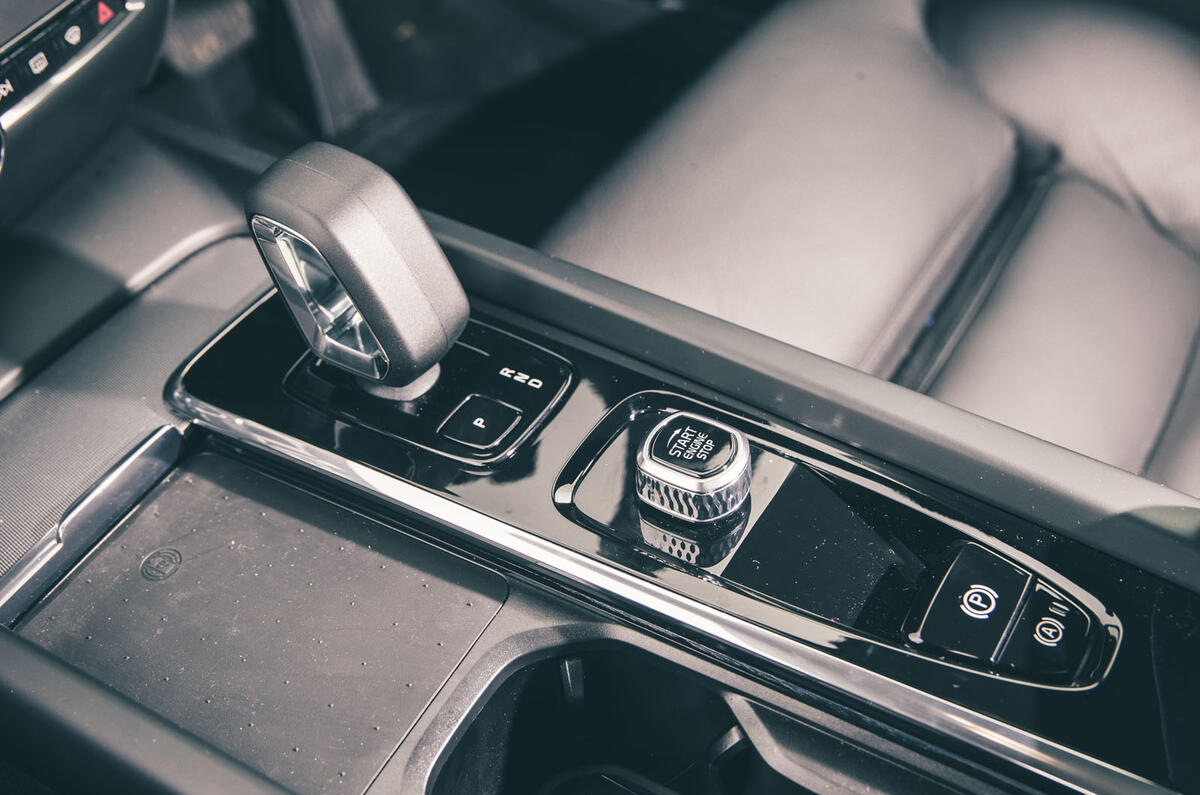
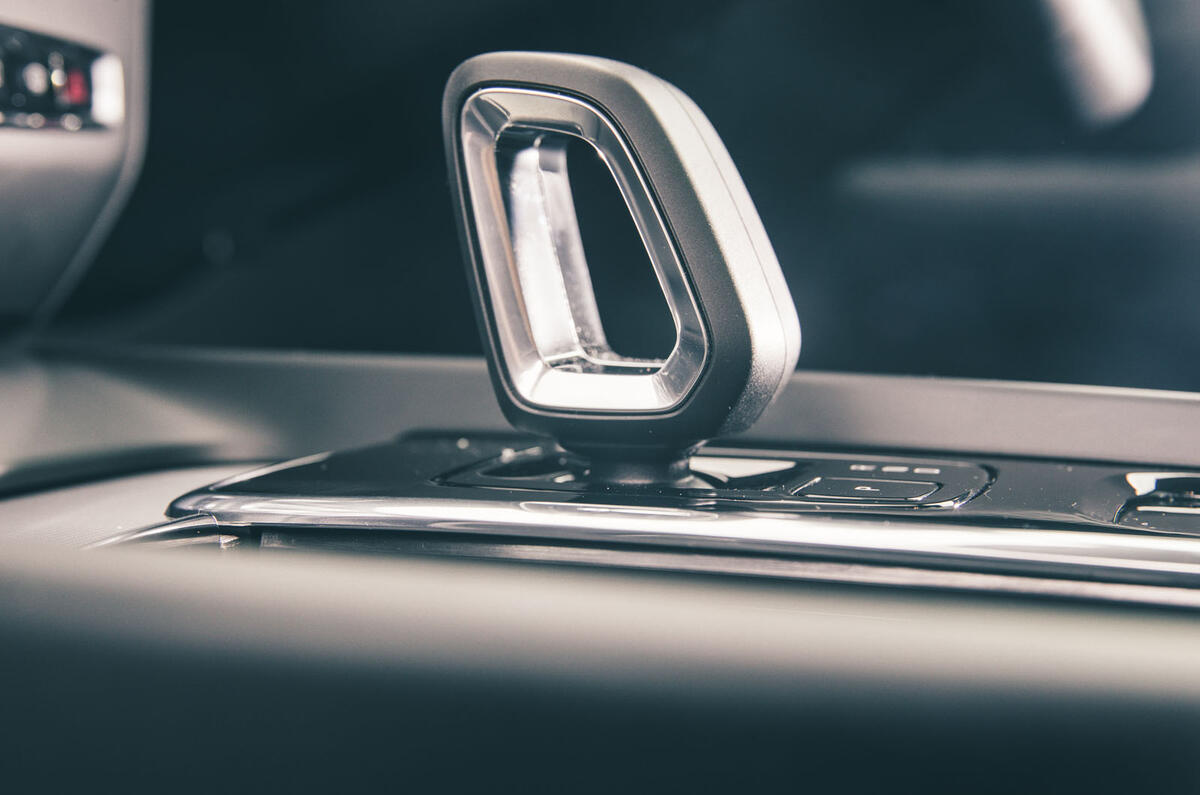
Certainly, the infotainment touchscreen feels cramped today, and while Volvo has swapped the lengthy old gear selector for a stubbier handle in keeping with current trends, the switchgear in general has a touch of ‘previous generation’ about it. (Not that we should complain about, say, adjusting the mirrors with real knobs and buttons – items so conspicuously absent in some of Volvo’s more contemporary cars.)

A remote rear headrest release button accessible from the driver’s seat has been offered by Volvo for yonks, and I don’t know why other brands haven’t nicked it. One-up driving with the whole rear screen to see through makes a big difference to all-round visibility.

Equally, the dashboard is tall and proud, the digital instrument binnacle properly cowled, and that small, portrait-oriented central display is unobtrusively integrated into the fascia, unlike so many artlessly tacked-on screens you now get even in quite expensive cars. It is a reassuring, homely cockpit, with neat proportions, few gimmicks, excellent seats and good adjustability in the driving position. It would be more compelling still had this car been optioned with the ‘blond’ leather interior, which lightens the ambience considerably.

The software is also better than ever. The infotainment’s response and usability have come a long way since the Sensus era, which ended in 2021 when Volvo transitioned to using Google’s Android Automotive OS, with built-in Maps and Google Assistant. The system has recently been upgraded with faster Qualcomm Snapdragon processors, and we experienced bright, crisp graphics and no latency, with neat integration of Android Auto smartphone mirroring.

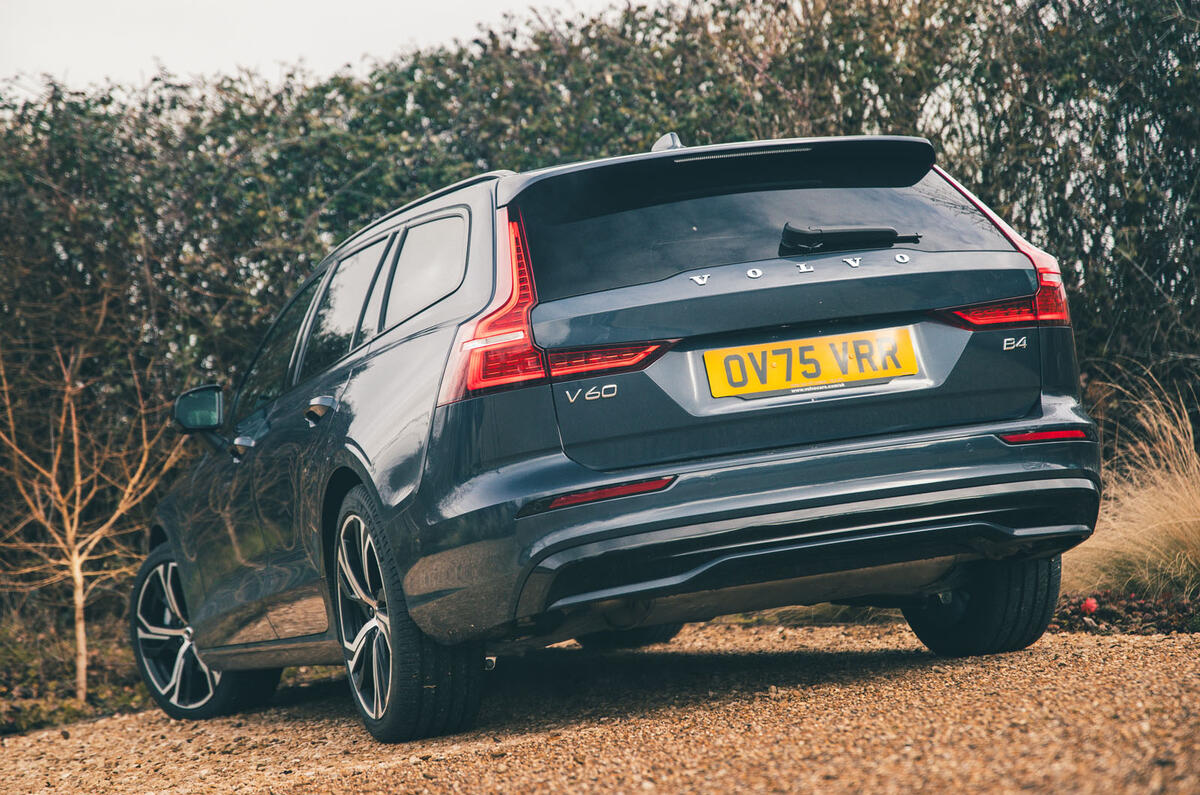
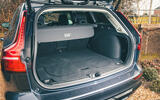
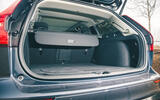
That said, the ‘contextual’ bar of everchanging icons, depending on which app you’re using, still irks. Where is the consistency? Elsewhere, the V60 remains a smaller car than you might expect, so far as capacity goes. Its low roof is partly to blame, and even in the B4 the boot floor is high due to the 48V battery. The bay is longer than that of a 3 Series Touring, mind.

ENGINES & PERFORMANCE

6
Volvo V60 review 2026 020

Those opting for the B4 powerplant will be prioritising more rational attributes than outright pace, we suspect.

However, in the case of estates it pays not to be too conservative with power and torque, given that these cars, when loaded with passengers and luggage, can easily carry 300kg more than they do when we run our telemetry tests at Horiba MIRA. Our VBox recorded a time of 7.5sec to 60mph in damp conditions, with an untidy getaway as the front axle scrabbled for traction.

This is fair going for an entry-level model with a four-cylinder petrol engine only mildly aided by electric power, but still quite ponderous by the standards of premium estates. With peak torque of only 221lb ft, even arriving decently early at 1500rpm, the V60 B4 might feel sluggish when loaded up. A four-wheel-drive T6 PHEV would probably get to 60mph at least two seconds quicker, even in the same miserable conditions, and would cope better with high loads.

That said, for roughly £45k, the V60 offers better than average power. We also have some reservations about the steady-shifting dual-clutch gearbox. In entirely laid-back driving it is fine, but if you need to execute an overtake it is slow to kickdown. Also, when pulling away from a standstill, on at least one occasion there was pronounced driveline shunt as the gearbox seemingly failed to anticipate which cog would be needed when.

Otherwise, Volvo’s efforts over the years to quieten down this four-cylinder unit have paid off. It emits a gentle, nasal and wholly inoffensive tone even under duress, and mostly goes about its business very meekly indeed. It also pulls smoothly, spinning out linearly and only beginning to feel strained when pushed beyond 5500rpm or so.

The V60 also stopped well on its Michelin Primacy 4 tyres. The 48.8m taken to undramatically haul up from 70mph in the damp easily beat the 54.3m taken by the BMW 330d xDrive M Sport tested in 2020. During brake-fade tests, the car then doled out five emergency stops with a variance of barely a cubit.

RIDE & HANDLING

8
Volvo V60 review 2026 018

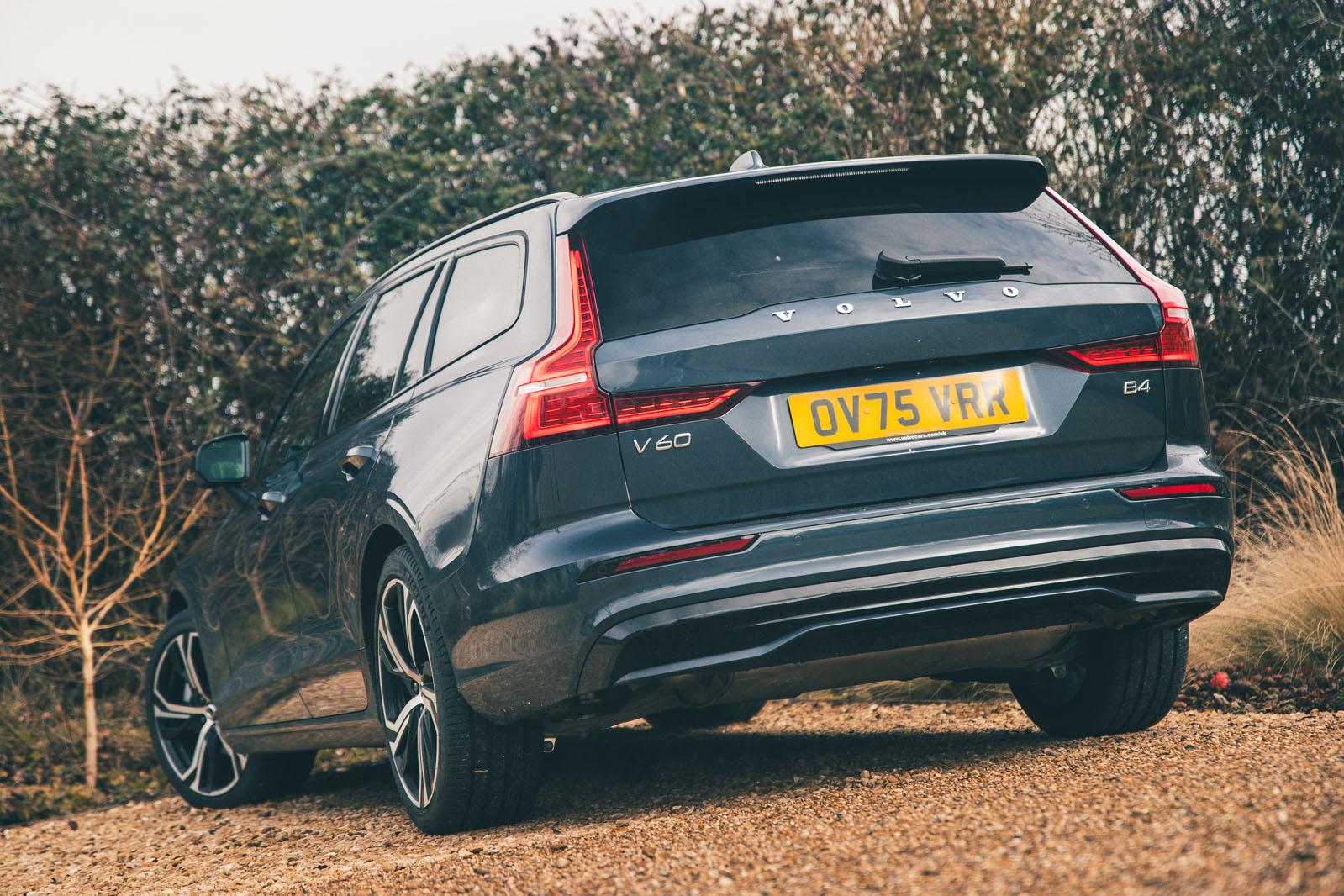
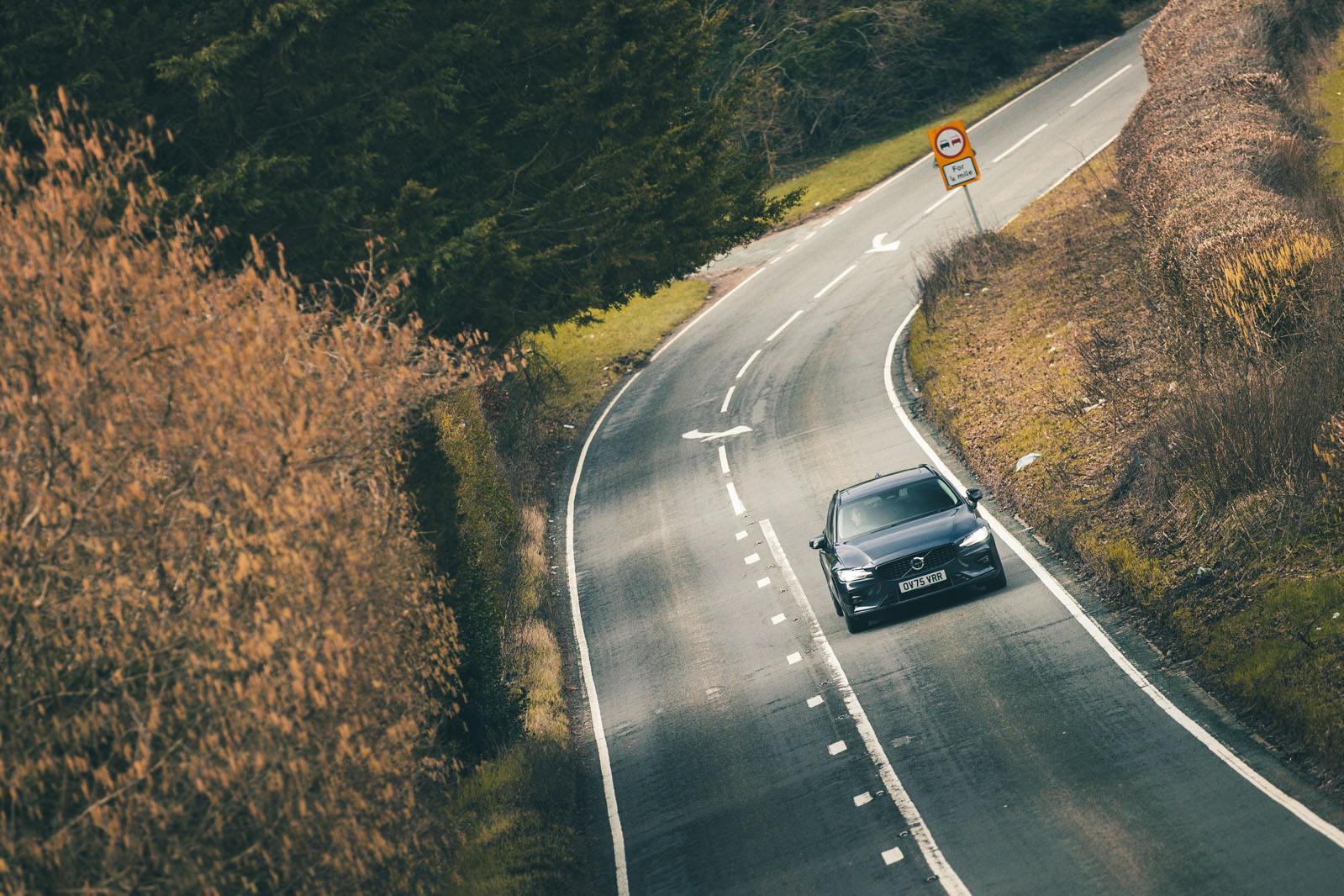
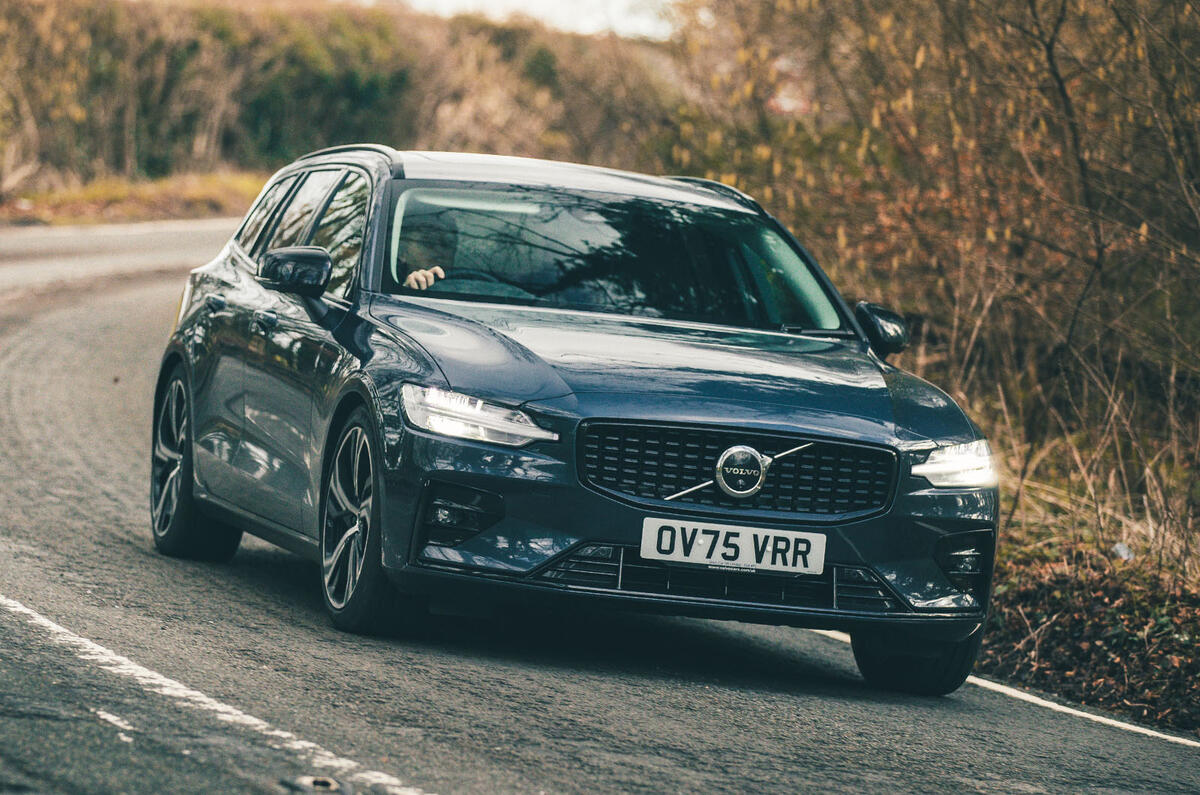
Now we get to the most endearing aspect of this car. Our test vehicle lacked the adaptive dampers you can have on rivals from BMW, Audi and Mercedes, but it demonstrated the quiet appeal of an old-school Goldilocks suspension set-up that manages to cater for nearly all environments and doesn’t require the driver to think about modes. Volvo hasn’t attempted to be sporty, with the exception of 19in wheels done more for aesthetics than anything.

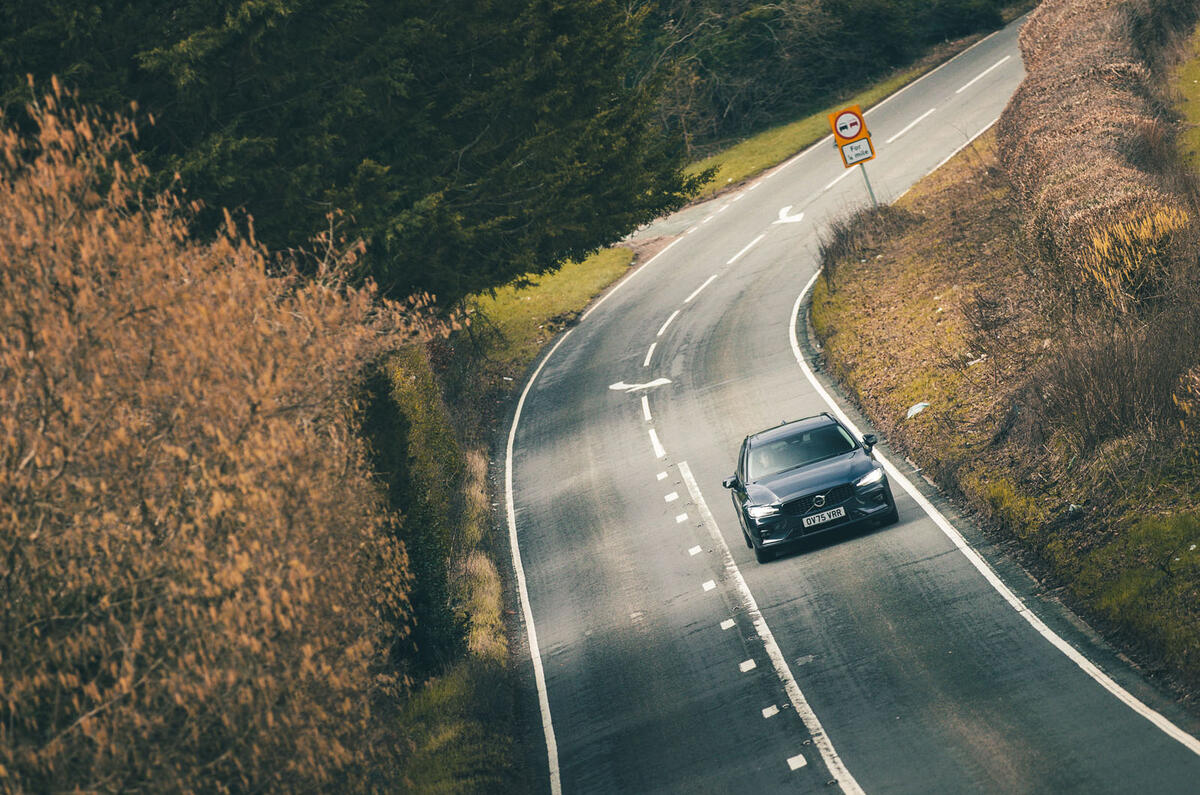
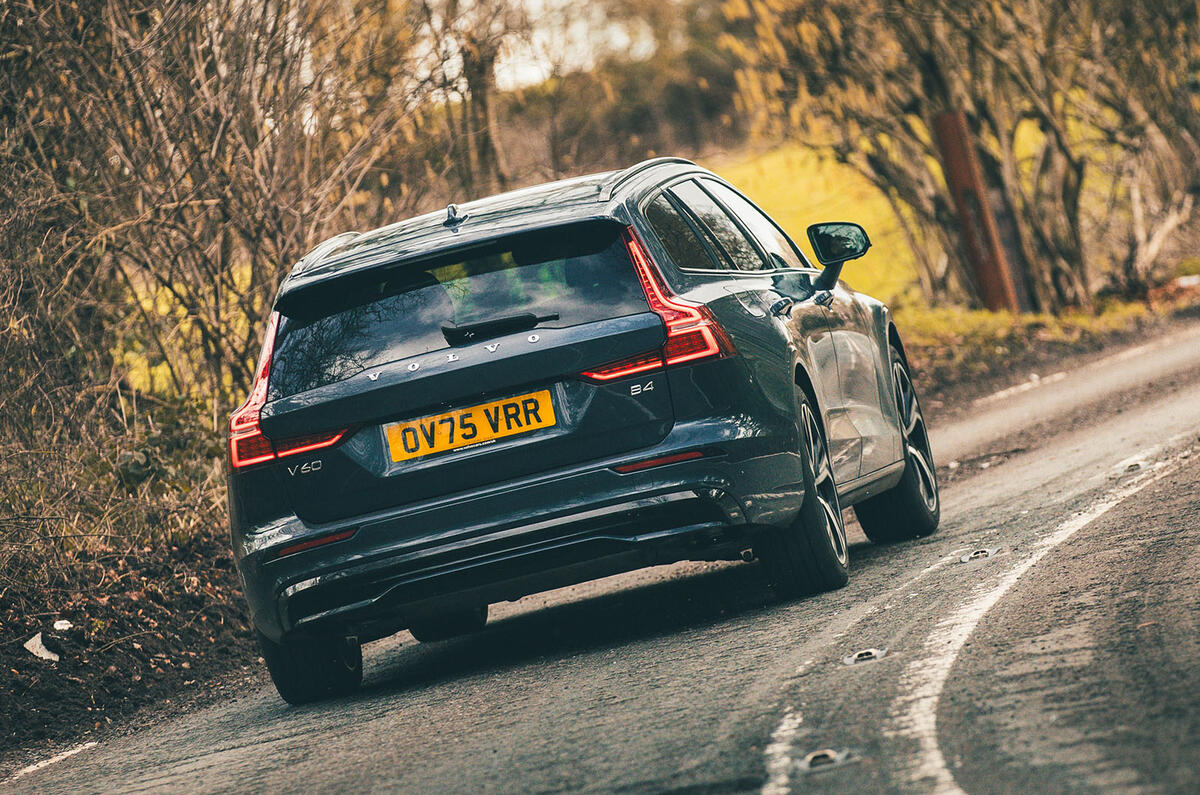
As a result, the V60 pairs a casually sped steering rack, of moderate weight, with suspension that permits some heave and lethargy at a cruise but keeps roll in check, such that the car is easy company on B-roads. So long as you park any fun-chasing intentions, the V60 is supremely intuitive and will dependably go where you point it with a good degree of unflustered poise. It is also a serene cruiser, the long nose and sleek body seeming to mitigate wind noise effectively.

The only caveat is secondary ride. “The V60 is supremely intuitive and will go where you point it” This suspension can crash over potholes. It’s a Volvo bugbear.

MPG & RUNNING COSTS

7
Volvo V60 review 2026 001

Our car recorded a touring economy of 40.1mpg and an ‘everyday’ economy of 42.6mpg, translating to ranges of 529 and 562 miles respectively. The B4’s motorway economy looks particularly strong, exceeding that of the heavier T6 tested in 2022 by more than 10%, and trailing the now-defunct diesel V60 D4 by only a similar degree.

The range starts at £45,190 for the B4 in Plus specification, which includes the full Google suite, a heated steering wheel and plenty of opulent touches besides. You would pay the additional £4000 for Ultra grade mainly in order to have the panoramic roof, 360deg cameras and Harman Kardon sound system. From there the jump up to a PHEV, in the form of the £51k T6 Plus, is quite minor, and with 17g/km and 57 miles of claimed electric range, such a move might be worthwhile for company car drivers.

As for the B4, the ranks of non-PHEV/electric premium cars may be dwindling, but it has a full roster of rivals. Of them, we would lean towards the 181bhp BMW 320i Touring, on the strength of its cabin quality, assured handling and very similar pricing. However, the MHEV Mercedes C200 (pricier, admittedly) and Audi A5 Avant are each worth 

VERDICT

7
Volvo V60 review 2026 021

The second-gen V60 has been with us for a long time, and sure enough it does feel a touch over the hill in some respects.

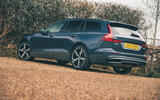
However, this entry-level B4 remains worthy of consideration for anybody in need of a straightforward estate with no small degree of premium appeal. It is less expensive and more powerful than its key rivals, and to our eyes still looks as fantastic ever. Factor in a good ride and handling balance, plus the updated infotainment, and this is a pleasant, easy-going estate to live with. It’s something of an antidote to overly complex, digital-heavy contemporaries.

Richard Lane

Richard Lane
Title: Deputy road test editor

Richard is Autocar's deputy road test editor. He previously worked at Evo magazine. His role involves travelling far and wide to be among the first to drive new cars. That or heading up to Nuneaton, to fix telemetry gear to test cars at MIRA proving ground and see how faithfully they meet their makers' claims. 

He's also a feature-writer for the magazine, a columnist, and can be often found on Autocar's YouTube channel. 

Highlights at Autocar include a class win while driving a Bowler Defender in the British Cross Country Championship, riding shotgun with a flat-out Walter Röhrl, and setting the magazine's fastest road-test lap-time to date at the wheel of a Ferrari 296 GTB. Nursing a stricken Jeep up 2950ft to the top of a deserted Grossglockner Pass is also in the mix.