From £64,8108

Long-lived SUV arrives with a new six-pot and extremely luxurious trim

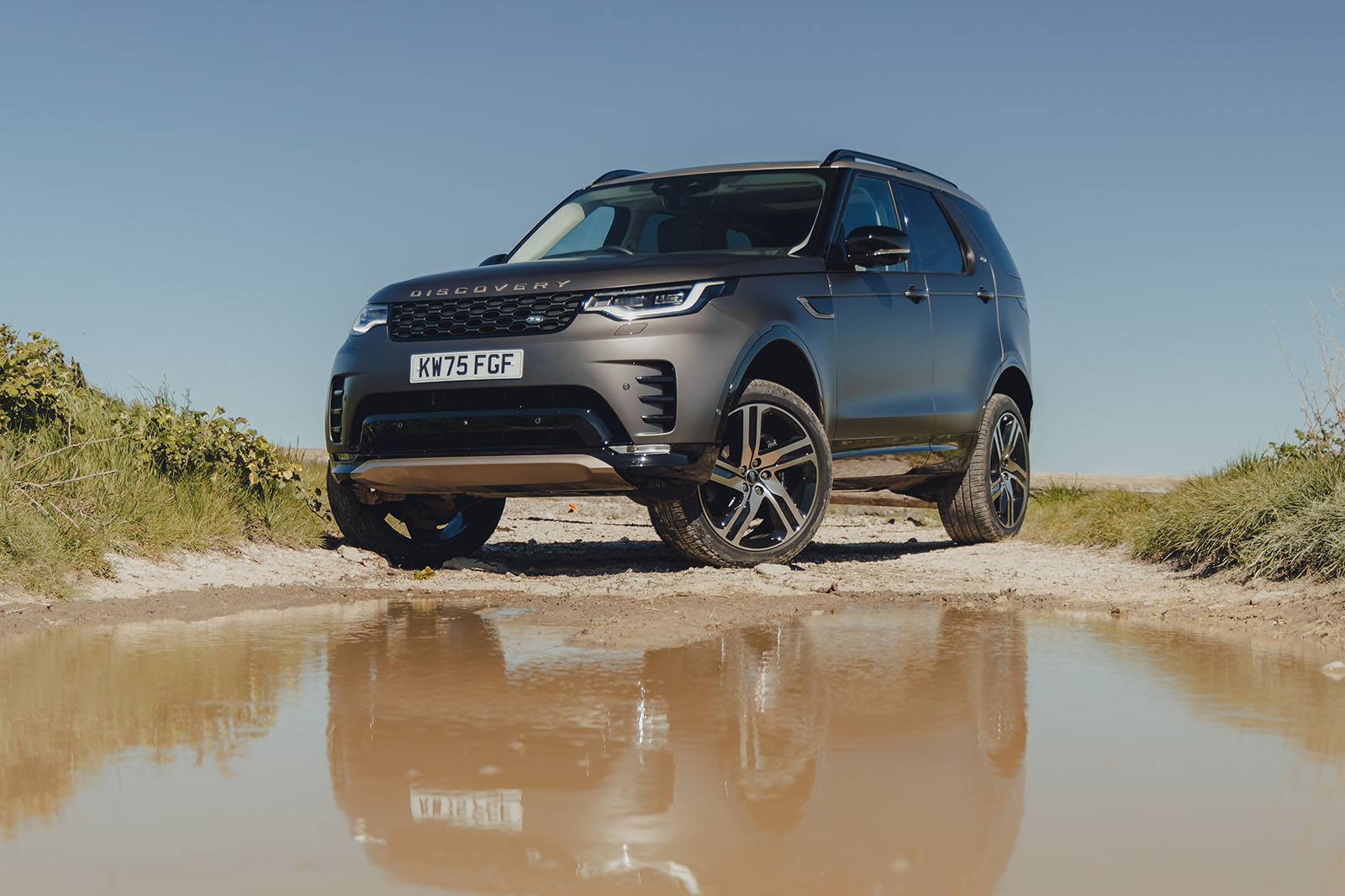
The fifth-generation Land Rover Discovery is a seven-seat premium SUV with apparent staying power. First announced in 2016, and hitting UK roads in early 2017, it will shortly celebrate its 10th anniversary, with no confirmed plan for a replacement model as yet.

Its 10-year life cycle has brought major powertrain changes and plenty of interior and exterior design tweaks. Not to mention one almost unheard of rarity among modern passenger cars: a wholesale relocation of its production base. The Discovery 5 was built in Solihull, alongside the Range Rover and Range Rover Sport, for the first couple of years of its life. Then, in 2018, production was relocated to Nitra, Slovenia, where the Defender would later be built alongside it.

But not since the car’s arrival in spring 2017 has the Autocar road test lavished any more attention on this long-serving, versatile and slightly unassuming big Land Rover. That is a situation we will now rectify, as we focus on a powertrain that the car inherited only relatively recently, and a new flagship trim level that, Land Rover claims, makes for the most luxurious Discovery yet.

Advertisement

DESIGN & STYLING

8
Land Rover Discovery Tempest review 2026 002

JLR’s model and platform codenames are less intuitive than, say, BMW’s – and the Discovery’s history illustrates that rather well. The current, fifth-generation Discovery (the L462) made waves by abandoning the hybrid body-on-frame chassis of the Discovery 3 and 4 for the aluminium unitary platform on which the Range Rover (L405) and Range Rover Sport (L494) of the time were based.

However, the replacement Range Rover (L460) and Range Rover Sport (L461) models that came next, in 2022, went onto a new, more electrification-ready platform dubbed MLA Flex. That left the Discovery more closely related to the Defender (L663) of 2020, whose ‘D7x’ platform was derived from the Disco’s ‘D7u’ architecture. This in turn helps to explain the shift in production location.

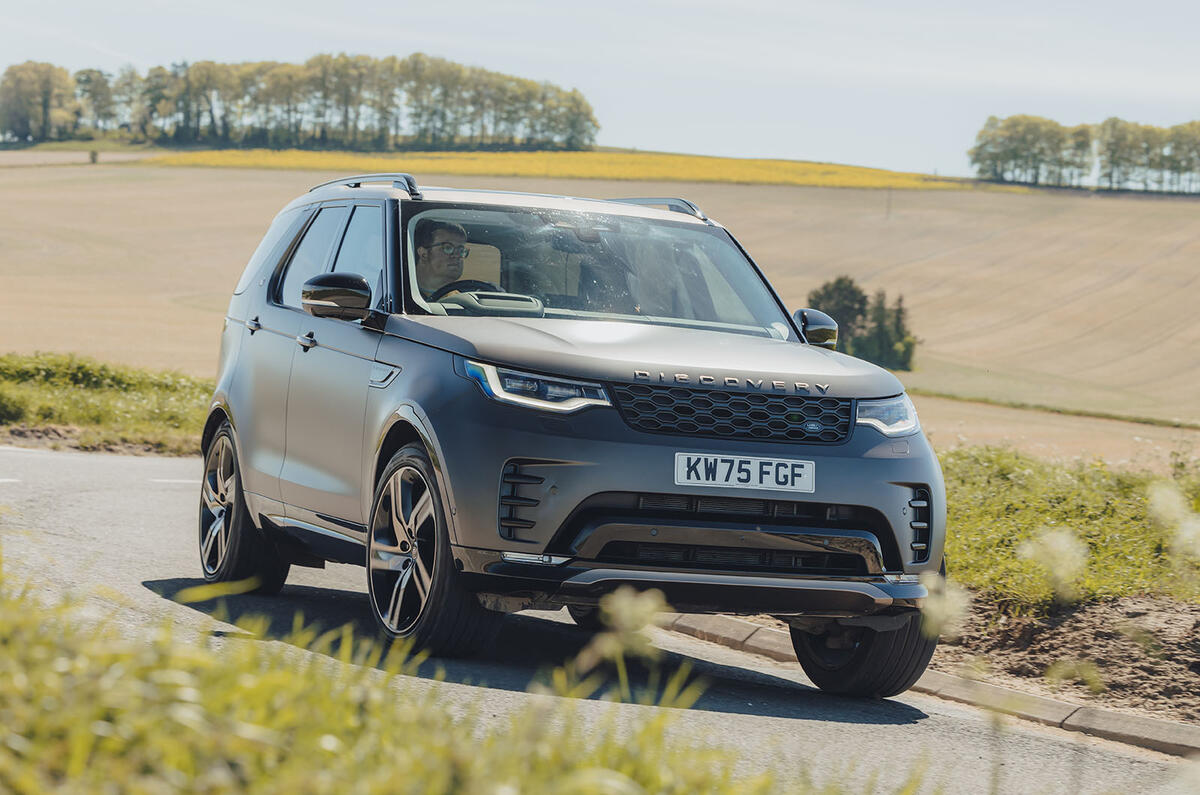
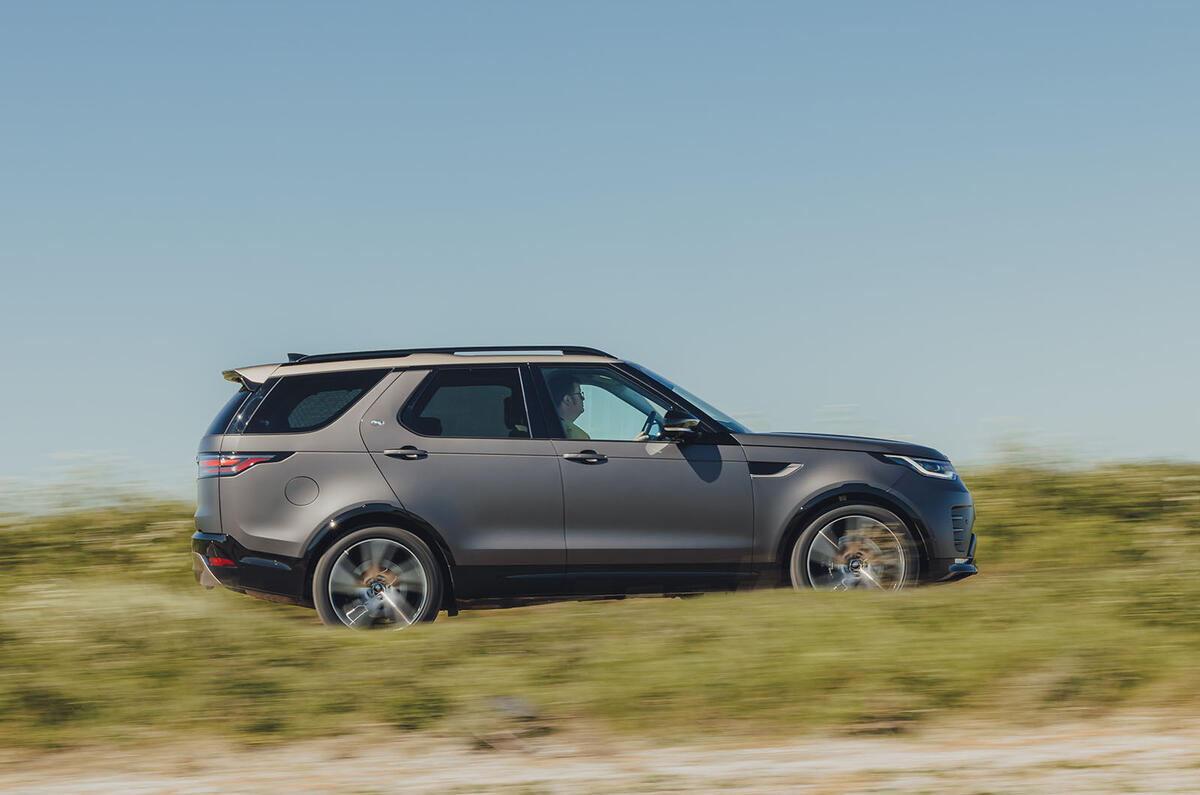
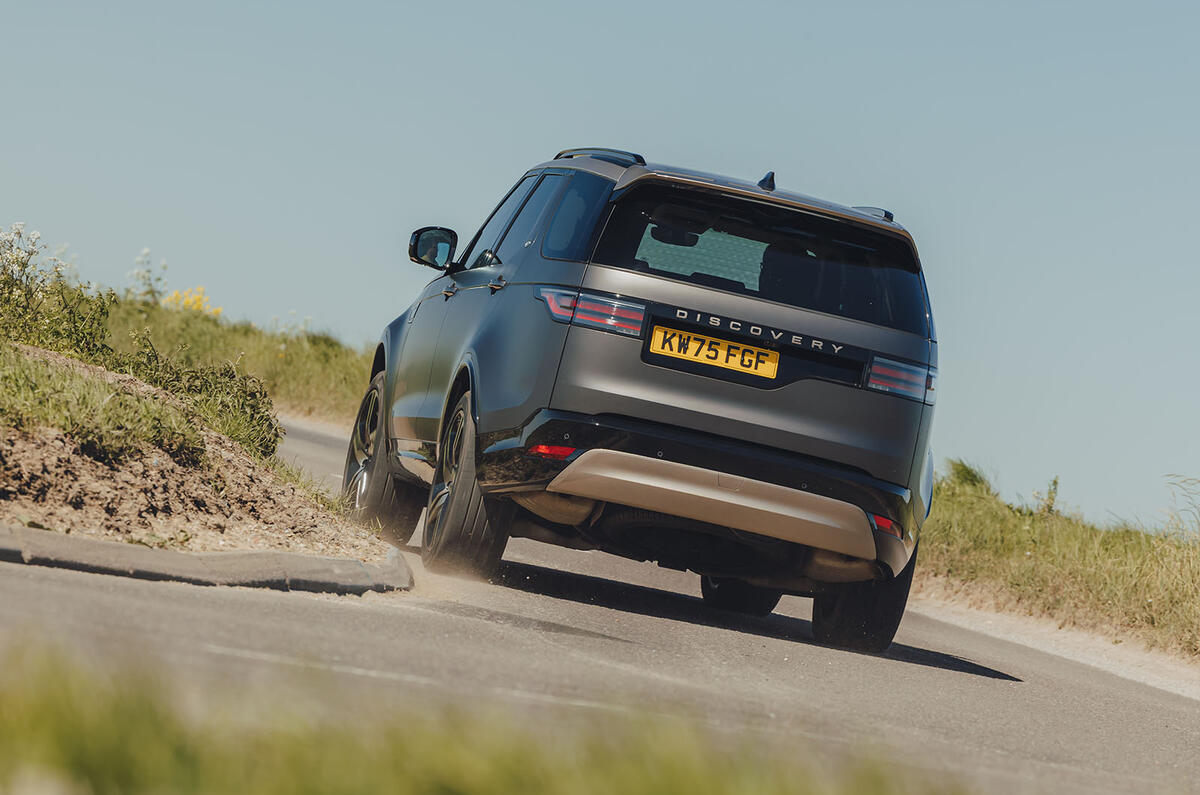
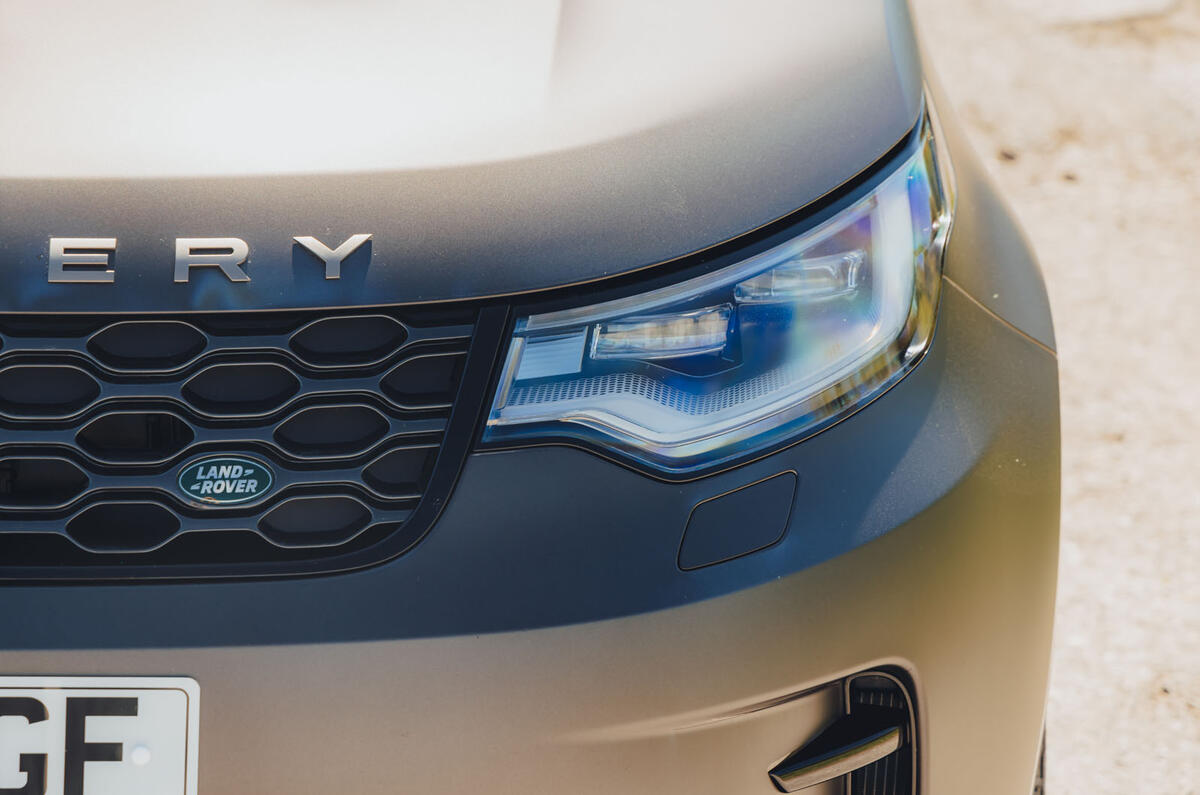
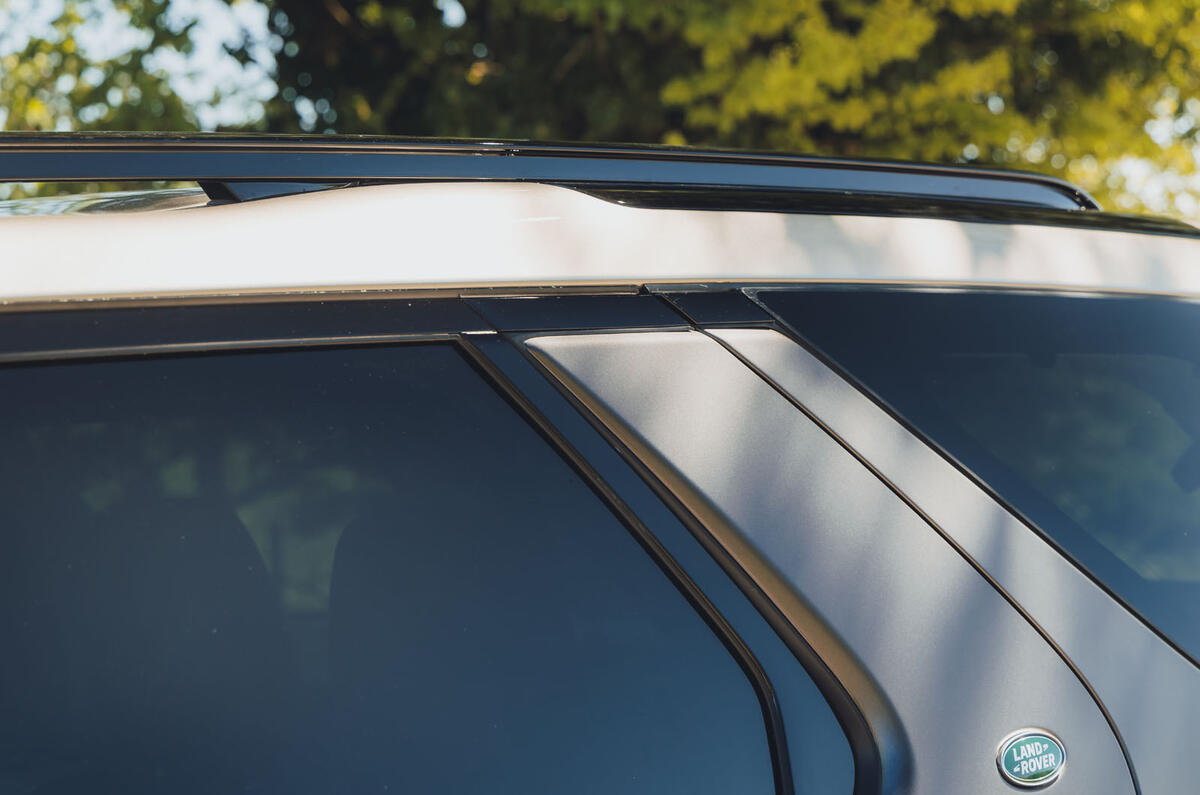
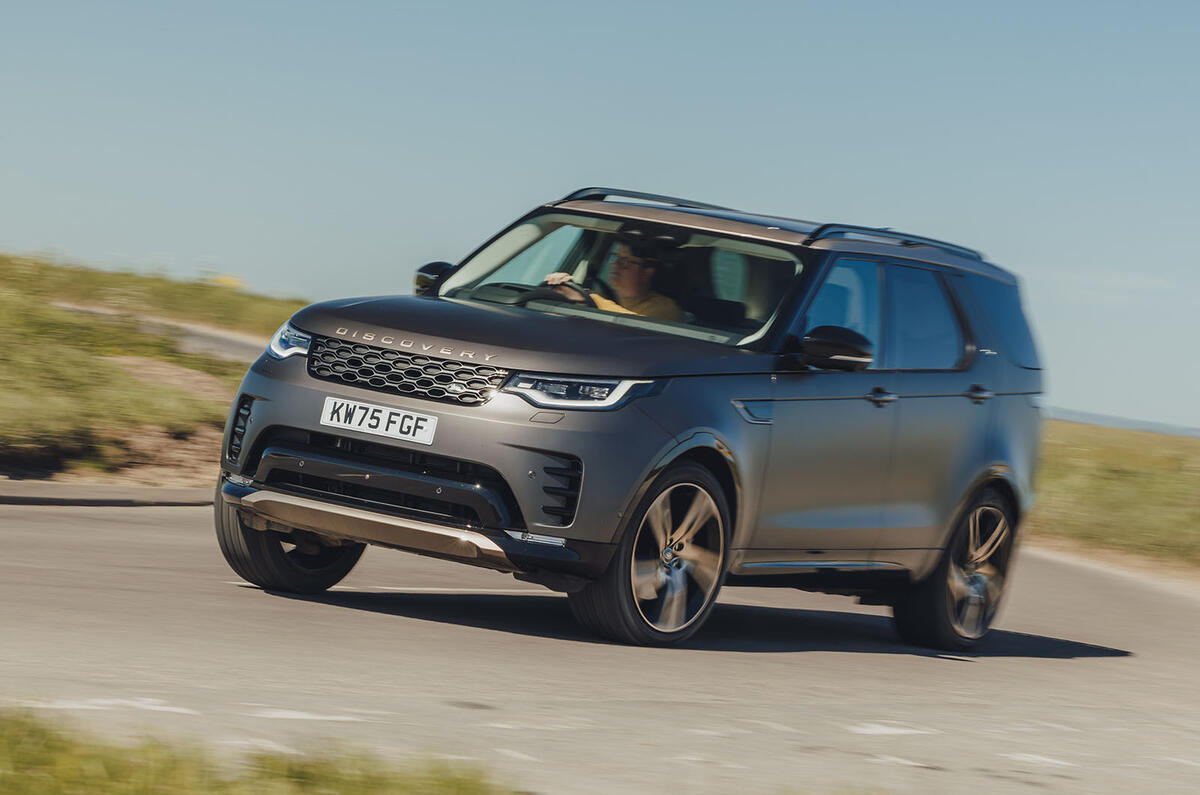
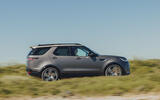
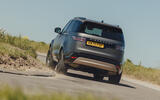
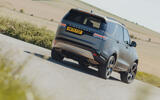
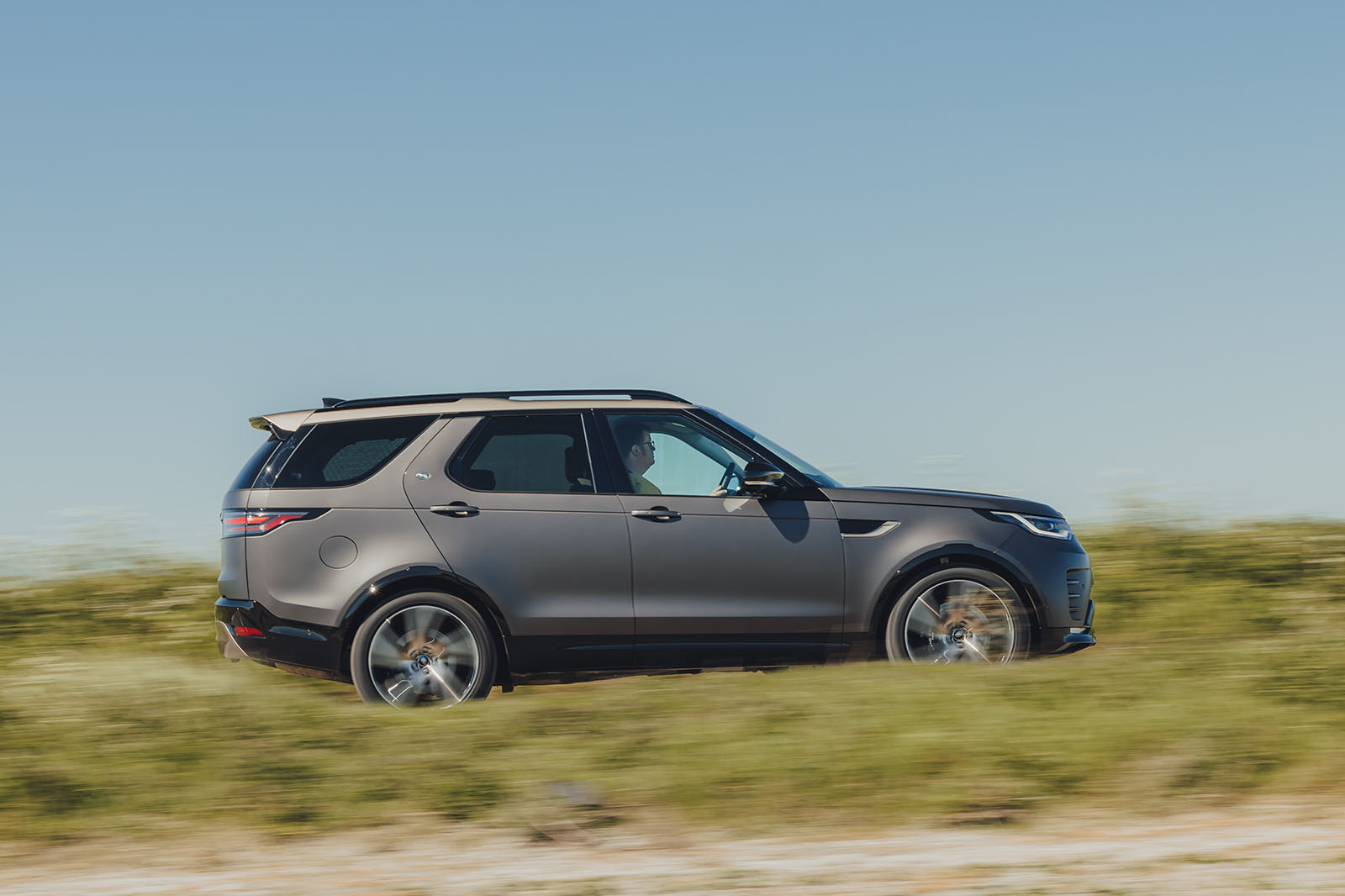
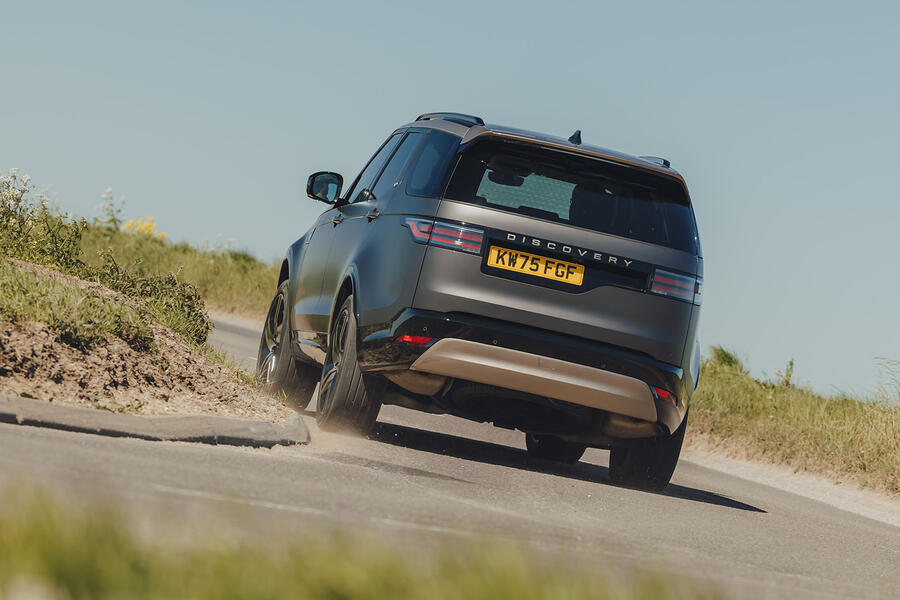
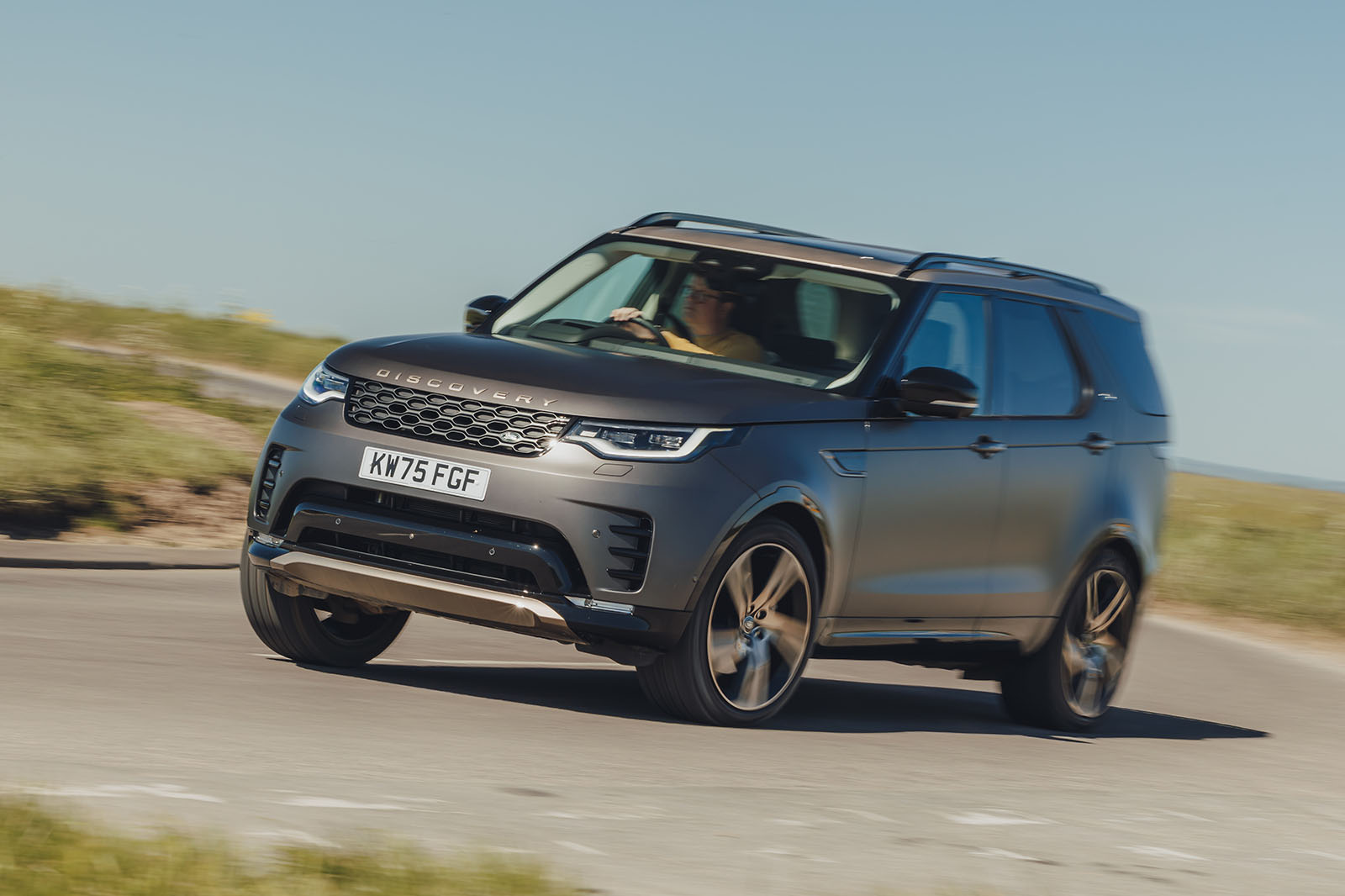
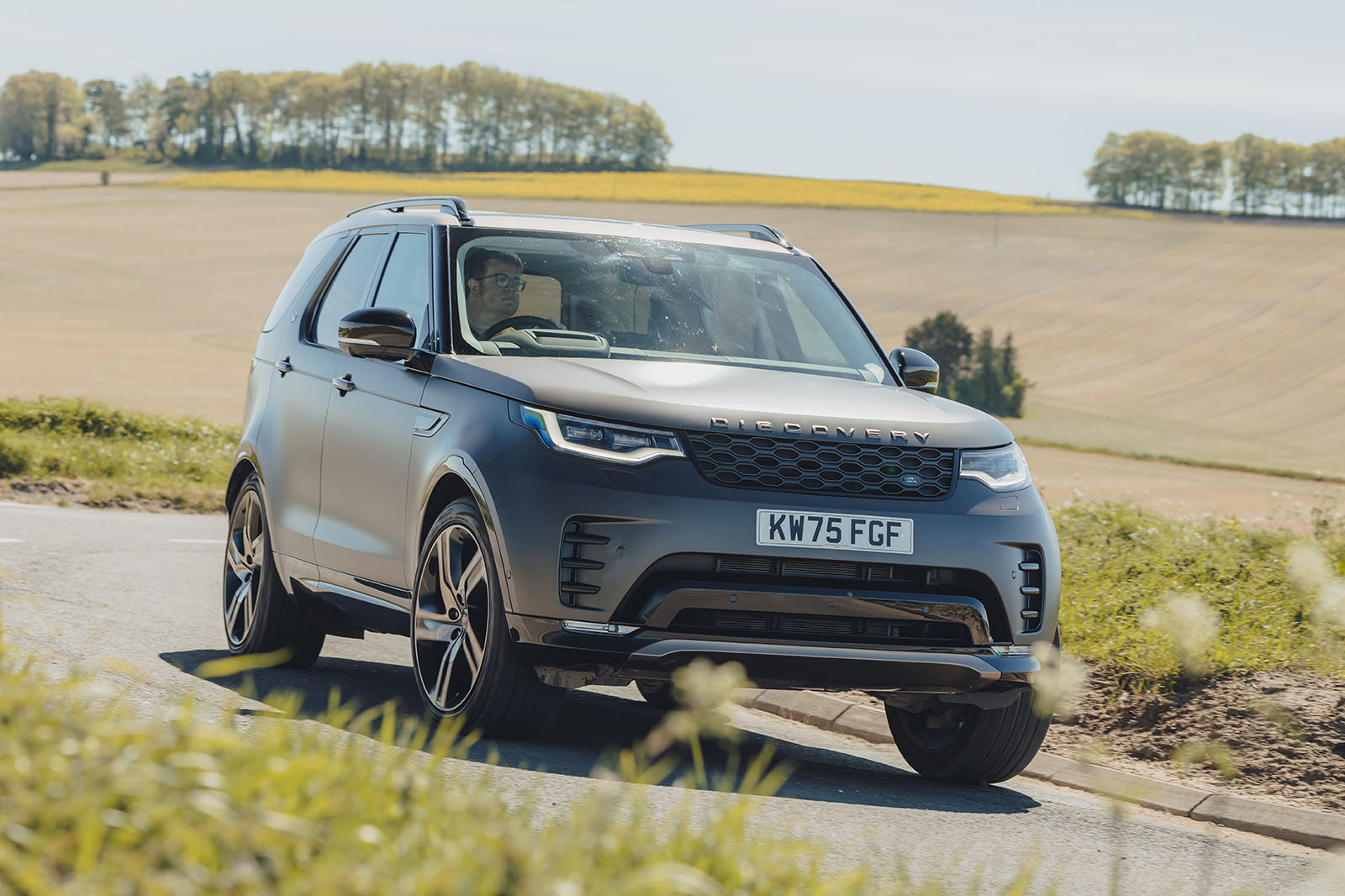
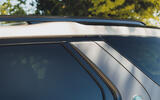
All Tempest models come with either grey or blue paint wrapped with a protective film. The copper-coloured roof and body accents also help to set them apart. The combination comes together clearest at the kinked C-pillar.

Back in 2016, moving away from the old Discovery’s ladder-frame chassis was all about saving weight and boosting efficiency. But fast forward 10 years, to our test car in particular, and you might well wonder what’s happened in the intervening years.

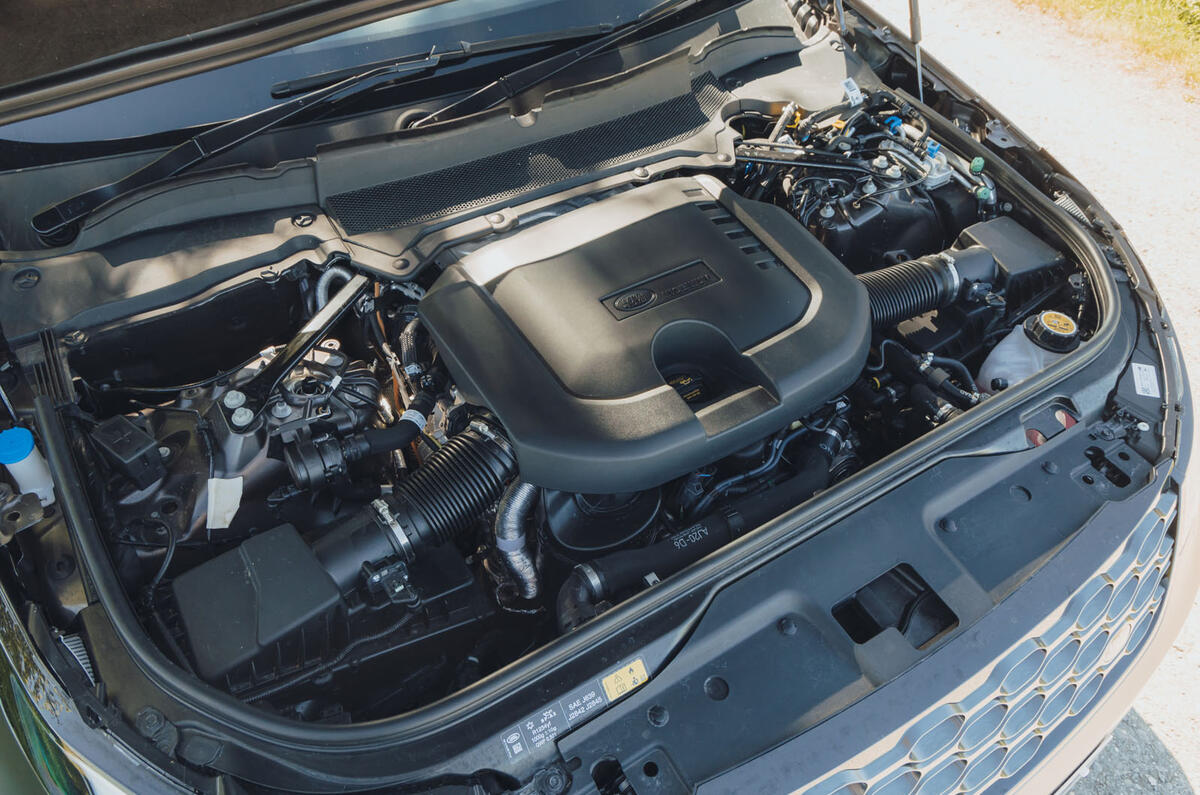
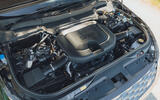
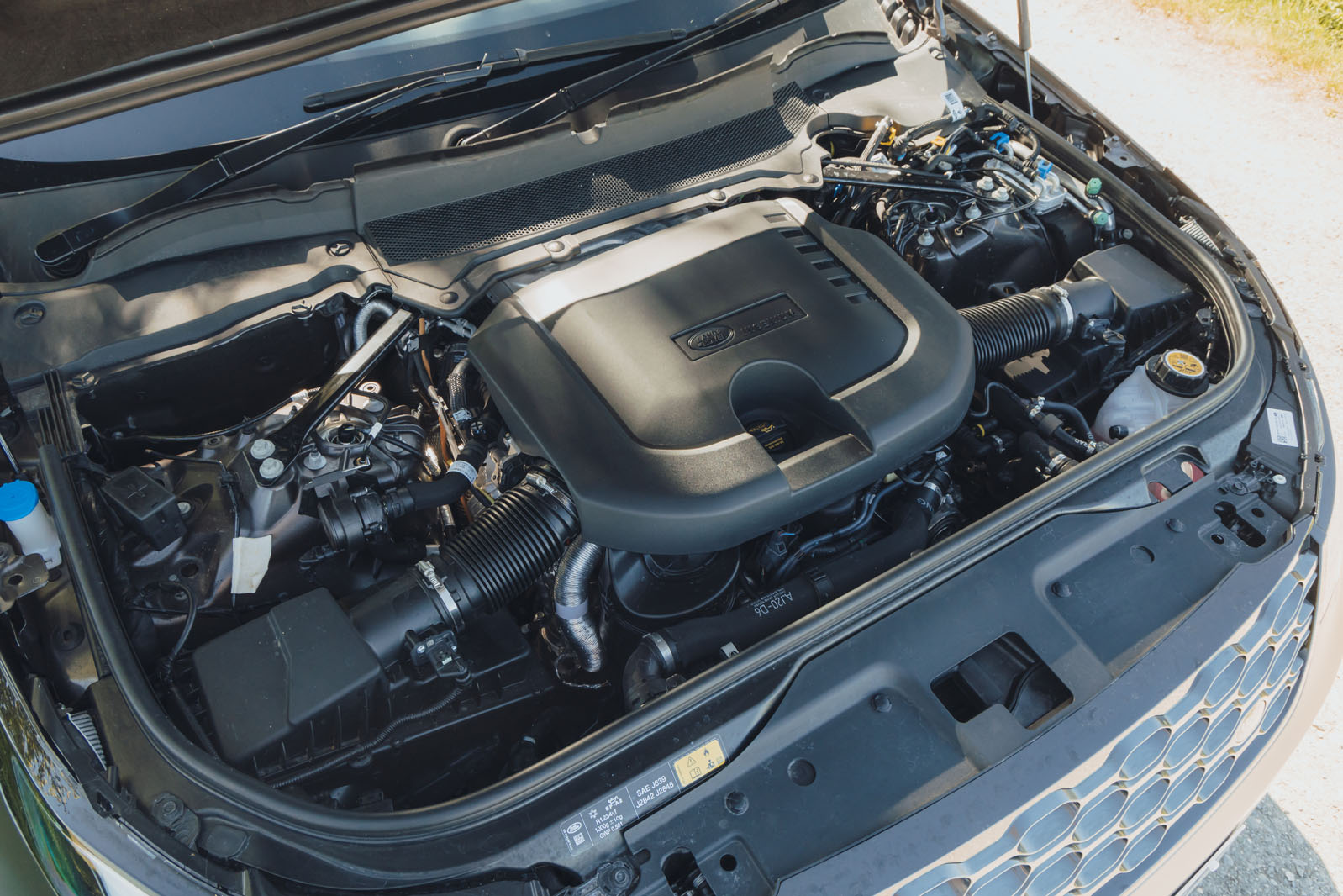
The short answer is plenty. The car was launched with a box-fresh four-cylinder diesel engine that was expected to do the majority of business in the UK and mainland Europe. But six-cylinder diesel power has proven of much more interest, and it’s where JLR has invested in improvements since. Today, the company’s 345bhp, 516lb ft, twin-turbocharged, 48V mild-hybridised D350 Ingenium diesel straight six is the only engine available to UK buyers. Four- and six-pot turbo petrols have come and gone. Interestingly, there has never been a Discovery PHEV.

Our range-topping D350 Tempest test car came with a homologated claimed kerb weight of 2425kg but was actually 2610kg in running order, with about half a tank of fuel. Its very extensive equipment level accounts for some of the near-200kg discrepancy. However, fully equipped or otherwise, more than 2.6 tonnes is a big number for the Discovery’s kerb weight to have swollen to – and we should expect it to show in the test results to come.

As for its suspension and drivetrain hardware, the Discovery is now air suspended as standard, with adjustable ride height. ‘Short-long arm’ (SLA) double wishbones are used at the front axle and an ‘integral link’ multi-link axle at the rear. A permanent, torque-biasing Torsen centre diff comes as standard. Opt for the Advanced Offroad Package and you get a bevel-gear centre diff instead, plus an active locking rear differential and low-range transfer gearing.

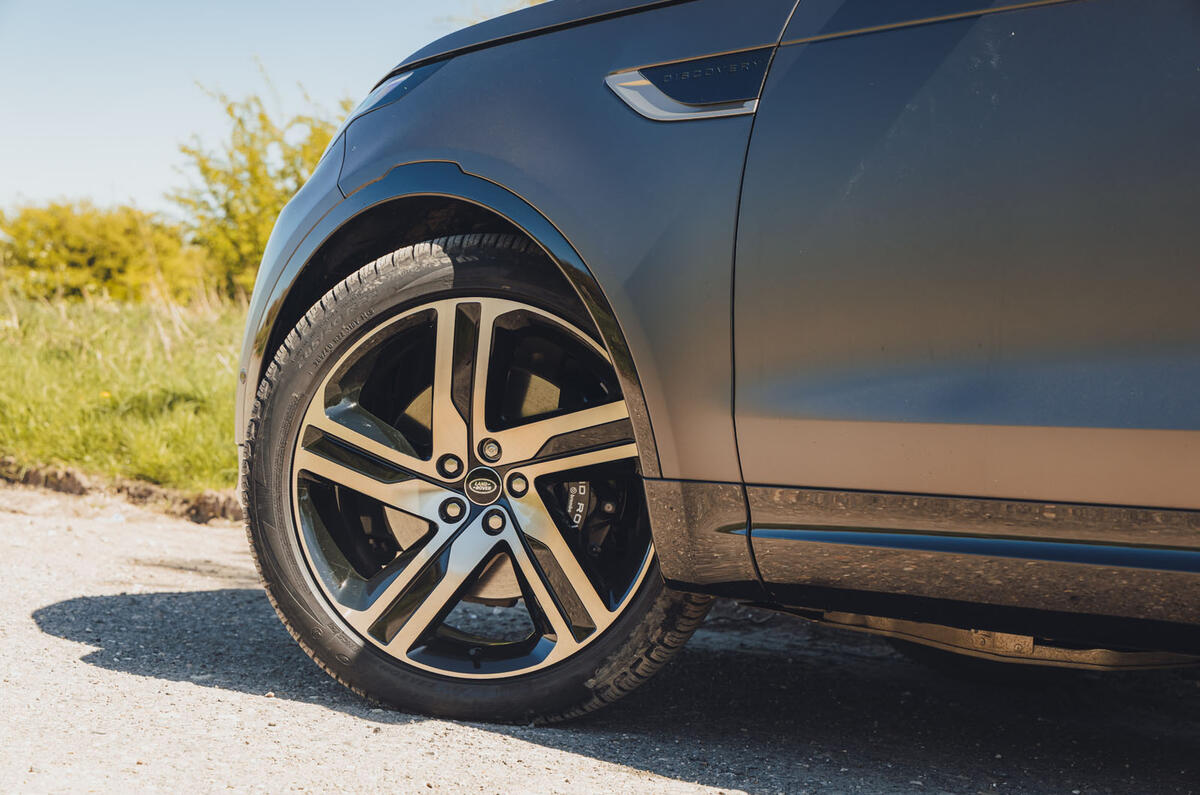
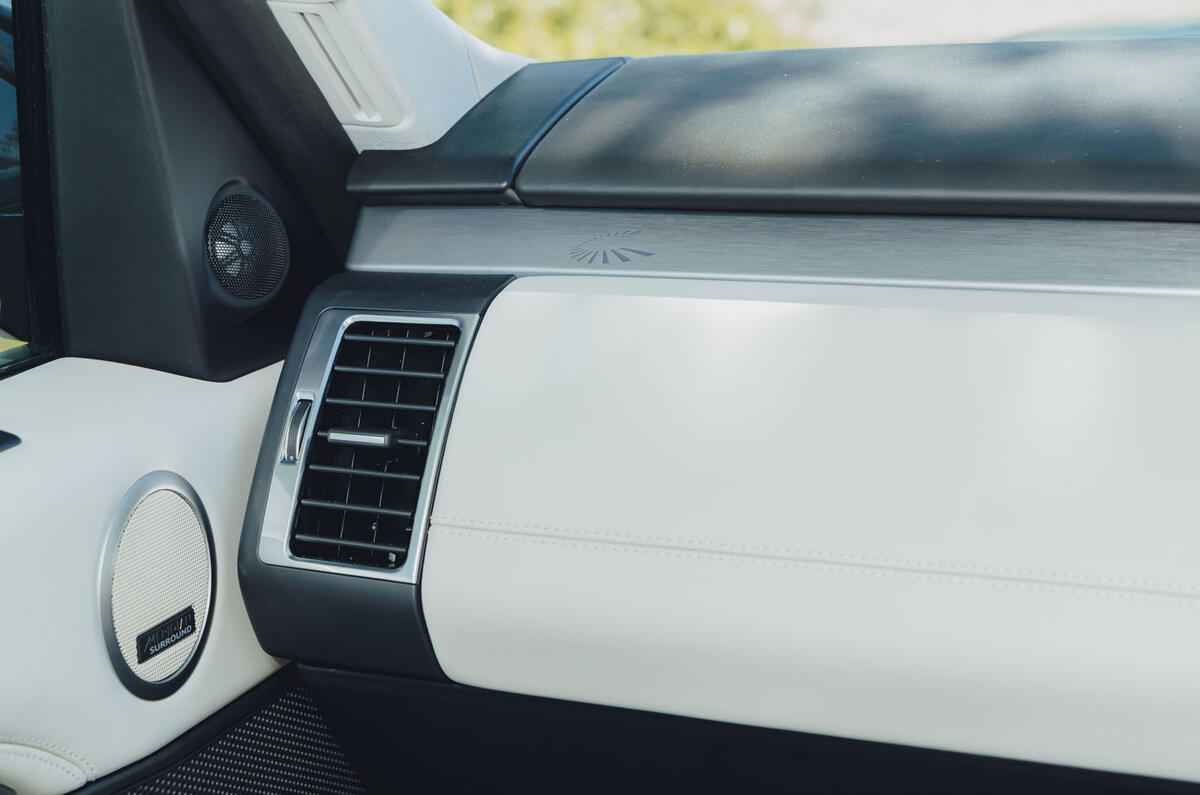
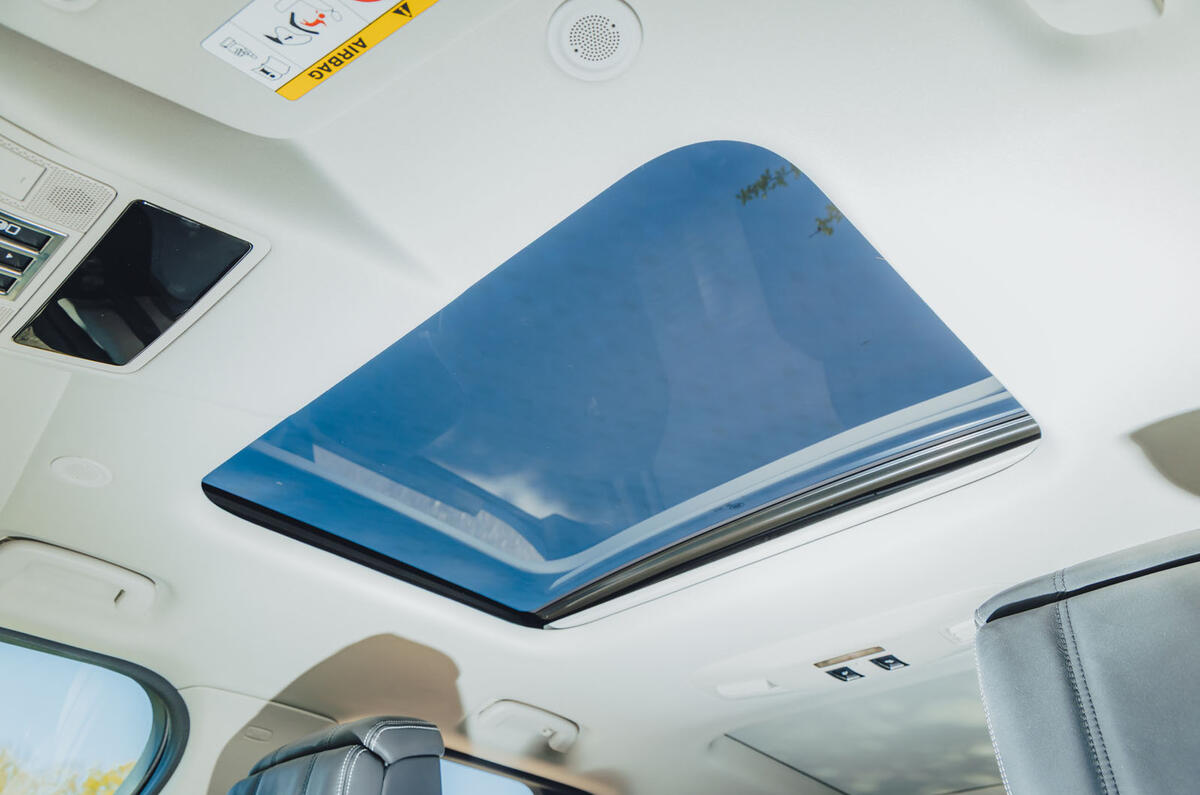
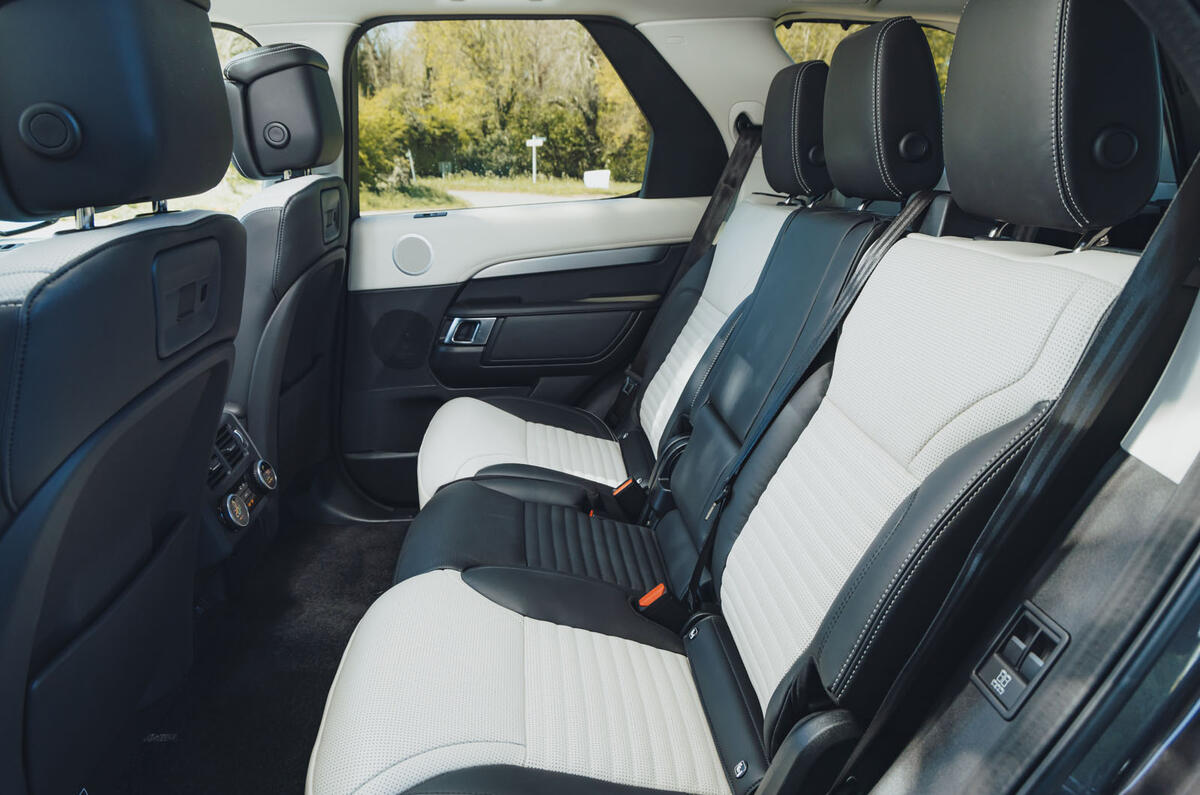
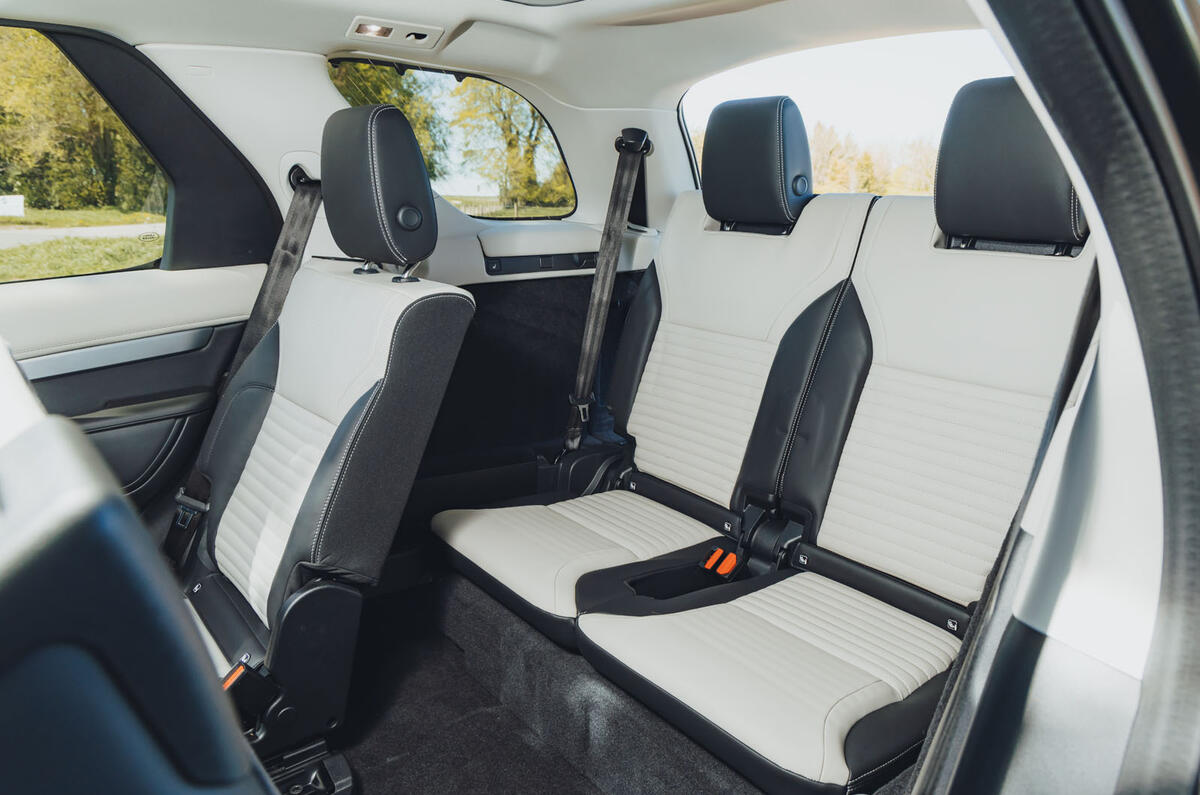
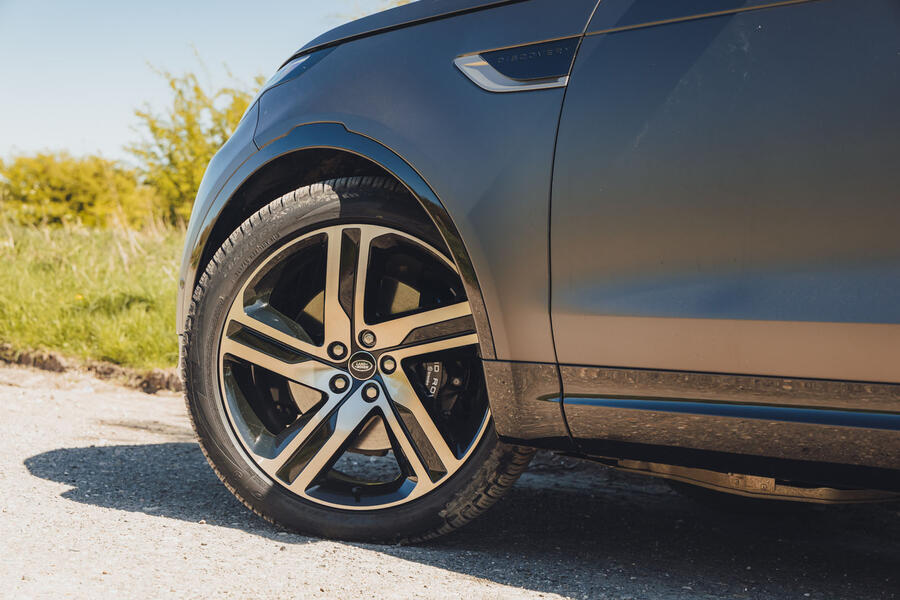
Range-topping Tempest trim, meanwhile, buys you a car with heated and motorised folding chairs in rows two and three; two sunroofs; extended Windsor leather and special brushed aluminium cabin trim; and, outwardly, new 22in alloy wheels and wrapped, matt-finish, two-tone paintwork.

INTERIOR

10
Land Rover Discovery Tempest review 2026 011

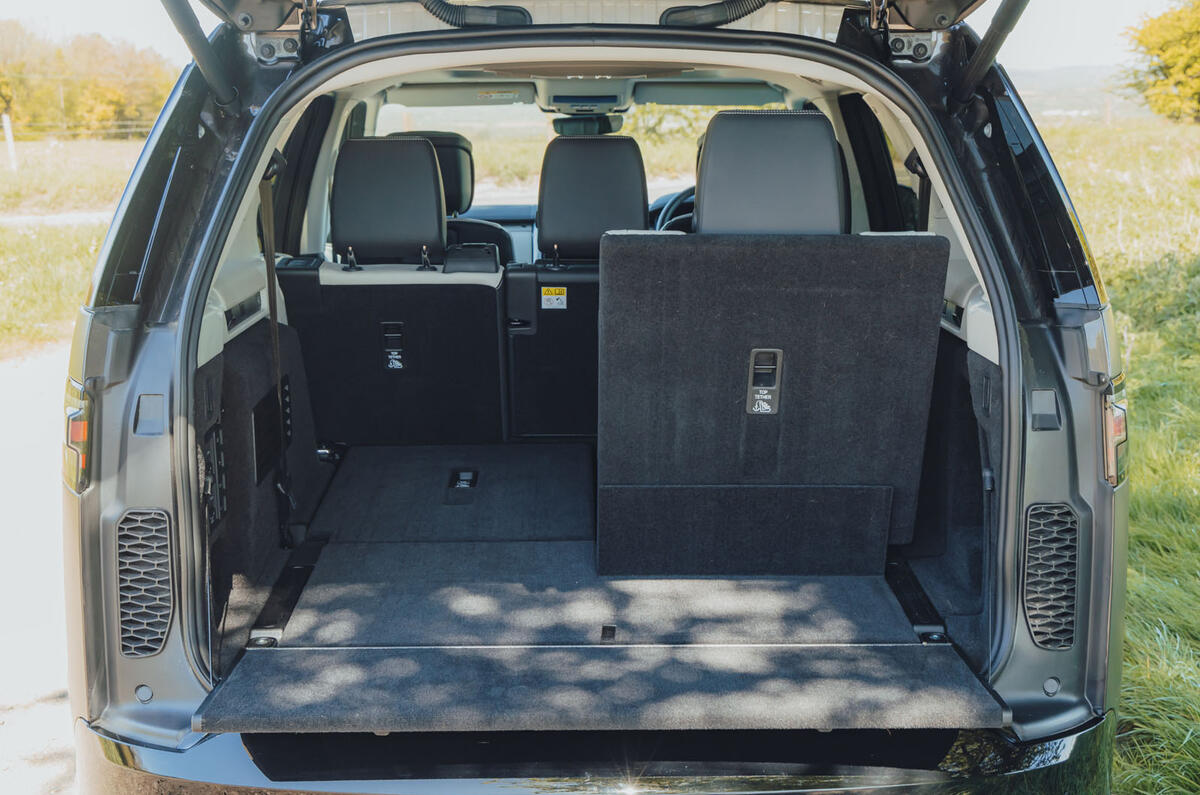
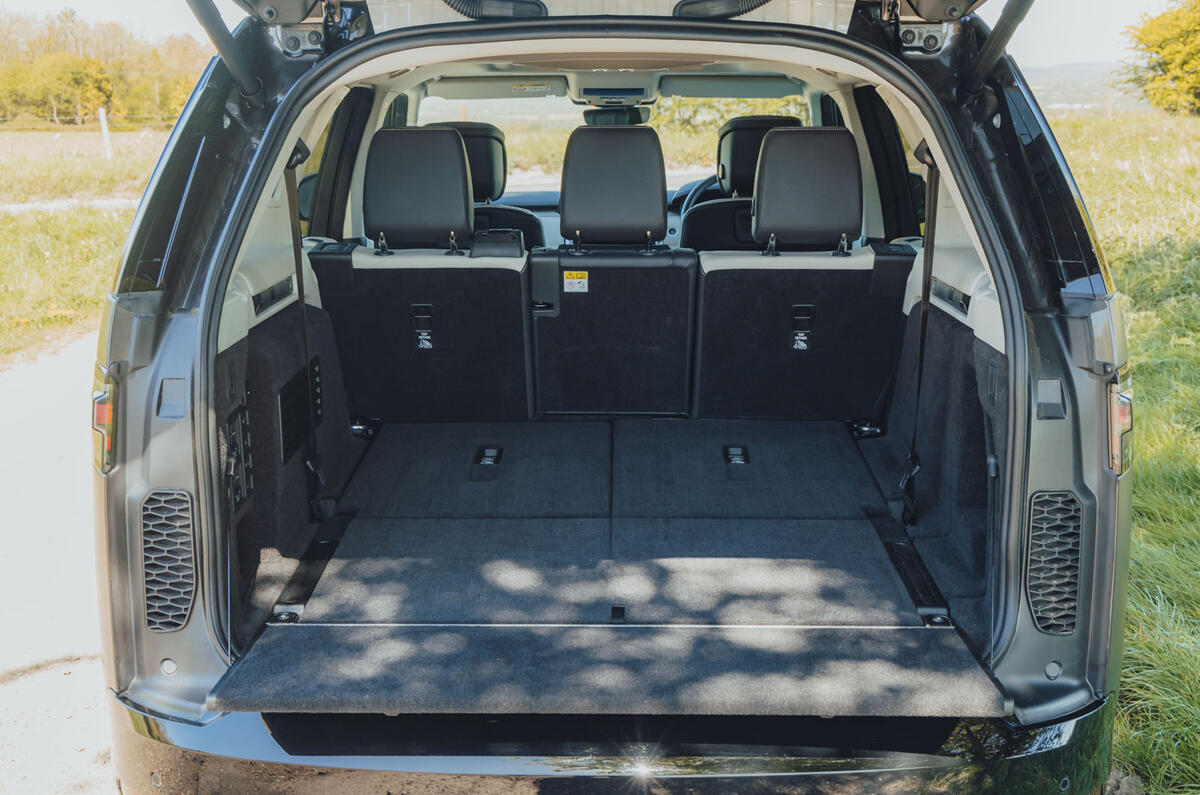
Ever since the Discovery 3 of 2004, this car has had a reputation for seven-seat passenger carrying that surpasses most other full-size SUVs. The Discovery 5 developed that further in 2016 via an extended wheelbase, and by arming itself with a remotely operable ‘intelligent seat fold’ system that, via an app on your phone, lets you electrically lower, raise and configure the five rearmost seats before even unlocking the car.

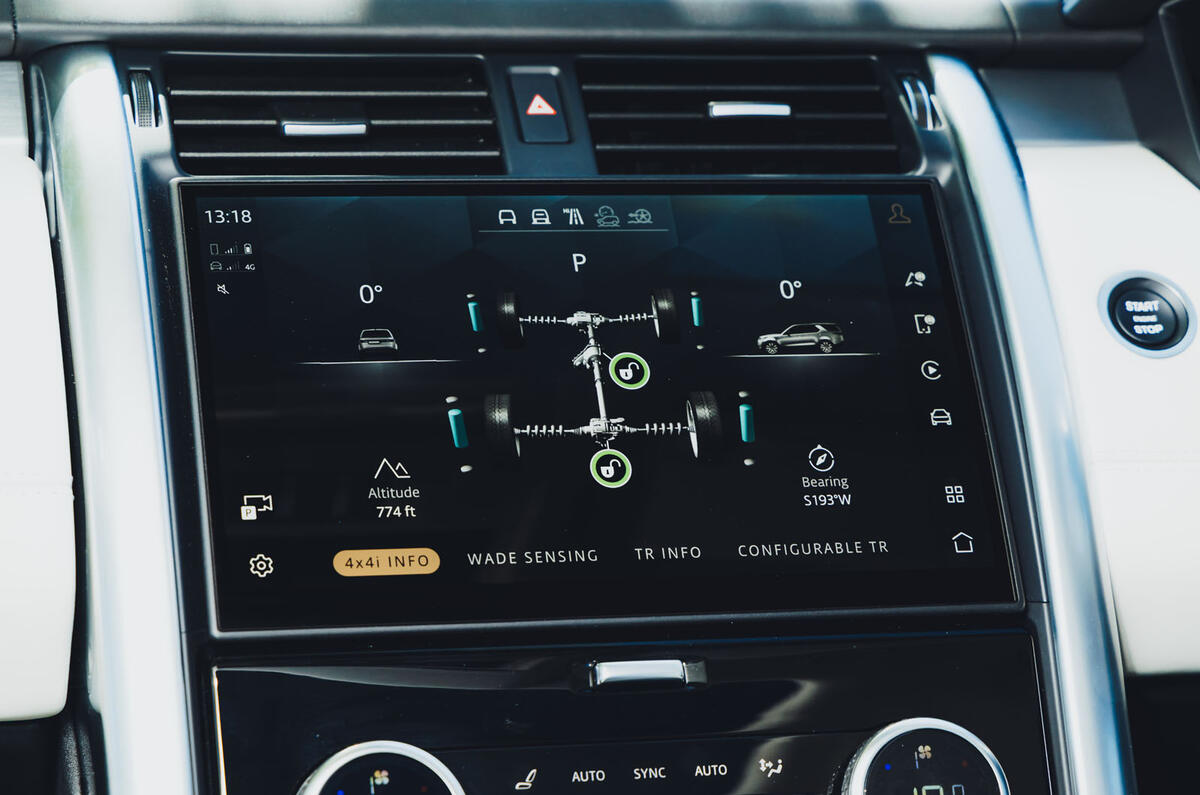
Not all versions get the electric third row that enables this, but our test car did; and the system makes preparing for particular trips and loads very easy. As a bonus, it allows you to remotely fold all five rear headrests down via the multimedia screen, which clears your rear view very effectively when travelling only one- or two-up.

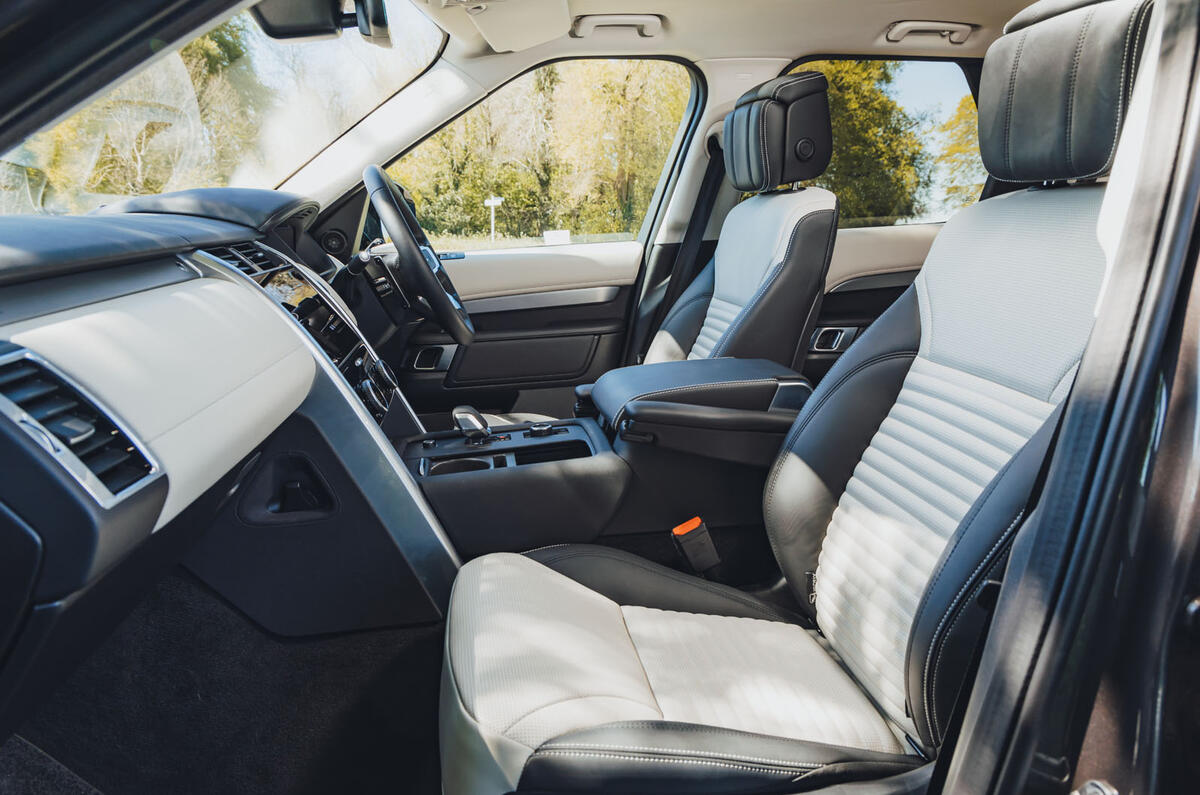
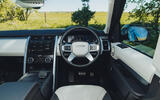
Tempest’s comfy ‘captain’s’ front chairs have heaters, coolers and massagers; armrests on both sides; cushion-angle adjustment; and proper separately adjustable head rests.

Outright passenger accommodation and comfort are excellent. Up front, the Tempest offers captain-style chairs with individual drop-down armrests, and generous space at the wheel. 

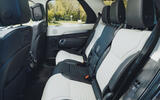
The second-row chairs are split 60:40 and slide fore and aft as well as reclining electrically, so even taller adults will find plenty of room. 
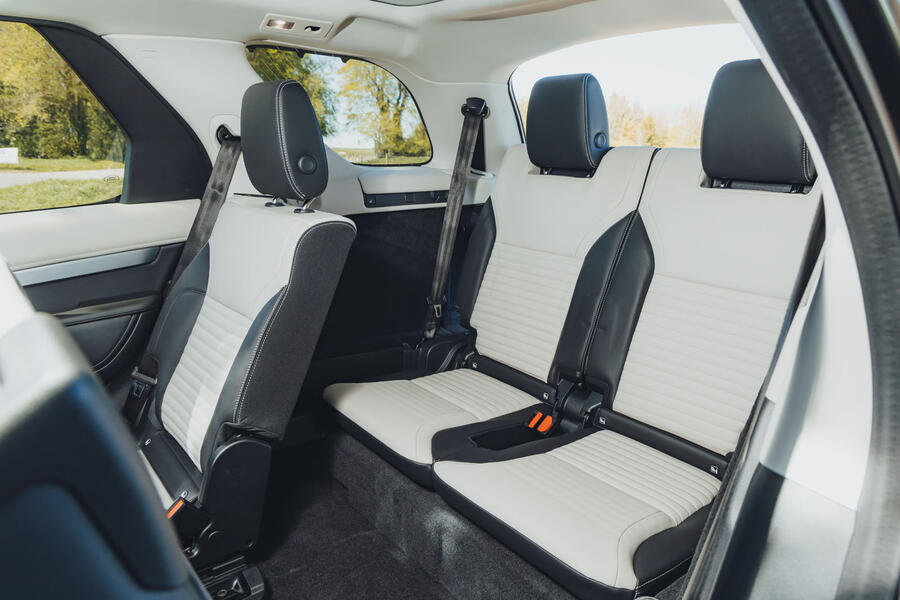
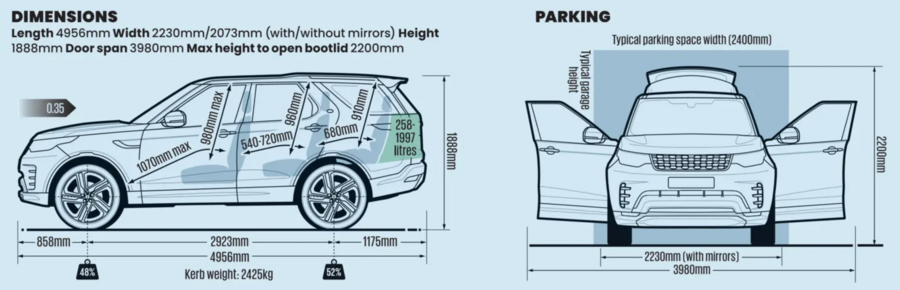
A Volvo XC90 offers 30mm more second-row leg room, according to our tape measure, but also 30mm less head room, which is the likely result of the Discovery’s ‘stadium’ seating layout and stepped roofline.

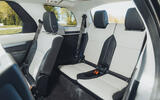
In row three, the Land Rover beats the Volvo for passenger space pretty resoundingly (by 80-110mm on leg room, and 40mm on head room). There’s even space for a 6ft 2in adult to travel fairly comfortably in the rearmost seats of the Discovery. JLR also includes Isofix child-seat anchorages.

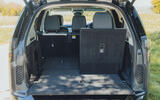
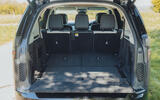
In the boot, a motorised flip-up interior tailgate is combined with other useful storage and retention features. The 1137-litre load capacity here (to the roof, and up to the second-row seatbacks) again trumps the long-time rival Volvo (1045 litres).

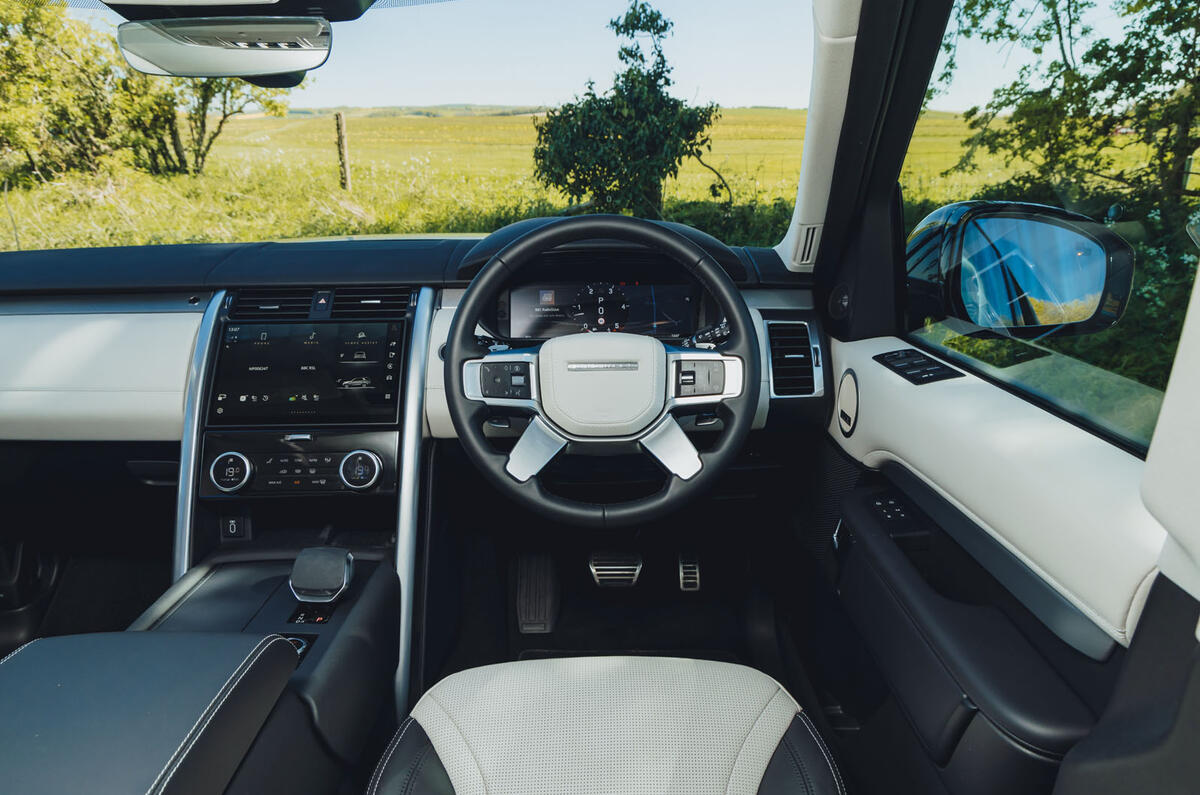
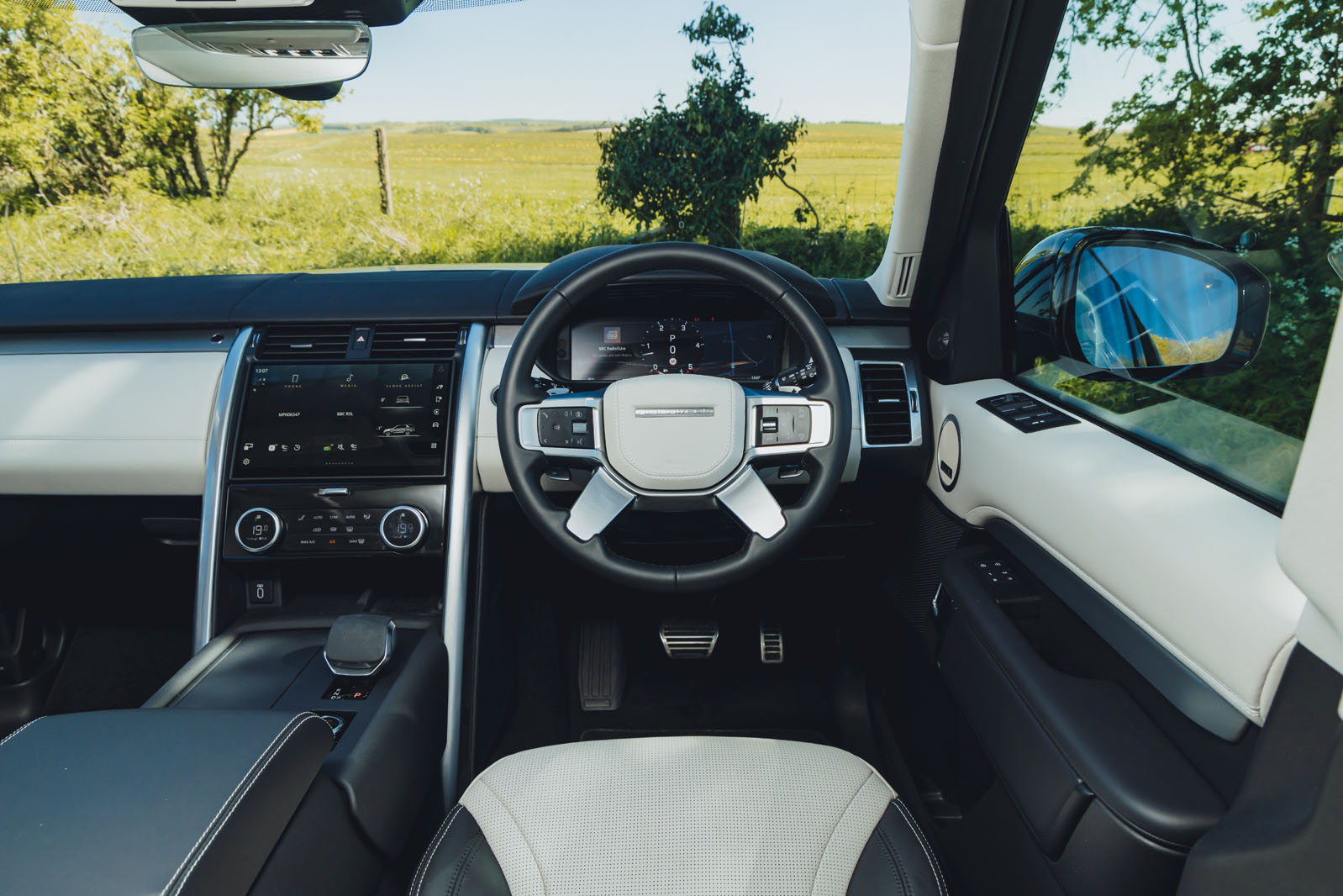
The driver climbs up into a classically high, Land Rover-typical ‘command’ driving position and settles in behind an unpretentiously large, four-spoke steering wheel. The front seats are very comfortable and widely adjustable while the control layout is simple, functional and easy to get on with.

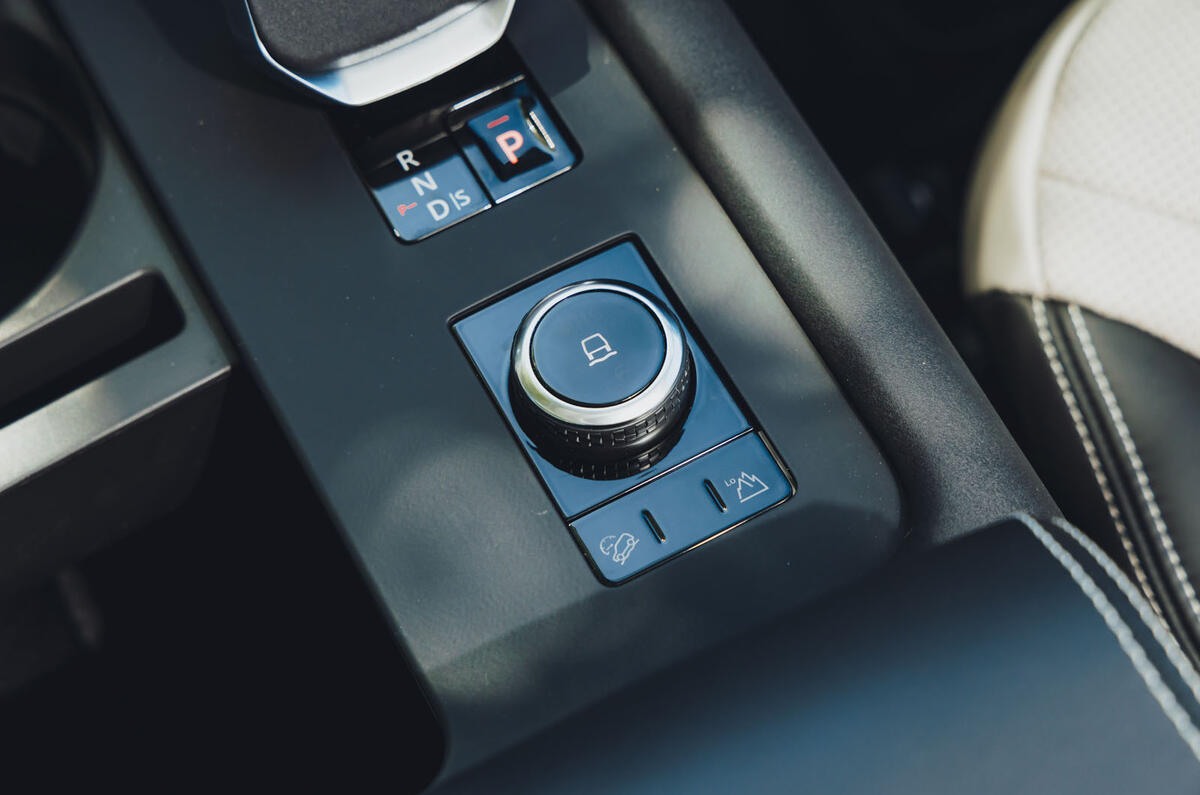
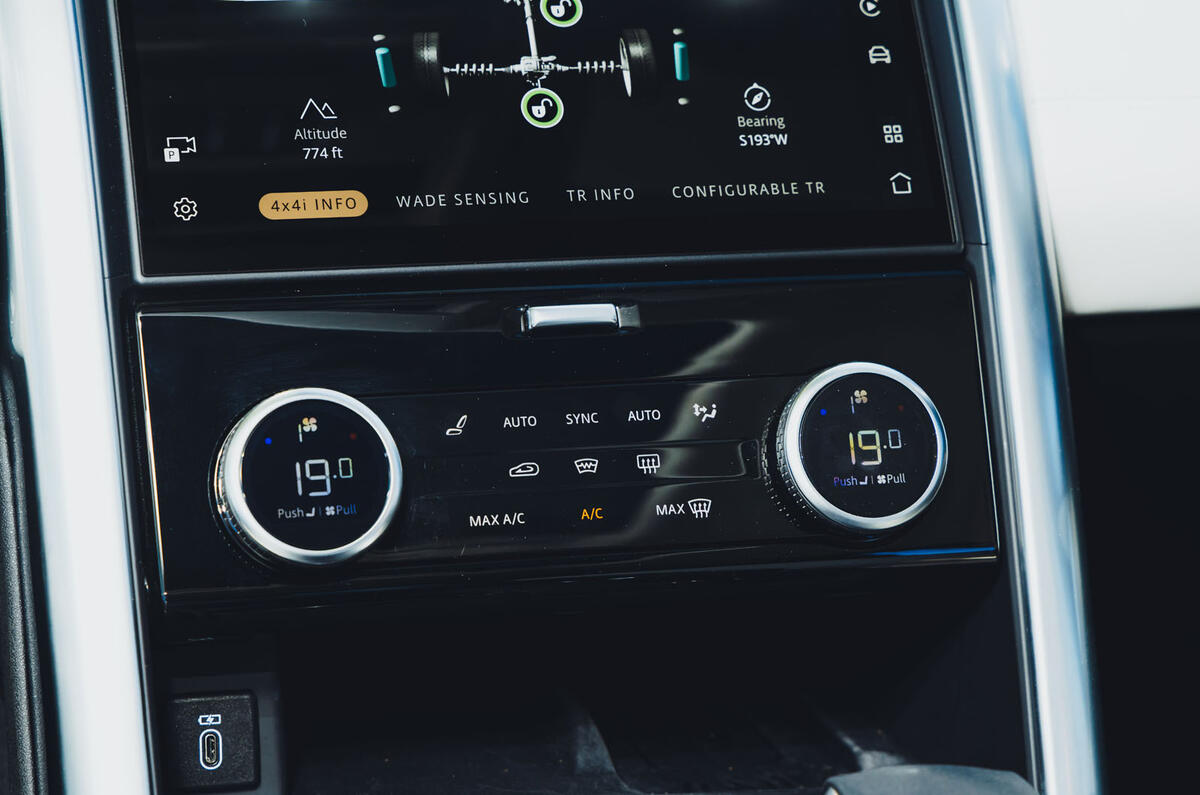
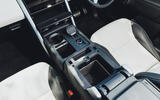
JLR’s Range-Rover-brand cars have lately lost their physical HVAC and drive mode secondary controls, getting a sleeker and more reductive interior ambience as a result, but relying on their touchscreens to take up the slack. However, the Discovery, like the Defender, has kept its various knobs and dials, which undoubtedly makes it more straightforward to operate.

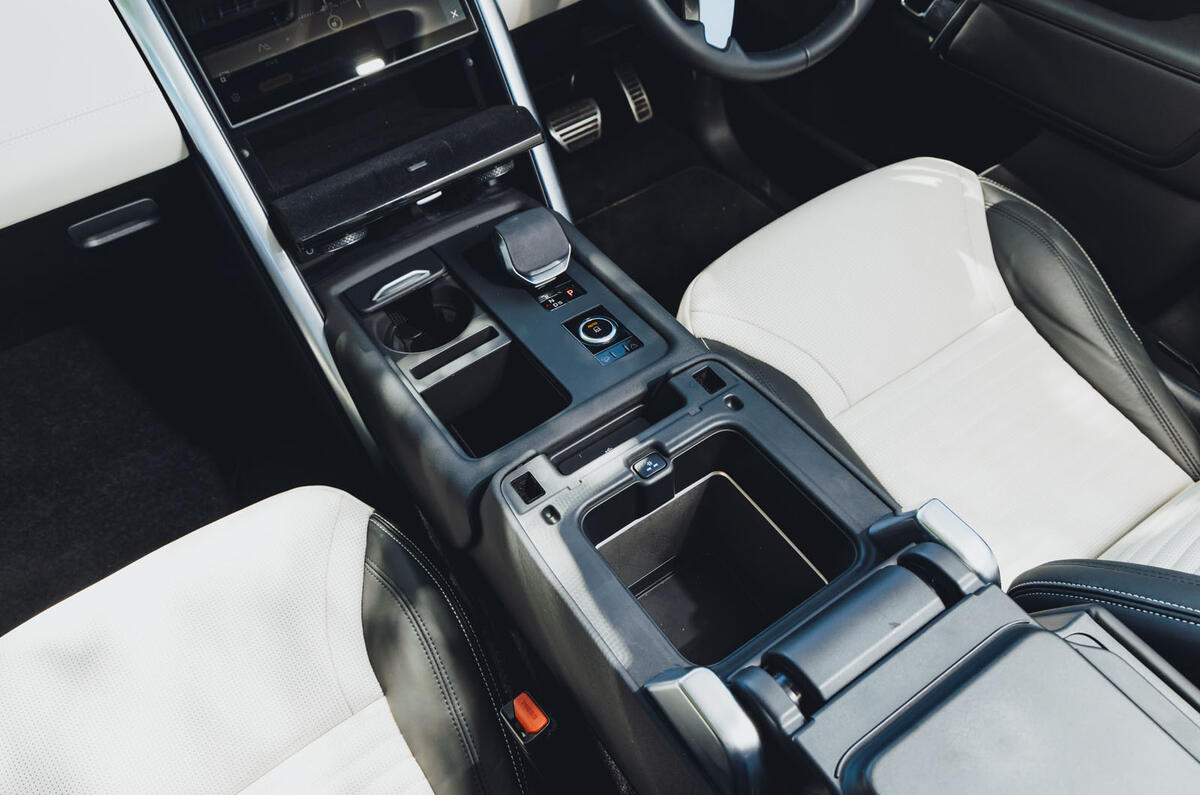
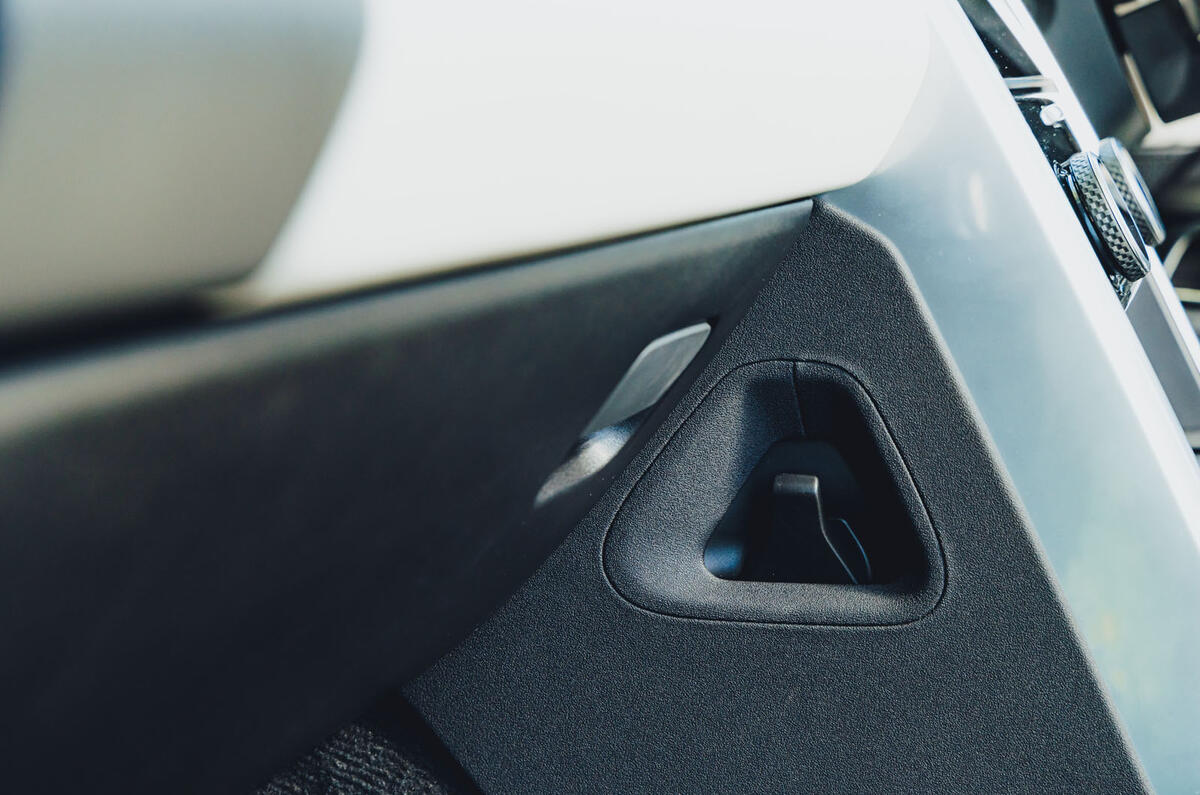
It offers lots of practical features, too: a really deep storage cubby under the sliding cupholders, a slimmer one behind the ventilation dials, good-sized twin gloveboxes, and a cooler in the armrest cubby deep enough for 500ml bottles.

ENGINES & PERFORMANCE

8
Land Rover Discovery Tempest review 2026 025

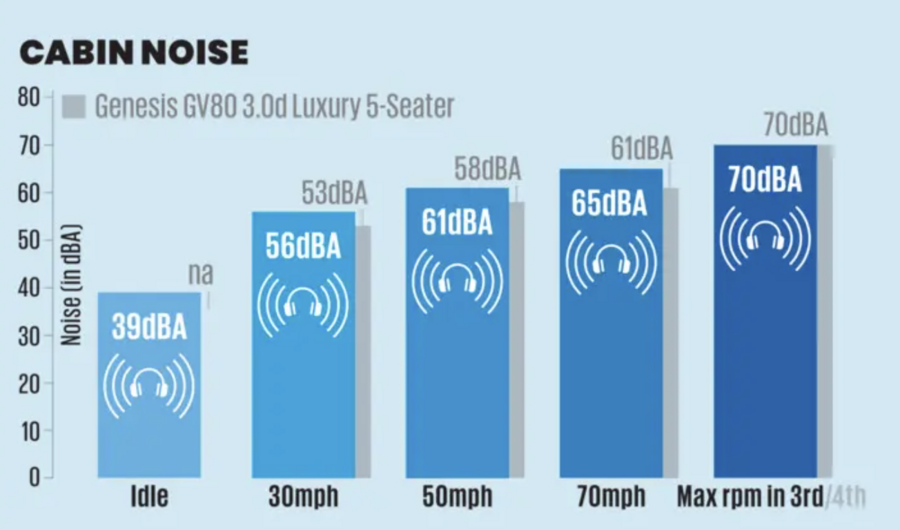
There’s nothing crude or uncouth about the muted, humming idle of the Discovery Tempest’s inline six-pot diesel engine. Where a Toyota Land Cruiser’s four-cylinder diesel seems ruder by comparison, clattering and fussing more obstreperously, the Land Rover is all smoothness and good manners.

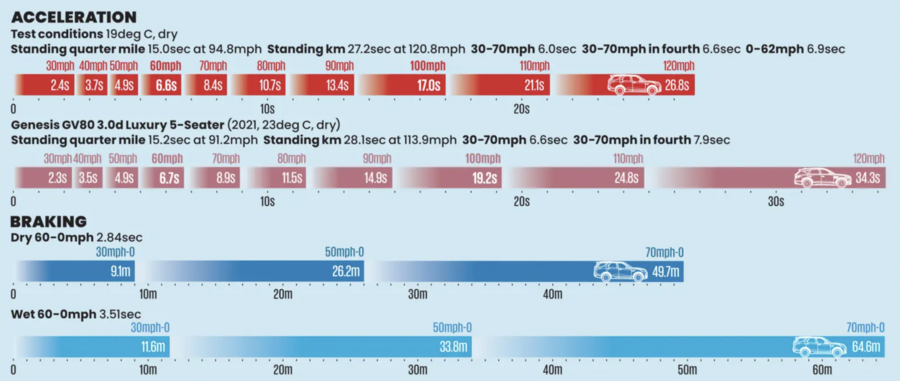
It’s strong, too. The 254bhp Discovery TD6 that we tested when this generation first arrived needed 8.7sec to hit 60mph from rest; 8.8sec to get from 30-70mph; and 16.8sec for the standing quarter mile. While it’s still a six-cylinder turbo diesel engine, the mild-hybrid D350 Tempest cut those numbers to 6.6sec, 6.0sec and 15.0sec respectively. Big gains, all – and from a car with a couple of hundred kilos of optional equipment ballast, remember, which helps explain why it missed Land Rover’s acceleration claim of 0-60mph in 5.9sec by some distance.

Even accounting for the shortfall, that’s enough of a performance gain to reduce the gap to the car’s mostly German premium rivals to something that’s more easily overlooked. Perhaps most important of all, the old sense of inferiority about what’s under the Discovery’s bonnet – of an engine that’s adequately powerful for the ‘non-attention-seeking lesser sibling’ Land Rover, but wouldn’t do in a Range Rover – has long gone.

And yet the Discovery’s amiably laid-back dynamic charm remains. While the engine can pour on lots of torque and rev industriously well beyond 3500rpm when it needs to, the car never charges into motion. Step-off is gentle and progressive, the centre diff and torque converter seeming to combine to soften every dab of your toe just slightly before letting the car raise its prow and surf genially onwards.

There is, of course, more precise manual gear selection available via the shift paddles as well as plenty of responsiveness and outright control of the powertrain to tap into when it’s called for – perhaps when towing, climbing, hauling or motoring off road.

The one performance characteristic that may look more concerning is how the car stops. Here, our test car’s sheer bulk and its Pirelli Scorpion all-season M+S tyres cost it quite a lot in our benchmarking – especially when it came to wet-surface stopping (70-0mph 64.6m; Volvo XC90 B5 AWD 56.4m). It’s worth noting that the car can be fitted with road-biased tyres from Continental or Goodyear for those who prefer stronger asphalt grip, and are willing to trade some extra purchase on grass, gravel, mud and snow.

RIDE & HANDLING

8
Land Rover Discovery Tempest review 2026 026

The Discovery’s suspension and steering systems speak in very much the same relaxed tones as its diesel powertrain. As your first serious turn of the sizable steering rim intuitively reveals, this is a big, tall, substantial car that handles in an entirely unpretentious, unaffected, straightforward way. 

That’s broadly how it felt nine years ago, when we described it as a car that “rolls congenially with gravity” and is anything but “agile, car-like or witlessly adhesive”. In 2026, while a whole generation of rivals has now come and gone, the Discovery’s dynamic appeal is just the same – just as singular, distinct and lovely.

There’s something about the sheer size of the Discovery’s tiller that tells you all you need to know about what driving it will be like. Chunky in the rim, large in circumference, fairly lightly weighted, and lovely to twirl.

It feels supple, with a primary ride that’s so buoyant as to be almost weightlessly removed from the road surface. It has a tenderness of handling response that makes it a pleasure to steer smoothly, and that intuitively conveys the pace the car prefers to adopt. It’s a gentle giant of a family car that only a boor would hurry, but its stability and unshakable security really do inspire utmost assurance and also feel ready to tow something with a weight measured in gross registered tonnage (GRT).

And yet somehow it handles. The tyres seem to find a way to develop more bite and purchase as the body gently leans and comes to rest on its loaded side. Although it takes a bit of work at the wheel, it’s easy enough to take a keen line through a fast bend when you have to. You just need, first, to tune into the frequencies of the car’s gentle chassis and steering responses.

And what of ride isolation? Well, nine years ago, we gave the Discovery’s air suspension high scores for it. Tested back then, it was on 21in wheels. In 2026 – on the Discovery Tempest’s special 22s, and with almost a decade of ride-quality-advancing technological progress having flown by – the car still seems pleasant, but less outright praiseworthy. Those 22in wheels do clunk and thump over the odd raised edge and sunken drain. Truth be told, from a car billed as the most luxurious Discovery yet, we’d prefer a lighter alloy wheel, a taller sidewall and a quieter secondary ride overall.

Offroad - 5 stars

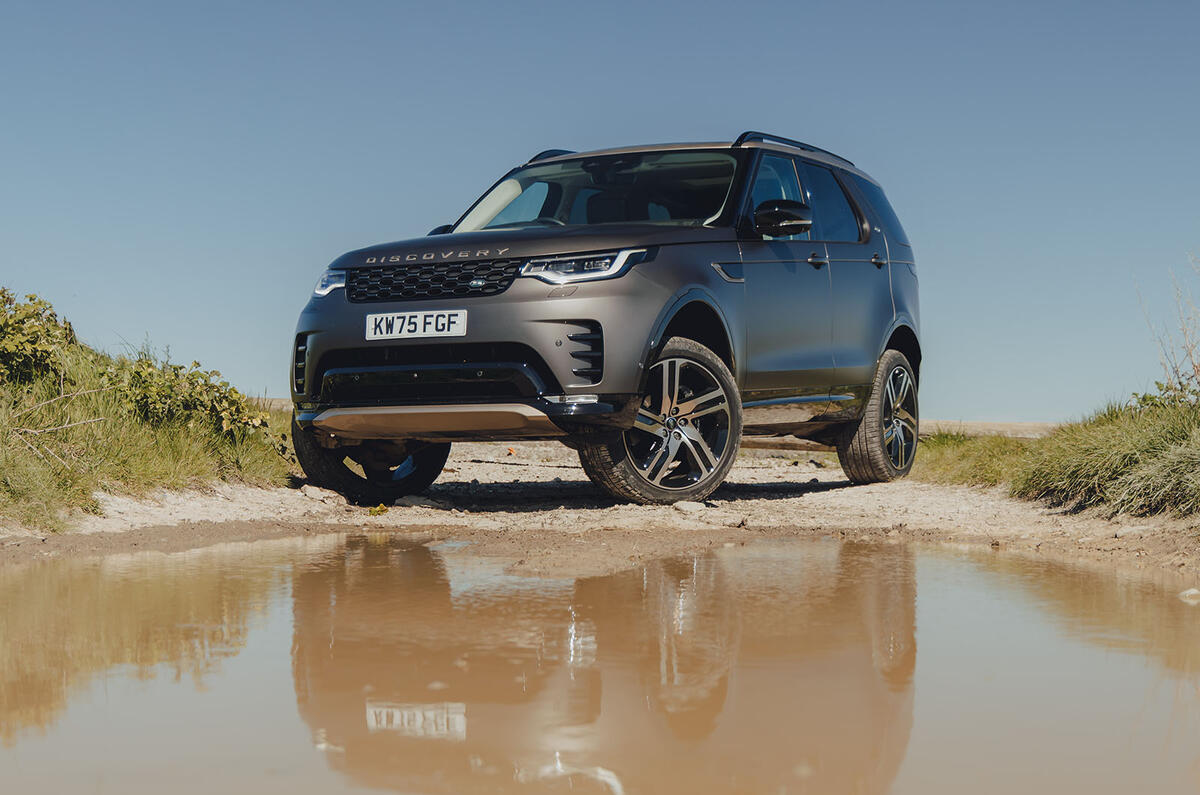
The Discovery’s now-standard air suspension, combined with its optional Advanced Offroad Pack, makes it a very capable off-roader indeed. With the suspension at its highest setting, both approach and departure angles are at or over 30deg and its ramp, or breakover, angle is 27.5deg. Outright ground clearance of 285mm and maximum wading depth of 900mm both trump any Jeep or Land Cruiser, as well as the Mercedes G-Class.

Horiba MIRA’s short off-roading course does have some staggered, axle-twist-style moguls designed to catch out cars without the axle articulation that ladder-frame chassis were for so long relied upon to provide. But the Discovery just stepped lightly over them without ever teetering or dangling a wheel. 

The car’s progressive pedal and steering tuning comes into its own off road, making judicious inputs easy. The way the driveline and electronics sniff out traction and maintain steady, smooth momentum is totally assured.

It was a dry day when we tested it off road, so we can’t say how Land Rover’s halfway-house all-season tyres might have coped with really wet, slippery mud, though the car waded through submerged troughs very easily.

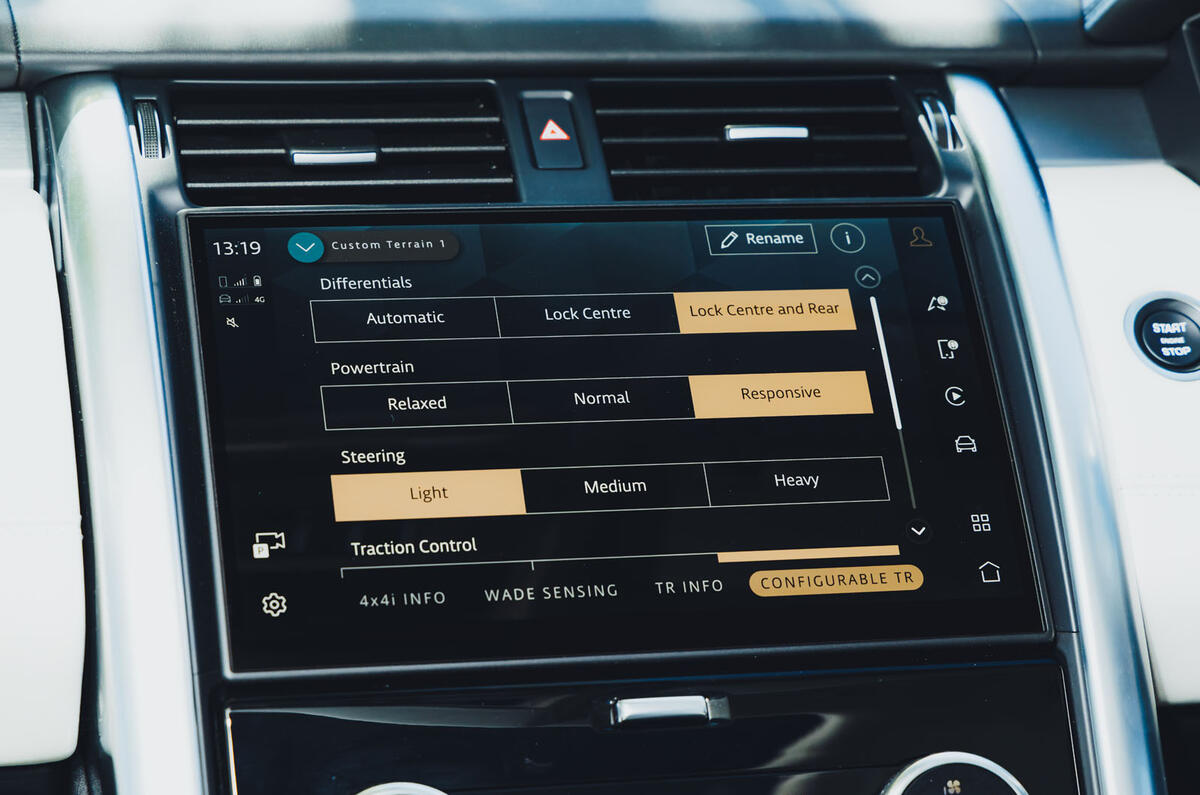
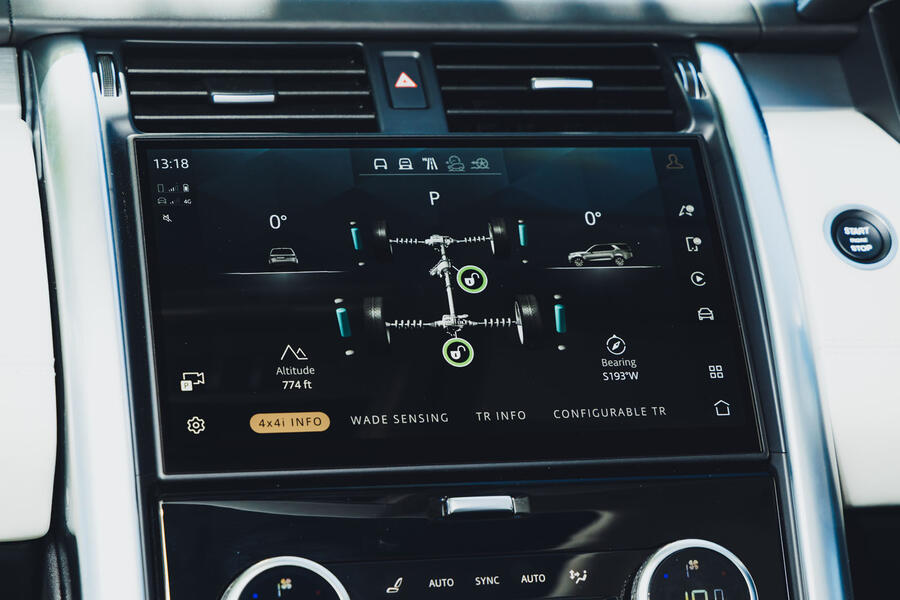
The configurable mode of the Terrain Response system, meanwhile, now allows you to manually lock and unlock the rear diff, and to tweak various other settings, rather than simply picking between ‘mud and ruts’, ‘grass/gravel/snow’ or ‘rock crawl’.

MPG & RUNNING COSTS

7
Land Rover Discovery Tempest review 2026 001

The UK-market 2026 Discovery 5 model range has now effectively been slimmed to just the one engine: the D350 we’ve tested. The trim line-up until recently encompassed four derivatives (S, Dynamic SE, Dynamic HSE and Metropolitan Edition) but now takes in the top-tier Tempest as well, plus a slightly lower-positioned new trim level called Gemini (which was the original Discovery’s development codename).

Accounting for those, showroom prices now start just below £65,000 and rise to just short of £84,000, before options. The removal of four-cylinder engines, or less powerful variants more generally, inflates the car’s price a little, but you have to travel back to 2022 to find a Discovery with a sticker price starting with a five.

Where does that leave the car? Slightly cheaper, in some trims, than a like-for-like Defender 110 D350, interestingly, if only perhaps because the Discovery is the Land Rover that everyone has forgotten about. But inevitably, residuals aren’t as strong as the Defender’s and our test car is expected to shed about £13,000 more of its showroom price than an equivalent Defender 110 over a typical three-year ownership period. 

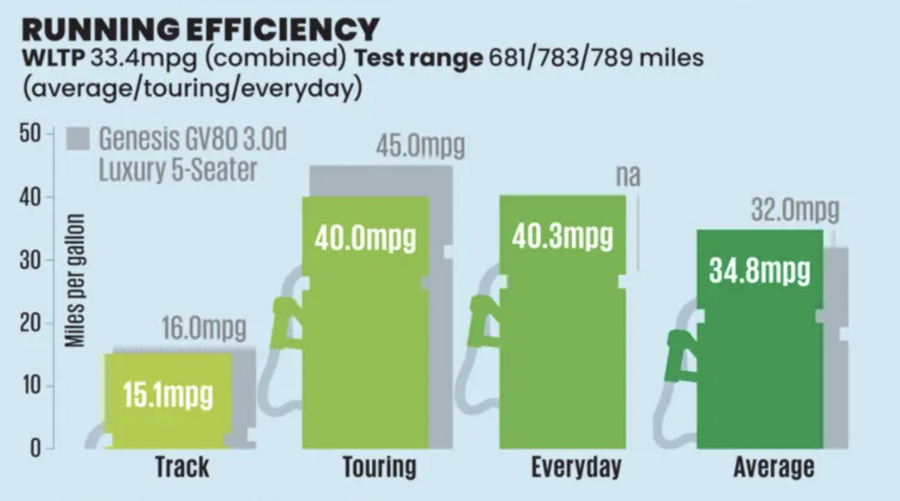
As for economy, the Tempest returned a very respectable 40.0mpg exactly on our motorway touring efficiency test. For comparison, the best seen from our TD6 test car in 2017 was 32.6mpg.

VERDICT

8
Land Rover Discovery Tempest review 2026 028

There is huge potential for JLR’s Discovery sub-brand to be the firm’s next masterstroke, or equally a costly gaffe if the company tries to force it one way or another without recognising what has made the Discovery so likeable for so long.

Major change is likely. But what the Discovery badge must continue to represent, come what may, is a focus on everyday comfort, functionality and ease of use; a level of practicality and versatility beyond that of key rivals; and a rejection of posture, frippery, affectation and superfluous dynamism.

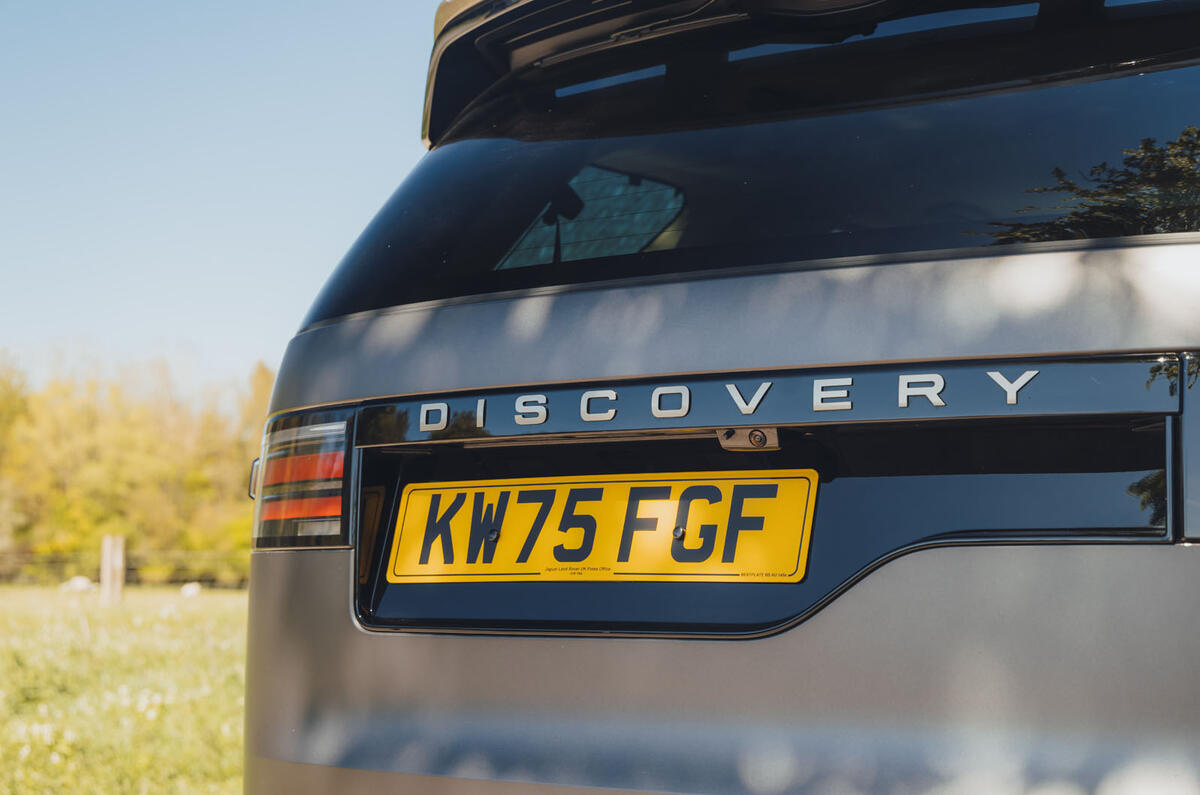
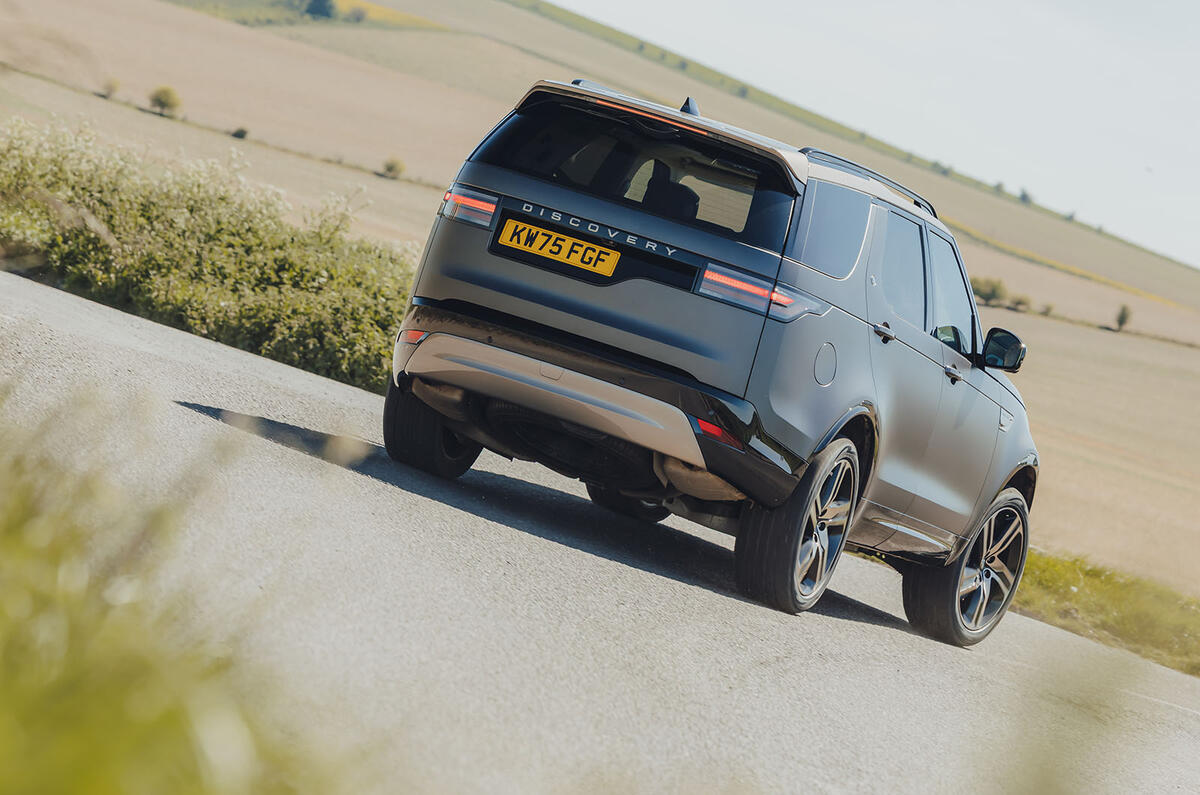
Remember how we laughed at the shape of this car’s tailgate when it first appeared? Well, we soon got used to it. You don’t see many cars with those aftermarket panel modification kits now.

Even in this new range-topping form, those are the qualities the Discovery continues to dedicate itself to. And that dedication continues to make it wonderfully relaxing and gratifying to drive, beguiling to inhabit, and singularly obliging to use.

Matt Saunders

Matt Saunders Autocar
Title: Road test editor

As Autocar’s chief car tester and reviewer, it’s Matt’s job to ensure the quality, objectivity, relevance and rigour of the entirety of Autocar’s reviews output, as well contributing a great many detailed road tests, group tests and drive reviews himself.

Matt has been an Autocar staffer since the autumn of 2003, and has been lucky enough to work alongside some of the magazine’s best-known writers and contributors over that time. He served as staff writer, features editor, assistant editor and digital editor, before joining the road test desk in 2011.

Since then he’s driven, measured, lap-timed, figured, and reported on cars as varied as the Bugatti Veyron, Rolls-Royce PhantomTesla RoadsterAriel Hipercar, Tata Nano, McLaren SennaRenault Twizy and Toyota Mirai. Among his wider personal highlights of the job have been covering Sebastien Loeb’s record-breaking run at Pikes Peak in 2013; doing 190mph on derestricted German autobahn in a Brabus Rocket; and driving McLaren’s legendary ‘XP5’ F1 prototype. His own car is a trusty Mazda CX-5.