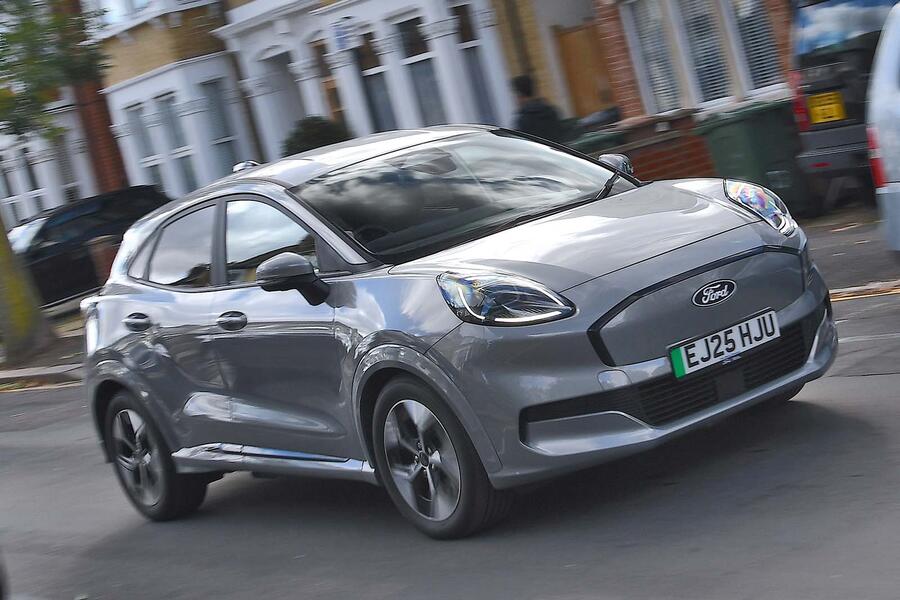
Super-cheap EV showed us that Ford can still do the business with passenger cars in Europe

Dear reader, an interesting bit of insight into your life landed in my inbox recently: fresh Autocar market research with some illuminating statistics, figures and overall feelings towards lots of things. In fact, it's possible that you personally took part in the survey. There is no getting around it: statistically, I am likely to be a good chunk younger than you. 

Which is why I'm deploying a bit of empathy and stepping into your shoes. A lot of you reading this might not be too interested in buying a new electric vehicle. You might consider them to be a pain to charge, with too much technology and, even worse, boring. 

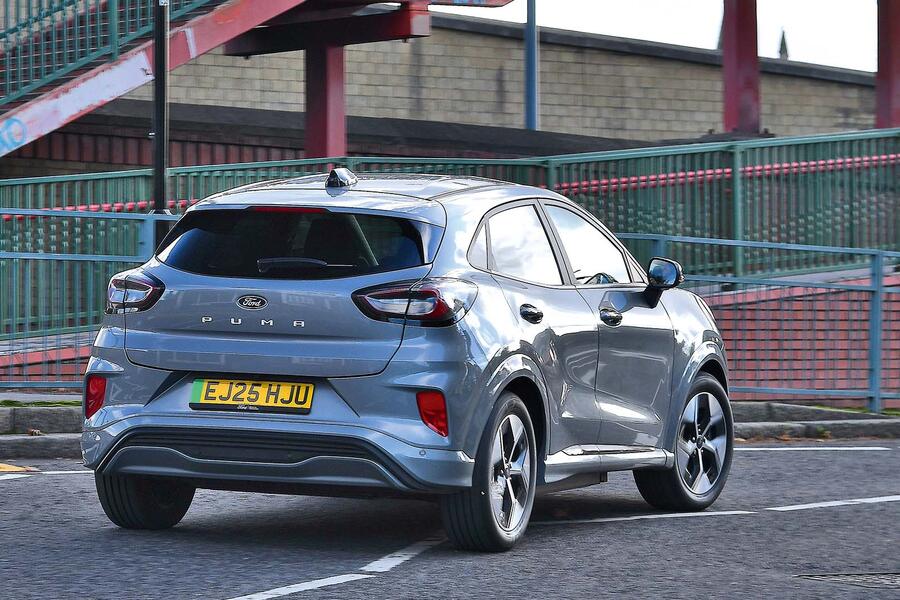
But I'm hoping this Ford Puma Gen-E will offer a bit of a fresh perspective, because with just the right amount of blue-sky thinking and some man maths, it might begin to make sense. 

The Puma Gen-E is cheap. So cheap that using it could save you money under the right circumstances. Here's the thinking: if you've been on a leasing configurator in the past few months you will have seen a Puma Gen-E in the massive 'oh my goodness, 100/100 value' section. 

The best deal I've seen is £132 per month with a £1884 deposit and 5000 miles per year, but you could upgrade to 8000 miles for another £20 per month. These cars are flooding the leasing market. ZEV? ECG? You betcha. That's £3468 in total for a year's worth of drudgery driving. 

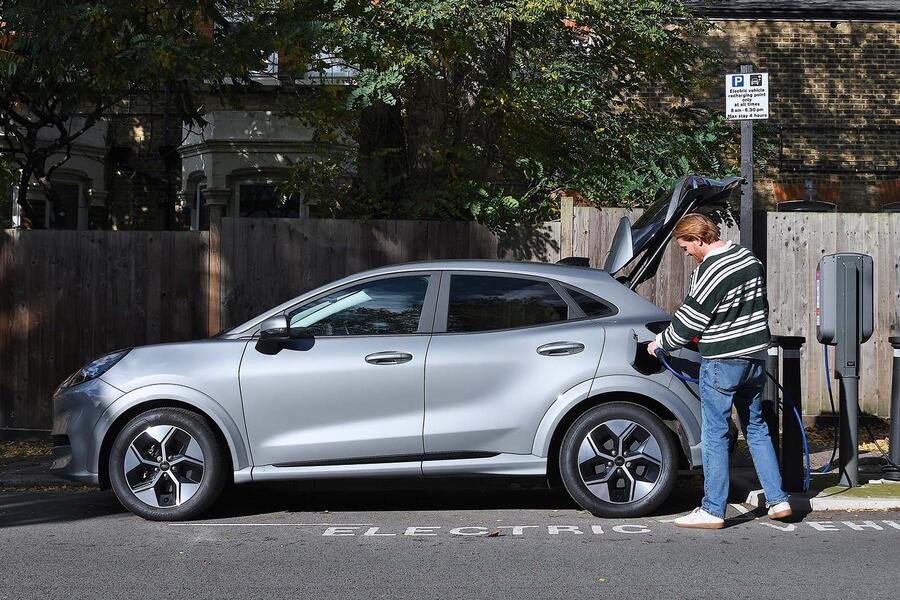
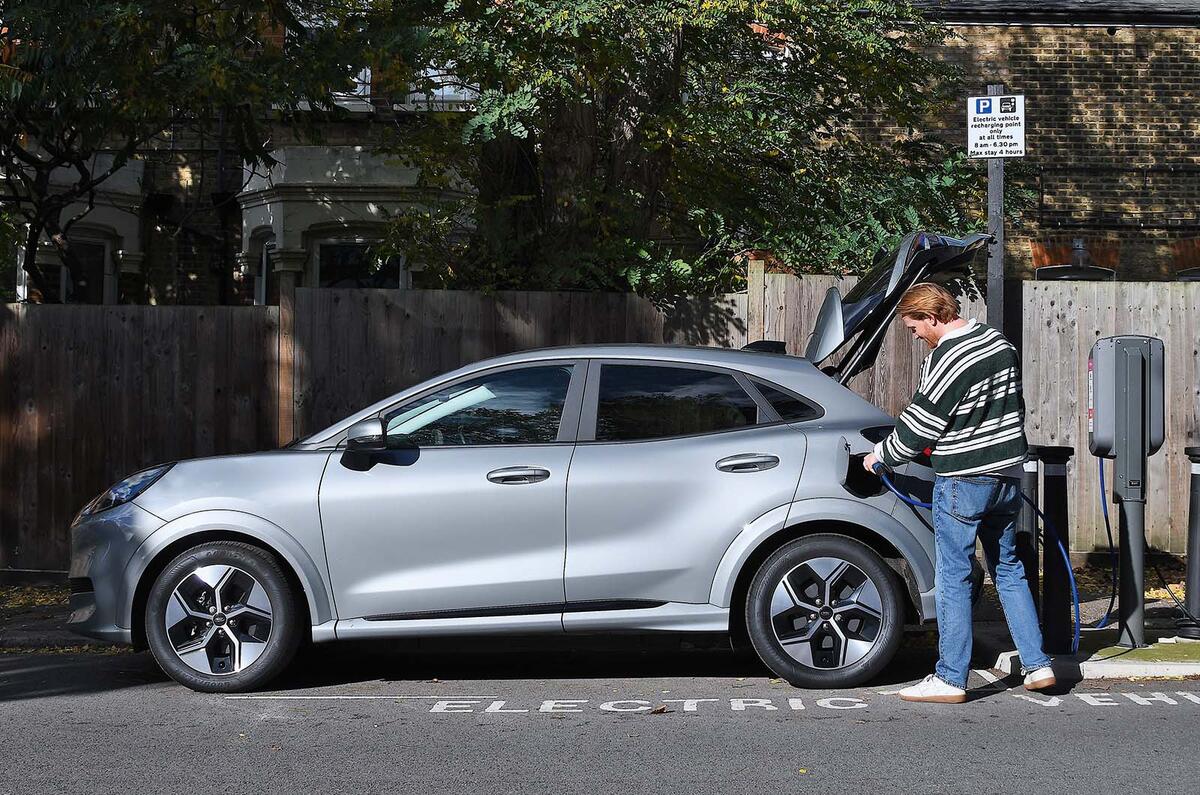
To the shops, supermarket and hospital in a car that could cost as little as 6p or 7p per mile, assuming you are able to charge from home. Reader, you're a clever sort. So I imagine your investment strategy is diverse and robust - and you can see where I'm going with this. 

Advertisement

Read our review

Car review

Ford's best-selling compact crossover gets an all-electric powertrain

Back to top

Instead of ploughing capital into a new or used car, you could just finance a cheap EV such as this Gen-E and use the cash you might have spent to top up your pension or Vanguard S&P 500 tracker-or, better yet, a second car. 

A classic or weekend car to own, enjoy and tinker with while the cheap EV sits there to do the car-type things. But anyway. Choosing the cheap EV in this hypothetical situation is devilishly important. During my time with this car I want to figure out not only if it's good enough for this type of thing but also whether it's simply a good car, full stop. 

I want to know if it's easy to live with, how far it will go on a charge, if it's easy to park, if it's big enough for my lifestyle and if it charges okay. It's looking very good so far. At the time of writing I haven't covered huge ground in it, so I'll fill in some driving details later. 

But it's proven easy to live with already. For one, it didn't make me sign into anything when I first stepped inside. The seating position is spot on, too. It's high enough so it's a cinch to get into but not so high that it feels like I'm perching over the top of everything. 

Oh, and the wireless Apple CarPlay is simple to set up and has been faultless so far. This may seem superficial to you, but it's something that really winds me up, and it is not done as well as you might think in many new cars. 

Back to top

Choosing a Puma Gen-E is straightforward enough: there's just the one battery and power choice. Under the floor you will find a 43.6kWh battery that teams up with a 166bhp motor to power the front wheels. The WLTP range figure depends slightly on which spec you choose, because wheel size makes a difference. 

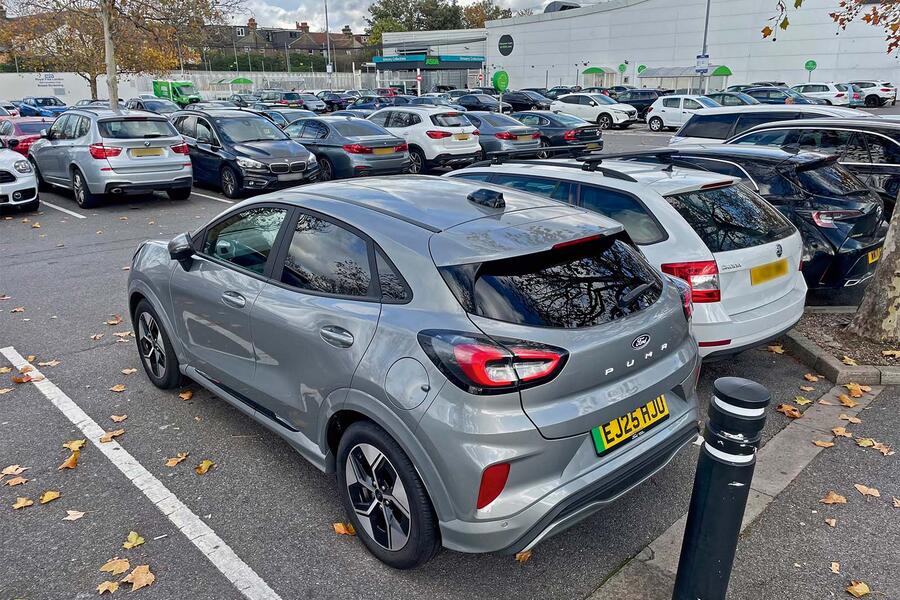
I've gone for boggo Select trim for two reasons: first, it offers the longest official range, at 234 miles; second, it's the specification found on those super-cheap leasing deals. And do you know what? It's lovely. Everything I want and nothing I don't. All the connectivity, 17in wheels, one of the clearest parking cameras in the game. 

Cruise control, too, and not the adaptive kind, is a win for me, because I think these systems (from legacy manufacturers at least) are progressively getting worse in their functionality, less reliable and more prone to not working. 

The next spec up, Premium, has 18in wheels, a better sound system and faux leather - none of which I am bothered about. The spec above that, Sound Edition, gets different 18in wheels and an even more banging sound system. Again, not bothered. 

But I have optioned the Winter Pack, for its heated steering wheel and front seats, as well as the Comfort Pack, with an electric tailgate, keyless entry and puddle lights with the Puma logo. 

That last of which is proper naff. Could this Gen-E be peak daily driver? Let's find out.

Update 2

If you have a scientific background, please look away now. For those of you who are still here, I'm about to deploy some man maths.

In my first report, I posited that the Puma Gen-E, currently available from as little as £132 per month with £1800-ish down, might just make fantastic financial sense. Its cost-effectiveness allows you to pump capital into other things. The best bet is probably an S&P 500 index tracker. But maybe you've got your eye on a new kitchen or that 2006 Aston Martin V8 Vantage you've been stalking on Autotrader.

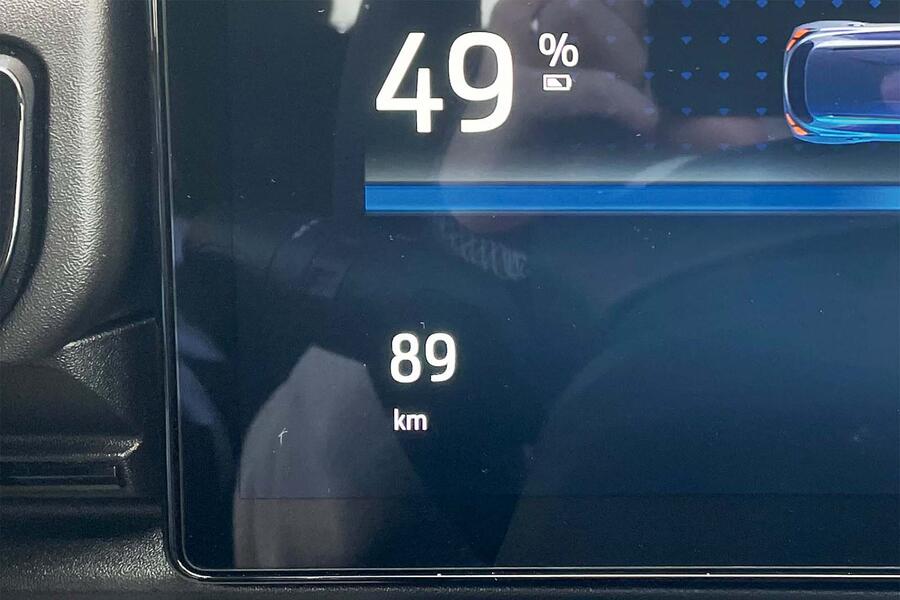
And it struck me as I parked up at the supermarket the other day (while mentally preparing myself to spend £7 on 500ml of olive oil) that I was absolutely spot on with my assertion. Because staring back at me from the Gen-E's instrument display was this figure: 6.9mpkWh. Nearly seven miles per kilowatt hour.

Back to top

I appreciate that this might be meaningless if you're not attuned to EVs, so to put it into perspective, the car's WLTP efficiency rating is much lower at 4.7mpkWh. I should clarify that the readout was relating to the trip I'd just done - from my flat to the supermarket, around 3.4 miles at speeds ranging from 15-50mph.

During our road test, we recorded 6.2mpkWh in our 'everyday' test too. So it's not just me or this particular car. This is a hugely economical model in the right circumstances, as highlighted by the fact that, under the same strict testing conditions, rivals such as the Renault 5 can barely crack 5.0mpkWh.

My car's 6.9mpkWh rating wasn't scored in Eco mode and I had made no concessions to driving particularly economically. I was driving how I drive naturally. Following the flow of traffic, in the outside lane for the bit of A-road I use.

With this in mind, I tracked the economy figure for my drive home, and then my scores for the next two weeks. The average mpkWh was frankly staggering: 7.2, thanks largely to one trip at a ridiculous 8.8mpkWh. Must have been windy.Yes, I am just going by the car's readout, and no, I took absolutely no steps towards making this testing scientifically rigorous - but still.

And now, ladies and gentlemen, for some context to this to reveal just how cheap this is. I pay 56p per kWh at my local set of chargers. At that price, travelling 6.8 miles (to the supermarket and back) at 7.2mpkWh costs me about 53p in total. On the bus it would cost £3.50. Obviously there are other costs and pains associated with owning a car - but again, still.

Back to top

And that's not the half of it. I'm paying a lot of money to charge my car, because I don't have a driveway. But I've seen tariffs as low as 6.5p per kWh (off-peak, of course). And with charging that cheap, my supermarket run would cost about 6p. Imagine that!

If I were to move to a house with a driveway, I'd save enough money after 15 shopping trips to buy myself that olive oil.

Update 3

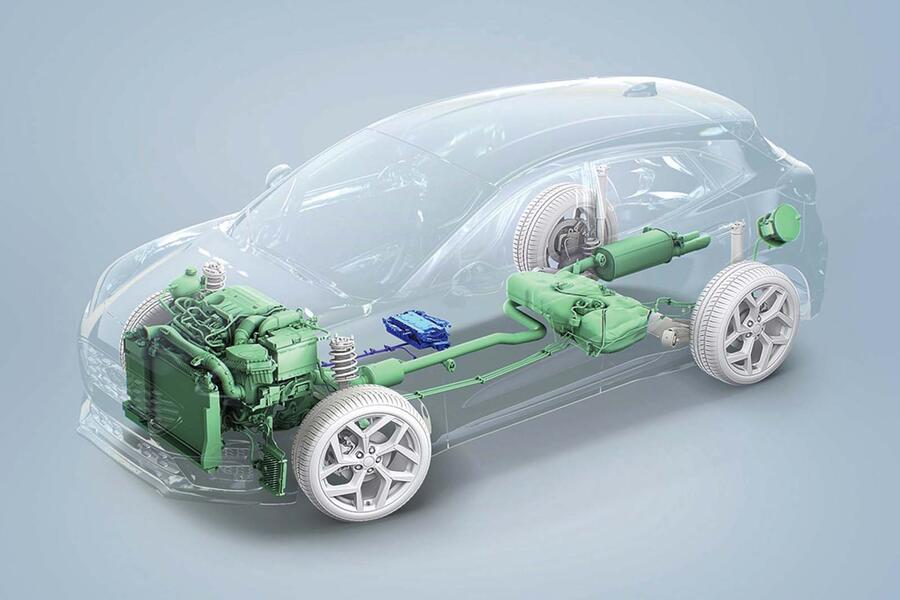
The compact proportions of the Ford Puma left us wondering how they managed to reverse engineer this best-seller into an electric SUV. 

Of course its small battery and fleeting range are all clues that this isn’t a bespoke EV, but like its piston-powered sibling, the Gen-E earned itself a four-star Autocar road test rating. 

So how did Ford transform the Puma into an electric car? We sat down with the Puma’s lead engineer, Dieter Leffers, to find out.

Read the full feature here

Back to top

Final Report

Get me a pair of running shoes, a shrimping boat and a can of Dr Pepper and call me Forrest Gump, because I love Gen-E. Broadly, I'm a big fan of small EVs.

The instant brawn of electric motors is extremely useful for day-to-day driving; they're quiet and smooth; and small means lighter weight, better efficiency, smaller batteries and greater simplicity. So they make a great deal of sense for a great deal of people.

Some seem to believe everyone in the UK drives from London to Edinburgh every day, but MOT test data points to more like 100-150 miles per week - which means one charge every seven days for most small EVs.

And of all the small EVs out there, I think the Gen-E is the best, especially at this end of the budget. Sure, its range isn't huge. Its interior feels a bit cheap in places and I don't think it's a looker. But the way it steers and rides is pure Ford at its best, despite the extra weight.

It's only half a second slower from 0-62mph than the 1.0-litre Puma ST, which is great for getting off the line if I'm in the wrong lane at a set of traffic lights on a roundabout. There are no downsides to practicality either: the Gigabox, a 145-litre, waterproof underfloor bin in the boot, is great for storing the filthy charging cable.

The Gen-E is just the perfect size for a Londoner like me, too. You wouldn't get a trio of rugby players in the back, but that's fine because, despite Autocar being based in Twickenham, that has never been a cause for concern.

Back to top

And although small cars can't filter like a motorbike, they still make more sense in the city: easier and quicker to park, nimbler down tight residential streets and simpler to squeeze out of a T-junction.

The Gen-E is also refreshingly no-nonsense. It didn't make me sign into anything; it has the slightly higher-than-supermini seating position that my mum loved; and the infotainment proved super-simple while still having all the functionality I really wanted and nothing I didn't. The wireless Apple CarPlay worked faultlessly too-a rarity for me.

Perhaps more impressive is the fact the Gen-E changed my perspective on EVs that sit on the same platform as ICE cars. I was thoroughly underwhelmed by the original Hyundai Ioniq EV's range, the Volkswagen e-Golf's shrunken boot was a bit disappointing and my heart rate is still recovering from the Mk1 Hyundai Kona Electric's attempts at going around a corner and accelerating at the same time.

But things have got a bit better of late. The current lot of Stellantis products are largely as good as EVs as they are as ICE cars. But it's this Gen-E that has thoroughly changed my mind, because Ford evidently had to make so few compromises in convincingly electrifying the Puma.

The Gen-E also cemented my thoughts about the value for money an EV can offer. The lowest price I saw for a lease was £132 per month. Including an initial payment, that's just £3468 for a year's worth of drudgery driving (excluding tax and insurance, obvs).

Back to top

That's before we get to the potential running costs. Street charging in my area is 56p per kWh, which is expensive, but I've seen prices as low as 6p per kWh for home charging, which is phenomenally cheap. All of this adds up in favour of the Gen-E because of its outstanding efficiency.

Totting up my shopping trips for two weeks (a mixed route, pretty slow, 3.4 miles each way and admittedly in autumn rather than winter weather), I calculated a stellar 7.2mpkWh. What spec would I have? I'm glad you asked. My Gen-E was basic, with just a few options (including the ghastly puddle lamp), but I would bin them all off and have it as cheap as possible.

If you're in the market for a new small car and you're being swayed by my words, here is what I would do if I were you. I would get on the leasing configurators and take the cheapest Gen-E deal you can find. Don't tick any boxes. Don't even look at the colour. Order it and use the cash you saved by not splashing out on an expensive new car to buy a used second car instead - something for the weekend.

Take the Gen-E to Tesco and the Porsche for a real drive.

Ford Puma Gen-E Select

Prices: List price new £29,995 List price now £26,245 (after ECG) Price as tested £31,795

Options: Solar Silver metallic paint £800, Comfort Pack £650, Winter Pack £350

Economy and range: Claimed range 234 miles Battery 53/43kWh (total/usable) Test average 5.5mpkWh Test best 7.2mpkWh Test worst 3.8mpkWh Real-world range 237 miles Max charge rate 100kW

Tech highlights: 0-62mph 7.2sec Top speed 99mph Engine Permanent magnet synchronous motor Max power 166bhp Max torque 214lb ft Gearbox 1-spd reduction gear, FWD Boot 523 litres Wheels 17in, alloy Tyres 215/55 R17, Goodyear EfficientGrip Performance Kerb weight 1488kg

Service and running costs: Contract hire rate £252 pcm CO₂ Og/km Service costs None Other costs None Fuel costs £97.75 Running costs including fuel £97.75 Cost per mile 10 pence Faults None

Back to top

Murray Scullion

Murray Scullion
Title: Digital editor

Murray has been a journalist for more than a decade. During that time he’s written for magazines, newspapers and websites, but he now finds himself as Autocar’s digital editor.

He leads the output of the website and contributes to all other digital aspects, including the social media channels, podcasts and videos. During his time he has reviewed cars ranging from £50 - £500,000, including Austin Allegros and Ferrari 812 Superfasts. He has also interviewed F1 megastars, knows his PCPs from his HPs and has written, researched and experimented with behavioural surplus and driverless technology.

Murray graduated from the University of Derby with a BA in Journalism in 2014 and has previously written for Classic Car Weekly, Modern Classics Magazine, buyacar.co.uk, parkers.co.uk and CAR Magazine, as well as carmagazine.co.uk.

Add a comment…