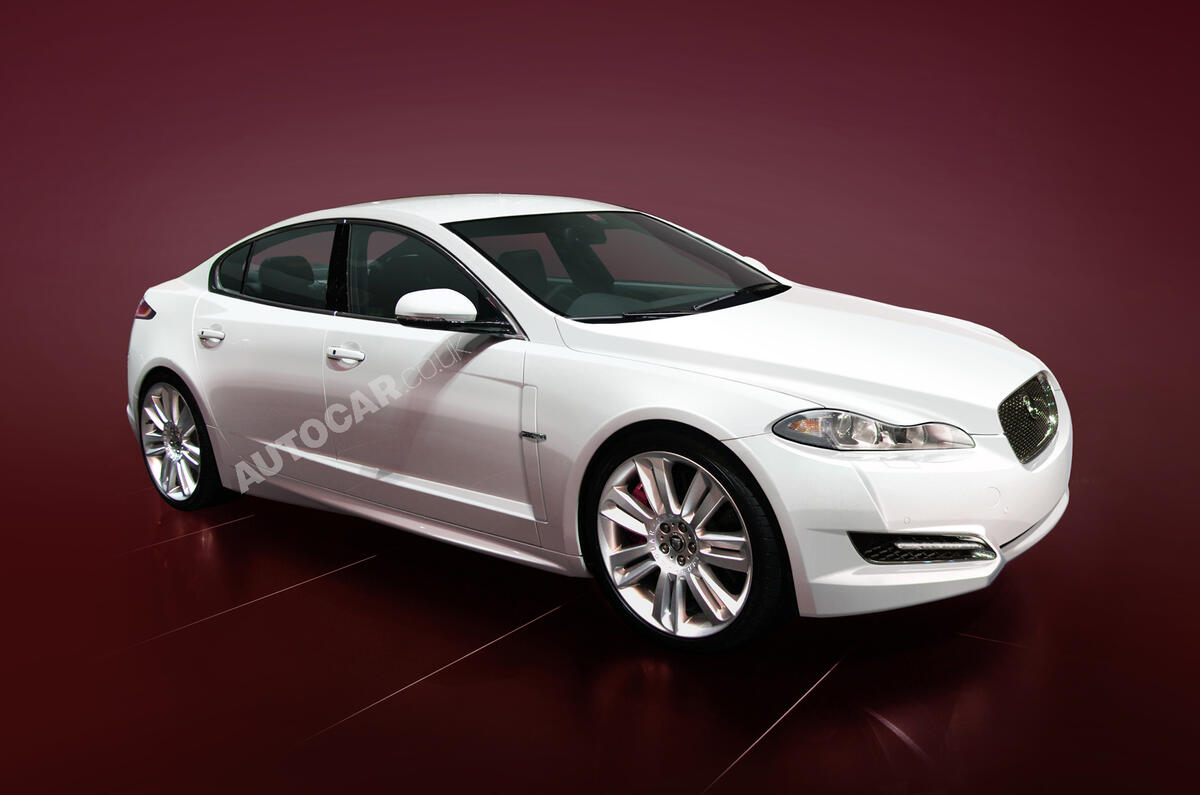
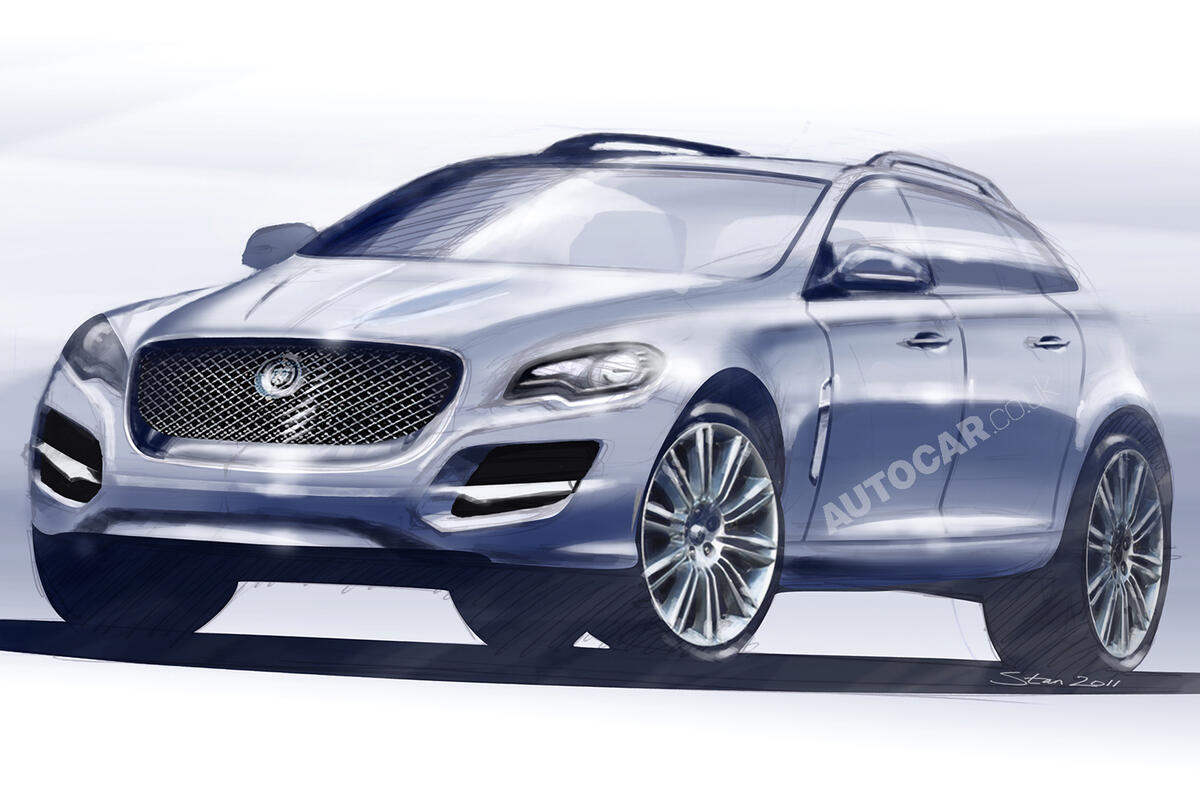



Jaguar plans to launch an upmarket 3-series saloon rival and a radical, sporty 4x4 crossover by the middle of this decade.
The two new £40k models, being planned under project codename X760, will join with the new XE sports car to help lift Jaguar’s sales volume closer to 100,000 units per year, the company’s medium-term strategic goal.
Jaguar had a good year in 2010, boosting sales by a couple of thousand units to around 52,000. But the number is comparatively tiny and strong growth is vital to ensure future profits and satisfy owner Tata, which is investing heavily in Jaguar Land Rover.
See Autocar's renderings of Jaguar's small saloon and crossover
Porsche, whose success has to some extent guided Jaguar’s strategic target, added around 20,000 units last year and is already heading back to over 100,000 units, its peak in 2007.
Success in China and the US will dictate whether Jag can hit its target, which is partly why it will break out of its brand straitjacket to launch a soft-roader in late 2014.
Sports saloon in 2014Jaguar has been considering a return to the vital ‘executive saloon’ segment with a premium-priced, high-quality, front-engined, rear-drive small car for well over 18 months.
Since being first proposed as a new entry-level Jag, project X760 has evolved from a radical hatch into a family of two cars — saloon and soft-roader — that could hike Jag’s volume by up to 40,000 units a year.
Jaguar came to the conclusion that the five-door hatch couldn’t guarantee sufficient sales and experienced new management, in the form of new boss Carl-Peter Forster, Ralf Speth and Adrian Hallmark, has crystallised the plan for a more conventional four-door, three-box design. “Saloons are where the meat in the market is,” one insider told Autocar.
Just like the mooted five-door hatch, the X760 saloon won’t be cheap. Its entry point will be around £40k at today’s prices, but it will be high in quality, handsome looking, fine driving and more frugal than any previous Jag. That’s largely thanks to its new aluminium monocoque, known internally as the RD7 platform.
RD7 is the next-generation pressed-alloy, riveted monocoque platform, freshly engineered for the next Range Rover and Range Rover Sport, and also known as the Premium Lightweight Architecture (PLA).
The smaller saloon will have its own version of the platform structure and upper body, but the manufacturing and basic design methods will be common. The shared parts will include electrical modules, axles and air-con units.
RD7 will eventually underpin the replacement for the XF (due around 2015) and XJ (2018). Much of the thinking for this was done by senior engineer Mick Mohan, now boss of JCB, whose job was to streamline JLR’s complex platform set-up.
See Autocar's renderings of Jaguar small saloon and crossover
Although the X760 saloon will be Jaguar’s ‘entry-level’ car, it won’t be especially small. Its dimensions will be nudging 4.8m — the size of the just-replaced BMW 5-series. But by the same time, of course, its main competitor — the new F11 BMW 3-series — will have grown to a comparable size. However, the Jag’s alloy bodyshell should ensure a kerb weight of around 1300kg, at least 100kg lighter than the main competition.