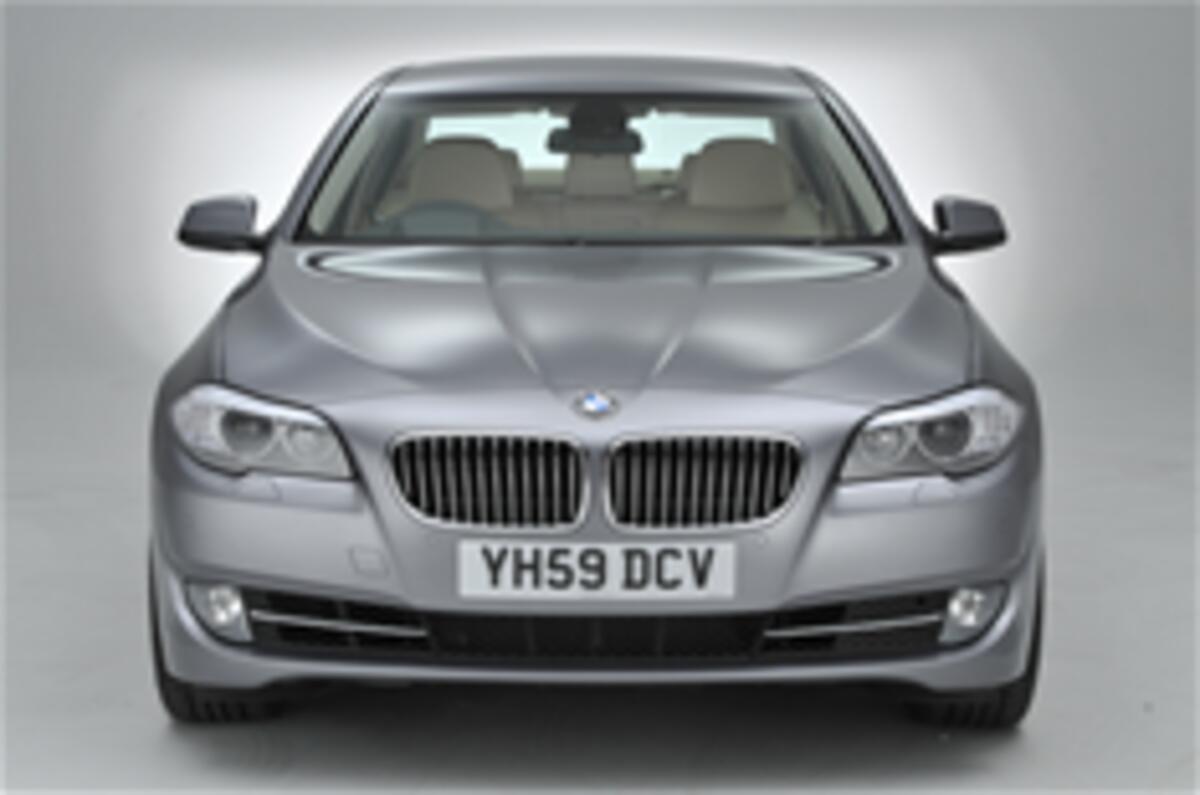

This is the new BMW 5-series four-door saloon, the sixth generation of its second biggest seller, which first appeared in 1972.
Despite its familiar format, the new BMW 5-series, which goes on sale after the Geneva motor show next March, breaks new ground by importing much of the equipment and technology of the recently launched 7-series, reinstating a driver-oriented fascia design which BMW dropped for one generation, and adopting a sophisticated new double-wishbone front suspension set-up.
New BMW 5-series picture gallery - more pictures
New BMW 5-series picture gallery - original picture selection
VIDEO - New BMW 5-series on video
BMW 5-series's design explained
There are seven engine options at launch, and BMW is stressing the importance of the UK market (and that fact that it has noticed the good reception of Mercedes’ new E-class) by issuing UK prices more than four months early.
Design and dimensionsThe biggest change to the proportions of the new 5-series is its adoption of an 80mm longer wheelbase, at 2970mm.
This improves rear cabin room allows a long bonnet, a low roofline and 50/50 weight distribution, and gives the car balanced proportions with relatively short overhangs front and rear. The kidneys of the grille are vertical rather than raked, designers say, to portray the car’s sporting character.
The styling relationship with the outgoing 5-series is obvious, but the car is less controversial than its predecessor, with a sleeker appearance apparently designed to enhance the visual differences between the 5-series and the 3-series, which has adopted a more grown-up look.
The saloon’s wheelbase is still 100mm shorter than the 3070mm shared by the 7-series and the 5 GT.
ChassisBMW promises “a more composed ride” with no reduction in dynamic capability now that the 5-series has adopted a longer wheelbase, and the 7-series’ sophisticated double-wishbone, coil-sprung front suspension system to replace the traditional MacPherson struts. The rear suspension is an independent multi-link system.
All new 5s get electric power steering, with Servotronic (speed-dependent) assistance, which saves weight and drag on the engine. It’s a big step for BMW, which has continued to prefer the ‘feel’ of electro-hydraulic systems as rivals have adopted electric set-ups.
More sophisticated 5s will have the latest electronic chassis traction control and stability equipment as before, but for the first time they will have a driver-operated chassis configurator. Called DDC (Driver Dynamic Control), it has settings for normal, comfort, sport and sport+, and it groups functions in one control. BMW’s development chief Klaus Draeger, said, “We have built a car as agile and as lightfooted as a 3-series”.
Selection of any setting will automatically change and match parameters for steering assistance, throttle sensitivity, auto gearchange characteristics, the degree of intervention of the stability control, and, if the car has adjustable dampers, its ride character.
Among other optional gadgets will be park assistance sensors, lane departure warning, surround-view cameras, head-up display, night vision and speed limit monitoring systems.