
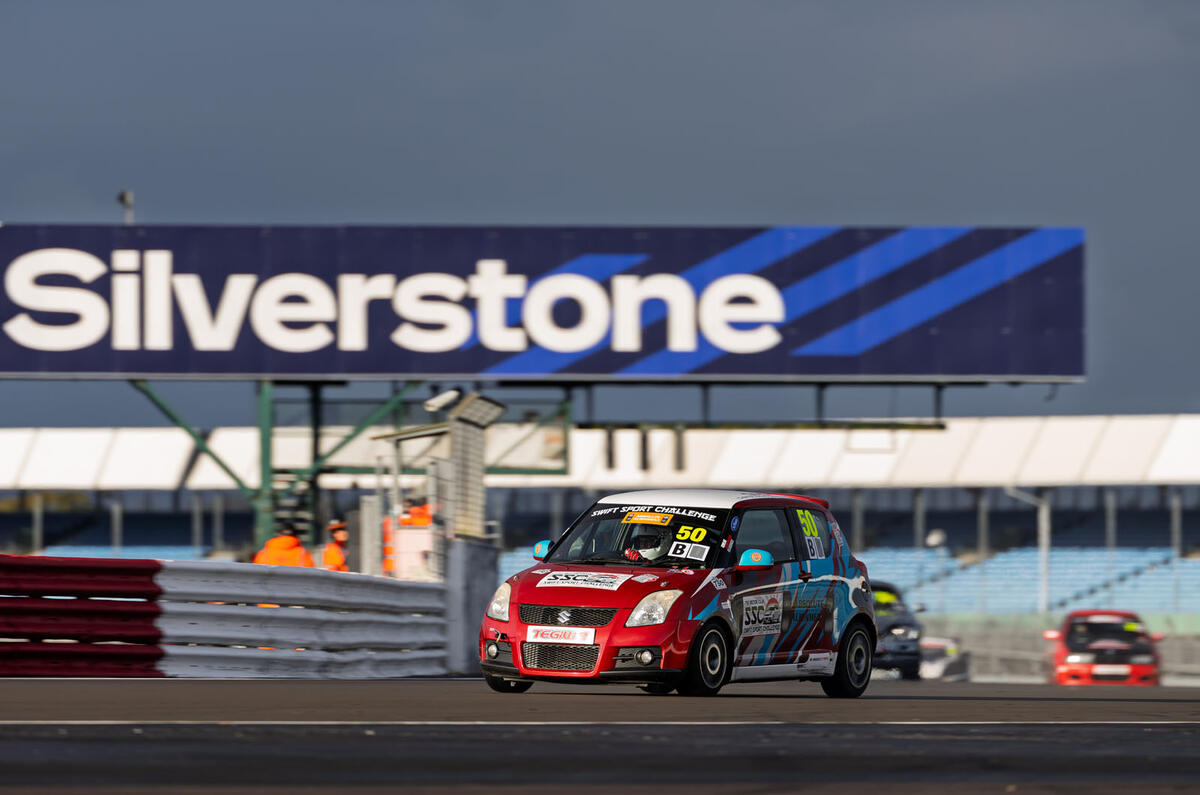
A race that "everybody enjoys but nobody understands" is how someone describes the Birkett Six-Hour Relay race to me.
Since 1951 it has been a season-ending fixture race for the 750 Motor Club, which itself has been around for so long promoting affordable club motorsport that it's the first place I'd think to send someone who wanted to go low-cost racing.
I've done a few 750 Club races and without exception they've been friendly and approachable. But perhaps none more so than the Birkett, named after its creator (and 750MC founder) Holland Birkett. Its name is otherwise descriptive. It lasts six hours and is a relay.

Teams have up to six drivers, none fewer than three, and you can enter several cars per team. One is on track at a time and when it pits, as it passes its garage, the next team-mate can head out instead. Sounds simple. Isn't. At the end of the six hours, the team with the most laps wins? Not so fast.
There is a winner from that point of view but this is also a handicap race and the proper winner, if you like, will be the one who is judged to come first after the pace of all its respective team's cars has been adjusted, so it's not as simple as pitching a Suzuki Swift Sport against a Caterham 420R in a straight fight.
And, even then, it's not totally straightforward because what if one team has three moderately quick BMWs and a rival has one really quick Caterham but two quite slow hatchbacks?
A handicapper could calculate for the two slower cars, yet then the Caterham could do all the hard work and well, let's put it this way, after the race there's a lot of hanging around in the pit lane in the dark while such calculations are made.
As my friend said, nobody really understands it, but they all want a good time, so it's best not to overthink it.


Add your comment
