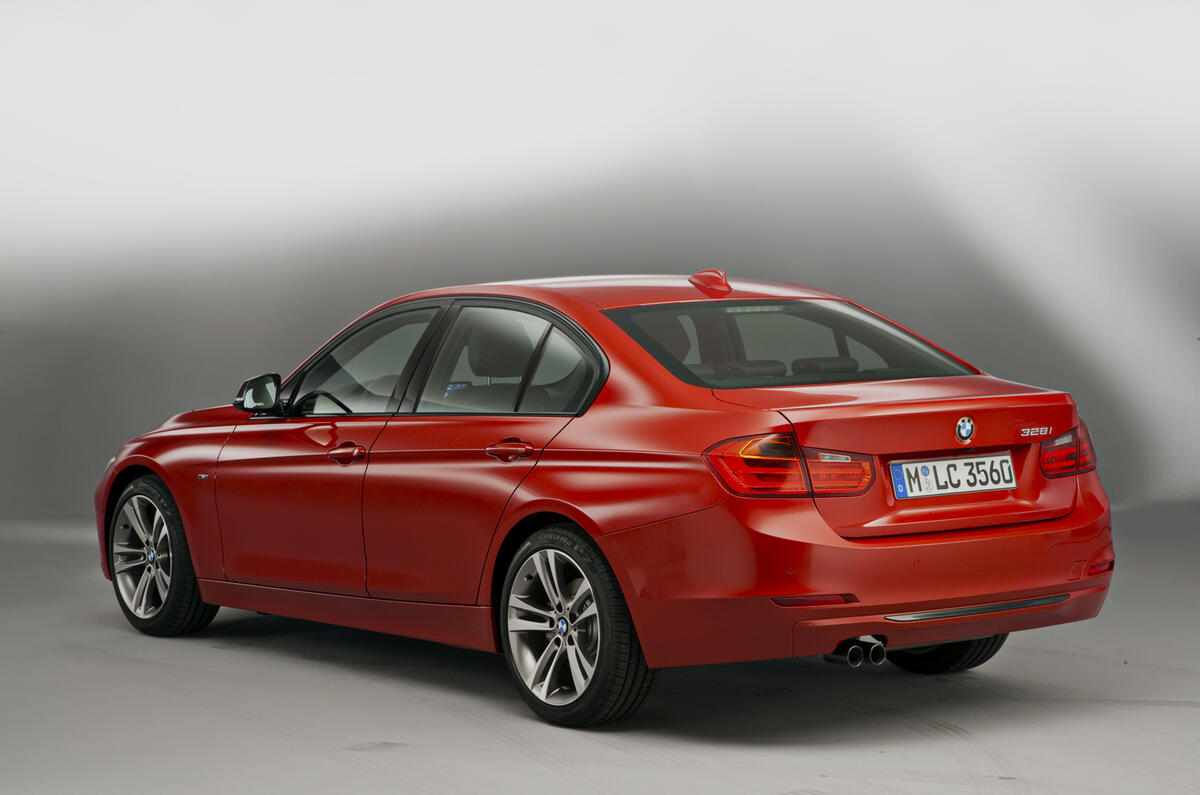
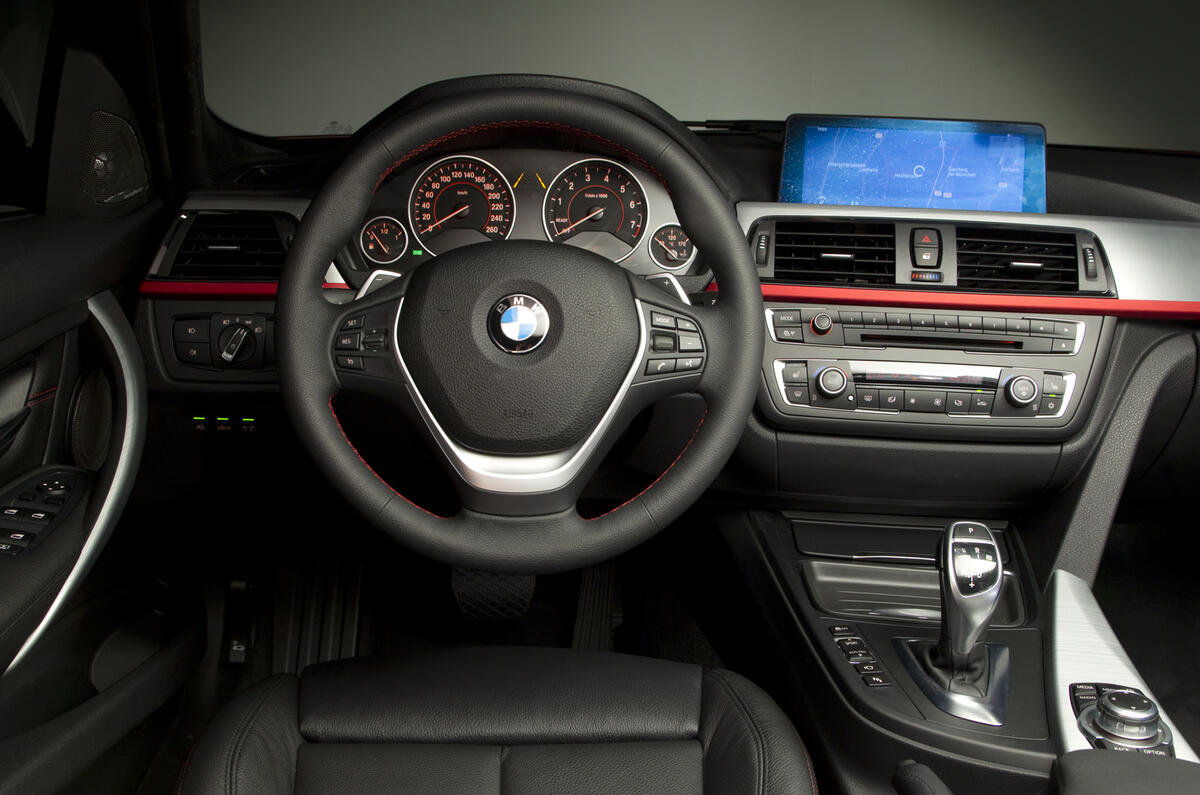
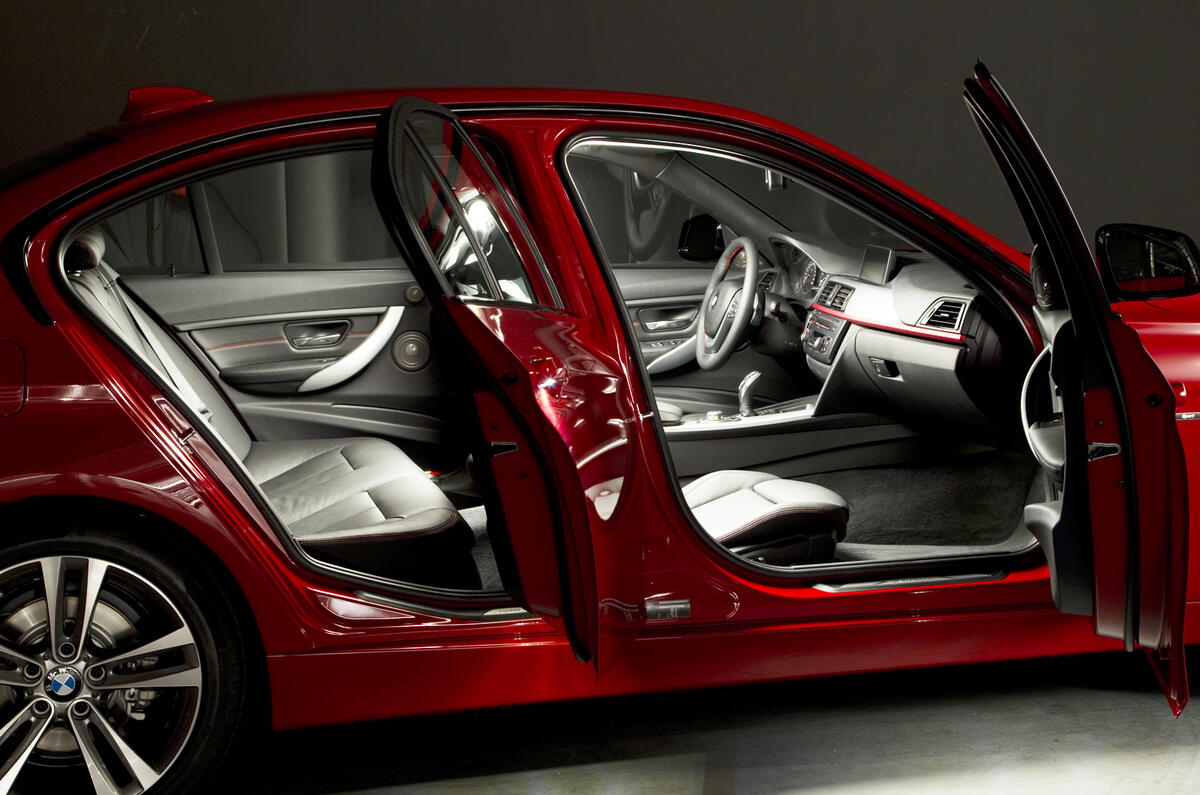
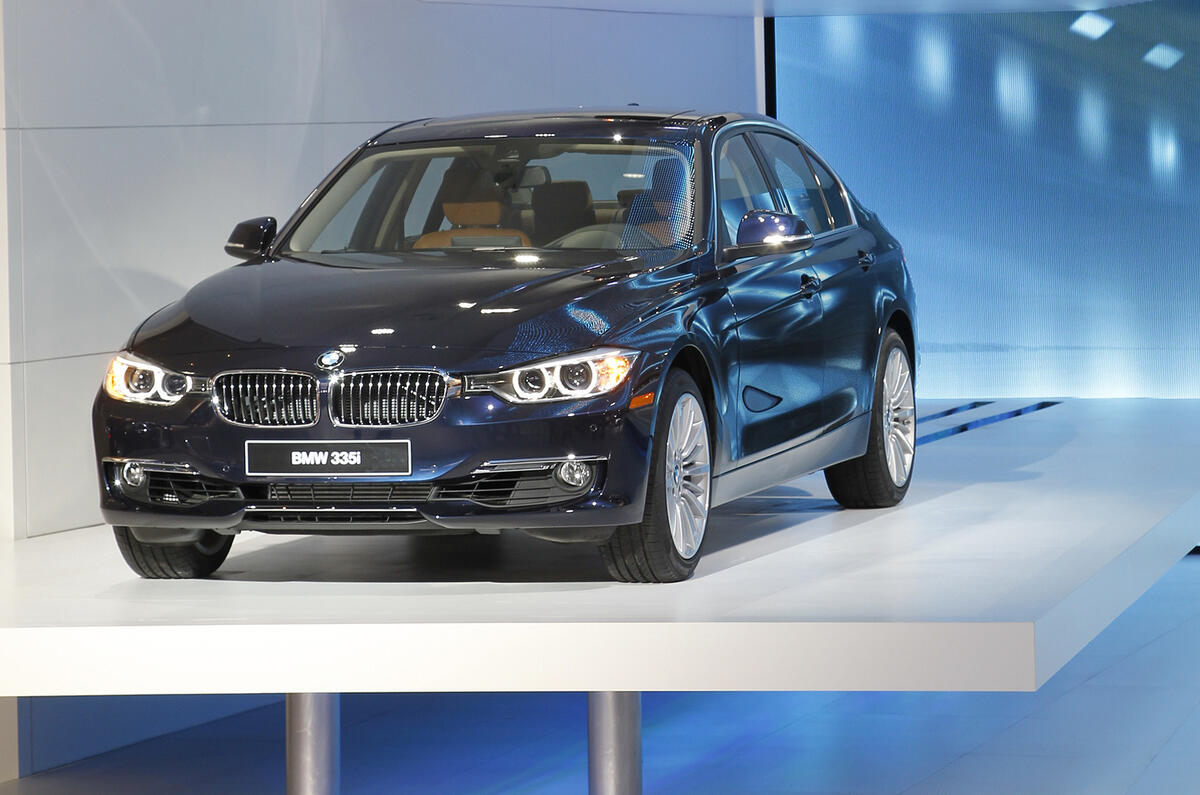








The BMW 3-series has been unveiled to the North American audience at today's Detroit motor show.
The roomier, faster and more economical BMW 3-series saloon - know internally as the F30 - is new from the ground-up, has been four years in the making, and is tasked with continuing BMW’s dominance over key rivals such as the Audi A4, Mercedes-Benz C-class and Volvo S60.
So thorough has the design and development been that BMW R&D chief Klaus Draeger, describes it as ‘BMW’s most ambitious engineering program to date’.
Holding true to a front-engine, rear-drive layout, the new 3-series will initially be sold with the choice of three engines in four models – the 320d, 320d EfficientDynamics, 328i and 301bhp 335i.
Following the launch cars into the showrooms a month later, in March next year, are the entry-level diesels and a petrol model: the 320i, which gets a 181bhp 2.0-litre four-pot, and the 114bhp 316d and 141bhp 318d, both of which use versions of the same 2.0-litre four-cylinder unit. Later in the year comes the rest of the cavalry, including the 318i petrol and the 325d, 330d and 335d diesels.
And in a move mirroring that of the 1-series, the new 3-series will introduce three new trims – Sport, Luxury and Modern — to complement the usual ES, SE and MSport.
Also being readied for late next year is the 3-series ActiveHybrid that mates a turbocharged 3.0-litre petrol engine with an electric motor combined into the automatic ’box housing. It will produce 335bhp and 332lb/ft and return 44.4mpg. A UK-first late next year will be four-wheel drive models.
Styling/Dimensions/WeightBMW’s design team, headed by Adrian von Hooydonk, was charged with delivering more models and a greater styling variation than ever before.
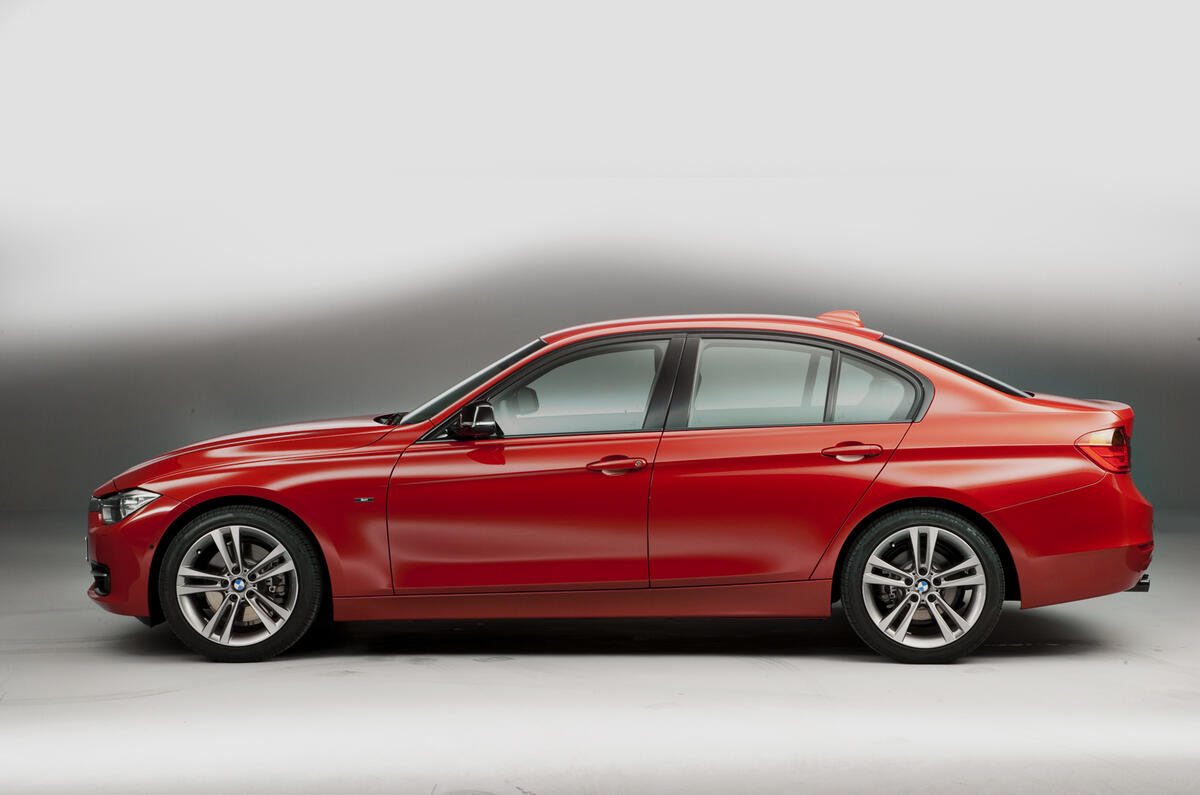
The starting point is von Hooydonk’s distinctive long-bonnet, cab backward proportion, chosen to emphasise BMW’s rear-drive running gear.
In that sense the 3-series follows the 5 and 7-series, but the departure is the details to avoid the ‘salami-sliced’ family look that BMW was once criticised for.
Shapely headlamps positioned close to the near-vertical kidney grille accentuate the width up front, while double swage lines along the bodysides emphasise the wedge profile and break up the visual bulk of the flanks.
This adds up to a more individual look than before, particularly necessary on the new F30, because the model range will eventually stretch to six body styles.
The new saloon has also grown – but not every dimension. Length is up by a considerable 93mm to 4623mm, some 50mm of which has been dedicated to increasing the wheelbase, now 2810mm.
Width is down by 4mm at 1811mm but height is up by 9mm at 1429mm. The wide track, a long time 3-series design touch, has also been enhanced, with the front gaining an added 37mm at 1543mm and the rear up by 47mm at 1583mm.
Despite the increase in size, BMW claims weight of a lightly-trimmed model has decreased by an average of 40kg. Although increased equipment levels have pushed it back up again. For example, BMW quotes the new 320d at 1420kg, the same as the old model.