3.0i Coupe 2dr Petrol Auto Euro 6 (s/s) (339 ps)
Submitted by dev_editor on
For as long as anyone can recall, Morgan cars have been clearly and proudly old-fashioned, in terms of style, ethos and production, even if the engines have been modern.
And while many have always been baffled by the prospect of buying a new car that looks like a very old one, many others adore Morgan. But when exactly did the British brand get stuck in time – and why?
Let’s go back to the start. In the earliest days of motoring in Britain, only the upper crust could partake; those below could afford only a motorcycle, attaching a sidecar if they needed to carry passengers.
So when former railway engineer Henry Morgan decided to put his own car into production, with a simple design featuring only one rear wheel and a two-cylinder engine from a motorcycle, he was deluged by a torrent of pent-up demand for an affordable car.
Jump forward to late 1918 and Autocar readers were clamouring for a ‘£100 car’ (that’s about £5000 now) to get the masses motoring after the Great War – and our answer was Morgan’s Runabout, despite the fact the Malvern creation had never really been updated.
“Anyone accustomed to cars of a conventional character must pause to admire the genius of the man who evolved a machine so efficient, so obviously simple and so cheap,” we said, having prior noted that it was “far more suitable for high-speed sporting work” than AC’s rival.
However, as ‘proper’ cars became more and more affordable through the ’20s and ’30s, Henry recognised that he needed something new. The result: a four-wheel, four-cylinder sports car, logically named the 4/4.
“There are several interesting features in the design,” we said (not least independent front suspension), “but without doubt the first point to take the eye is the distinctive appearance. It is unusually low in build and looks long and graceful.”
That may have been so, but it still followed the same formula as the 1936 efforts of AC, Aston Martin, BMW, Lagonda, MG, Riley and the rest: swooping wings, shield-shaped grille, separate, circular headlights. Indeed, it wouldn’t be until the late 1940s that car design began to diversify through ‘envelope’ styling.
Enjoy full access to the complete Autocar archive at the magazineshop.com
Like any car firm, Morgan simply dusted off its old designs come 1946. No bad thing: the 4/4 had barely got going before World War Two had stopped play and had “made a most favourable impression” on us “by the sure and accurate way in which it can be put round a bend” and its “lively, willing performance”.
But even when the slightly larger and punchier Morgan +4 was added in 1950, it didn’t look fundamentally different.
And within just a few years, it was starting to look dated; look above to compare with the Triumph TR2 (from 1952) and Austin-Healey 100 (1953), then consider the smooth lines of the AC Ace (1953), Jaguar XK140 (1954) and MG A (1955).
By this time, Peter Morgan was a key figure at Malvern. He fancied trying “a more modern, all-enveloping style”, but his father was reluctant, “feeling that it was probably better to wait until such bodywork had stood the test of time”.
Henry died in 1959, and instantly Morgan’s advertising tone changed, to sell the +4 as “one of Britain’s few hand-built cars, made in the finest traditions of British craftsmanship”. And four years later, Morgan’s aesthetic finally re-entered the present with the introduction of the sleek, glassfibre-bodied +4+ coupé.
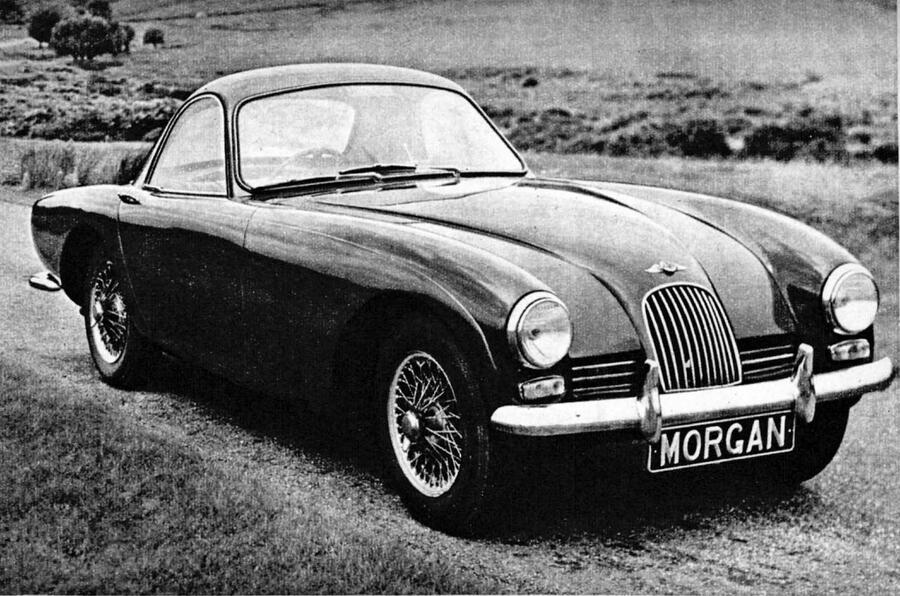
Yet it was notably absent from the 1966 Earl’s Court motor show, apparently because “so strong is the demand for vintage-type Morgans that the tiny Malvern works have had to suspend indefinitely production”. Hmm. Today it’s commonly held that only 26 were ever produced. Peter drove a +4+ himself and told us in 1968: “People call it a flop, but it wasn’t really.”
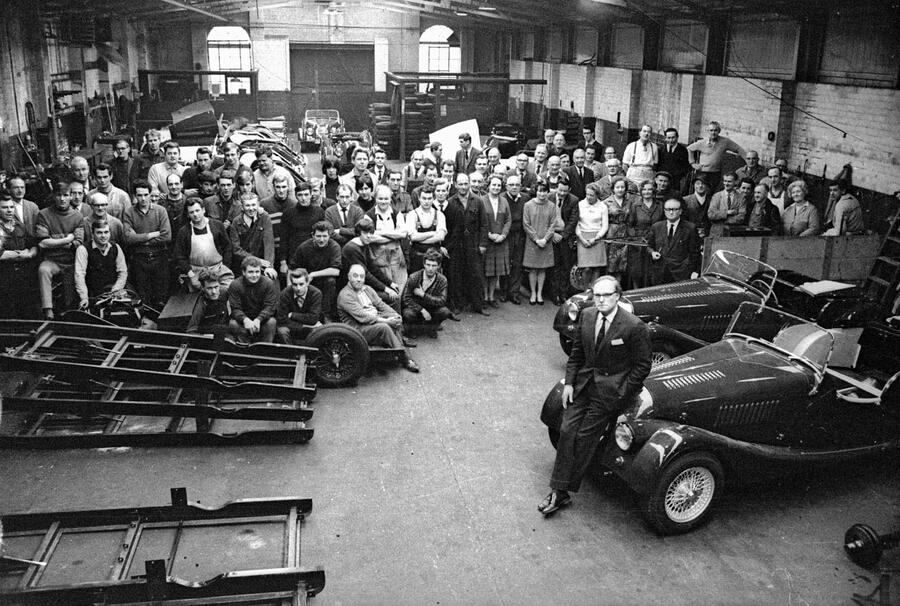
He also said he was considering making a mid-engined V8 Morgan! Although tweed-suited, he was no stick-in-the-mud. But he never risked updating or expanding Malvern, so customer demand for old-fashioned fun always outstripped the supply.
And so we concluded upon our 1968 visit: “So long as the public prefer the traditional-style Morgan, what point is there in trying to ape a style of car which, in purposely buying a Morgan, such people go out of their way to avoid?”
True now as then. How funny that Morgan’s USP was kind of accidental.
For as long as anyone can recall, Morgan cars have been clearly and proudly old-fashioned, in terms of style, ethos and production, even if the engines have been modern.
And while many have always been baffled by the prospect of buying a new car that looks like a very old one, many others adore Morgan. But when exactly did the British brand get stuck in time – and why?
Let’s go back to the start. In the earliest days of motoring in Britain, only the upper crust could partake; those below could afford only a motorcycle, attaching a sidecar if they needed to carry passengers.
So when former railway engineer Henry Morgan decided to put his own car into production, with a simple design featuring only one rear wheel and a two-cylinder engine from a motorcycle, he was deluged by a torrent of pent-up demand for an affordable car.
Jump forward to late 1918 and Autocar readers were clamouring for a ‘£100 car’ (that’s about £5000 now) to get the masses motoring after the Great War – and our answer was Morgan’s Runabout, despite the fact the Malvern creation had never really been updated.
“Anyone accustomed to cars of a conventional character must pause to admire the genius of the man who evolved a machine so efficient, so obviously simple and so cheap,” we said, having prior noted that it was “far more suitable for high-speed sporting work” than AC’s rival.
However, as ‘proper’ cars became more and more affordable through the ’20s and ’30s, Henry recognised that he needed something new. The result: a four-wheel, four-cylinder sports car, logically named the 4/4.
“There are several interesting features in the design,” we said (not least independent front suspension), “but without doubt the first point to take the eye is the distinctive appearance. It is unusually low in build and looks long and graceful.”
That may have been so, but it still followed the same formula as the 1936 efforts of AC, Aston Martin, BMW, Lagonda, MG, Riley and the rest: swooping wings, shield-shaped grille, separate, circular headlights. Indeed, it wouldn’t be until the late 1940s that car design began to diversify through ‘envelope’ styling.
Enjoy full access to the complete Autocar archive at the magazineshop.com
Like any car firm, Morgan simply dusted off its old designs come 1946. No bad thing: the 4/4 had barely got going before World War Two had stopped play and had “made a most favourable impression” on us “by the sure and accurate way in which it can be put round a bend” and its “lively, willing performance”.
But even when the slightly larger and punchier Morgan +4 was added in 1950, it didn’t look fundamentally different.
And within just a few years, it was starting to look dated; look above to compare with the Triumph TR2 (from 1952) and Austin-Healey 100 (1953), then consider the smooth lines of the AC Ace (1953), Jaguar XK140 (1954) and MG A (1955).
By this time, Peter Morgan was a key figure at Malvern. He fancied trying “a more modern, all-enveloping style”, but his father was reluctant, “feeling that it was probably better to wait until such bodywork had stood the test of time”.
Henry died in 1959, and instantly Morgan’s advertising tone changed, to sell the +4 as “one of Britain’s few hand-built cars, made in the finest traditions of British craftsmanship”. And four years later, Morgan’s aesthetic finally re-entered the present with the introduction of the sleek, glassfibre-bodied +4+ coupé.
Yet it was notably absent from the 1966 Earl’s Court motor show, apparently because “so strong is the demand for vintage-type Morgans that the tiny Malvern works have had to suspend indefinitely production”. Hmm. Today it’s commonly held that only 26 were ever produced. Peter drove a +4+ himself and told us in 1968: “People call it a flop, but it wasn’t really.”
He also said he was considering making a mid-engined V8 Morgan! Although tweed-suited, he was no stick-in-the-mud. But he never risked updating or expanding Malvern, so customer demand for old-fashioned fun always outstripped the supply.
And so we concluded upon our 1968 visit: “So long as the public prefer the traditional-style Morgan, what point is there in trying to ape a style of car which, in purposely buying a Morgan, such people go out of their way to avoid?”
True now as then. How funny that Morgan’s USP was kind of accidental.
For as long as anyone can recall, Morgan cars have been clearly and proudly old-fashioned, in terms of style, ethos and production, even if the engines have been modern.
And while many have always been baffled by the prospect of buying a new car that looks like a very old one, many others adore Morgan. But when exactly did the British brand get stuck in time – and why?
Let’s go back to the start. In the earliest days of motoring in Britain, only the upper crust could partake; those below could afford only a motorcycle, attaching a sidecar if they needed to carry passengers.
So when former railway engineer Henry Morgan decided to put his own car into production, with a simple design featuring only one rear wheel and a two-cylinder engine from a motorcycle, he was deluged by a torrent of pent-up demand for an affordable car.
Jump forward to late 1918 and Autocar readers were clamouring for a ‘£100 car’ (that’s about £5000 now) to get the masses motoring after the Great War – and our answer was Morgan’s Runabout, despite the fact the Malvern creation had never really been updated.
“Anyone accustomed to cars of a conventional character must pause to admire the genius of the man who evolved a machine so efficient, so obviously simple and so cheap,” we said, having prior noted that it was “far more suitable for high-speed sporting work” than AC’s rival.
However, as ‘proper’ cars became more and more affordable through the ’20s and ’30s, Henry recognised that he needed something new. The result: a four-wheel, four-cylinder sports car, logically named the 4/4.
“There are several interesting features in the design,” we said (not least independent front suspension), “but without doubt the first point to take the eye is the distinctive appearance. It is unusually low in build and looks long and graceful.”
That may have been so, but it still followed the same formula as the 1936 efforts of AC, Aston Martin, BMW, Lagonda, MG, Riley and the rest: swooping wings, shield-shaped grille, separate, circular headlights. Indeed, it wouldn’t be until the late 1940s that car design began to diversify through ‘envelope’ styling.
Enjoy full access to the complete Autocar archive at the magazineshop.com
Like any car firm, Morgan simply dusted off its old designs come 1946. No bad thing: the 4/4 had barely got going before World War Two had stopped play and had “made a most favourable impression” on us “by the sure and accurate way in which it can be put round a bend” and its “lively, willing performance”.
But even when the slightly larger and punchier Morgan +4 was added in 1950, it didn’t look fundamentally different.
And within just a few years, it was starting to look dated; look above to compare with the Triumph TR2 (from 1952) and Austin-Healey 100 (1953), then consider the smooth lines of the AC Ace (1953), Jaguar XK140 (1954) and MG A (1955).
By this time, Peter Morgan was a key figure at Malvern. He fancied trying “a more modern, all-enveloping style”, but his father was reluctant, “feeling that it was probably better to wait until such bodywork had stood the test of time”.
Henry died in 1959, and instantly Morgan’s advertising tone changed, to sell the +4 as “one of Britain’s few hand-built cars, made in the finest traditions of British craftsmanship”. And four years later, Morgan’s aesthetic finally re-entered the present with the introduction of the sleek, glassfibre-bodied +4+ coupé.
Yet it was notably absent from the 1966 Earl’s Court motor show, apparently because “so strong is the demand for vintage-type Morgans that the tiny Malvern works have had to suspend indefinitely production”. Hmm. Today it’s commonly held that only 26 were ever produced. Peter drove a +4+ himself and told us in 1968: “People call it a flop, but it wasn’t really.”
He also said he was considering making a mid-engined V8 Morgan! Although tweed-suited, he was no stick-in-the-mud. But he never risked updating or expanding Malvern, so customer demand for old-fashioned fun always outstripped the supply.
And so we concluded upon our 1968 visit: “So long as the public prefer the traditional-style Morgan, what point is there in trying to ape a style of car which, in purposely buying a Morgan, such people go out of their way to avoid?”
True now as then. How funny that Morgan’s USP was kind of accidental.
For as long as anyone can recall, Morgan cars have been clearly and proudly old-fashioned, in terms of style, ethos and production, even if the engines have been modern.
And while many have always been baffled by the prospect of buying a new car that looks like a very old one, many others adore Morgan. But when exactly did the British brand get stuck in time – and why?
Let’s go back to the start. In the earliest days of motoring in Britain, only the upper crust could partake; those below could afford only a motorcycle, attaching a sidecar if they needed to carry passengers.
So when former railway engineer Henry Morgan decided to put his own car into production, with a simple design featuring only one rear wheel and a two-cylinder engine from a motorcycle, he was deluged by a torrent of pent-up demand for an affordable car.
Jump forward to late 1918 and Autocar readers were clamouring for a ‘£100 car’ (that’s about £5000 now) to get the masses motoring after the Great War – and our answer was Morgan’s Runabout, despite the fact the Malvern creation had never really been updated.
“Anyone accustomed to cars of a conventional character must pause to admire the genius of the man who evolved a machine so efficient, so obviously simple and so cheap,” we said, having prior noted that it was “far more suitable for high-speed sporting work” than AC’s rival.
However, as ‘proper’ cars became more and more affordable through the ’20s and ’30s, Henry recognised that he needed something new. The result: a four-wheel, four-cylinder sports car, logically named the 4/4.
“There are several interesting features in the design,” we said (not least independent front suspension), “but without doubt the first point to take the eye is the distinctive appearance. It is unusually low in build and looks long and graceful.”
That may have been so, but it still followed the same formula as the 1936 efforts of AC, Aston Martin, BMW, Lagonda, MG, Riley and the rest: swooping wings, shield-shaped grille, separate, circular headlights. Indeed, it wouldn’t be until the late 1940s that car design began to diversify through ‘envelope’ styling.
Enjoy full access to the complete Autocar archive at the magazineshop.com
Like any car firm, Morgan simply dusted off its old designs come 1946. No bad thing: the 4/4 had barely got going before World War Two had stopped play and had “made a most favourable impression” on us “by the sure and accurate way in which it can be put round a bend” and its “lively, willing performance”.
But even when the slightly larger and punchier Morgan +4 was added in 1950, it didn’t look fundamentally different.
And within just a few years, it was starting to look dated; look above to compare with the Triumph TR2 (from 1952) and Austin-Healey 100 (1953), then consider the smooth lines of the AC Ace (1953), Jaguar XK140 (1954) and MG A (1955).
By this time, Peter Morgan was a key figure at Malvern. He fancied trying “a more modern, all-enveloping style”, but his father was reluctant, “feeling that it was probably better to wait until such bodywork had stood the test of time”.
Henry died in 1959, and instantly Morgan’s advertising tone changed, to sell the +4 as “one of Britain’s few hand-built cars, made in the finest traditions of British craftsmanship”. And four years later, Morgan’s aesthetic finally re-entered the present with the introduction of the sleek, glassfibre-bodied +4+ coupé.
Yet it was notably absent from the 1966 Earl’s Court motor show, apparently because “so strong is the demand for vintage-type Morgans that the tiny Malvern works have had to suspend indefinitely production”. Hmm. Today it’s commonly held that only 26 were ever produced. Peter drove a +4+ himself and told us in 1968: “People call it a flop, but it wasn’t really.”
He also said he was considering making a mid-engined V8 Morgan! Although tweed-suited, he was no stick-in-the-mud. But he never risked updating or expanding Malvern, so customer demand for old-fashioned fun always outstripped the supply.
And so we concluded upon our 1968 visit: “So long as the public prefer the traditional-style Morgan, what point is there in trying to ape a style of car which, in purposely buying a Morgan, such people go out of their way to avoid?”
True now as then. How funny that Morgan’s USP was kind of accidental.
They use new tools at the Morgan Motor Company, of course, like the ones for bashing most metal panels. Today they’re metal-tipped rather than wooden so they don’t deform over the years like they used to, which would make different examples of the same car a different shape.
But there are still old tools too, such as the ancient ones they use to put louvres into car bonnets. And perhaps no tool is more significant to the enduring shape of a Morgan than the wooden press that initially shapes out Plus Four rear wheel arches.
It dates from the early 1950s. It might even be the first one. They can’t be sure: paperwork wasn’t what it is. As a result, an original Plus Four from 1950 and a new one have effectively interchangeable rear wings; it’s only a bit of extra width that separates them.
It’s 75 years this week since Morgan announced the Plus Four, via the medium of The Autocar’s pages (29 September 1950, for digital archive subscribers).
“2-litre engine in a high-performance light car,” ran the headline across the top of a double-paged spread. It had a Standard Vanguard unit making 68bhp.
Morgan is abuzz today. It was recently reported that it’s on track to return a profit this year, which isn’t always a given; it has just regained access to the US market; and it has differentiated the models in its range more than at maybe any time – certainly in recent memory.
And the Plus Four lineage from 1950 continues, today with a 2-0-litre BMW engine and 255bhp so rather sparkling performance. But it’s still a car that you buy because it looks like the Morgan you always wanted. Meanwhile, what was the Plus Six has been allowed to become something with a more separate identity: the Supersport. It wasn’t meant to be that way: the project started as a Plus Six facelift and they got carried away.
Not the first time they’ve done that recently: the Super 3 was only meant to be an engine change for the 3 Wheeler. I think it’s the consistency of the Plus Four that has allowed those models to evolve. And I wonder if the diversification of the range actually reinforces the identity, the central traditional appeal, of the 75-year-old Morgan.
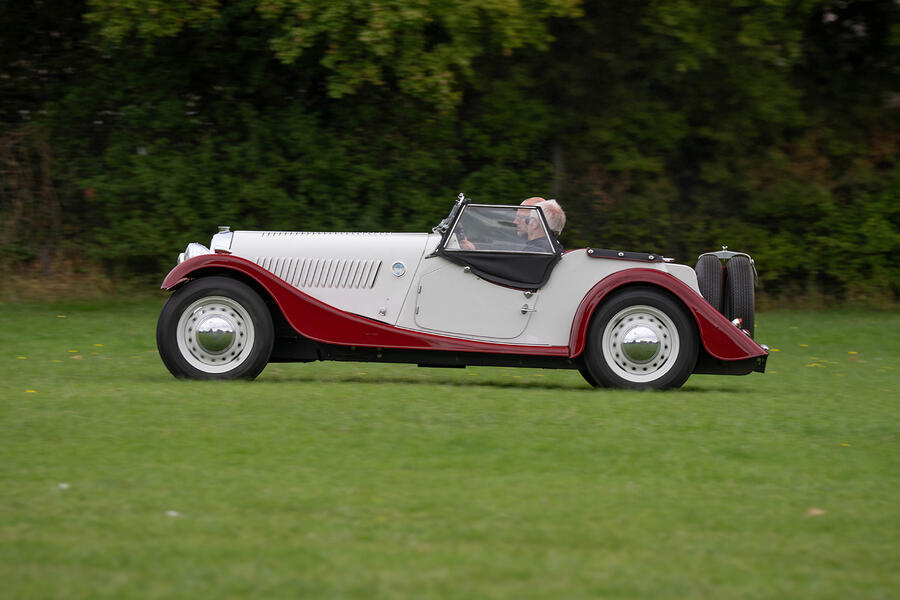
If you’ve always wanted a Morgan, it will look like a Plus Four. I haven’t driven an original Plus Four before, but Martyn Webb, Morgan’s archivist, has owned his 1953 car (the same as a 1950 one) for 40 years. In the mid-1950s, Morgan introduced a curved grille and a Triumph TR2 engine, which a lot of owners latterly fitted to earlier cars, so there aren’t so many original original Plus Fours like Webb’s.
See an old and a new Plus Four together and it’s notable how much taller and more ground clearance the former has. If, like me, you’re used to a Plus Four looking like the later one, it’s a surprise to note how different they are although with them back to back, you can spot those trademark wheel arches.
This is a shape that a car designer wouldn’t draw these days, as Jon Wells, Morgan’s designer of the past 17 years, tells me: there are circles and curves whose centres don’t match each other, and the wheel is offset within them “perfectly imperfectly”. But it does give the Plus Four its enduring, unique, shapely rear.
In an original Plus Four, you sit upright and close to the dashboard, to give you leverage over the large, unassisted steering wheel. The H-pattern gearbox needs more rev-matching than a new car, but it’s very accurate, it’s snickety and there’s a lot of torque. The steering lightens as you pick up speed.
Morgan’s introduction in 2020 of its new CX aluminium architecture (launched 110 years after the company’s founding) was perhaps the biggest change in the Plus Four’s history. So it’s testament to Wells and his team’s work that the car still looks so familiar to the mind’s eye.
So it’s testament to Wells and his team’s work that the car still looks so familiar to the mind’s eye. “It doesn’t look like it but it has been redesigned,” Wells says. “That’s the game on the Plus Four: preservation.”
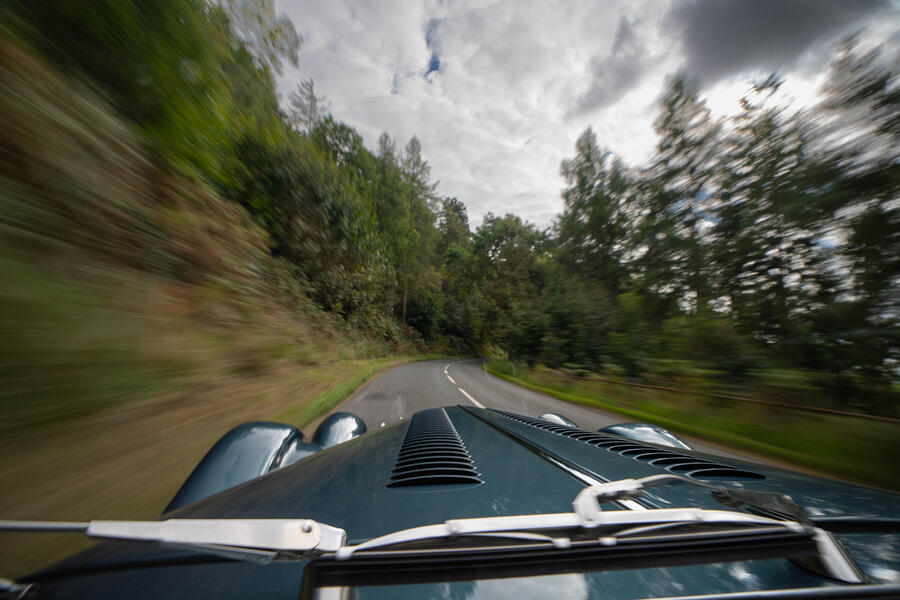
Discreetly, as the car recently got wider, the headlights got bigger, to retain familiarity. The Plus Four of today feels much more sophisticated, of course (optional dampers make the ride a particular pleasure), but the headline we ran in 1950 – high performance, light car – is one we could still run now.
Let’s hope that in 2100 it could read the same way again – and that they’re still squeezing those wheel arches out of the same press.
Submitted by dev_editor on
Submitted by dev_editor on
Submitted by dev_editor on
Submitted by dev_editor on
Submitted by dev_editor on