
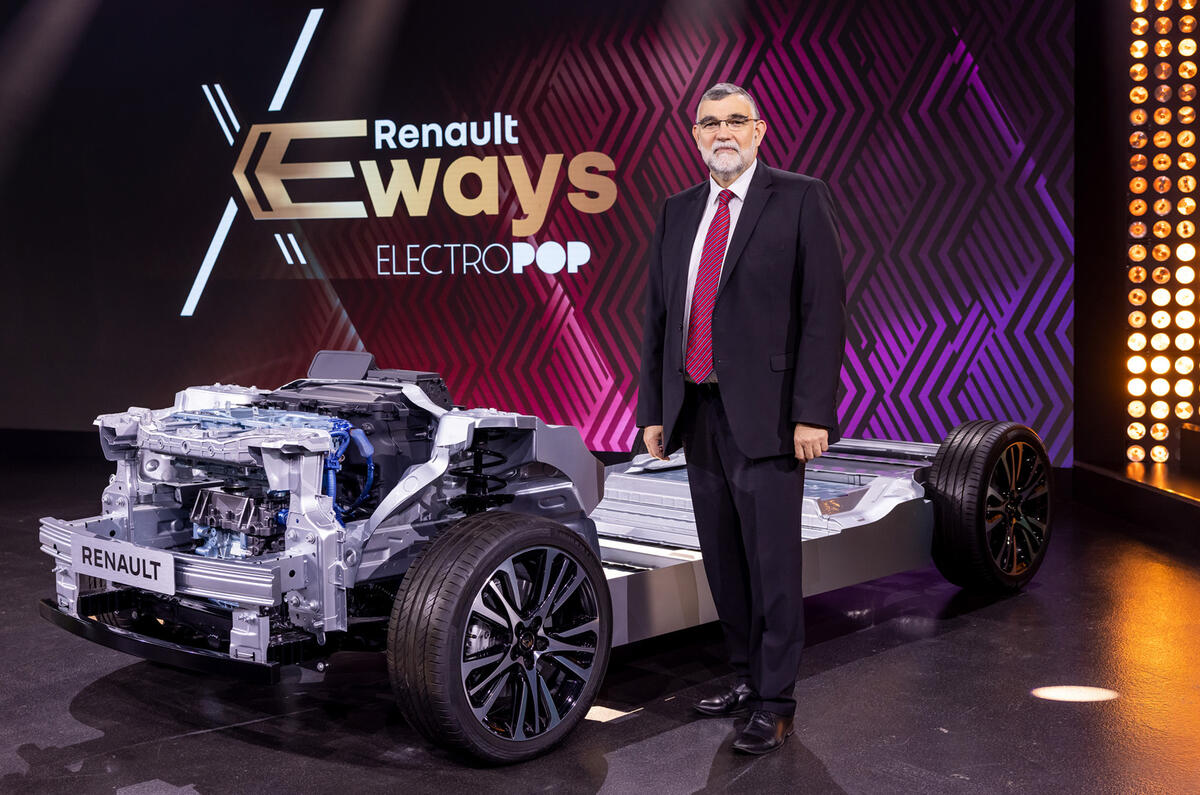
Such is the apocalyptic outlook for the future of our planet that I had come to think it was nigh-on impossible to resist any environmental initiative – especially for car makers, widely seen as the devil’s work post-Dieselgate.
You can imagine my eyes popping out, then, when the Renault Group’s director of R&D, Gilles Le Borgne, used the Munich motor show to calmly outline why the EU’s proposal to “cut vehicular CO2 emissions from current levels by 100% by 2035” (in simple terms, to ban all forms of hybrids across the EU’s 27 nations) would be resisted by the French firm. He said that 2040 would be a fairer date, environmentally, societally and economically.

Join the debate
Add your comment
When disruption and transition, driven by technology, impact on a sector, the agile companies change and the dinosaurs try to double-down on their existing model. This often results in the dinosaur companies going bust and disappearing. Think Nokia, BlackBerry and Kodak. Renault would do better to accelerate their electrification plans to get ahead of the curve, even if it means ditching Dacia. Dragging their feet could make them the wounded prey at the back of the pack.
Sounds like Renault doing what they've done throughout history and moaning about reality and trying to get French government aid. La Borge should just be truthful and say what the real problem is with restructuring in France and that is that the unions wont accept massive job losses.
I recently leased a new SUV. I do low miles so an EV would be fine for me even though I live in a terrace with no access to at-home charging. I went for a Peugeot 3008 Allure Premium EAT8 that costs me £285 per month. A Hyundai ioniq 5 would have cost me £505 per month on the same terms. Buying a 1.2 petrol instead was an absolute no-brainer!
You could have leased a Kia Niro Electric for £262 a month and made further savings due to lower fuel and maintenance costs. See Drive Electric website.