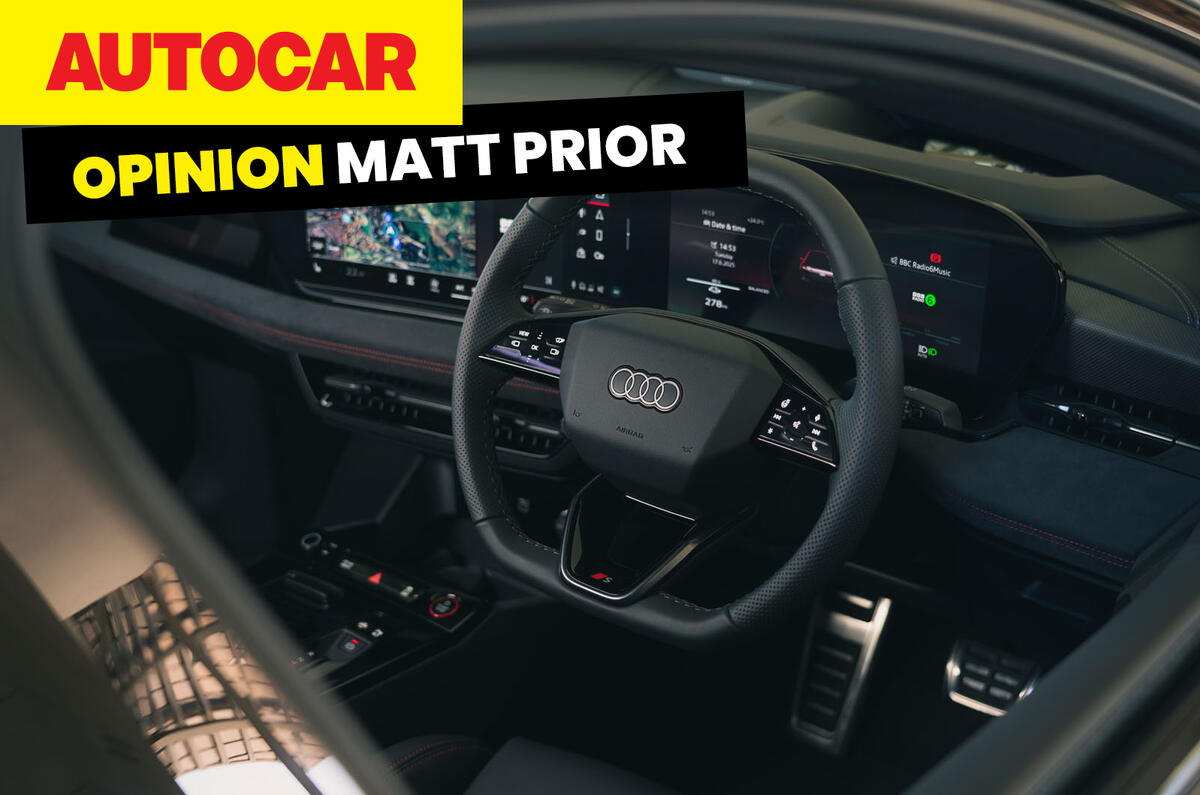

I have an affliction that, when I begin to think about how difficult it is to find a pleasing steering wheel in a new car, Feargal Sharkey's 1985 hit A Good Heart begins to play on repeat in my head - only with 'wheel' replacing 'heart', of course.
I've learned to live with it as something as inevitable as getting into a new car and being faced with an unnaturally awkward primary control surface – one that routinely changes position from where you last held it. Owing to it, y'know, not being round.
I still can't pinpoint the exact moment that un-round steering 'wheels' (I'll use the term even though I suspect it isn't grammatically accurate) began to be a thing. The 'quartic' steering wheel was so widely ridiculed when it featured on the 1973 Austin Allegro that the industry gave up on them for a while, and I kind of think that, with the widespread adoption of power steering in the years that followed, the best steering wheels were created then too: small, with modest spoke and rim sizes, perhaps even deeply dished on something sporty.
I wonder which particular wheel was 'peak wheel'? Do write in.
It was probably before the first airbags appeared, because some early bagged wheels were big fat shockers, but manufacturers got to grips with those relatively briskly too, compressing the bags down so that they took up not much more space than a conventional steering wheel boss. Buttons have increased spoke width, which isn't optimum for vehicle control, because it reduces the amount of rim available to grip but is probably worth the sacrifice for the increased convenience.
What I find (much) less forgivable is the idea that a steering wheel doesn't need to be nearly round or that a wildly alternative shape is somehow superior. I understand that in racing cars, where access is difficult so you might want to flatten the bottom, and in single-seaters, where a round wheel could protrude into the air flow and you will only need to hold the wheel at a quarter to three because the steering rack is so direct, a squared wheel with sculpted grips is preferable. Necessary, in fact.
But in a road car, even one with such a direct steering ratio that there are only two turns between locks, any wheel that isn't nearly round is, to be blunt, ergonomically stupid. Drivers should not be required to look at the steering wheel as they're driving. They shouldn't have to guess or gauge or estimate where the steering wheel rim is while they're turning it. Such a shape adds, even at a semi-conscious level, another thing to think about, increasing a driver's cognitive load, like feeling for a light switch while walking into a darkened room, at a time when a car should be making things as easy as possible.
But now some new things are happening - some encouraging, others not. The Luce has a far more round wheel than other recent Ferraris and Audi's newish CEO Gernot Döllner recently told me that while Audi has 100(!) different steering wheel designs, "none of them is any good". By 2030, he said, it will have five, "and they will all be round". This is good news.