Currently reading: 9 big aircraft stars of Film and TV

9 big aircraft stars of Film and TV

There’s something undeniably thrilling about seeing real planes and helicopters fighting in the skies on television or in film.

But what happens when producers can’t get their hands on the exact aircraft they want? That’s when aeroplanes become true “flying actors”, stepping into roles as exotic enemy fighters, high-tech helicopters, or even fantastical sci-fi machines. With clever modifications, prosthetic add-ons, and imaginative paint schemes, these airborne stand-ins often steal the show—capturing viewers' imaginations and becoming just as beloved, or even more beloved, as the human stars on screen. Let’s take a look:


9: Hispano Aviación HA 1112 Buchón - Me 109
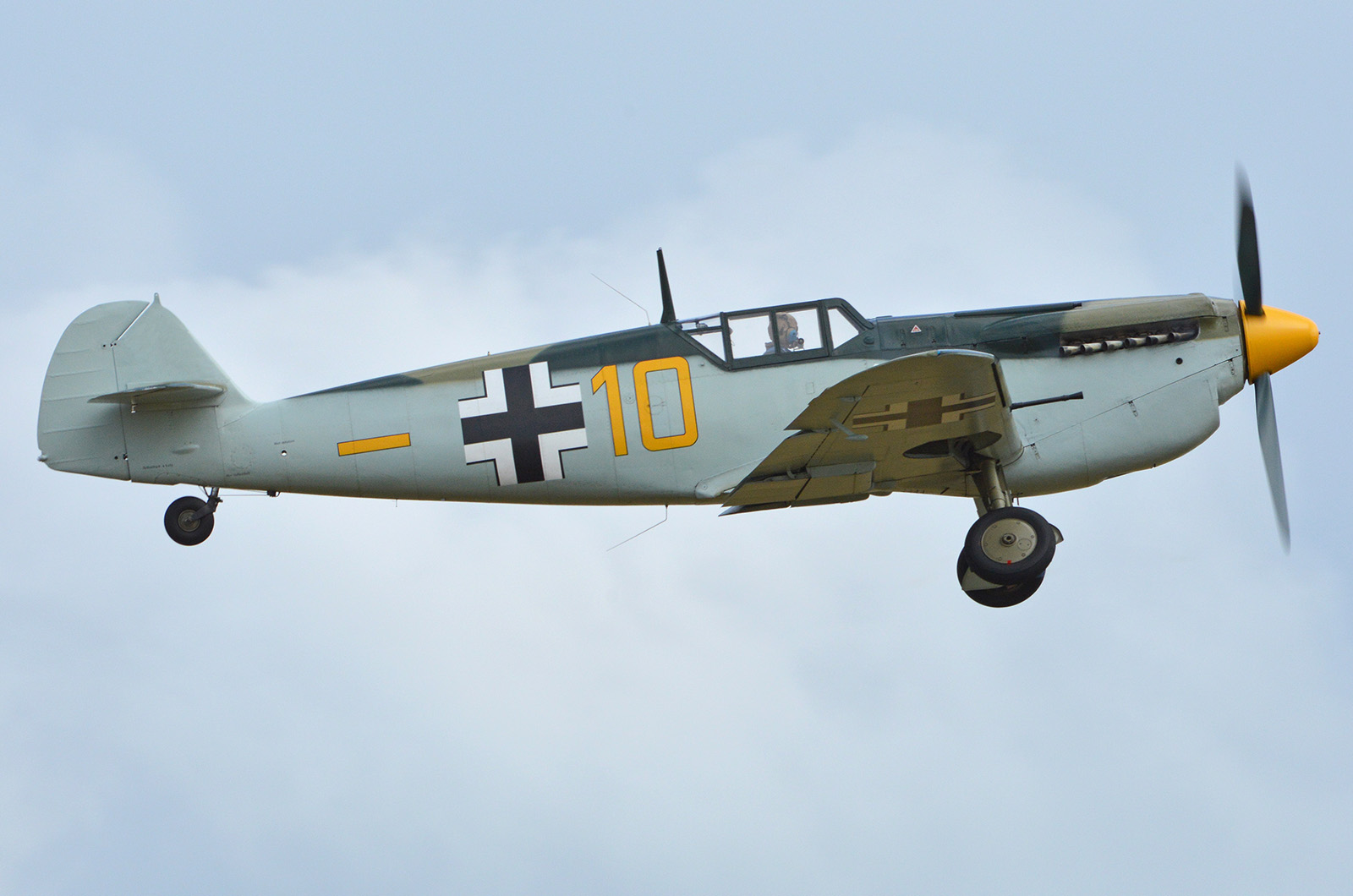
 Hispano Aviación HA 1112 Buchón - Me 109

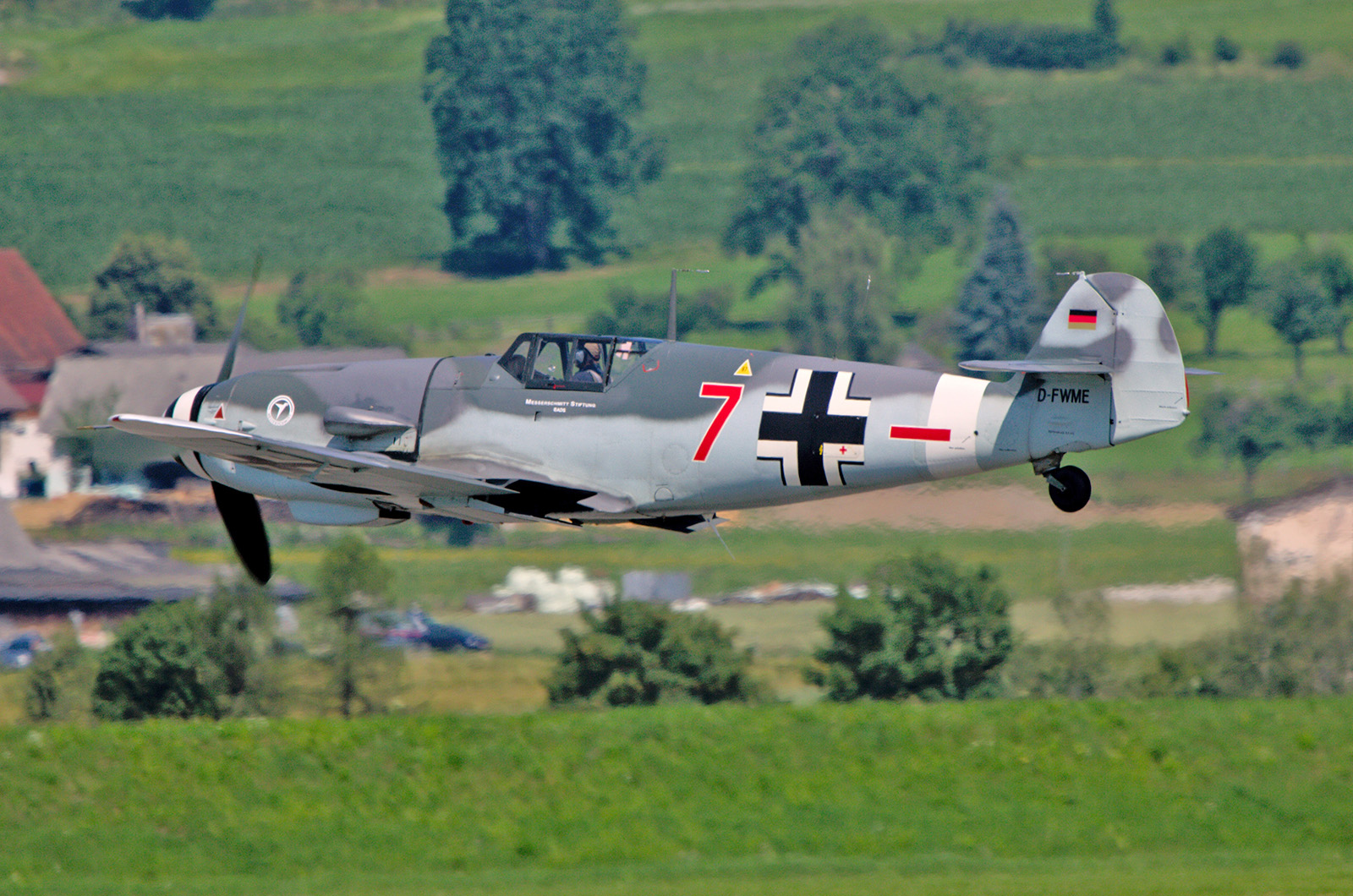
The Hispano Aviación HA 1112 Buchón was a Spanish post‑Second World War derivative of the Messerschmitt Bf 109, widely used in films to represent wartime Luftwaffe fighters. Genuine Bf 109s were rare, so directors relied on Buchóns for their overall resemblance, particularly the fuselage lines and canopy shape, making them convincing stand-ins despite minor differences.

Most Buchóns used in cinema were fitted with Rolls‑Royce Merlin engines rather than the original Daimler‑Benz of the Bf 109, giving a distinctive chin intake and different exhaust arrangement. Filmmakers cleverly disguised differences with dummy armament, squared-off wingtips, tailplane struts, and appropriate paint schemes, while careful camera angles further hid the engine’s characteristic profile.


9: Hispano Aviación HA 1112 Buchón - Me 109
 Hispano Aviación HA 1112 Buchón - Me 109

Buchóns featured in numerous productions, most famously in Battle of Britain (1969), where a fleet of these aircraft portrayed Luftwaffe fighters, and some were even painted as Hurricanes when originals were unavailable. Other appearances include Der Stern von Afrika (1957), Piece of Cake (1988), Memphis Belle (1990), A Perfect Hero (1991), The Tuskegee Airmen (1995), Over Here (1996), Pearl Harbor (2001), Dunkirk (2017), and SAS Rogue Heroes (2022).

The use of the Buchón demonstrates how filmmakers balanced historical authenticity with practicality. By adapting a post‑war Spanish aircraft, they recreated the iconic Bf 109 for audiences, preserving the visual legacy of one of the Second World War’s most famous fighters using what was essentially the same aircraft, if modified.


8: Folland Gnat / Oscar EW 5894
 Folland Gnat / Oscar EW 5894

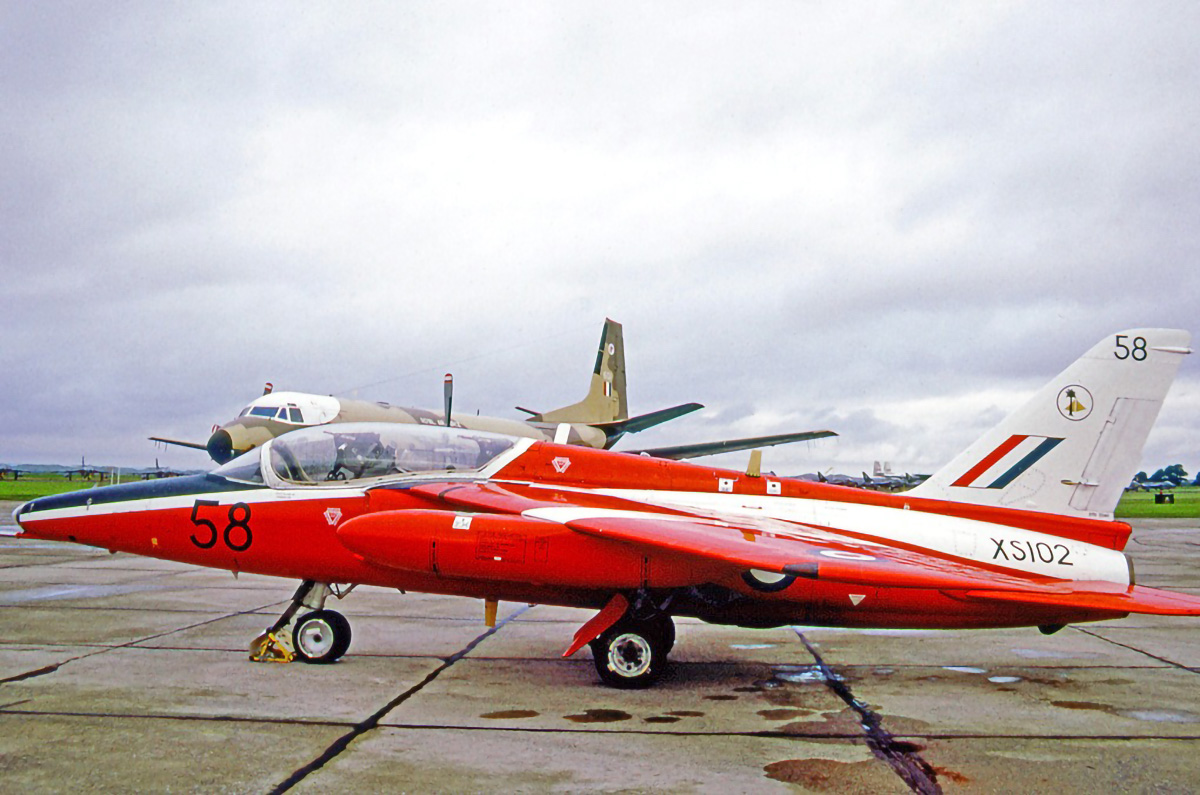
The Folland Gnat was a British light jet first flown in 1955 and later developed into a two‑seat trainer used by the Royal Air Force and also its acrobatic team, the Red Arrows. It was compact, agile, and relatively inexpensive to operate compared with larger fighters, making it ideal for training roles.

In the 1991 parody Hot Shots!, Folland Gnats and at least one HAL Ajeet portrayed the fictional “Oscar EW 5894 Tactical Fighter Bombers” flown by the US Navy characters. These jets wore mock markings for comic effect, and carried fake rocket pods.


8: Folland Gnat / Oscar EW 5894
 Folland Gnat / Oscar EW 5894

For the film, the aircraft were visually modified with American style paint, insignia, and props to resemble frontline fighters, with some shots using ground‑based mock-ups and careful camera work rather than high‑speed military jets. Practical effects and limited footage emphasised humour over realism.

Back to top

Filmmakers often use light jet fighters or trainers like the Gnat in place of real fighters because operational combat jets are costly, complex, and hard to access. Trainers or light fighters are cheaper to hire and maintain, safer to operate for choreographed scenes, and permit exaggerated aerial choreography.


7: MiG-28 / Iron Eagle II

 MiG-28 / Iron Eagle II

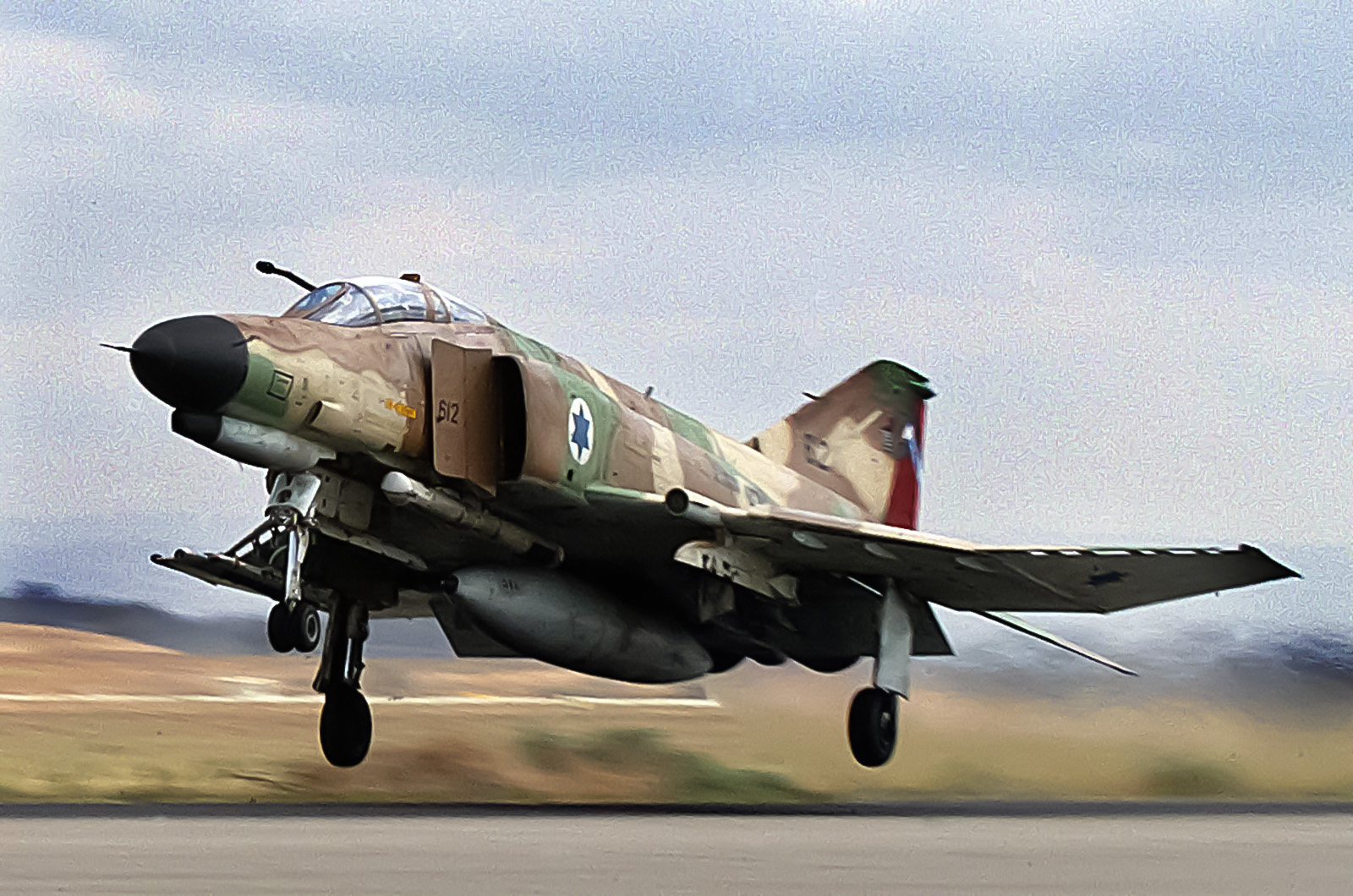
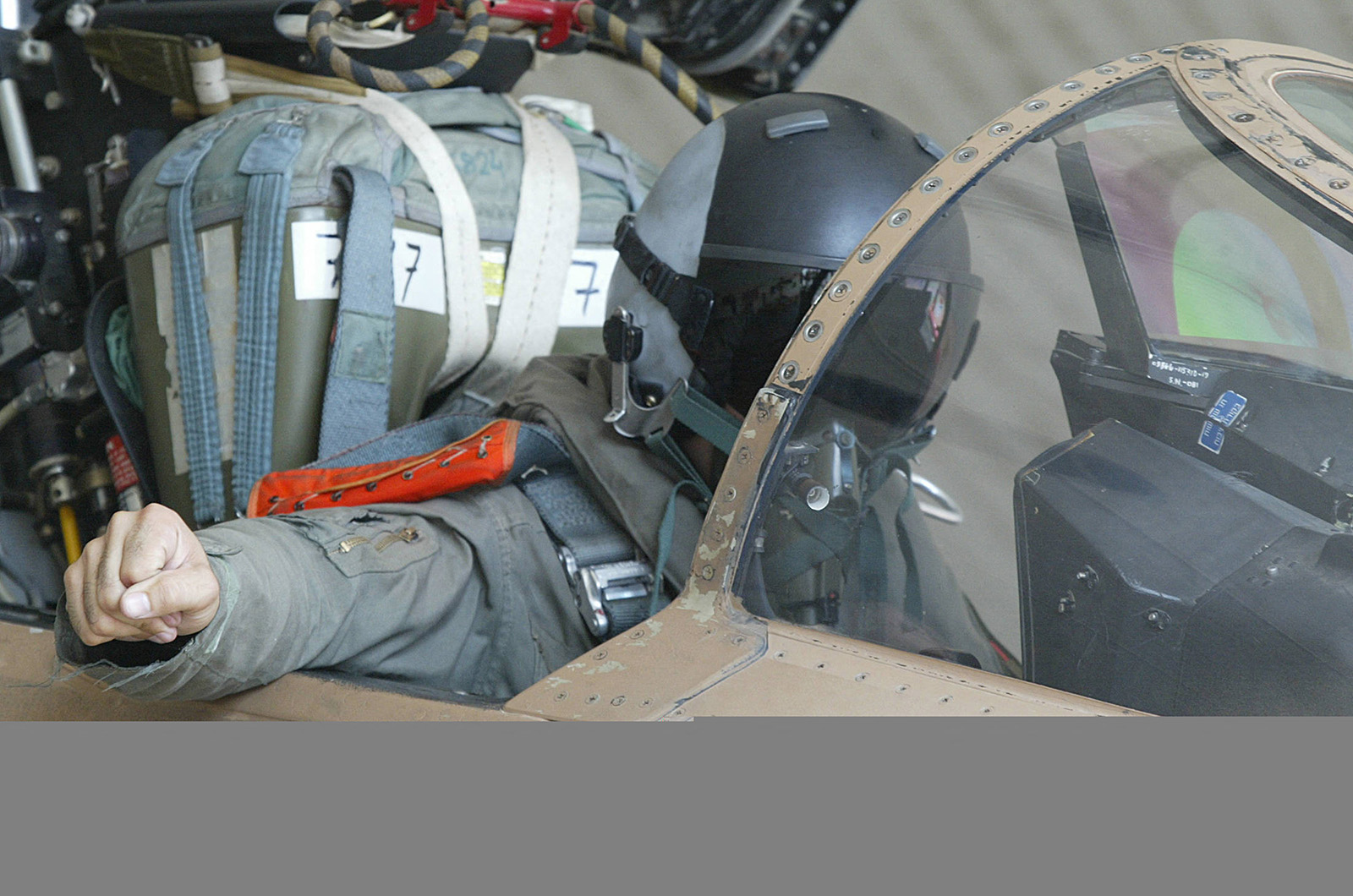
In Iron Eagle II, the filmmakers employed Israeli Air Force F-4 Phantom II jets to portray the fictional MiG‑28 aircraft, as acquiring actual Soviet‑era MiGs would have been impossible in the 1980s. Interestingly, in reality, MiG fighters always carry odd-numbered designations, such as ‘MiG‑29’, making the “MiG‑28” entirely fictional.

To make the F-4s appear more like MiG‑28s, they were visually modified with darker paint schemes, red star markings, and subtle tail number changes. Filming angles were carefully chosen to obscure recognisable features. These techniques allowed audiences to believe they were seeing an exotic adversary, enhancing the film’s aerial combat sequences.


7: MiG-28 / Iron Eagle II

 MiG-28 / Iron Eagle II

The F-4 Phantom II had a long and distinguished career in Israeli service, performing air superiority, ground attack, and reconnaissance missions. Filming took place largely in Israel, where the Air Force cooperated for financial incentives and to showcase their advanced aircraft (the F-16) and operational capabilities.

Despite not being authentic, using real jets provides a tangible wow factor that audiences respond to. Similarly, in the Iron Eagle series, other real aircraft were repainted or modified to portray fictional jets: F‑21 Kfirs represented enemy aircraft in Iron Eagle III, T‑33s and various American trainers were used for air combat sequences, and F‑4s returned in Iron Eagle IV to stand in for different opponents, ensuring the films retained a sense of aerial realism that CGI alone could not replicate.


6: MiG-28 (Northrop F-5) / Top Gun

 MiG-28 (Northrop F-5) / Top Gun

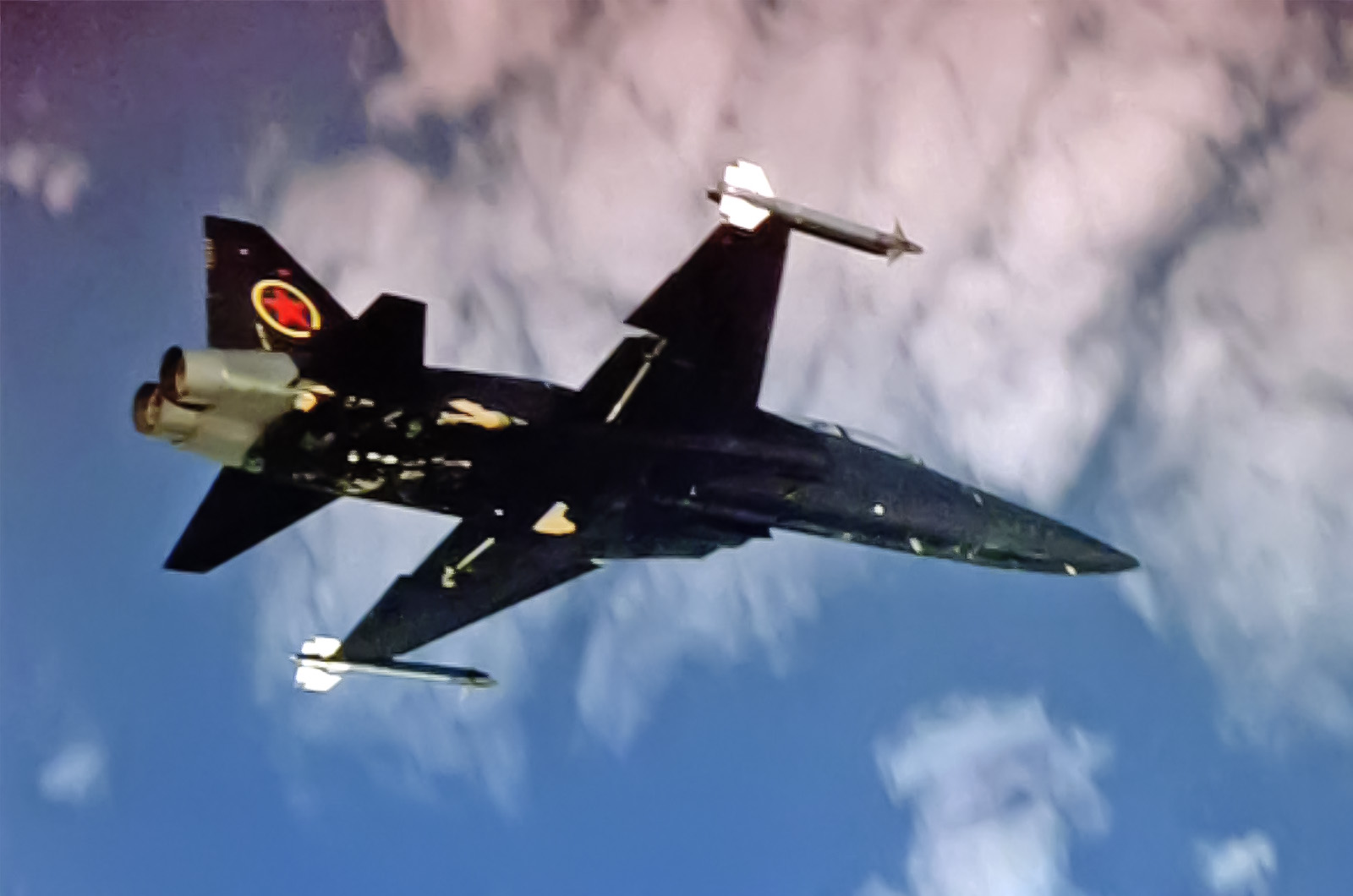
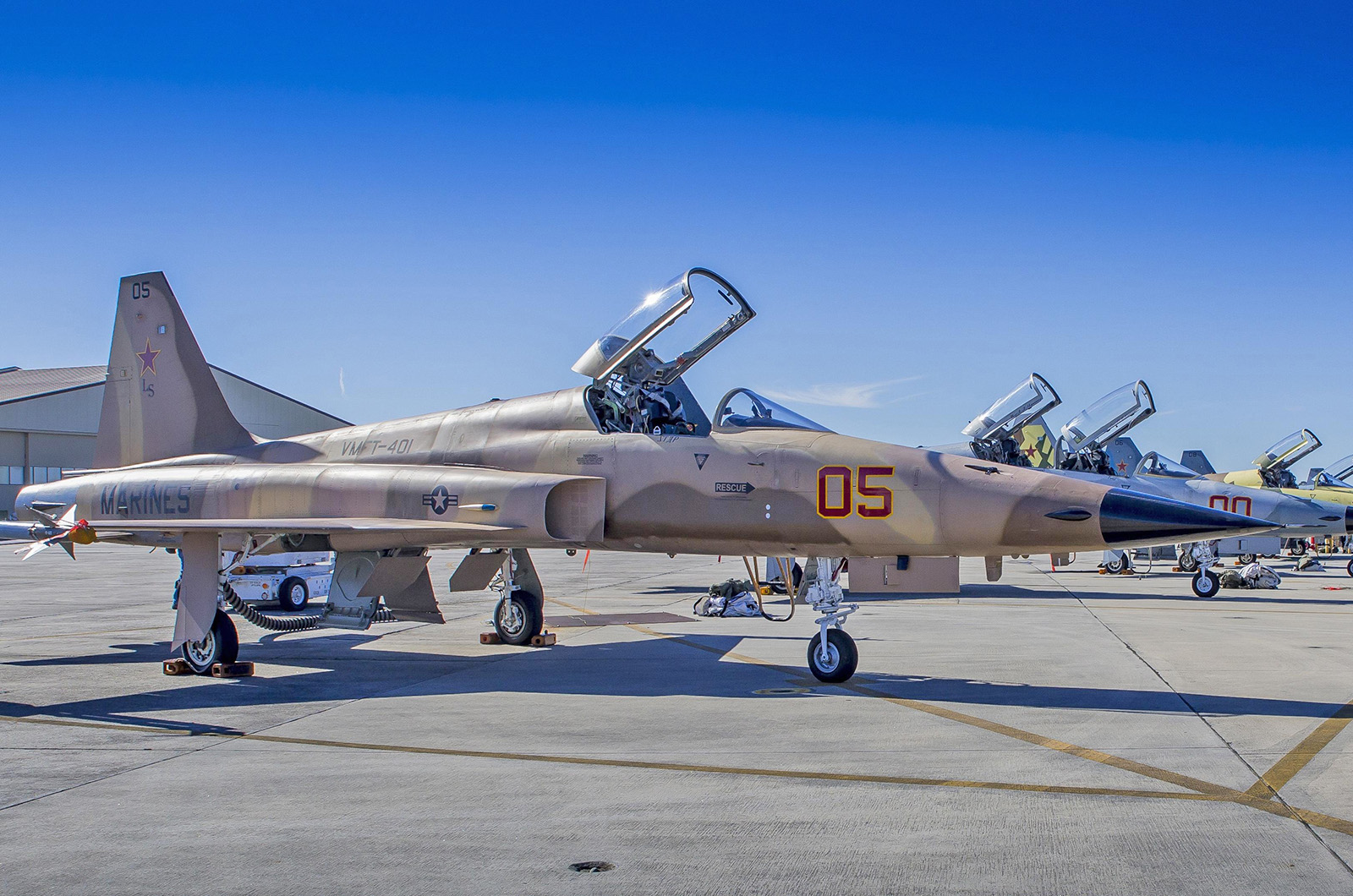
Being cheaper to operate than heavyweight fighters and offering aggressive fighter looks with photogenic agility, the Northrop T‑38 and F‑5 series have appeared in several films. Most famously, F‑5s played notional ‘MiG‑28s’ in Top Gun (not to be confused with the ‘MiG‑28’ of Iron Eagle II).

Back to top

In Top Gun, F‑5s were adapted to portray the fictional MiG‑28 using dark paint schemes, fictional communist-style insignia, and aggressive flight profiles to simulate enemy fighters. Cinematic angles and close formations enhanced their menacing appearance, while no structural modifications were needed. They carried dummy missiles for show, meant to look like Soviet air-to-air missiles. The illusion of launches was created with clever camera angles, editing, pyrotechnics, and pilot manoeuvres.


6: MiG-28 (Northrop F-5) in Top Gun

 MiG-28 (Northrop F-5) in Top Gun

Performance-wise, the F‑5’s small size, high manoeuvrability, and speed closely approximate those of the Soviet MiG‑21, making them ideal for dogfight simulation. This real-world capability underpins their role as aggressor aircraft in the US Navy and Air Force, providing realistic training against fast, nimble opponents in air combat exercises.

F‑5s and T‑38s have appeared in several films, portraying both themselves and other aircraft types. The parody Hot Shots! used T‑38 footage and F‑5 models to depict the ‘MiG‑28’, a jokey reference to the Top Gun movie.


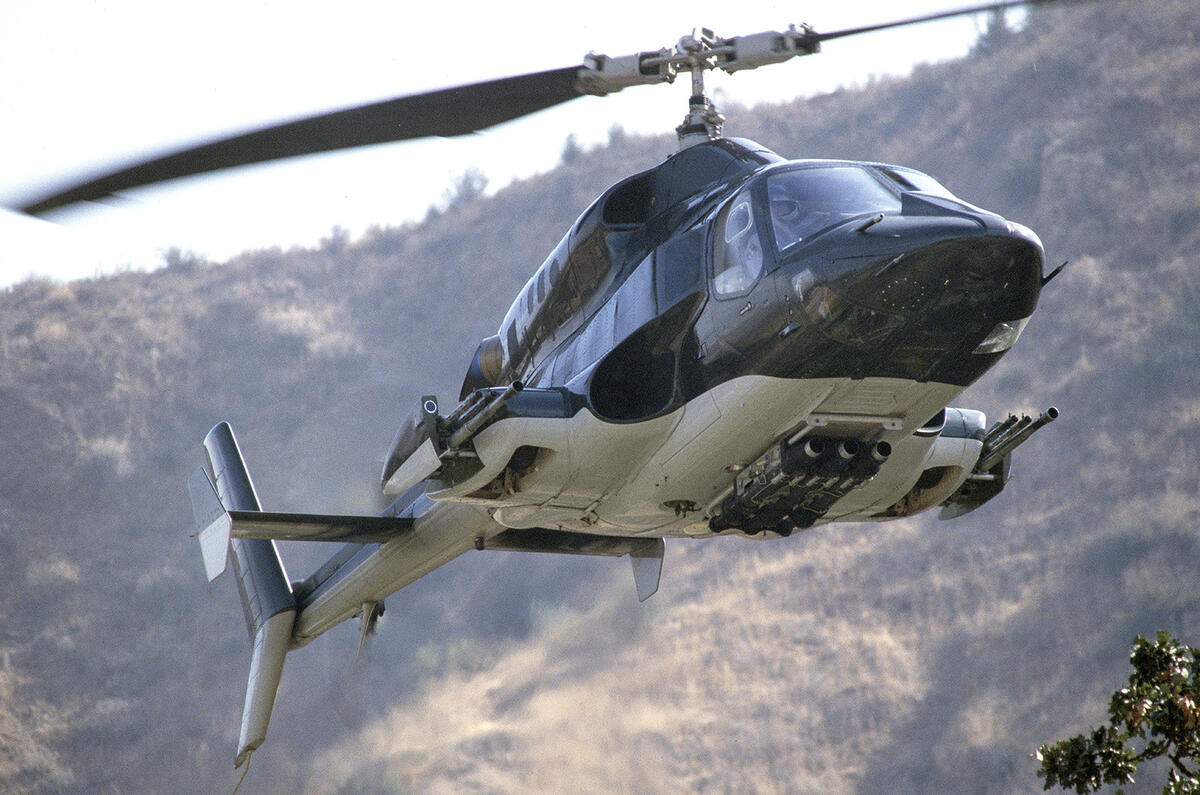
5: Bell 222 / Airwolf

 Bell 222 / Airwolf

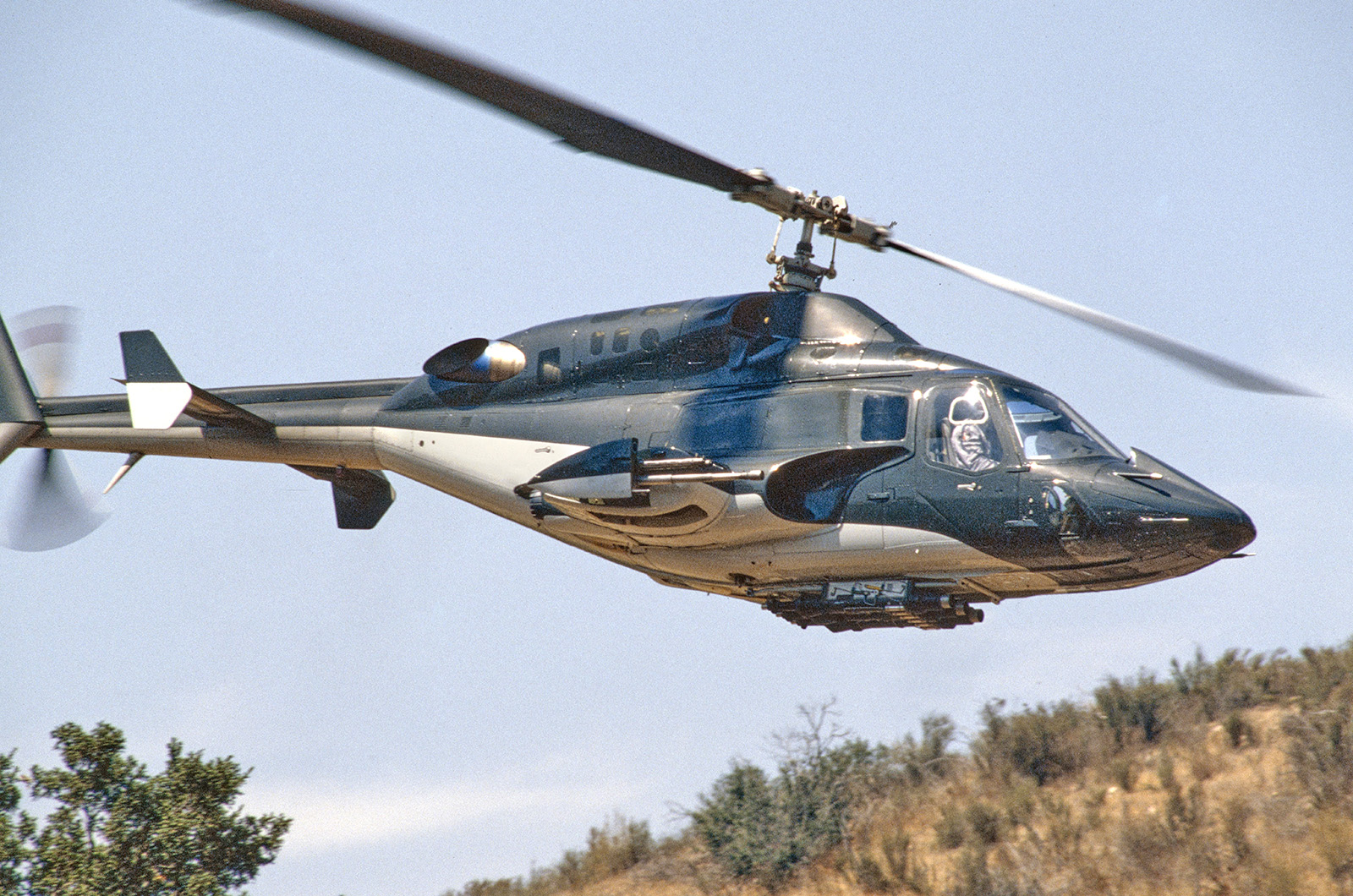
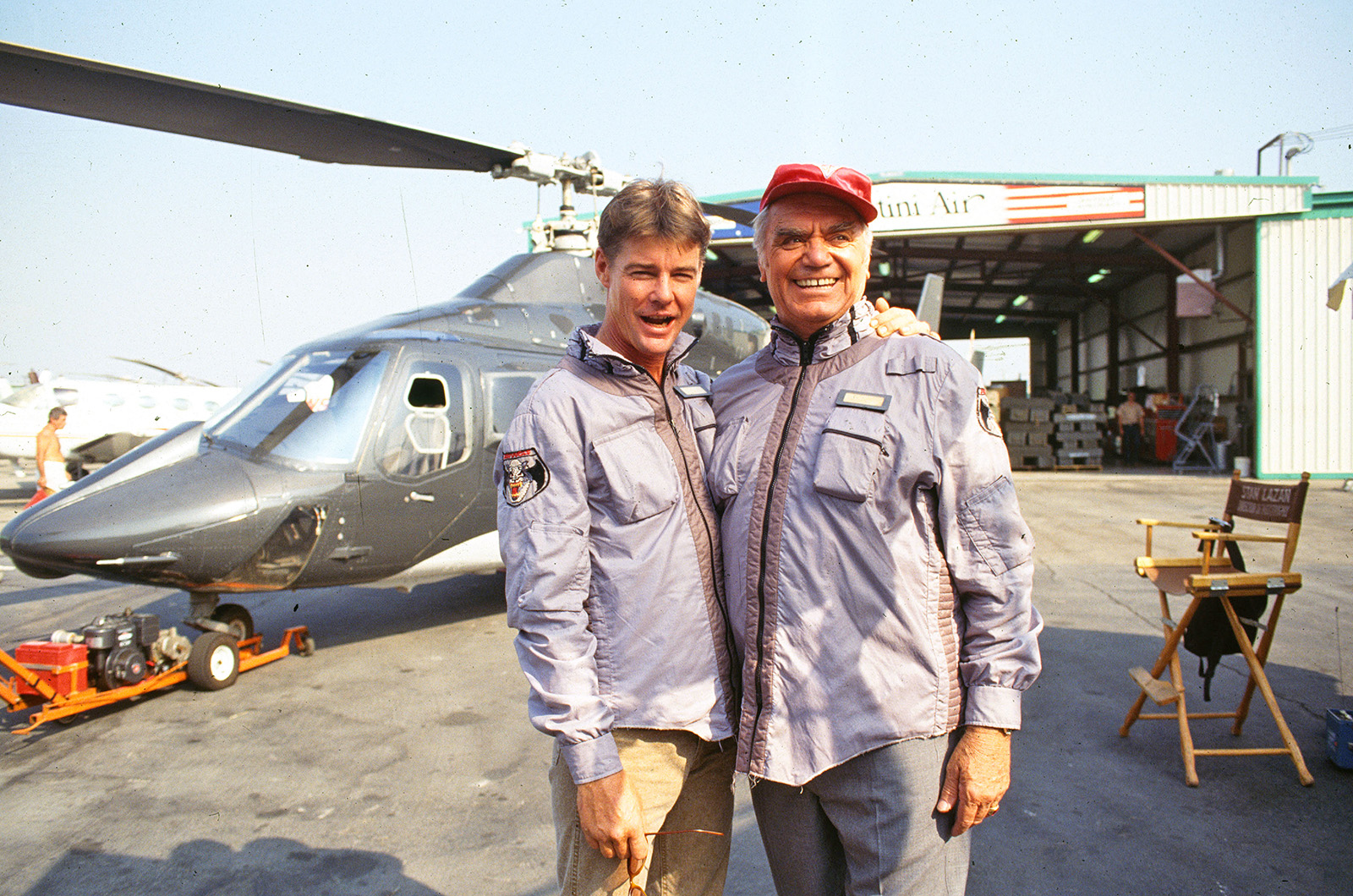
Airwolf was one of the most exciting action television shows of the 1980s, and it starred a converted Bell 222. The Bell 222 was a twin‑engine light helicopter introduced in the late 1970s, designed for civilian transport with graceful lines and relatively high performance. When production began in 1976, it attracted interest from VIP transport, emergency services, and corporate owners due to its smooth cabin, reliable performance, and sleek looks.

Despite respectable performance, Bell sought ways to boost sales in a competitive market. In the early 1980s, the producers of a new action series titled Airwolf were searching for a futuristic helicopter to portray an advanced, high‑speed military aircraft. They chose a modified Bell 222 because its sleek, streamlined silhouette looked sufficiently cutting edge and unlike typical military helicopters of the day.


5: Bell 222 / Airwolf

 Bell 222 / Airwolf

Back to top

Extensive cosmetic and functional modifications were made for filming: a custom nose, retractable ‘missile’ pods, unique intake and exhaust treatments, and an interior outfitted like a high‑tech cockpit. Though the real aircraft lacked the fictional supersonic and stealth capabilities shown on screen, its appearance and sound helped sell the idea convincingly to viewers.

Once the show aired in 1984, the Bell 222 gained iconic status in pop culture as Airwolf, the “World’s Most Advanced Tactical Assault Helicopter.” Its association with the series cemented the type in the public imagination far beyond its civilian origins.


4: Gazelle/ Blue Thunder

 Gazelle/ Blue Thunder

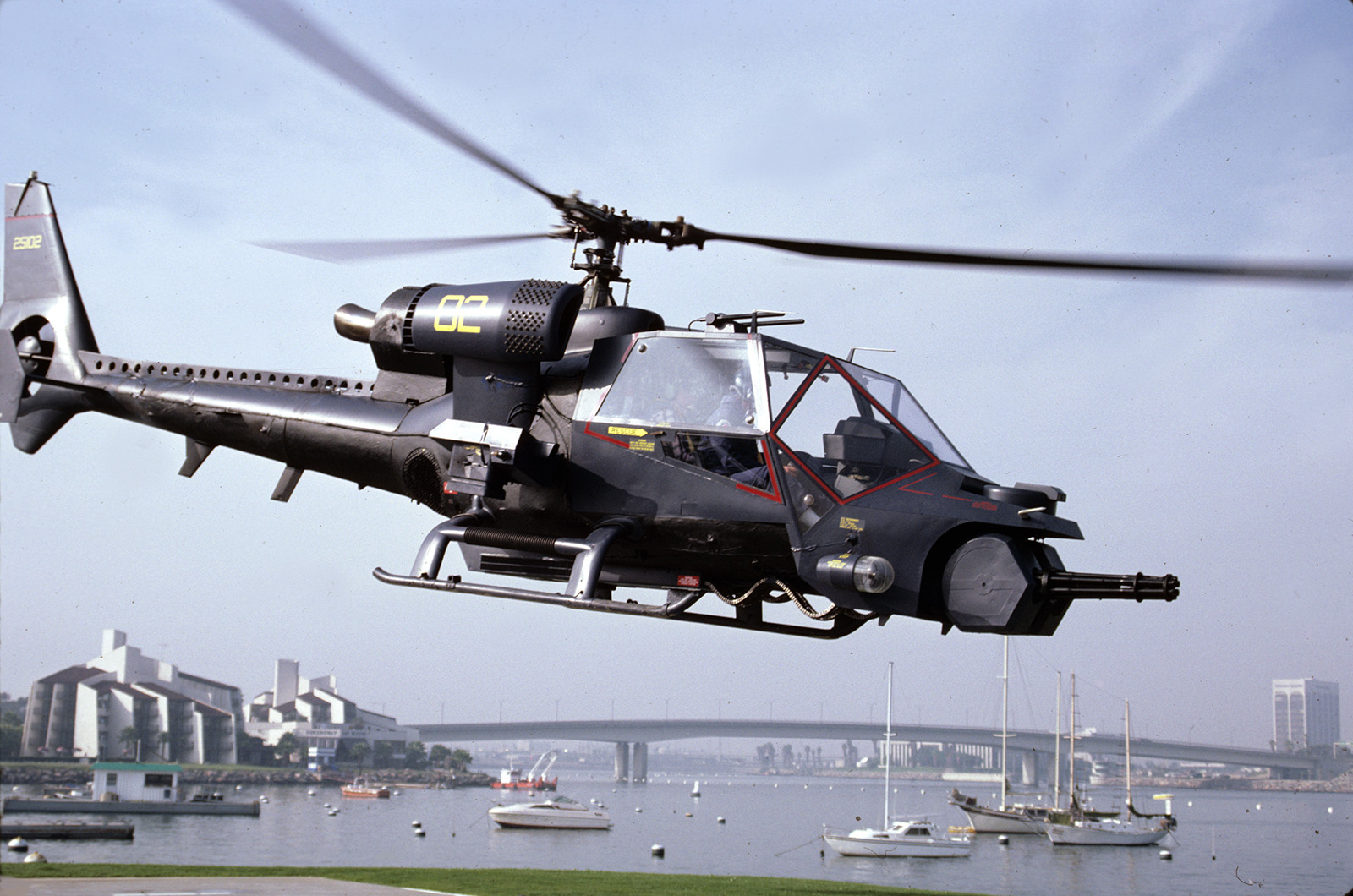
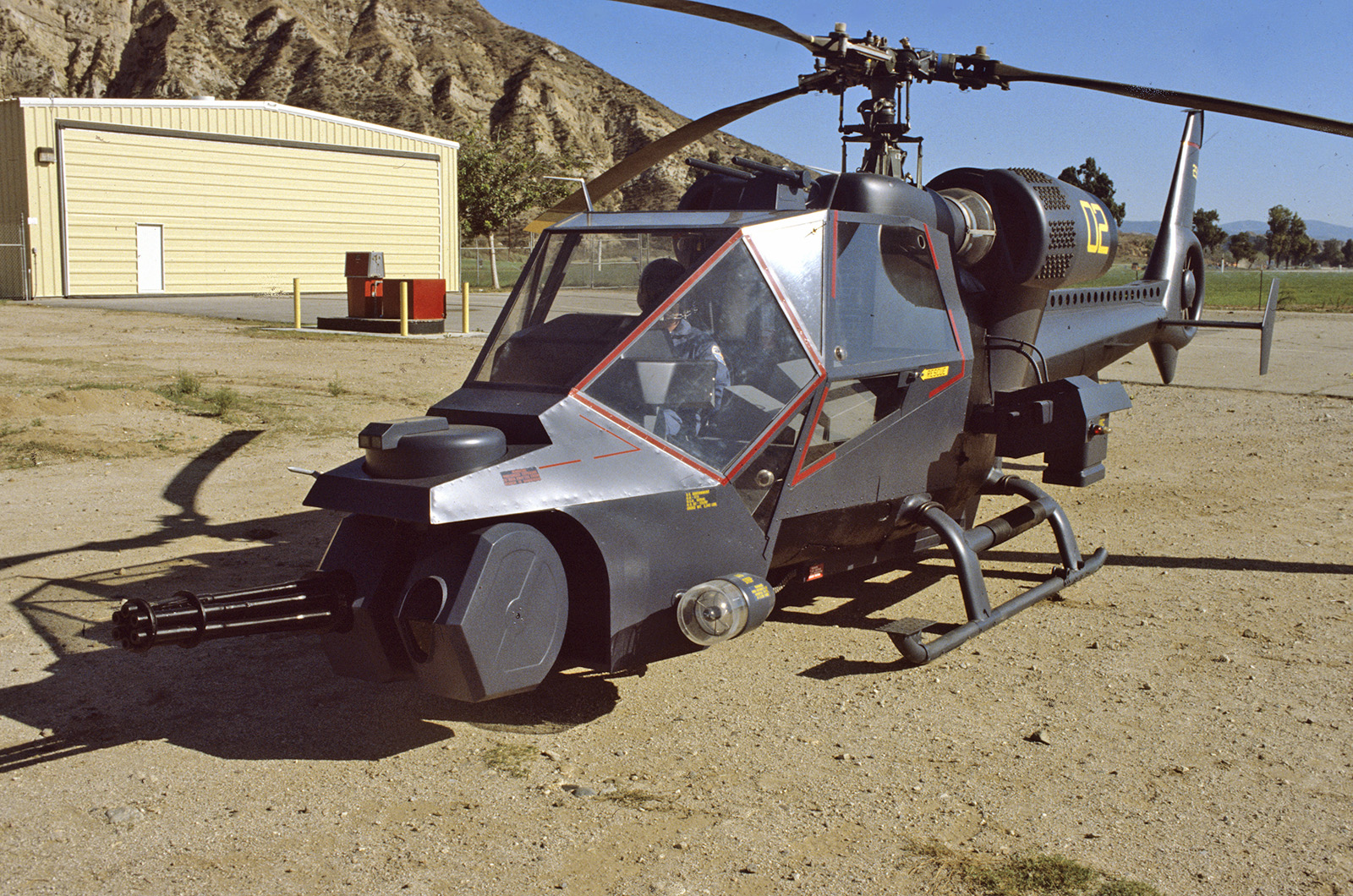
In the film Blue Thunder, the title helicopter was portrayed by a modified Aérospatiale SA‑341/342 Gazelle. This light French helicopter was chosen for its speed, agility, and stable handling, all of which were ideal for demanding aerial cinematography.

To transform it into a convincing futuristic gunship, the Gazelle was heavily reworked with a mock cannon, sensor fairings, and stub wings. One of the most distinctive changes was the angular, plated cockpit transparencies.


4: Gazelle/ Blue Thunder

 Gazelle/ Blue Thunder

These flat, faceted panels replaced the original curved glazing, giving the aircraft the appearance of armoured, high‑technology protection and helping to sell the illusion of a powerful military machine.

The success of the 1983 film led to a short-lived Blue Thunder television series in 1984, which reused the concept but with lower production values and less emphasis on spectacular aerial sequences. It inevitably drew comparisons with Airwolf, which had debuted earlier in 1984. Airwolf was not inspired by the Blue Thunder TV series, but rather developed in parallel, although both drew on the film’s popularity.


3: F-86 /MiG-15: The Hunters (1958)

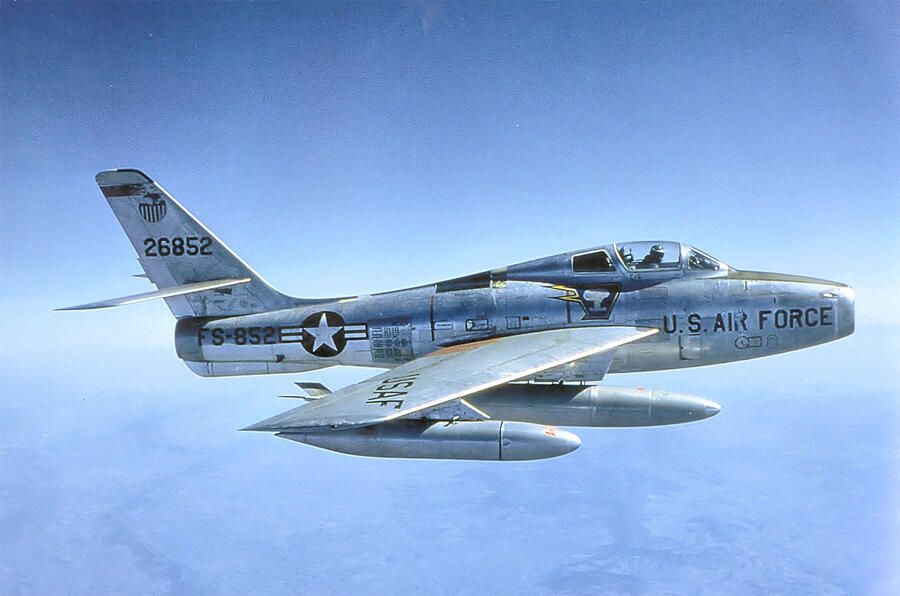
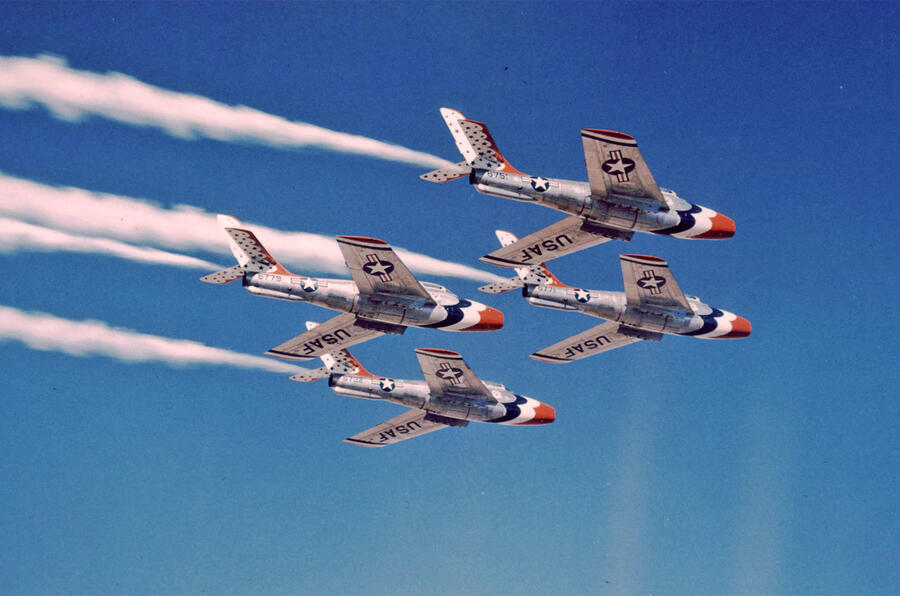
Hollywood faced a familiar Cold War problem: how to depict enemy aircraft that were unavailable to Western filmmakers. In The Hunters, this was solved by using Republic F-84F Thunderstreaks to portray the Soviet-built MiG-15s encountered during the Korean War.

Back to top

To distinguish the “MiGs” from the American aircraft, the production relied on paint schemes and markings rather than physical modification. The F-84Fs were finished in darker colours and marked with red stars, while careful camera angles and editing avoided prolonged close-ups that would reveal their true identity.


3: F-86 /MiG-15: The Hunters (1958)

Dialogue and narration reinforced the illusion, allowing viewers to accept the Thunderstreaks as MiG-15s even though the American F-86 Sabres were, in reality, facing other U.S. jets. The use of operational jet aircraft gave The Hunters an immediacy and realism that model work or studio effects could not achieve.

While technically inaccurate, the presence of real, swept-wing jets conveyed the speed and danger of early jet combat. The F-84Fs’ performance and on-screen presence enhanced the film’s aerial sequences, demonstrating how filmmakers adapted creatively to Cold War restrictions while still delivering convincing and dynamic aerial warfare.


2: Me 263 /Aces: Iron Eagle III

 Me 263 /Aces: Iron Eagle III

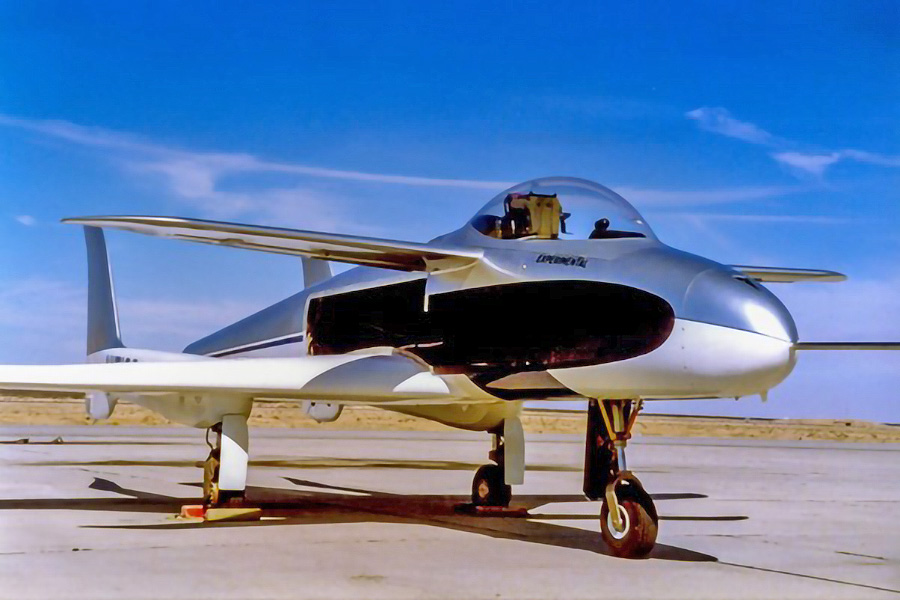
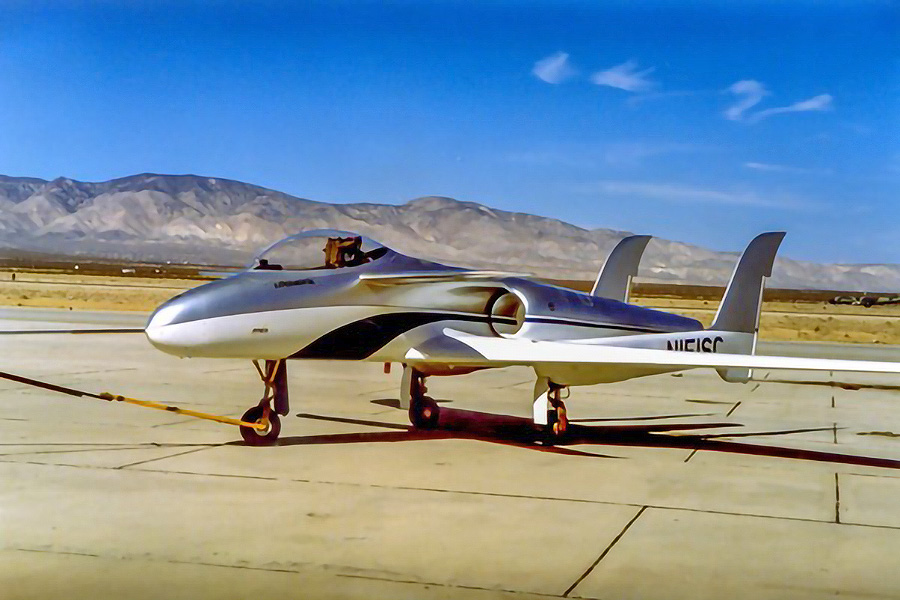
In the 1992 action film Aces: Iron Eagle III, audiences are treated to an assortment of period-styled military aeroplanes, among them a spurious “Messerschmitt Me 263”. In truth, the aircraft that dons this semi-fictitious German designation is not a genuine Second World War machine but the Scaled Composites ARES, a prototype close air support jet of distinctly modern lineage.

Designed under the auspices of Burt Rutan’s Scaled Composites as an Agile Responsive Effective Support aircraft for the U.S. Army’s Low Cost Battlefield Attack Aircraft programme, the ARES first flew in February 1990. Its relatively unknown and somewhat bizarre appearance made it a brilliant casting decision.


2: Me 263 /Aces: Iron Eagle III

 Me 263 /Aces: Iron Eagle III

Powered by a single Pratt & Whitney JT15D‑5 turbofan, it features a strikingly unconventional profile, with an asymmetric air intake on the left and a GAU‑12/U 25 mm rotary cannon mounted on the right. Its canards and twin tails also contribute to its unmistakable appearance.

Back to top

For Iron Eagle III, this prototype was pressed into service to stand in for the fictional Me 263, a designation that bears no relation to any actual wartime Messerschmitt type. The real Messerschmitt Me 263 was a German late-war rocket-powered fighter and interceptor prototype. The film’s aerial sequences thus marry real heritage machines with this unlikely Hollywood imposter, an imaginative but anachronistic nod to aviation history.


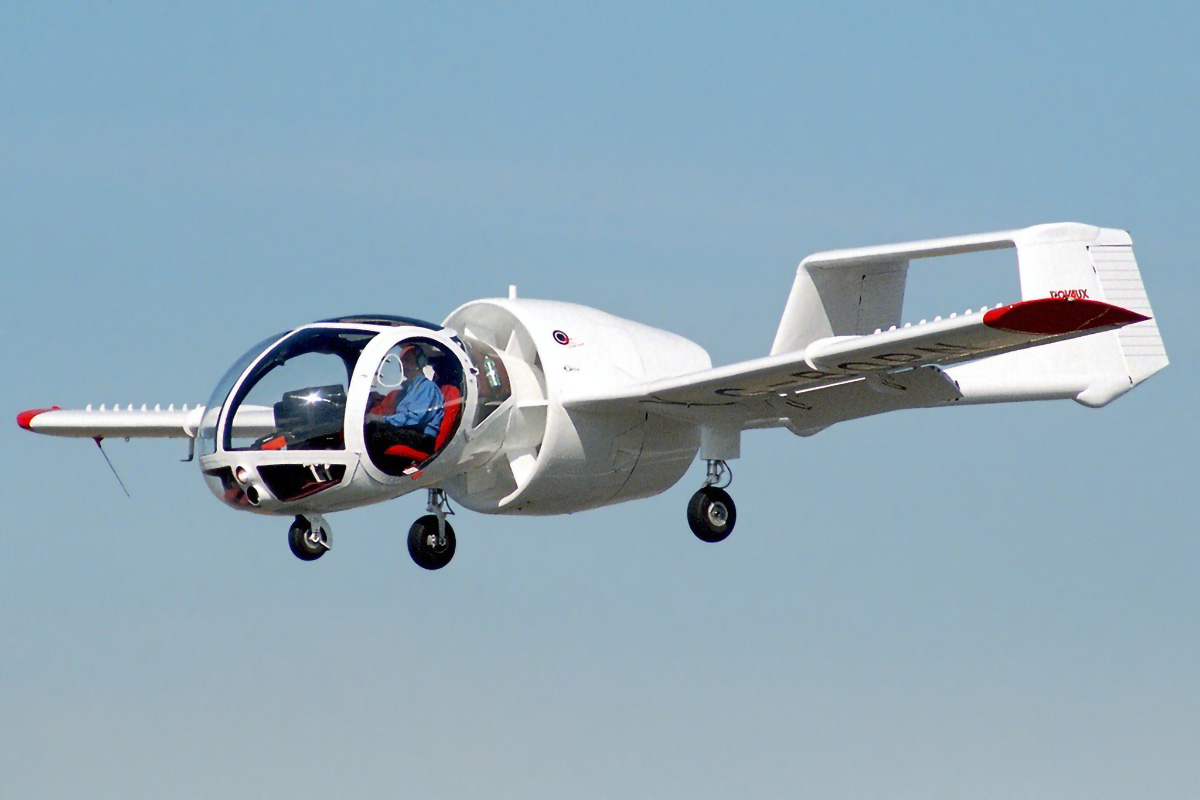
1: Edgley Optica / Slipstream

 Edgley Optica / Slipstream

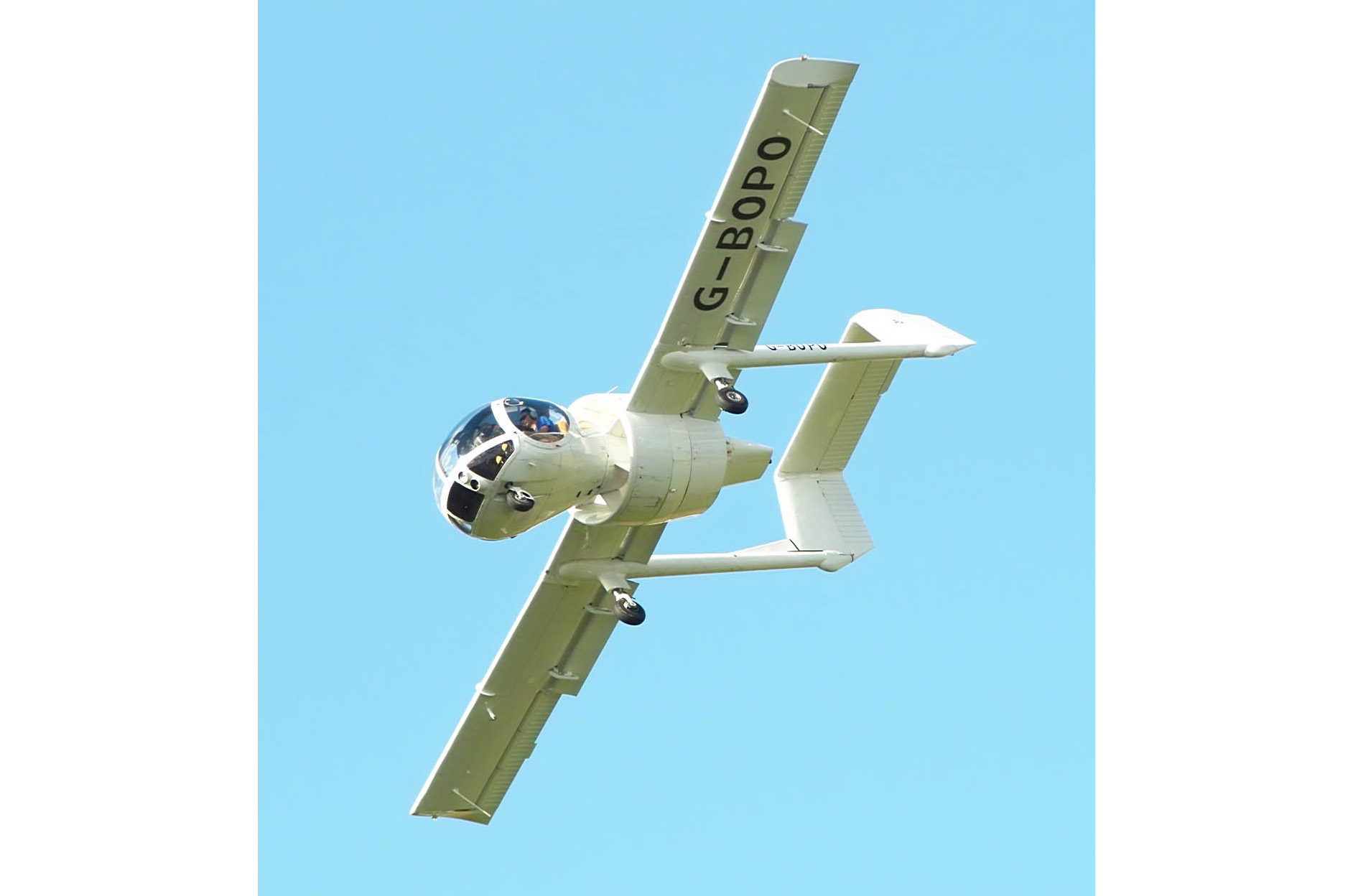
The Edgley Optica appeared in the 1989 science fiction film Slipstream, starring Mark Hamill as the bounty hunter Will Tasker. Its unusual design, with a large bubble canopy and twin‑boom tail, gave it an otherworldly appearance. The aircraft was used for aerial sequences, enhancing the futuristic, post‑apocalyptic setting of the film.

Though a British-built light observation aircraft, in the movie it was portrayed as a high‑tech, almost exotic flying machine. Its slow, stable flight and excellent visibility allowed for dramatic scenes of pursuit and reconnaissance. The Optica’s distinct shape helped sell the illusion of a unique, futuristic vehicle, convincing audiences it belonged to the world of Slipstream.


1: Edgley Optica / Slipstream

 Edgley Optica / Slipstream

The filmmakers capitalised on the aircraft’s rarity and recognisability. Its bubble cockpit and unusual lines made it visually striking, especially against the barren landscapes and skybound action sequences. The aircraft’s presence contributed to the film’s atmosphere, creating tension and suspense in key moments.

Even though the Edgley Optica only appeared briefly, it left a memorable impression. Its design and handling suited the story’s need for an identifiable, futuristic vehicle, while remaining functional for filming.

Follow Joe Coles on Substack, Twitter X  or Blue Sky. His superb Hush-Kit Book of Warplanes is available here.

If you enjoyed this story, please click the Follow button above to see more like it from Autocar

Join our WhatsApp community and be the first to read about the latest news and reviews wowing the car world. Our community is the best, easiest and most direct place to tap into the minds of Autocar, and if you join you’ll also be treated to unique WhatsApp content. You can leave at any time after joining - check our full privacy policy here.

Add a comment…