Among the wildest sights in aviation is a high-performance aircraft taking off from a lake or the sea.
The exciting ability to take off from water frees aeroplanes from needing a runway, airfield, or airport. It offers incredible flexibility but comes at a huge cost, as a seaplane must also function as a boat.
This adds weight and involves large hydrodynamic, aerodynamic, configuration, and structural compromises, yet somehow, quite miraculously, some were built that offered impressive speed. One even held the absolute world airspeed record for all types of aeroplanes… Let’s take a look:
10: Spitfire floatplane - 377 mph
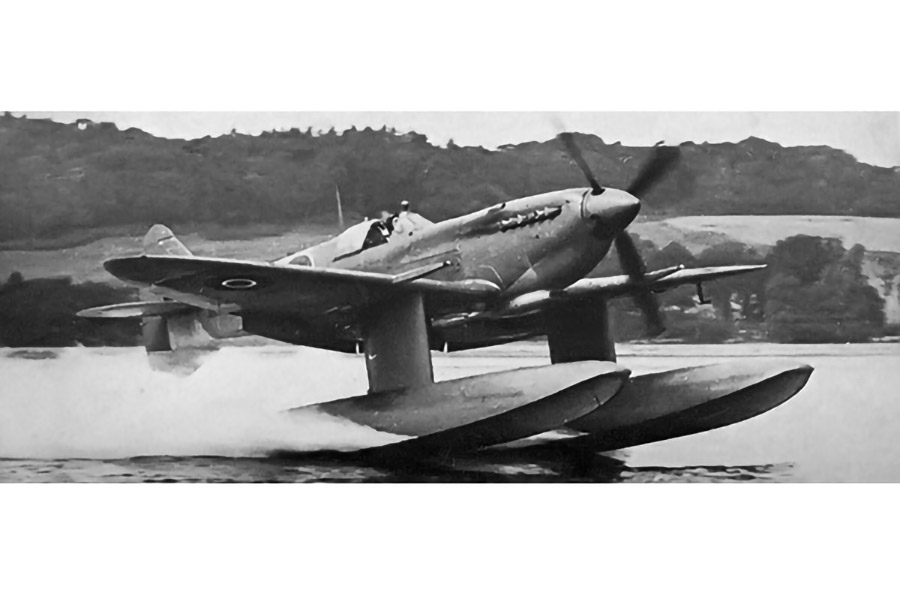
The German attack on Norway in 1940 and the alarming lack of RAF airfields to use in the resultant campaign made the need for a floatplane fighter one of the highest orders. An urgent scheme to fit floats from the Blackburn Roc to the Spitfire was hatched, but before these new Spitfire floatplanes even flew, the Norwegian campaign was over, and there was a more significant need for landplanes.
The converted Spitfires were changed back to regular wheeled undercarriage. But this handy idea refused to go away. Subsequently, the Spitfire floatplane was looked at again when war in the Pacific against Japan kicked off in late 1941, and this time a Mk.V, was converted.
10: Spitfire floatplane
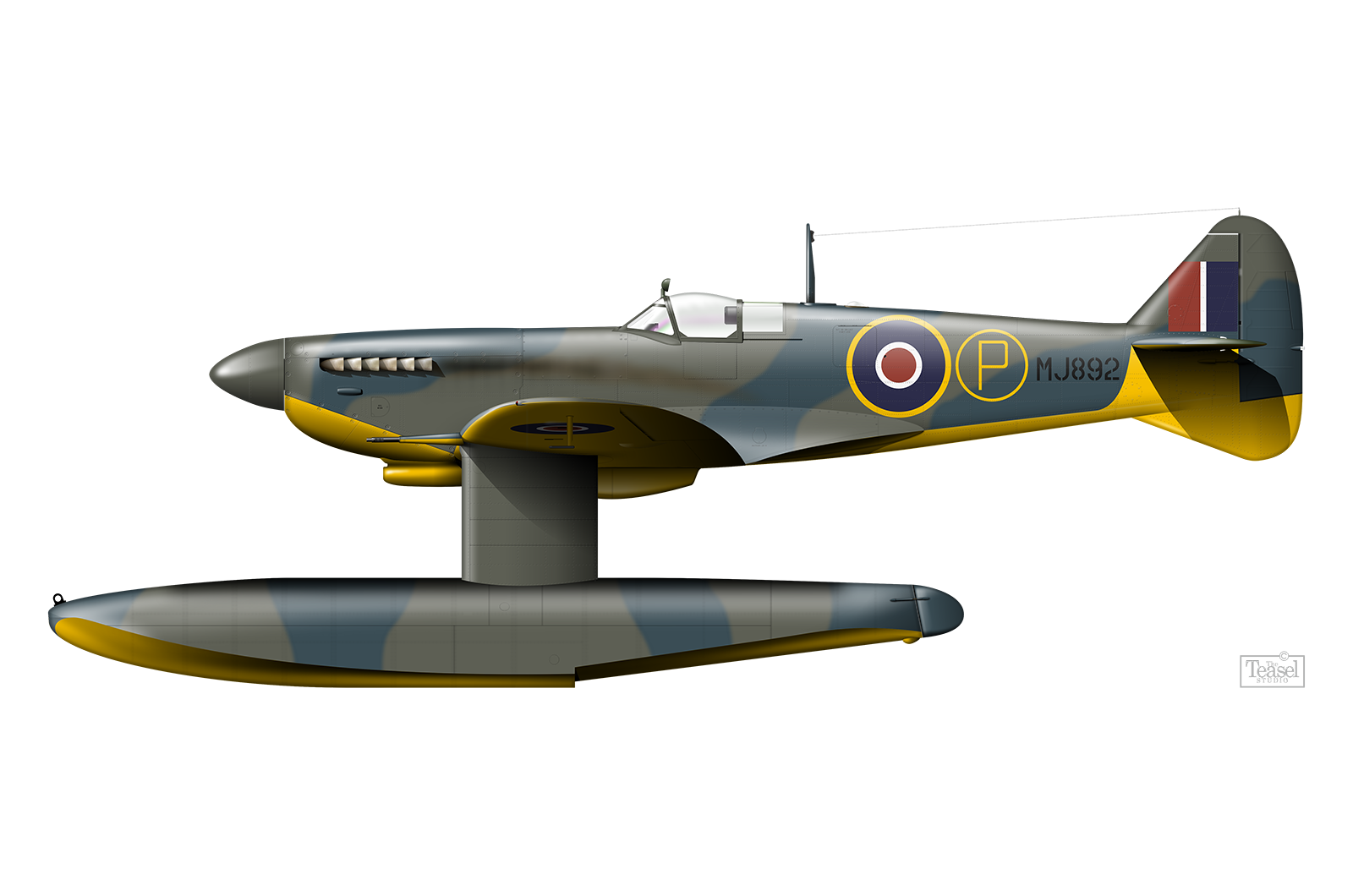
By the time three Mk.V had been converted to floatplanes, the plan had changed, and instead of the Pacific, the Spitfires were to operate from discreet island bases in the Aegean. Unfortunately, the Germans stymied the idea by capturing all the appropriate islands. Attention turned to the Pacific again for the final and fastest Spitfire conversion.
In 1944, a Spitfire Mark IX (serial MJ892) powered by a Merlin 45 engine was fitted with floats. The result was spectacular: the machine reached 377mph, making it the fastest floatplane of the war. Sadly, the concept was shelved, and despite becoming the third fastest floatplane ever built, the waterborne Spitfire was abandoned in late 1945.
9: Saunders-Roe SR.45 Princess - 380mph
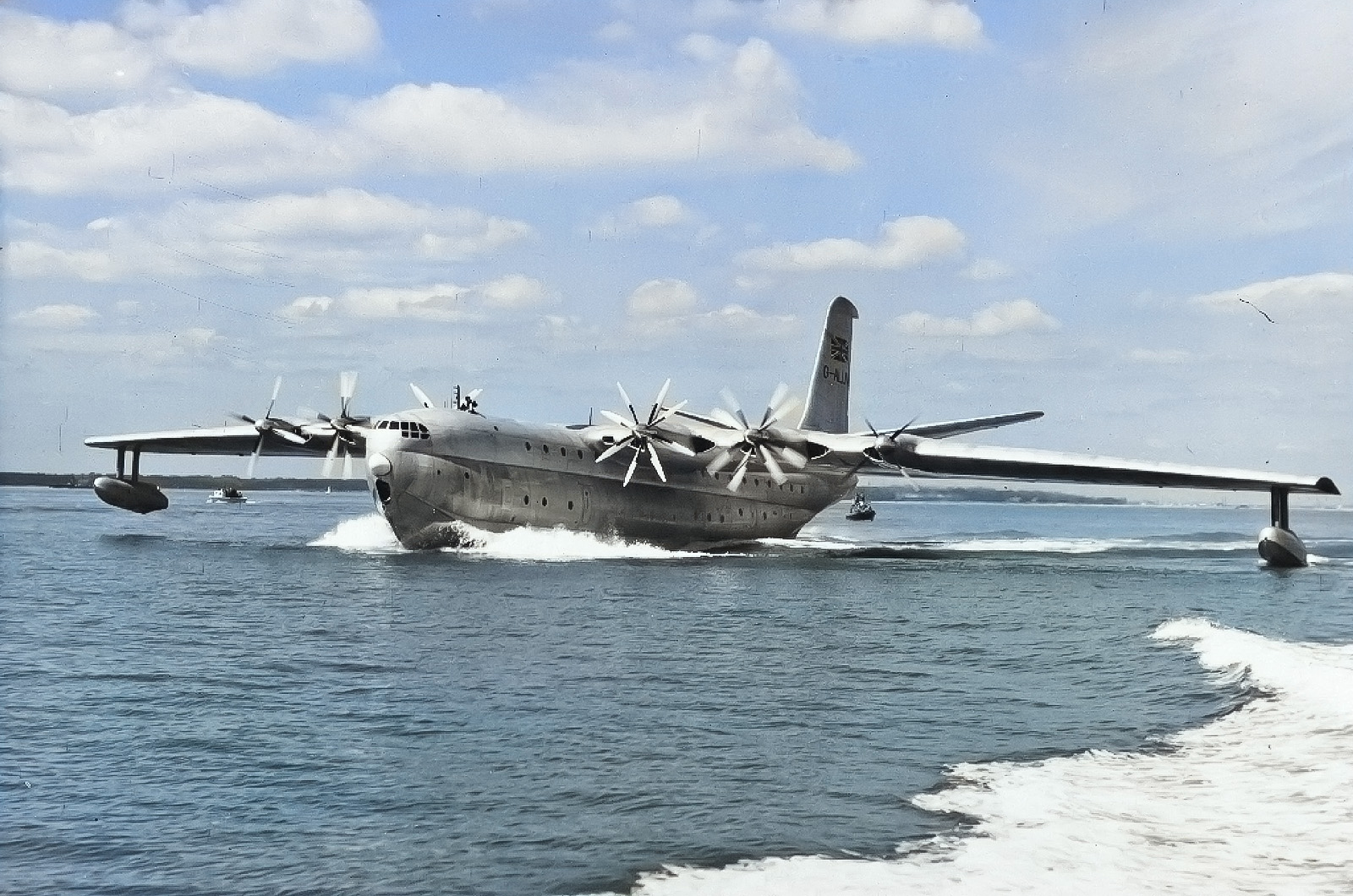
The Saunders-Roe SR.45 Princess was a magnificent machine of epic proportions. Weighing 86,000 kg, the same as 33 Spitfires, and with a greater wingspan than a Boeing 747, blessed with an endurance of 15 hours and a range of almost 6000 miles, the Princess was utterly impressive.
The Princess was planned as a luxurious airliner to serve the transatlantic route. To carry 100 passengers over such a long route in style, the Princess needed to be big and heavy and required a massive amount of power. Eight massive Bristol Proteus turboprop engines were mounted in four ‘coupled’ pairs, along with two regular uncoupled Proteus.
9: Saunders-Roe SR.45 Princess
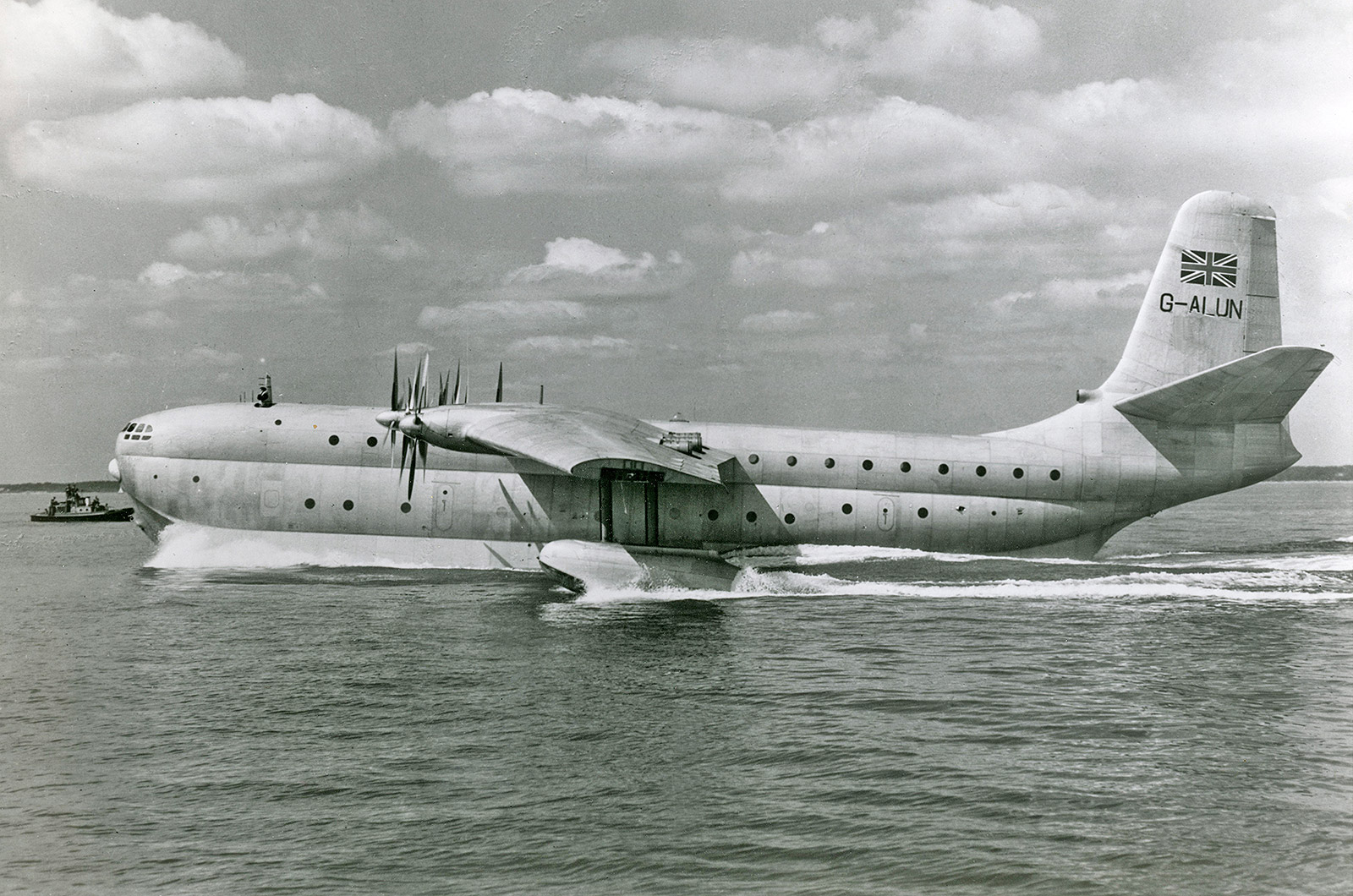
The Princess first flew in 1952, unfortunately coinciding with the dawn of the land-based jet airliner age. Large airports and runways, able to accommodate the far more efficient land planes, were becoming increasingly common. The Princess, though impressive, was the last and grandest example of a dying concept that was rapidly becoming obsolete.
Remarkably, despite the myriad compromises a flying boat must endure, the Princess was capable of a racy 380 mph, a mere 69mph slower than the jet-powered land-based de Havilland Comet I. Saunders-Roe were nothing if not persistent and considered even larger (jet-powered) flying boats before finally accepting defeat, and moving to another technological cul-de-sac: mixed propulsion fighters.
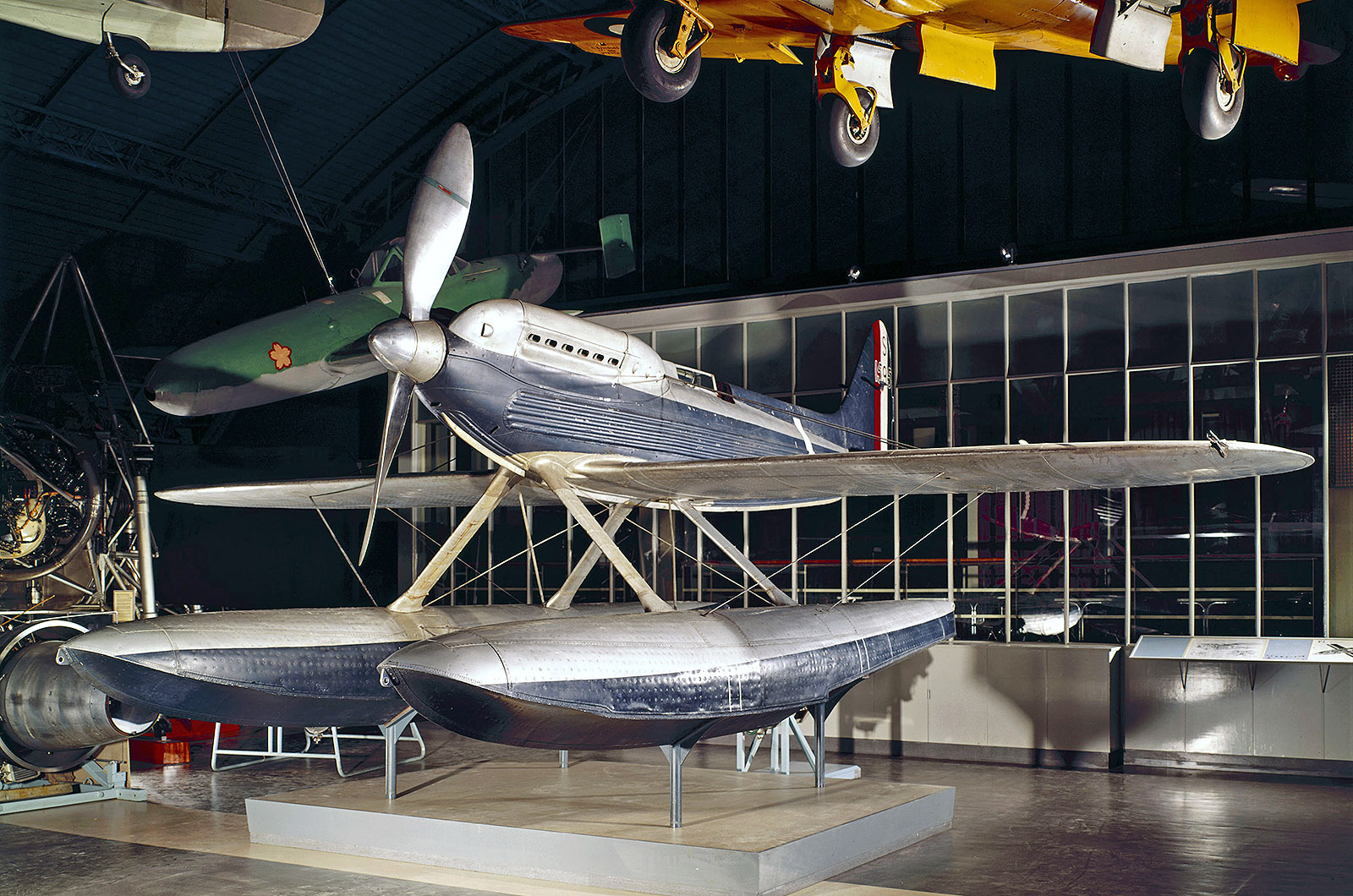
8: Supermarine S.6 Series - 407.5mph

Before RJ Mitchell designed the Spitfire, he unleashed a series of stupendously fast floatplanes for the Schneider Trophy race. The S.5 had won the race in 1927 but was not considered competitive for the race of 1929 and Mitchell designed a successor powered by a new and very powerful Rolls-Royce V12 engine.
The new S.6 was delivered only a month before the race, mainly due to problems with the Rolls-Royce ‘R’ engine. Although offering huge potential, it was a capricious unit but had finally been tamed to an acceptable state of reliability by race day.
8: Supermarine S.6 Series

The S.6 obliterated the competition to win the 1929 Schneider Trophy, coming in 60mph faster than the second placed Macchi MC.67. Further tweaks to the R-type engine led it to deliver a huge 2350 hp in the S.6B which won the trophy outright for the UK in 1931.
As a final flourish, the sensational S.6B proved it was as fast as it was beautiful by setting the world absolute speed record at 407.5mph, becoming the fastest man-made vehicle yet built in the process. Incredibly, it remains one of the two fastest floatplanes ever constructed nearly 100 years later.
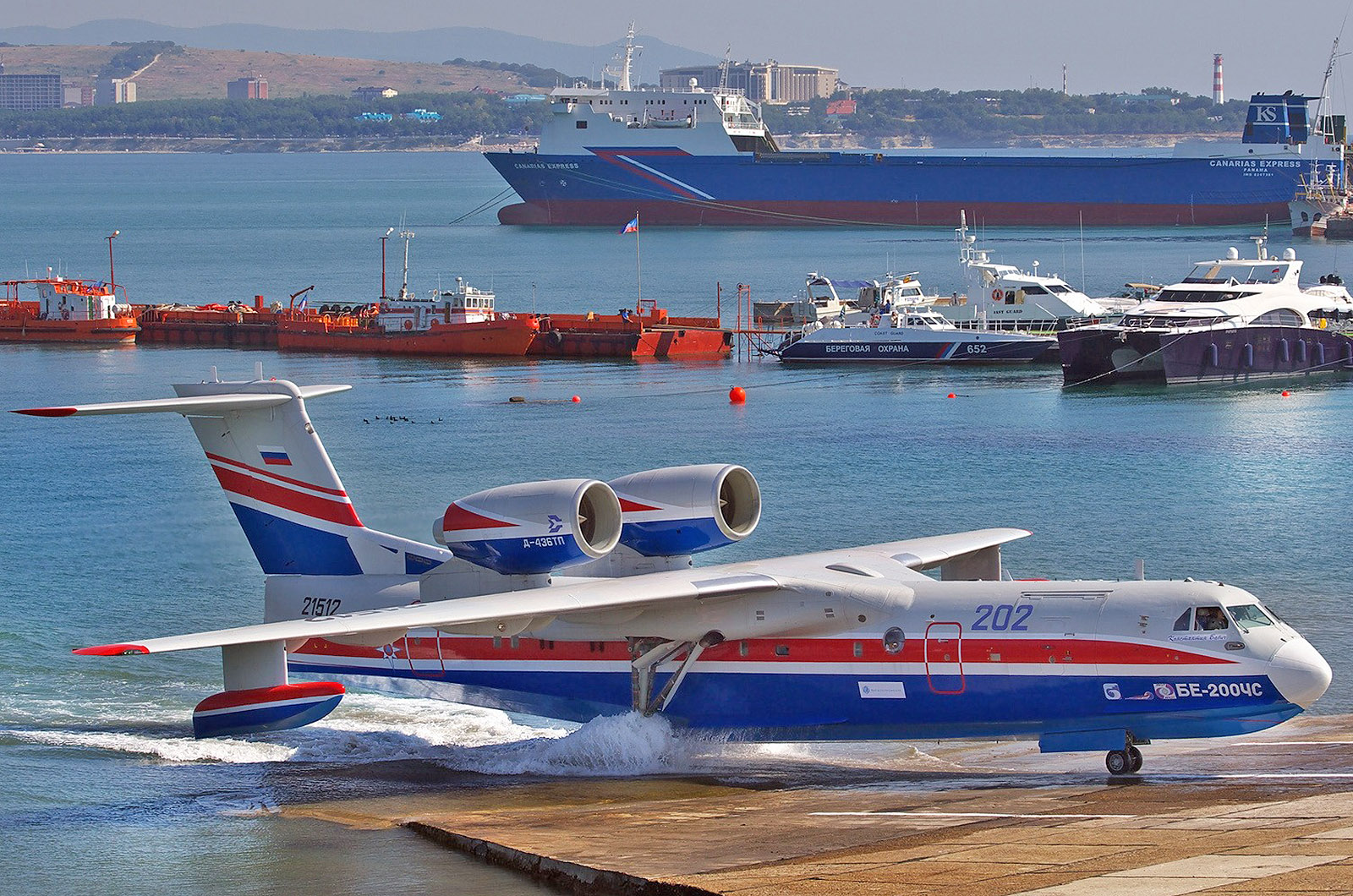
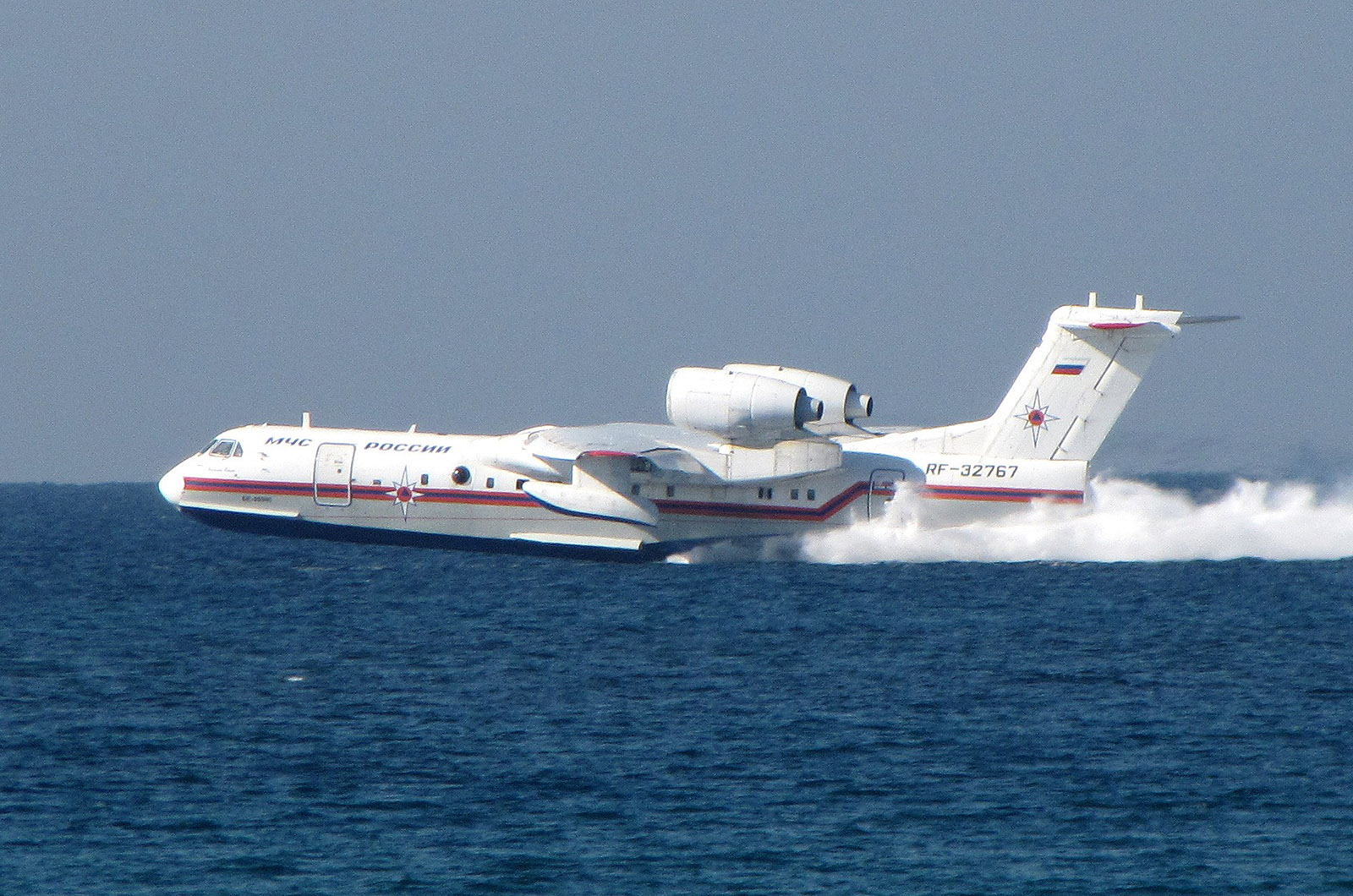
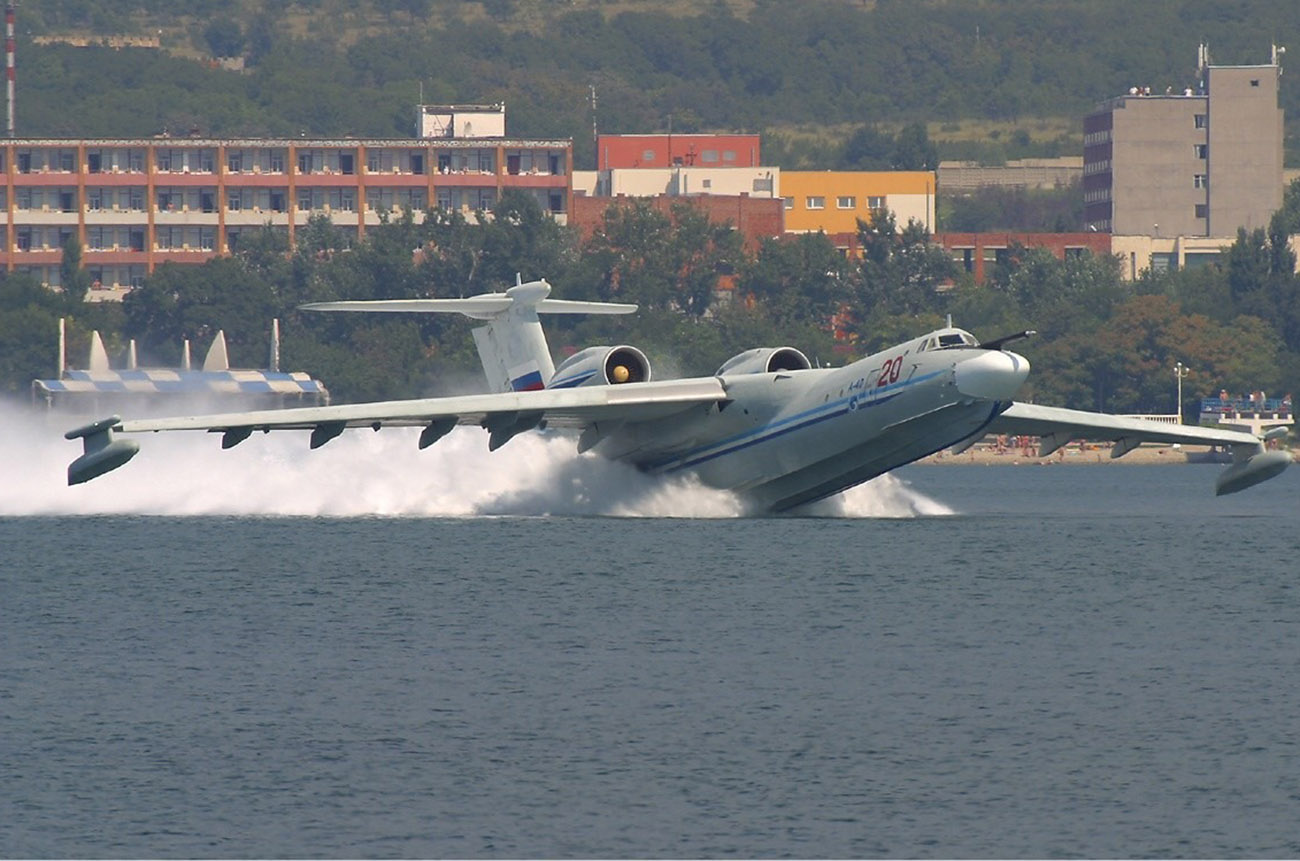
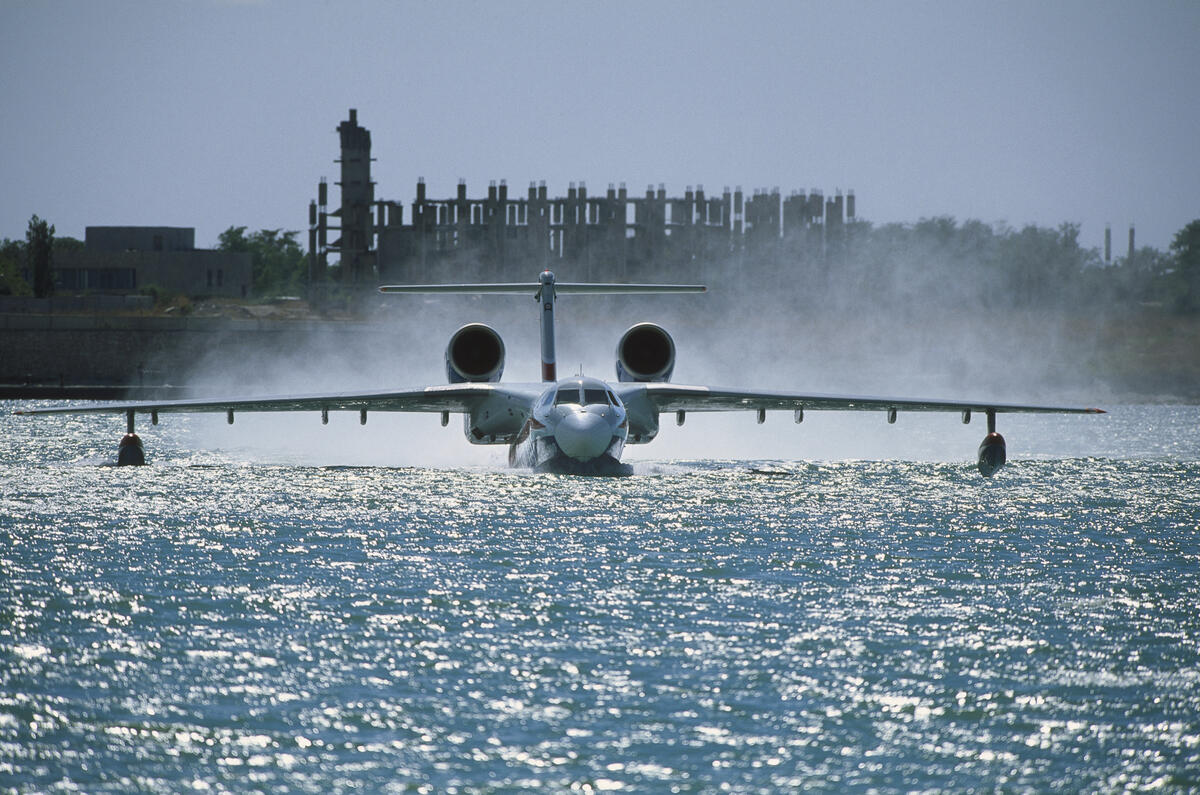
7: Beriev Be-200 - 430 mph

Jet seaplanes are among the most exotic aircraft types, with only a handful of designs ever having entered actual service. In fact, I’m pretty sure we can name them all from memory: the Beriev Be-10 and Beriev Be-200 – wait, I think that’s it; only two?
The only one remaining in service today is the Be-200. Based on the rather unfortunate Beriev A-40 (which we’ll cover later), the Be-200 first flew in 1998. It was designed for various roles, including firefighting, air ambulance, search and rescue, maritime patrol and transportation duties.
7: Beriev Be-200

Only around 20 of these rather pretty amphibians have been built so far. The first operational use of the Be-200 was in 2004, when SOREM deployed a Be-200ES from Sardinia. The aircraft, flown by a joint Russian-Italian flight crew, performed over 100 flights and dropped 324 tons of water to counter four forest fires.
Since then, the aircraft has fought fires worldwide, in Israel, Portugal, Greece, Serbia, Russia and other locations. It can carry a maximum of 12,000 litres (3,200 US gal) of water. The Be-200 is operated by Algeria, Azerbaijan, and Russia.
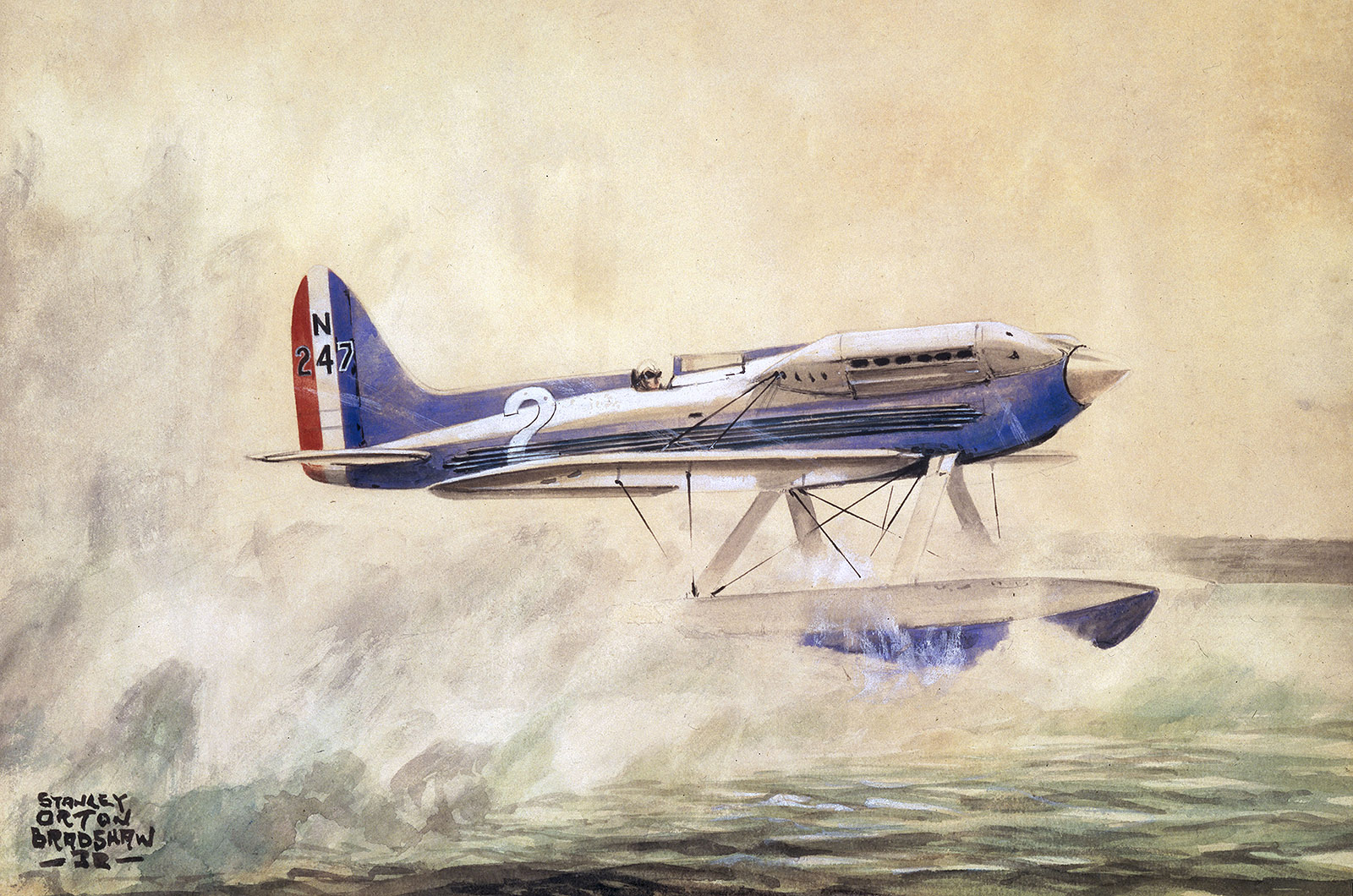
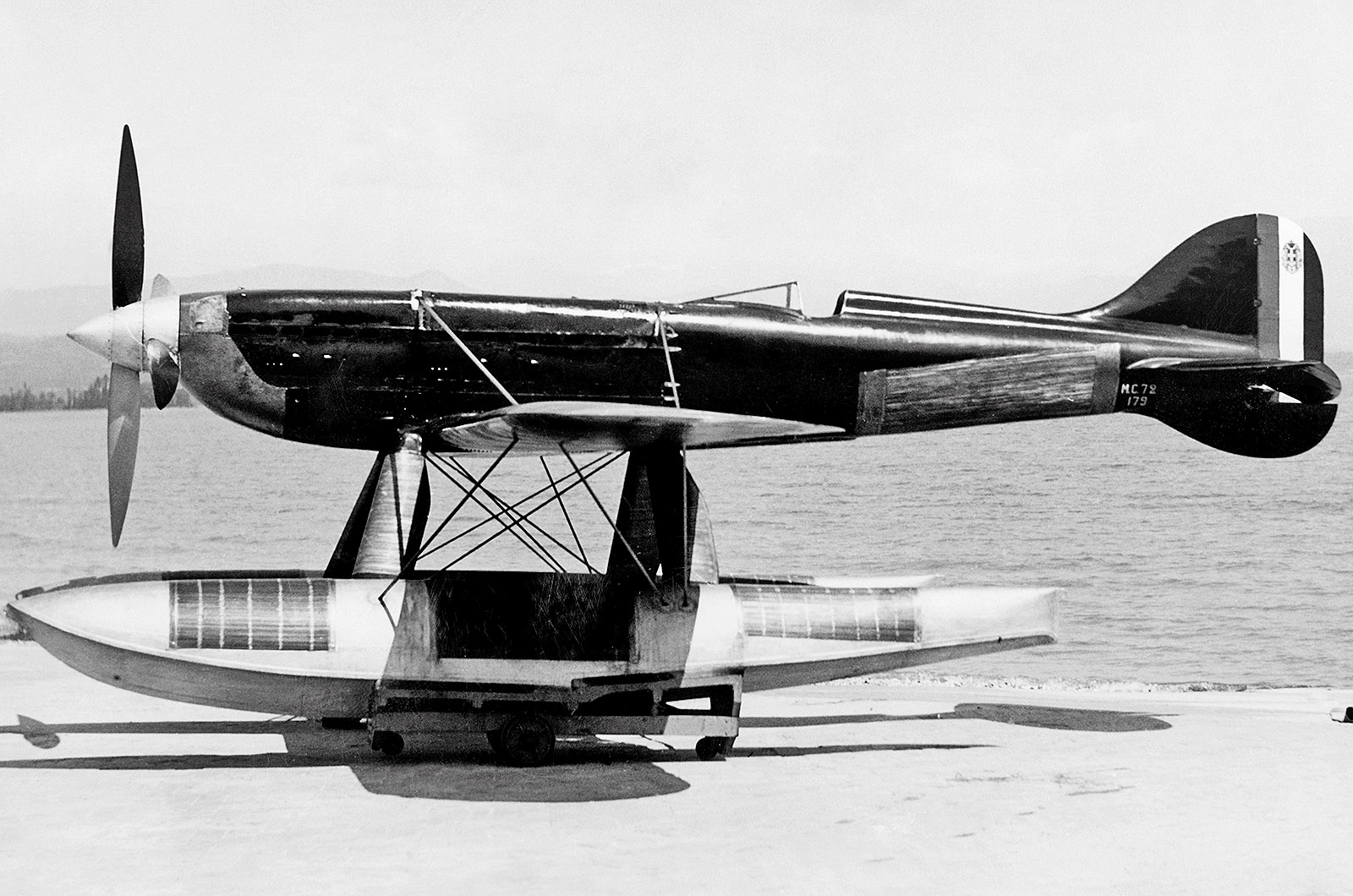
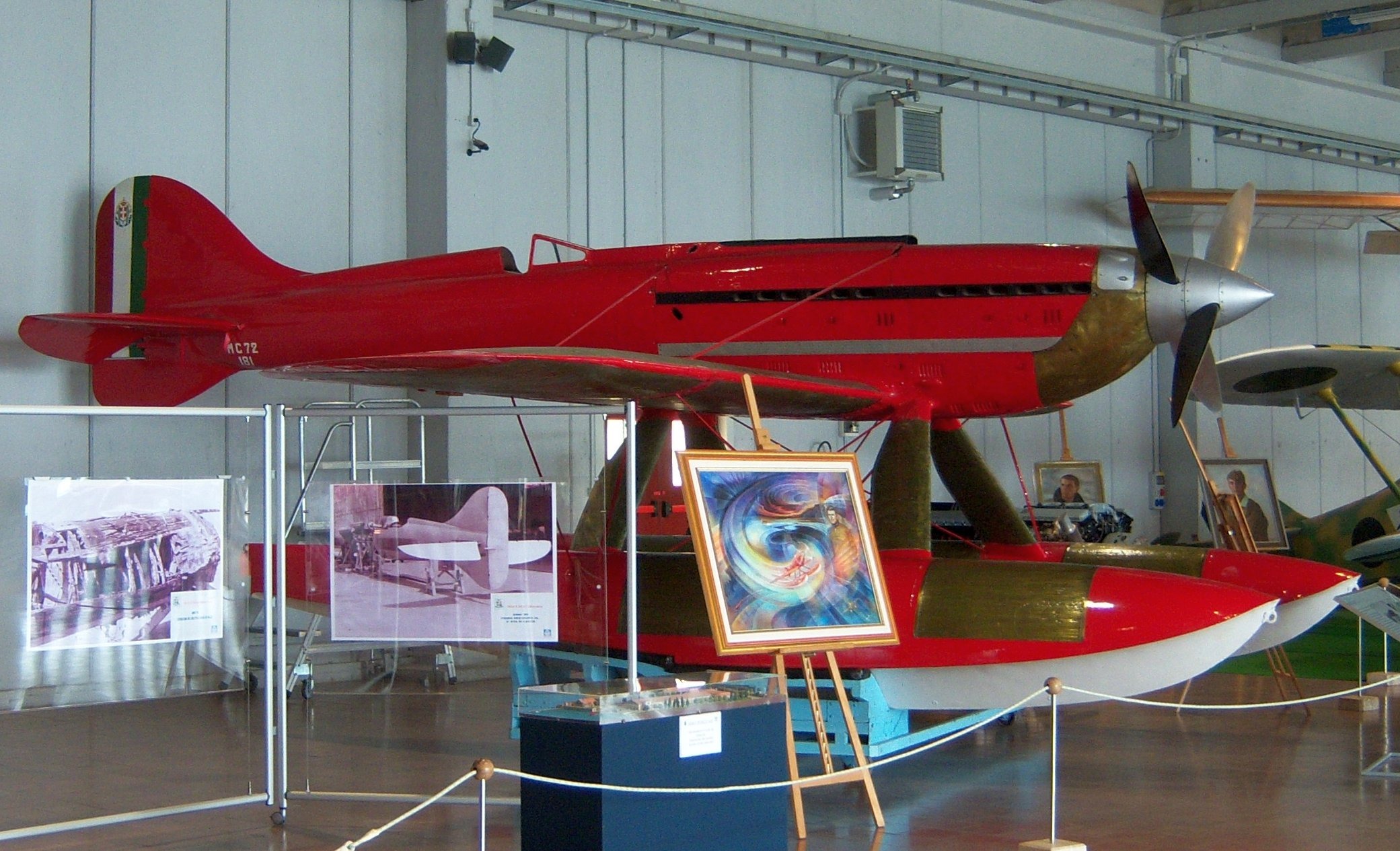
6: Macchi-Castoldi M.C.72 - 441mph

On 23 October 1934, Francesco Agello became the fastest man that had ever been when he took the stunningly beautiful MC.72 to a speed of 440.682 mph (709.209km/h). Packed into the long nose of the MC.72 was a 2800-horsepower monster: the engine is two separate units really, mounted inline, each driving one of the contra-rotating propellers.
The luscious Italian Macchi-Castoldi M.C.72 combined a wealth of innovative features with outstanding beauty and a quite astonishing performance. It was built to win the Schneider race, a fiercely competitive international seaplane contest encouraging rapid technological progress in aeroplane development.
6: Macchi-Castoldi M.C.72

Although conceived to contest the 1931 Schneider Trophy, the M.C.72 ruled itself out by being too late - however it did go on to set an outright speed record that stood for five years. The journey to success wasn’t easy though, with Fiat’s A.S.6 24-cylinder engine being the main culprit.
The A.S.6 was an alarming idea: take two highly-strung V12 engines and bolt them back-to-back, having one drive one element of a contra-rotating prop and the other drive the second, with no direct link between the throttles. A speed of 440.68mph was set in 1933, only bettered in 1939 (by a German landplane), and it’s still the case that no piston-engined seaplane has travelled faster.
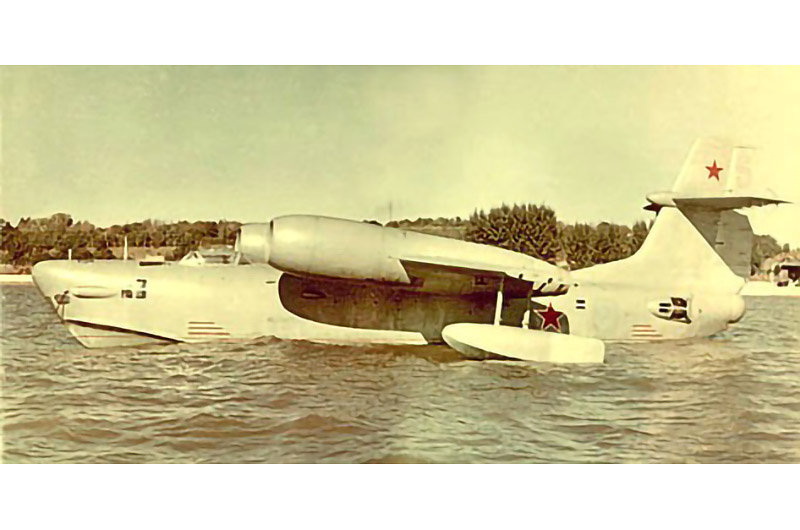
5: Beriev R-1 – 500mph

The Beriev Aircraft Company started as a Soviet design bureau specialising in amphibious aircraft. When the jet age arrived, the Beriev had been building seaplanes for some time. The new technology promised a massive leap in speed, so Beriev set about designing a jet-flying boat.
The R-1 first flew on 20 May 1952, powered by two Klimov VK-1 turbojet engines, each rated at 26.5 kilonewtons (5950 lbf). Capable of an impressive 500 mph, and armed with two forward-firing and two tail-mounted 23-mm cannon, and up to 1000 kg of munitions. The single prototype suffered from severe vibrations and instability on water and crashed in 1953.
5: Beriev A-40 – 500mph

The Soviet Beriev A-40 amphibious jet flying boat first flew in 1986, and it was intended that it would replace the Beriev Be-12 (and land-based Ilyushin Il-38) in the anti-submarine warfare role. Between 1989 and 1998, the Beriev A-40 set 140 in-class world records.
Various attempts were made to get the aircraft into Russian service, but they all failed. The most recent effort of a modernised version involved new Ukrainian-made propfan engines, an effort which ended with Russian aggression against Ukraine; Russian forces bombed and destroyed the engine plant in May 2022.
4: Saunders-Roe SR.A/1 - 512 mph

The Japanese floatplane fighters of the war showed that the concept could work, at least to some degree, in the calmer parts of the Pacific. British manufacturer Saunders-Roe thought they could do one better, negating the seaplane’s inherent performance disadvantage with the latest technology: the jet engine.
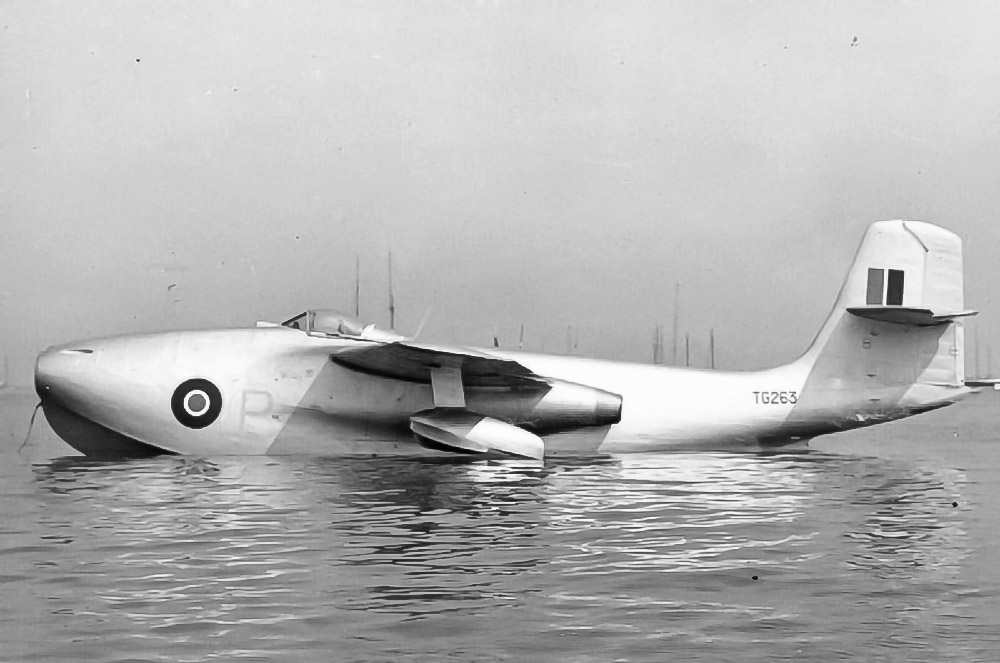
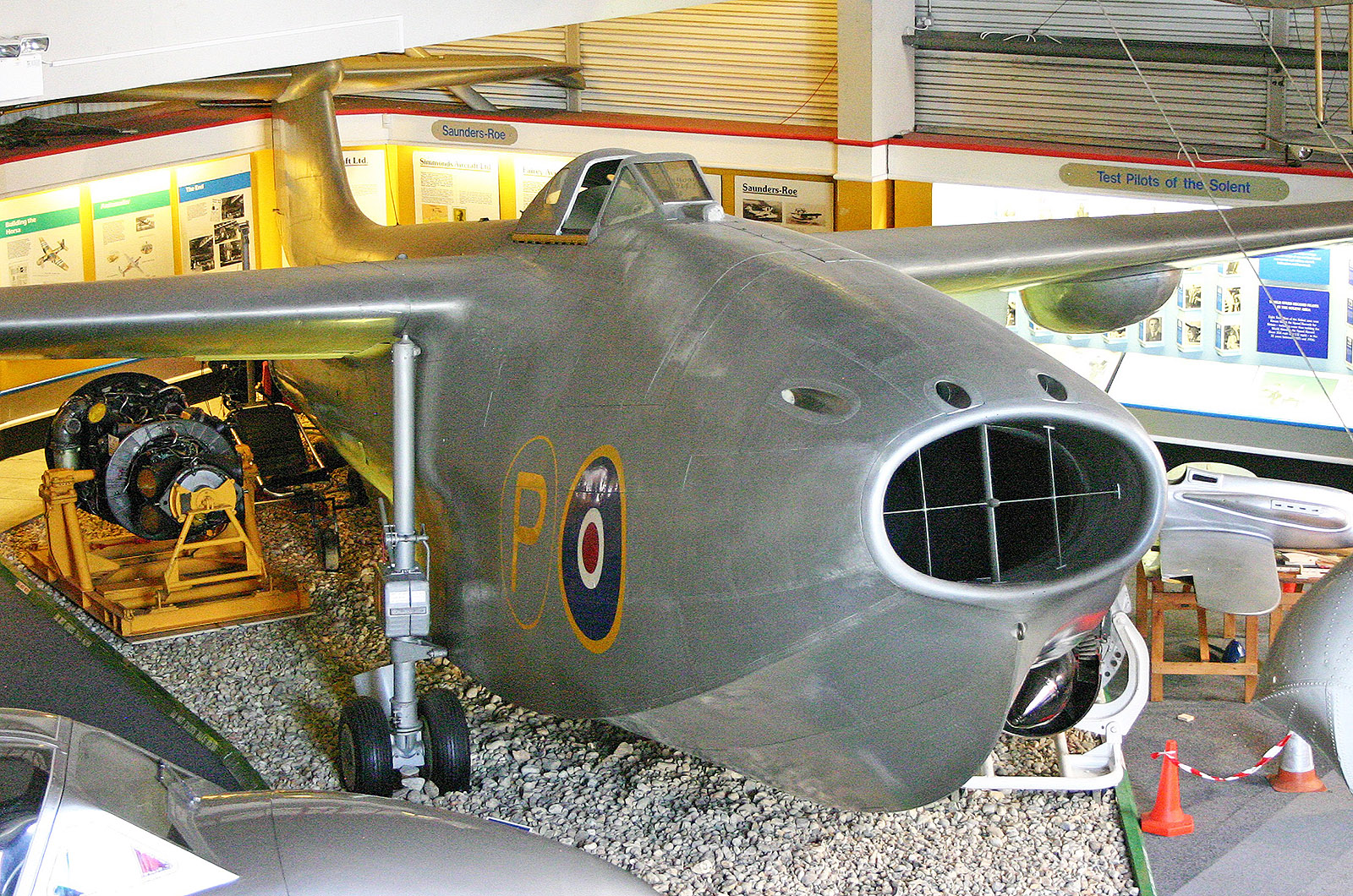
Creating an aircraft capable of 512 mph with four 20-mm cannon would have proved an awesome, perhaps unbeatable, opponent to Japanese seaplanes and flying boats. Timing was against the aircraft; however, with the war winding down, the company looked away from this military project, instead devoting their resources to the huge, long-range, civilian flying boat, the Princess. This delayed the type’s first flight until 1947.
4: Saunders-Roe SR.A/1

The aircraft proved impressive – it had great handling, good agility and was pleasant to fly Notably, the prototypes were fitted with the first two examples of Martin-Baker production ejection seats. However, there wasn’t a great deal of need for it by this time, and two months later, a carrier fighter that was faster still (the 600mph Hawker Sea Hawk) took to the air.
The Royal Navy wasn’t very interested in this eccentric design, believing in the conventional carrier concept. It was briefly brought back to life in 1950 to assess its utility for the Korean War, but things had moved on, and it would have been no match for the latest fighters. The ‘Squirt’, as it was affectionately known by its creators, was not to be. Three examples were built.
3: Beriev Be-10 ‘Mallow’ - 570 mph

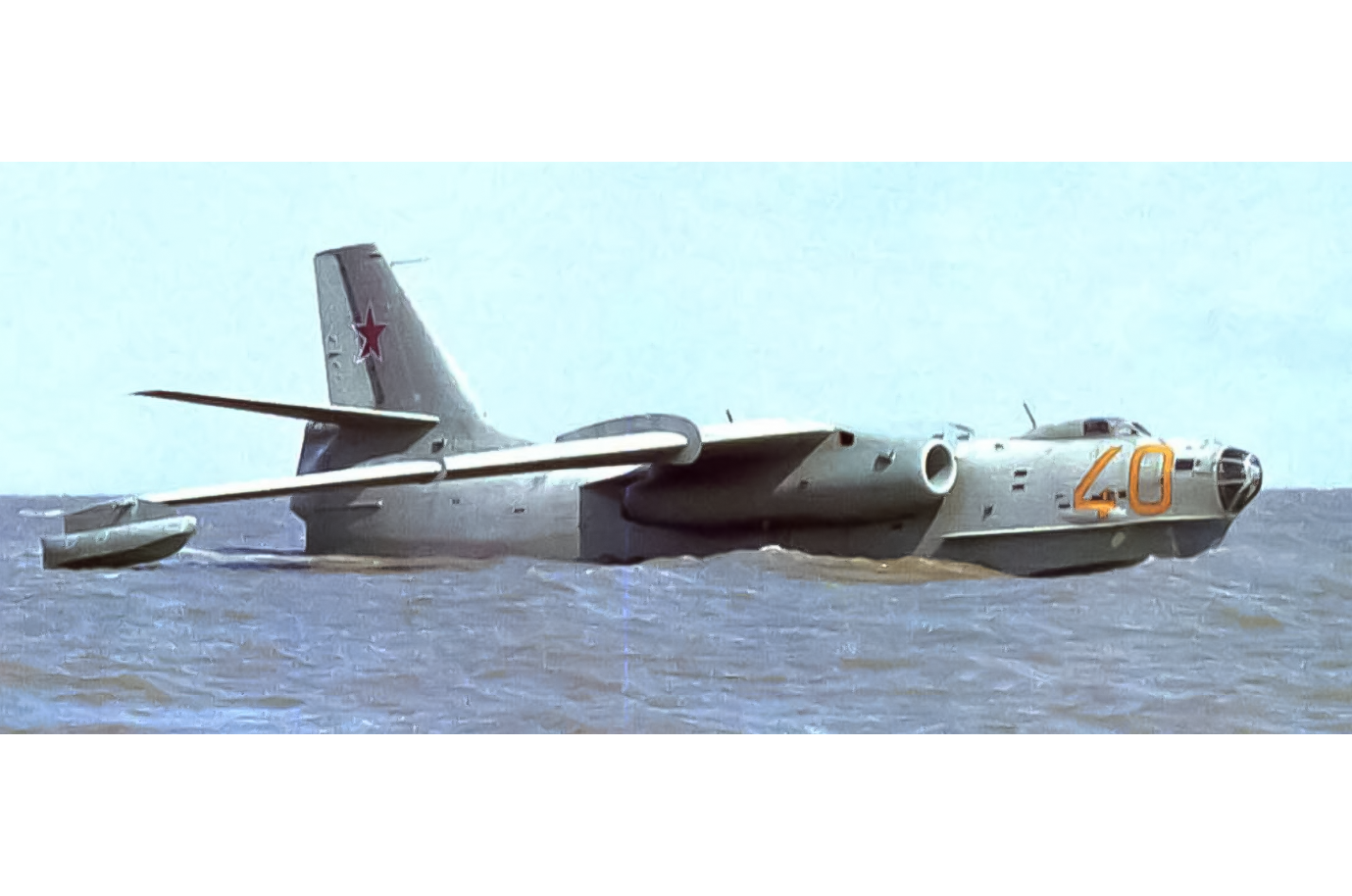
The Beriev Be-10 ‘Mallow’ was a turbojet-powered flying boat designed for reconnaissance, bomber, torpedo attack and mine-laying missions. The first flight of this dramatic-looking aeroplane with its swept-back wing was on 20 June 1956 from Gelendzhik, on the Black Sea, in Russia.
The first turbo-jet flying boat to enter service, the Be-10 was a massive step up in performance from the piston-engined flying boats that preceded it, like the Be-6. Offering a top speed more than twice as fast, it smashed 12 in-class world records in speed, altitude, and payload, which still stand today.
3: Beriev Be-10 ‘Mallow’

It was powered by two Lyul’ka AL-7B turbojets, each rated at 71.26 kilonewtons (16,000lbf). Unlike other AL-7 installations on various fighters, the AL-7B had stainless steel compressor blades and no afterburner fitted. It was armed with four 23-mm automatic cannons, with a maximum bombload of 3,000kg.
It was initially beset with a multitude of problems, including engine water and gun-gas ingestion, quality control issues, and it suffered a relatively high accident rate. Only 28 aircraft were made and served only two squadrons within the 977th Independent Naval Long-Range Reconnaissance Air Regiment.
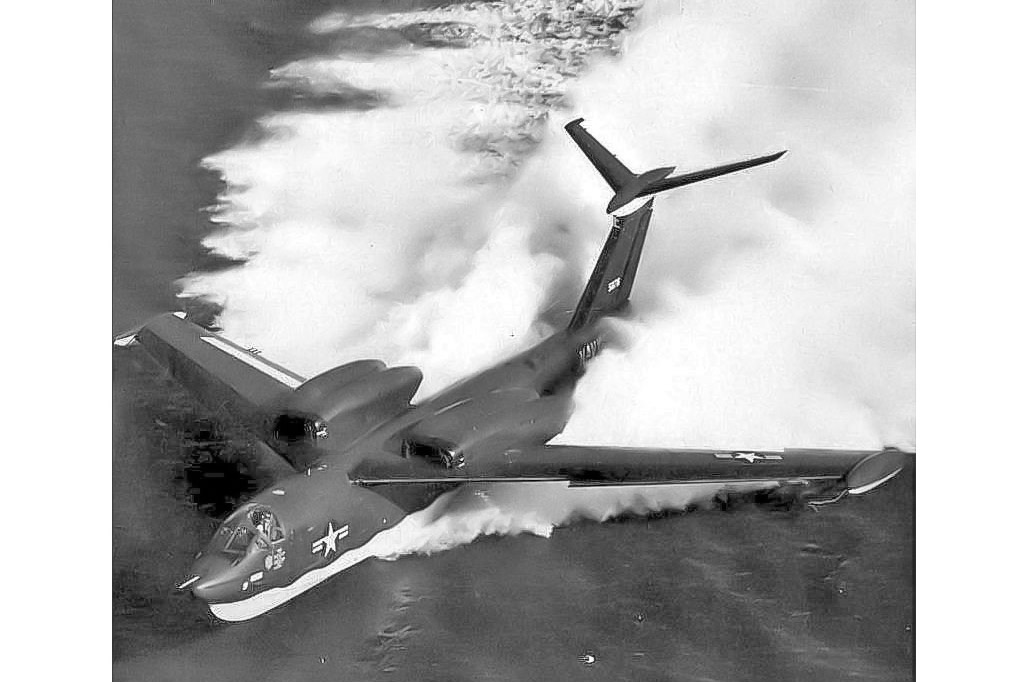
2: Martin P6M SeaMaster - 686 mph

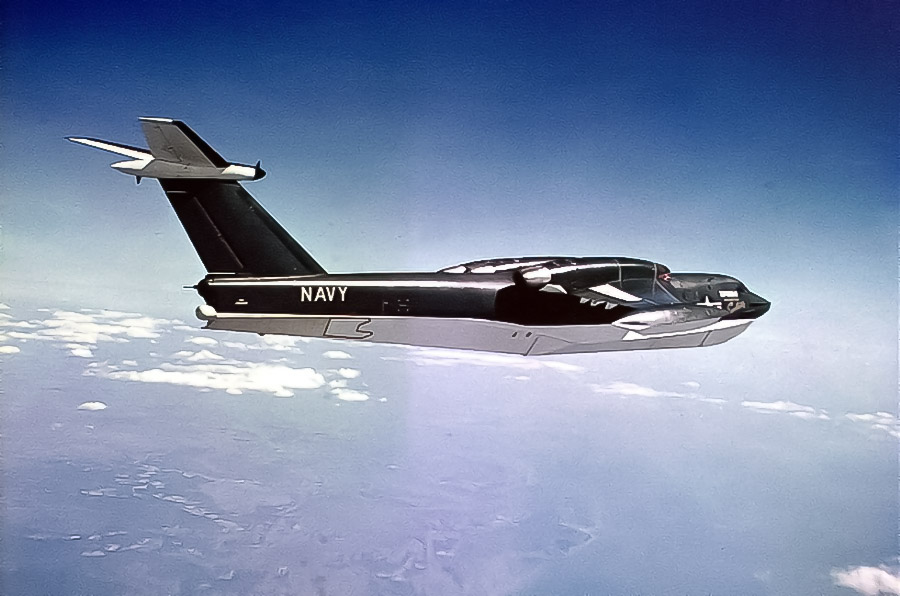
Two 1950s quad-jet bombers were designed for high speed at low level: one was the British Valiant B2, and the other was the far more exotic American Martin P6M SeaMaster. This was planned as a strategic bomber and minelayer for the U.S. Navy, able to fly just above the waves at near supersonic speeds and destroy enemy submarines in their homeports.
This high performance ‘on the deck’ was excellent for any aircraft that first flew in 1955, even more so for a machine weighting an 44,300 kg that could take-off from water. Intended as part of a new Seaplane Strike Force, the SeaMaster was a bold design that inherited the t-tail (or tee tail) and rotating weapons bay from the failed Martin XB-51 bomber.
2: Martin P6M SeaMaster

The SeaMaster was late, over budget, riddled with technical challenges, and was cancelled. The new Polaris Submarine-launched ballistic missile offered a cheaper and less risky alternative. The project cost a staggering $400 million, equivalent to almost $5 billion in today’s money.
Only 16 SeaMasters were built. The project’s failure drove the Glenn L. Martin Company, established in 1917, out of the aircraft business, despite attempts to market an extremely exciting (and unbuilt) civil version, the SeaMistress.
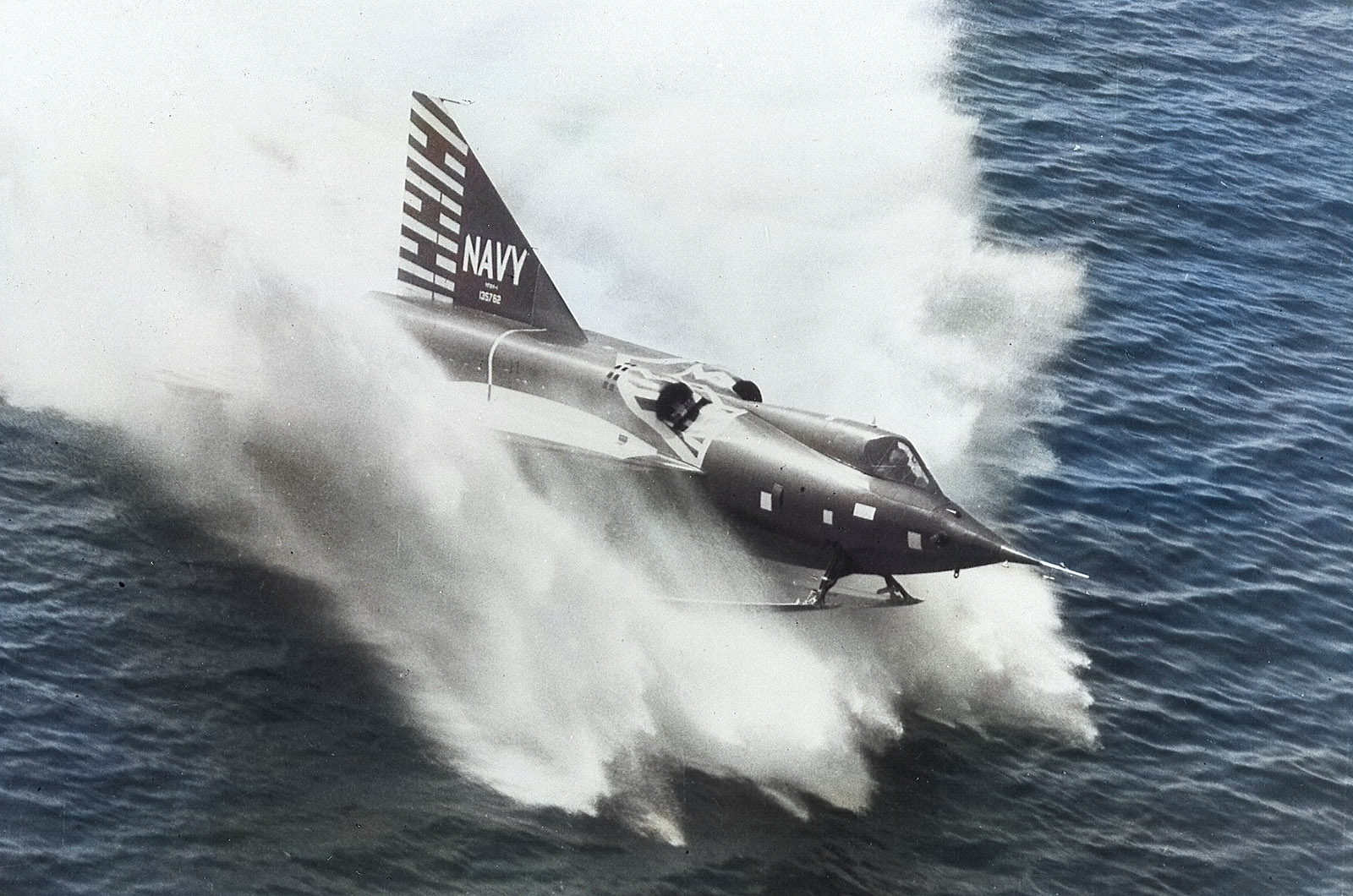
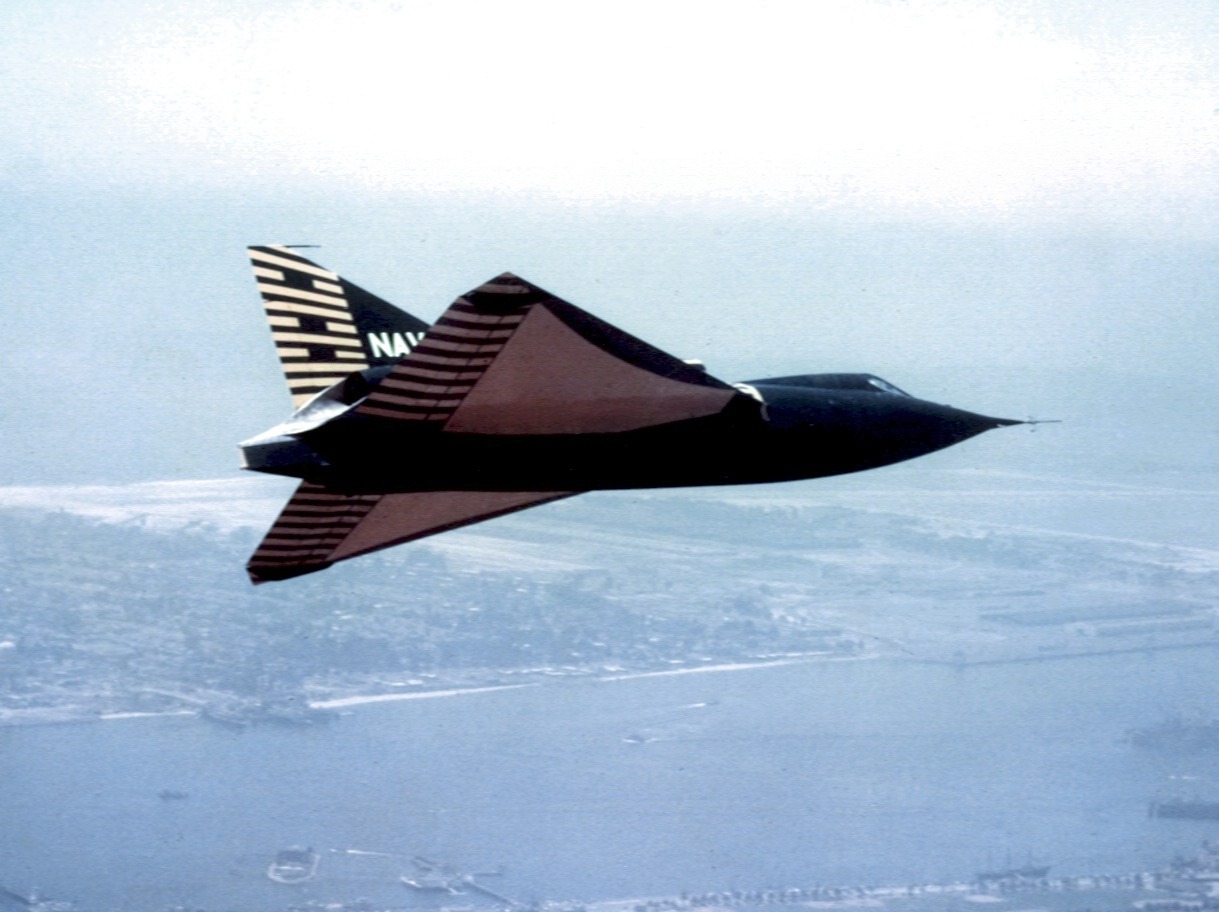
1: Convair F2Y Sea Dart - 695 mph

High-performance jet combat aircraft of the 1950s required long runways, and tended to have rather unforgiving handling characteristics. This made them dangerous for land-based operations; aircraft carrier operations were even more hazardous. Convair believed the solution was a fast jet seaplane that took off from water.
The sleek delta-winged Sea Dart launching or landing on the ocean was one of the most compelling sights, even in a decade bursting with aerospace spectacle. Thrust skywards by two jet engines, the Sea Dart was designed as a fighter interceptor for the United States Navy.
1: Convair F2Y Sea Dart

With its delta wing and sleek uncluttered lines, it was a revelation when it appeared in 1953. It looked a world apart from the seaplanes of the war that had only ended eight years earlier. Despite being a seaplane, it was only marginally slower than the fastest aircraft flying and could be dived to Mach 1.25, making it the only supersonic seaplane in history.
However, even higher speeds were desired, including supersonic speed in level flight, which it could not achieve. It was also relatively sluggish in agility. Even worse, its legged ‘hydro-ski’ take-offs almost shook the poor pilot to death. Still, it was a fantastic machine, capable of 695mph. Five examples were produced.
Follow Joe Coles on Substack, Twitter X or Blue Sky. His superb Hush-Kit Book of Warplanes is available here.
If you enjoyed this story, please click the Follow button above to see more like it from Autocar
Photo Licence: https://creativecommons.org/licenses/by/4.0/deed.en

Add your comment