
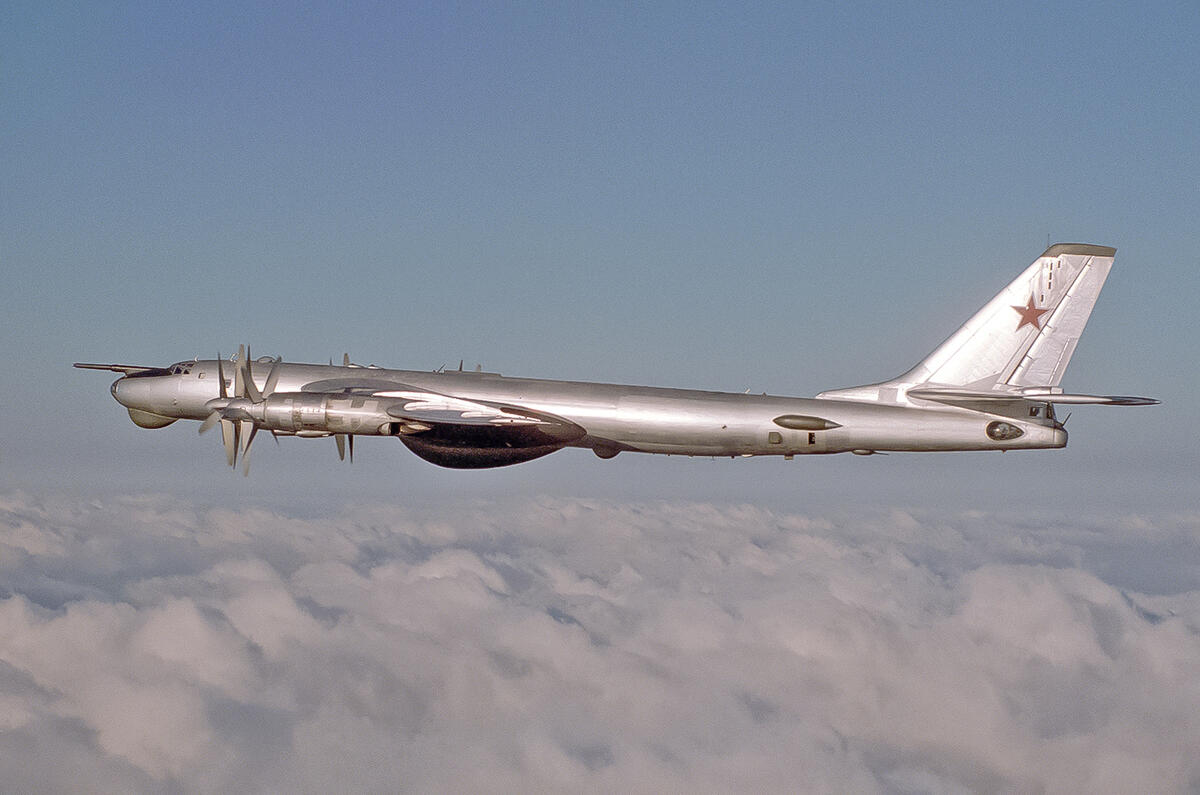

NATO air planners looking east during the Cold War faced a vast, intimidating armada of bombers and attack aircraft.
With superior numbers, the Soviet Union and the other Warsaw Pact nations brandished a massive hammer of both nuclear and ‘conventional’ destructive force. Here are 12 Soviet combat aircraft that kept NATO awake at night:
12: Sukhoi ‘Fitter’ series
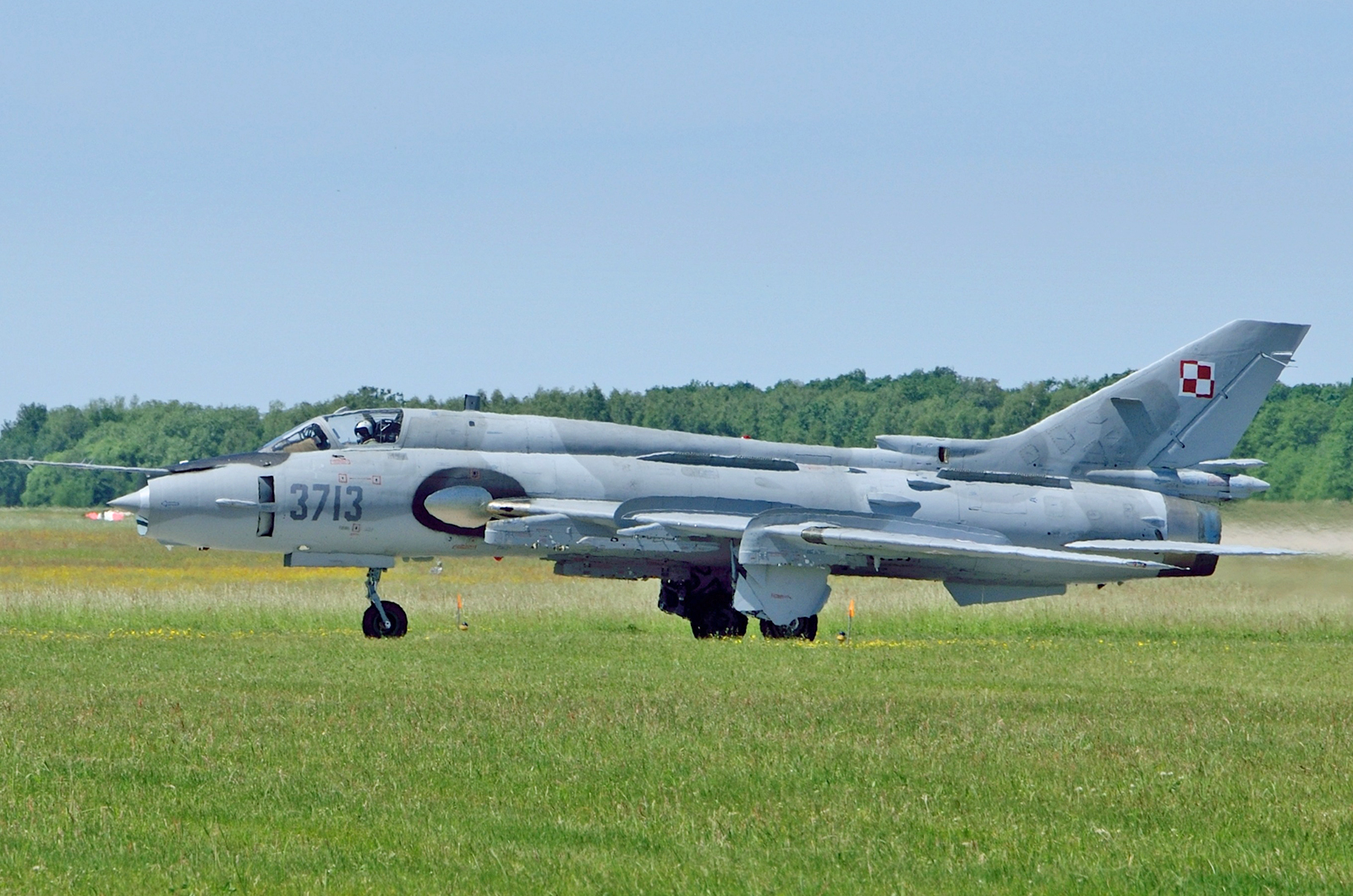
The supersonic single-engined Sukhoi Su-7 (codename: ‘Fitter’) was a brutally fast attack aircraft. Relatively easy and inexpensive to manufacture, it provided ‘air mass’ but was flawed; most worrying for Soviet planners was its small payload, range, and long runway requirements.
A long runway requirement made an aircraft vulnerable, as airfields were primary targets for any aggressor. Various efforts were made, including the installation of a new undercarriage and the use of RATO (rocket-assisted take-off), but something more radical was needed.
The next-generation Fitter, the Su-17, featured a variable geometry outer (‘swing’) wing section, which dramatically reduced field length requirements and improved range. The aircraft would later gain a more powerful engine, better sensors and targeting equipment and new weapons.
The result was a fast, potent attack aircraft. It was widely exported as the Su-20 and Su-22. The Su-17 was the primary tactical fighter-bomber during the Soviet occupation of Afghanistan. It remains in service in limited numbers with a small number of air forces.
11: Mikoyan-Gurevich MiG-27 ‘Flogger’
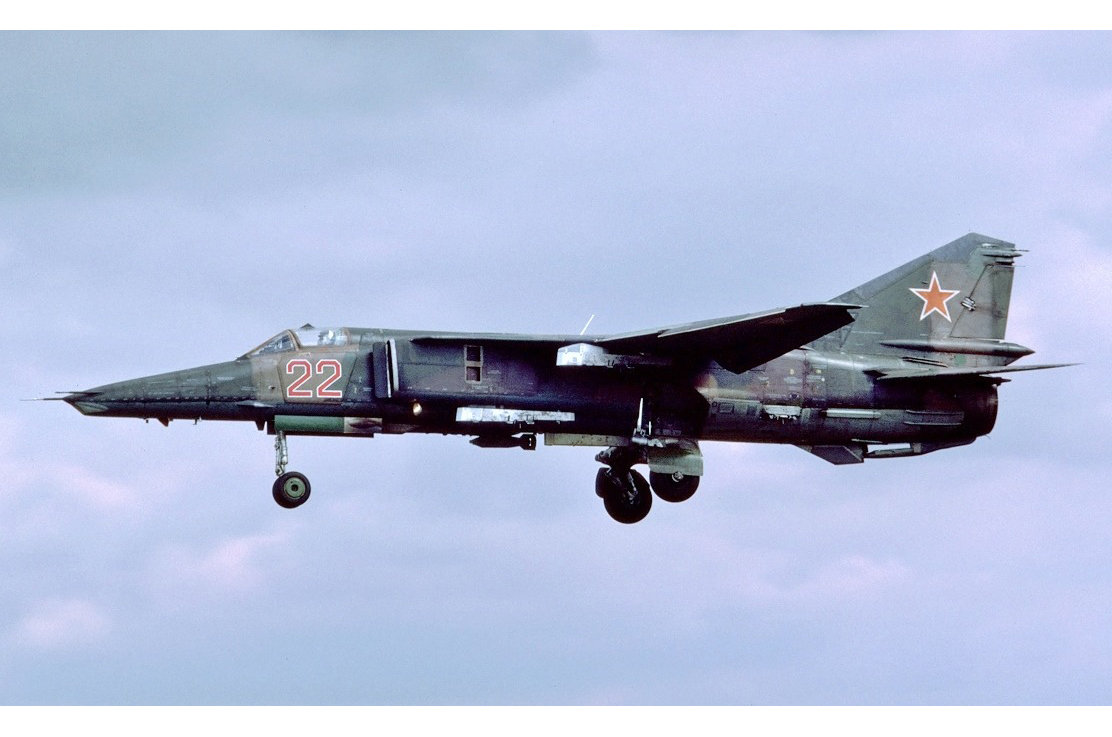
With breathtaking performance and carrying the most powerful aircraft gun fitted to a supersonic aircraft, the MiG-27 was a fast fighter-bomber based on the MiG-23 fighter (via the MiG-23B attack series). Compared to the fighter Floggers, the MiG-27 was heavily armoured, lacked a radar, and had a distinctive ‘duck-nose’.
When the author spoke to former Indian Air Force pilot Anshuman Mainkar, he noted, “She was very fast at low levels, and her ability to hold steady was superb. With wings swept back fully and speeds exceeding 1000 km/h at low levels, the wings waggled and the noise and vibrations that set in gave an impression of a banshee just freed, screaming with abandon.”
It was powered by a single R-29-B-300 turbojet, rated at 25,400 lbf (113 kN) with afterburner. It was an unforgiving and sometimes dangerous machine, as Mainkar put it. “In my opinion, it is the only fighter which has ‘engine explosion’ as a standard aircraft emergency.”
Though not as fast as the fighter Floggers, the MiG-27 kept much of the Floggers’ famed acceleration and extremely high speed at low altitude. It could carry up to 4000 kg (8818 lb) of offensive weapons, including free-fall bombs and guided missiles.
10: Sukhoi Su-25 ‘Frogfoot’
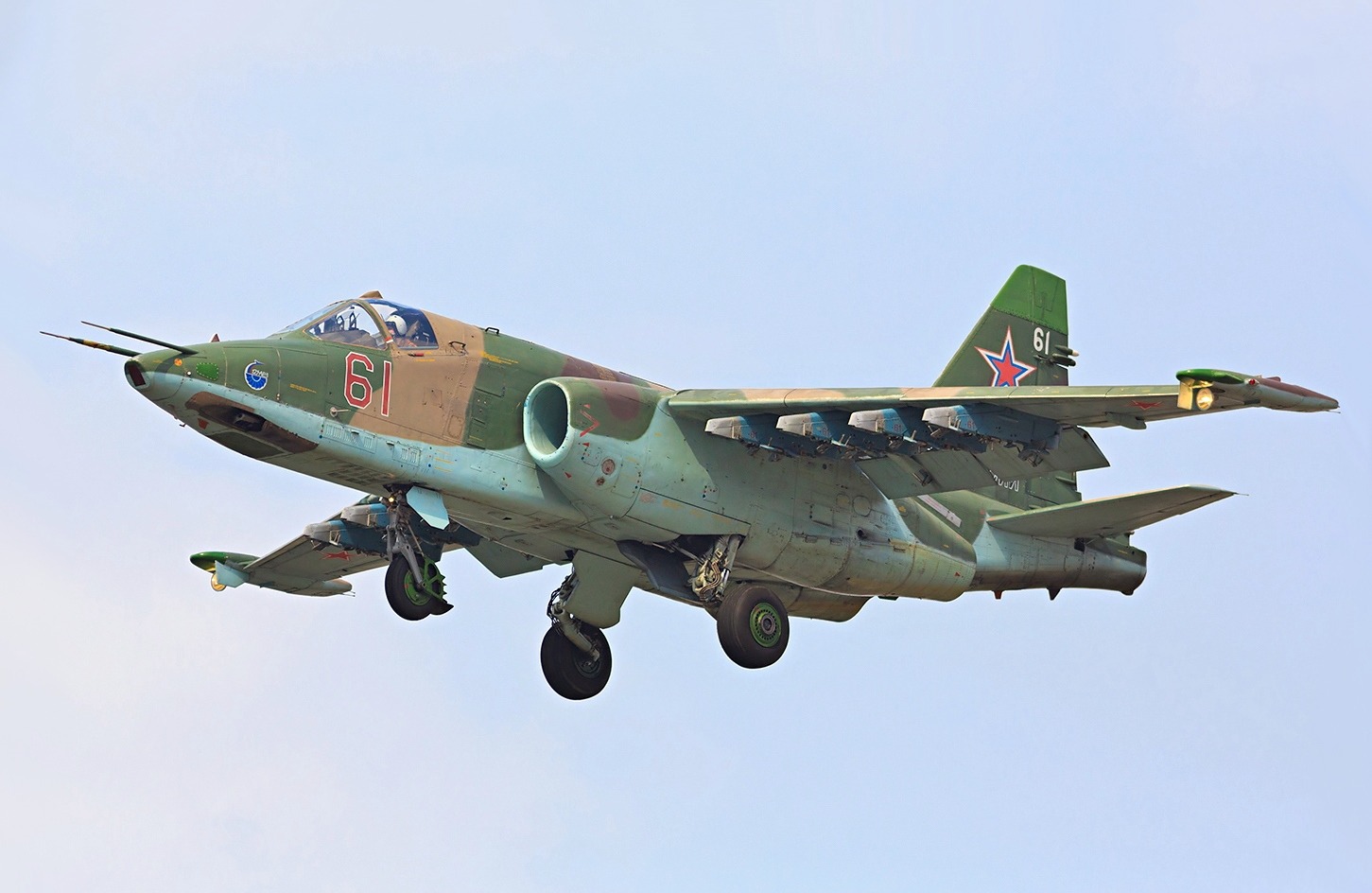
During the Great Patriotic War, the rugged Ilyushin Il-2 ‘Sturmovik’ ground attack aircraft proved hugely important; it became as significant to the Soviet mythology of the war as the Spitfire is to the British. The Soviets revived the concept of a battlefield support aircraft in the 1960s with the Sukhoi Su-25.




Add your comment