8

New-era ‘junior’ Lambo has Ferrari squarely in its sights

Find Lamborghini Temerario deals
New car deals
Nearly-new car deals
Other Services
Sell your car
84% get more money with

Picture ‘a Lamborghini’ and the brain drifts to visions of some vast V12-propelled supercar from another planet. The Sant’Agata flagships are monumental in both attitude and performance; in so many ways they embody the brand. But since 2003, the company’s commercial bedrock has always been found elsewhere.

In recent times, the Urus SUV has taken up this critical role. These days, one in every two Lamborghinis is a Urus. Before then, for nearly 20 years – since Audi took over – financial security was provided by a ‘junior’ supercar that combined 4WD with a sensational naturally aspirated V10 engine. Some variations on this theme were far better than others but, broadly speaking, were it not for the combined efforts of the Gallardo and its progeny, the Huracán, there is a fair chance the world would be one Italian supercar maker poorer.

Those shrieking V10 cars democratised (we use the word loosely) the Lamborghini experience. In handling terms, they also took the fight to Ferrari and Porsche. By the time it bowed out with the RWD Tecnica in 2024, the Huracán could legitimately claim to be a finely honed driving tool – one that carried by far the most enthralling engine in the class.

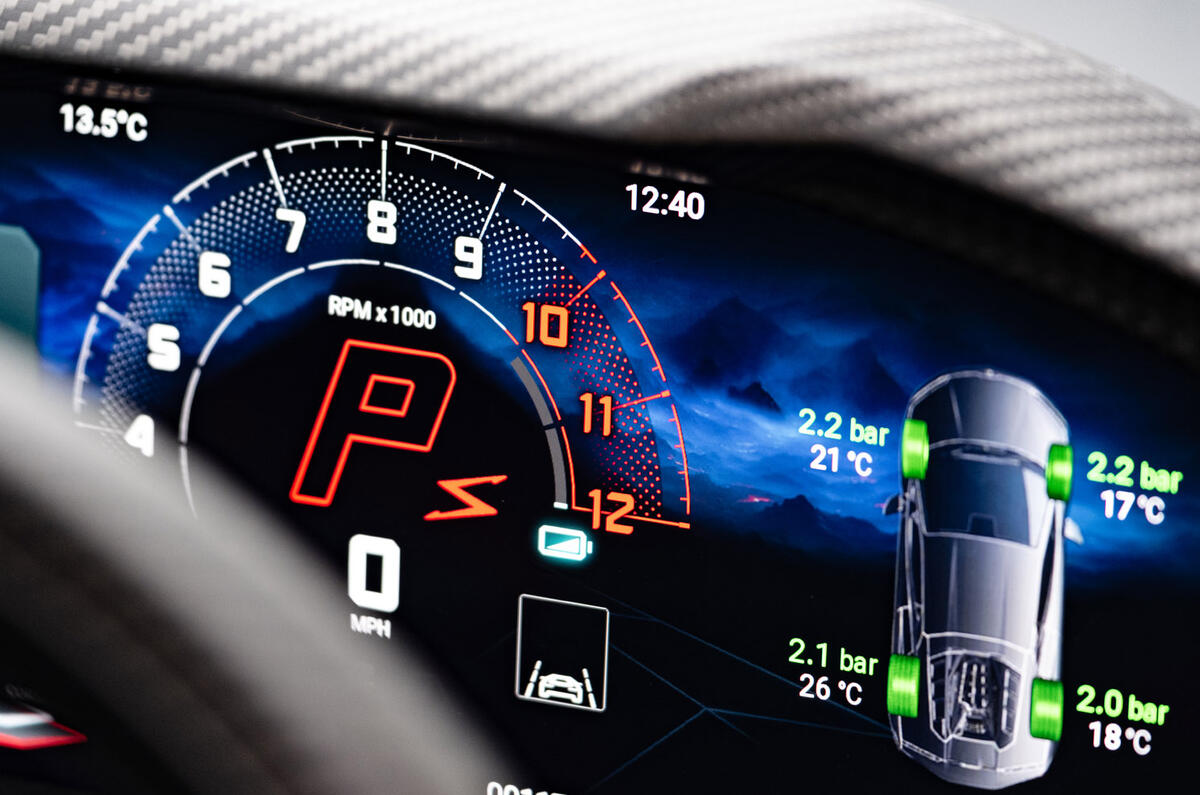
That engine is now dead, finished off by drive-by noise and emissions regulations. Its successor is the ‘L411’ twin-turbo V8, whose performance is boosted by a trio of e-motors. It spins to 10,000rpm. The car that houses this heady set-up is the new Temerario – understudy to the hulking, V12 hybrid Revuelto but, as we’ll discover, to all intents and purposes no slower.

The Temerario joins the PHEV club, alongside the Ferrari 296 GTB and McLaren Artura. It is the most powerful of the three supercars and could be dynamite from a handling perspective, if the agility and poise of the Revuelto (which uses an identical layout) is anything to go by. Could Lamborghini, for the very first time, become the class leader?

Advertisement
Back to top

DESIGN & STYLING

7
Lamborghini Temerario review 2026 002

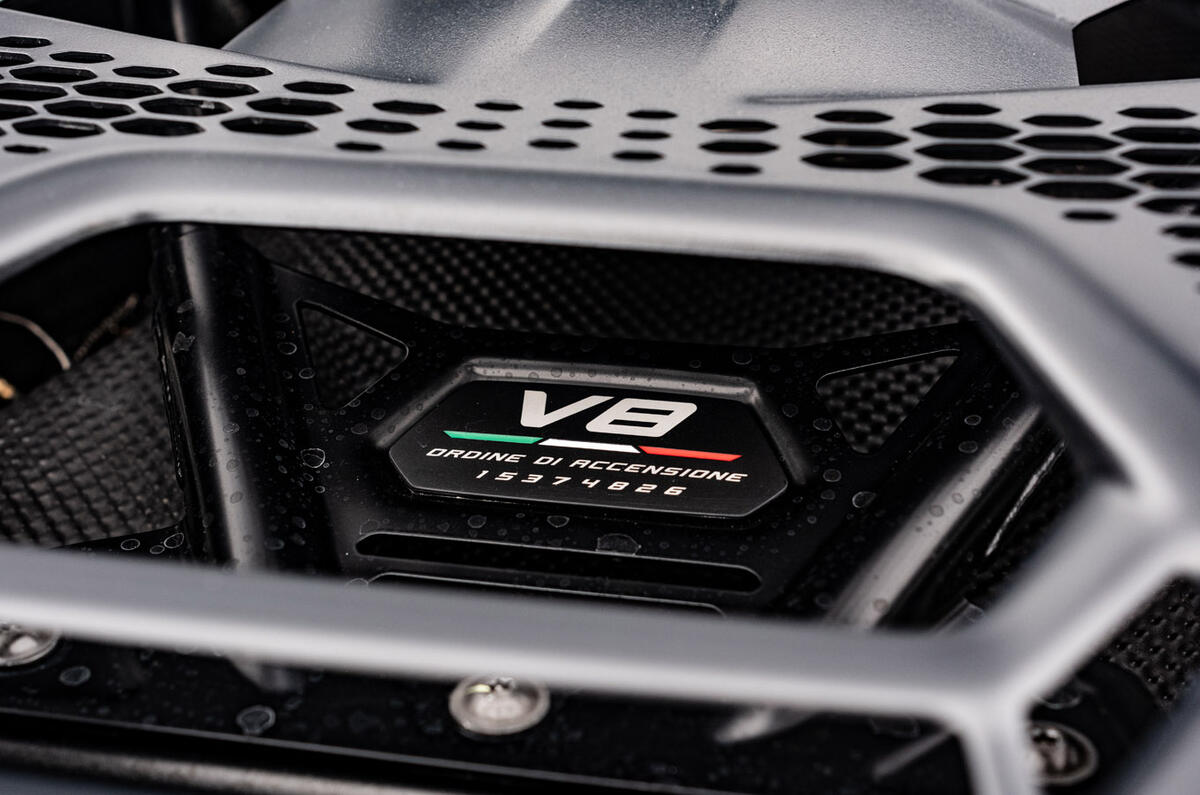
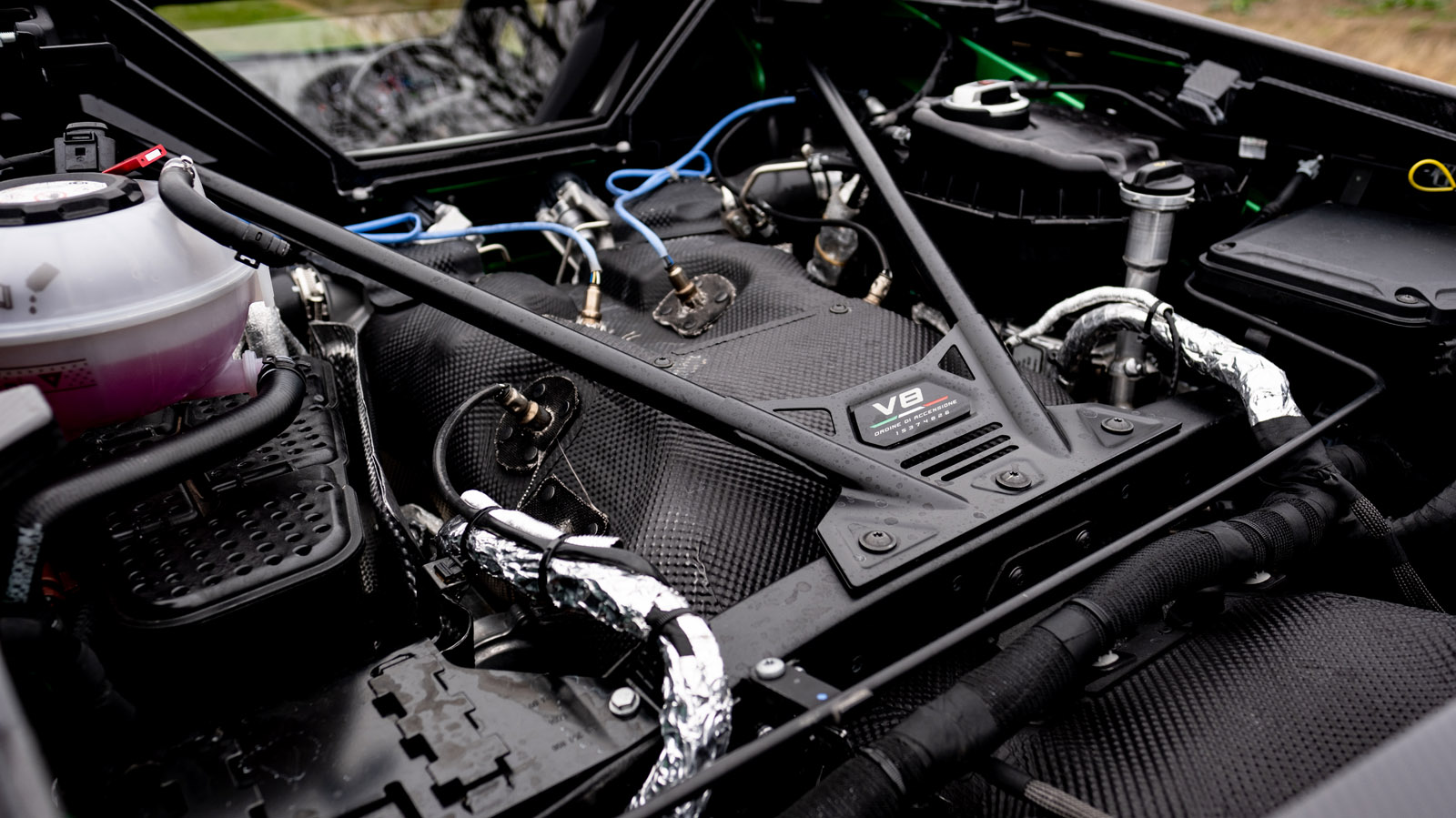
In 2022, spy photographers would have seen an unusual sight – an Aventador mule – leaving the factory gates at various times. It carried a prototype version of the Temerario’s new heart, which is a 4.0-litre V8 assembled entirely in Sant’Agata (the old V10 was largely built in Hungary) and unrelated to anything else in the Volkswagen Group stable. It’s an extraordinary powerplant for a ‘mainstream’ car and we'll explore its design in more detail in a moment.

The salient facts are that it spins to five figures, is fitted with a pair of the largest turbochargers available for this kind of application and develops 789bhp on its own.
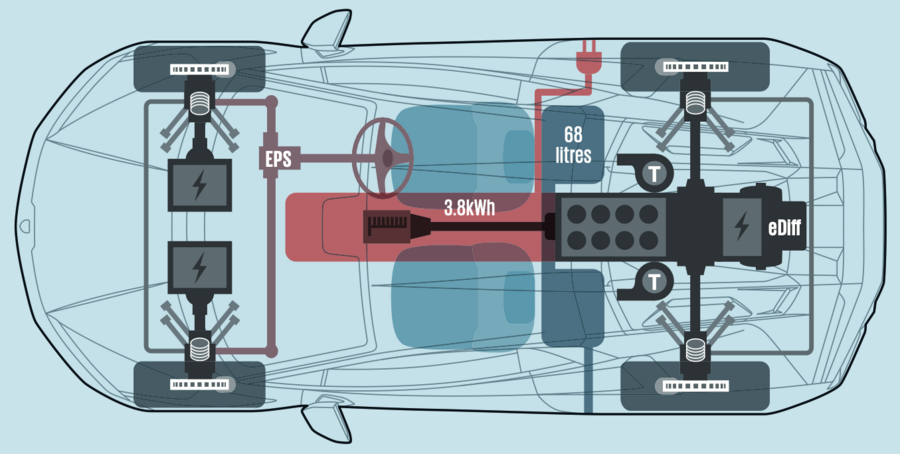
That it makes only 538lb ft isn’t really a weakness, either. That’s because sandwiched between the V8 and rear-mounted eight-speed dual-clutch transmission is one of three 148bhp axial-flux electric motors, ready to flood the rear wheels with plenty of twisting force at the mere flex of your right ankle.

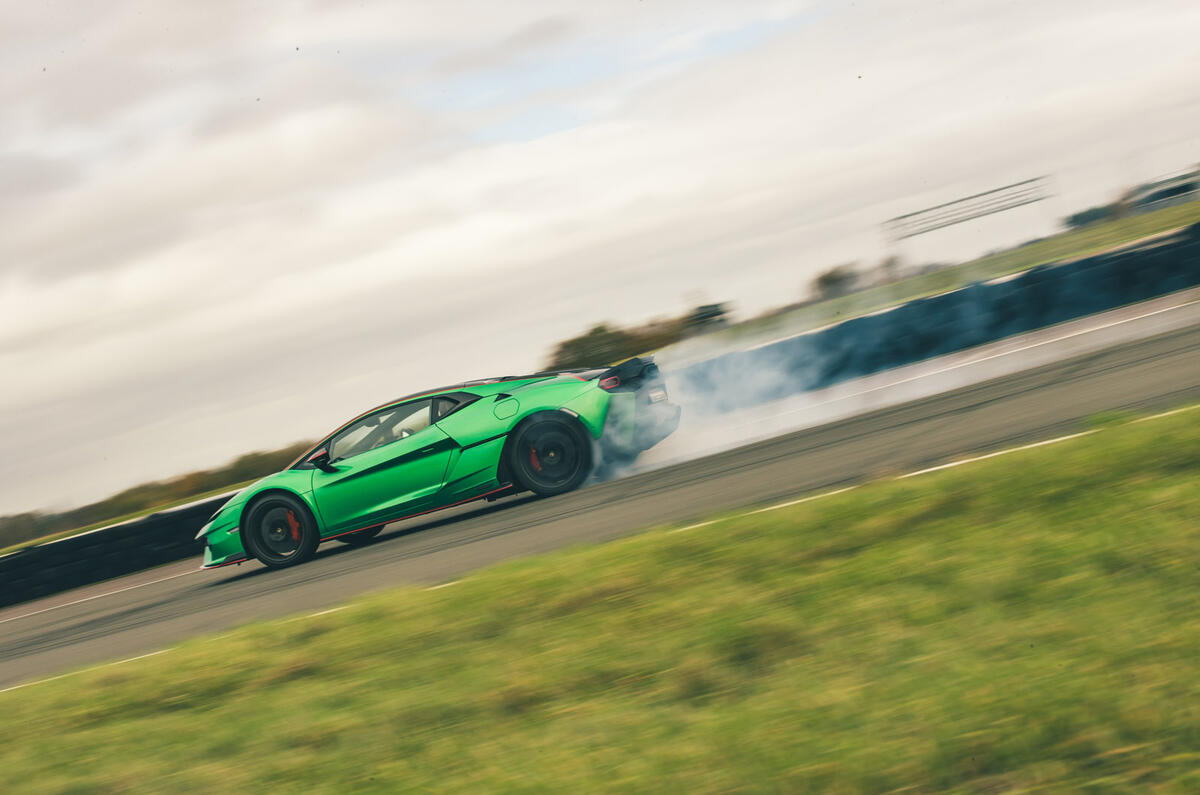
There’s a secret party mode designed purely for standing starts. Quickly shift from the brake to full throttle in Corsa ESC Off mode and the car will safely light up its rears for maximum theatre. The engineers devised this for the treacherously narrow start at the Goodwood FoS

The layout for the Temerario’s powertrain – and much of its hardware, engine and rear-axle steering aside – is donated by the Revuelto. It means front-axle drive is supplied by two more of these axial-flux motors, one for each wheel. They weigh 15.5kg each, contributing roughly half of the 73kg the front axle adds. As well as speeding up an individual wheel, the motors can also slow them. As with the Revuelto, the tuning of this set-up is key to the Temerario’s unique handling personality and startling agility.

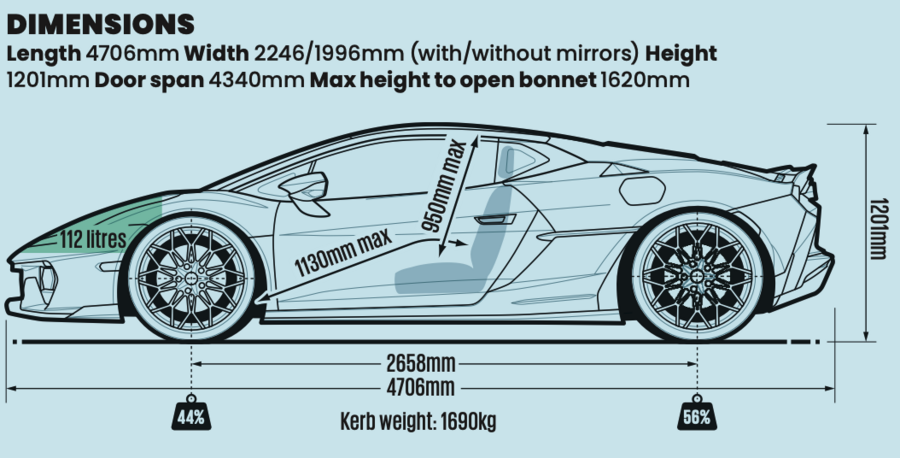
It’s a degree of agility that doesn’t easily compute when you discover the weight of this car: 1905kg on our scales. That is 257kg more than the 296 GTB we weighed in 2022 and 353kg heavier than the Artura weighed the same year. Perhaps a fairer basis for comparison is Ferrari’s SF90, which uses a similar tri-electric motor V8 set-up and has almost exactly the same footprint. (As an aside, the Temerario is notably larger than its traditional rivals. Were you to chart today’s supercars in side profile, like encyclopedias do with animals, the new Lambo would engulf both the 296 GTB and Artura. In fact, it is closer in length to the Revuelto.)

Alas, even the SF90 was 207kg lighter, so it’s fair to conclude that the Lamborghini is overweight. A Revuelto is only 55kg heavier, despite its size and 6.5-litre V12.

The PHEV powertrain is surely to blame, because even using a carbonfibre tub would save the Temerario only 100kg or so. That powertrain sits in a new aluminium body-in-white with considerably fewer welds than the Huracán needed. It also has a 20% increase in torsional stiffness compared with the older car, which also benefited from carbonfibre bulkhead and floor panels. The Temerario does without these but does have an ultra-rigid transmission tunnel housing for the 1550mm-long, 3.8kWh battery that feeds/harvests from the e-motors.

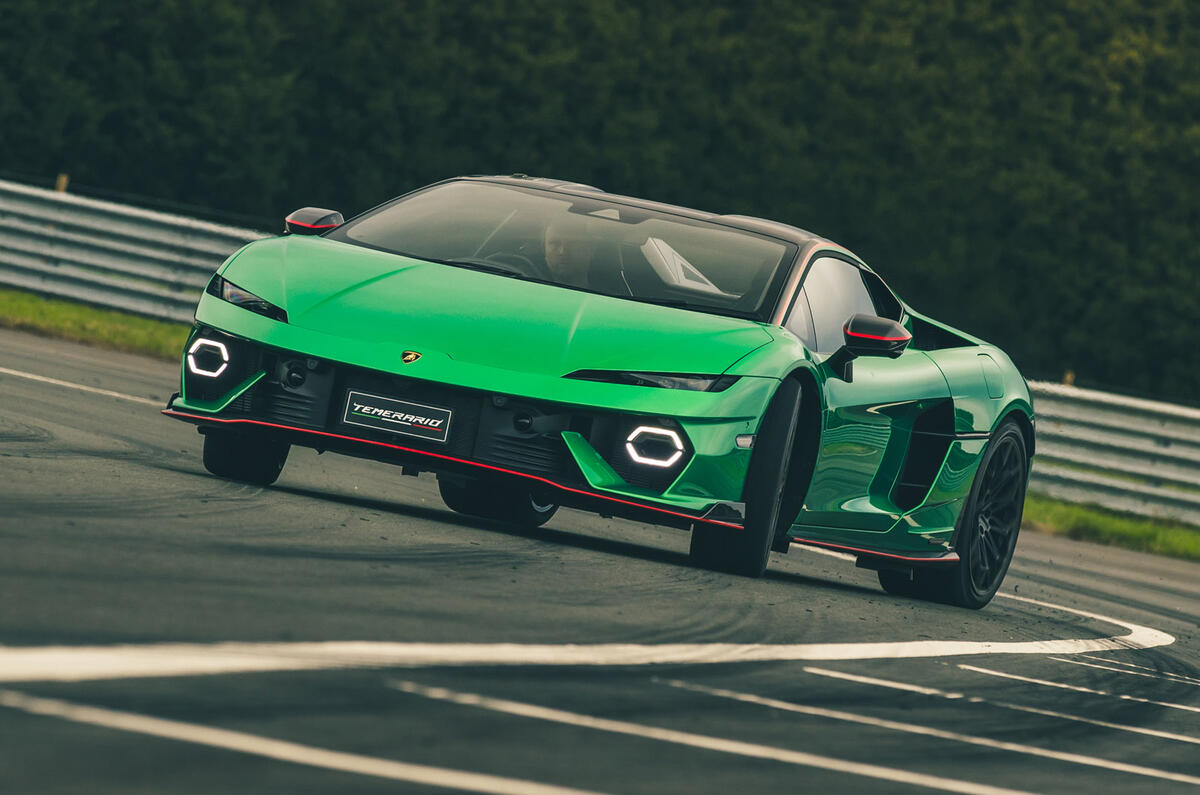
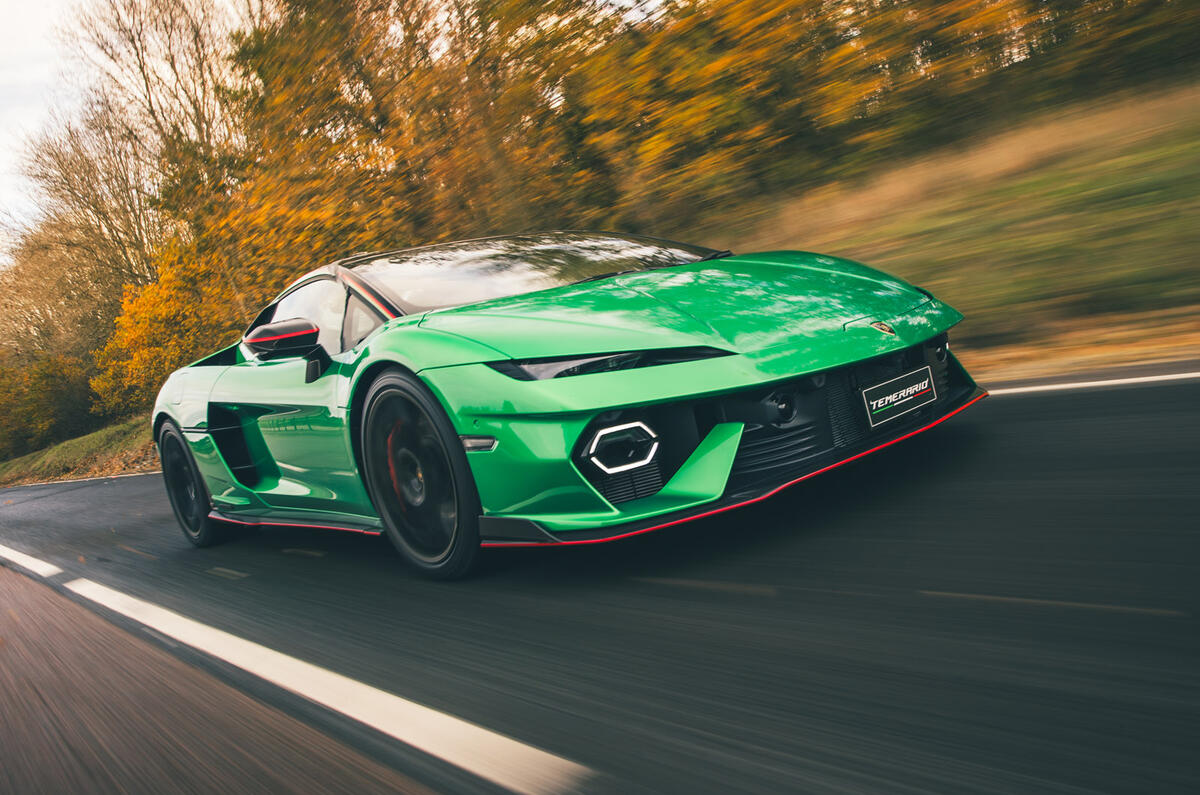
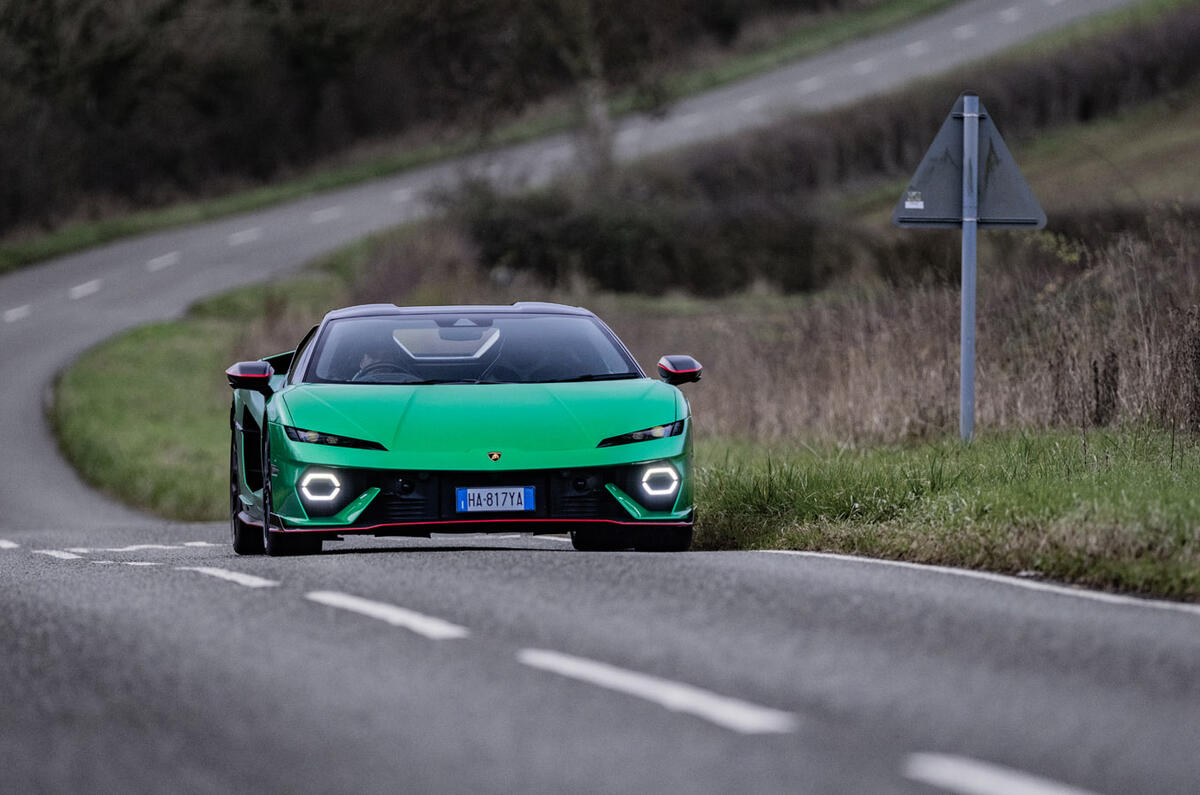
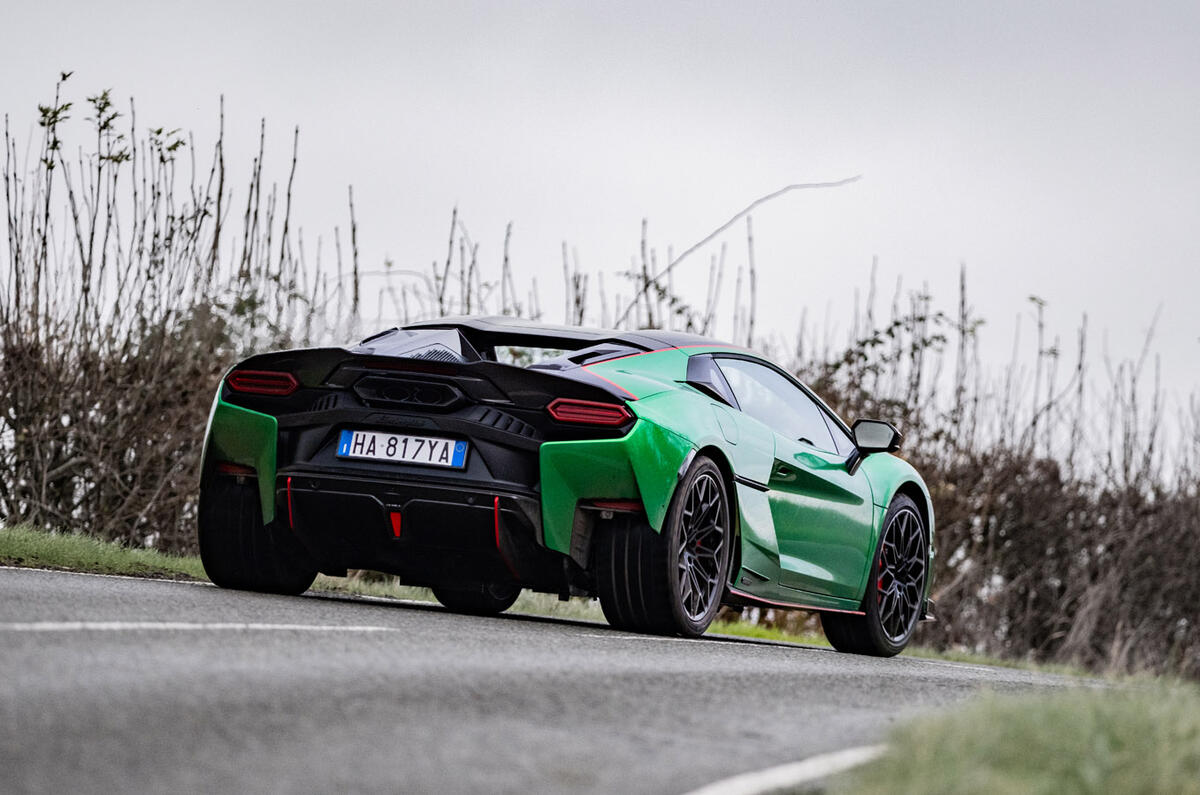
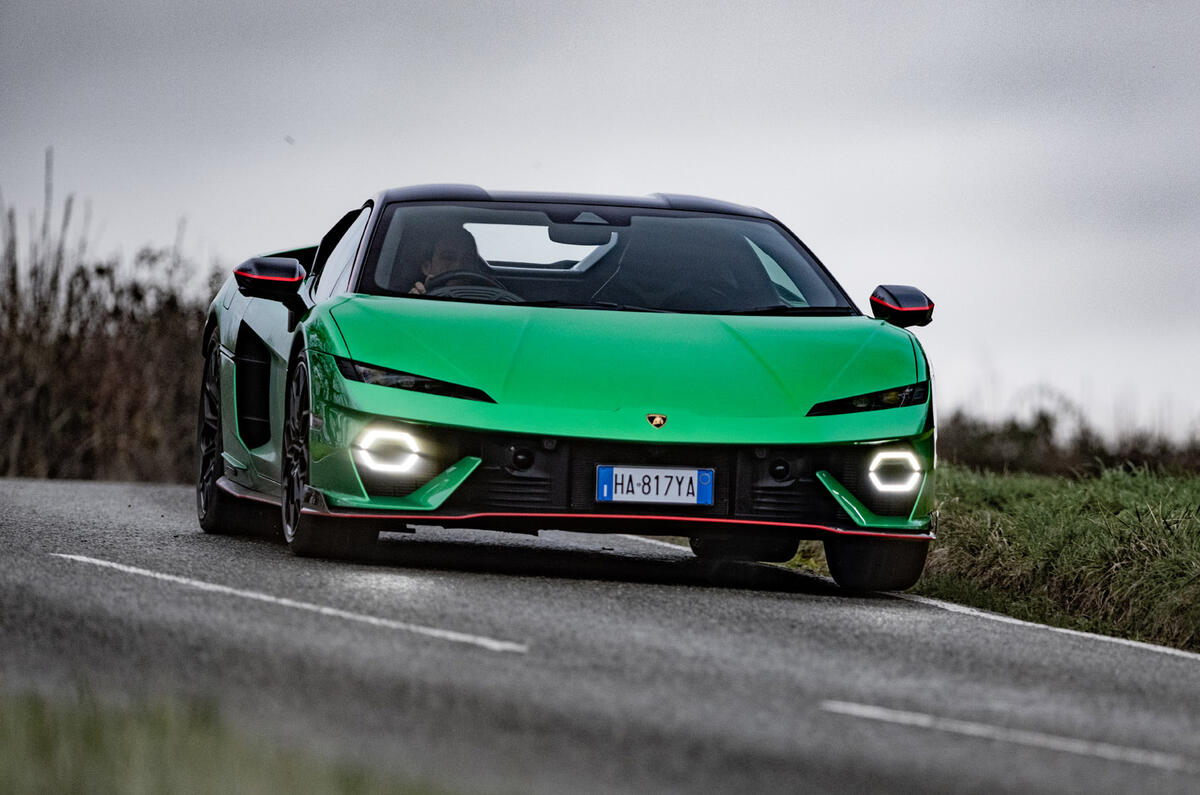
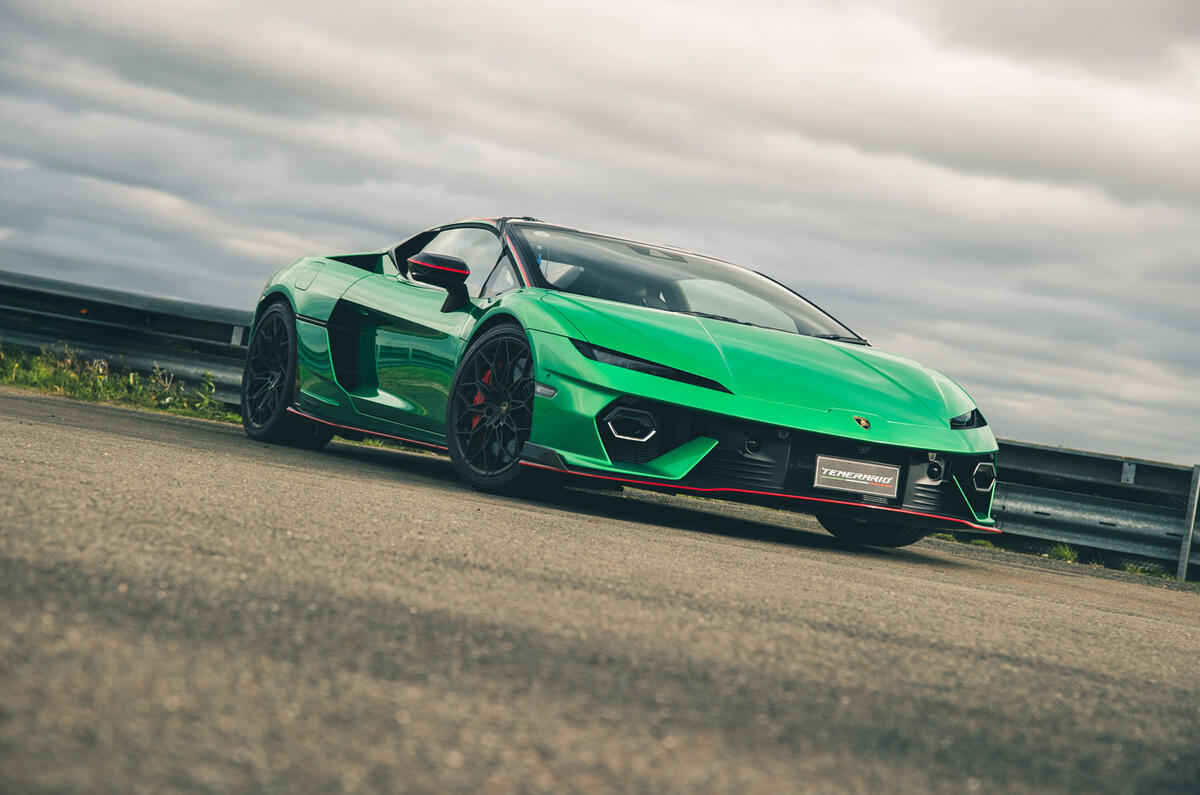
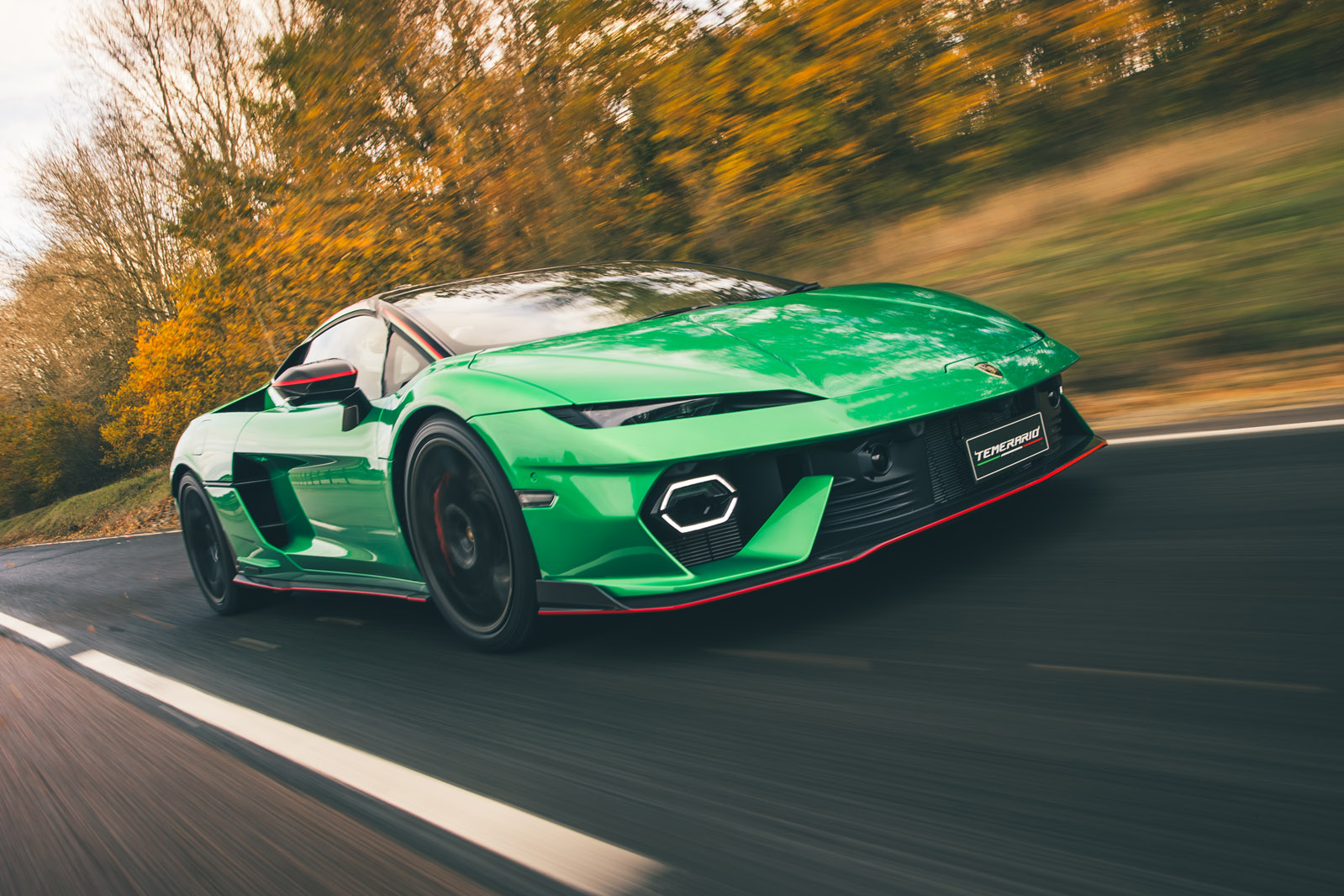
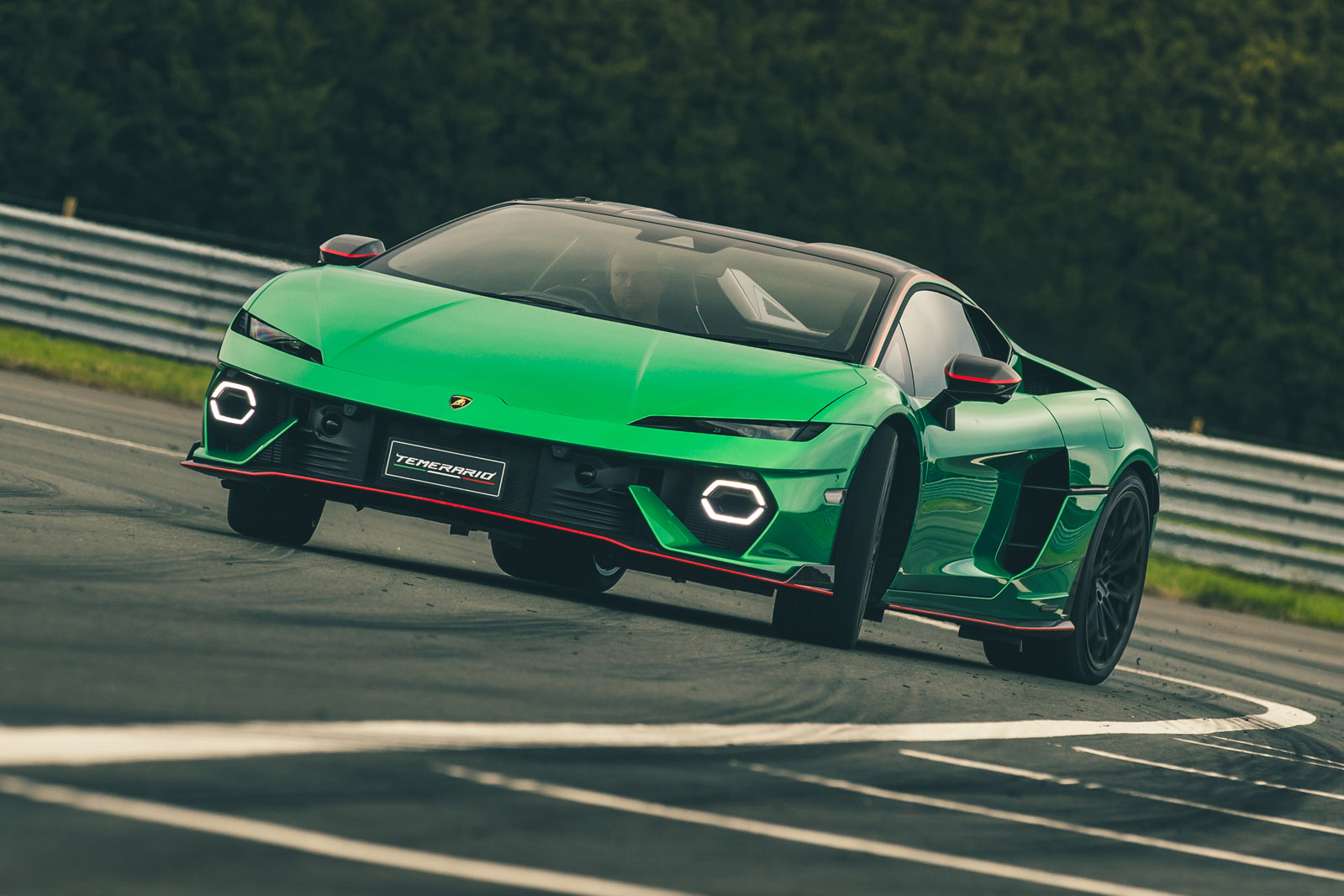
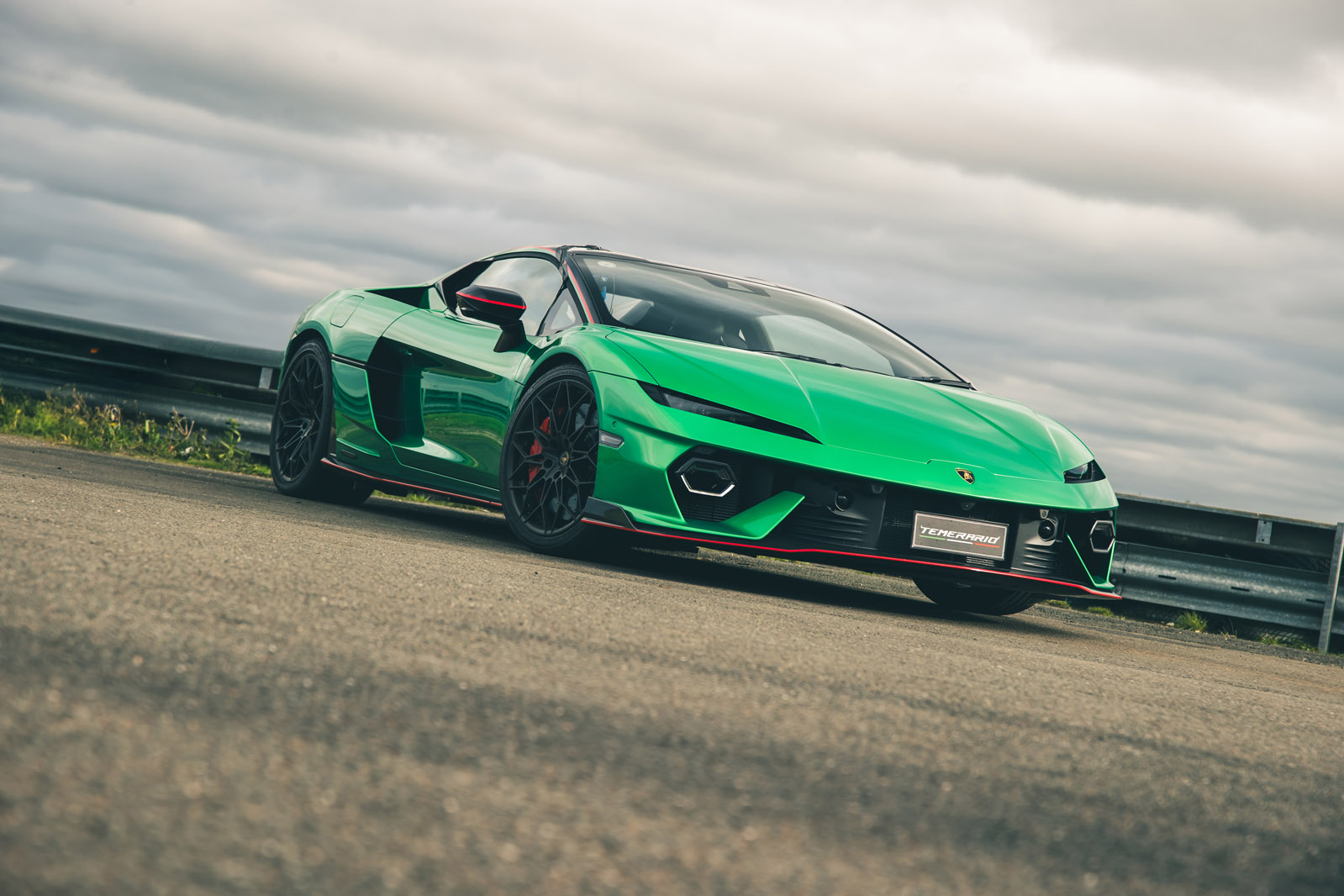
As you’d expect in 2025, aero plays a key role in the Temerario’s exterior design, which to our eyes isn’t quite as compelling as that of later versions of the Huracán but can hardly be said to lack presence.

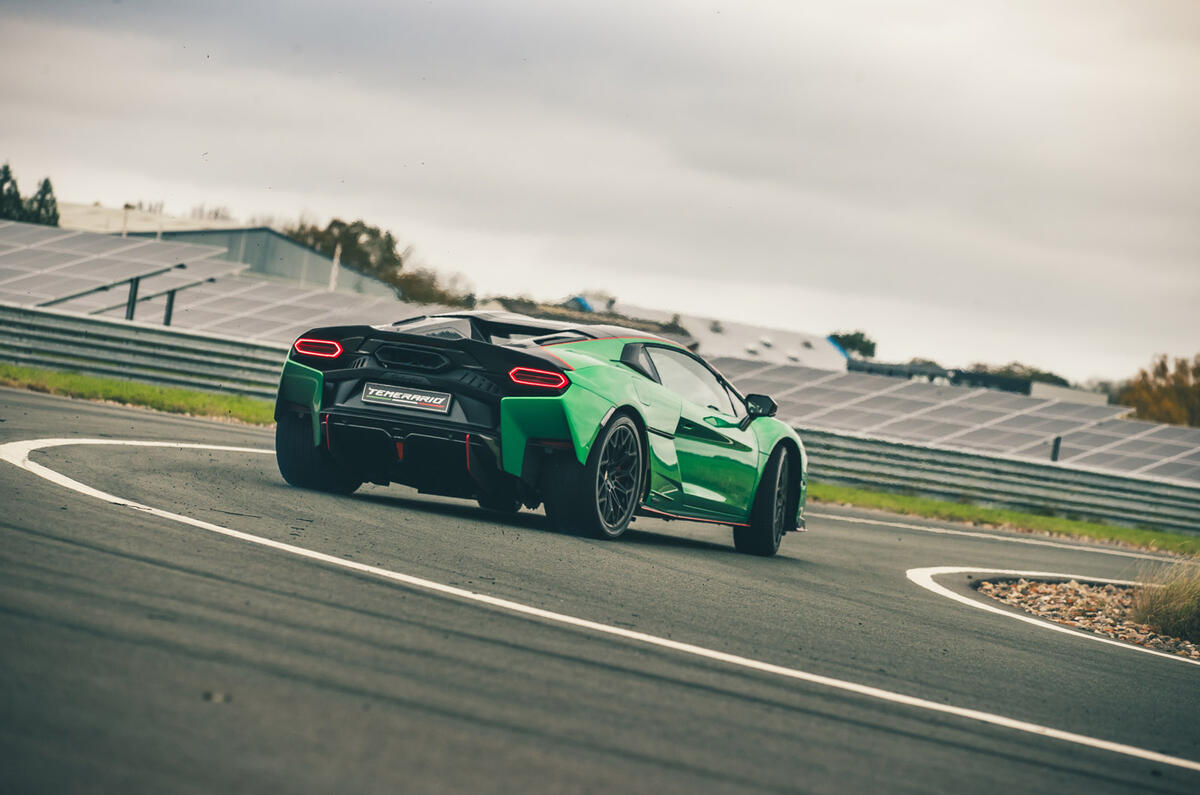
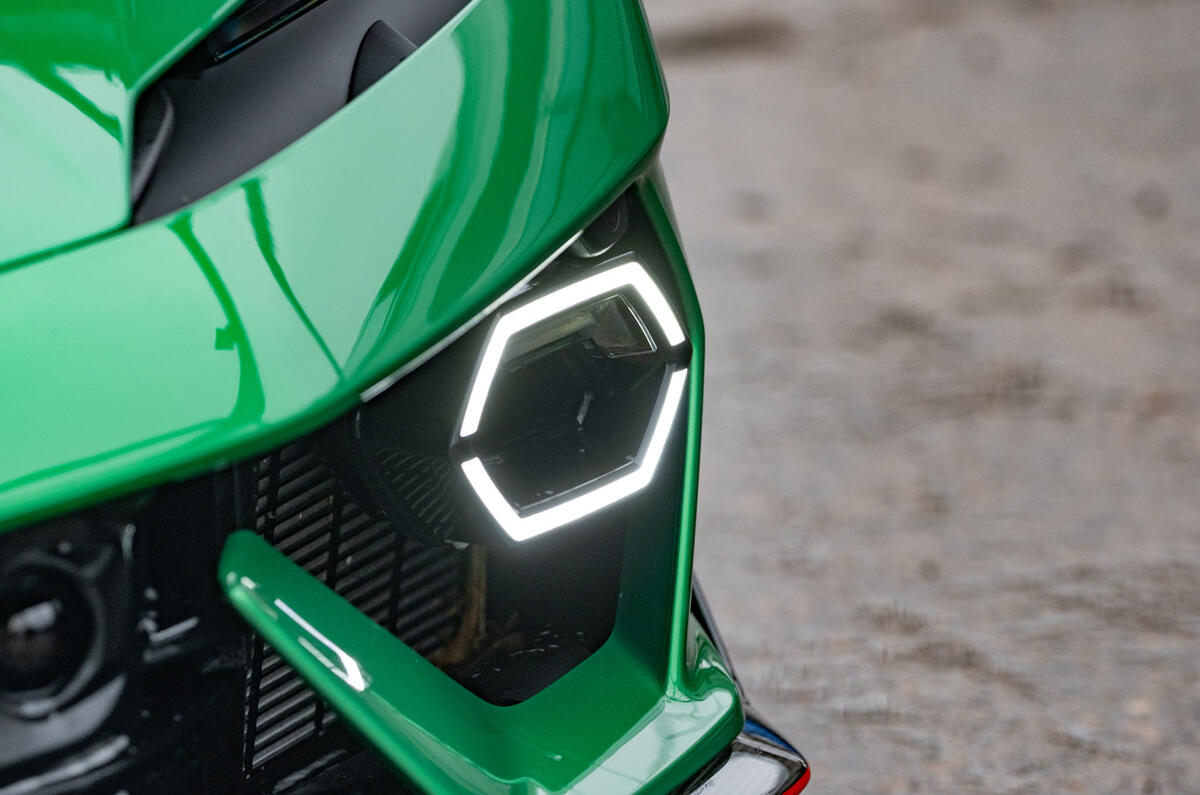
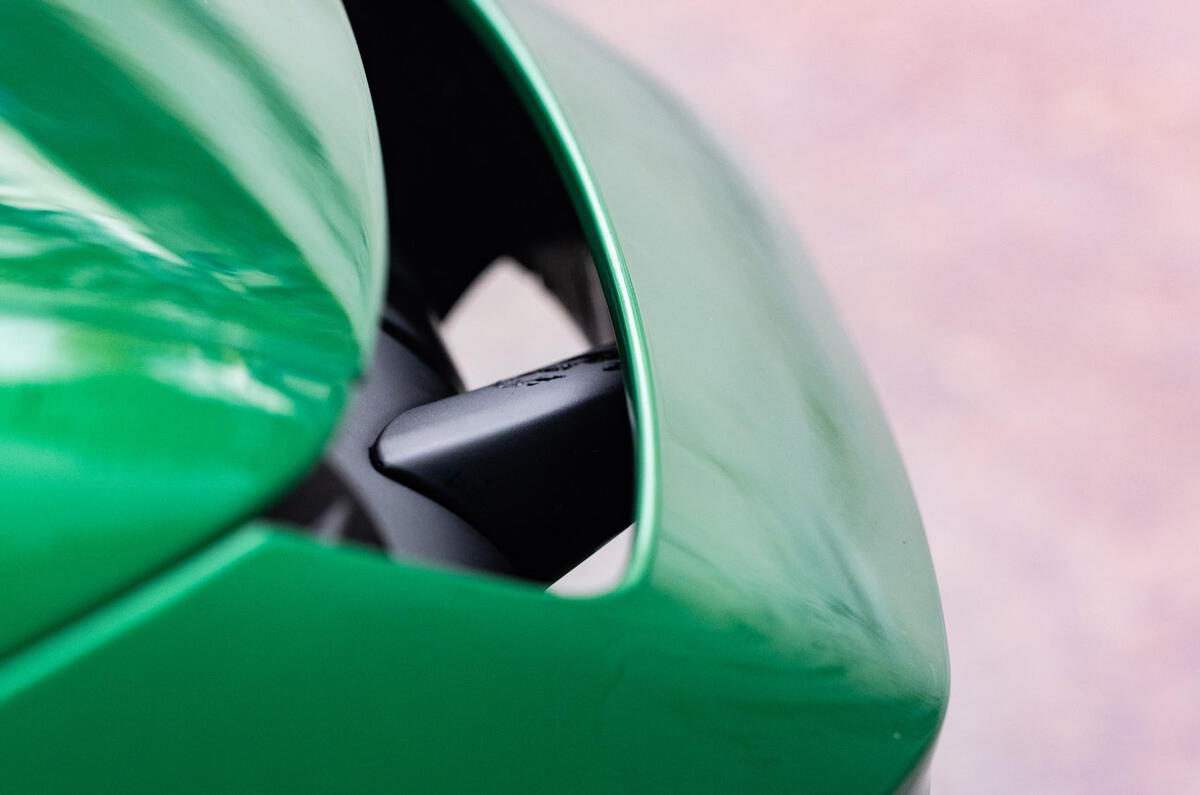
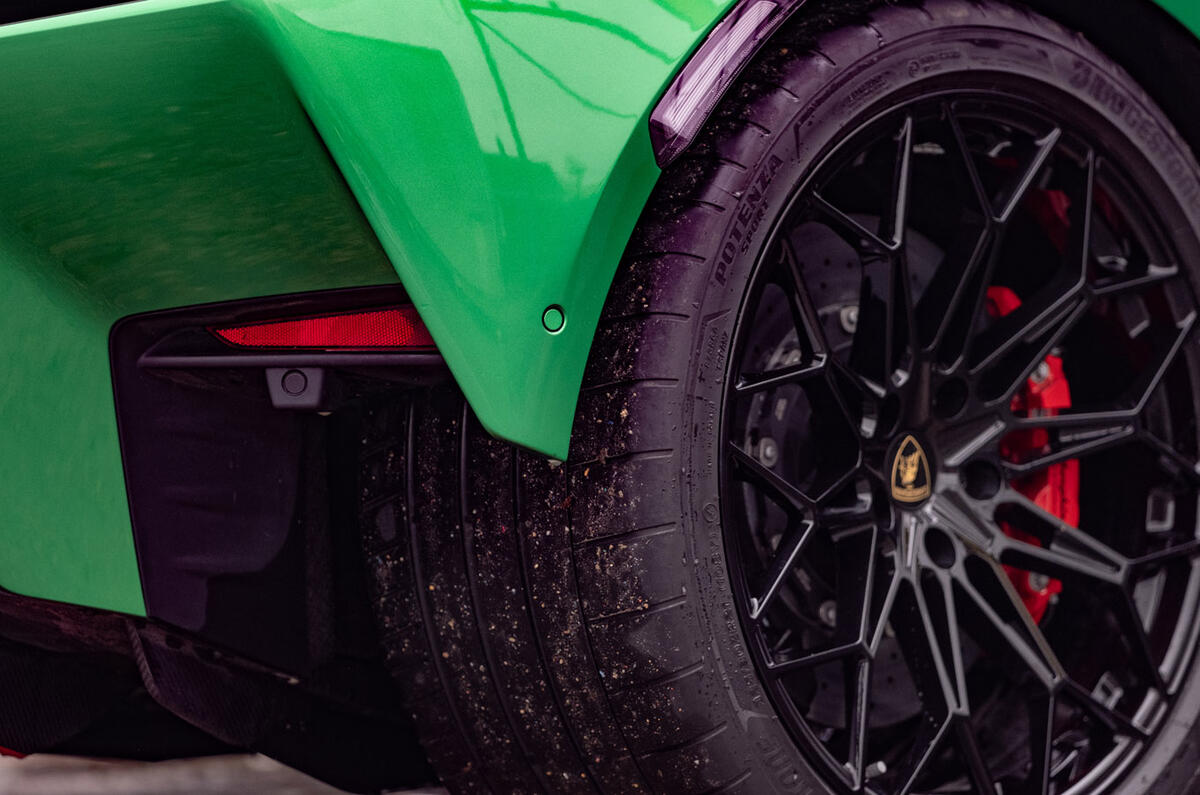
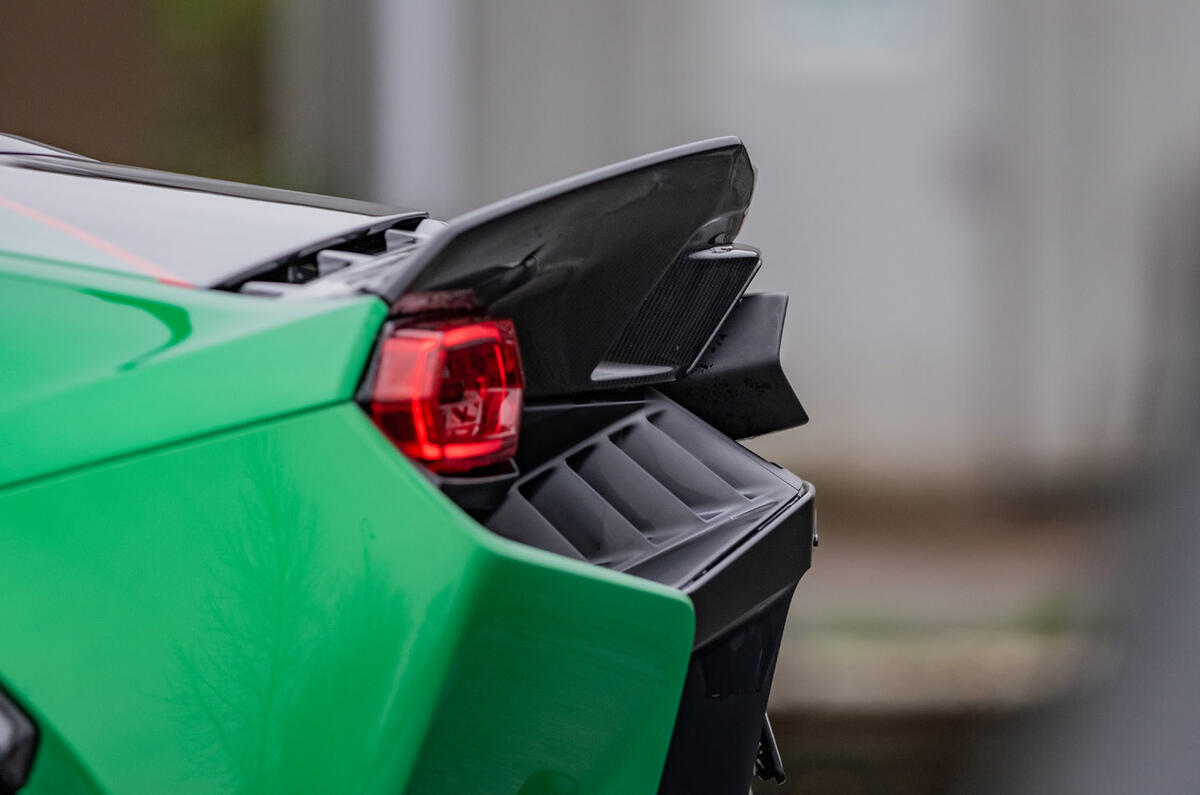
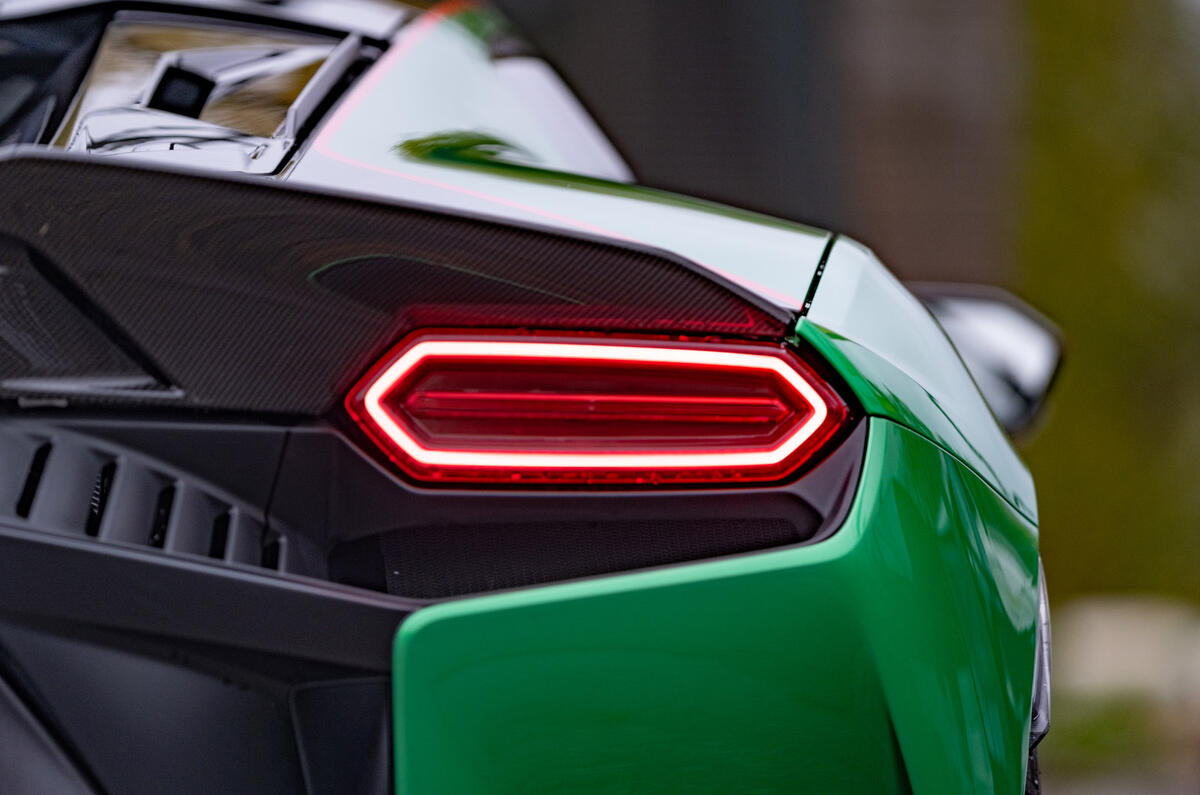
The hexagonal lights at each end of the car are hollow, with those on the tightly cropped tail helping to excavate hot air from the engine bay. At the front, air that does not hit the huge central radiator is channelled through a slot just above the tip of the bumper’s ‘fangs’ and then diagonally up and out of an opening just beneath the headlights, smoothing the flow over the front wings and subsequently into the squared-off side intakes that feed the V8 and cool the carbon-ceramic brakes.

More extreme interpretations of the Temerario are on the way and the recently launched GT3-class racing version gives a flavour of what we can expect if the STO or Performante approach is applied.

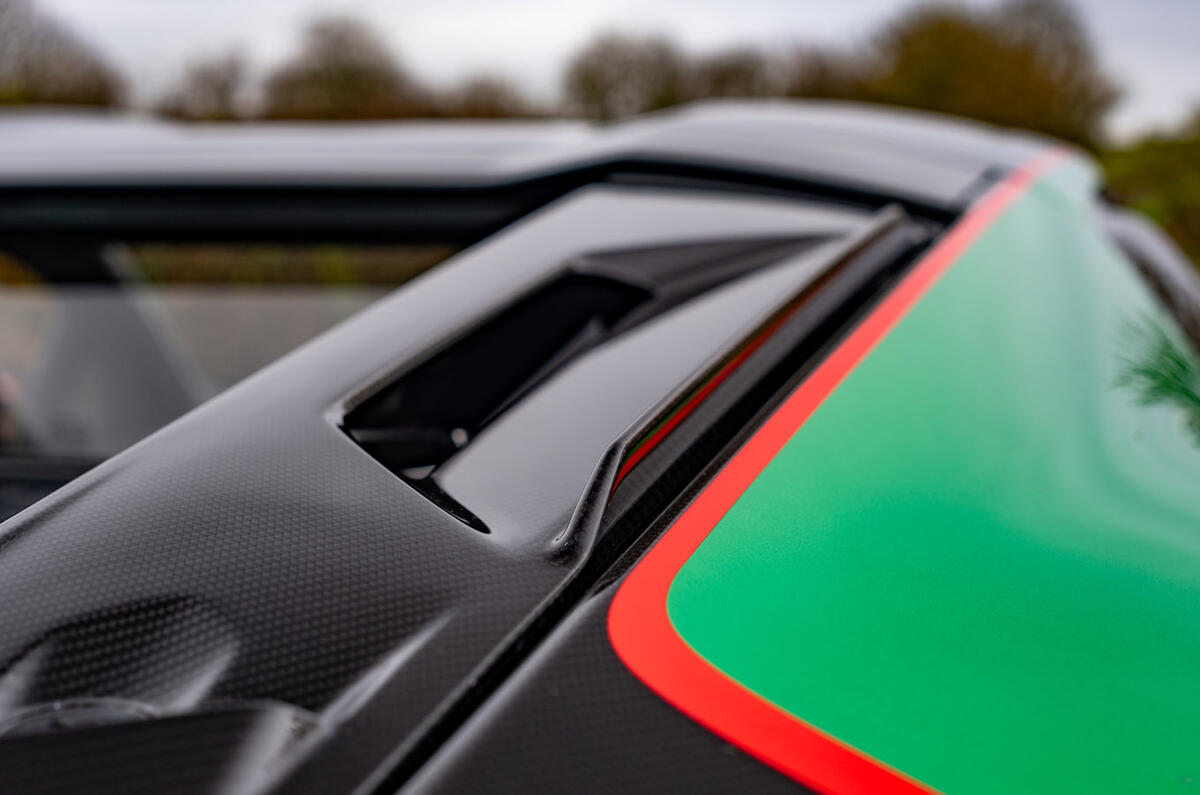
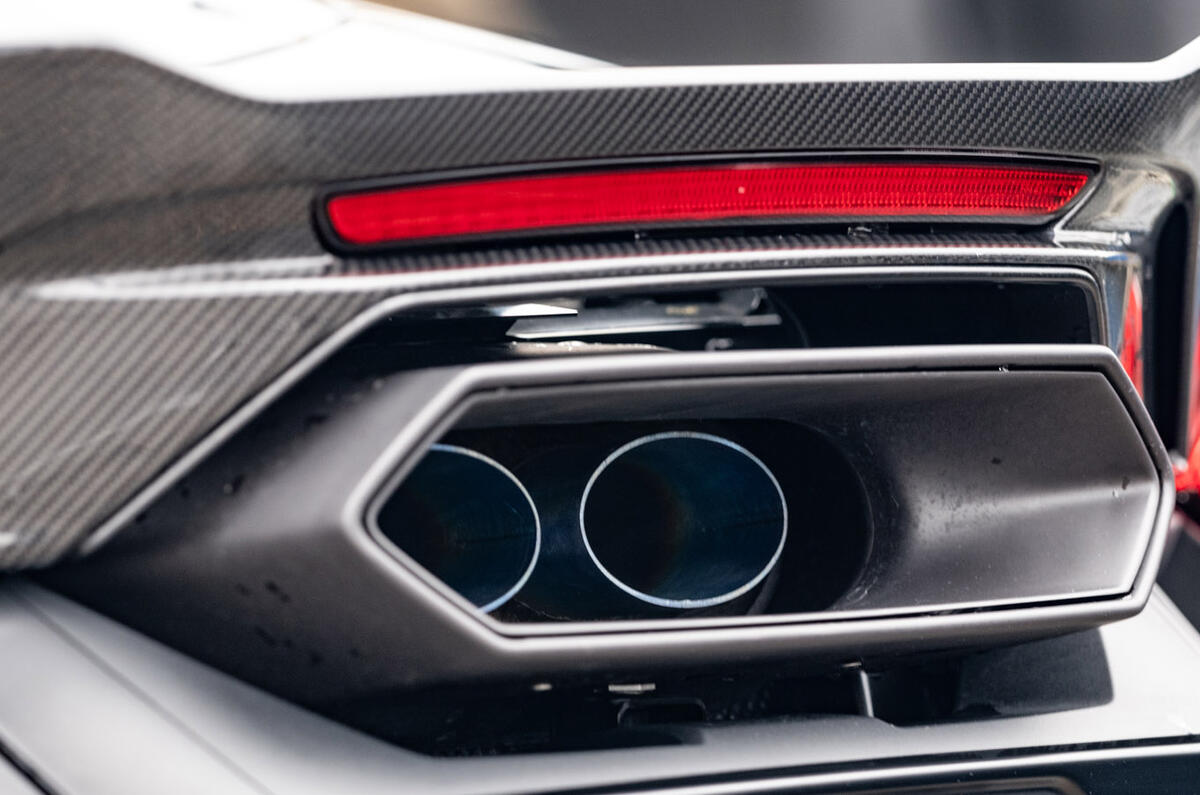
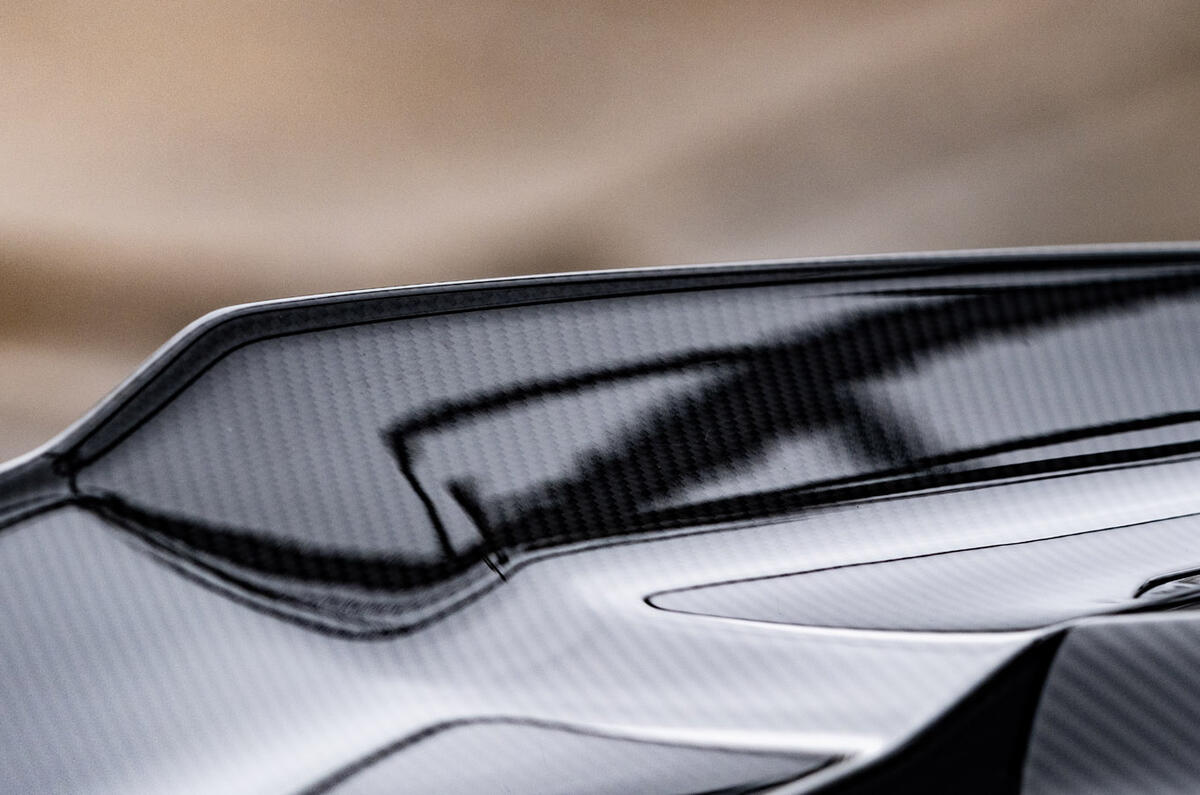
For now, there is only the option of the Alleggerita package. It adds a more viciously raked rear spoiler in carbon, and carbon is also used for the engine cover (saving 9kg alone) and the rear wings. The front spoiler, skirts and substantial rear diffuser are also wrought in carbon, and the rear screen is Gorilla glass, typically used for phone screens. Inside, the pack brings carbon door cards and polycarbonate windows, plus carbon shell seats, for a total saving of just over 25kg.

INTERIOR

8
Lamborghini Temerario review 2026 014

The driving position in the Huracán at times felt like a relic from Italian supercars of the ’70s. The header rail was so low-flying that you couldn’t pull right up to traffic lights, lest you hinder your view of them. The driving position was oddly perched too – on top of the jet fighter canopy, not within it.

The Temerario is much better in these respects without losing too much of the extraterrestrial ‘wow’ factor when you first drop aboard. It helps that the wheelbase is 40mm longer than the Huracán’s, but that alone doesn’t explain the full extent of the ergonomic improvements.

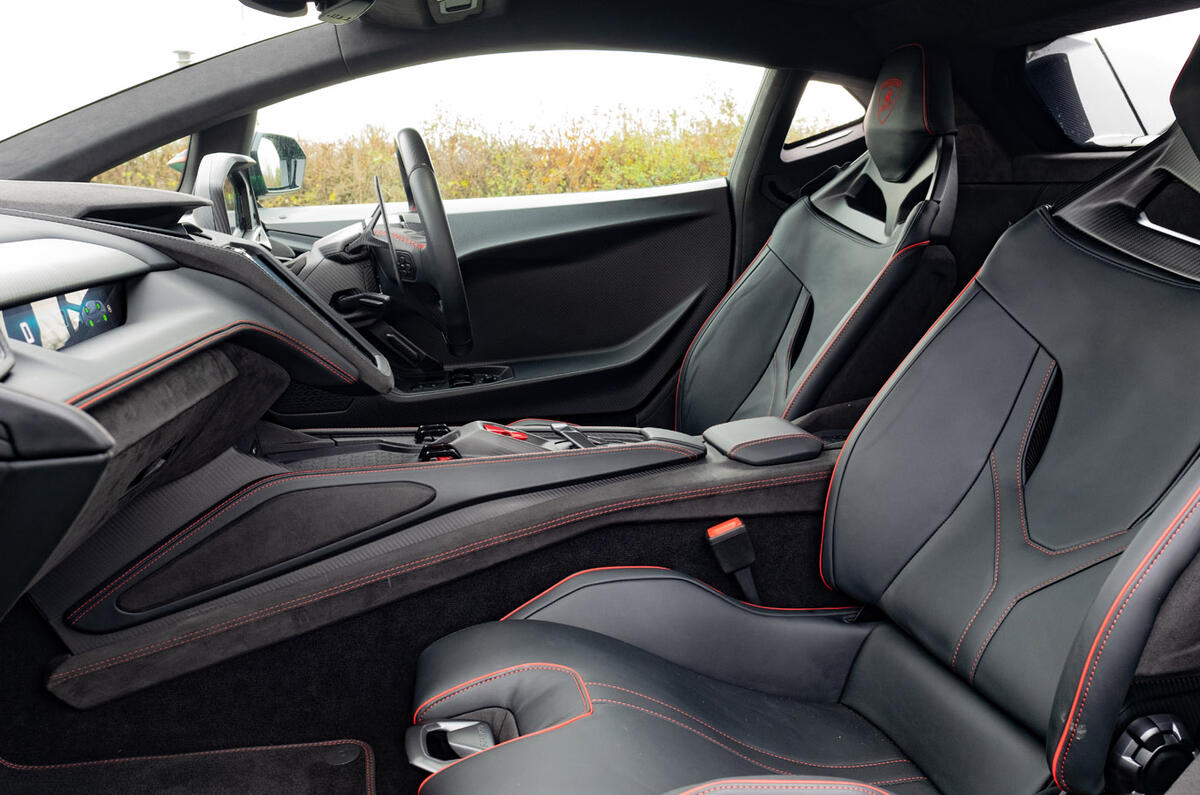
There has quite obviously been a reconsidering of the mounting for the seats, and the positioning of other architectural elements. Your hip point still feels higher than it might in an Artura or 911, but the driver is now more intuitively positioned relative to the dashboard and the arc of the severely raked windscreen. As a consequence, you instantly have more confidence when it comes to simply operating the Temerario. Visibility is also good by supercar standards, with large quarterlights. This is handy, given the car will demolish the quarter-mile dash in 10.0sec dead.

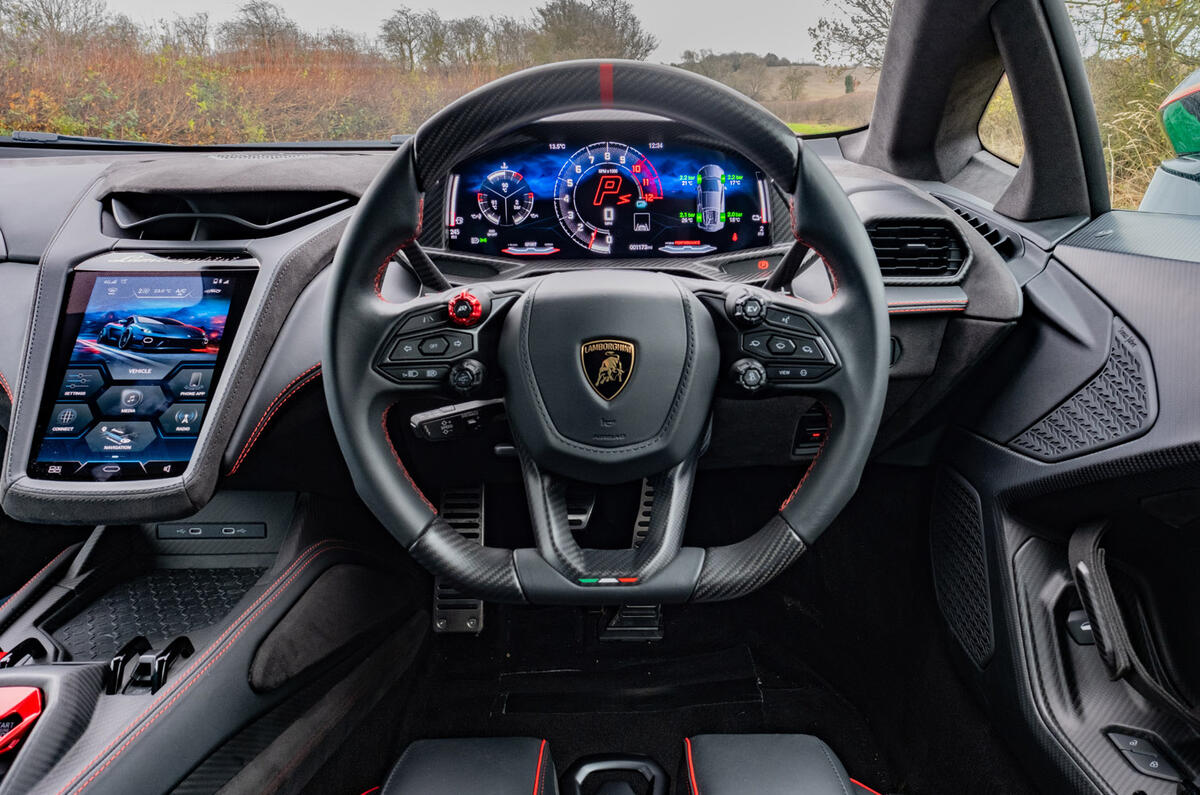
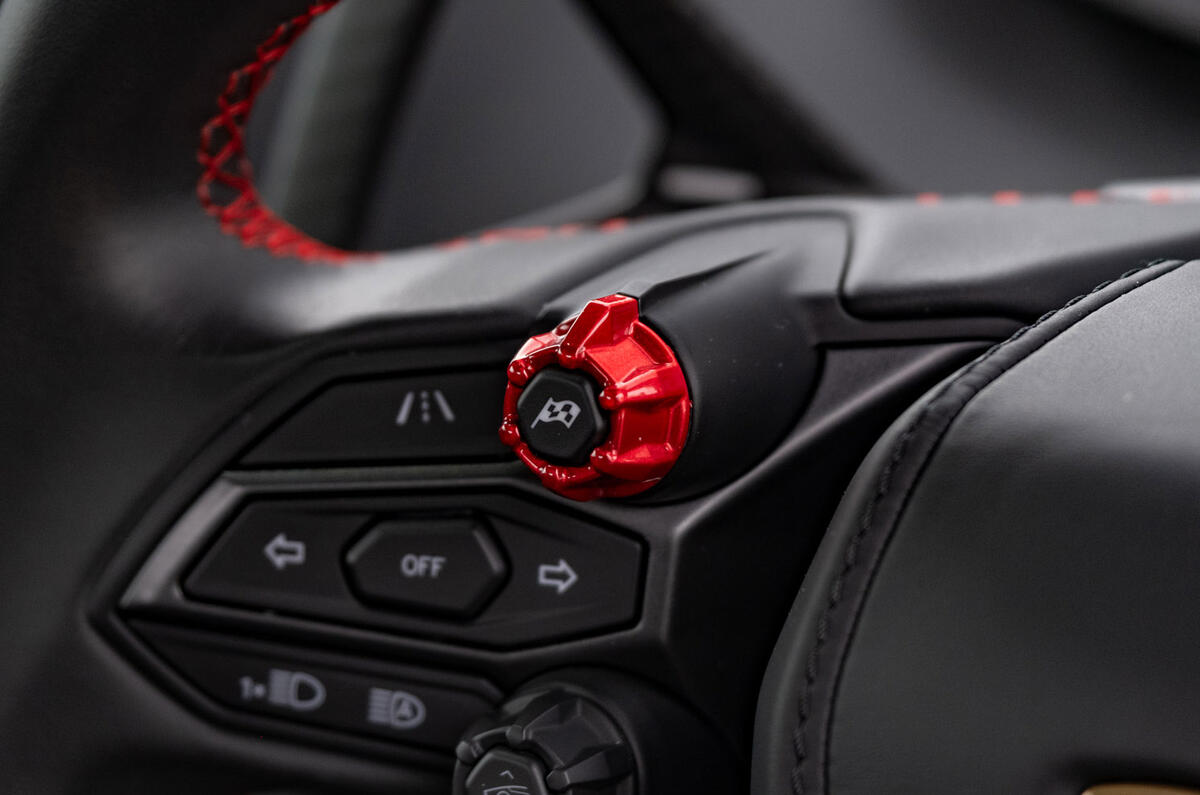
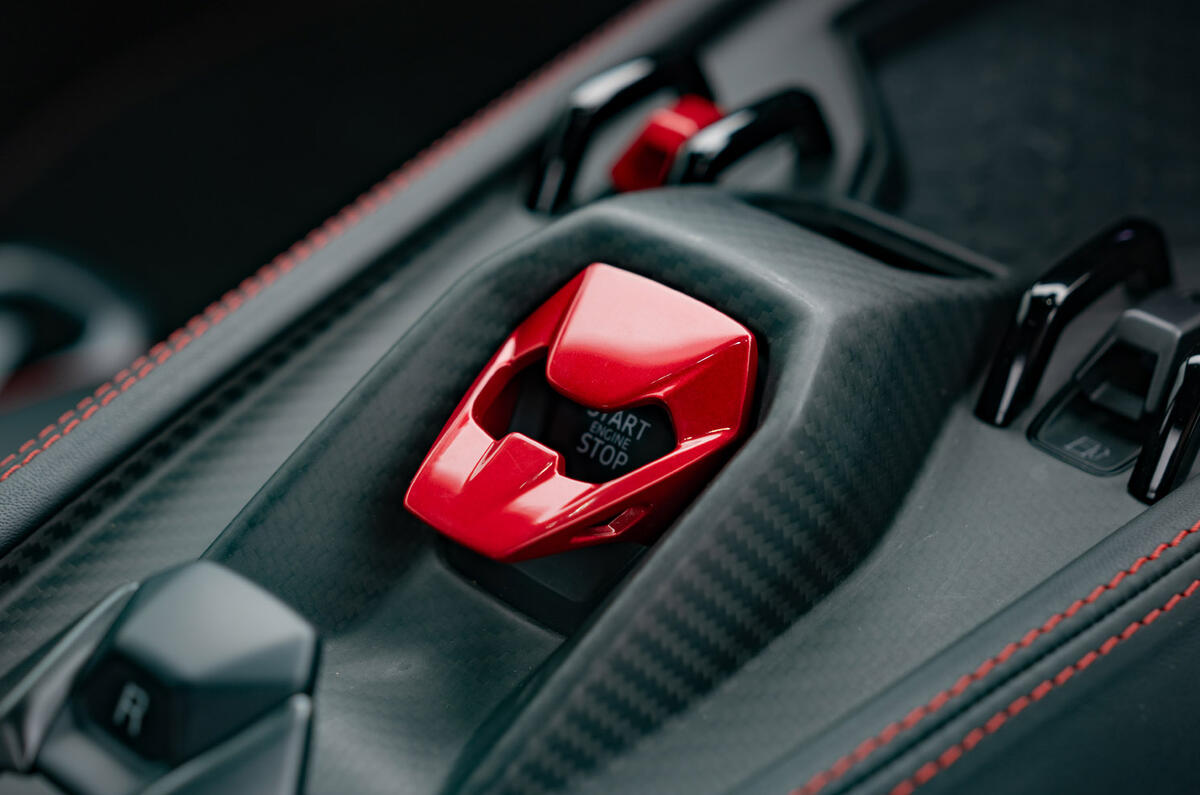
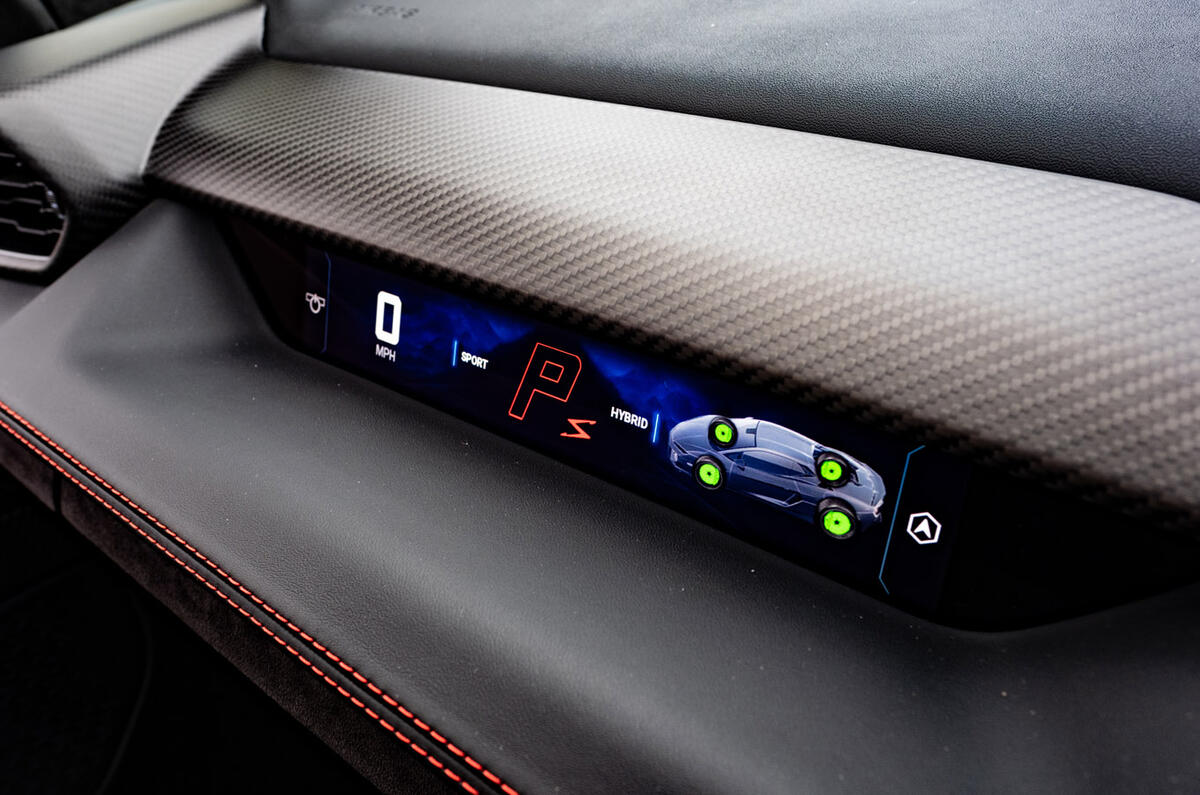
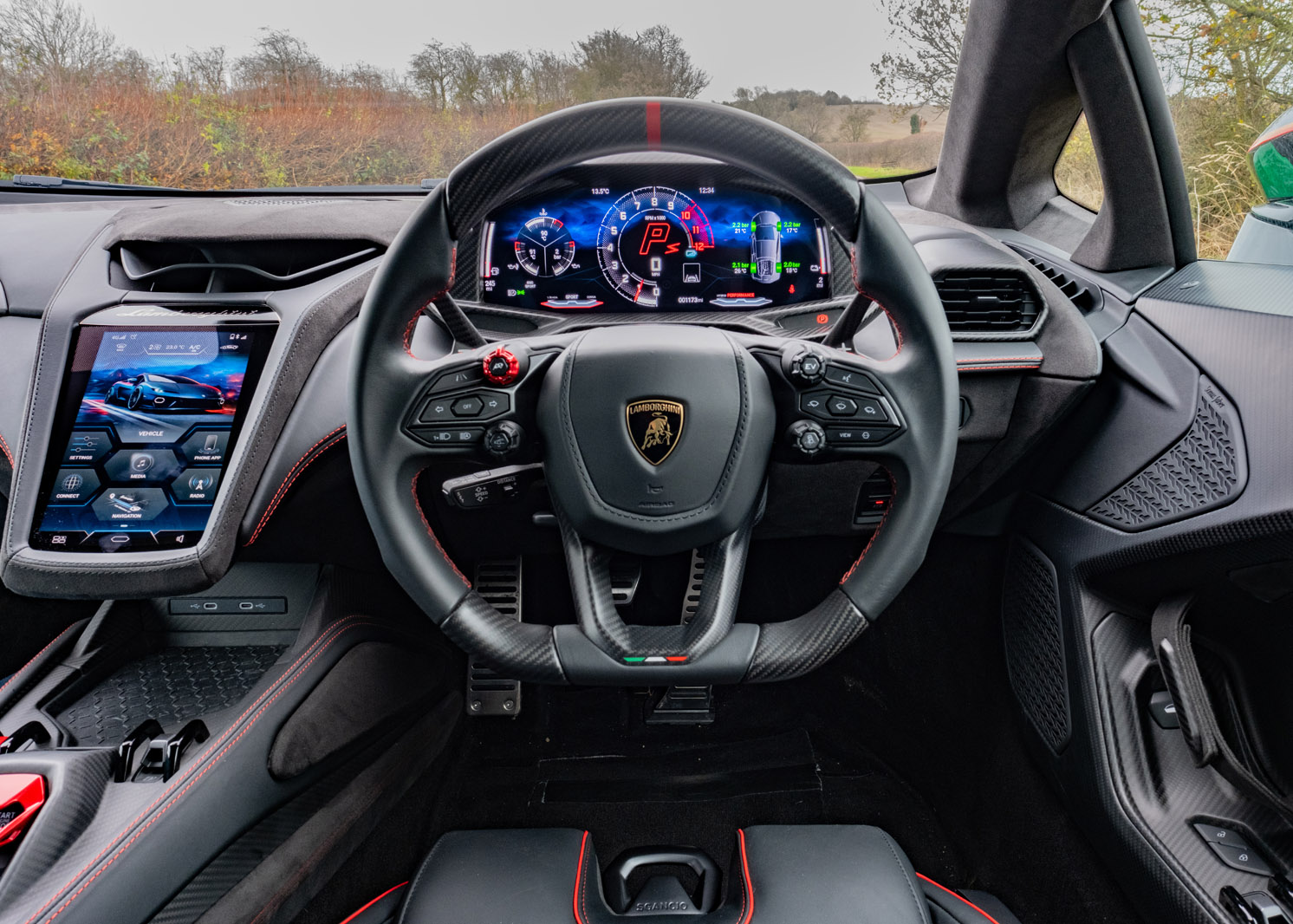
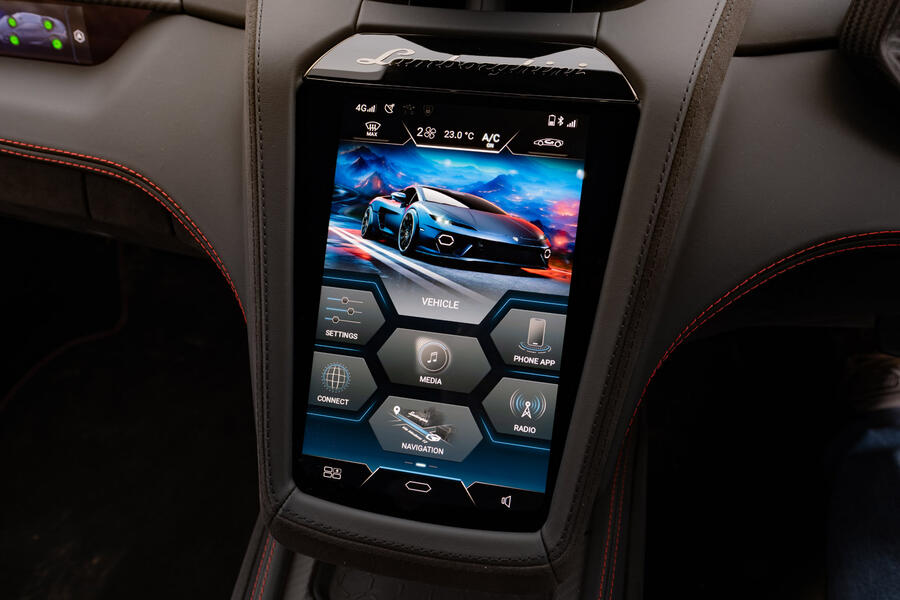
The Temerario’s ability to do the basics neatly extends to the switchgear. All the important commands are given dedicated buttons and the dials, materials and weighting have a whiff of Audi’s glory days of the late 2010s. Only the awkward placement of the indicator controls on the left-hand steering wheel pad will irk (presumably a stalk was thought to get in the way of the vast gearshift paddles?), though you soon get used to this.

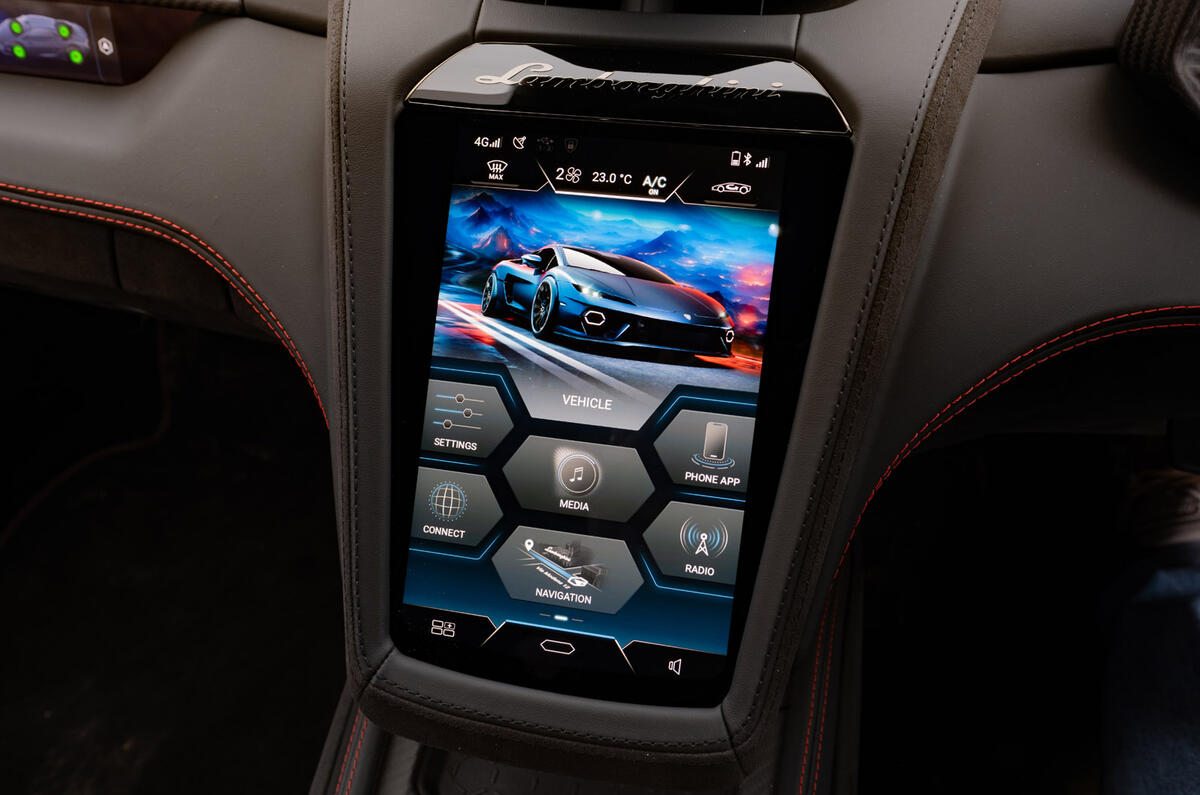
The other side of this coin is that in putting all the meaningful controls on the steering wheel (those that control the dampers, powertrain, optional nose-lifter, headlights, lane keep assist and, on the back side, the infotainment commands), Lamborghini has made the Temerario exceedingly easy to operate on the fly. Which is just as well, because the central touchscreen is still no great pleasure to use.

From an aesthetic perspective, the cabin of our test car is on the spartan side, with dark Alcantara and a lot of optional carbon beyond what the Alleggerita package brings. You can go for something a lot warmer and flamboyant, particularly if you make use of Lamborghini’s Ad Personam atelier.  Full-leather interiors of green, tan and even turquoise are available.

So too is a Sonus Faber sound system that does a decent job of cutting through class-typical road roar. Another interesting option is the Vision pack, which features a trio of 4K cameras, integrated into a telemetry-gathering feature similar to Porsche’s Track Precision app.

It would be no trouble at all to configure a Temerario with a greater sense of occasion than our test car. Any visual flair would be combined with a fair degree of comfort (rising further if you stuck with the standard Comfort seats, which can be heated and ventilated) and very high perceived quality.

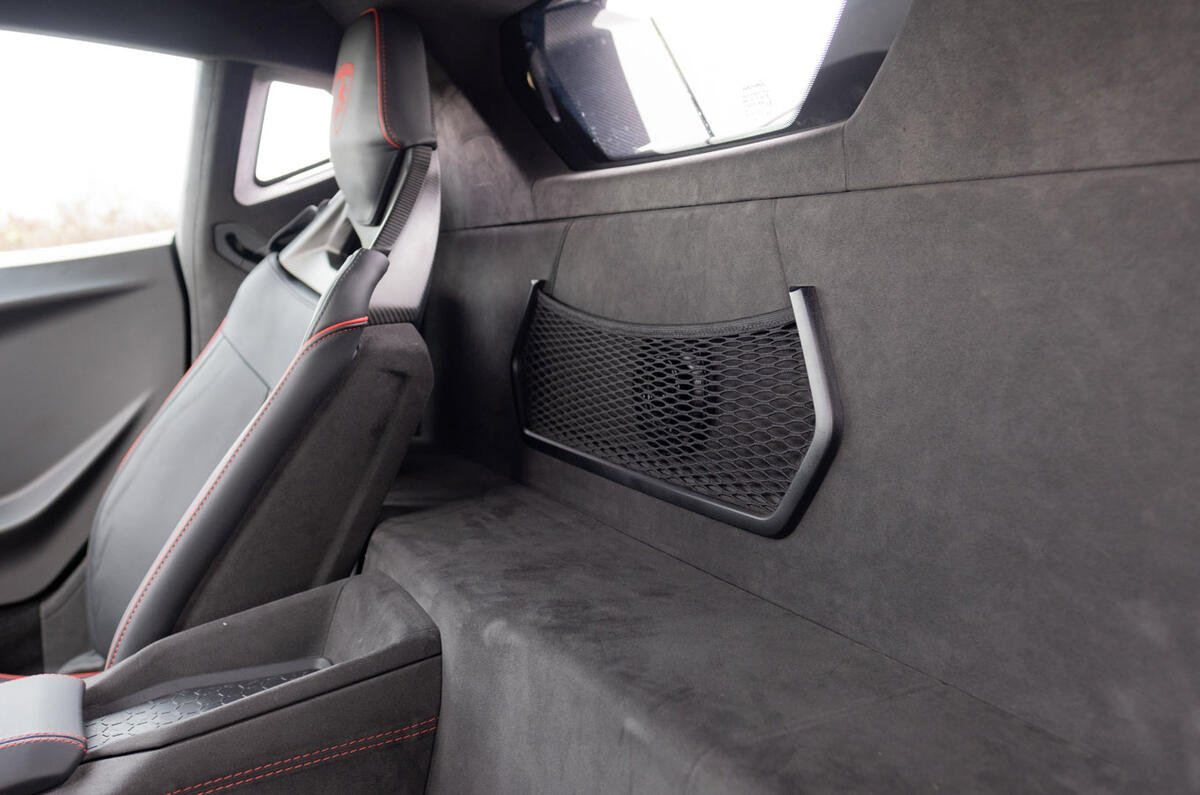
Only the lack of oddment storage holds the Temerario back as a truly versatile proposition. There is a small net in the rear firewall (optional!) but there are no bins in the door cards and no armrest storage, only a small deck at the front of the centre console with two USB-C ports just ahead. It means that uncorking the car – as you surely will – can turn it into a snow globe of wallets, keys and other loose items. Be warned.

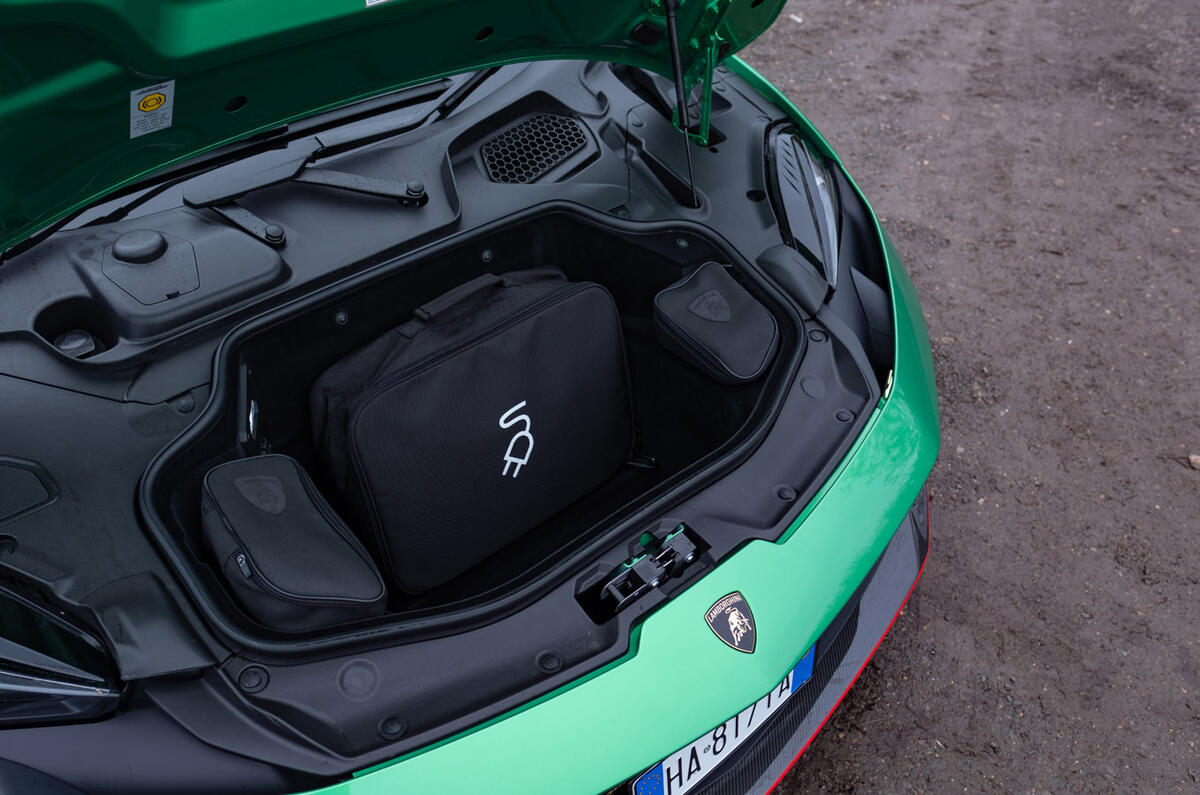
As for carrying capacity, storage is not notably good in any of the current crop of supercars (Maserati MC20 and Chevrolet Corvette Z06 excepted, with their additional compartment behind the engine bay) but there is usually enough for a weekend away. The Temerario is no different in this respect, with 112 litres of storage in the frunk (10% or so more than the Huracán offered but less than the Ferrari 296 GTB or McLaren Artura) and a reasonably broad, usefully flat deck behind the seats that can just about take a couple of squished duffel bags without eating into the car’s reasonably good rear visibility. 
ENGINES & PERFORMANCE

9
Lamborghini Temerario review 2026 024

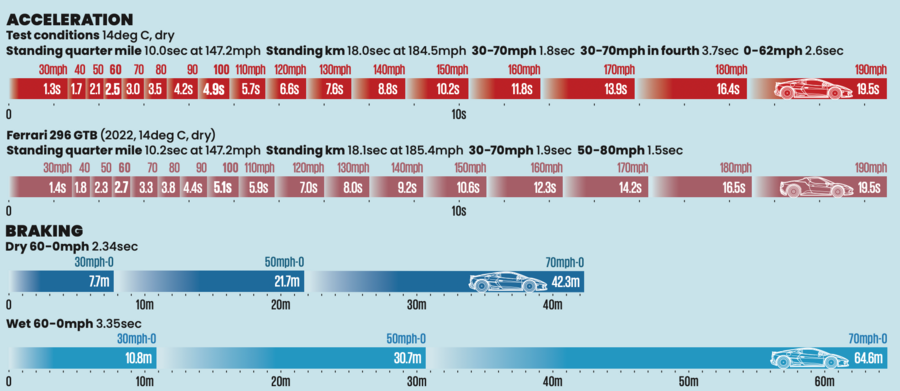
It feels almost churlish to award the Temerario anything other than five stars when it comes to performance. Objectively, it is plainly outstanding, as evidenced by the 2.48sec 0-60mph time and standing kilometre time of 18.0sec. These figures put the Temerario at the bleeding edge of combustion-based, series-production supercars.

The Ferrari SF90 – so similar to the Temerario in layout but even more powerful and priced in line with its status as a range-topping senior supercar – could go only 0.1sec quicker over the standing kilometre. Indeed, in this metric, the Temerario precisely matches our time for the Bugatti Veyron Super Sport. It is relentlessly, stomach-churningly quick, particularly to 100mph, by which point it is 0.2sec up on the 296 GTB and fully 1.2sec ahead of the flyweight Artura. Admittedly, the 819bhp 296 GTB, with its smaller frontal area and lower mass, hits harder once into triple figures. Remarkably, both cars recorded the same 0-190mph time of 19.5sec.

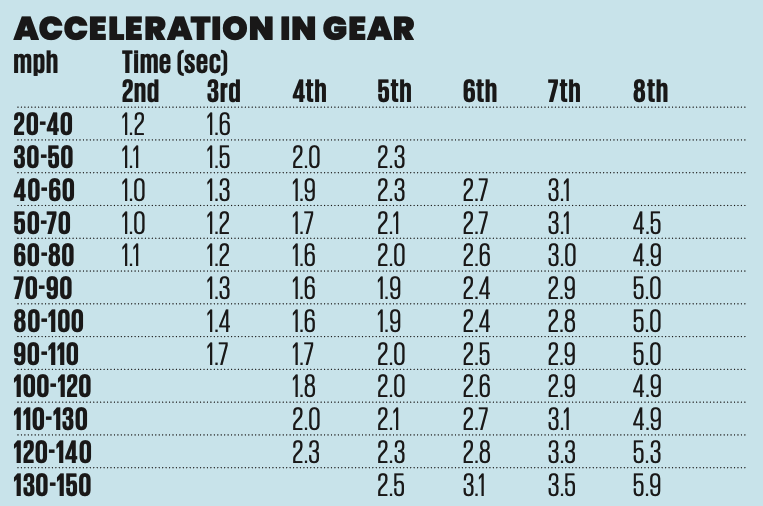
On the subject of numbers, we should mention tractability. Between 30-70mph in fourth, the Temerario isn’t quite a match for the 296 GTB but its time of 3.7sec is on a par with that of the new PHEV BMW M5 – a saloon whose middle name is ‘torque’.
So the Temerario is quick, but the subjective nature of its pace is more interesting and engaging still. Nobody could expect this new V8 to exhibit the same unbridled joy and personality as the old V10, which was an absolute event. But even if you’re realistic about what the new engine is and is not, it can still feel a little lacklustre in the  low and the mid-range of its scope.

Now, there is little wrong with the tip-in responsiveness of the powertrain, aided as it is by instant torque-fill from the electric motors. Neither is it devoid of its own personality, which in casual use amounts to a hollow, lean and cammy prattle that feels very racy and serious. It’s certainly not a boring engine and Lamborghini has mostly succeeded in giving it a proper naturally aspirated feel.

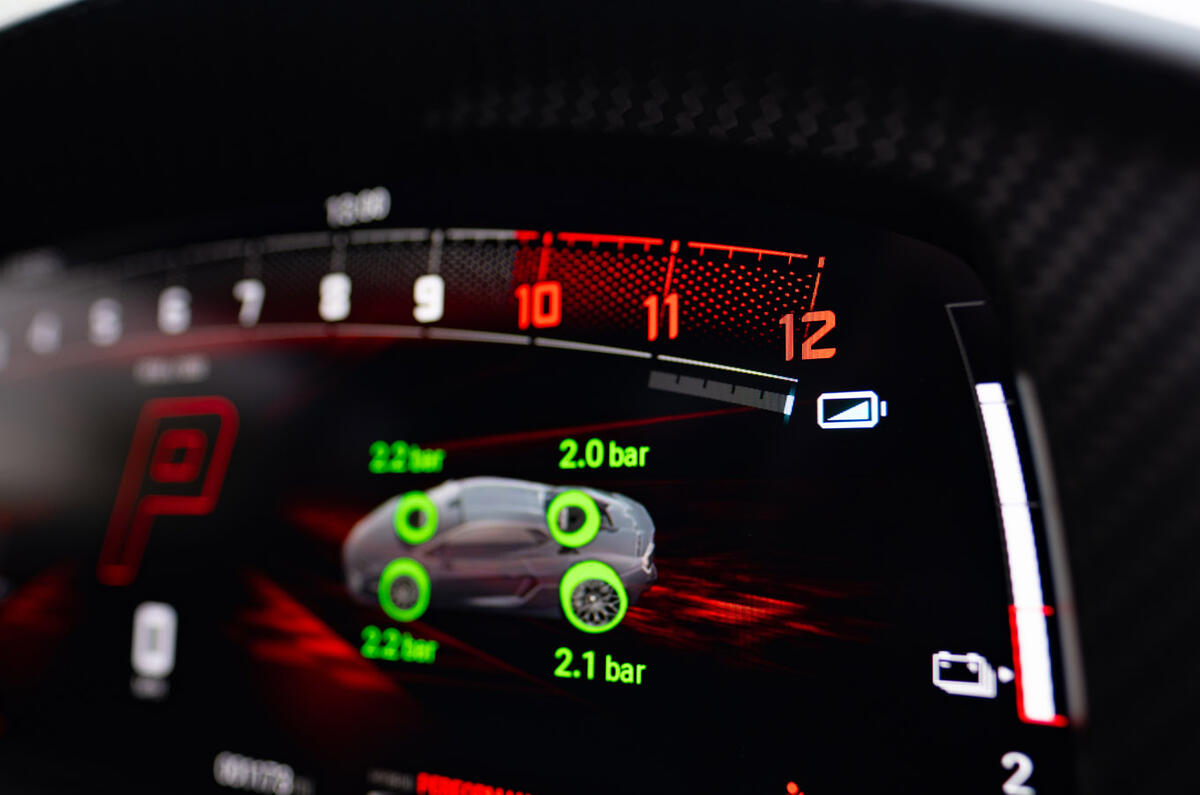
But equally, it comes alive only beyond 6000rpm or so. When you consider that hitting the 9900rpm (as tested) redline in second gear means reaching 86mph, you can see the problem. On the road, chances to really enjoy what this amazing motor can do will be fleeting. The same isn’t quite true of the 3.0-litre V6 in the 296 GTB, which has a rich musicality about it from 3000rpm.

But trust us when we say you will want to extend this engine. R&D chief Rouven Mohr admits that peak power could arrive earlier than it does and that the final 1000rpm or so is purely for fireworks value. Beyond 7000rpm, the intake note thickens into an almost painfully waspish rasp and at first you have to repeatedly will yourself not to pull for an upshift, such is the head room in crank speed. You could honestly be forgiven for believing this engine was indeed naturally aspirated, such is the alacrity with which it spins at its highest heights. It is more rev hungry than even the Revuelto’s V12, which of course is naturally aspirated. A purely rear-driven track-day version of the Temerario, with this engine but carrying 300kg less weight, is a pretty mesmerising prospect.

Elsewhere, the dual-clutch ’box, transversely mounted behind the engine and supplied by Dana Graziano (it’s the same unit as in the Revuelto), is stellar both on the way up and down. Our only complaint is that, in certain modes, you can get a fairly vicious serving of manufactured driveline shunt on uplifts in the mid-range – enough to unsettle the chassis in the damp.

Finally, braking. Considering that Lamborghini has chosen to integrate regenerative front-axle retardation into the pedal, linearity is good and it’s easy to sensitise your left foot (the pedal box suggests you use your left) and deftly brush speed off when the need arises. The pedal is also satisfactorily firm once you’re into the meat of the action.

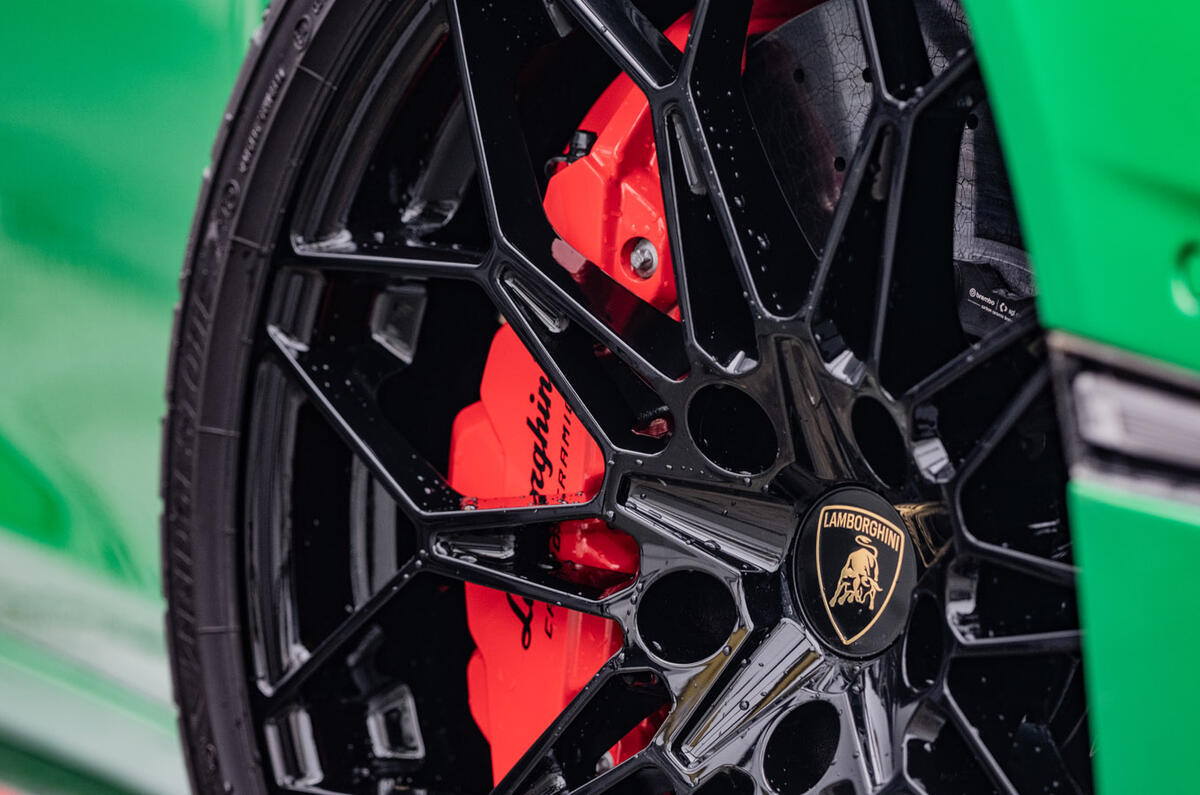
However, feedback is thin, which can make gauging grip quite tricky. Outright stopping distances were also only adequate at Horiba MIRA. The Temerario needed 42.3m to stop from 70mph on its Bridgestone Potenza Sport tyres. The best cars of this kind are now dipping beneath the 40m mark. The Revuelto was similar to the Temerario in this way. That said, once below 50mph, both cars haul up as rapidly as the best.

In detail: the new V8

Now how on earth do you replace an engine as evocative and exciting as the shrieking 5.2-litre V10 in the Huracán?

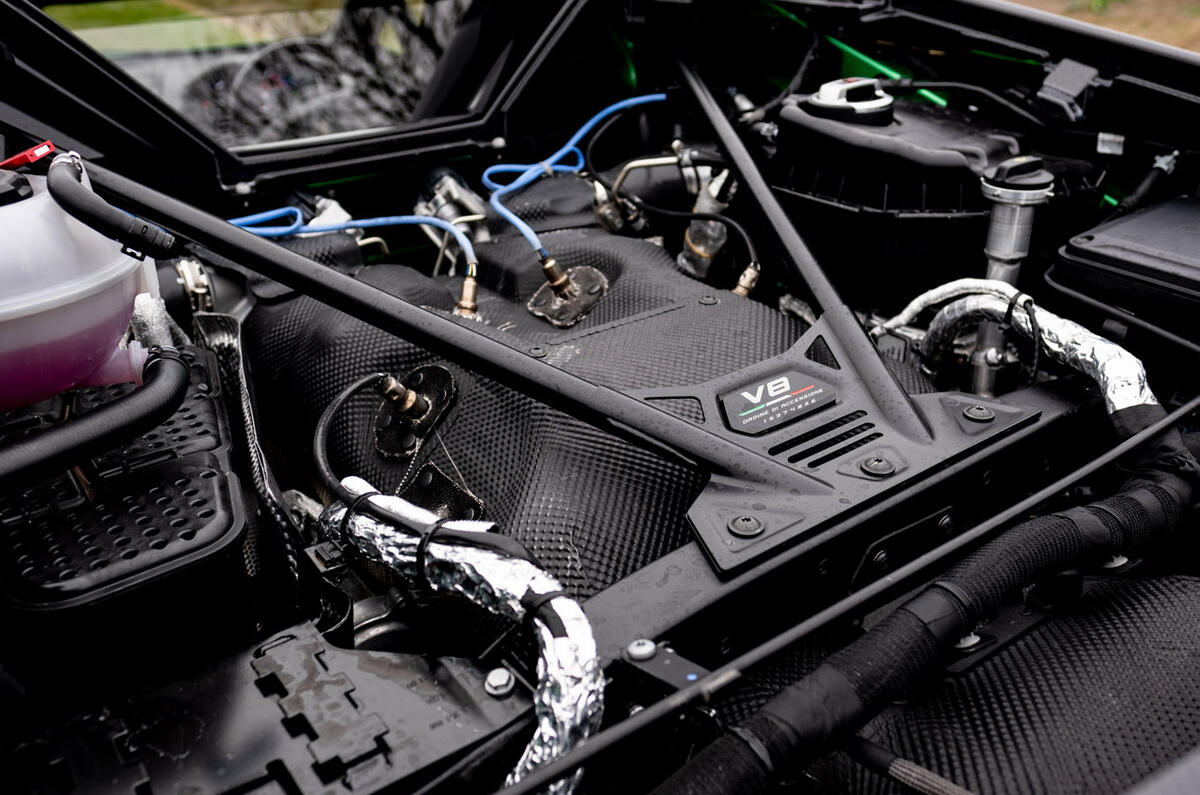
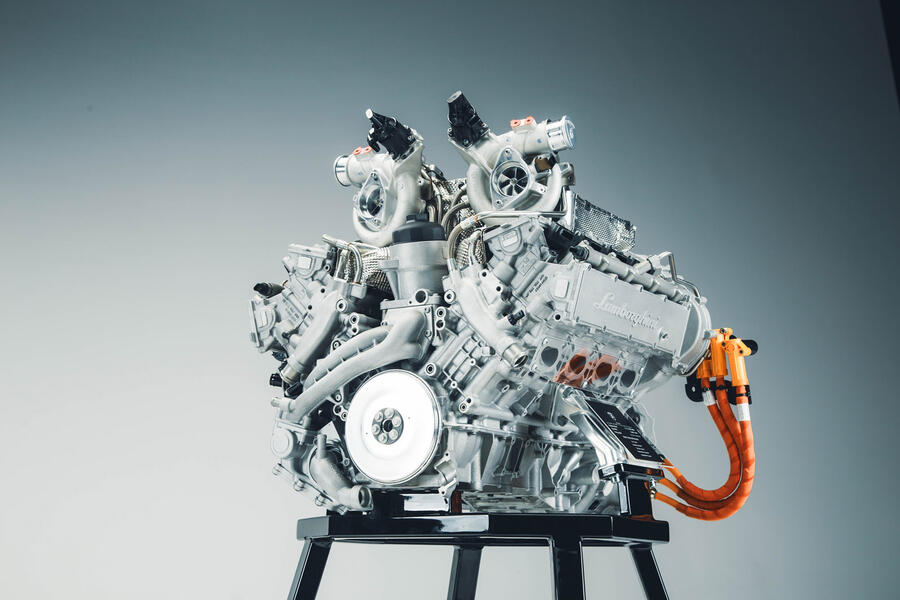
You can guarantee that Lamborghini – knowing only too well that the V10 was a pivotal factor in surely every Huracán buying decision – thought hard about the answer. It has come up with an all-new V8 – one with a specific output far greater than that of the 6499cc V12 in the Revuelto, thanks to two enormous IHI turbos that sit within (above, strictly) the vee of the cylinder banks. The dry-sumped unit’s peak of 789bhp at 9000-9750rpm also easily outguns the 631bhp at 8000rpm that the old V10 made in its fruitiest guise.

To achieve its headline 10,000rpm speed (9900rpm was the best we saw), the ‘L411’ uses a 180deg flat-plane crankshaft, titanium conrods and a head cast in the A357 aluminium often used for competition engines. An extremely rigid valvetrain that cycles on a very short chain then uses a finger-follower design with an 11,000rpm ceiling. Finger-followers are not unique in the supercar world and are found on current Ferraris and the Porsche 911 GT3 but are reserved for specialised products with high engine speeds.

Onto the back of the engine, and mounted to the crankshaft is one of the car’s three axial-flux motors. At the front axle, these are critical to the torque vectoring and the car’s handling character, but the one paired with the V8 engine is essentially there to offer torque-fill while the turbos spool to 2.5 bar. The ‘Lamborghini’ scrawled across the cylinder head is also a nice touch, being reminiscent of the engines of bygone eras.

Elsewhere, Lamborghini says it has attempted, using particular engine mounts and exhaust design, to channel a crisp, fizzing sensory experience into the cabin – one redolent of race engines.

RIDE & HANDLING

8
Lamborghini Temerario review 2026 026

The Temerario is a fascinating car from a handling perspective. It would be all too easy to drive it at six- or seven-tenths and chalk it up as a reasonably well balanced but faintly flat-footed supercar that goes where you point it, and at great speed, but lacks some inspiration. Fortunately, there is rather more to the Temerario, though you need to go looking for it because, at a mere canter, this car doesn’t have the elegance of the 296 GTB or the delectable filigree communication skills and accuracy of the Artura. 

Its steady-state cornering balance has a hint of front-axle push about it and the quick steering is aloof. You need to be ‘doing’ something with it, because it’s the transitional phases in which this complex road-racer of a supercar comes alive.

The dial for damping firmness – there are two settings – is an essential tool but is extremely easy to miss. Find the little nose-lift button on the wheel and it’s the roundel on that. I like to have the ESC in Sport, with softer damping

On a committed run, corner entry is where you begin to realise the Temerario is an order of magnitude more initially responsive and malleable than the Huracán was. You don’t have to be trail-braking like crazy for the chassis to want to pivot into bends, aided by the torque-vectoring front axle. This can occasionally border on feeling synthetic, but mostly the car just feels hyper-alert and ready to play. The quick adoption of cornering attitude invites you to pick up the throttle early. Do so with zeal and the car feels very rear-driven indeed and able to be truly steered on the throttle with some – or a lot of – yaw.

You could drive RWD versions of the Huracán like this but they tended to be the rarefied ones and you needed to know the car extremely well. In the Temerario, oversteer comes so easily, naturally and catchably. In Sport, the car feels 95% rear-driven, with the straightening effects of the front axle parsed out with a deliberate thrift. Along with the angry energy of the V8 at higher revs, it’s a massively exciting car. Implicit in this is the fact that the Temerario’s weight is concealed well. Well, but not entirely. Accurate and agile as this car is, it often feels innately big-boned.

Meanwhile, pliancy is good in either the ‘soft’ or ‘firm’ windows of operation for the magnetorheological dampers, which control double wishbones at both ends of the chassis. In the softer mode, the Temerario can’t quite summon the languid ease of a 296 GTB set to Bumpy Road mode, but it’s not far off and doesn’t feel overwrought in the slightest. Neither does it tramline or bump-steer or exhibit any other less predictable traits you wouldn’t want in a car with more than 900bhp. Lamborghini deserves credit for engineering such a wildly quick car that has the under-wheel security to be enjoyed in most conditions while keeping the front Bridgestones down to a sensible width of 255mm.

Track notes

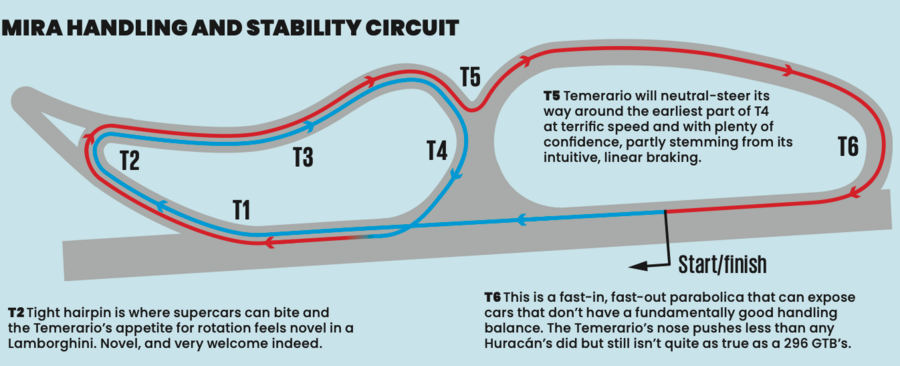
Lamborghinis, even track-focused ones such as the recent Huracán STO, have never been the first port of call for circuit junkies but they’ve nevertheless come a long way in the past decade or so. The Temerario appears to lay the ground for another step forward when it comes to making these extrovert supercars genuinely fulfilling track-day tools, but there are some caveats.

Let’s start with the good bits. At high speeds, this is not an edgy supercar in any of its various stability control calibrations. Like anything with such a low polar moment of inertia, it’s not exactly unspinnable, but it will devour fast transitions securely, and when it comes to teasing the tail out of line with committed trail-braking, the moment of yaw is well telegraphed and unfolds predictably. These elements allow you to push the Temerario, exploring the limits 
of yourself and the car.

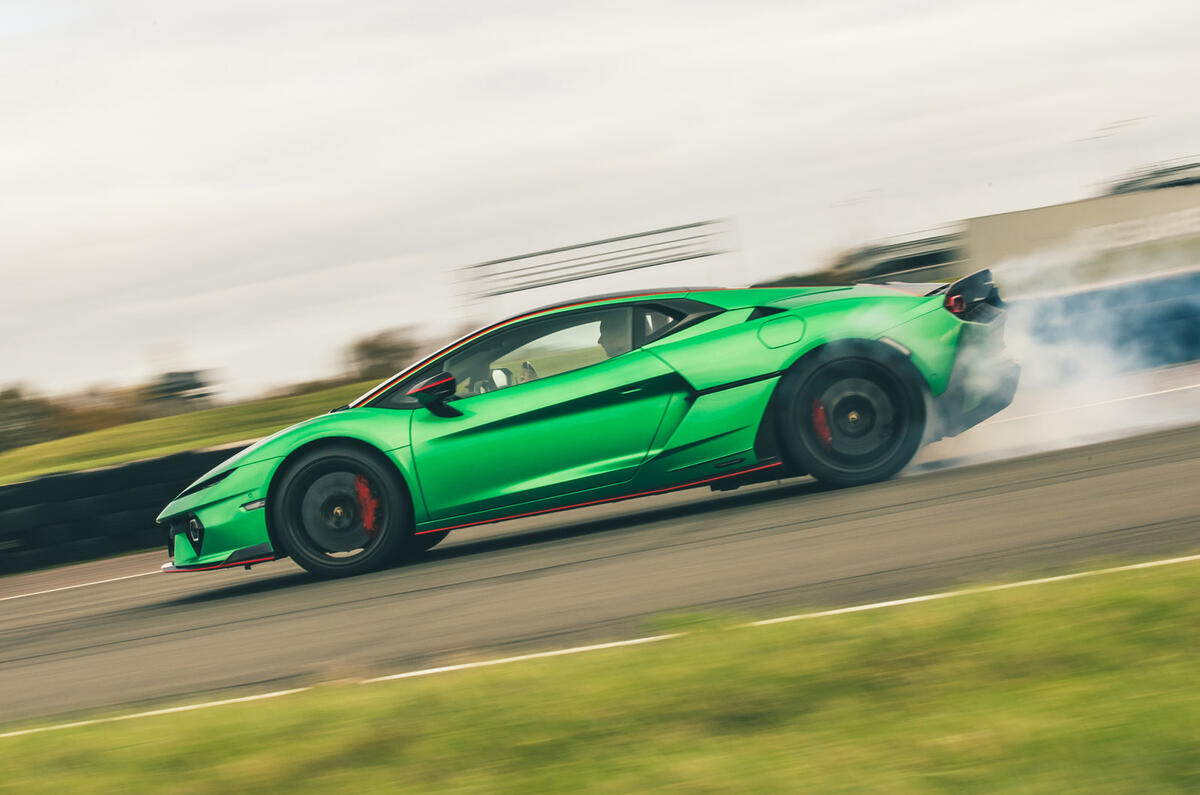
Its various ‘drift’ modes are also useful if you don’t want to disable the electronics entirely (as well you may not, given the mad speeds so easily achievable). These modes are not simply for showboating and can actually help you achieve a quicker lap while having more fun, much like Ferrari’s vaunted CT Off mode. 

You can pick between 20, 30 or 40deg of permitted attitude, achievable both on the brakes and on the power, and with impressive fluidity. The car  never does anything truly unexpected and equally, if you want to keep it locked down and less expressive, you can stick with Corsa mode. You’ll want to dial up Performance mode for the powertrain, beyond the softer Hybrid and all-electric Citta.


Ultimately, the car seems to work more predictably with the electronics on than off. And its weight becomes more apparent as you get deeper into the realm of true limit handling. For now, the Temerario can excite on track, but it will never satisfy like an Artura can.

MPG & RUNNING COSTS

6
Lamborghini Temerario review 2026 001

There will be some apprehension in Sant’Agata regarding the fortunes of the Temerario. In commercial terms, neither Ferrari nor McLaren have had it easy with the respective launches of their first mainstream plug-in hybrid supercars.

Unlikely to help is the fact that the new model is considerably more expensive than its predecessor. When the Huracán Tecnica arrived in 2022, it was £50,000 cheaper than the Temerario’s starting price of £259,000 (exactly on a par with the 296 GTB). Options will swell that figure and our test car, decked out with plenty of carbonfibre and the £63,780 Alleggerita package, comes in at nearly £420,000. Yes, this is a press car so is more generous in its specification than is typical, but that is a staggering sum for a car in the same class as an Artura.

But is that true? Lamborghini would argue the Temerario, with its class-busting footprint and Revuelto-aping tri-motor powertrain, sits in its own bubble. It’s a reasonable point. As we’ve seen, the performance is hypercar-esque, and the 10,000rpm V8 really is a unique proposition, especially when key rivals are now down to six cylinders. The V10 may be dead, but Lamborghinis still have the most bombastic powertrains going.

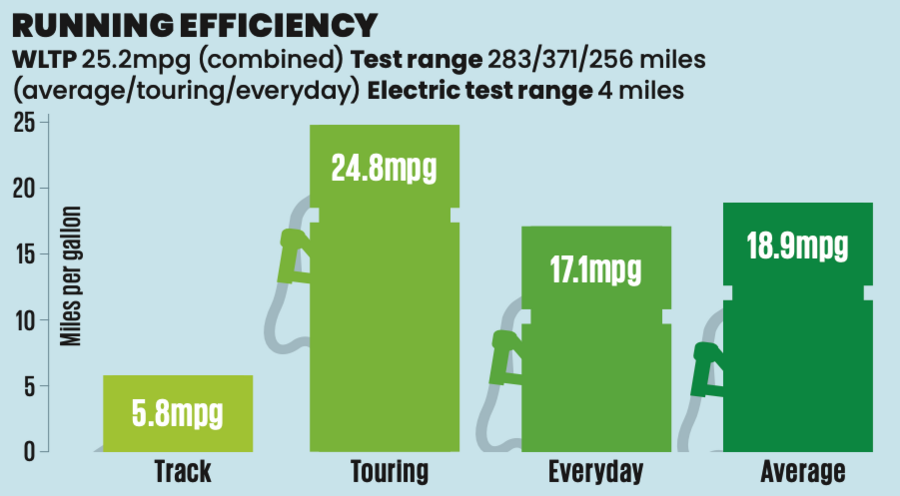
And perhaps the thirstiest. We test the economy of PHEVs with the drive battery as depleted as possible. In this way, the Temerario recorded a touring economy of 24.8mpg, which trails the Artura (27.2mpg) and 296 GTB (37.8mpg). It also has the smallest electric range of the three, amounting to six miles or so in real-world use. Of course, that’s more than enough to get you into or out of an environment subtly, should you desire. You enter EV mode at the push of a button. 

VERDICT

8
Lamborghini Temerario review 2026 035

In several respects the Temerario can be deemed a stunning achievement. It carries an all-new engine with a truly competition-grade rev ceiling; its thrillingly agile handling has a devilish sense of humour and approachability about it; it has markedly better cockpit ergonomics than its Huracán forebear; and its hybrid integration is slick. As with the Revuelto, cockpit quality has also risen to match and in several ways exceed that achieved by any rival. And then there is the mind-warping performance, which is on a par with the Revuelto and marks the wild new frontier for supercars at this level.

That being said, the stratospheric heights of the V8 can be challenging to explore on the road. The Temerario is also too heavy, sometimes lacking the easy fluidity and communicative transparency of key rivals at times when you don’t have a dagger between your teeth. Even so, what an event this car is. The Huracán’s V10 will be sorely missed, but the dynamism of this new chassis goes a very long way to filling the void.

Richard Lane

Richard Lane
Title: Deputy road test editor

Richard is Autocar's deputy road test editor. He previously worked at Evo magazine. His role involves travelling far and wide to be among the first to drive new cars. That or heading up to Nuneaton, to fix telemetry gear to test cars at MIRA proving ground and see how faithfully they meet their makers' claims. 

He's also a feature-writer for the magazine, a columnist, and can be often found on Autocar's YouTube channel. 

Highlights at Autocar include a class win while driving a Bowler Defender in the British Cross Country Championship, riding shotgun with a flat-out Walter Röhrl, and setting the magazine's fastest road-test lap-time to date at the wheel of a Ferrari 296 GTB. Nursing a stricken Jeep up 2950ft to the top of a deserted Grossglockner Pass is also in the mix.