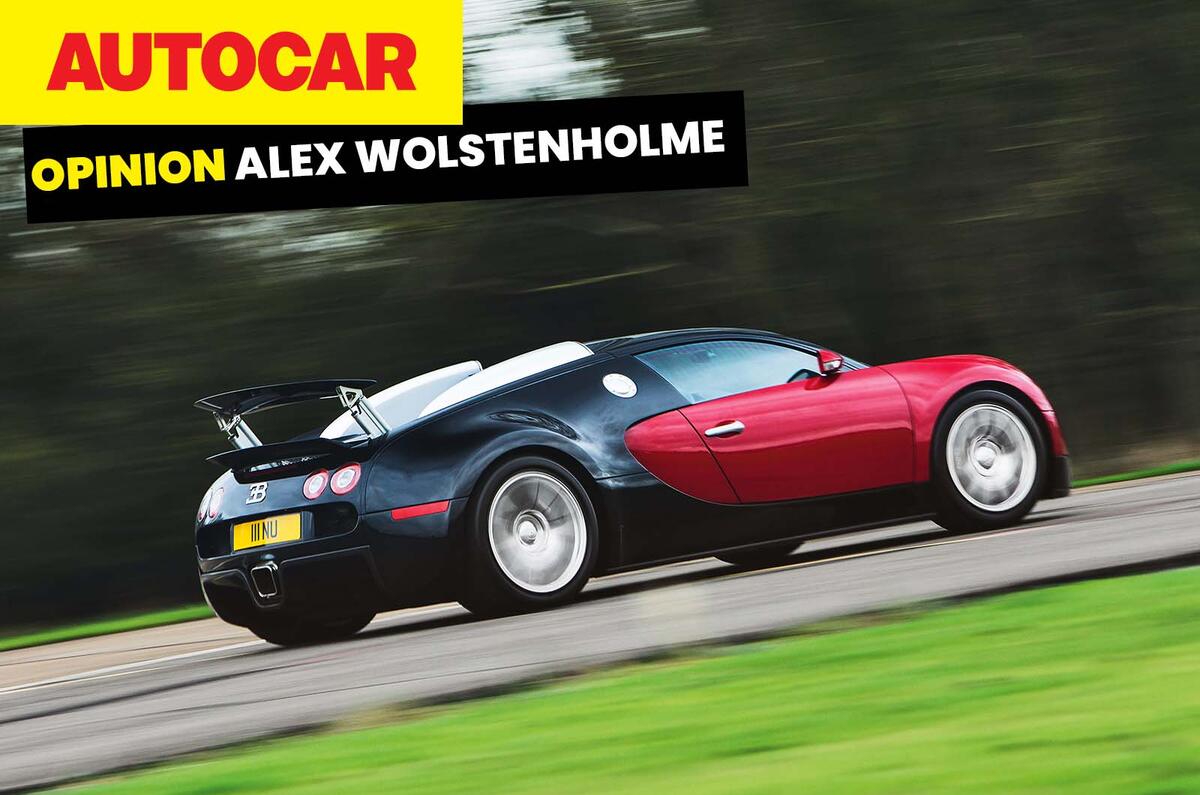

Two decades ago, Autocar drove the Bugatti Veyron for the first time – and it blew us away.
“The noise – a peculiar cacophony that sounds a bit like two TVRs on full reheat plus an industrial-strength air hose – is accompanied by mind-bending, heart-stopping acceleration, the like of which has never been felt before in a road car,” gushed our tester.
And yet they didn’t love it. “Despite the titanic performance and refinement, it doesn’t grab you emotionally like it should” was the conclusion.
Surely there can be no criticism to level at this mega-powered monument to mechanical excellence, which, even at 20 years old, still feels every inch the soul-stirring headline-maker it was at launch.
To me, the most impressive thing about the Veyron is not that it has a 13mph greater top speed than a McLaren F1, nor that it was the first production car to break 250mph. Nor even that it had an 8.0-litre engine, four turbos and 16 cylinders (all of which had been seen before).
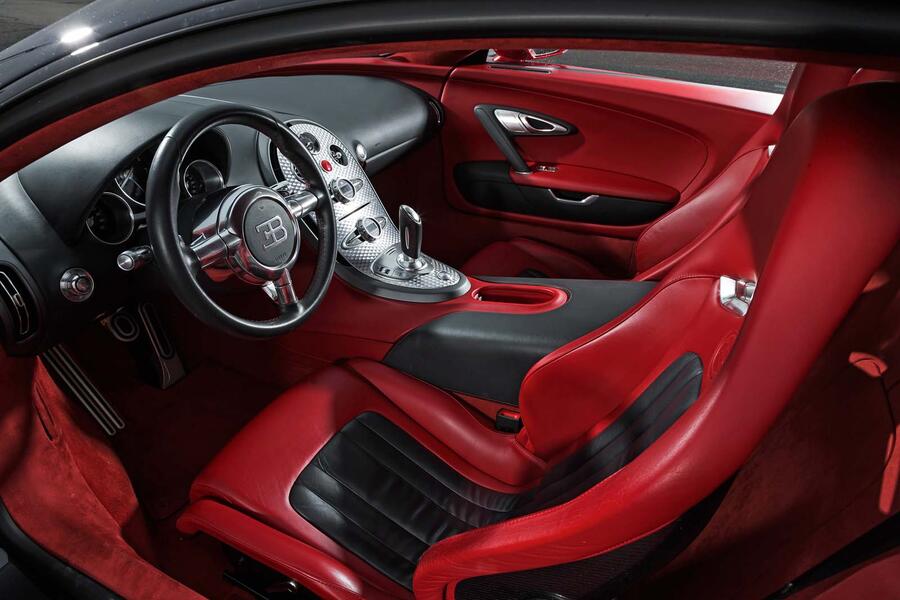
And although its 1000 metric horsepower was a first for a car with a warranty, tuners had been getting that much out of Toyota Supras for years. So no, the most impressive thing about the Veyron to me is not the big numbers that have always been bandied about, but the attention to detail, the sumptuous interior and its civility.
The fact that it weighed almost two tonnes, had 10 radiators, held 15 litres of engine oil and cost well over £1 billion to develop might seem silly given the 240mph McLaren F1 was so much less resource-intensive yet not much slower.
Except an extra 13mph at 240mph isn’t like an extra 13mph at 70mph. The force needed to accelerate a car rises exponentially with velocity. It’s a quadratic relationship, so for every tiny increase in speed beyond 200mph, you must do an ever-increasing amount of work to achieve it.
Pursuing a top speed record is a vicious cycle. It requires more power and therefore a larger, heavier engine. Then you need bigger brakes to bring it all to a halt, beefier suspension to hold it to the road and better cooling to keep it from overheating – and that’s before you’ve factored in the effects of downforce, friction and a plethora of other factors that get bigger and potentially more dangerous at speed.