

As ever, the headlines mislead. Pointlessly powerful mega-EVs and SUVs propelled by supercar-grade engines aren’t the only ‘exciting’ things happening on planet car in 2021. At best they’re ephemeral (and at worst absurd), and more heartening, worthwhile signs of this industry’s ability to elevate its game can be found closer to home. Possibly as close as your own driveway.
We’re talking about hot hatches. Specifically, the more sophisticated ones, with four-wheel drive and doit-all remits. These are the machines currently leading the genre down an unexpected path that starts with a signpost that dryly reads ‘active rear-axle torque vectoring’ but ends up in a paradoxical realm where family hatchbacks can do power oversteer.
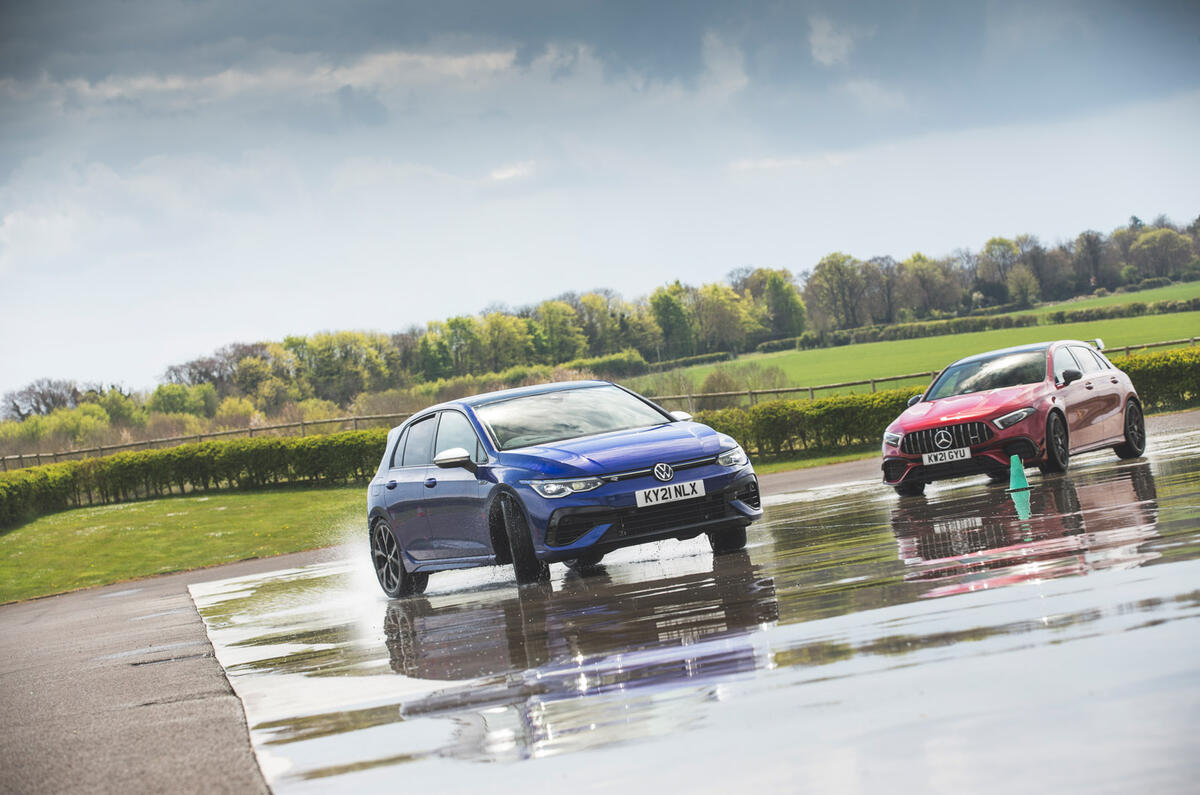
Brewing over the past half-decade and now found on several big players, torque-vectoring technology in this humble bit of the market is a genuine double-take development. The Audi RS6 and its ilk will inevitably become quicker, you can bet that Rolls-Royce will somehow make the Rolls-Royce Phantom yet more soporific and the next Land Rover Defender will probably be able to wade the Mariana Trench. But a Volkswagen Golf that can do the full Ari Vatanen? Hold the front page.
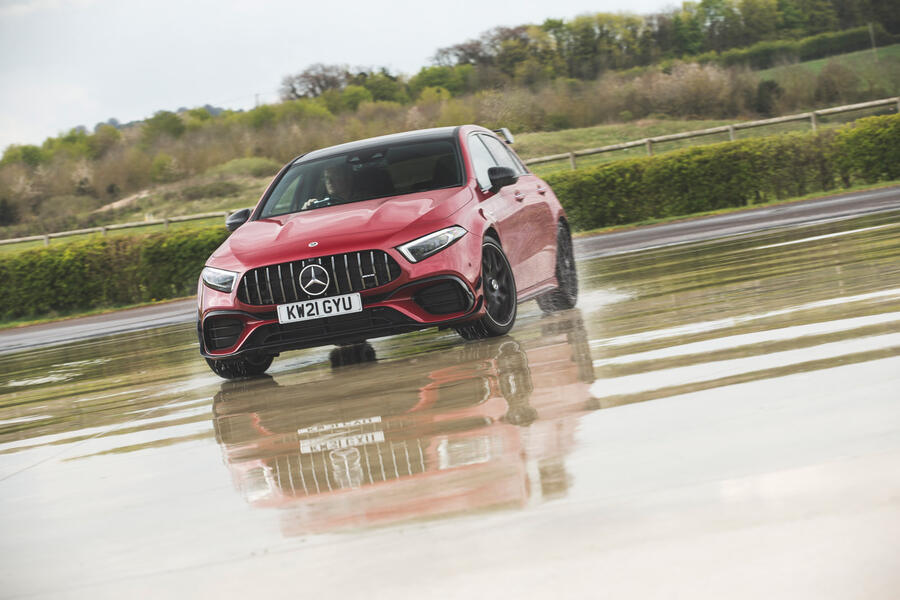
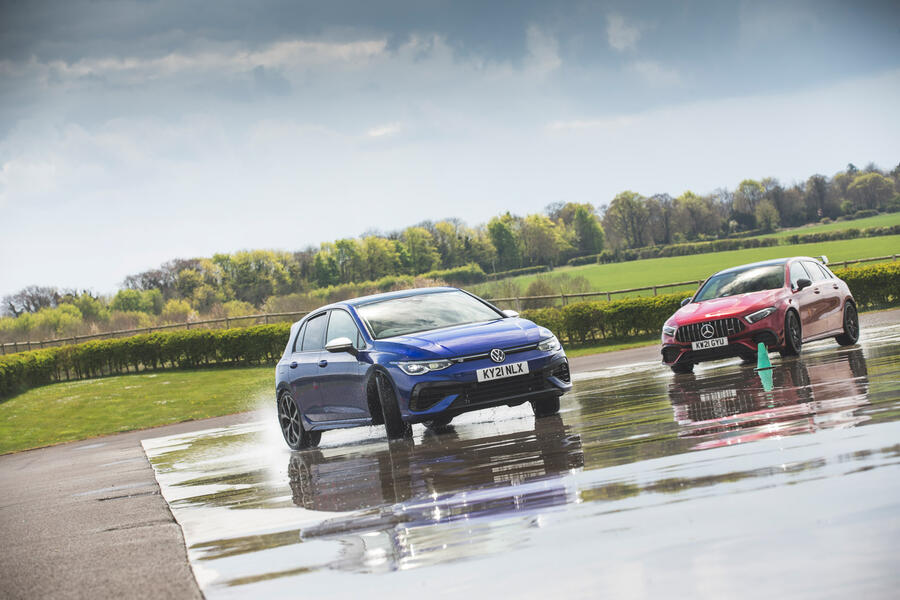
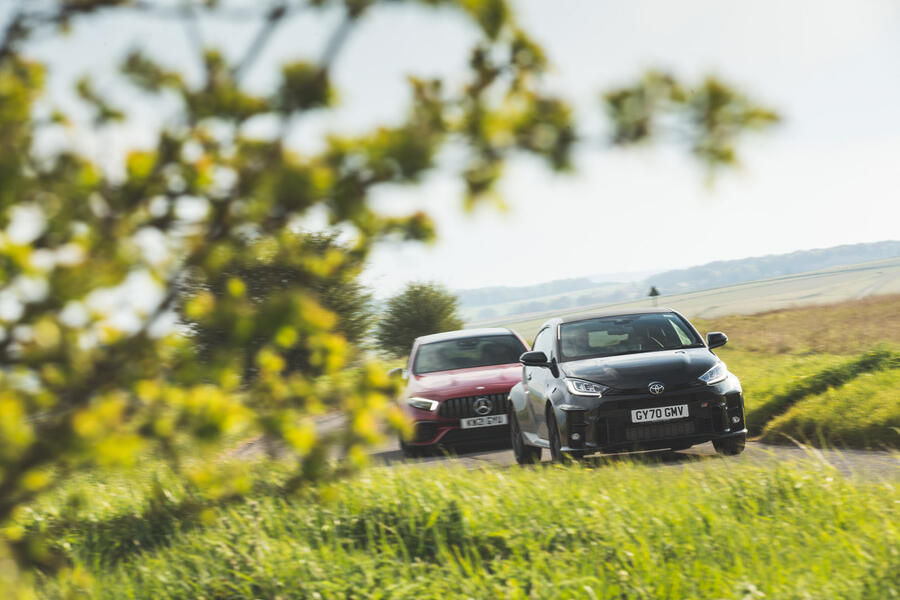
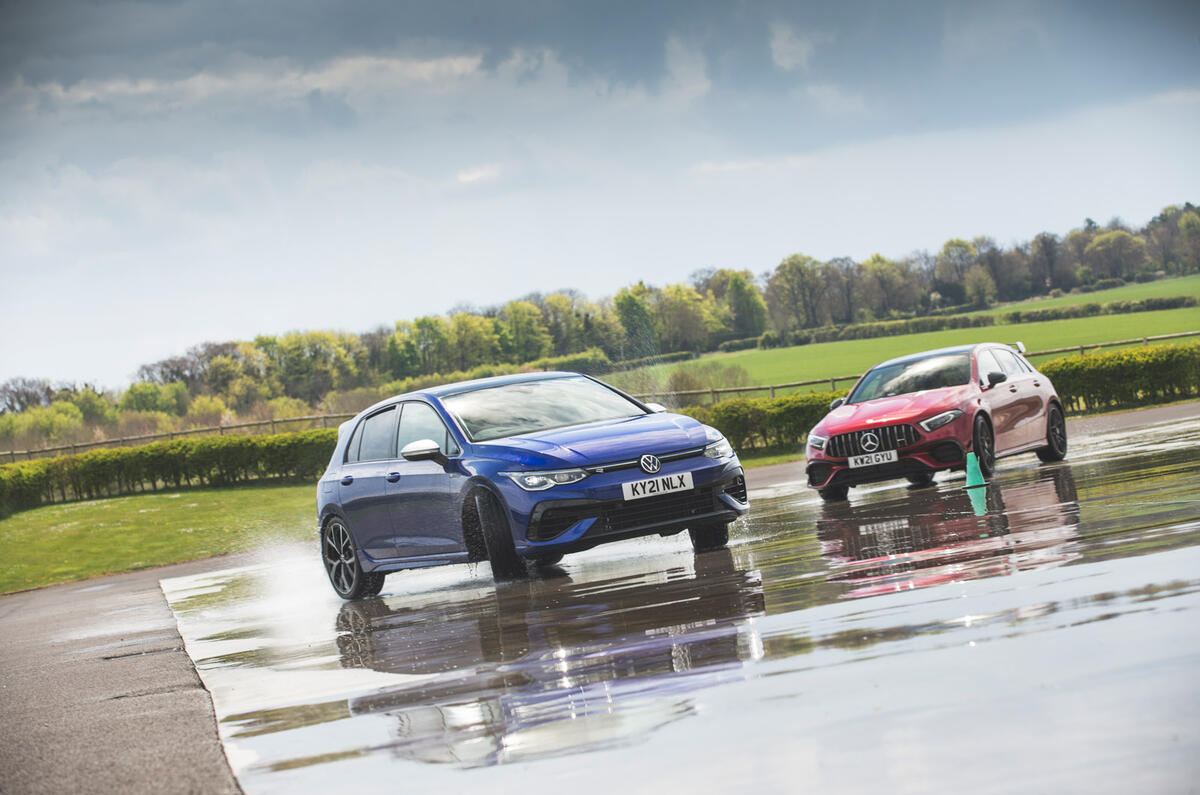
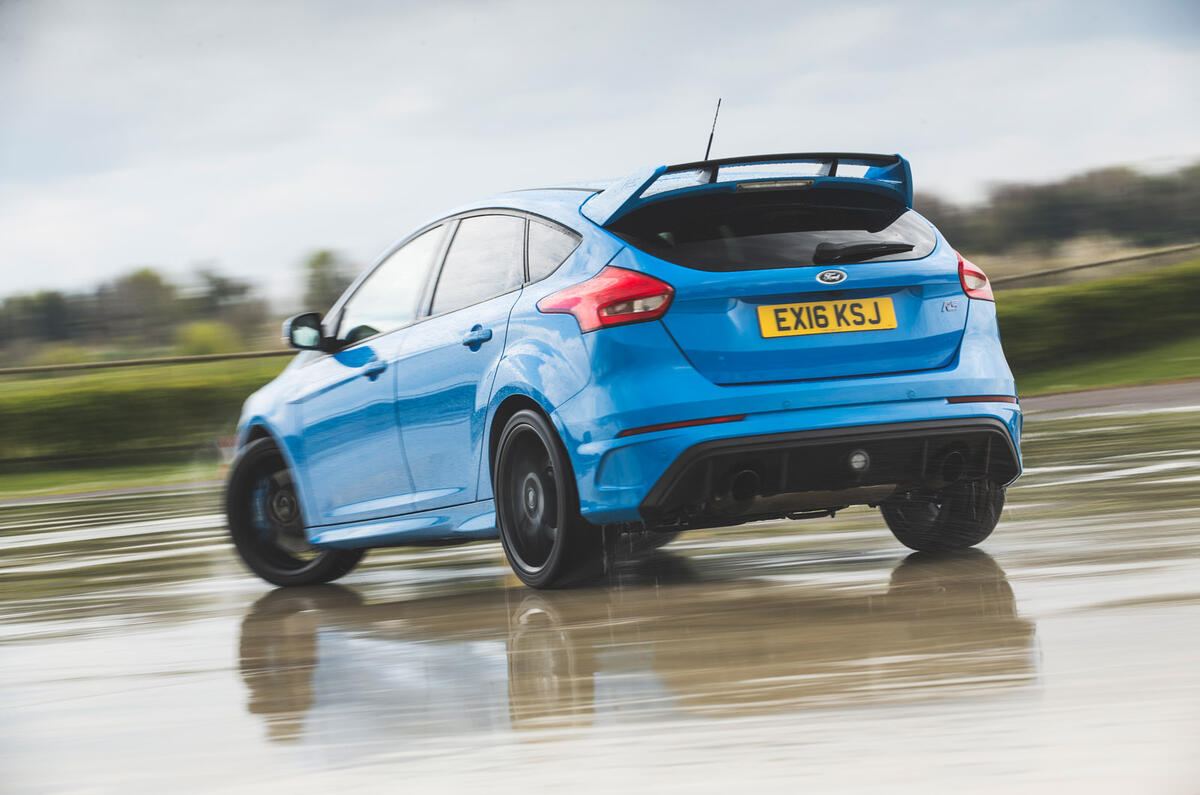
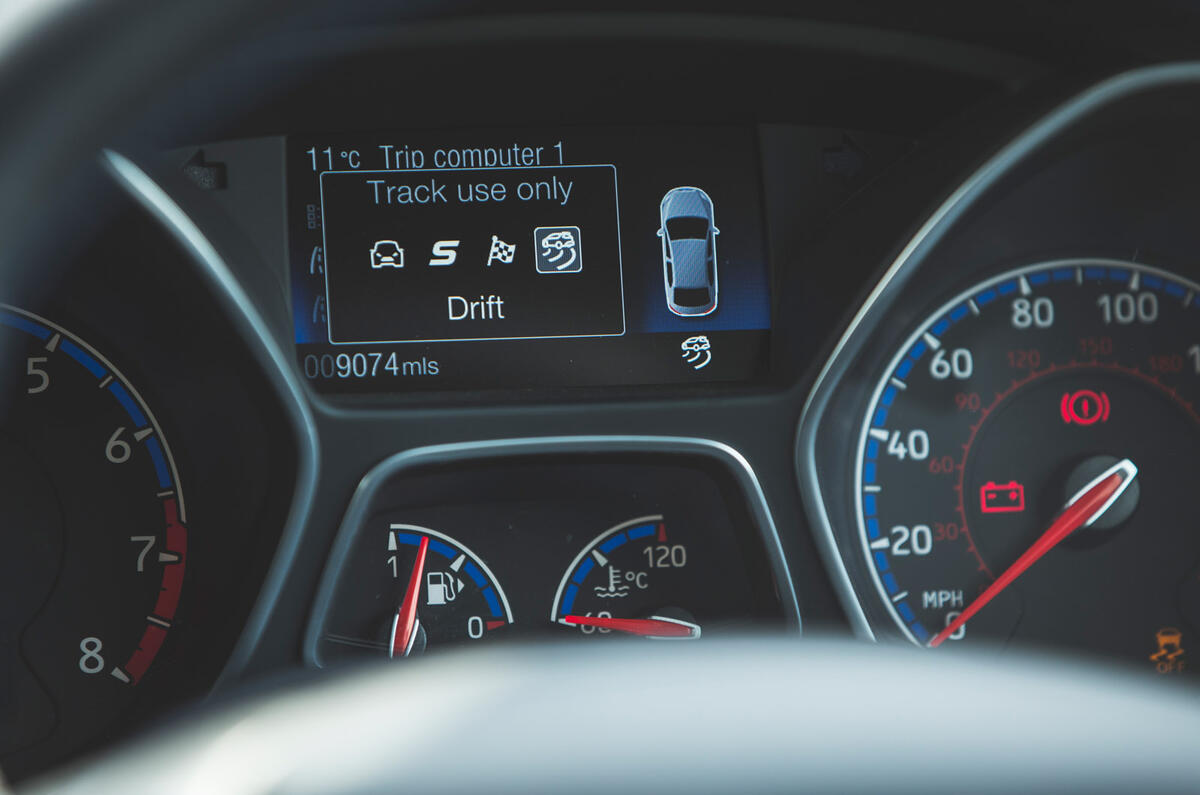
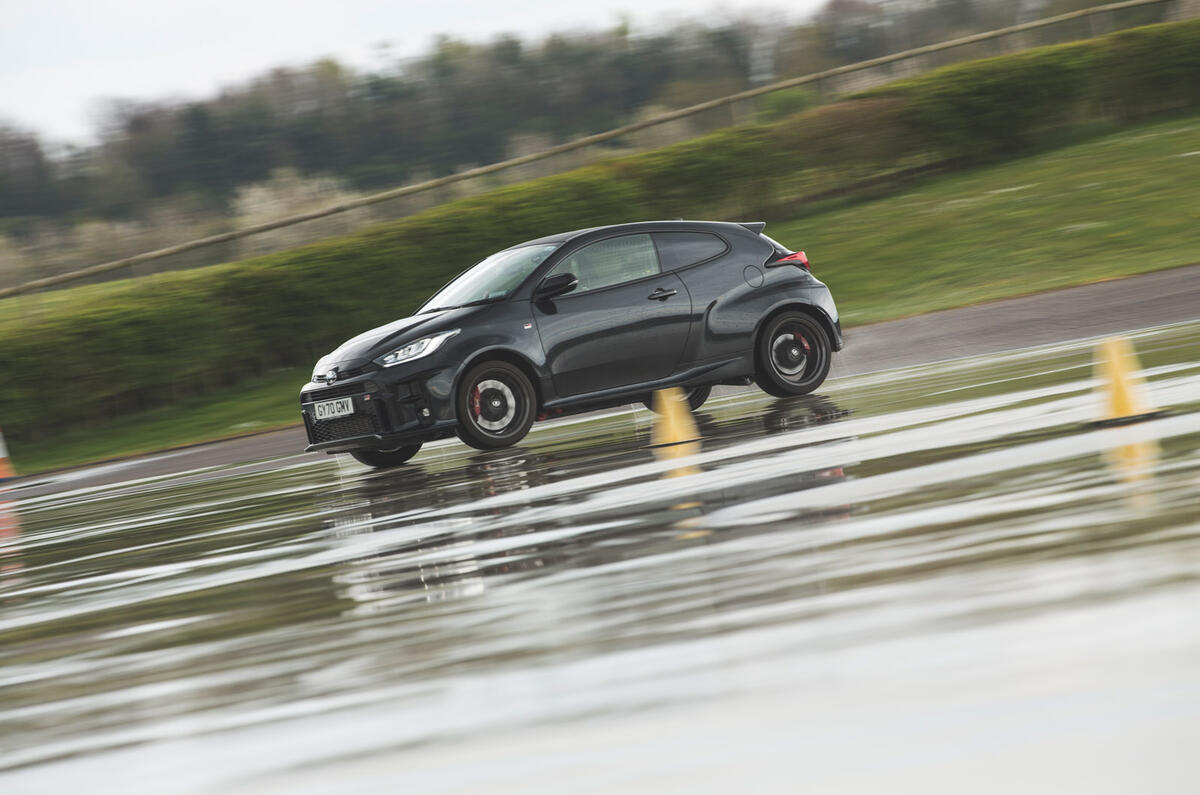
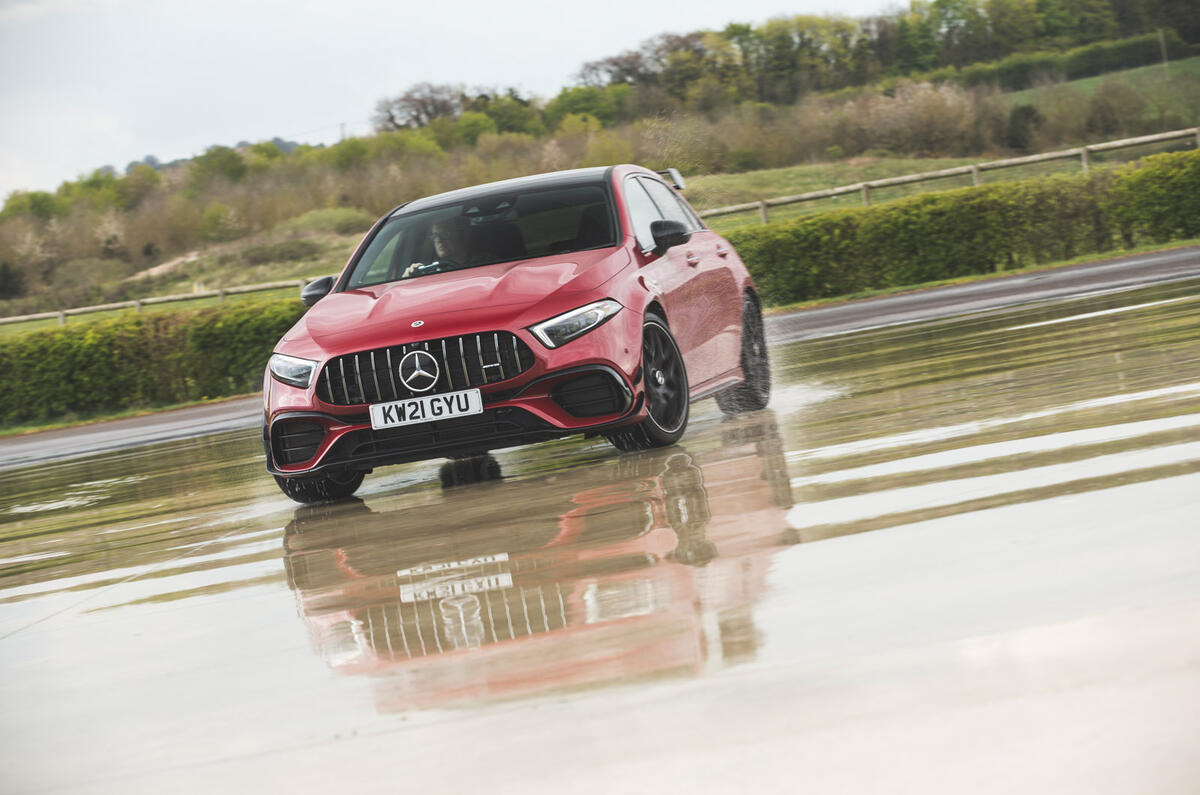
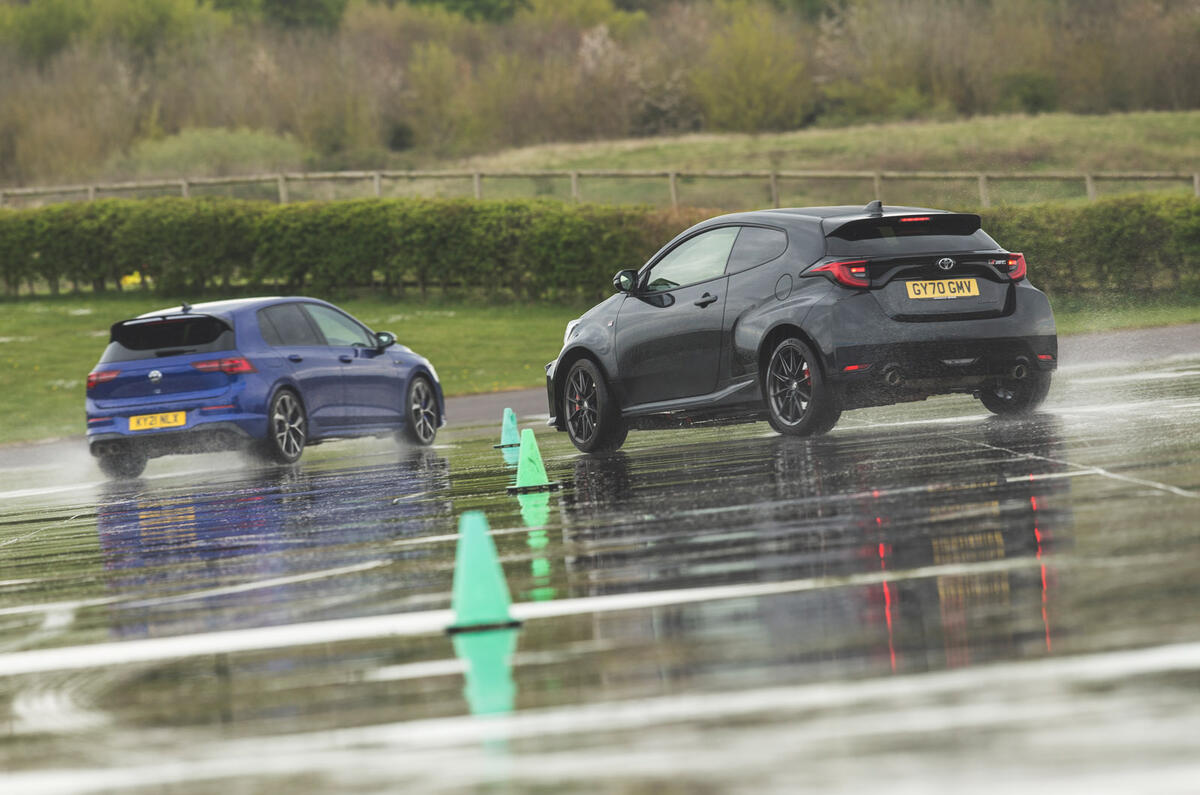
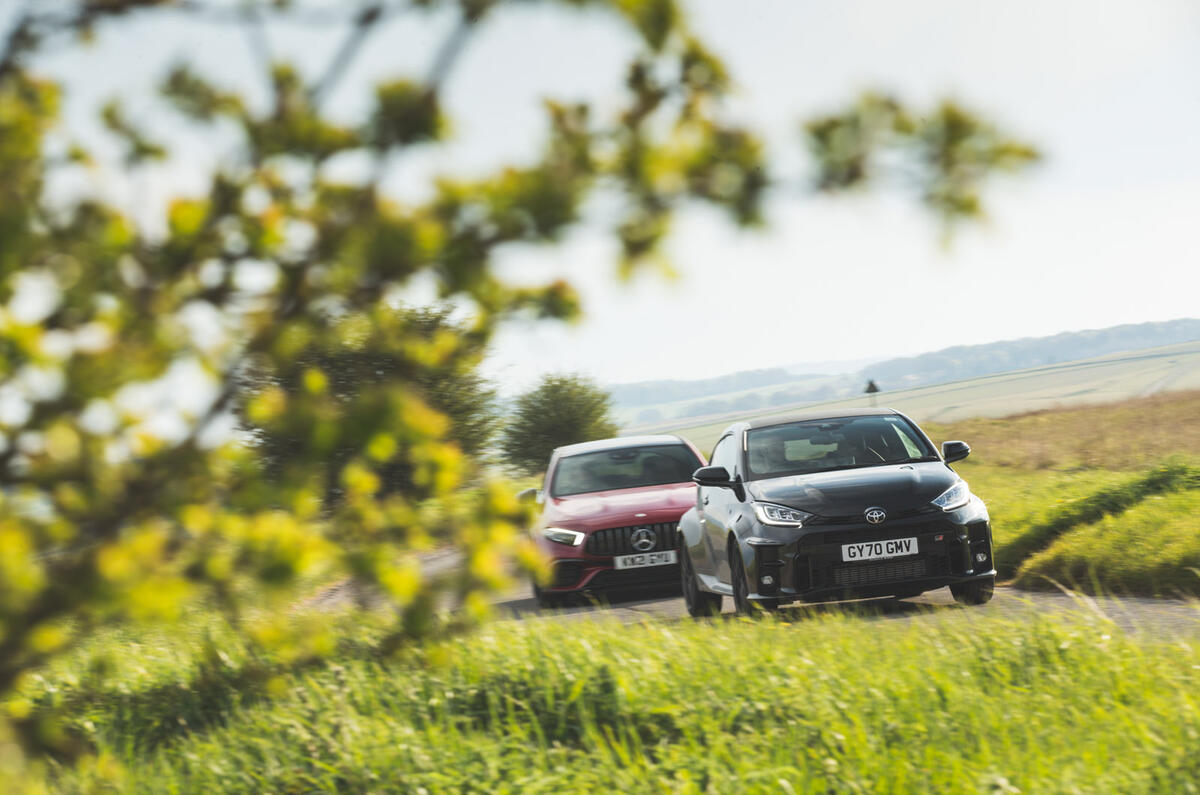
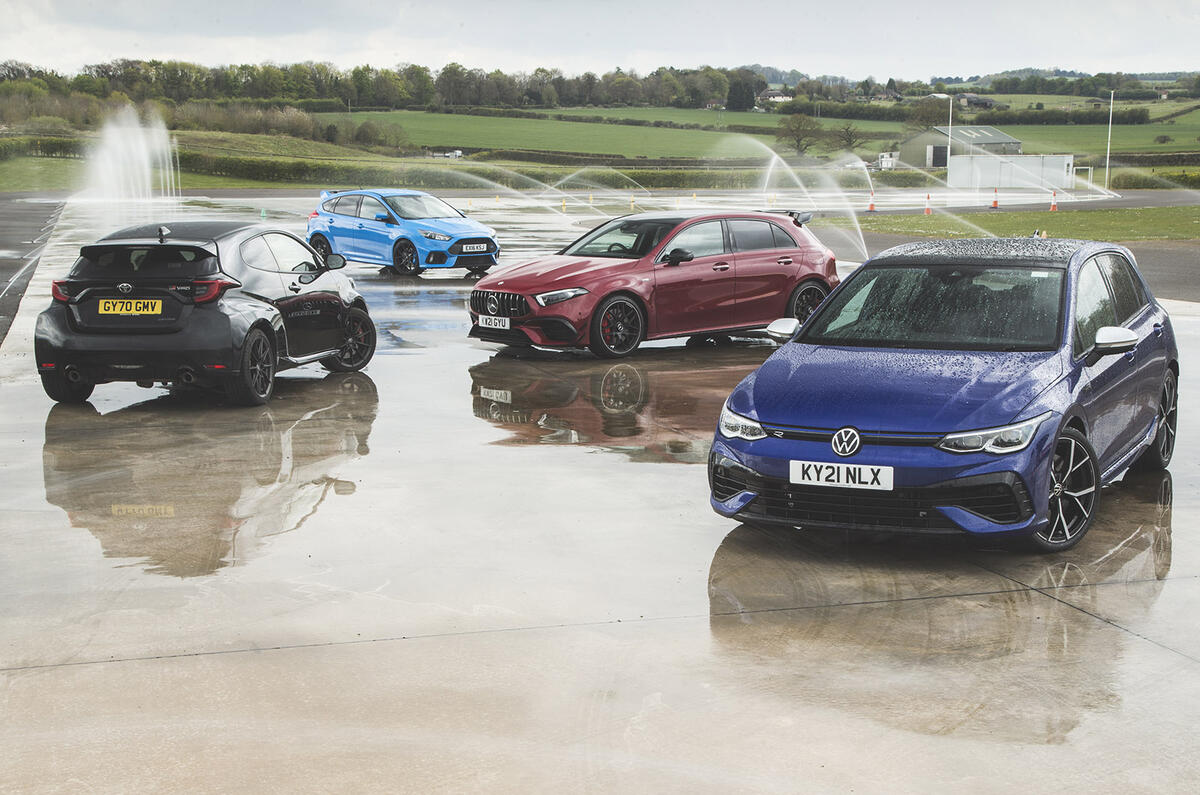
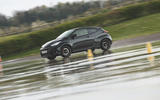
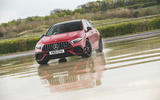
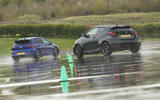
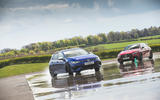
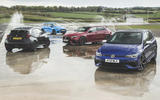
It’s why we’ve gathered a trio of these torque-vectoring hot hatches (plus one very special Japanese guest) at Thruxton Circuit’s skidpan. We want to explore how the tail-happy drivelines work and see whether the effects are as convincing as the fevered marketing bumf makes out. Time on both dry roads and slick-wet track ought to clear things up.
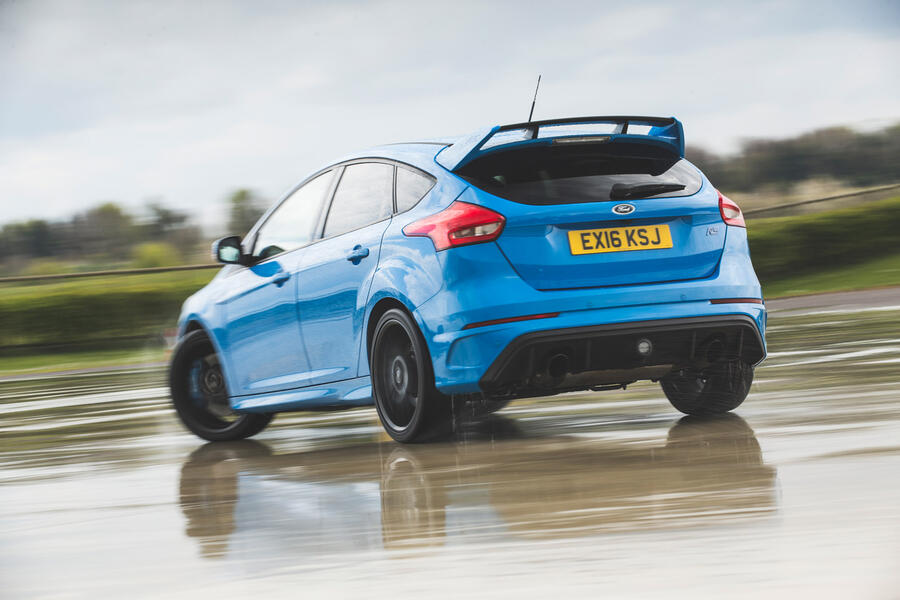
As for why hot hatch vendors are pursuing torque vectoring, the more you think about it, the more sense it makes. The super-saloon power wars were fierce (20 years ago, BMW’s BMW M5 made 400bhp; the current one touts more than 600bhp), but they were mere skirmishes compared with what has unfolded in the hot hatch playpen. Consider this: in 2002, the 212bhp of the Mk1 Ford Focus RS was deemed borderline unhinged, but the Mercedes-AMG A45 S we have here makes no less than 416bhp. That’s more than the Porsche 911 Turbo touted back when the Ford was new.
With horsepower levels becoming so high as to seem academic and emissions rules making it harder to claw redundant performance from downsized four-pot turbo engines, the industry’s solution has been to move the emphasis away from speed and towards handling. It looks like an intelligent solution, too. Nobody needs a sub-4.0sec sprint time from their hatchback, but some rear-led flare in the handling department?
Torque vectoring in road cars can be traced back to the 1990s. It’s the ability to manipulate the flow of torque so that individual wheels experience different levels of drive depending on the situation. So much like any old limited-slip differential? Well, yes, but with far more flexibility. While LSDs can split torque between two wheels, their behaviour is natural: drive is directed towards the wheel with more grip, and then only to a predetermined and limited extent. Active (rather than brake-based) vectoring systems can go to much greater extremes. They act pre-emptively rather than reactively, and they can induce behaviours that aren’t necessarily organic to the car but enhance the dynamic package.