


From £39,5108

Stalwart family hauler goes estate-only, with choice of petrol and plug-in hybrid powertrains

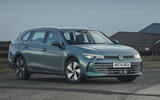
There is no longer-serving Volkswagen model than this one: the trust Volkswagen Passat. Having made hay in the days when, some thirty years ago and more, mid-sized saloons ruled the sales charts, it has now survived into it ninth full model generation; albeit now being a more niche product than ever it used to be.

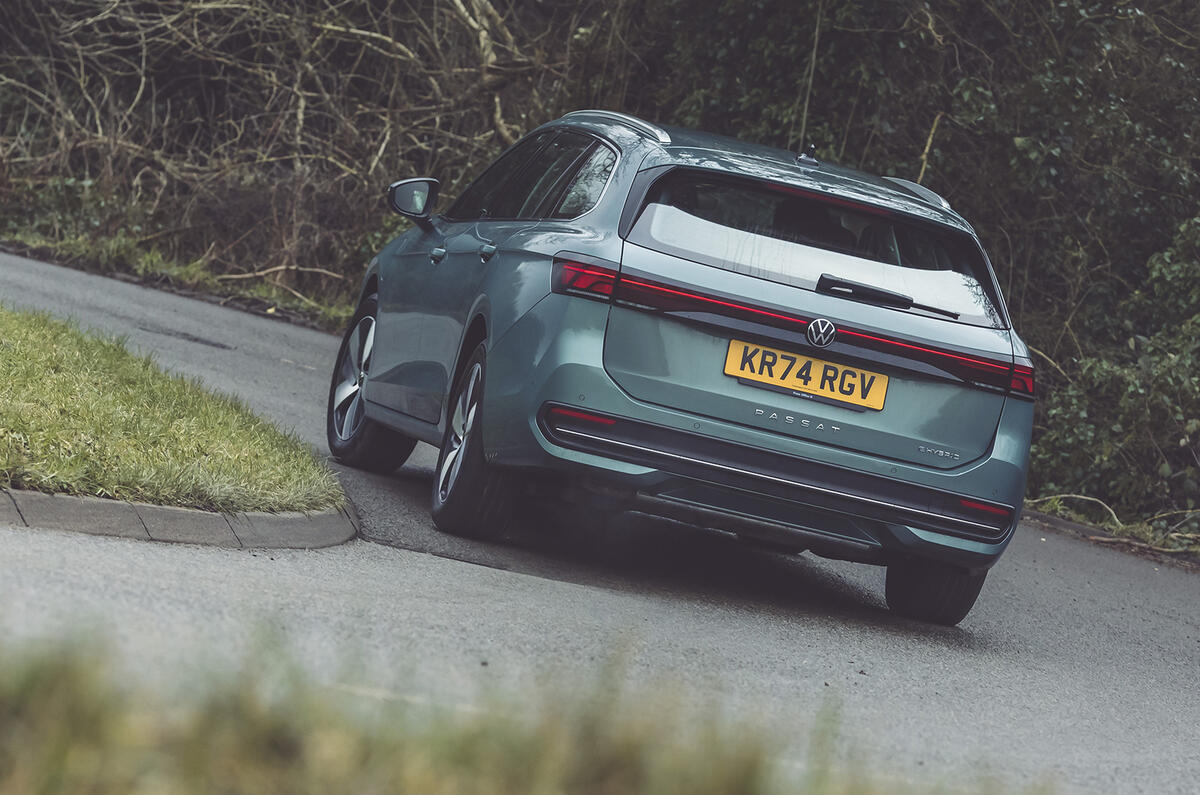
While older ones were originally classic three-box saloons with estate-car derivatives, only then to become 'liftback' five-doors, this Passat comes to you exclusively as a biggish family estate car. Other markets don’t care for them, but here in Europe the estate car remains very popular; and in many cases where rival models of similar size are offered in a choice of saloon and estate bodies, it's the latter that sells the stronger.

The Passat isn't built in Germany, as you might expect, but in Slovakia, alongside the closely related Skoda Superb.

Still, this ninth generation has had quite a different genesis from previous iterations. It was developed alongside the Skoda Superb, with the project actually led by Skoda. It’s not the first time the Passat has been very closely related to another Volkswagen Group car: a number of earlier generations were based on the Audi A4.

The Superb got the full five stars when we road tested it in diesel form in 2025, so it’s a good place for VW to start. The question is whether the Passat can still justify its existence next to its Czech cousin.

Advertisement

DESIGN & STYLING

8
vw passat review 2024 02 side panning

Like the Superb and many other VW Group cars, the ‘B9’ Passat uses the latest version of the familiar MQB Evo platform, which brings two major advancements in particular.

One is the improved in-car tech, which we will get to in due course. On the mechanical side, meanwhile, that new platform confers the plug-in hybrid with a large, 25.7kWh (net) hybrid drive battery, which can be accommodated with minimal impact on luggage space. That is thanks partly to improvements in battery chemistry giving better energy density than previously, and partly to the battery’s placement under the rear seat, with the 45-litre fuel tank now under the boot floor.

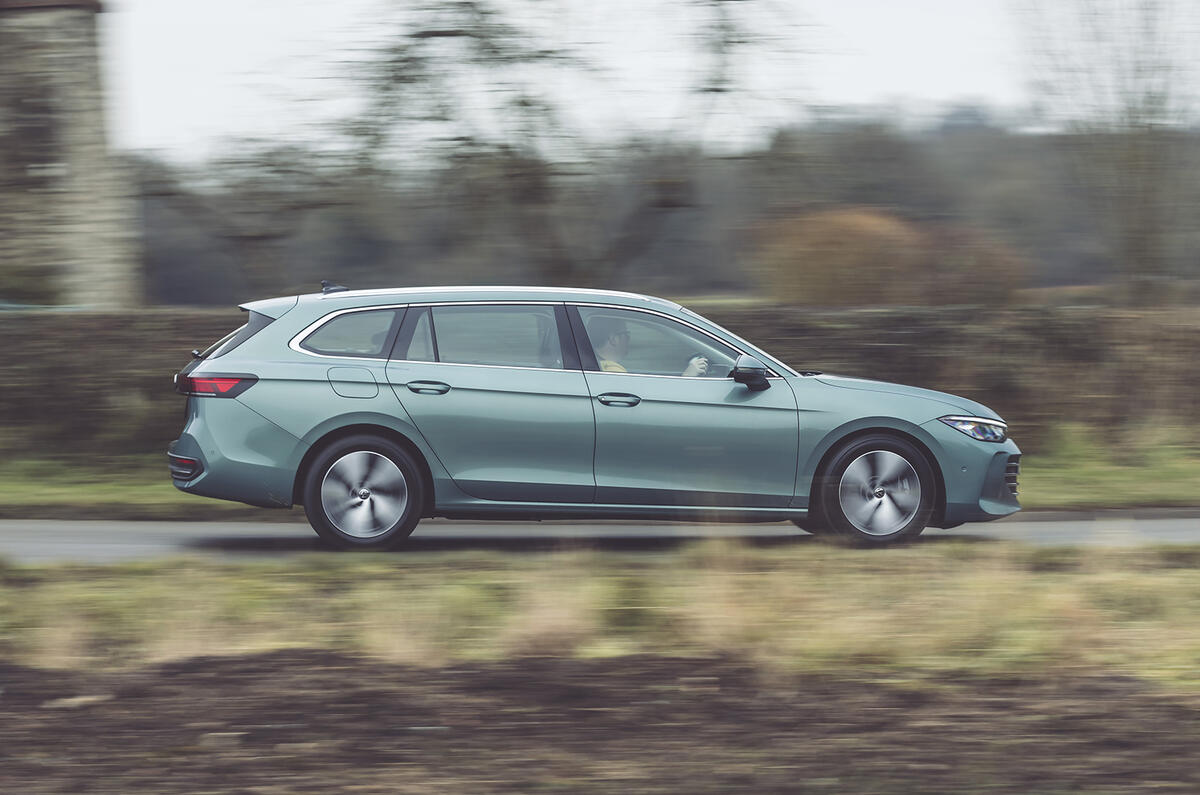
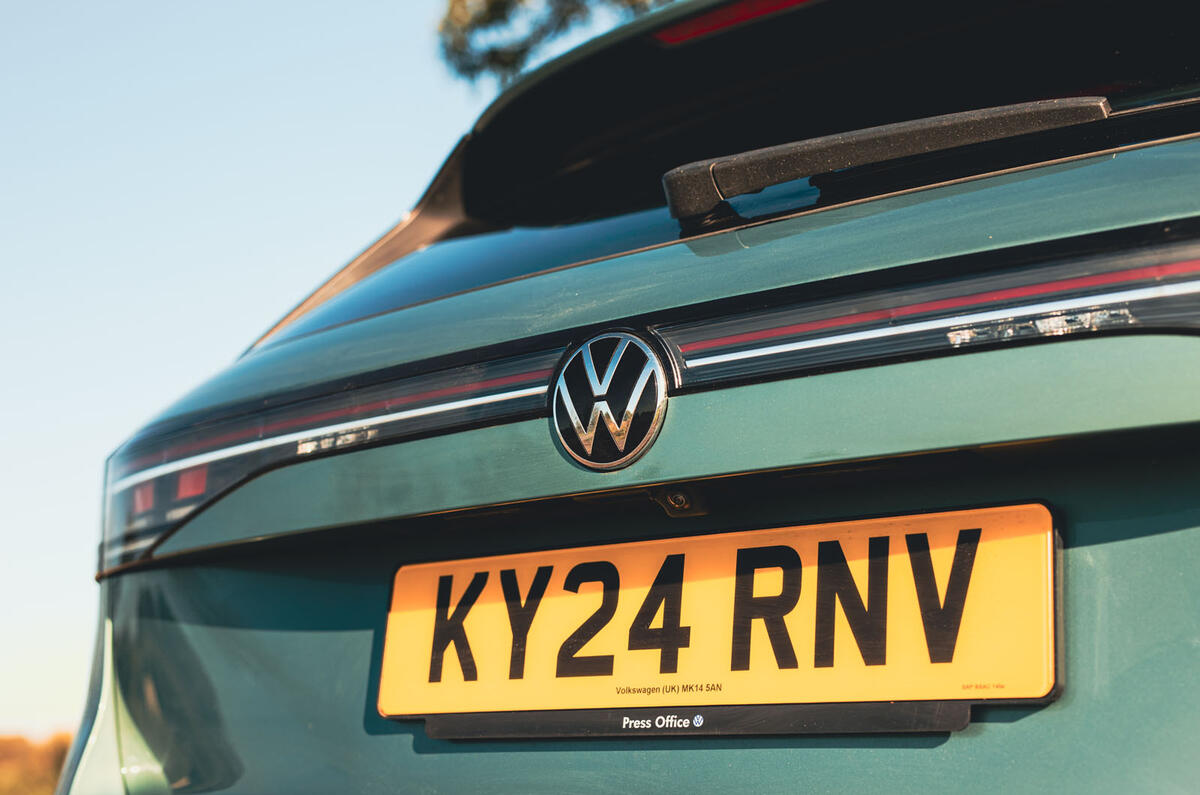
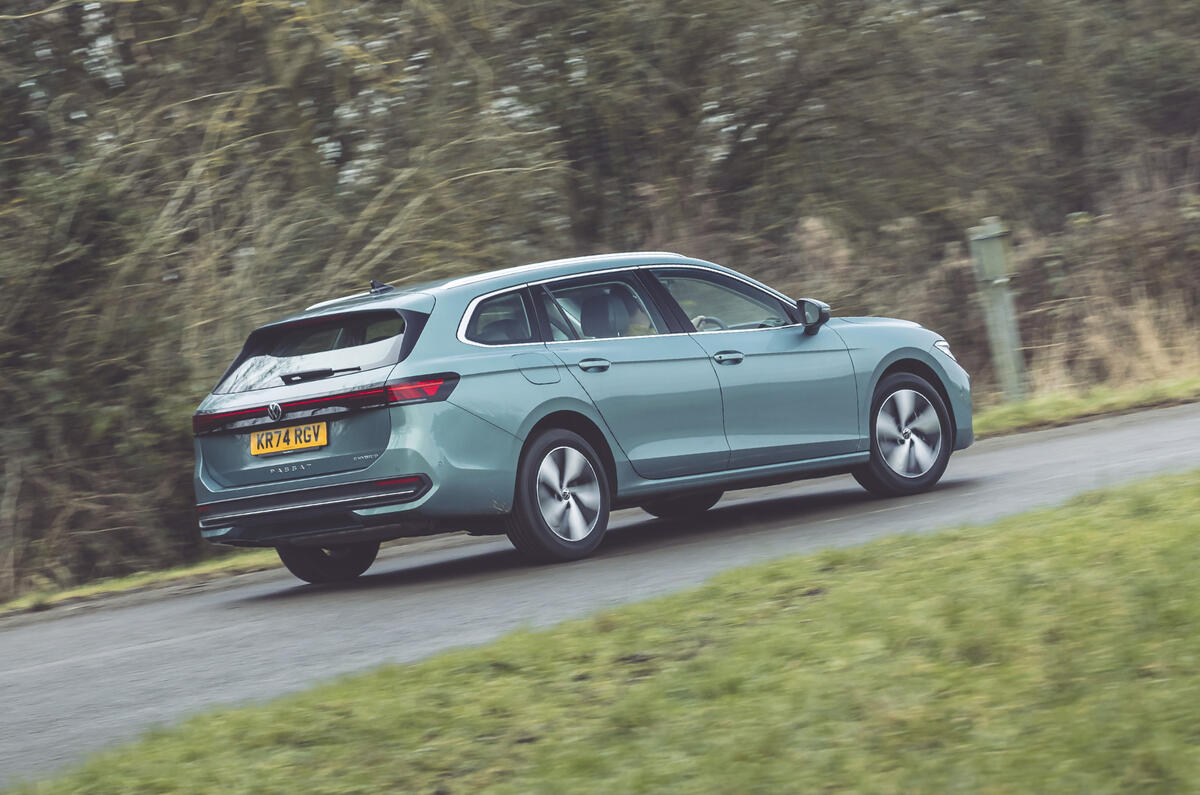
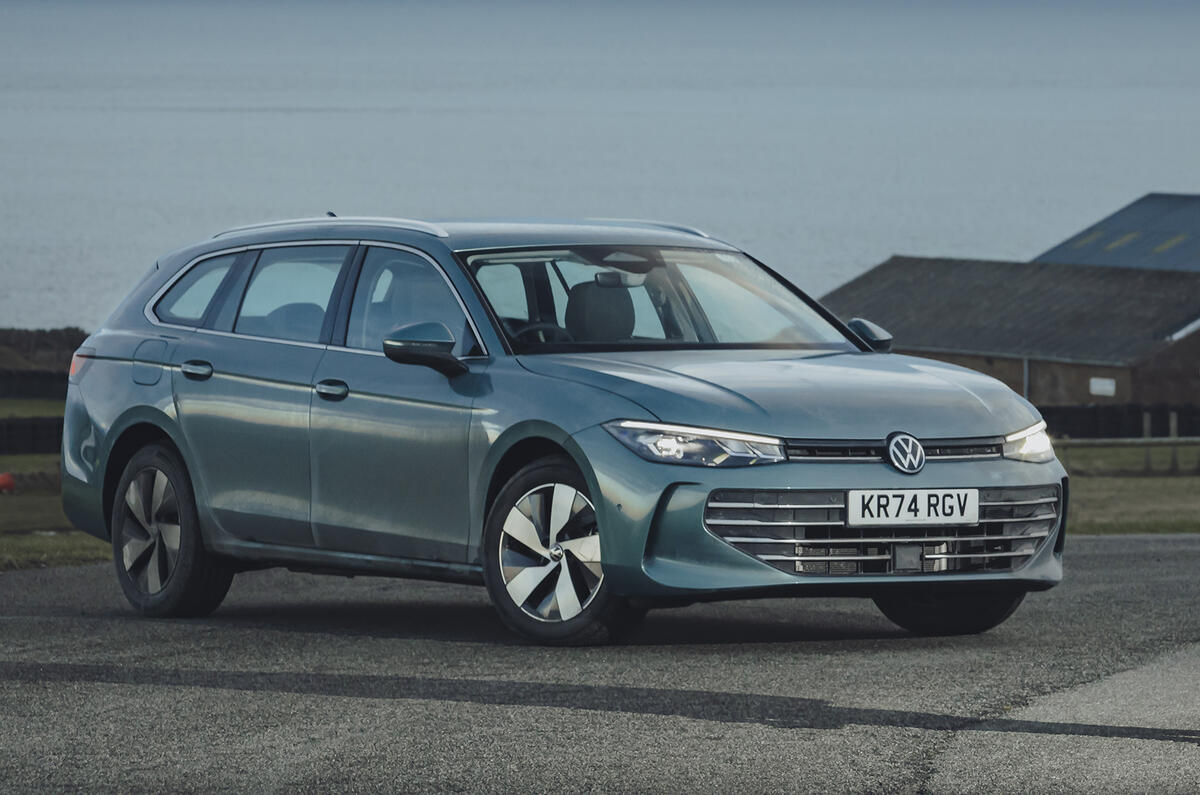
Elegance trim gets you some classic multi-spoke 17in wheels. I like the lack of sporting pretence but, in combination with the tall ride height, there is a hint of MG 5 about the resulting look.

In Germany, the Passat is available with the same wide range of petrol, diesel and PHEV powertrains as the Skoda Superb, and both front- and four-wheel drive - but VW UK is keeping its offering limited. At market launch in 2024, all Passats over here were powered by a 1.5-litre eTSI mild hybrid which got only a little bit of assistance from an integrated starter-generator to produce 148bhp and 184lb ft of torque.

Two plug-in hybrid models were added soon afterwards, where a related engine is joined by a 114bhp electric motor integrated into the six-speed dual-clutch gearbox. The entry-level 'eHybrid' PHEV has system outputs of 201bhp and 258lb ft, while the upper-level model bumps those up to 268bhp and 295lb ft. As a result, the eHybrid 272 is a second faster to 62mph, according to the spec sheet.

The big battery should also take less time to replenish than before. With the right charging hardware, it can take up to 11kW (up from 3.6kW) of AC power, and it can DC rapid-charge at up to 40kW.

Volkswagen also later added a 2.0-litre turbocharged petrol-four to the Passat's UK range, with this unit sending 201bhp and 236lb ft to the front wheels via a seven-speed dual-clutch gearbox. But this engine has since been removed from the showroom range, leaving the Passat range looking a bit truncated and restrictive compared with its Czech relation. If you want R-Line trim, for example, you have to have the eTSI 150 engine; but you can't have that engine in a Passat Elegance, Match or Black Edition.

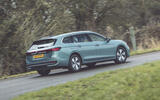
The Passat has grown quite considerably since the eighth generation, to match its Czech cousin. It’s 144mm longer than before, with some of that coming from the 50mm-longer wheelbase, and the rest from the longer overhangs.

INTERIOR

8
vw passat review 2024 08 dash

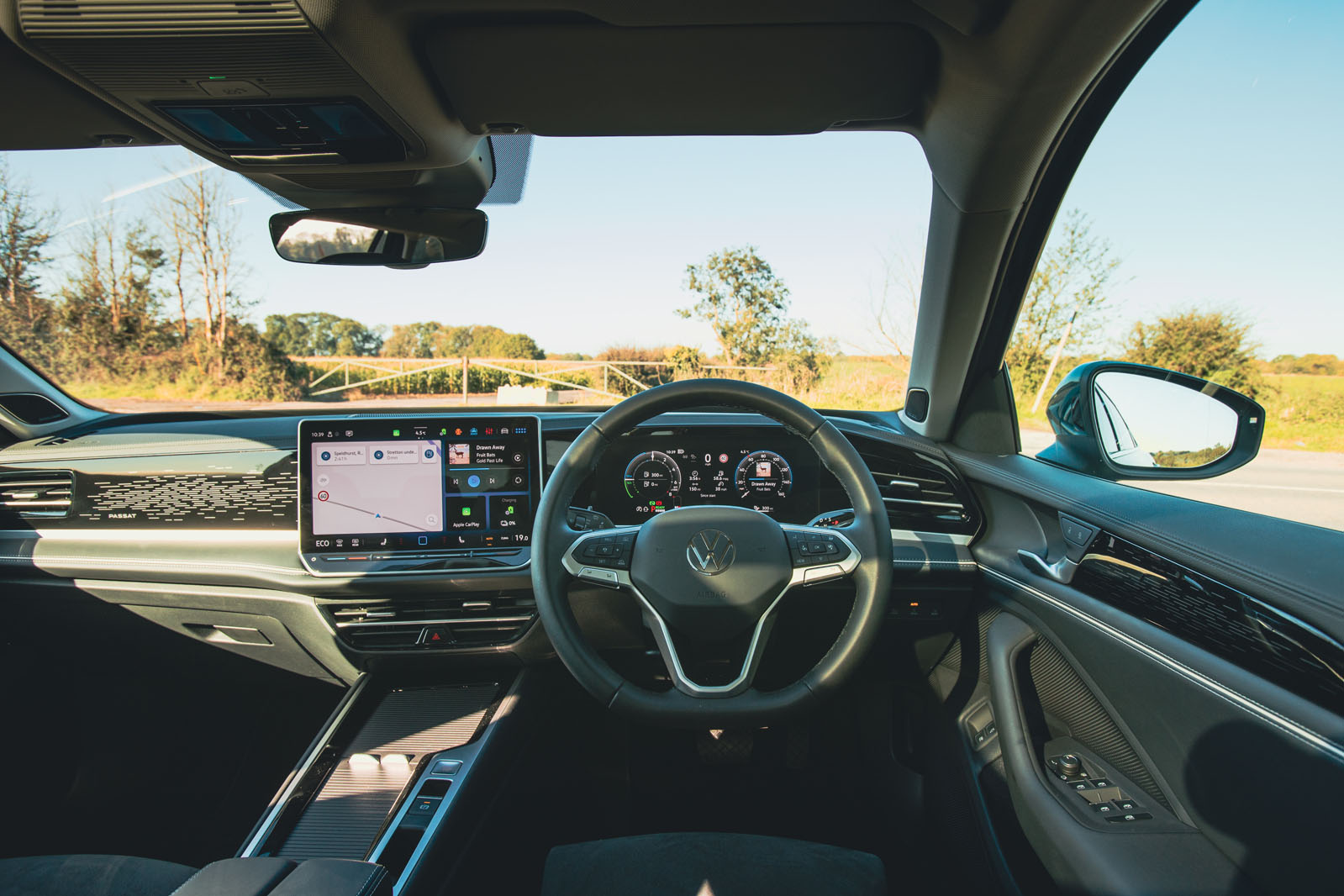
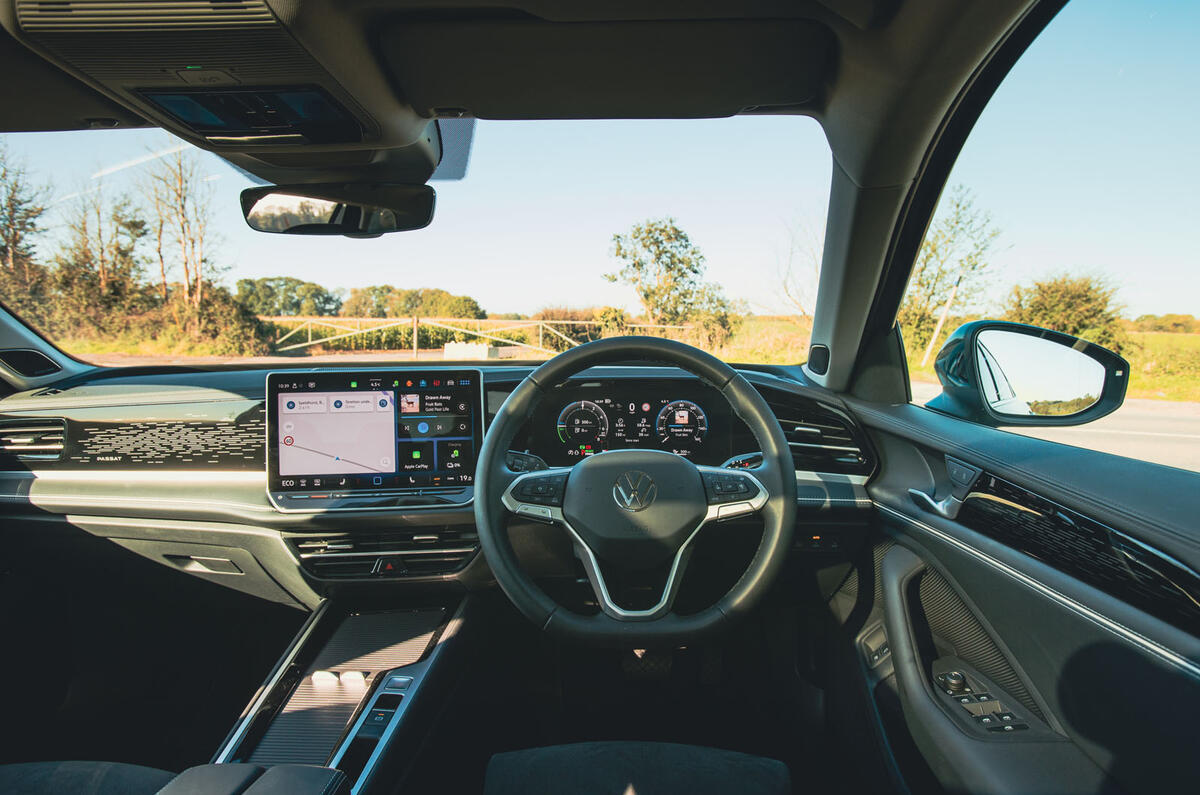
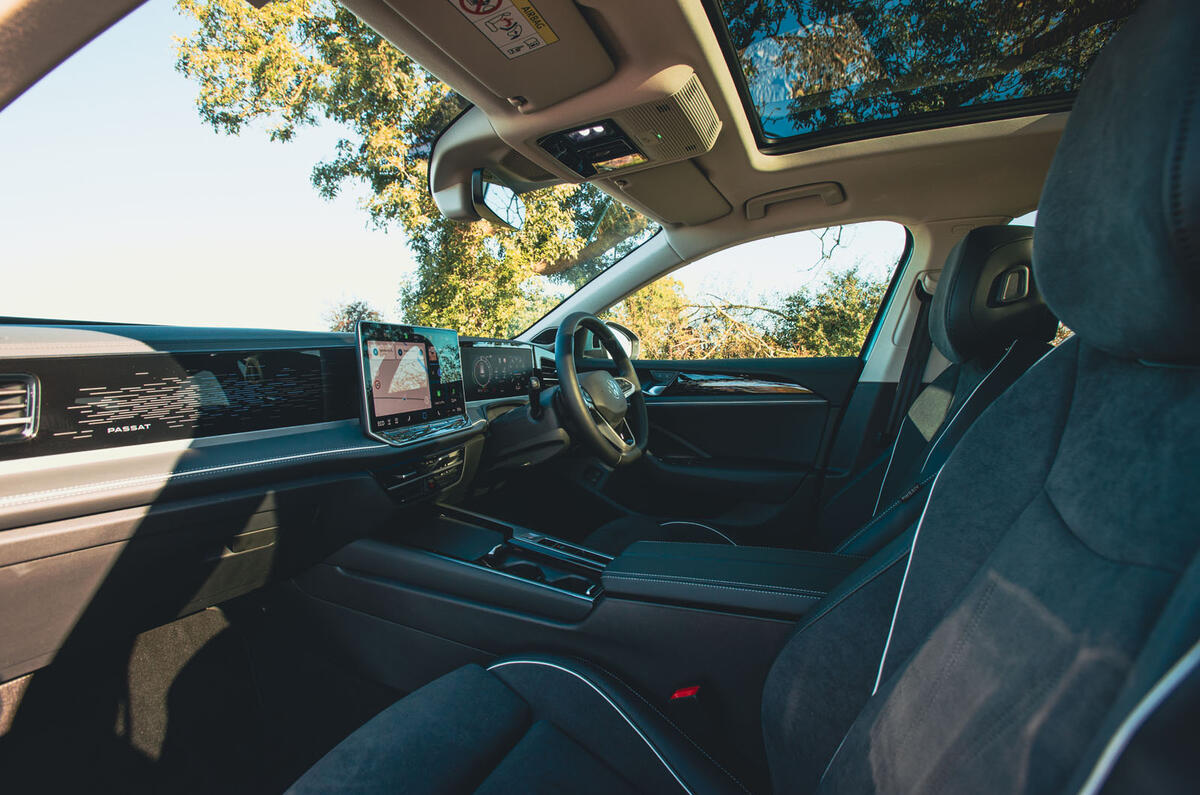
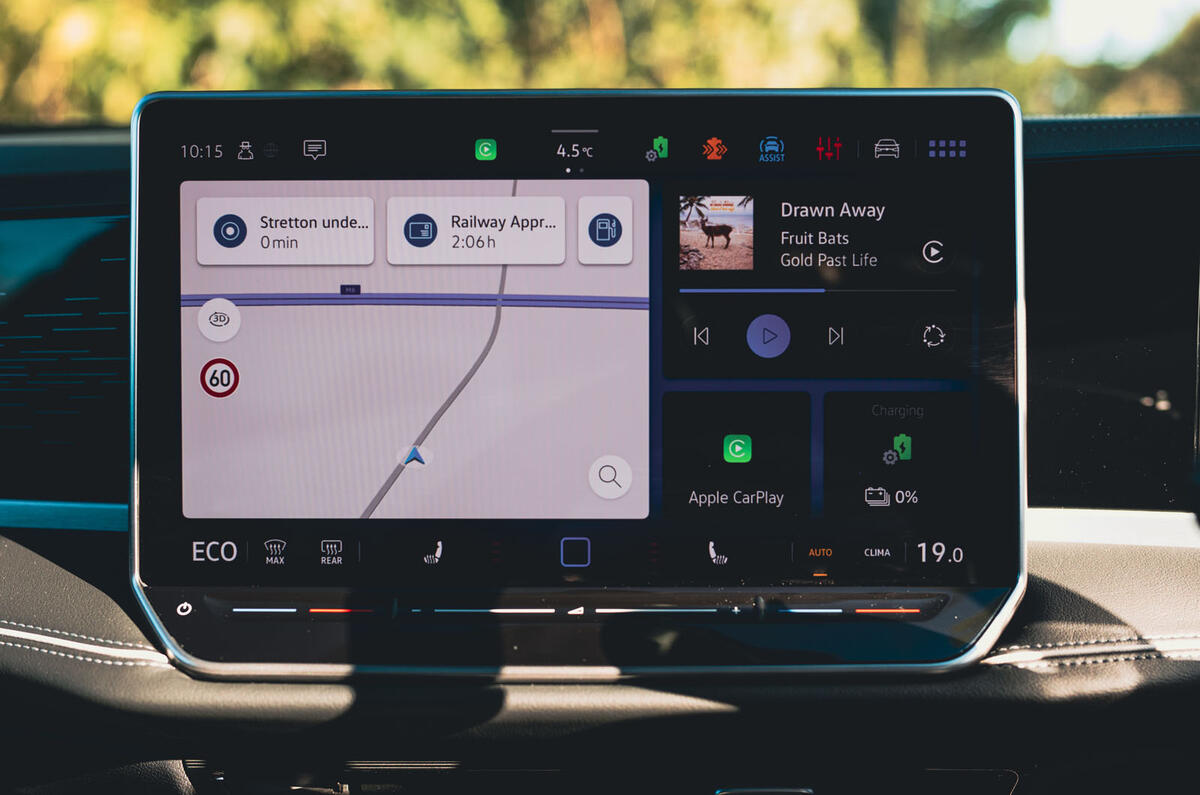
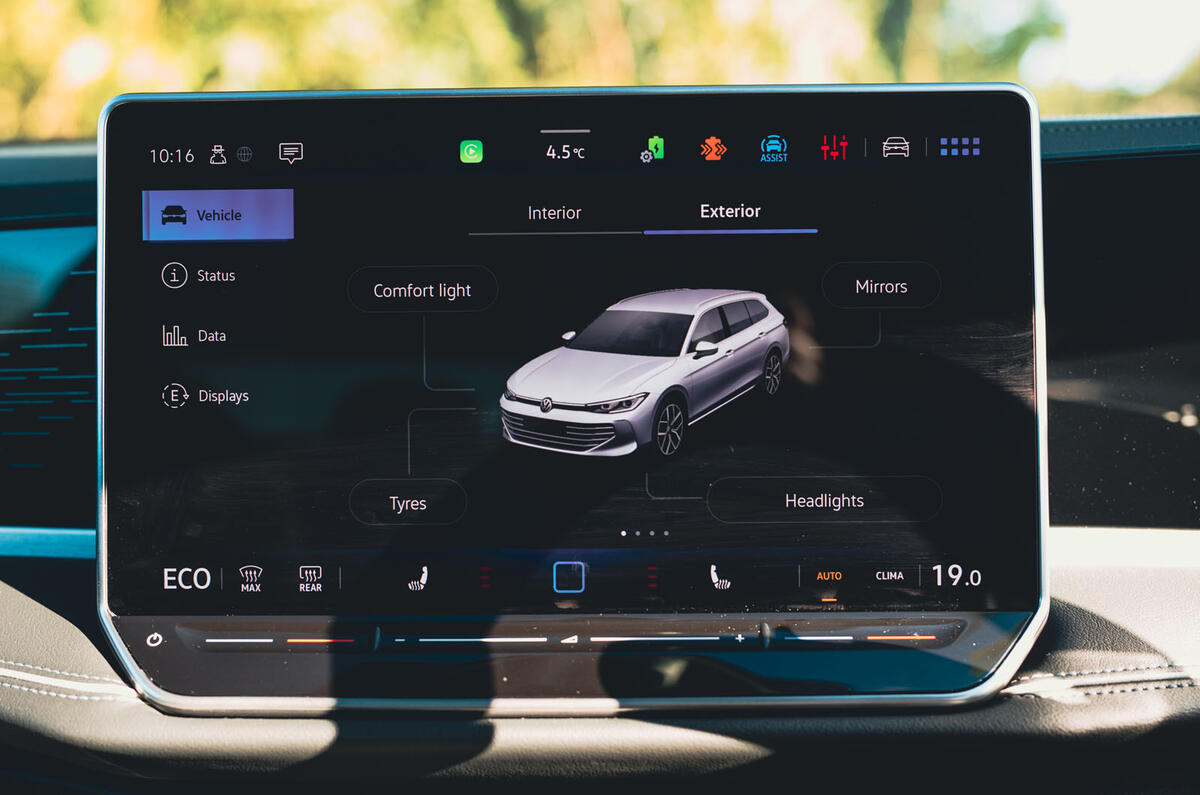
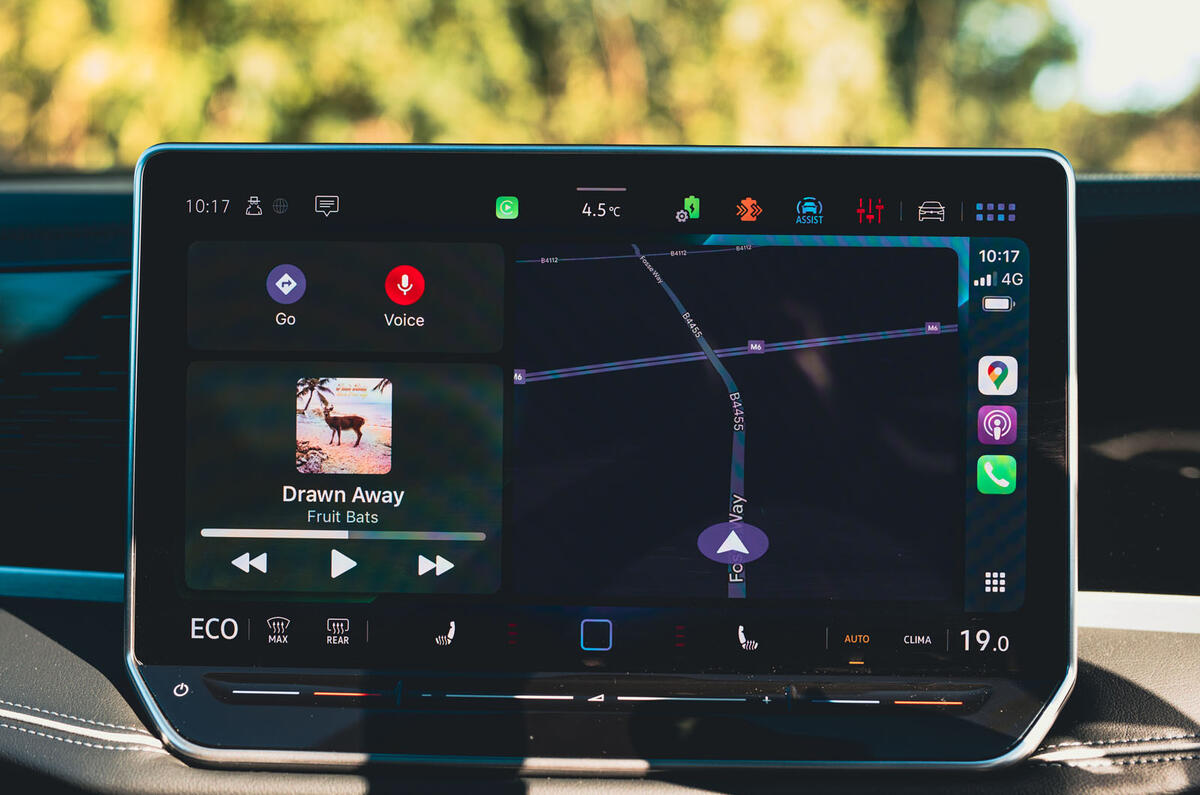
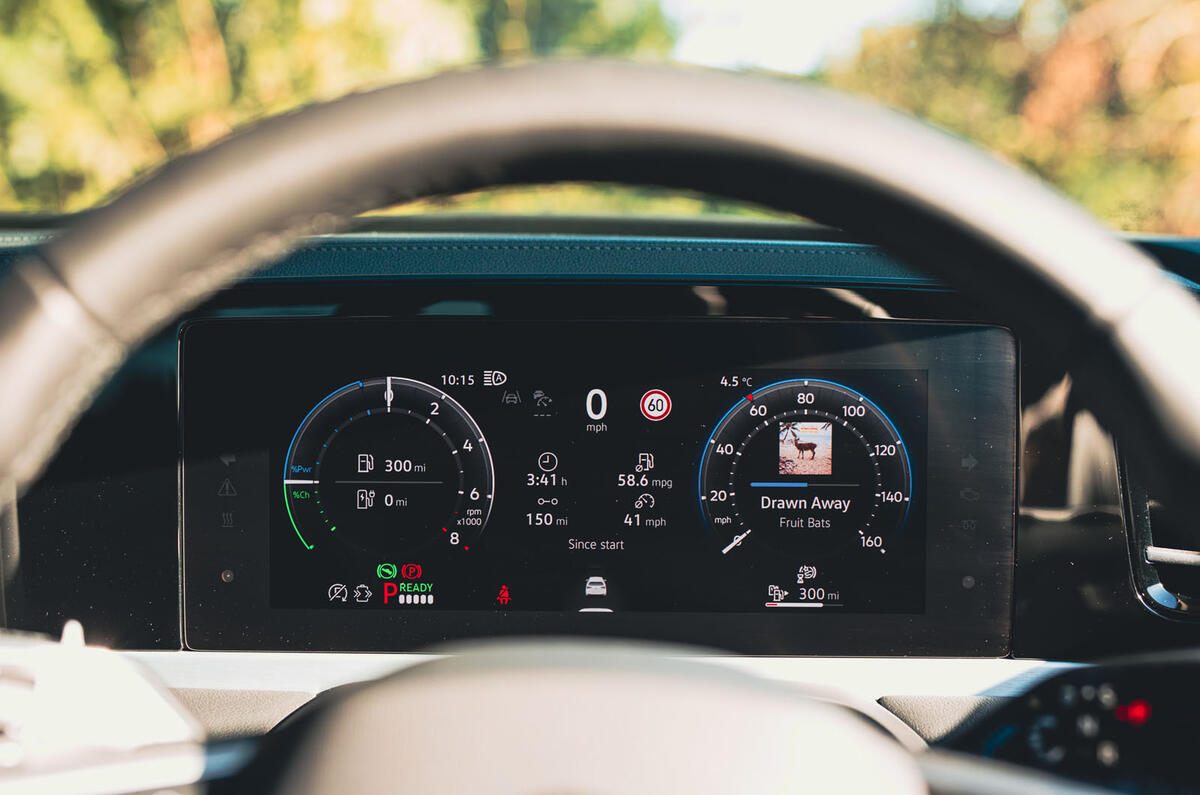
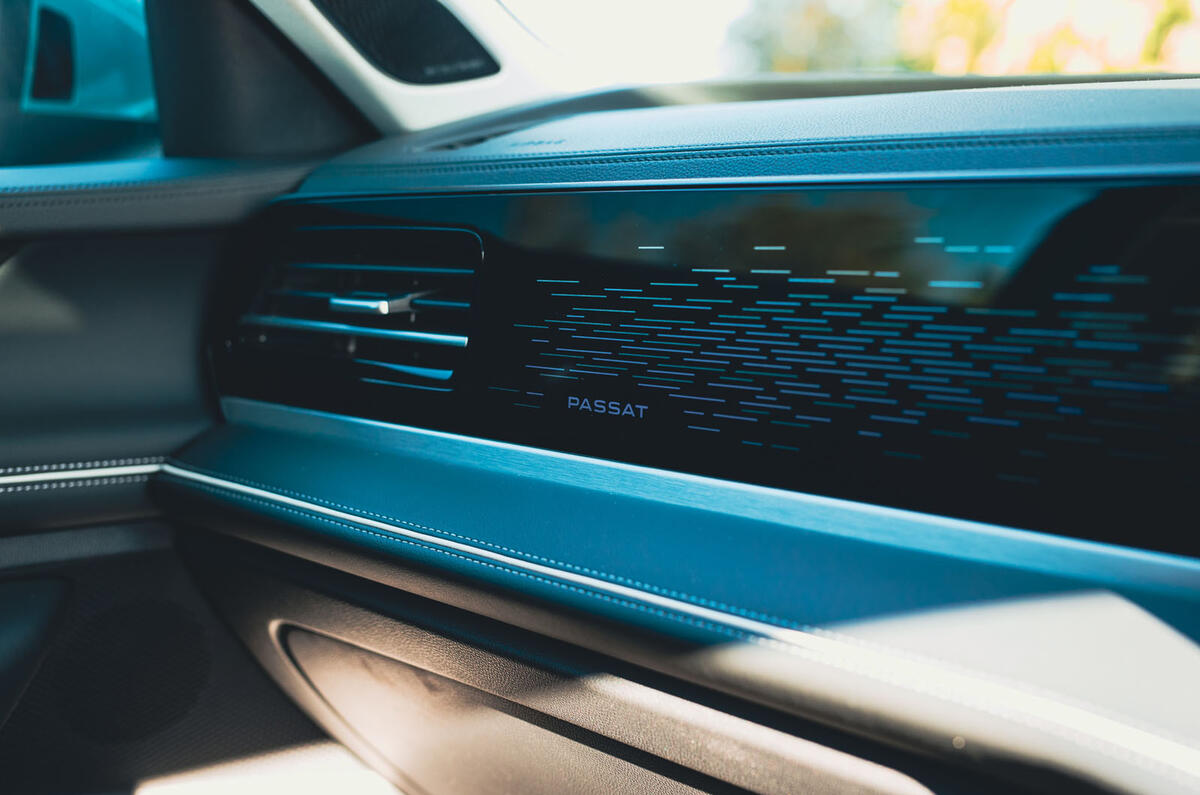
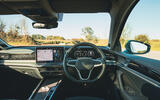
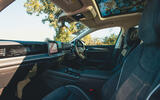
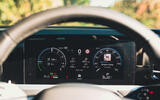
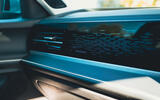
Having been launched in 2015, the previous Passat belonged to a very different generation of VW, so this one’s interior follows a quite different philosophy. Out are the copious buttons and aluminium trim strips, and in come big screens and elaborate mood lighting. The ambience that results is just a little more chintzy and gaudy than VW's longtime standard for understated, functional, solid-feeling interiors - but it only brings the Passat in line with the firm's other models in that respect. And, as far as the current interior design idiom is concerned, it's also very much the way the wind is blowing.

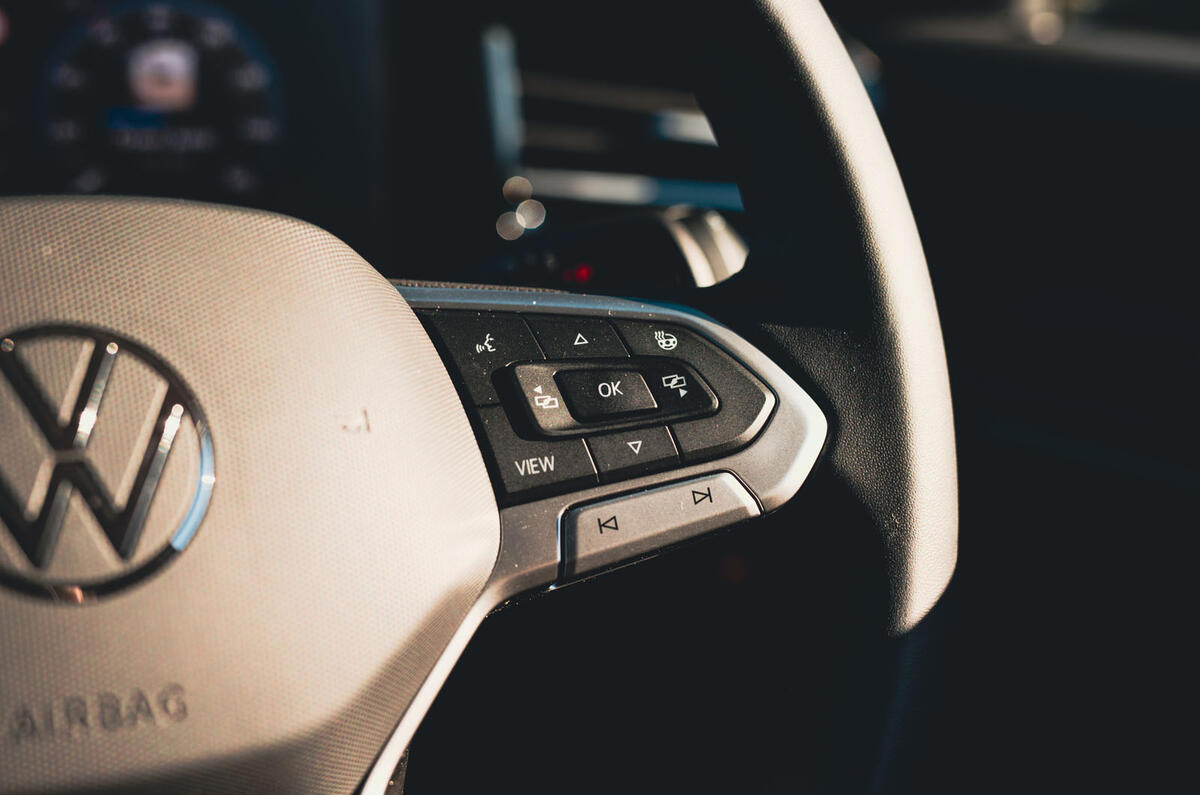
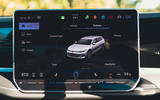
Thankfully, the current generation of VW’s screen interface, known as MIB-4, generally works quite well. Conventional buttons grace the steering wheel, the touch bar for the interior temperature control lights up at night, and the main touchscreen provides plenty of permanent and customisable shortcut buttons. This way, most of the functions that you might need frequently while driving are either permanently displayed, or only one or two taps away.

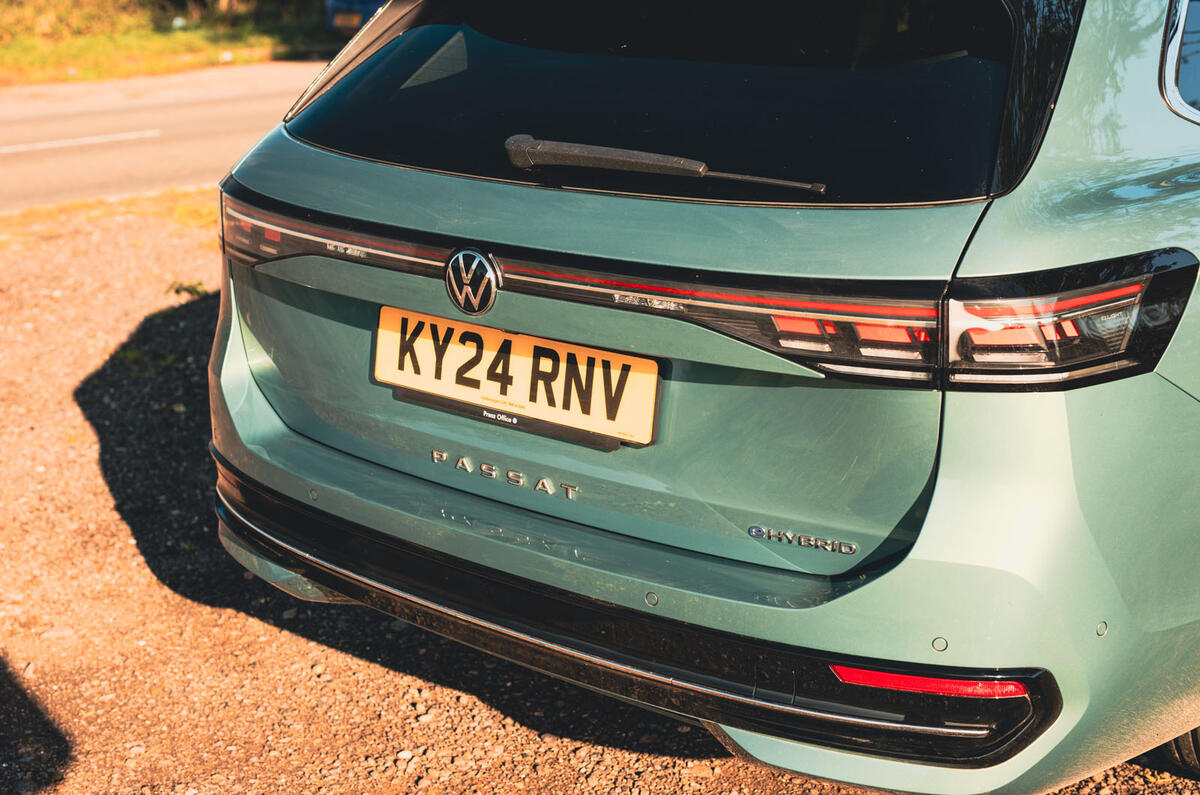
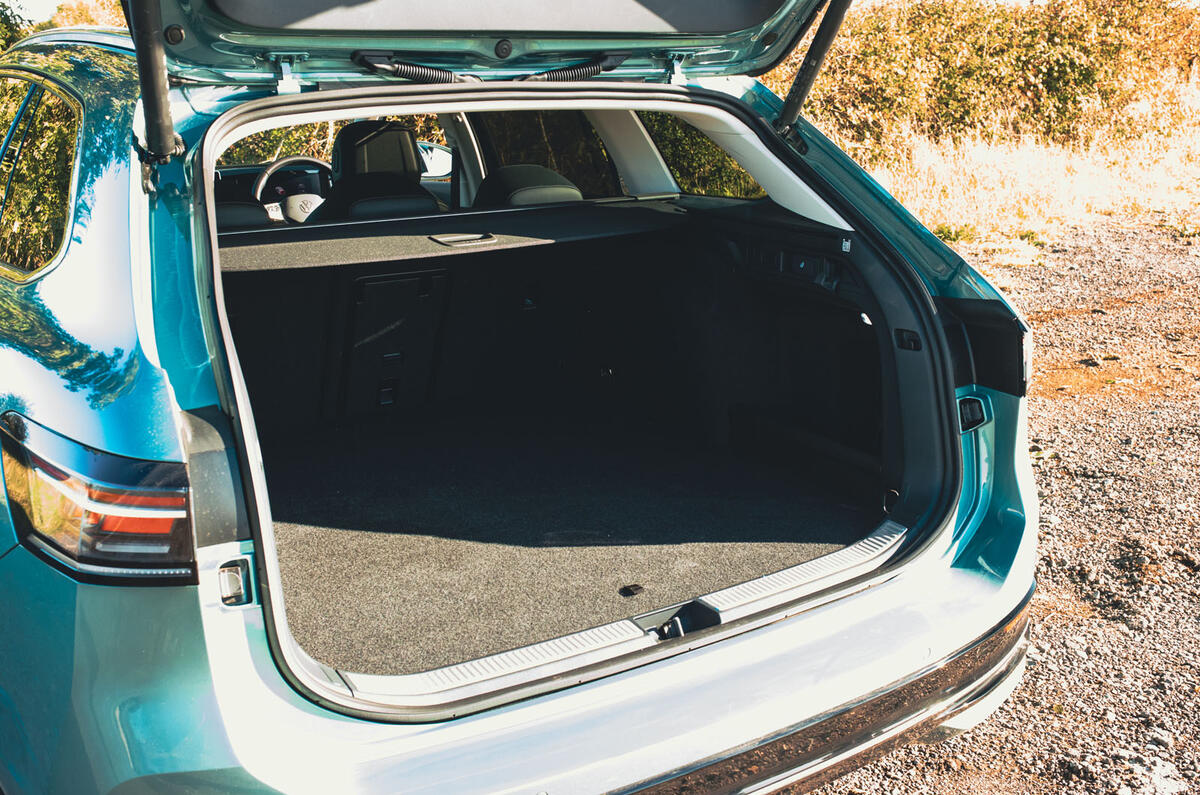
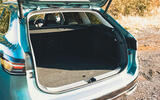
Apart from losing some underfloor space, the boot of the plug-in hybrid Passat isn’t really compromised. It comes with some sturdy hooks and levers to fold the rear seats flat.

It all adds up to an atmosphere that is more modern and tech-heavy than in the Superb, if not necessarily more upmarket. The Skoda’s physical ‘Smart Dials’ also add some really useful tactile controls, without making the cabin look like an Airbus flight deck; here, the Passat could have done with following its sibling's lead more closely. Also, a little bit less money spent on showy features, and more on the actual quality of the materials and switches used, would have been more like VW of old.

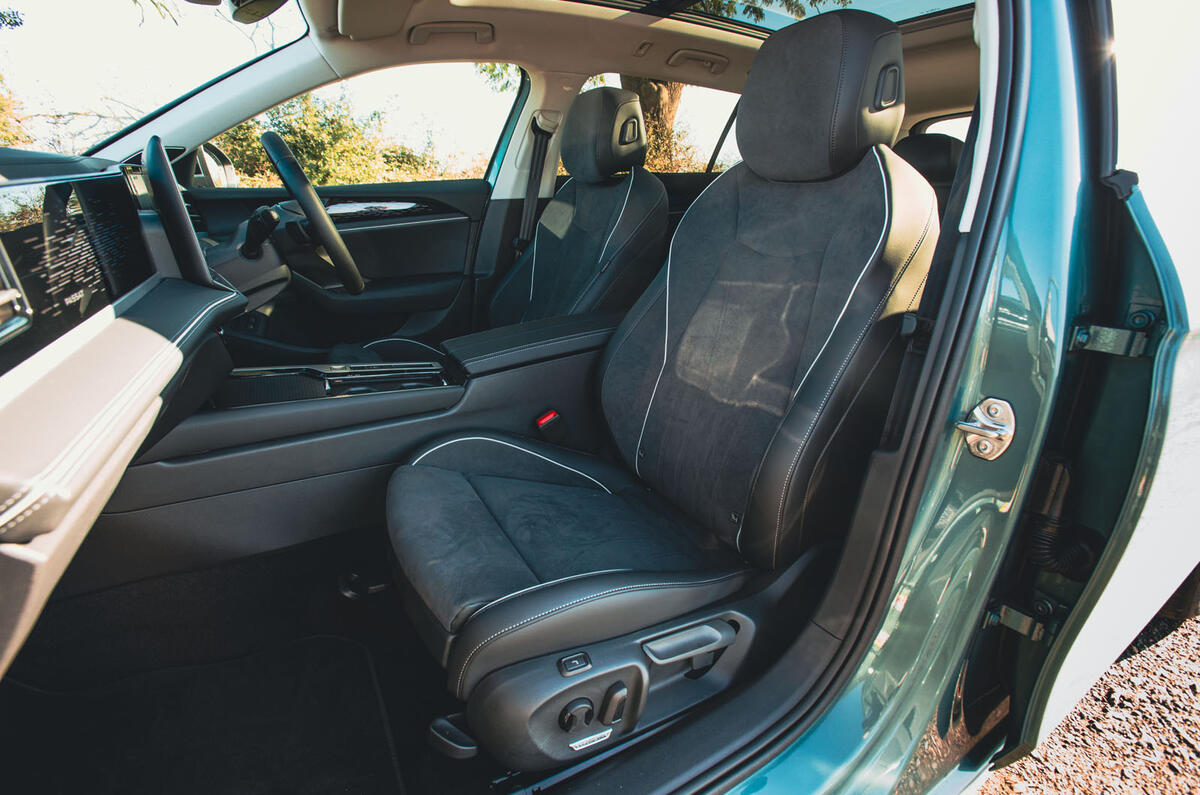
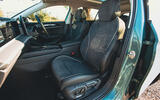
Elegance-trim test cars have the upgraded ErgoActive comfort seats with massage function. They are adjusted through a slightly strange combination of manual and electric controls, but are very comfortable and supportive indeed; and the R-Line-spec sports seats aren't far behind for comfort and support.

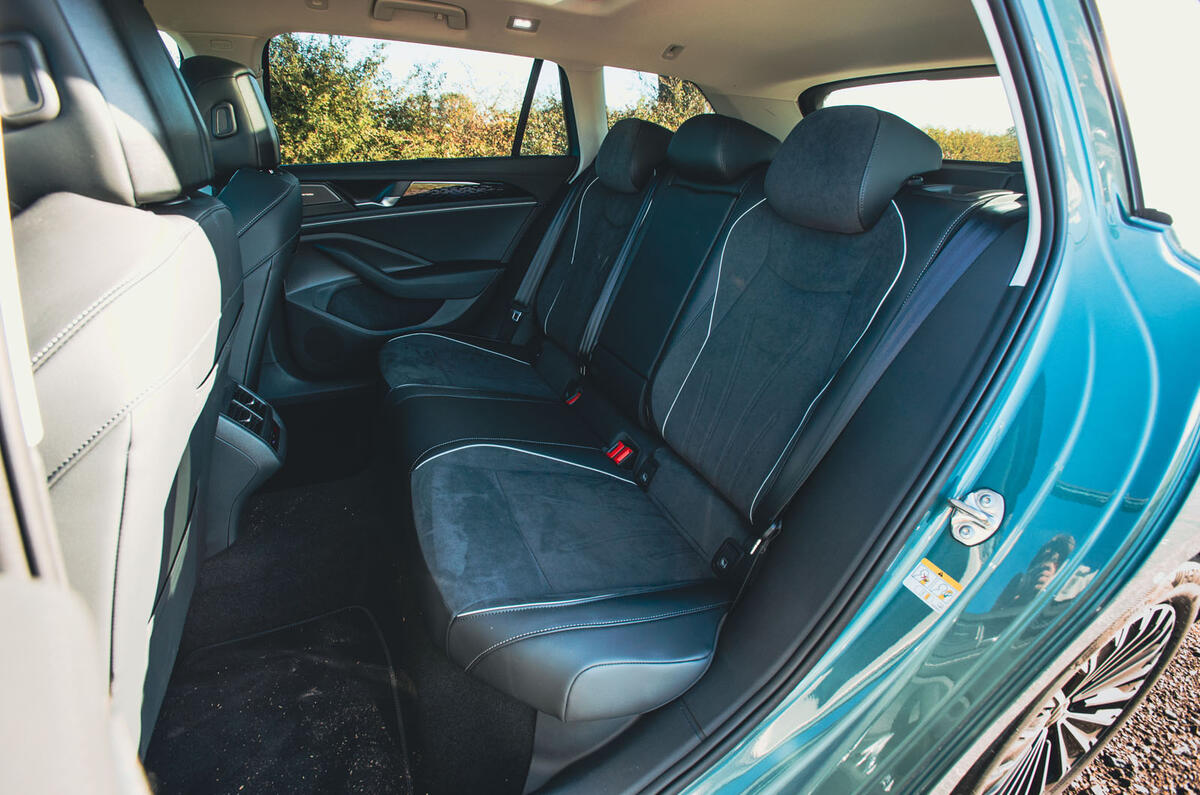
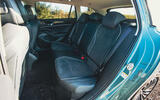
Rear space is outstanding, with the same amount of leg room as in the Superb, and some 65mm more than even in a last-generation Mercedes E-Class.

The boot space is not obviously compromised by the PHEV battery. You lose the mild hybrid’s variable-height floor if you go for a PHEV, but retain some underfloor space to store cables.

ENGINES & PERFORMANCE

8
vw passat review 2024 20 engine

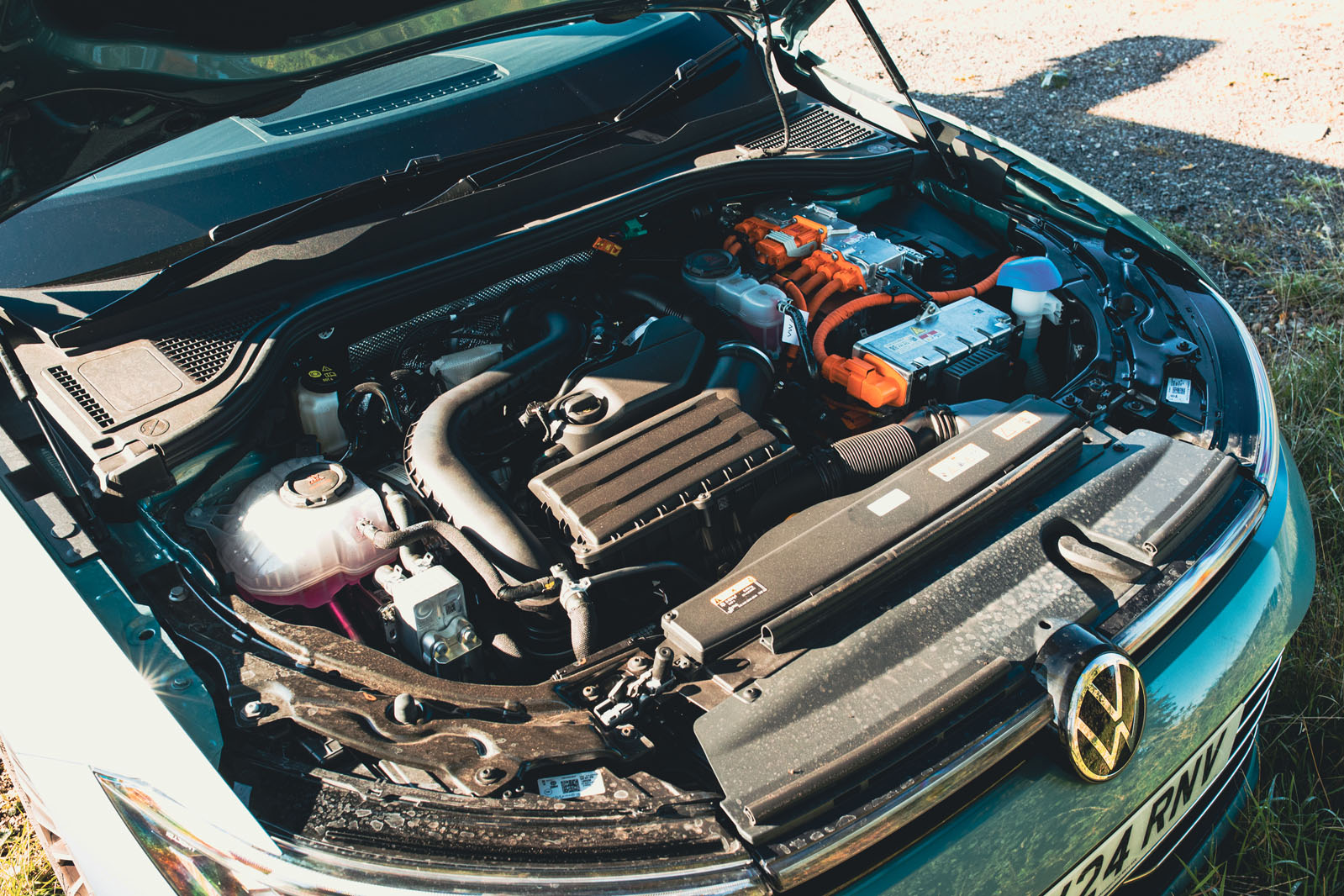
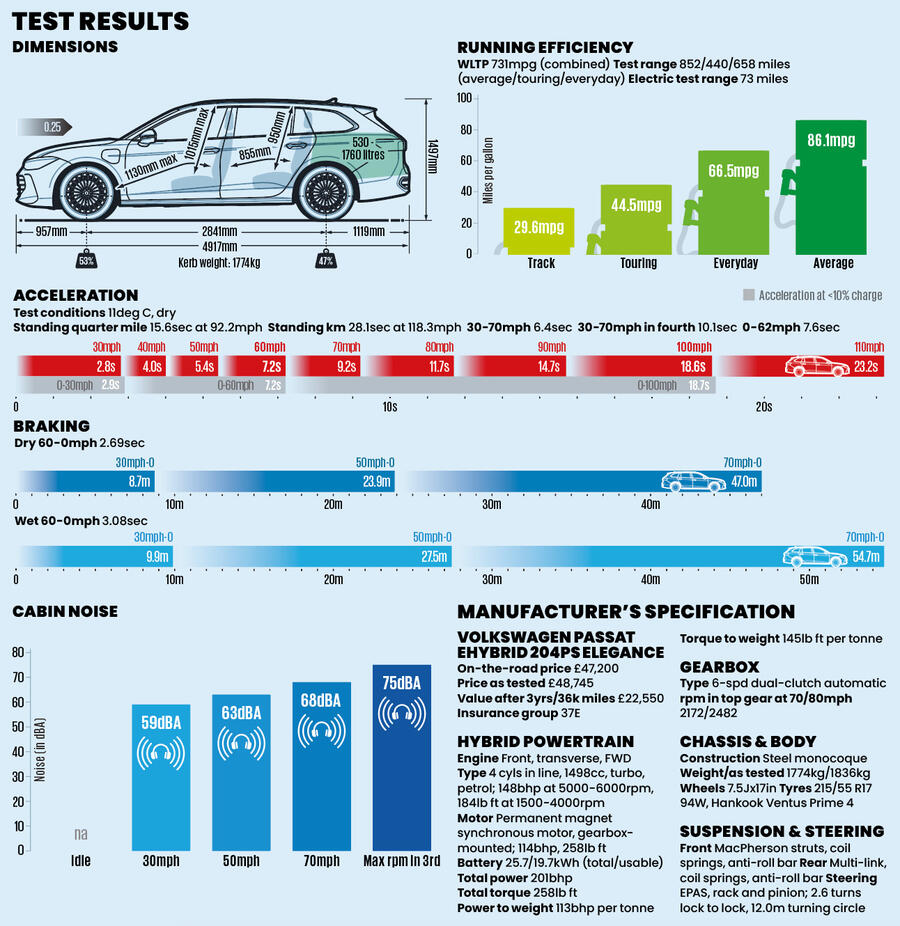
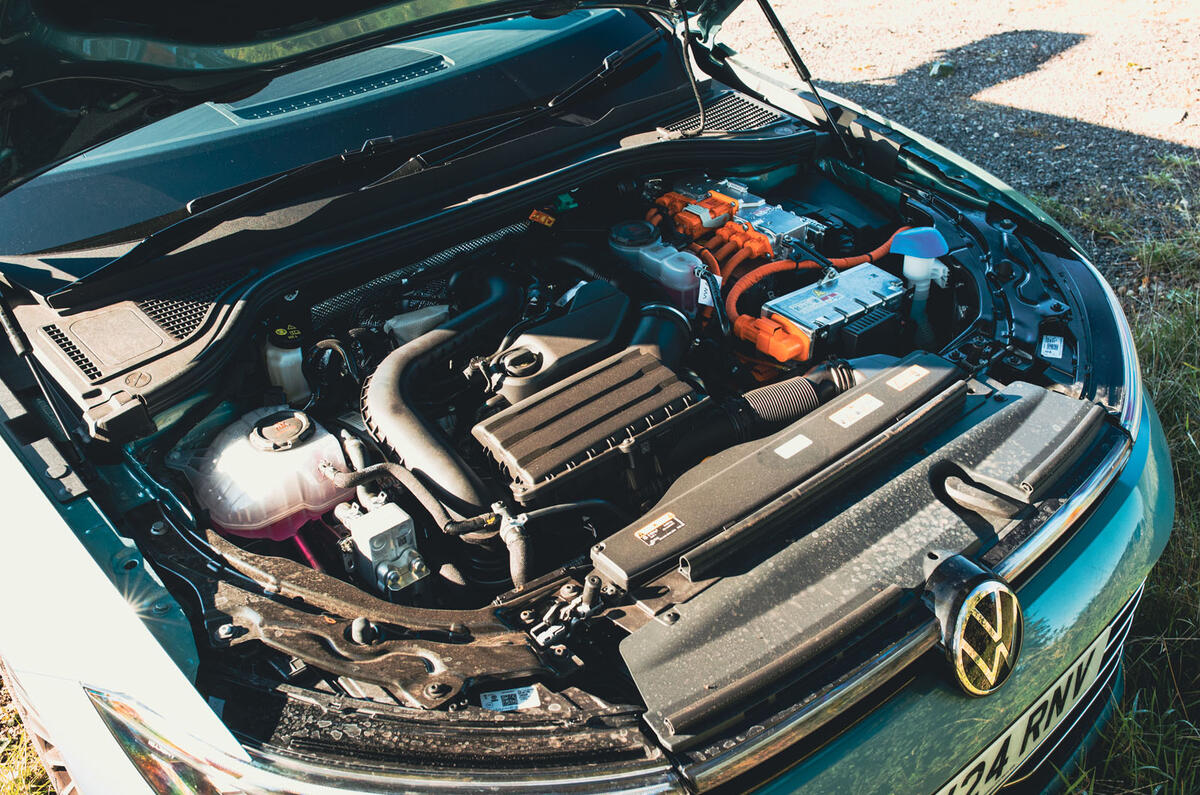
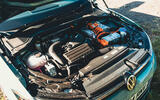
The plug-in hybrid powertrain in the Passat is the same one as in the Golf eHybrid. In dry conditions, we recorded the same 7.2sec 0-60mph time as the Golf, despite the Passat’s heavier body.

Although there is plenty of performance in evidence, this is not a powertrain that gives it up all that willingly. The 1.5-litre petrol becomes quite a strained-sounding lump when revved hard.

However, the electric boost means that it is entirely possible to drive the Passat eHybrid briskly on the road without the engine ever exceeding 3000rpm. Driven in this way, the Passat becomes quite a relaxing car in which to make progress. Although there are sport and manual gearbox modes, they don’t always behave as you would expect and are better left alone.

In pure-electric mode, the Passat took 11.2sec to get to 60mph and 15.2sec to 70mph. Not particularly quick, in other words, but there’s more than enough performance to keep up with traffic, and – with some circumspection – to get up to motorway speeds. Maintaining 70mph in EV mode is entirely unproblematic.

Braking is well-resolved, with predictable response from the brake pedal and off-throttle regen. The strength of the latter can be adjusted by a number of settings, including a freewheeling mode.

Based on wider test experience of the 268bhp version in the VW Tiguan, we would stick with this lower-power hybrid, since the hotter version is just slightly faster but no more dynamic, refined or involving.

Stepping down into a Passat 1.5 eTSI does feel like a significant downgrade on both outright performance and easy drivability; although the 148bhp engine is better-able to move this car along than, for example, a heavier Tiguan or Tayron SUV.

The entry-level petrol has enough torque to get the car moving along fairly authoritatively and unobtrusively up to about 4500rpm, and is fine in the normal run of traffic; though it kicks up a lot more noise, vibration and fuss from there up to 6000rpm, and feels every bit as unwilling when revving hard as it is ineffective. That kills any real appeal in driving the car in its sportier modes, or seeking to carry particular speed.

VW's twin-clutch automatic gearbox typically shifts smoothly when left in D; but it can be a little slow and clumsy when downshifting in manual mode.

RIDE & HANDLING

8
vw passat review 2024 21 front cornering

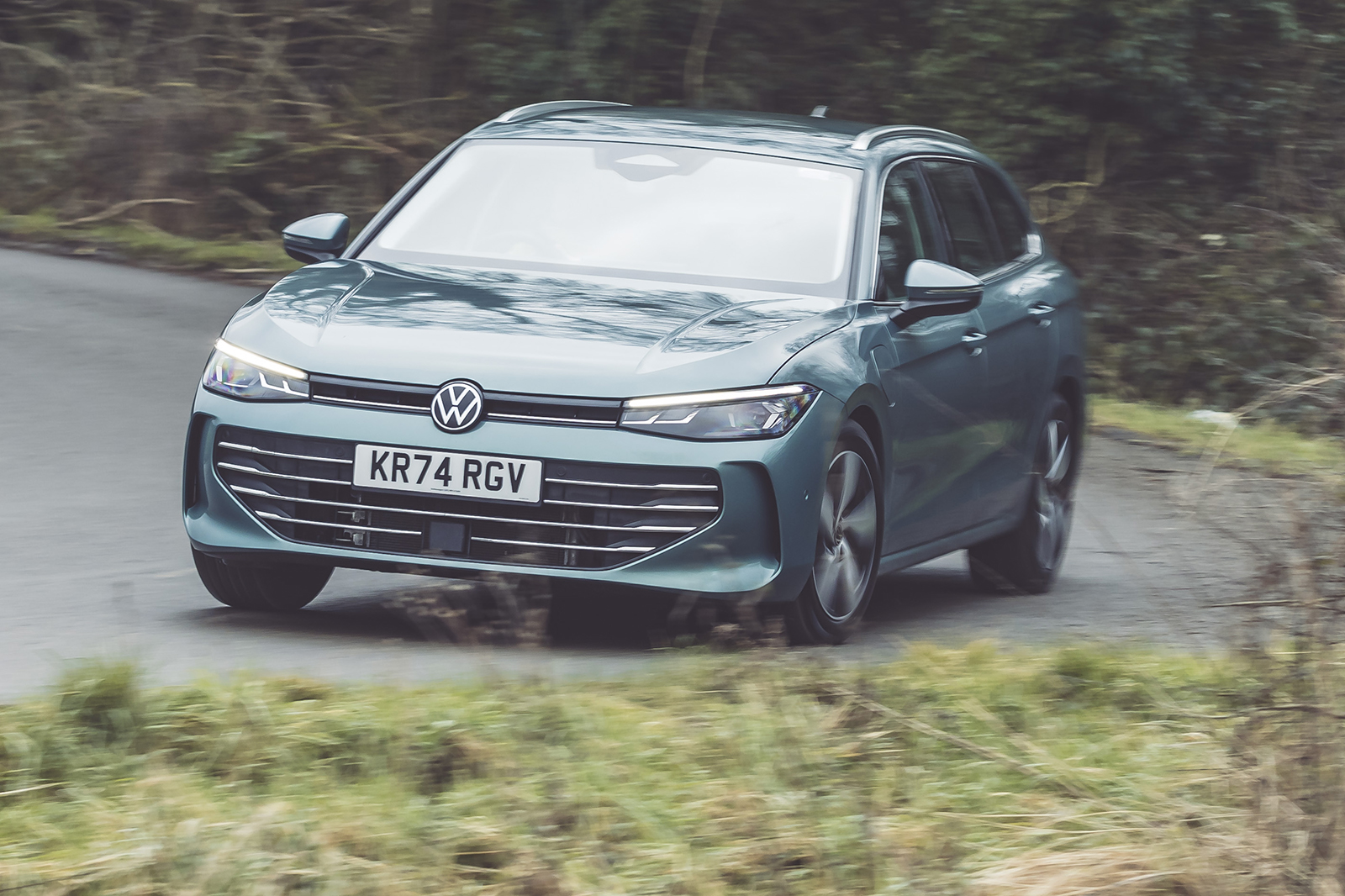
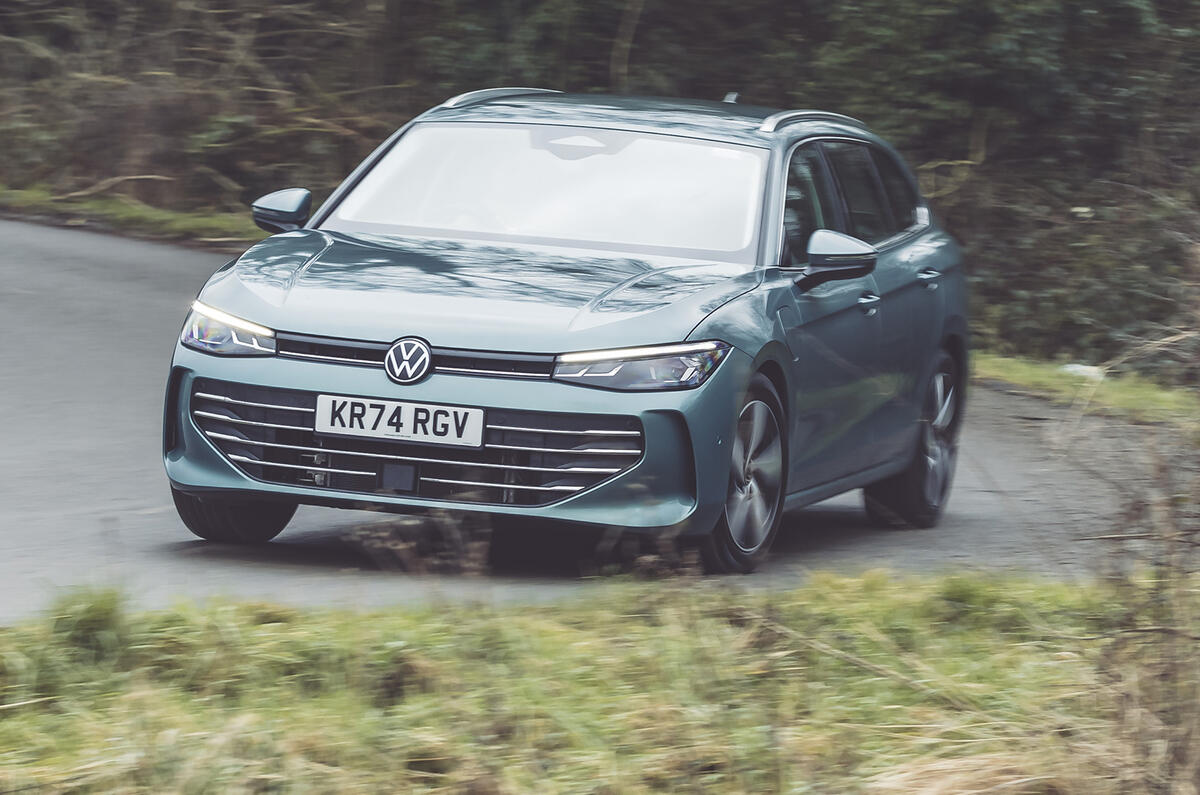
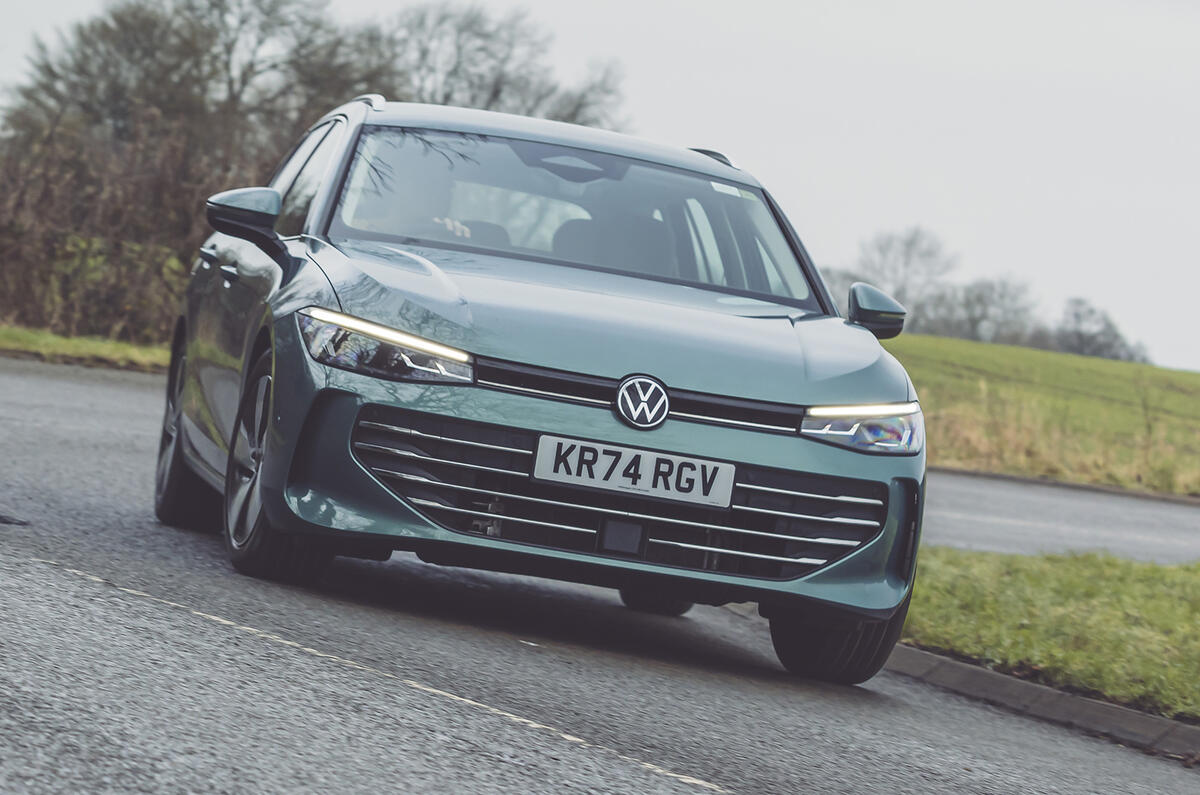
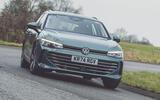
You can typically count on a VW to be 'nice' to drive - rounded, refined, obedient and viceless - and the Passat is no different. Good grip levels in the wet and dry, relaxed but not loose body control, and intuitively sped steering that weights up progressively in bends all add up to a driving experience that is not quite sporty or fun, but just pleasingly harmonious.

As with most modern VWs, we would recommend adding the DCC Pro adaptive dampers; and would avoid R-Line specification, with the biggest fitted alloy wheels. The standard suspension set-up picks up potholes and corrugations slightly too vivdly at lower speeds, although it smooths out nicely at speed. The adaptive dampers add some welcome plushness around town when softened up. The stiffer settings dial out a noticeable chunk of the body lean but keep the ride within the bounds of acceptability. But the car always rides better on 17- and 18in wheels than the biggest-available 19s.

The Passat is nice to drive, but it's not so much fun as it is pleasant. A good GTI version seems a pretty long-odds bet; but we'd like to try one anyway.

Noise isolation on the motorway is fair, without setting new standards; slightly better, again, on smaller fitted wheels.

All Passats come with adaptive cruise control with Travel Assist (automatic lane following) as standard. It’s a fairly mature system that isn’t easily spooked by cars in other lanes and usually slows down smoothly instead of immediately going for the brakes. It can be a bit abrupt in stop/go traffic, and there’s no way to switch it to standard cruise control. The lane keeping assistance and overspeed warning work averagely well and are easy to disable.

MPG & RUNNING COSTS

8
vw passat review 2024 01 front tracking

Pricing for the Passat eHybrid is quite competitive, being on the same level as an equivalent Superb, and cheaper than the Peugeot 508 SW or any of the premium options from Volvo, BMW or Mercedes.

We have already seen it in other VW Group products, but the PHEV system really moves the game on. With a claimed EV range of up to 82 miles, it incurs just 6% company car tax, and there are very few alternatives that can match that. We made it 73 miles before the engine kicked in on a motorway-heavy route, averaging an equally impressive 3.6mpkWh. Given it charges pretty quickly too, you could run this as an EV. As our touring and everyday economy figures indicate, it remains frugal even when the battery runs out.

A few of our attempts at a range test were thwarted by the engine starting up long before the battery was empty, even though we had set the car to EV mode. In normal usage, this would be little more than a slight annoyance, but it seems the car’s control systems still leave something to be desired. This was reinforced by the car refusing to go into drive for about five minutes on two occasions. In both instances, the drive battery was flat, but this simply should not happen.

The 1.5 eTSI is a much simpler prospect, typically returning between 40- and 50mpg during real-world testing depending on the type of route covered. It's with this engine that the car can be at its most cost-effective as well: making it a narrowly sub-£41k prospect, rather than a narrowly sub-£45k one.

VW warranties all its cars for three years or 60,000 miles, and the hybrid drive battery for 70% of its capacity for eight years or 100,000 miles. Other manufacturers offer stronger warranties, and reliability surveys show that MQB cars are far from trouble-free.

VERDICT

8
vw passat review 2024 23 static

Volkswagen had some difficult years at the beginning of the decade, but it seems to have turned a corner with its core models, and to be returning to some kind of form.

With the Passat Estate, it's demonstrating that it can still make a traditional, practical, functional, conventional, comfortable and understated family car, and make one well.

The Passat is an accomplished all-rounder, but so is the Skoda Superb – and that car can be thousands less expensive, depending on configuration.

Little about the Passat strikes a discordant note with any of that; and yet much about it seems entirely up to date. There's a little more unnecessary glitz and digital glare about its cabin than some might want from a Volkswagen, true; but its drive is mostly refined, assured, mature and comfortable, its interior is roomy, solid and versatile, and its PHEV powertrains in particular combine great electric range and low benefit in kind running costs with strong performance and drivabilty - and real potential to save money at the pump.

The car deserves the full breadth of the model range it used to have, of course. There's no good reason to deny customers a TDI diesel, a gutsy four-wheel drive petrol, or a saloon or fastback body if they'd prefer one. There's no reason to be so prescriptive with combinations of engine and trim level, either. Or, by lack of choice, to force people to buy an entry-grade petrol model whose decidedly ordinary 1.5-litre engine simply doesn't show this car at its best.

In those respects, the Passat feels like the poorer relative to the Skoda Superb; even if, in many areas, it's nothing of the sort.


Charlie Martin

Charlie Martin Autocar
Title: Staff Writer

As part of Autocar’s news desk, Charlie plays a key role in the title’s coverage of new car launches and industry events. He’s also a regular contributor to its social media channels, creating content for Instagram, Tiktok, Facebook and Twitter.

Charlie joined Autocar in July 2022 after a nine-month stint as an apprentice with sister publication What Car?, during which he acquired his gold-standard NCTJ diploma with the Press Association.

He is the proud owner of a Mk4 Mazda MX-5 but still feels pangs of guilt over selling his first car, a Fiat Panda 100HP.

Illya Verpraet

Illya Verpraet Road Tester Autocar
Title: Road Tester

As a road tester, Illya drives everything from superminis to supercars, and writes reviews and comparison tests, while also managing the magazine’s Drives section. Much of his time is spent wrangling the data logger and wielding the tape measure to gather the data for Autocar’s in-depth instrumented road tests.

He loves cars that are fun and usable on the road – whether piston-powered or electric – or just cars that are very fit for purpose. When not in test cars, he drives an R53-generation Mini Cooper S or a 1990 BMW 325i Touring.

Matt Saunders

Matt Saunders Autocar
Title: Road test editor

As Autocar’s chief car tester and reviewer, it’s Matt’s job to ensure the quality, objectivity, relevance and rigour of the entirety of Autocar’s reviews output, as well contributing a great many detailed road tests, group tests and drive reviews himself.

Matt has been an Autocar staffer since the autumn of 2003, and has been lucky enough to work alongside some of the magazine’s best-known writers and contributors over that time. He served as staff writer, features editor, assistant editor and digital editor, before joining the road test desk in 2011.

Since then he’s driven, measured, lap-timed, figured, and reported on cars as varied as the Bugatti Veyron, Rolls-Royce PhantomTesla RoadsterAriel Hipercar, Tata Nano, McLaren SennaRenault Twizy and Toyota Mirai. Among his wider personal highlights of the job have been covering Sebastien Loeb’s record-breaking run at Pikes Peak in 2013; doing 190mph on derestricted German autobahn in a Brabus Rocket; and driving McLaren’s legendary ‘XP5’ F1 prototype. His own car is a trusty Mazda CX-5.