Tech upgrades and driveline refinements headline the most extensive facelift in the limousine’s 54-year history

Find Mercedes-Benz S-Class deals
Other Services
Sell your car
84% get more money with

Six years after its UK launch, the seventh-generation Mercedes-Benz S-Class remains competitive enough for this facelift to focus on detailed improvement rather than wholesale reinvention.

The changes, while hardly dramatic on the outside, are numerous and run deep. Mercedes describes it as the most comprehensive facelift ever applied to an S-Class, claiming the 2026 model adopts more than 2700 revised or completely new components and functions.

Advertisement

DESIGN & STYLING

Mercedes Benz S Class 4

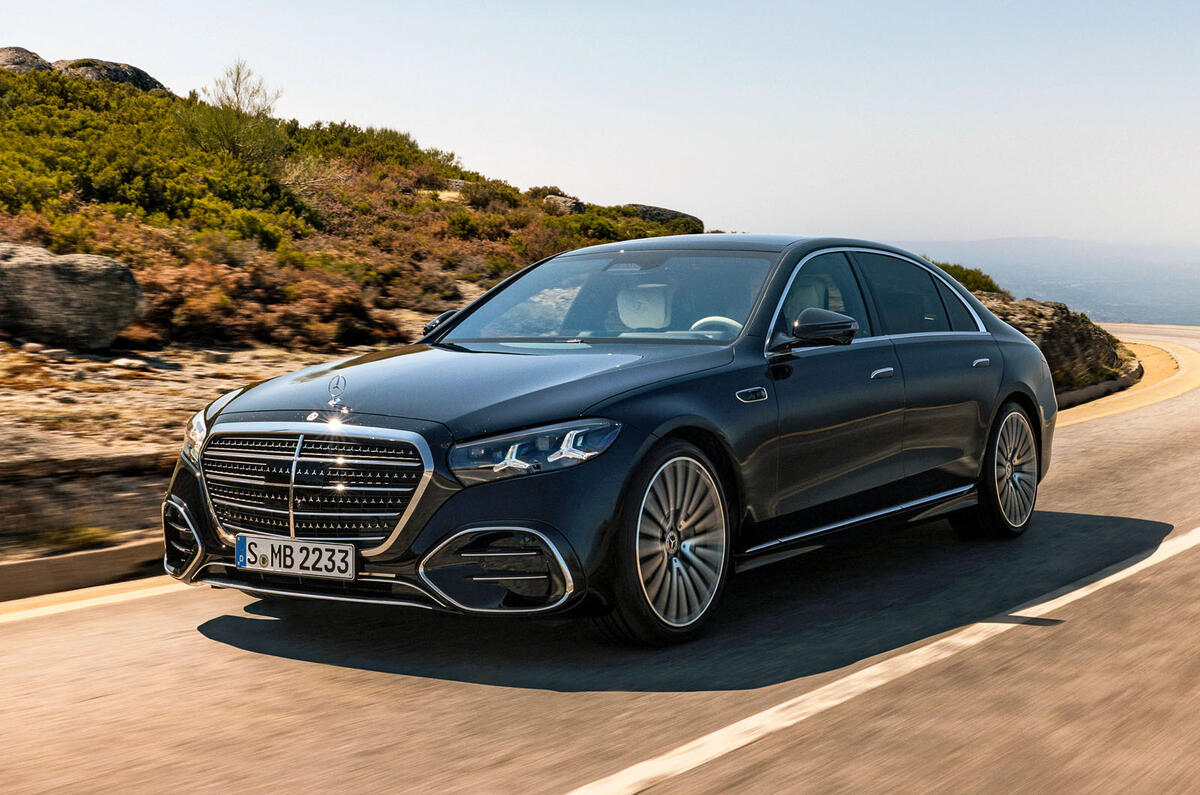
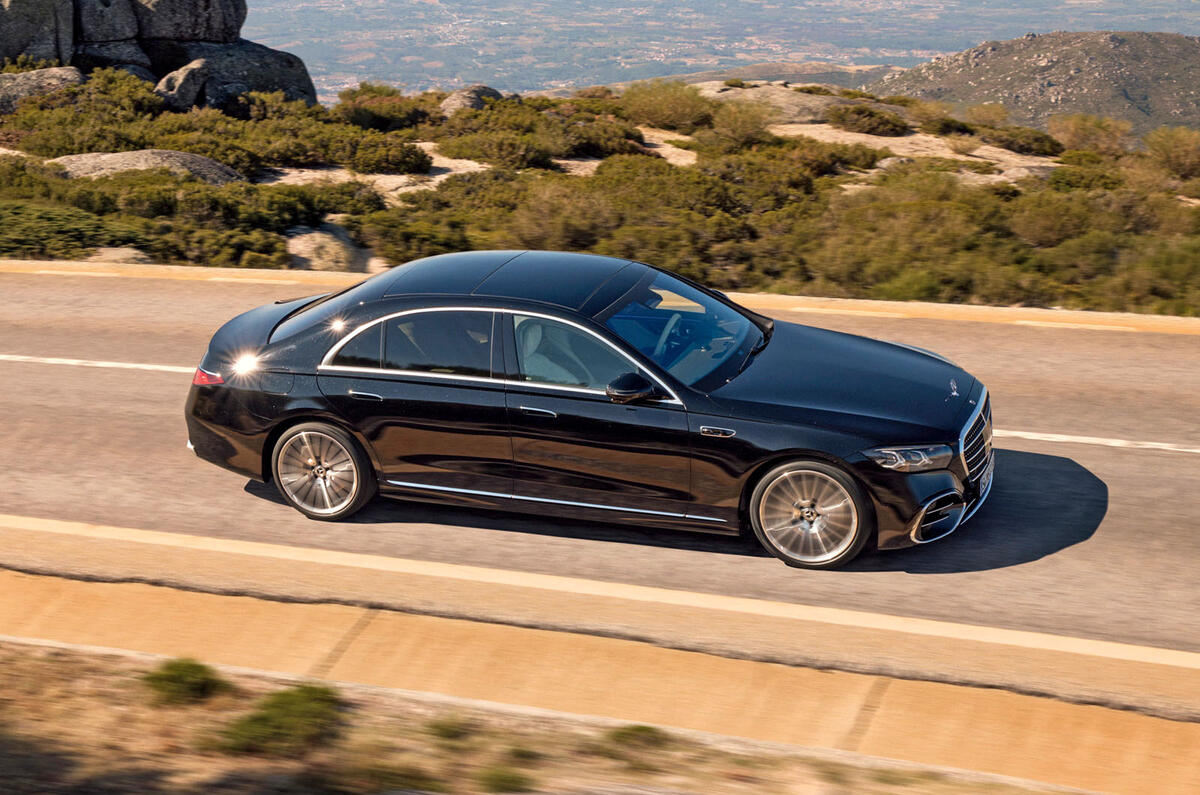
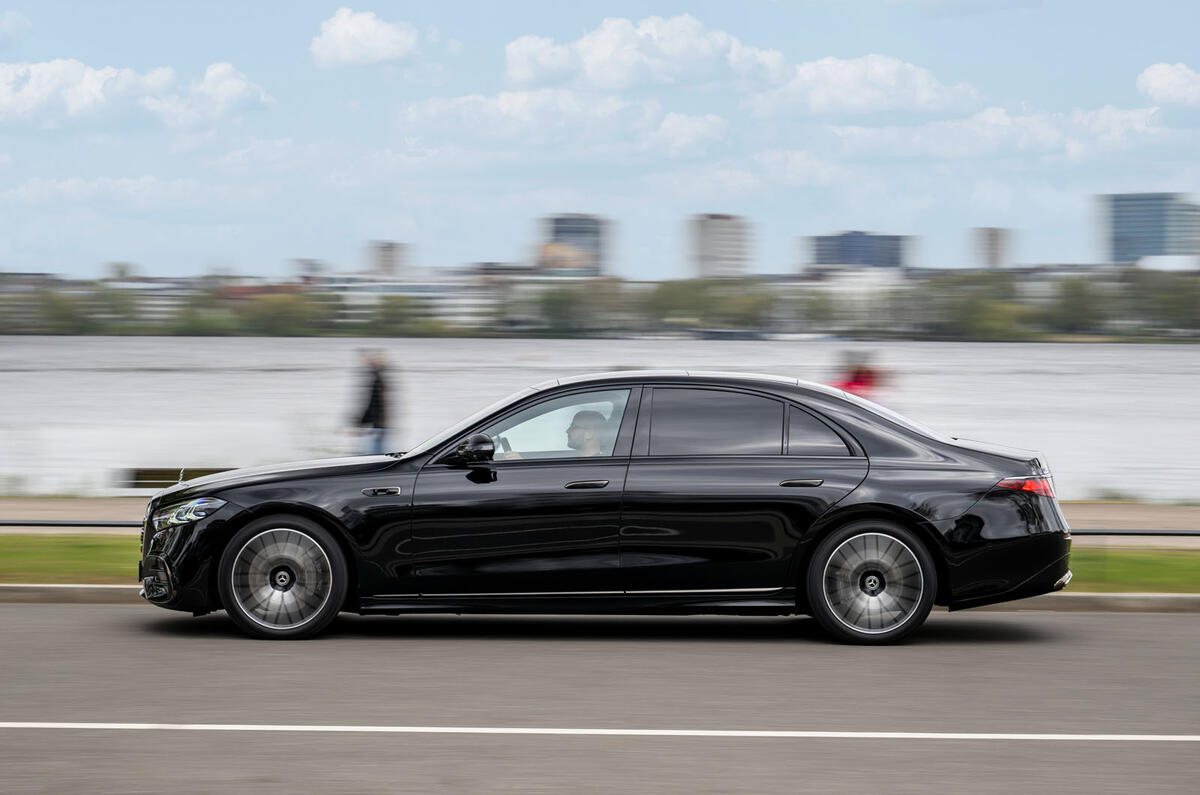
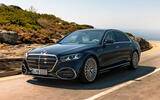
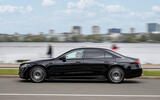
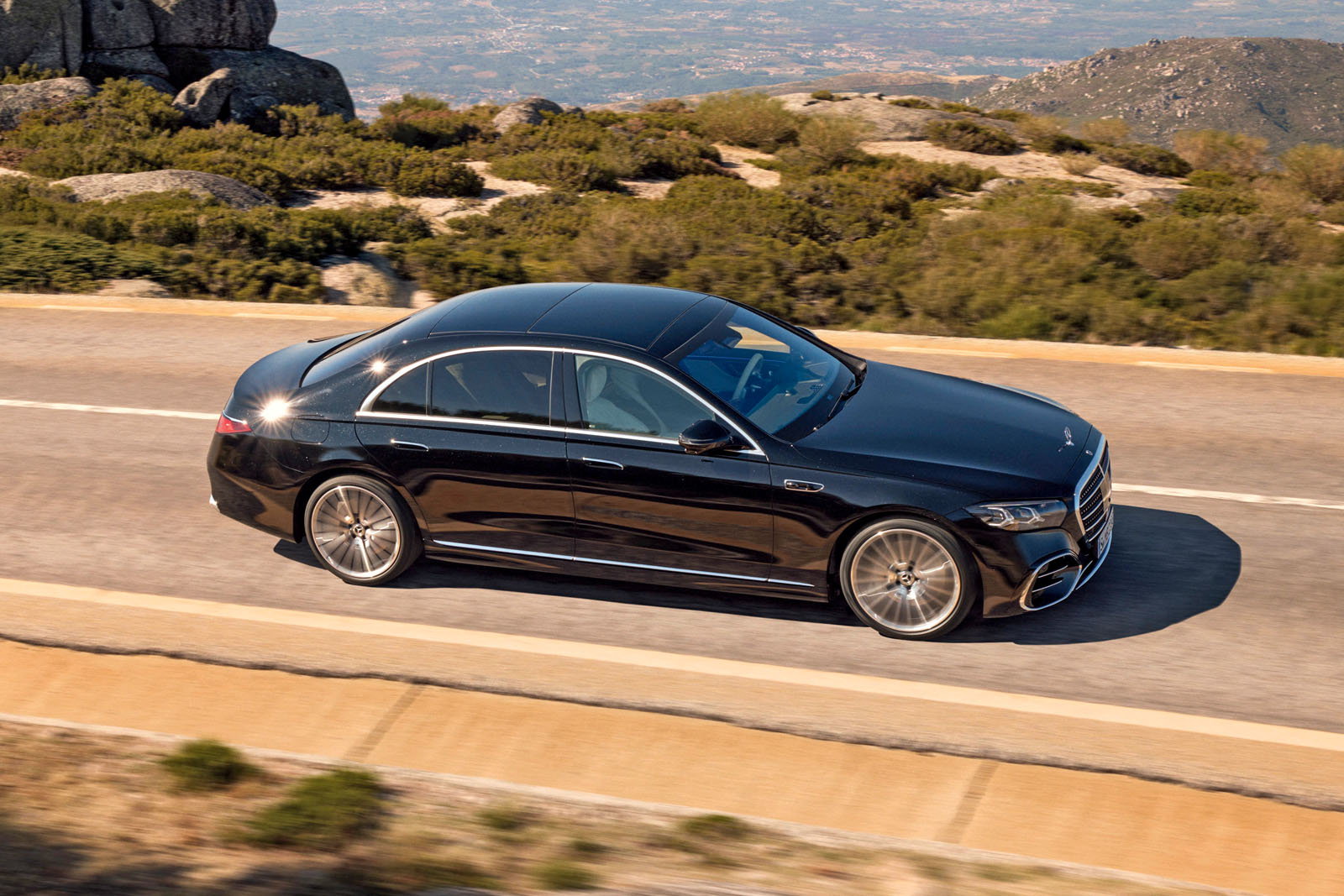
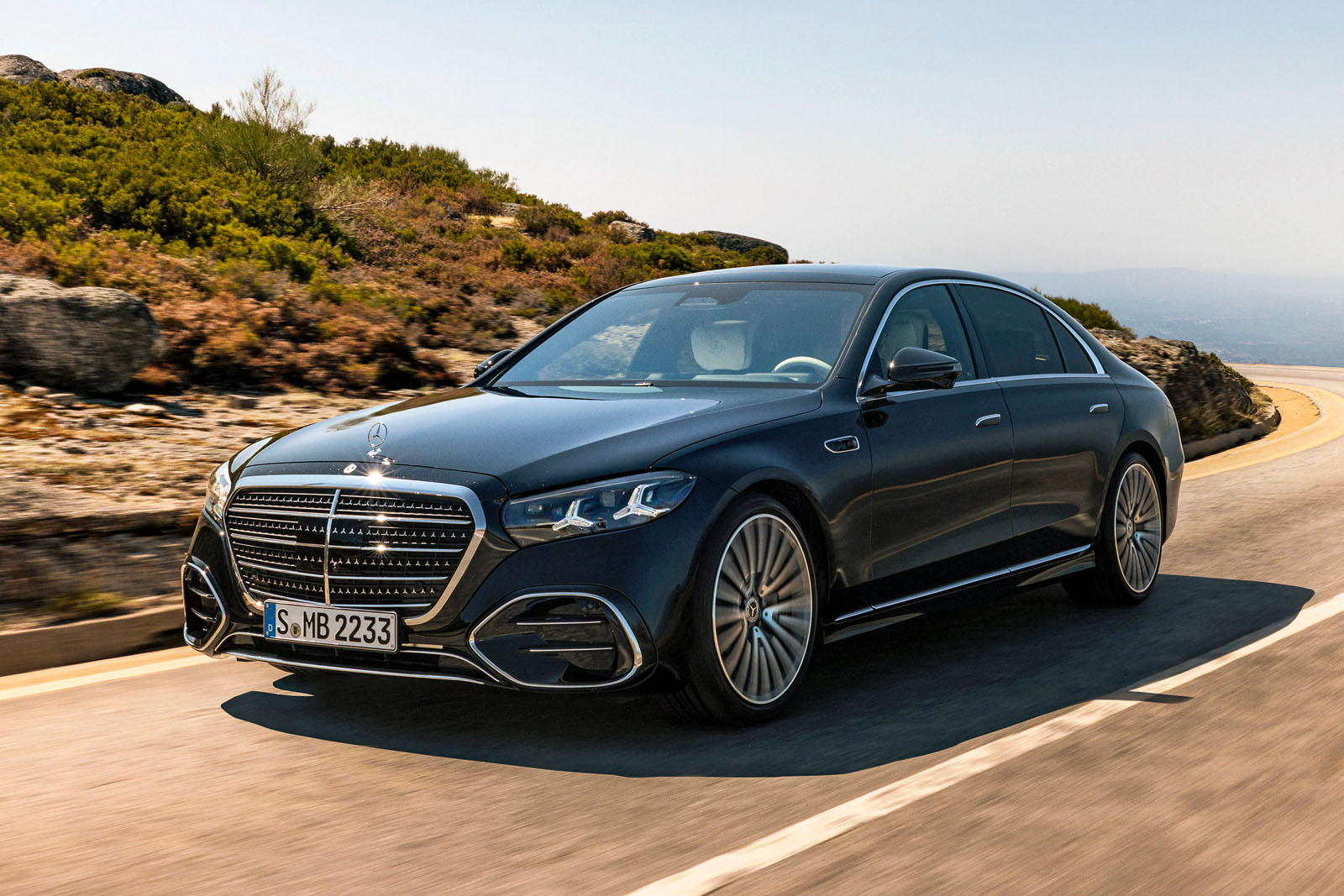
The visual alterations are measured but effective, giving it a fresh appearance. The front end receives reshaped LED headlights with three-pointed-star graphics, a high-beam illumination field that is 40% larger than before, reaching up to 600 metres away, and a grille that is 20% larger.

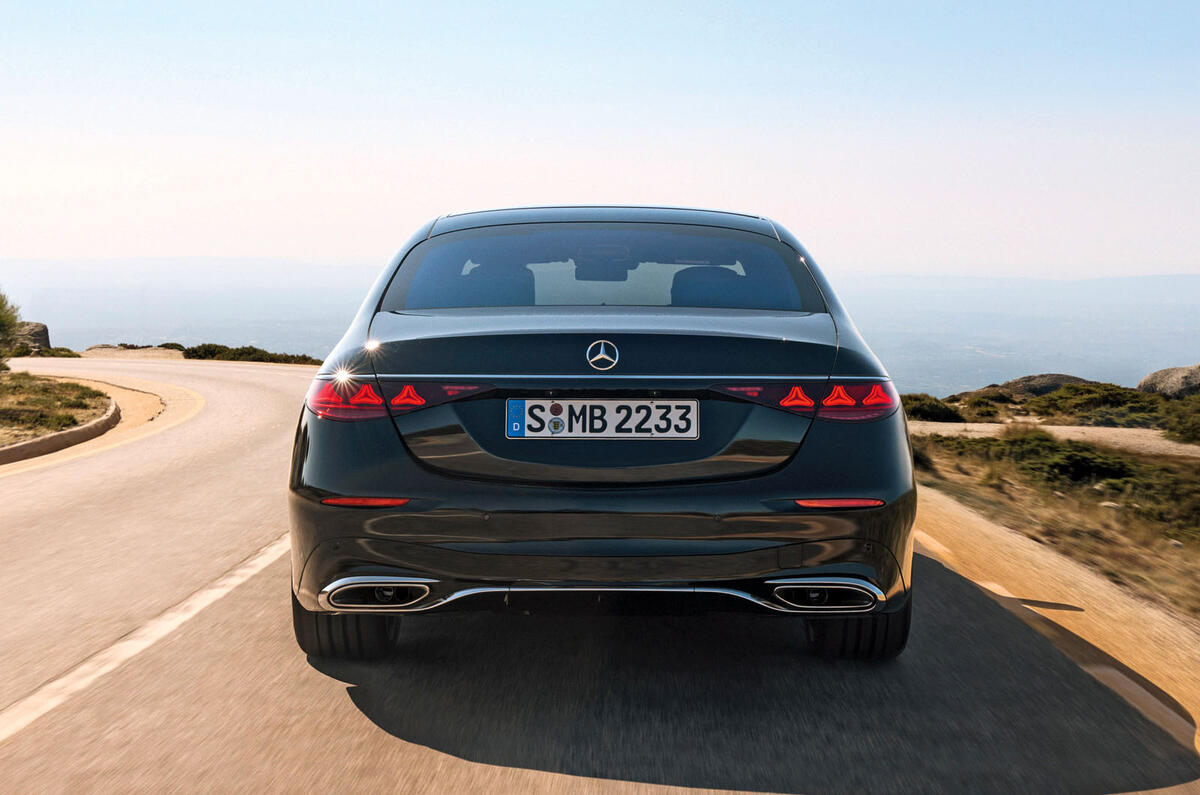
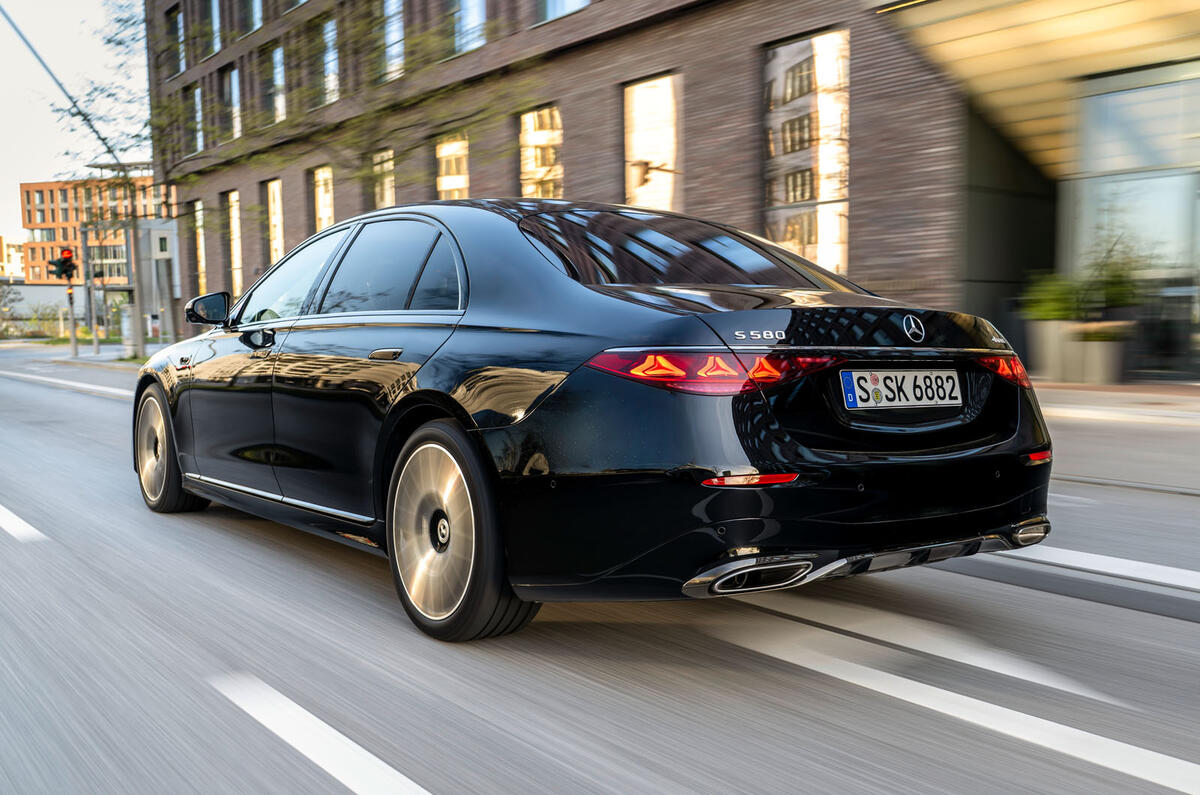
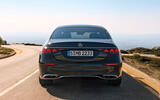
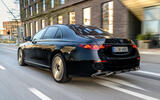
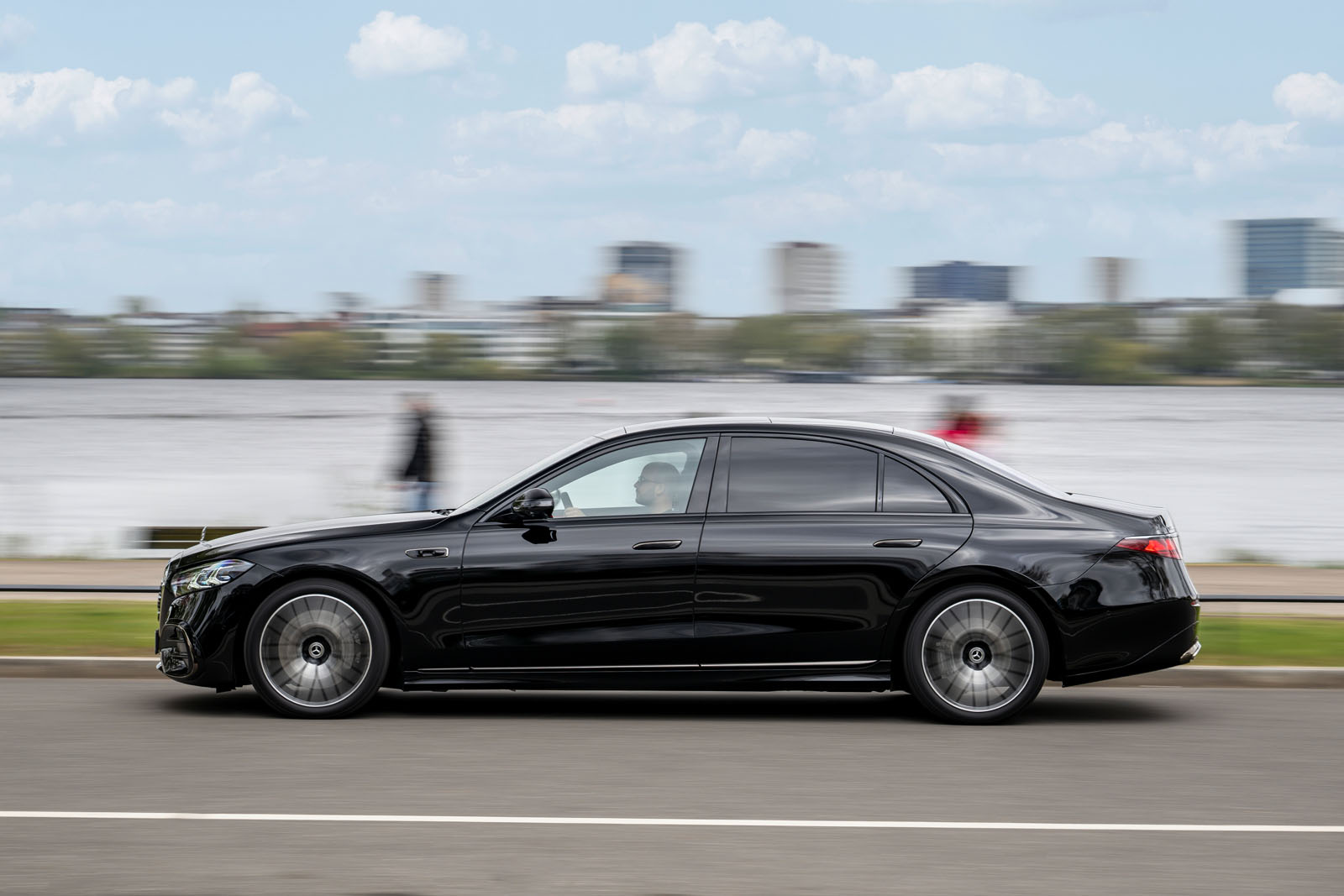
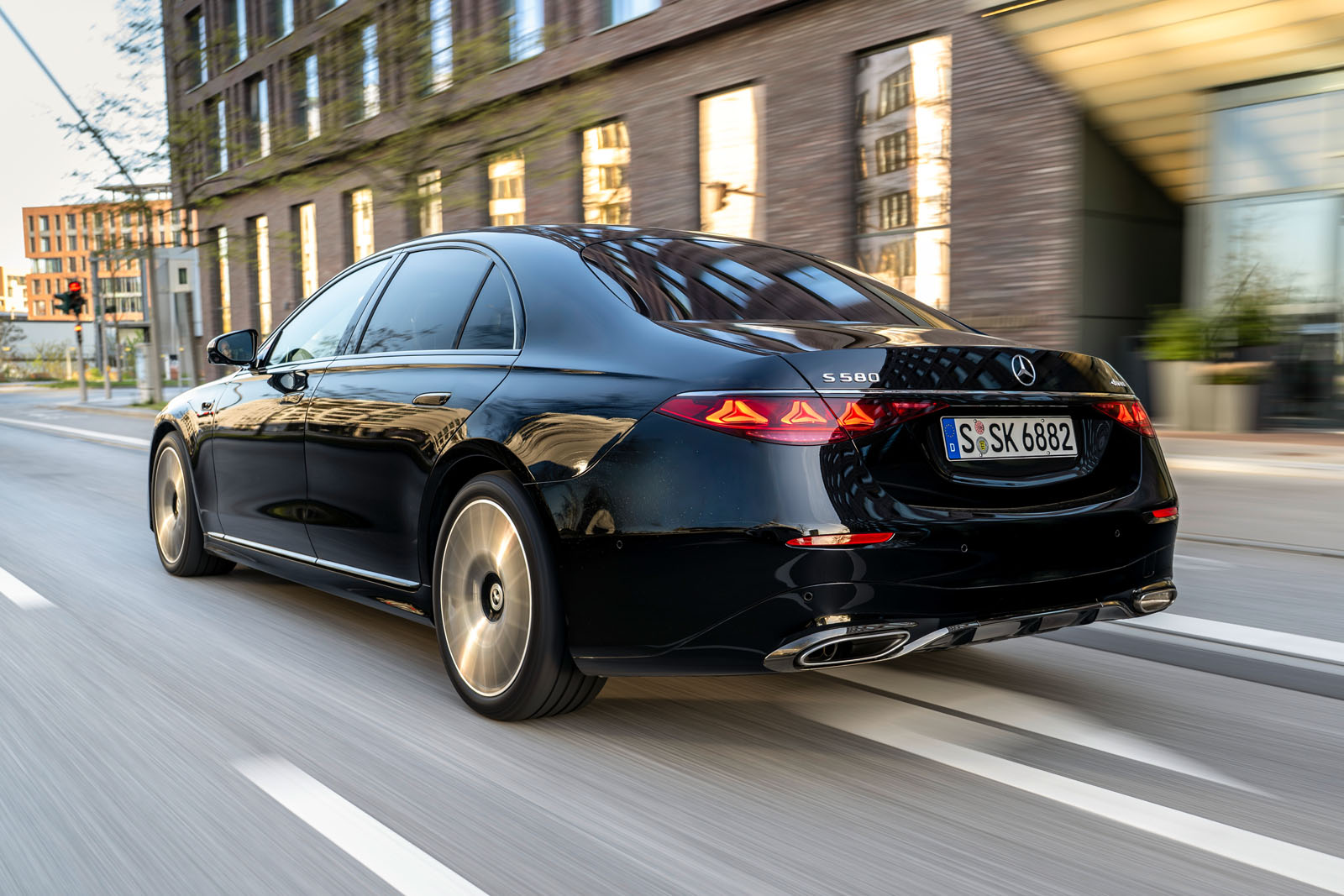
At the rear, revised tail-lamps also pick up the star graphic, giving the facelifted S-class a more distinctive night-time identity. The rear bumper has been lightly revised, while new wheel designs in sizes up to 21 inches complete the exterior changes. It remains unmistakably an S-class, but the detailing is sharper and the overall design now carries more intent than before.

This facelift arrives late in what is now an extended model cycle set to take the ‘W223’ S-Class well into the latter part of the decade.

In the UK, the facelifted S-Class line-up opens with the S350d six-cylinder diesel, offered with four-wheel drive only. The S450e plug-in hybrid is rear-wheel drive only, while the S500 six-cylinder petrol and S580e plug-in hybrid are four-wheel drive as standard.

All of the engines now use a 48V mild-hybrid system with a 17kW integrated starter-generator.

INTERIOR

Greg Kable driving Mercedes Benz S Class

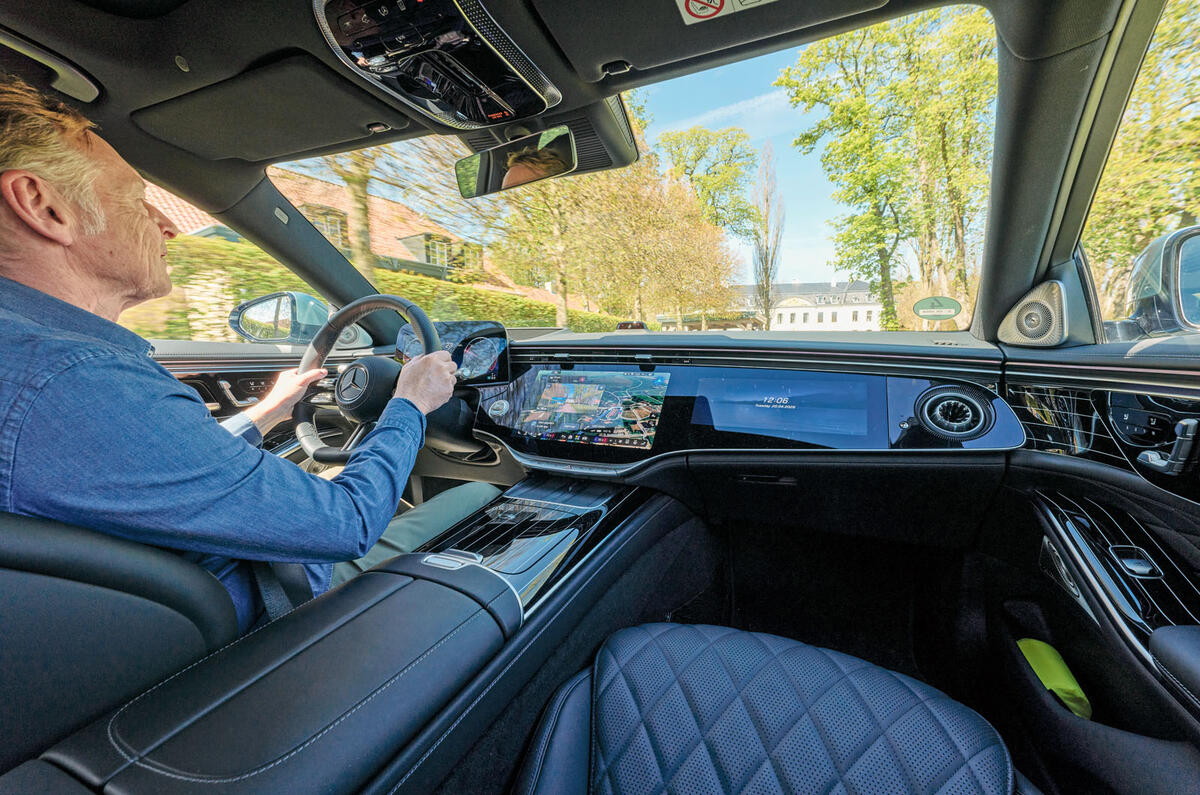
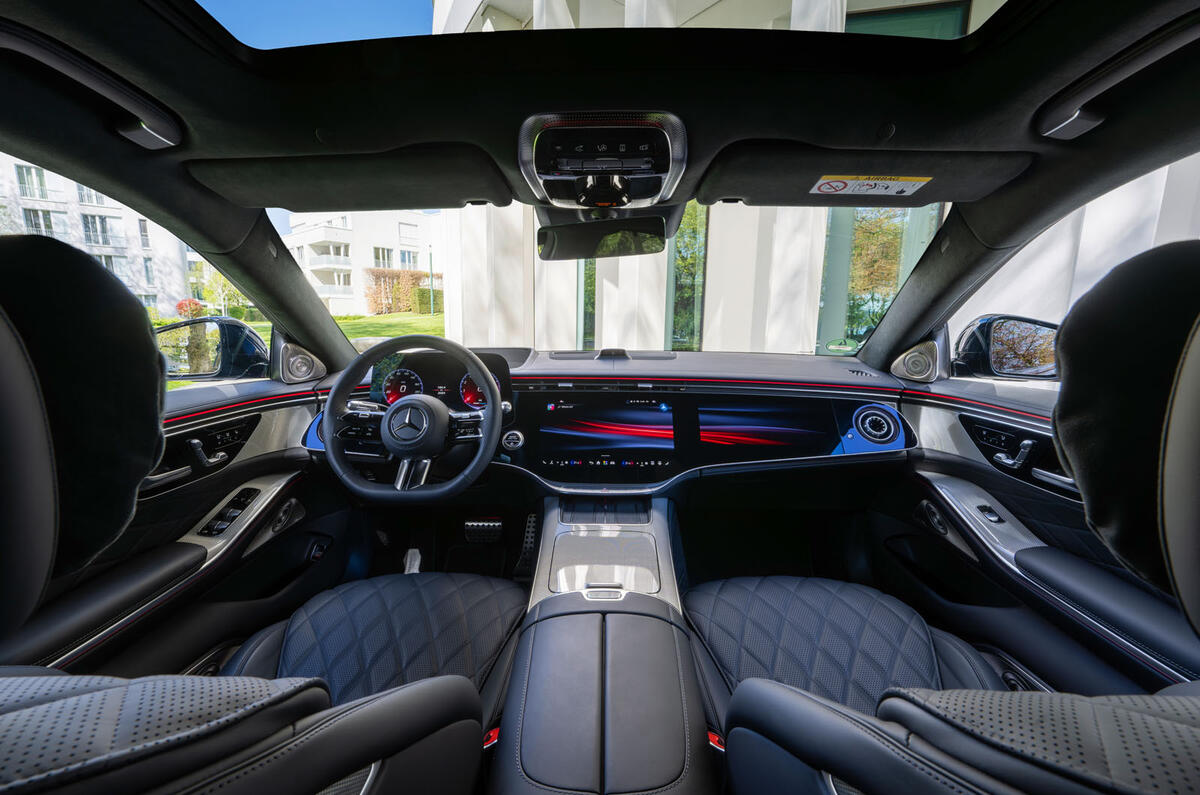
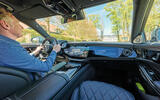
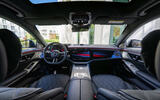
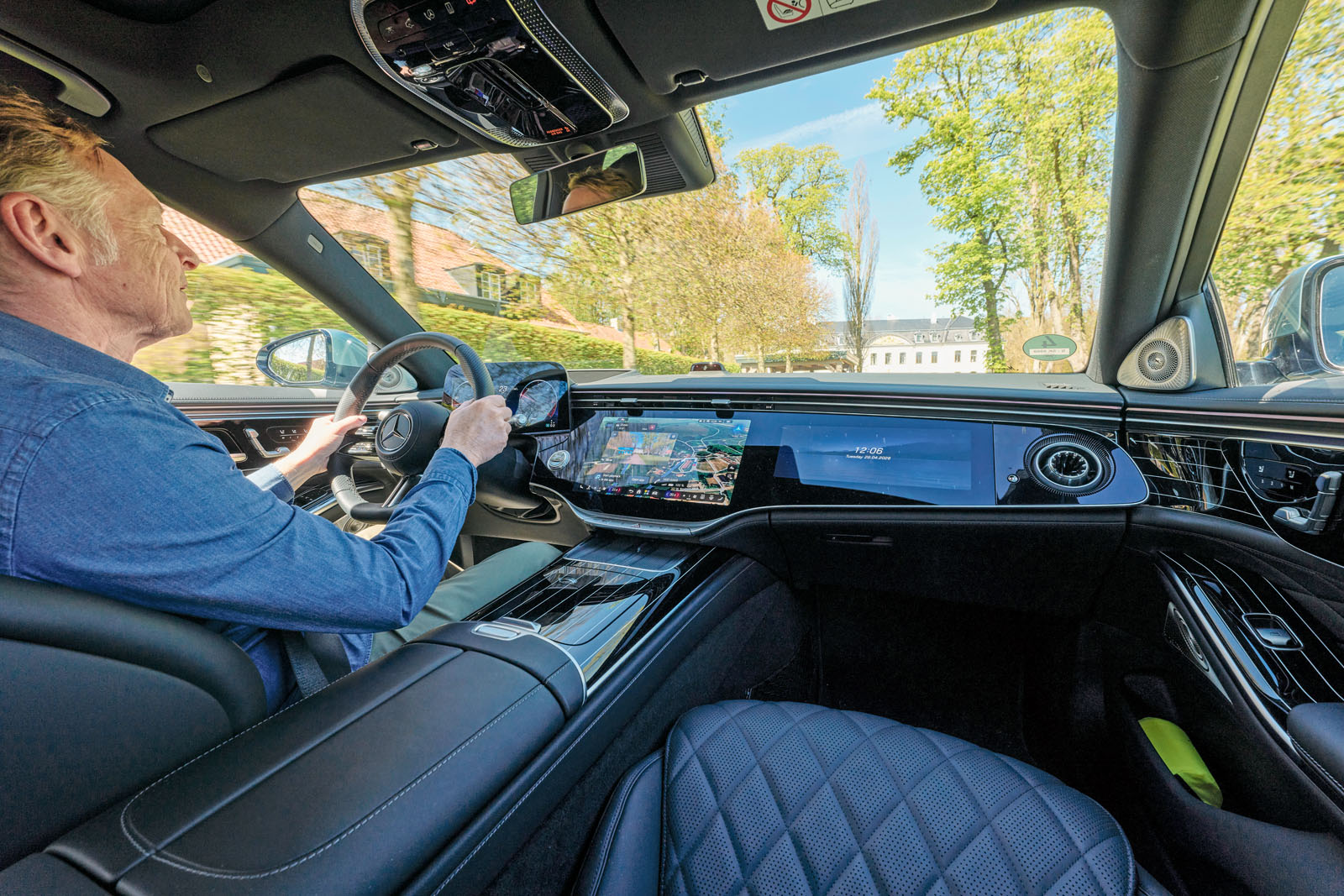
Inside, the biggest change is the adoption of MB.OS, a redesigned electrical architecture with greater processing power for the new MBUX Superscreen and driver assistance functions.

Unlike the Hyperscreen used by the electric Mercedes EQS, the Superscreen isn’t a full-width wall of glass: the 12.3in instrument display sits separately ahead of the driver, while the 14.4in central touchscreen and 12.3in passenger touchscreen sit beneath a continuous glass surface.

Menus load more quickly, touch commands are registered with less delay and Mercedes’ latest voice assistant, now supported by generative AI, handles more natural conversational prompts with greater consistency.

Mercedes has also addressed other points of contention. A reworked steering wheel, as introduced by other new and facelifted cars in recent months, reprises some tactile controls, replacing the touch-sensitive volume slider with a roller. It’s a small but important correction.

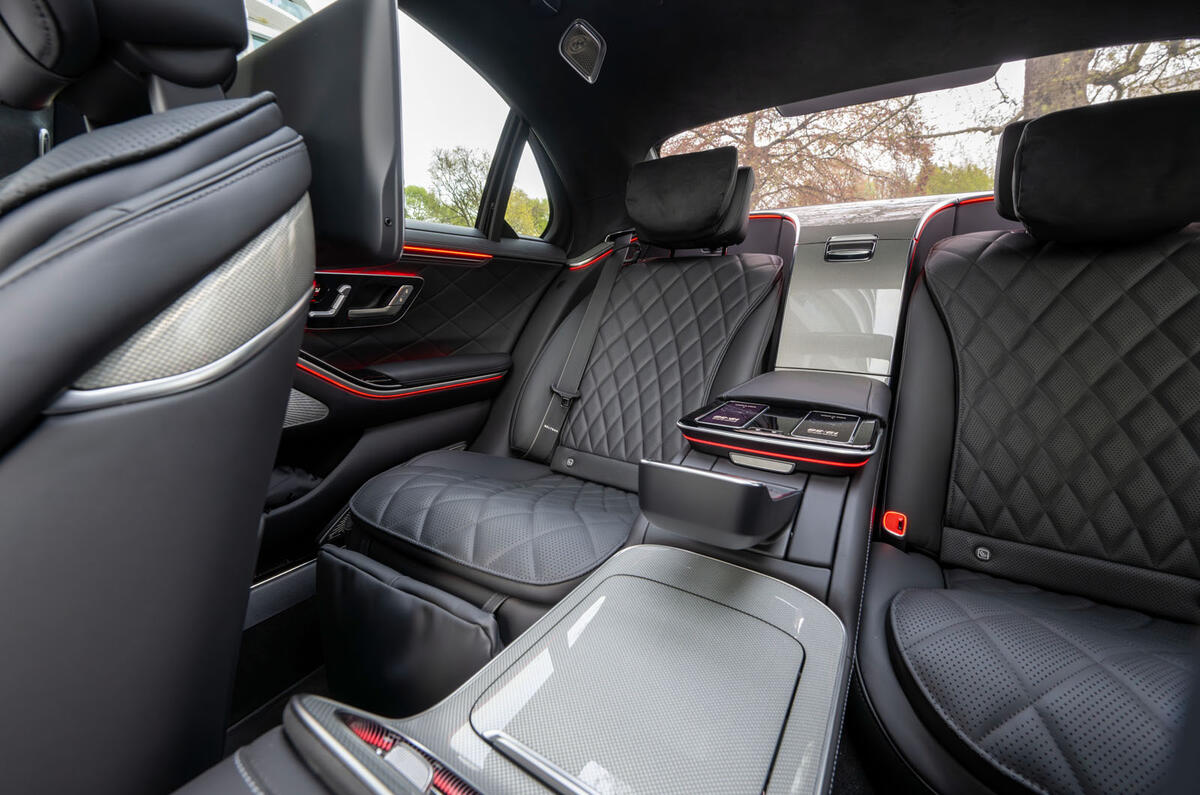
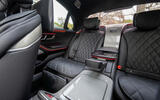
What continues to distinguish the S-Class is its ability to isolate its occupants from the outside world. In 5304mm long-wheelbase form, the only bodystyle offered in the UK, the rear seat remains central to its appeal. A reworked entertainment system with larger, 13.1in rear displays, detachable digital remotes and video-call capability underlines its role as a mobile workspace, but the overall impression remains one of restraint. It doesn’t shout for attention, which is exactly the point.

Excellent material quality is a given, but there’s now a stronger sense of cohesion between physical controls and digital interfaces. The cabin feels less like a showcase of technology and more like a properly integrated environment.

There are minor irritations, though: the electric seat controls are out of step with the rest, operating with a distinct audible motor whine.

The S450e and S580e demand a more tangible compromise. Boot space falls to 345 litres, compared with 530 litres in the S500 and 510 litres in the S350d, because their 22.0kWh battery (which supports rapid charging at up to 60kW) occupies valuable space beneath the boot floor. For a large luxury limo, that’s a clear shortcoming.

Heated seatbelts, warming to up to 44deg C, and an electric air filter claimed to purify the cabin air roughly every 90 seconds are more convincing additions.

ENGINES & PERFORMANCE

Mercedes Benz S Class 1 0

I tested a variety of S-Class powertrains on a mixture of city streets, fast country roads and unrestricted autobahn in northern Germany.

The S350d remains the pragmatic long-distance choice. Its turbocharged 3.0-litre diesel straight six produces 313bhp and 479lb ft of torque, with official fuel economy of up to 45.6mpg. It isn’t the most glamorous model in the range, but it fits the S-Class brief well: low-rev refinement, strong motorway pulling power and an ability to cover distance with minimal fuss. Its updated engine now also uses an electrically heated catalytic converter to reduce emissions from cold starts, giving it an official CO2 output of 163-182g/km, depending on specification.

The S450e takes a different approach and will probably be the more relevant model for UK buyers. Its turbocharged 3.0-litre petrol straight six is paired with a gearbox-mounted electric motor producing 163bhp and 354lb ft, giving total system outputs of 435bhp and 501lb ft. Electric-only running is possible at speeds of up to 87mph and for up to 67 miles (if not at the same time).

In Electric mode, throttle response is deliberately measured and the petrol engine stays out of the process unless full performance is demanded, allowing the S-Class to move through urban traffic with the sort of near-silent ease that’s usually associated with an EV.

This drivetrain suits the S-Class extremely well. The handover between electric and petrol power is terrifically smooth, the engine joining without any obvious flare in revs or interruption in delivery. The motor gives strong low-speed response, but the car’s character remains calm rather than urgent.

The S500 is the more conventional petrol choice. Its updated turbocharged 3.0-litre straight six develops 449bhp and 443lb ft, with up to 472lb ft available briefly via an over-torque function on kickdown. It feels lighter and more direct than the plug-in hybrid, while retaining the isolation expected of an S-Class. Smooth and unobtrusive at a cruise, it delivers a clean, progressive build of performance with stronger mid-range response and, thanks to standard four-wheel drive, greater traction in poorer conditions.

At the top of the UK range, the S580e combines the higher-output straight six from the S500 with the S450e’s electric motor to give 585bhp, 553lb ft, a 4.4sec 0-62mph time and up to 60 miles of electric range. It feels less like a performance derivative than an S450e with greater reserves.

That excellent refinement of Mercedes’ latest PHEV system carries through to other areas. At a steady cruise, the drivetrain fades into the background, road and wind noise are exceptionally well suppressed and the S450e’s ability to run electrically heightens the sense of calm through towns.

RIDE & HANDLING

Mercedes Benz S Class 1 2

The suspension plays a central role. Alongside a more advanced version of the Airmatic air system, E-Active Body Control uses GPS data shared by other Mercedes models on the road to prepare the S-Class for larger bumps and longer undulations by priming the damping characteristics.

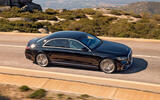
Body control is a highlight. On faster country roads, the S450e remains composed, resisting roll and settling progressively into corners with precision that belies its size. You sense the mass brought by the plug-in hybrid hardware over sharper compressions, but any road shock is very well contained. It works best with measured inputs, yet there’s still a quietly impressive sense of control.

Rear-wheel steering, standard at 4.5deg and optionally extending to 10deg, continues to heighten manoeuvrability in city driving while improving stability at higher speeds on more open roads.

Mercedes’ new MB.Drive automated driving hardware uses 10 external cameras, five radar sensors and 12 ultrasonic sensors, linked to a water-cooled high-performance computer running on MB.OS. Hands-off ‘level-two-plus-plus’ autonomy isn’t due in the UK until 2027, but in level-two form, speed adjustments and lane changes feel smoother than before.

MPG & RUNNING COSTS

Mercedes Benz S Class 2

Prices at launch run from £103,450 for the S350d L 4Matic AMG Line Premium to £135,675 for the S580e L 4Matic AMG Line Premium Plus Executive. We know Mercedes’ diesel engines as fairly economical in the real world. The plug-in hybrids can be a bit thirsty when you run them on an empty battery, but they do have an impressive electric range that still qualifies them for low company car tax, since this is still calculated based on the CO2 emissions on an older cycle.

VERDICT

In times increasingly dominated by luxurious electric alternatives, the internal-combustion-engined S-Class still makes its mark through engineering depth, consistent refinement and the effortless way that it covers distance. This facelift doesn’t reinvent the formula – it improves it in the sort of detailed and measured way that Mercedes’ traditional customers expect.