10

This Woking wonder punches far above its weight

Find Used McLaren 570S 2015-2019 review deals
Used car deals
Other Services
Sell your car
84% get more money with

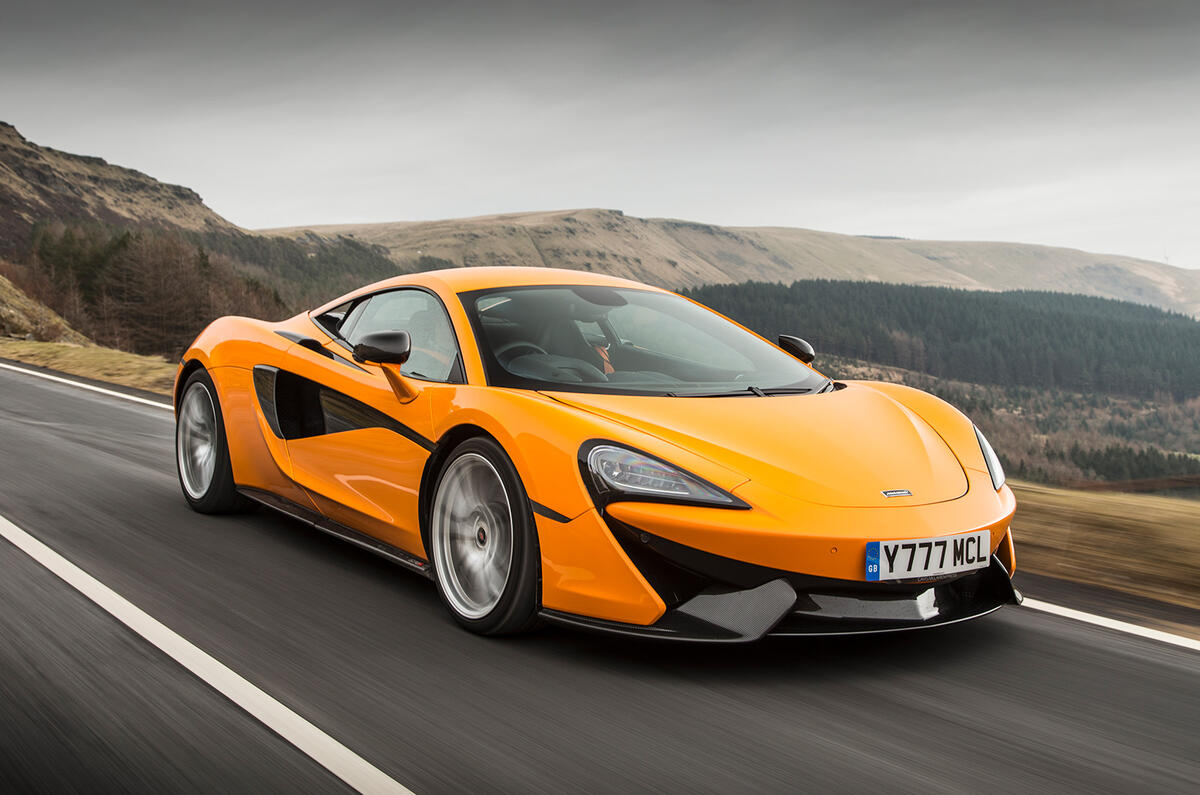
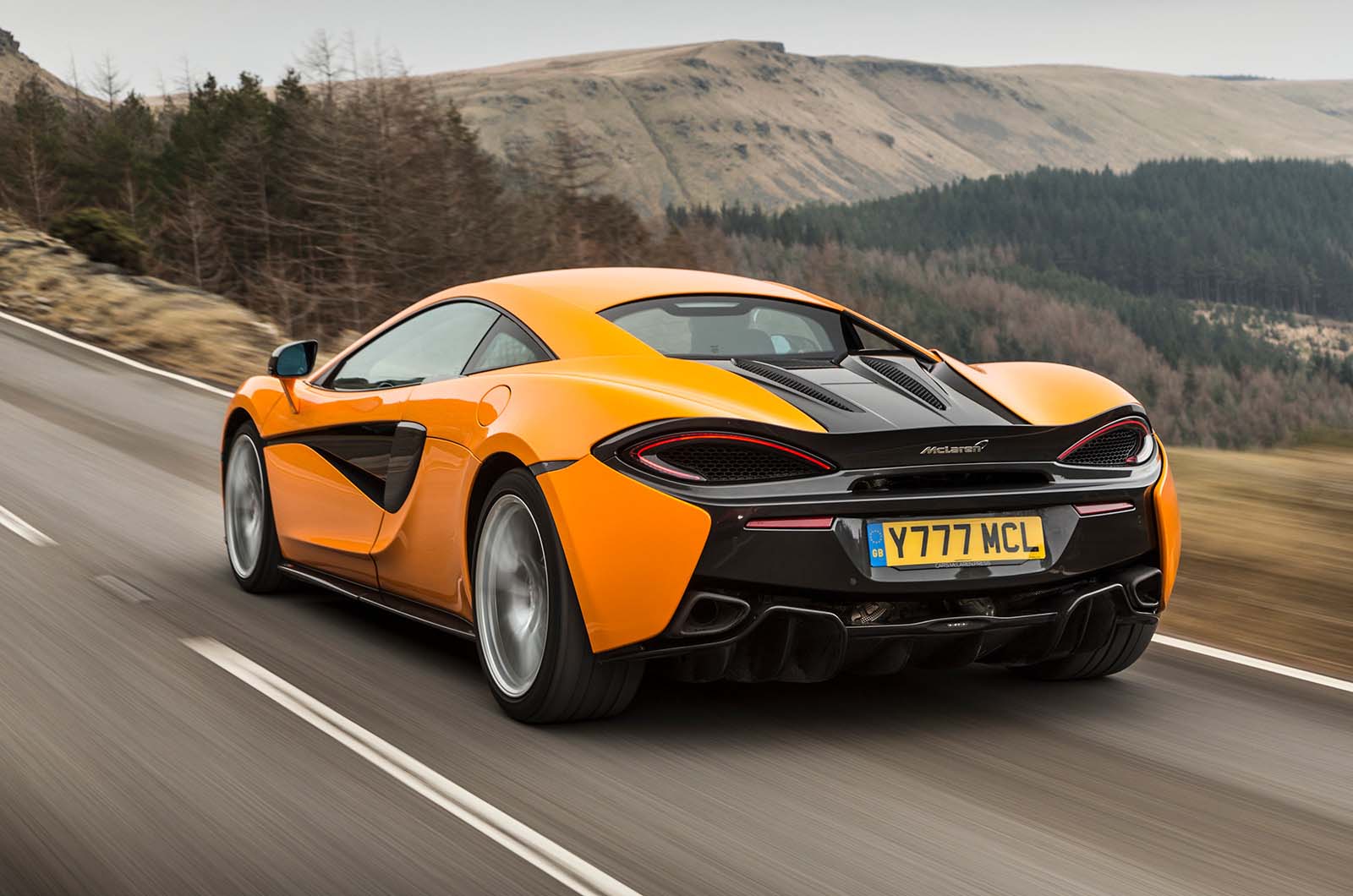
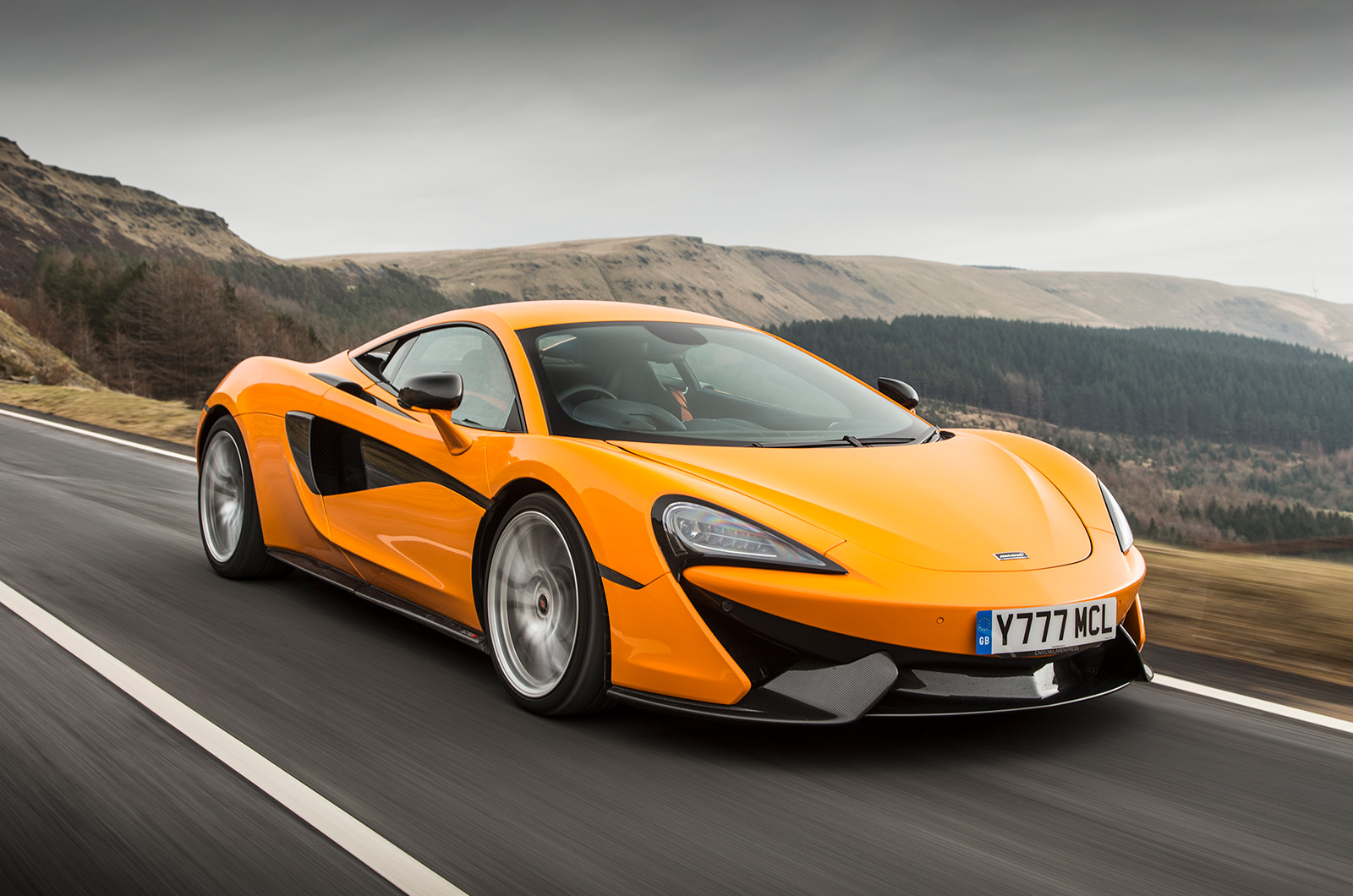
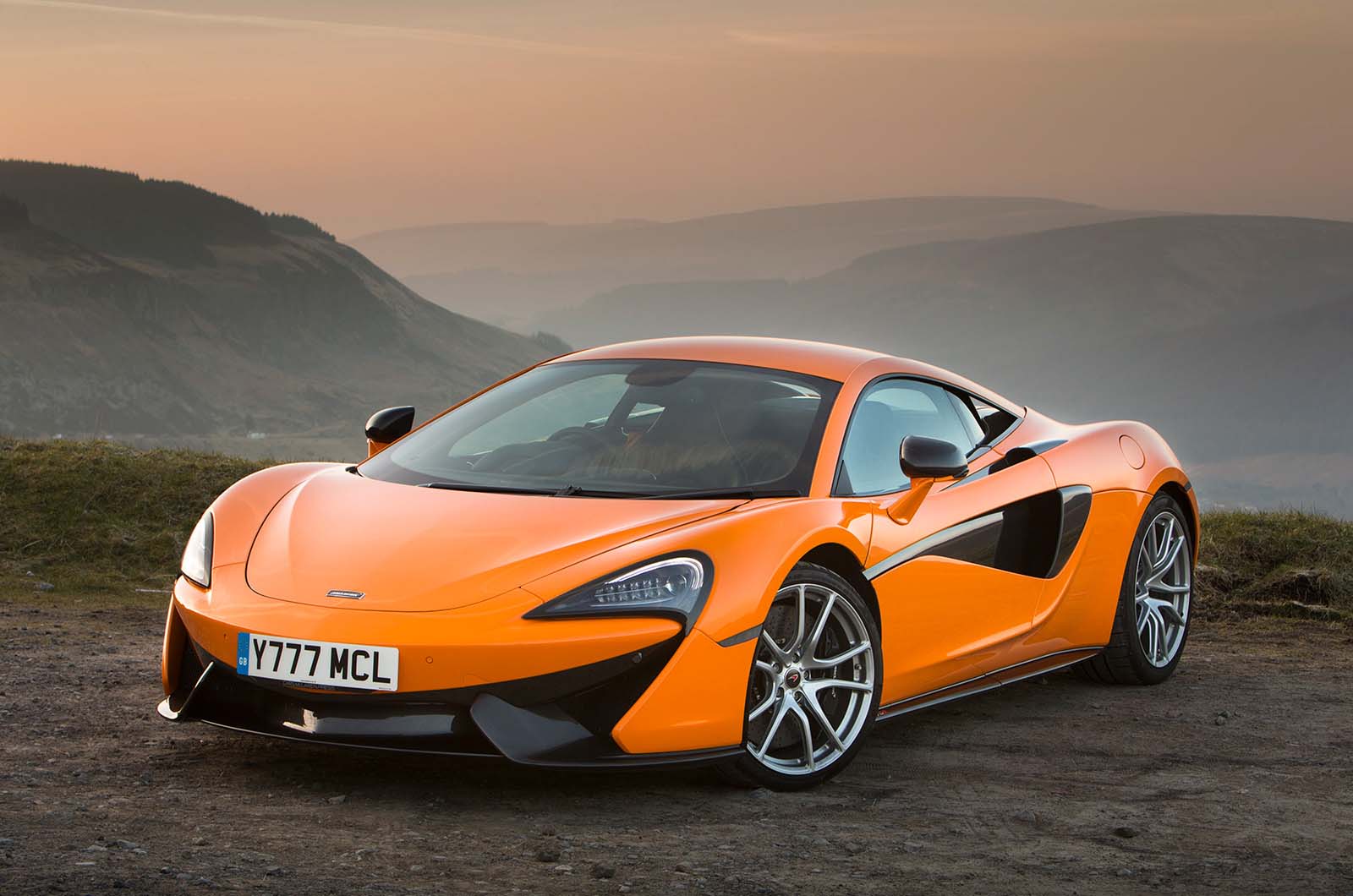
Want a V8-powered semi-supercar for the same price as a new six-pot sports car? The classifieds are full of supercar slayers that make a mockery of buying new, and for less than £70,000 you can get your hands on one of the best: the McLaren 570S.

The flagship in McLaren's Sports Series line-up was launched as an 'entry model' to sit beneath the 650S and 675LT, but one look at the 570S's technical spec shows it was a cut above the likes of the Porsche Cayman and Lotus Evora.

McLaren's sub-supercar 570 is far more than the sum of its parts

With 562bhp and 443lb ft, the McLaren's sizzling 3.8-litre twin-turbo V8 has the firepower to keep pace with true supercars. Despite being 40bhp and two cylinders down on the Audi R8 V10, the 570S matches its 3.1sec 0-60mph time and will top 200mph. It can cover a standing quarter mile in 11.0sec, too, the same as its 650S big sibling.

The engine is crisp and responsive, the seven-speed dual-clutch 'box is slick in all driving modes and the 8000rpm redline ensures plenty of drama.

However, it's worth mentioning that the soundtrack is somewhat lacking in character compared with the 570S's Italian and German rivals. You could try aftermarket exhausts from Larini, QuickSilver or Novitec to improve things, but note that extreme mods can void the McLaren warranty.

The 570S has the handling prowess and ride quality to match its scintillating performance partly because weight is kept low thanks to its carbonfibre tub and aluminium panels: this car tips the scales at just 1440kg.

Advertisement
Back to top

Unlike its Super Series relations, the 570S goes without McLaren's clever hydraulic suspension and instead uses adaptive dampers and regular anti-roll bars. But that's no matter, because it can still muster supercar levels of engagement.

"Grip levels are huge and the handling is incisive and never hyperactive" is how our five-star road test summarised the dynamics. The weighty steering has scalpel-sharp precision, and there is impressive poise and predictability. Lumps and bumps are ironed out effectively, and the otherwise pliant ride is only caught out by sharp edges and potholes.

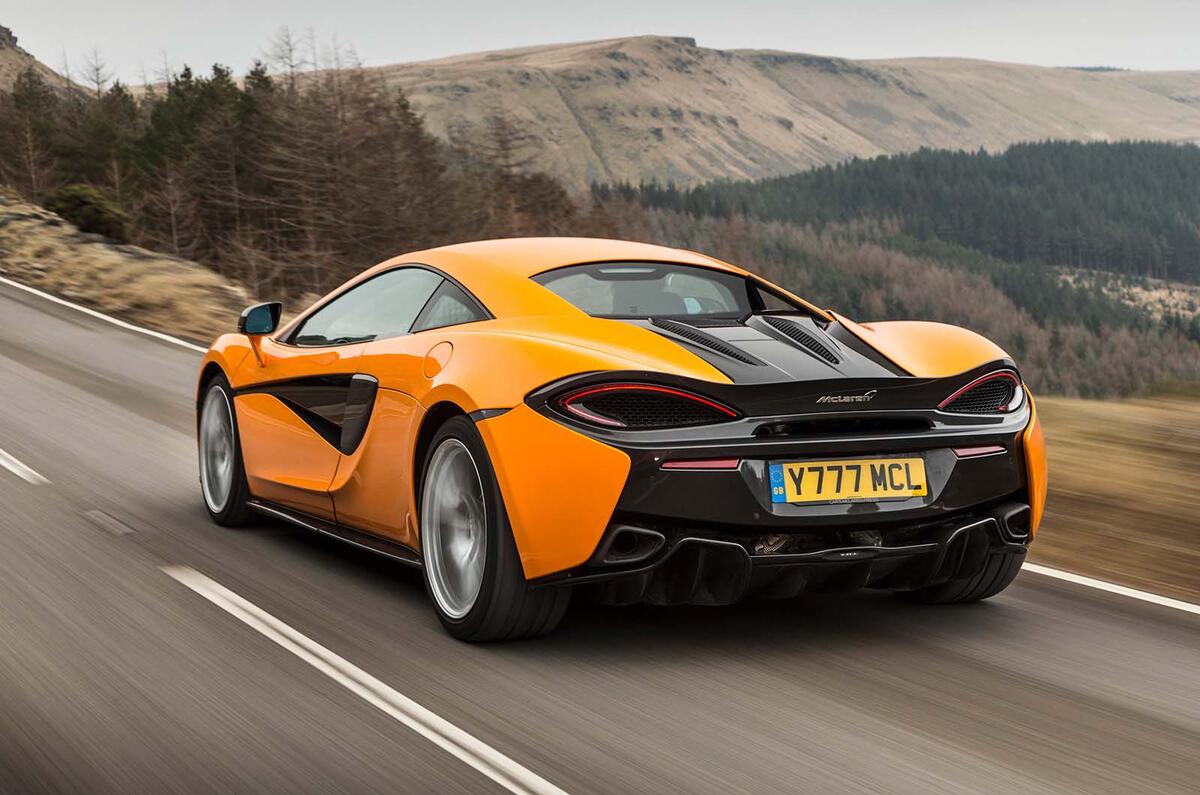
The supercar's touring credentials shine brightest in the slightly plusher 570GT that landed in 2017. Its softened spring rates are even more pliant, and it's better on the eye, with a sleek, fastback rear end. The side-hinged glass hatch can be opened to access the GT's 220-litre "Touring deck' (that's Woking-speak for 'boot').

So do you go for the stiffer S or more supple GT? Or split the difference with the 570GT Sport Pack? It gets the same suspension, steering and Pirelli Corsas as the 570S but has the GT's touring add-ons and sleek curves. It's a rare find in the classifieds but worth seeking out for its spread of abilities.

You pay closer to £80,000 for a GT, which makes them marginally dearer than a 570S, but you'll easily find a car with a full McLaren history and only a few previous owners.

The readout on the odometer is important but less of a determining factor when it comes to price: McLaren owners are generally a conscientious bunch who stick to servicing schedules and shell out on big-name parts.

Make sure you check for the options you want, though, and ensure every part is working and/or gleaming as it should be. Then all you need do is drive this Brit brute as its maker intended.

DESIGN & STYLING

10
Mclaren 570s rear

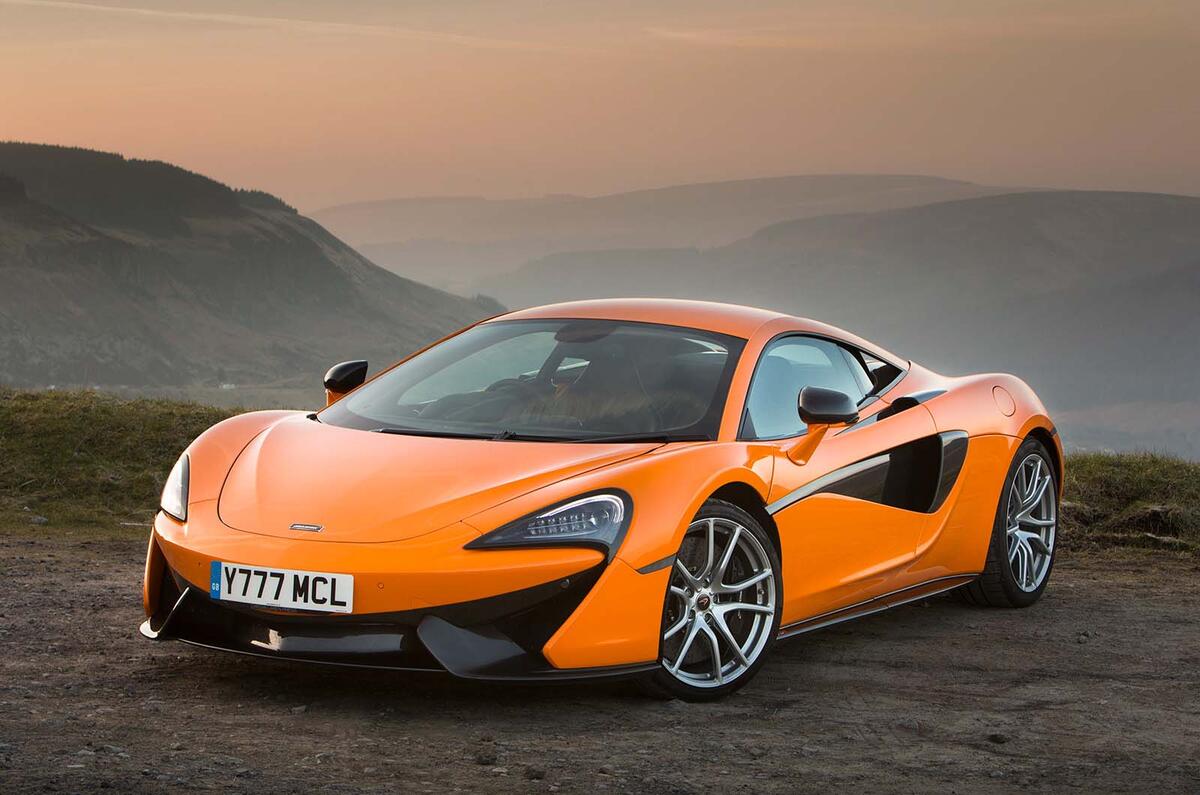
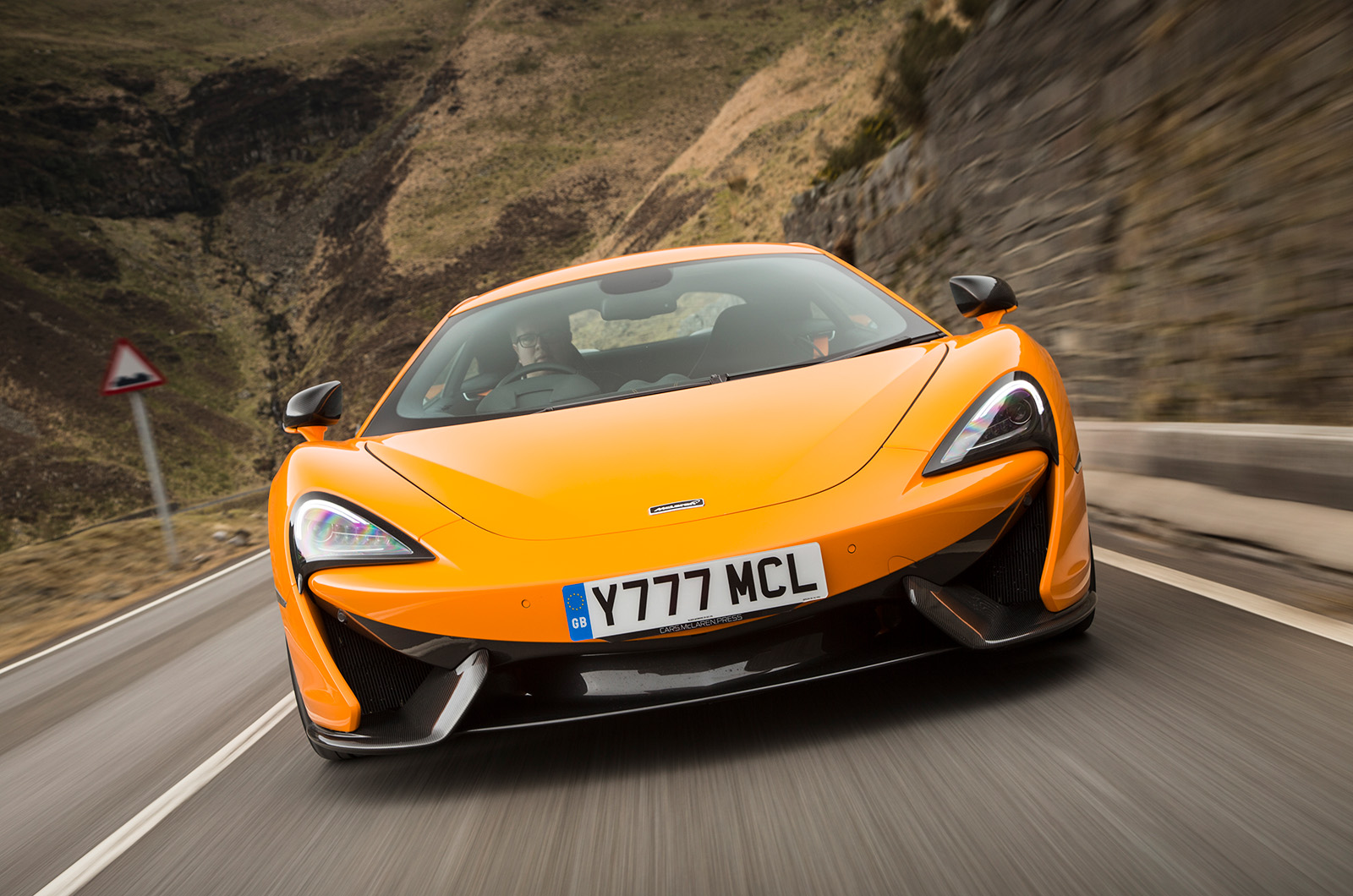
With undertones of the P1, more curviness than a 650S and slick new light detailing, the 570S is, to our eyes, not just a fine-looking car but the first regular McLaren not to suffer the ‘exactly which variant is it?’ double-take that Super Series McLarens require.

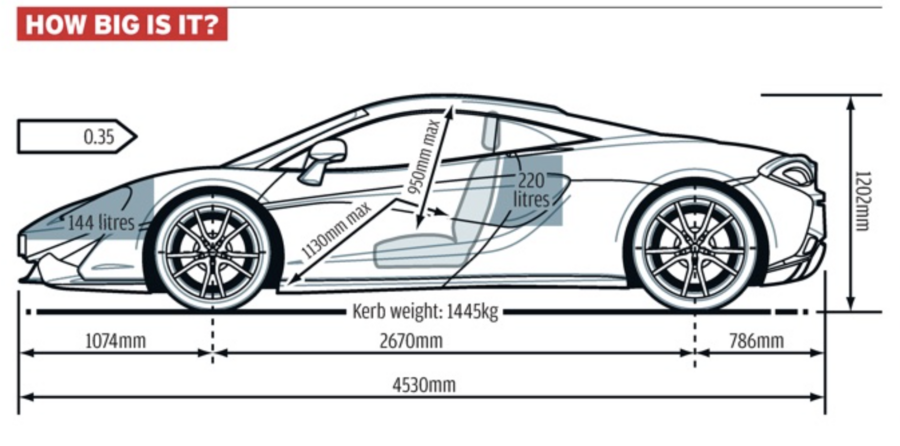
The rounded, soap-barred corners make the 570S look more compact than the 650S, but it isn’t. It’s longer and taller (by whiskers) and about the same width. The changes run more deeply where you can’t see them than where you can.

As standard, the 570S has 14-spoke lightweight forged wheels measuring 19in (front) and 20in (rear). Optional super-lightweight wheels are the same size but save 7kg overall

In essence, there are three major distinguishing factors between Super Series McLarens and this Sports Series car. Instead of composite bodywork, the 570S and 570GT have an aluminium shell. Instead of the clever linked hydraulic suspension system, the 570 gets regular anti-roll bars. And there are no active aerodynamics.

Otherwise, at face value, their construction is not so dissimilar. There’s a carbonfibre tub and a twin-turbocharged 3.8-litre V8 driving the rear wheels through a seven-speed dual-clutch automatic gearbox and a limited-slip differential.

But there’s rather more to it than that. The 570S’s tub has 80mm lower sills than a 650S’s, to aid entry and egress via the dihedral-opening doors that are fast becoming a McLaren trademark. And although the engine retains a flat-plane crank, some 30% of its internals are different from the 650S’s, with changes aimed at giving this lower-powered car a sharper throttle response than you’d expect from a car that is twin-turbocharged.

Elsewhere, the 570S is a McLaren to the core. On its centre console, the Active Dynamics panel allows you to switch between drive modes that give the adaptive dampers firmer settings, and there are double wishbones all round, standard carbon-ceramic brakes, and retention of electrohydraulic rather than fully electric power steering. 

INTERIOR

9
McLaren 570s interior wide]

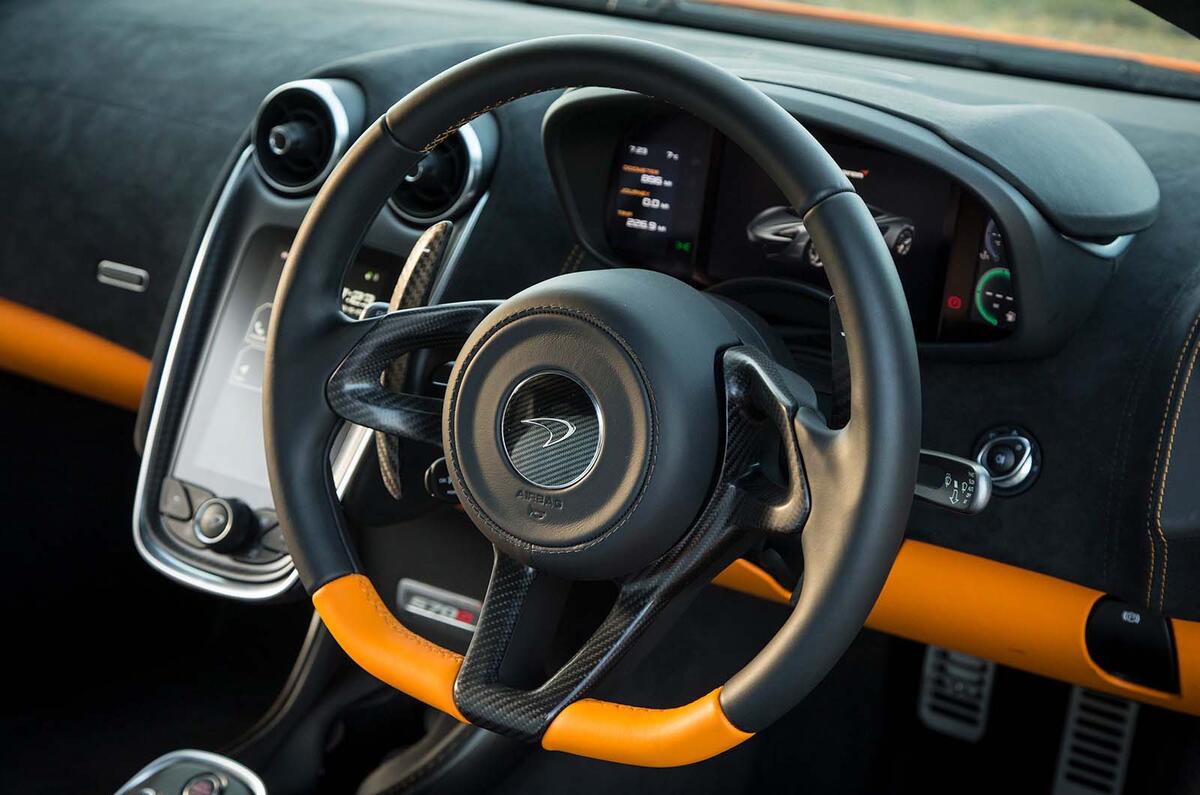
There have been times when the styling, spaciousness and quality of finish of past McLaren interiors seemed a smidgen less perfectly engineered than the unseen carbonfibre tub that housed them. In all respects, the 570S’s cabin feels like a step forward.

Its dashboard architecture is significantly different, introducing a new digital instrument cluster and centre stack console. The most notable alteration concerns that console: the ski-jump fixture of knobs and buttons has gone, leaving a new infotainment screen to ‘float’ above the transmission tunnel instead.

Boot space is limited to 144 litres in the nose — enough for a holdall or two. The shelf positioned immediately behind the headrests is large enough to accommodate a small rucksack but not a great deal more

By severing the two, McLaren’s main aim – delivering a greater sense of roominess (without actually creating any) – has largely been accomplished. There’s a less onerous sense of being sealed into a cockpit and clearly it’s now easier to reach the foremost cupholders.

Thanks to a redesign of the door cards, which lose an abundance of functions previously mounted on the grab handles, and the availability of a small load shelf behind the headrests, a more simple, smart and user-friendly space is made available.

It has not come at the cost of McLaren’s tech-savvy sophistication, either. The rotating dials for handling and powertrain settings remain the same, as does the Active button that engages it all.

The pleasingly bespoke switchgear (the stalks, paddle shifters and so on) stay in place, too, and so do the dihedral doors, which never feel less than special – even if the entry to and egress from the form-fitting optional race seats over wide sills still has the potential for a lurching inelegance.

Elsewhere, for the most part, the 570S lives up to its asking price. Granted, some optional extras were required to create our test car’s environment – a plush swirl of leather, Alcantara and carbonfibre – but that won’t come as a shock to buyers familiar with the segment. The way McLaren puts it all together is fast becoming beyond reproach.

Multimedia system

McLaren has taken it upon itself to build its own infotainment system — a tricky task, as evidenced by some early versions of its IRIS touchscreen.

Incremental improvements have been made, and the 570S’s 7.0in display gives a more positive account of itself. Nevertheless, perfect it is not. The sat-nav and DAB tuner remain frustratingly difficult to get to grips with — usually because of elemental mistakes that drastically reduce their intuitiveness.

These foibles, though, can be learnt. It’s the occasional complete lack of function that really grates.

Not being able to receive any BBC digital station properly while sitting on the M25 is shameful. Ditto the drop-out of Bluetooth connectivity we suffered and, at one point, losing the radio tuner completely.

McLaren insists that its standard four-speaker stereo system is the lightest it has fitted to a car, but it’s lightweight in sound, too. An eight-speaker version is available, although we wouldn’t think twice before ticking the full-bore 12-speaker Bowers & Wilkins system that features a fully digital 14-channel, 1280W amp and sites one of its five aluminium Nautilus tweeters right atop the dash.

ENGINES & PERFORMANCE

10
Performance 570s 2016 rt a

In applying a supercar engine (albeit slightly detuned) and bona fide supercar construction to what’s technically the highest stratum of the sports car market, McLaren clearly set out to break rules and, by doing so, to explode the class pecking order on out-and-out pace with this car. It has emphatically succeeded.

Appreciation of that starts to form as early as your first dip beyond the mid-point of the accelerator pedal travel. The twin-turbo V8 feels both relatively unstressed yet more highly developed than when we’ve sampled it before. It’s crisper in response to small throttle applications and still monumentally, rushingly, addictively potent in its wilder moments. It could sound better, yes, but it could never be expected to punch harder.

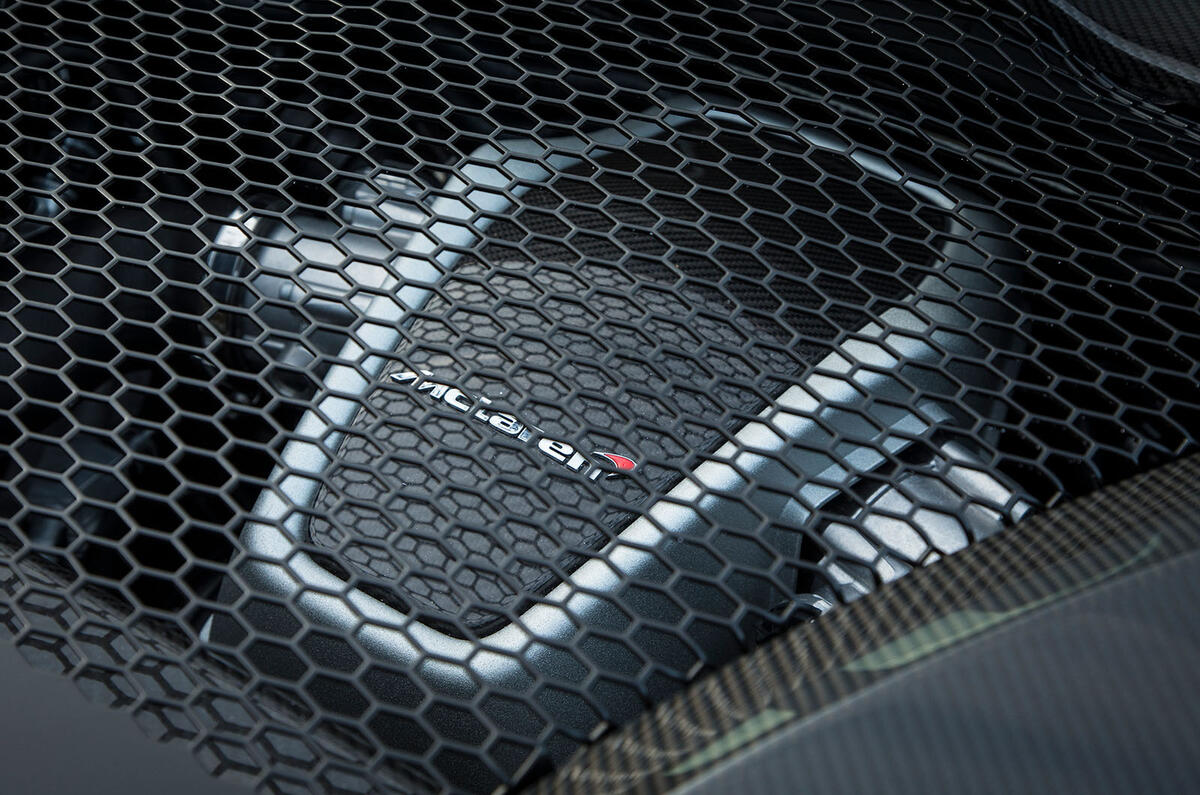
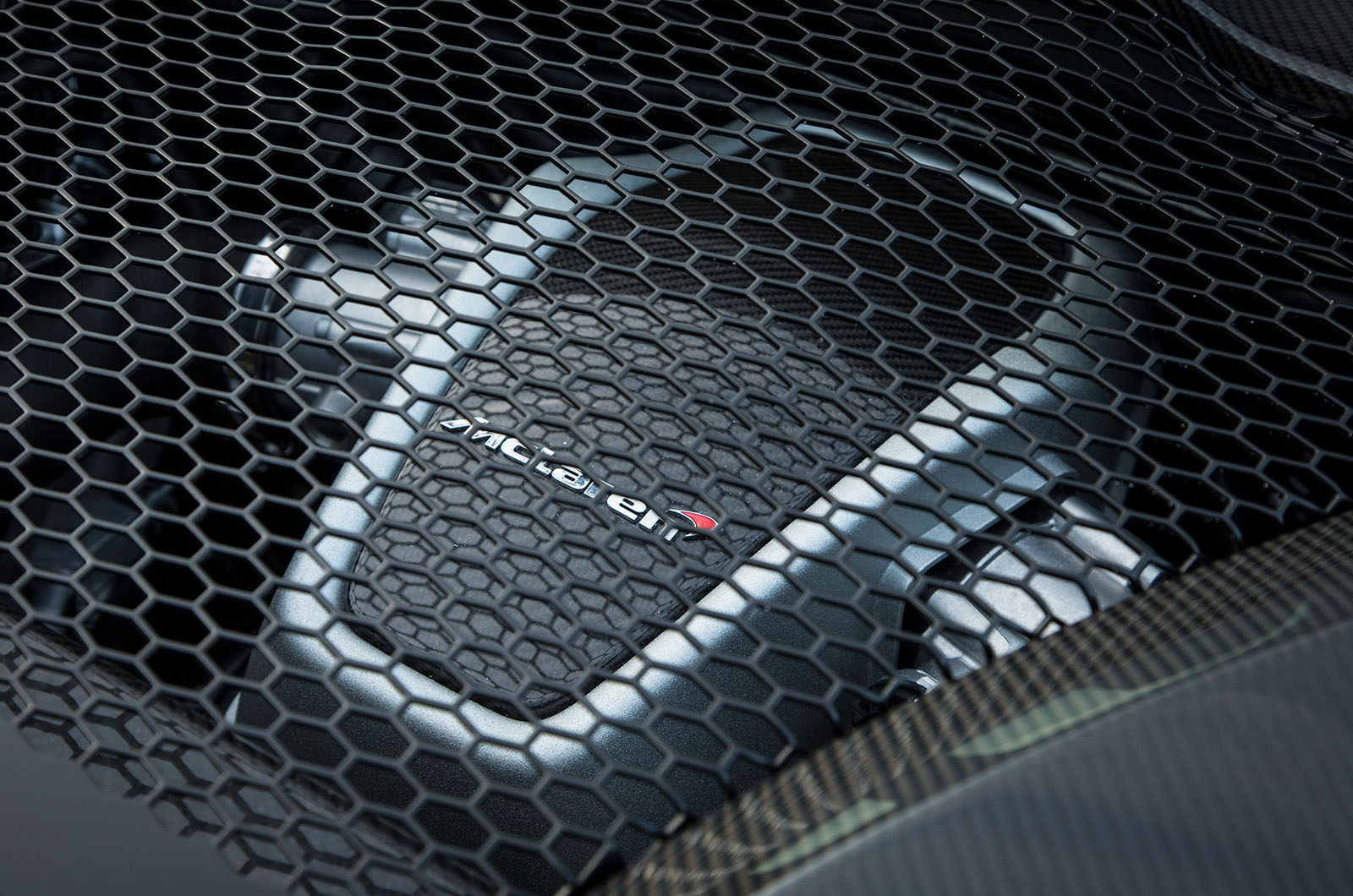
You may be able to see the V8, but McLaren would rather you didn’t get at it. A panel gives access to filler caps for coolant and oil; that ought to be enough for most owners’ needs

Standing quarter-mile times provide a good yardstick here. The previous three hypercars we’ve figured (Bugatti Veyron Super Sport, McLaren P1, Porsche 918 Spyder) have all come tantalisingly close to going under 10.0sec over a standing quarter. For a supercar, an even 11.0sec clocking (Ferrari F12, McLaren 650S) is where the mustard is cut.

For a top-echelon sports car, a few tenths under 12.0sec (Mercedes-AMG GT S 11.7sec, Porsche 911 Turbo S 11.4sec) would have sufficed. But the debutant 570S smashes its way to an order-upsetting time of 11.0sec – significantly more urgent pace than its rivals and precisely the kind that exotics costing many tens of thousands of pounds more trade on.

That there remains a wee bit of turbo lag below about 3000rpm and an absence of the sort of theatrical aural character you get from a new R8 or a GT are very minor black marks, but as part of an overall package this strong, they’re easily forgiven. In the upper half of the car’s formidable 8000rpm rev range, there’s now remarkable speed and proportionality about the engine response – as well as plenty of drama and crescendo as the revs rise.

The dual-clutch gearbox works brilliantly whichever mode you’ve got it in.

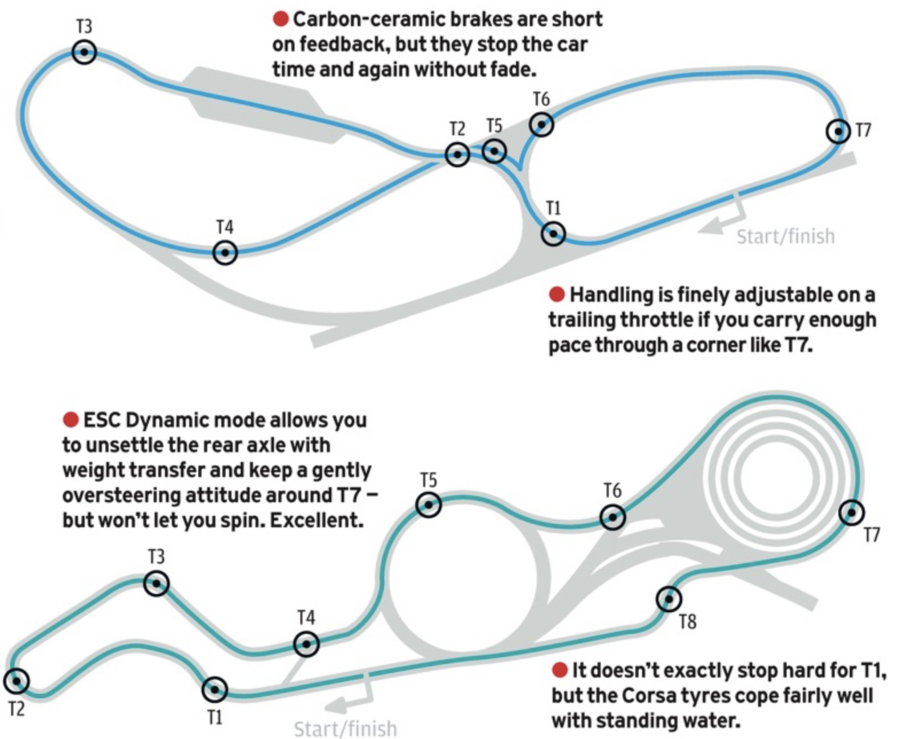
The standard carbon-ceramic brakes are powerful enough to easily haul in every bit of sudden velocity you might inadvertently accrue either on road and track. The pedal needs a hard press to give of its best, though, and doesn’t impress as much with feel as with ultimate retardative urge.

In the wet, the standard Pirelli P Zero Corsa tyres don’t provide them with abundant longitudinal grip with which to work, but regular P Zeros were a no-cost option.

Track notes

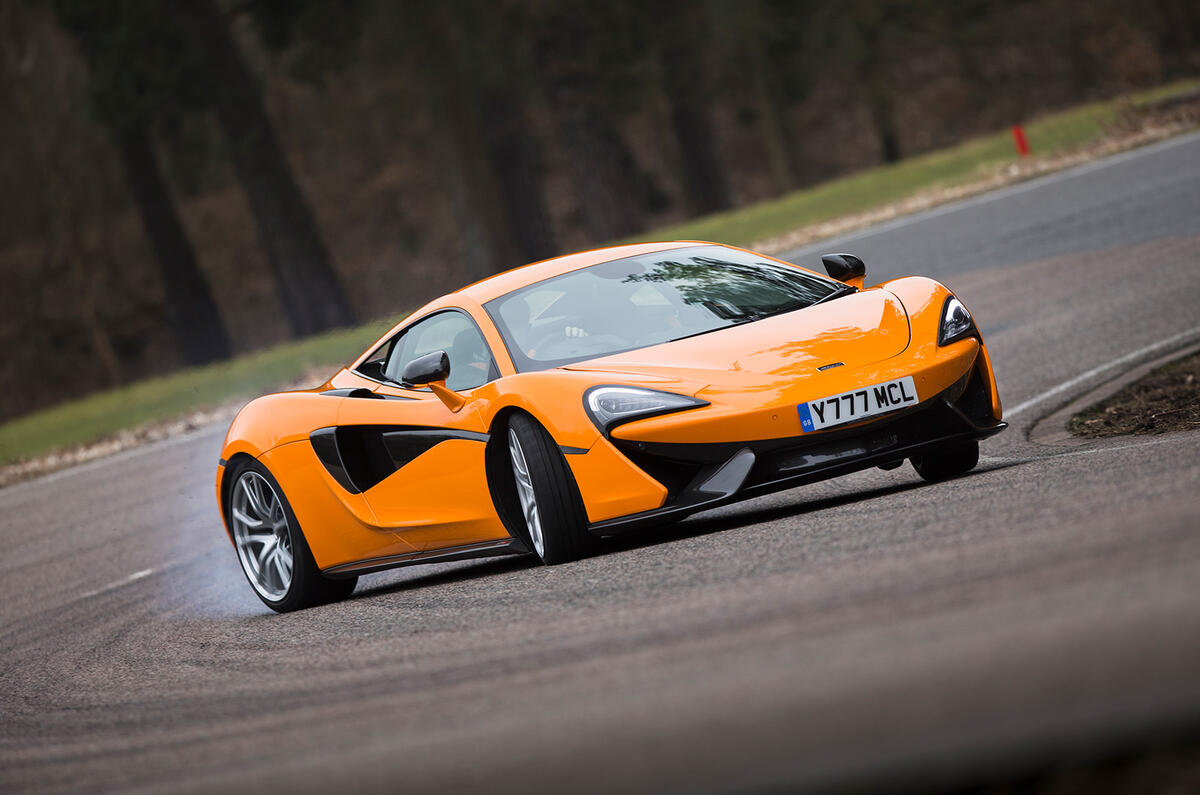
The standard carbon-ceramic brakes and Corsa tyres give the 570S searing pace and real staying power on track. The drive computer relays live tyre temperatures and pressures, letting you know when its rubber is in peak condition. And when it is, outright lateral grip is breathtaking, matched by perfect steady-state cornering balance and brilliant feel for all four contact patches through the wheel and seat.

McLaren’s ESC Dynamic mode for its stability control deserves praise, too. Seldom do you find software so cleverly tuned to allow enough adjustability of cornering attitude to be useful, but not so much as to slow you down or allow you to get into trouble.

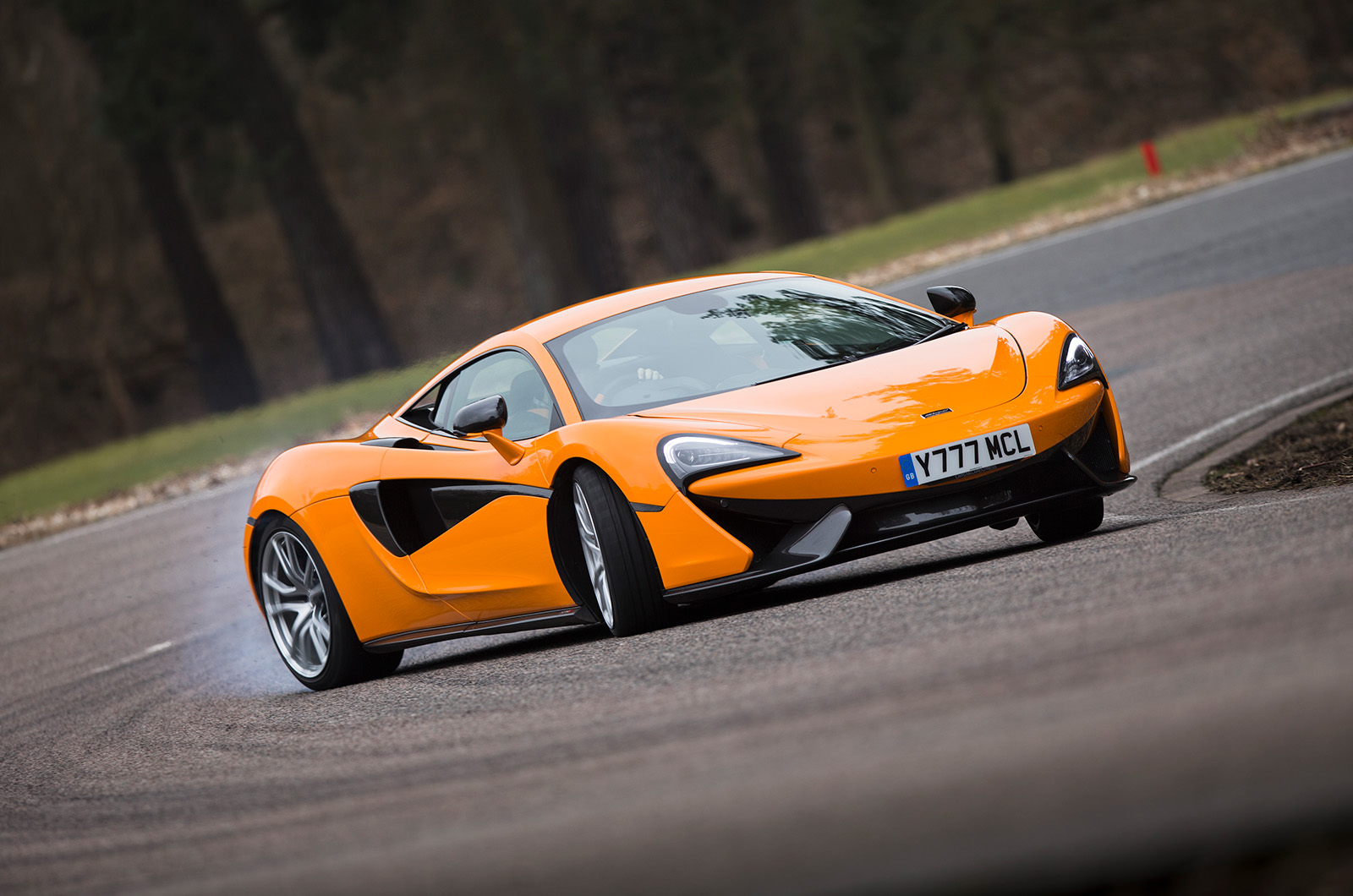
Creditable initial throttle response at higher engine revs makes the limit handling more playful than we’ve found with some of its forebears, but it’s still not a car for exuberant tailslides. The rush of boost and lack of a locking rear diff allow it to pitch into an unrecoverable slide quickly if you’re overzealous. Be judicious with the throttle, though, and more delicate slip angles are available.

Dry circuit: McLaren 570S 1min 8.7sec (Audi R8 V10 Plus 1min 11.7sec)

R8 had damp track conditions to contend with, explaining some of its lap time deficit but not all. The McLaren is awe-inspiringly rapid — only 0.4sec behind a 650S Spider.

Wet circuit: McLaren 570S 1min 22.7sec (Audi R8 V10 Plus 1min 19.7sec)

A very respectable showing, considering the Corsa rubber. Secure under braking, with well-telegraphed understeer adding stability in corners.

RIDE & HANDLING

10
Handling 570s 2016 rt an

All makers of top-rank sports cars face a difficult challenge in perfecting a dynamic balancing act that is defined as much by the need to accommodate a much broader, more everyday sort of use than more expensive and rarefied cars get.

There’s a reason why car makers call this one the 911 Turbo class: because 911 Turbos are very popular and that’s how people use them.

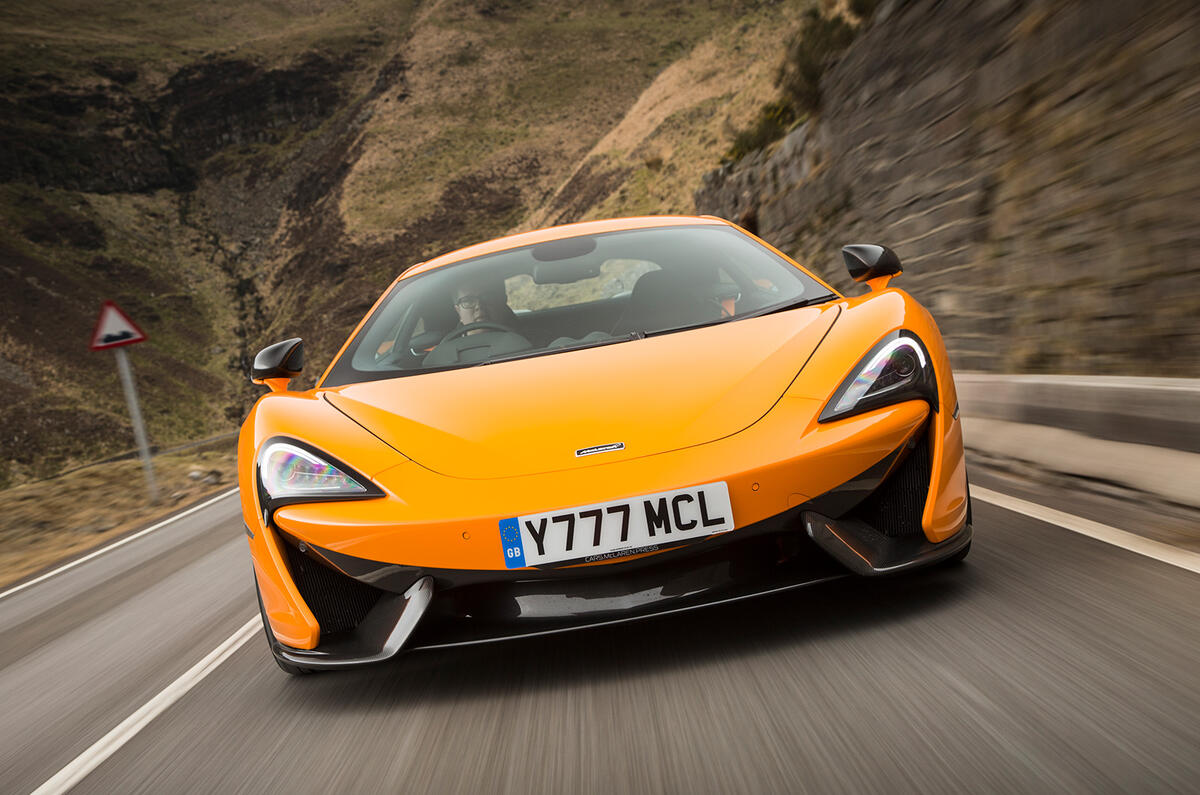
Straight-line may be devastatingly quick and readily accessible, but the ride quality remains taut and well controlled, with good pliancy in Normal mode

And yet McLaren’s challenge was even greater than that of most of its rival players for several reasons: how much less inherently suited to narrow B-roads, urban width restrictors and typical parking spaces that wide, mid-engined cars are than almost any other type you care to mention; how much more comfort and stability matter here than they have for any other model produced so far in the company’s new era; and because, this time around, McLaren’s engineers didn’t have fully active interlinked hydraulic suspension to work with but adaptive dampers and humble anti-roll bars.

In spite of all that, the 570S’s creators did spectacularly well.

The ride is flat, taut and cleverly damped but, in Normal handling mode on the Adaptive Dynamic panel, has a pleasing initial compliance that smothers small and medium-sized lumps and bumps on the road very effectively. For the record, Sport mode should be reserved for billiard table A-roads and Race for the track.

Some surface patter resonates from the wide rear tyres, through the suspension springs and rigid mountings and in via the tub, making the cabin a bit noisy at times, but it’s nothing beyond what plenty of cars in the class produce.

Although you’ll worry about the car’s width at first, you needn’t, because the steering makes it sublimely easy to place and brings extraordinary precision to the handling at road speeds that makes a narrow lane seem roomy.

On pace, weight, positivity and feedback, it’s utterly brilliant and without equal. It’s more alive to camber change and suspension deflection than other systems might be, but never enough to threaten high-speed stability.

Dry grip levels are huge – you won’t get close to exceeding them on the road – and the handling is incisive and poised. It’s never hyperactive or nervous, just always fluent, predictable, tactile and absorbing.

MPG & RUNNING COSTS

9
Intro 570s 2016 rt ap

After a decade of depreciation, 570s are now great value, and we can't imagine they've got much further to fall. 

Pick a nicely specified example and keep it well, and it should serve you well, with reasonable running costs considering the performance on offer.

I like the gauge that tells you how many days’ parking you’ll get before the battery gives out

VERDICT

10
Mclaren 570s Verdict

The 570S isn’t just another supercar slayer. Its job is to occupy purer and more exciting territory than rivals with front-mounted engines, occasional back seats, four driven wheels and the like – and it does that quite brilliantly. But unlike other rivals, the 570S can do that job entirely without pummelling your backside, trying your patience or testing your concentration.

Its performance level is exceptional, without compromise to driveability. Its handling is equally outstanding: a special mix of track-ready purpose, with on-road compliance, precision and stability – and enriched by wonderful control feedback. Great material quality, good infotainment features, decent carrying capacity and a fine touring range make it competitive on usability, too.

You don’t really need all the carbonfibre accoutrements, but they do look good. We’d stick with the standard seats; if you’re after greater comfort, the 570GT is worth a look

Sam Phillips

Sam Phillips
Title: Staff Writer

Sam joined the Autocar team in summer 2024 and has been a contributor since 2021. He is tasked with writing used reviews and first drives as well as updating top 10s and evergreen content on the Autocar website. 

He previously led sister-title Move Electric, which covers the entire spectrum of electric vehicles, from cars to boats – and even trucks. He is an expert in new car news, used cars, electric cars, microbility, classic cars and motorsport. 

Sam graduated from Nottingham Trent University in 2021 with a BA in Journalism. In his final year he produced an in-depth feature on the automotive industry’s transition to electric cars and interviewed a number of leading experts to assess our readiness for the impending ban on the sale of petrol and diesel cars.

Matt Saunders

Matt Saunders Autocar
Title: Road test editor

As Autocar’s chief car tester and reviewer, it’s Matt’s job to ensure the quality, objectivity, relevance and rigour of the entirety of Autocar’s reviews output, as well contributing a great many detailed road tests, group tests and drive reviews himself.

Matt has been an Autocar staffer since the autumn of 2003, and has been lucky enough to work alongside some of the magazine’s best-known writers and contributors over that time. He served as staff writer, features editor, assistant editor and digital editor, before joining the road test desk in 2011.

Since then he’s driven, measured, lap-timed, figured, and reported on cars as varied as the Bugatti Veyron, Rolls-Royce PhantomTesla RoadsterAriel Hipercar, Tata Nano, McLaren SennaRenault Twizy and Toyota Mirai. Among his wider personal highlights of the job have been covering Sebastien Loeb’s record-breaking run at Pikes Peak in 2013; doing 190mph on derestricted German autobahn in a Brabus Rocket; and driving McLaren’s legendary ‘XP5’ F1 prototype. His own car is a trusty Mazda CX-5.