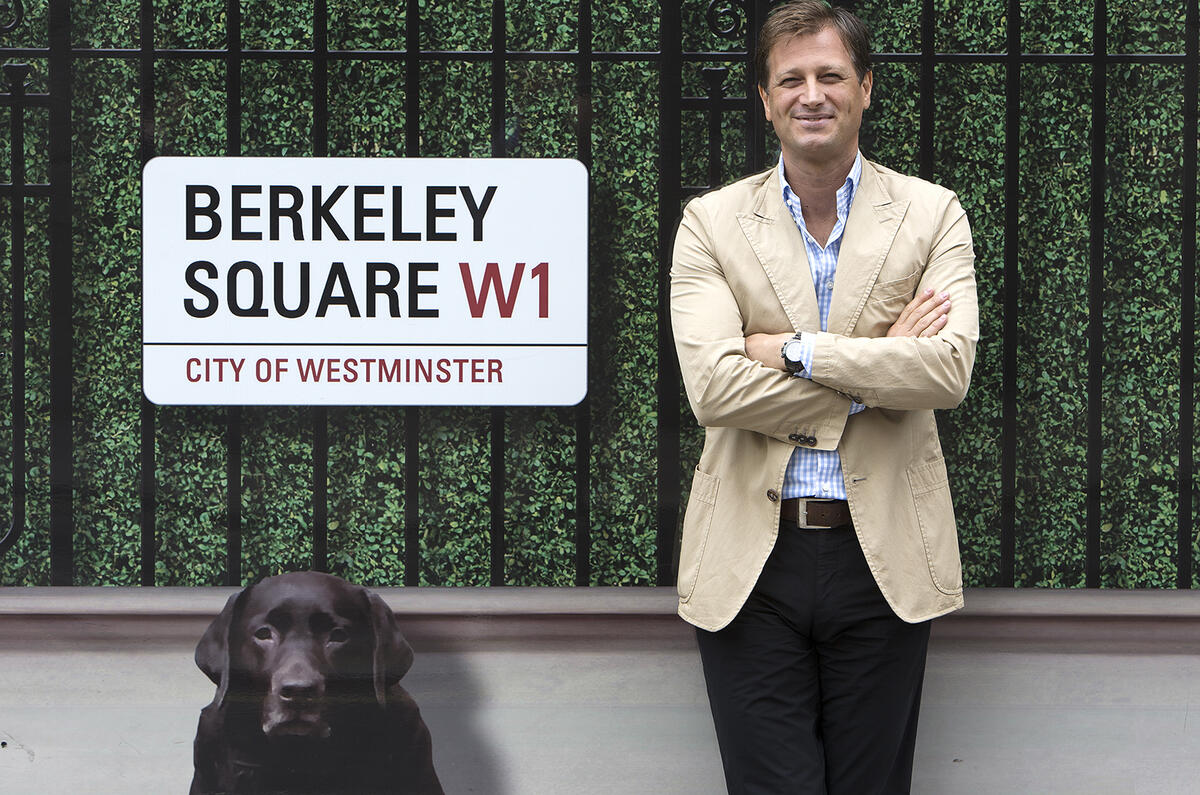








Dany Bahar was always heading for a big comeback.
The former Lotus CEO, best known for the five-model recovery plan that blew up a storm of controversy when launched in 2010, may have departed Hethel in a flurry of legal recriminations, but it was always clear he had too many friends and too much influence in the unfathomable world of cars for the super-rich for him merely to fade away.
Yet the size and scale of Bahar’s comeback has surprised even the man himself. Today he is founder and CEO of a two-year-old Modena-based automotive design and engineering company, Ares, named for the Greek god of war. Its core business is improving “everything you see or touch” in super-luxury cars to make them more exclusive and distinctive than the original maker’s build processes could ever allow.
Most projects go to Middle Eastern or Asian clients, and the company has already delivered 120 of them.
The big secret, says Bahar, is to cast the owner as the car’s creator, while giving him or her access to top-class designers to translate wishes into reality. Prices are high but not quite stratospheric, he says. A full-on redesign of a Range Rover interior in wood instead of leather – a four-week job – would set you back £75,000.
The entire recladding of an existing car in unique carbonfibre panels – an eight-month task – will likely carry a bill of £750,000. Really big jobs can go into seven figures.
Why set the business up in Modena? Because set-up costs are lower than in Germany, the original target area, and there is also a “remarkable” talent pool there that contains most of Italy’s fast-car factories.
The company has moved to bigger premises once already, and will do it again before an official opening planned for September. In the meantime, there are plans, due to reach fruition in the next couple of weeks, to open a UK Ares showroom “in the Piccadilly area”.
For a business like this, Bahar reckons you need headquarters in London, Dubai, Hong Kong and Shanghai as well as the Modenese factory. “Clients in this bracket may visit the factory once,” says Bahar, “but after that they want to go somewhere more convenient.”
The whole Ares proposition rests heavily on research Bahar and his five or six backers (several from his core team at Lotus) carried out over the year or so they took fleshing out a new project. What they discovered was a whole strand of car consumers who can afford anything they want, often buying top-end cars at a rate of a dozen or more a year.
Ares’s very first customer, who paid early for extensive mods to a Bugatti Veyron and thus helped to finance the embryonic business, buys 150 super-expensive cars a year and currently commissions Ares cars by the dozen.
“What we’ve learned,” he explains, “is that the further you go up the price scale, the less people care about what’s underneath a bonnet. People buying cars at £100,000 to £200,000 usually do care about the mechanical bits, but those who are in the £1 million-plus bracket are really only bothered about what you see, feel and touch.”
Ares’s current projects prove this point, making it clear that super-rich car consumers are also very much motivated by impatience. When we spoke, Bahar and Co were on the point of delivering a Mercedes-Benz G63 (nicknamed G-Force) with its styling completely changed by a new set of carbonfibre outer panels.