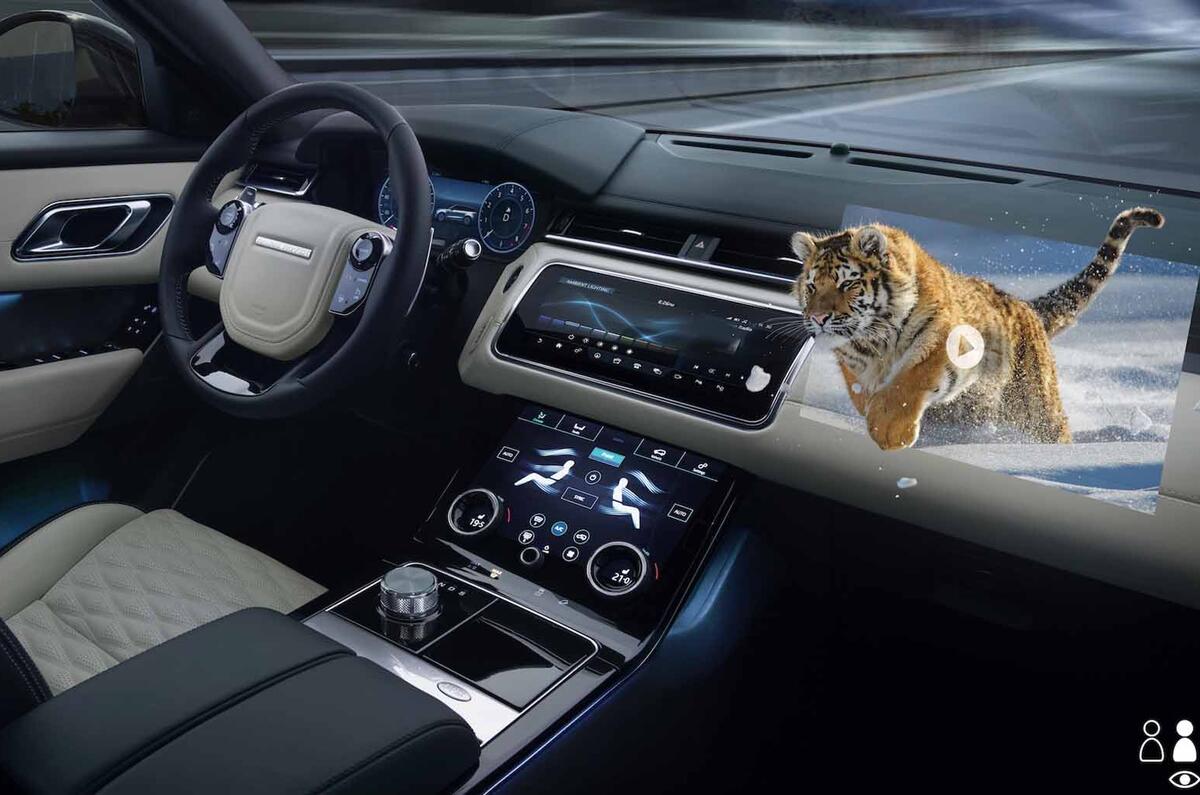
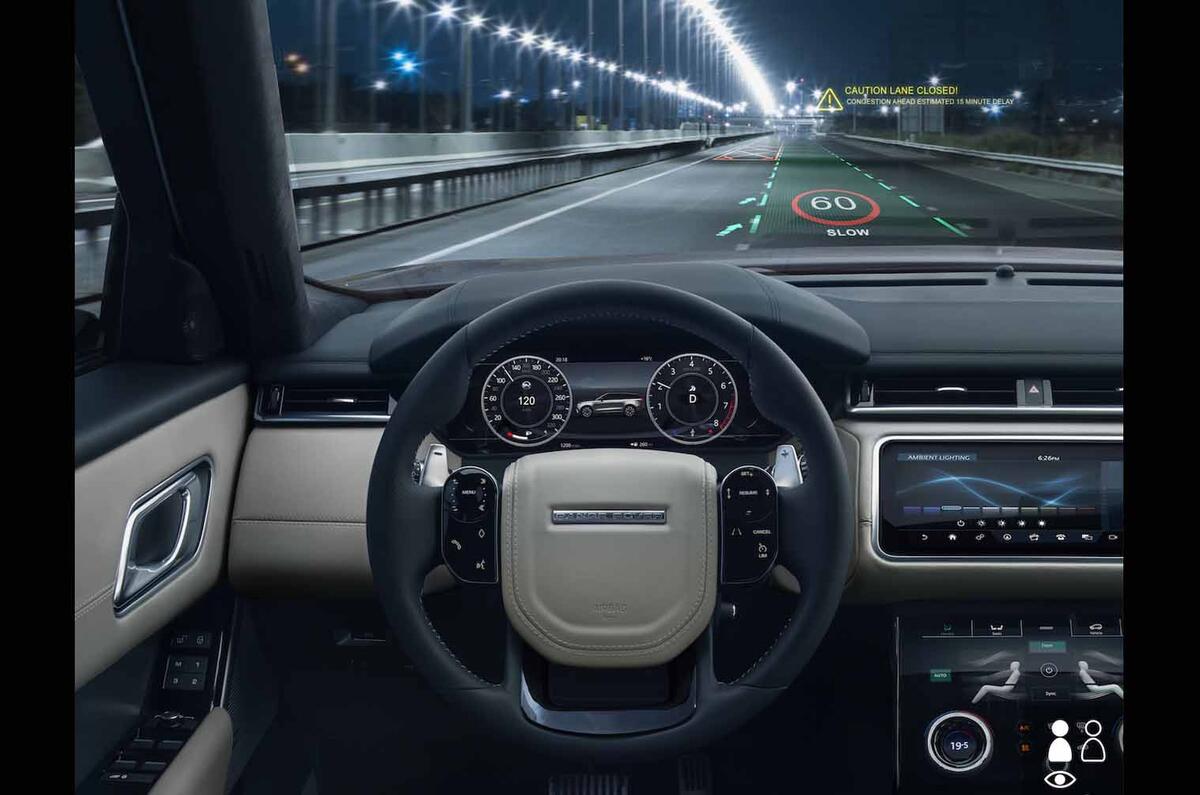

Jaguar Land Rover is developing a 3D head-up display that looks to serve as both a safety feature and point of passenger entertainment.
Developed in a joint venture with the Centre for Advanced Photonics and Electronics (CAPE) at the University of Cambridge, the technology primarily looks to improve driver reaction times by projecting augmented reality alerts into the drivers’ line of sight.
JLR engineers claim that the use of a 3D display serves to improve reaction times by allowing the driver to react more “naturally” to hazards and prompts. The tech can be used to warn drivers of lane departure and upcoming hazards as well as give sat-nav directions and improve visibility in challenging conditions.
Head and eye tracking technology would ensure users can view the 3D effects without the use of cinema-style glasses; however, it’s currently unclear whether drivers and passengers that are unable to view 3D effects in films due to eye-related issues will be able to use the technology.
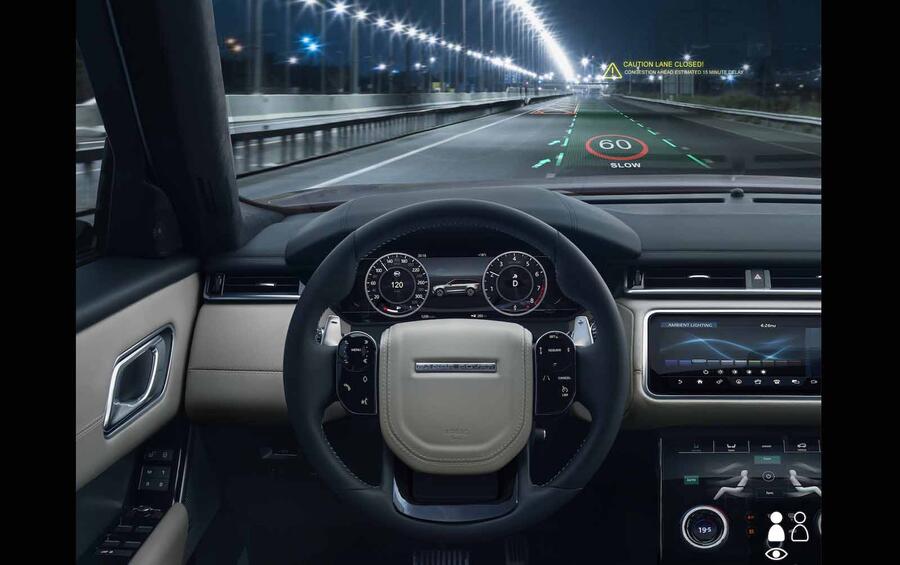
Aside from safety, JLR also claims the displays could offer entirely unique and personal entertainment for passengers in a “fully autonomous future”. Movies, journey details and local landmarks are all potential points of 3D development.
Valerian Meijering, Human Machine Interface & Head-Up Display Researcher for JLR says that the technology “not only provides a much richer experience for customers, but also forms part of our Destination Zero roadmap; helping us to towards a safer, more intuitive and smarter future”.
Destination Zero, a concept championed by JLR, is the utopian vision of a safer, healthier and environmentally friendly automotive future – a concept in which this 3D technology holds a reserved place.
Another concept in which it holds a place is that of the company’s ‘Smart Cabin’ venture, the hope of creating a “personalised space inside the vehicle for driver and passengers with enhanced safety, entertainment and convenience features”. There is currently no indication of when this technology might appear as a working concept.
Read more:
Jaguar Land Rover details plans to pay drivers for updates
Jaguar Land Rover's survival bid: five new cars in two years