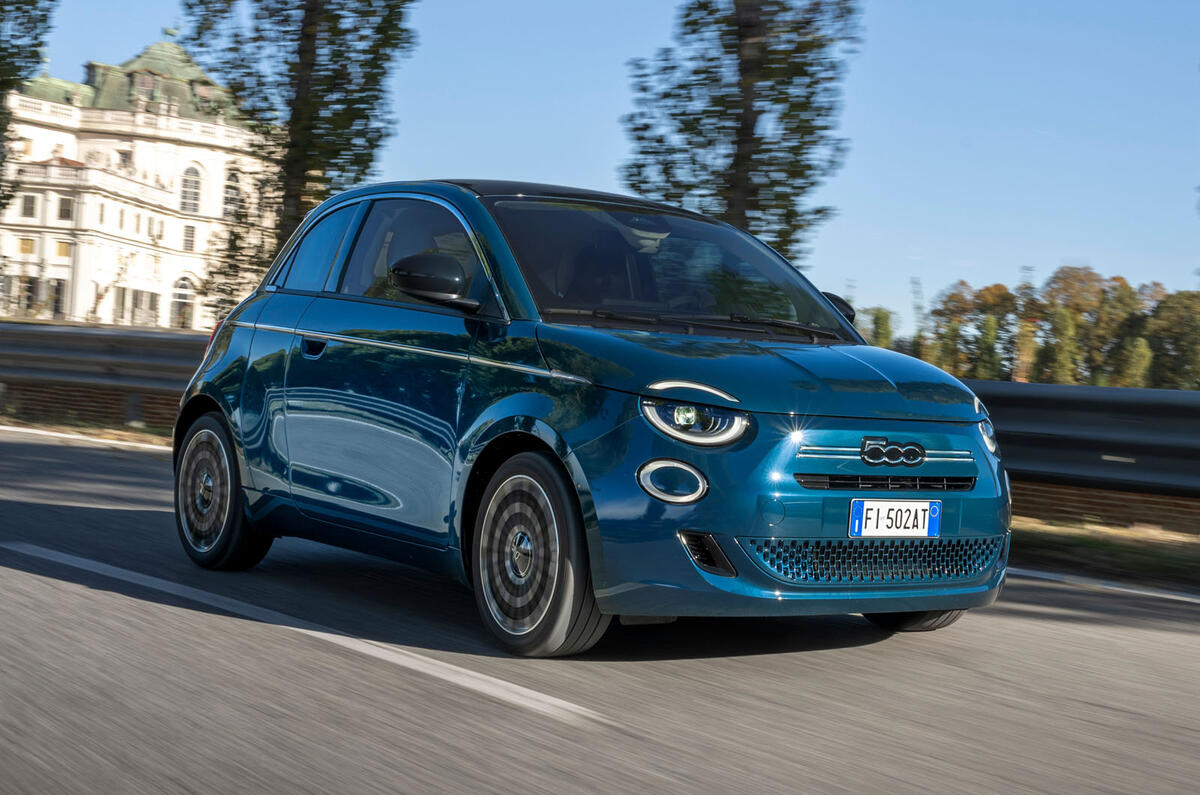
Fiat CEO Olivier François said he would "happily" limit the top speed of his company's city cars to 73mph, as an alternative to fitting them with costly safety technology that he considers unnecessary for low-speed driving.
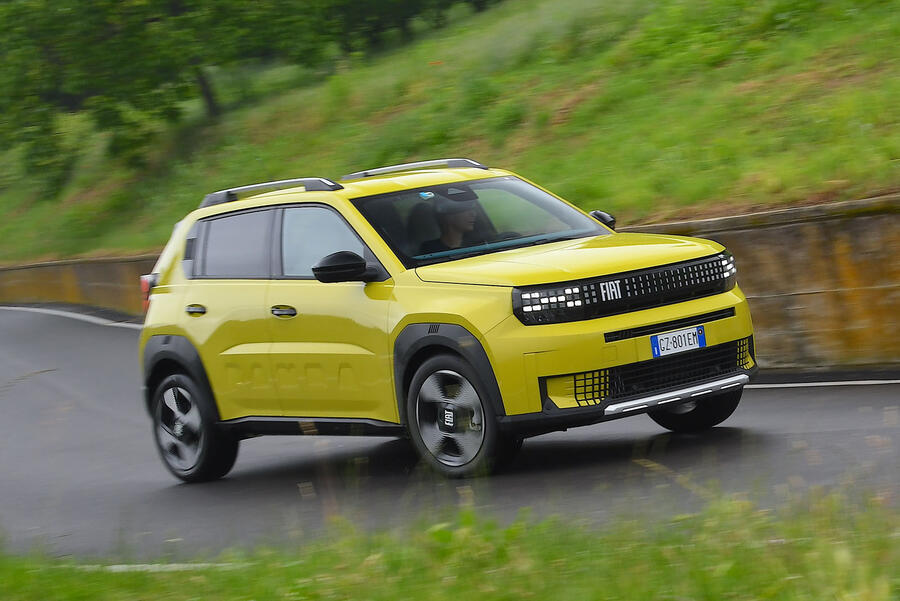
He said that most of the ADAS technology that is mandated by current EU regulations is designed to improve safety at higher speeds so has little relevance for cars like the 500, Panda and Grande Panda, which are mainly driven around town.
Fitting this equipment is therefore unnecessarily hiking up the price of such models for little benefit to the consumer - and François thinks capping their top speed could be a more cost-effective answer.
It wouldn't be a particularly severe limit in relative terms, because none of those models is officially capable of cracking 100mph, and the Grande Panda EV is restricted to 82mph.
François welcomed the EU's proposals for a new 'M1E' category for small cars, because it demonstrates a recognition that the unilaterally imposed safety rules aren't appropriate in all segments.
![]()
"We fundamentally think that with all these rules, the most unsustainable portion lies in the city cars and urban driving, because all these cars are small, democratic and inexpensive, bought by younger people and so on for the daily commute in a city," said François. "They are driven at way slower speeds. It's not the same usage.
"I have a hard time understanding why we need to install all this super-expensive hardware: sensors, cameras, road sign recognition... All this is a little bit inadequate, a bit crazy, and has contributed to raising the average price of a city car by 60% over the last five or six years.
"I don't think that city cars in 2018 or 2019 were extremely dangerous. Our proposal was literally to say 'let's go a little bit backward from overloading cars with expensive hardware'."
For this reason, said François, Fiat "could consider lowering the maximum speed" of some of its cars.
"If you take the average legal maximum speed in Europe, it's 118kph [73mph], so above 118kph is [often] illegal, and most of the radars, ADAS and all this stuff has been developed for cars to go way above the speed limit.
"I would happily limit my city cars, my smaller cars, to what is today the maximum legal speed limit. It's already a limitation. There is something weird that I need to over-spec my cars to go above the legal speed limit."


Join the debate
Add your comment
Makes sense. How often do these micro-cars need to drive above 130km/h?
In my opinion, this speed cap thing makes absolutely no sense. It's a purely rhetorical way out to backtrack on the ADAS—expensive but often questionable—imposed by the EU without admitting that they were a complete mistake that is destroying the small car sector and many jobs. But if you're convinced that these ADAS are truly necessary, there's no point in backtracking. What's the point of making small cars more affordable but less safe for occupants and other road users? Security cannot be waived based on wealth.
My 15 year old Panda felt perfectly safe at 80mph, the limit in here. Small cars, considering how incredibly expensive they got, shouldn't be limited to the city.Panda and 500 aren't the right car for long highway commuting but, for what they cost, they should definitely be able to take you for a few trips a year comfortably.The problem here isn't that you may want to drive much faster the whole time but that you lose any ability to overtake other cars on a highway.We're paying much more and getting less here, I'm not cool with it.
Agree, as did my last Fiat 500 which happily did return family trips Norfolk to Yorkshire and back.
It all depends on how they measure it, 80mph on the clock is in all probability around a genuine 73mph anyway.
Our cars were both city cars, a mii and a 500, both were quiet and comfortable at the legal limit with scope for going faster if needed, no they weren't high performance but were both capable and often did go far beyond city limits. I totally agree with reducing adas where not required, but the logic of limiting the car to the legal maximum speed limit for most and saying that as such it doesn't require the Adas makes no sense to me, as the car is still going to achieve the legal maximum speed, so is then surely fast enough to warrant the Adas?
if it was limited to 50mph or maybe 62mph/100kmh so below the maximum speed limit, I might have understood it more. That of course would restrict the use of the car which is kind of what is implied to justify the lack of Adas.
Again I'm not pro Adas as I believe a lot of them are fussy and don't work as well as the manufacturers claim, although that is going of others as I haven't got a modern enough car to have such systems. My old 500 and my wife's mii both had 4 out of 5 NCAP stars for crash protection, so I still consider them as safe.